Four things grow on rendered walls, and telling them apart is the whole basis of a sensible specification. Algae is the first and most common. It appears as a green film spreading across shaded elevations, thin at the outset and thickening steadily, and it is the easiest of the four to clear because it sits shallowly in the surface. Black fungal spotting is the second, and it is routinely mistaken for dirt. It shows as a scatter of fine dark specks, and its root structures extend below the visible surface, which is why scrubbing removes the top and guarantees a return. It needs chemistry and time rather than effort. Lichen is the third. It forms discrete raised patches, usually grey, green or yellowish, and bonds physically as well as biologically. It is markedly more resistant than algae, needs a longer dwell, and often continues weathering off for weeks after treatment rather than clearing on the day. Moss is the fourth, and the most damaging. It establishes where water sits, holds it permanently against the coating, and on a textured face it anchors into the surface profile so firmly that pulling it away takes render with it. Our render cleaning services identify which of these are present before anything is mixed, because dilution and dwell time differ between them and most elevations carry at least two. Render algae removal and render moss removal are not the same job even on the same wall. Treatment is biocidal, applied at low pressure, left to work at root level, then rinsed gently. Exterior render cleaning across properties in Bretforton usually means specifying for a combination rather than a single organism.
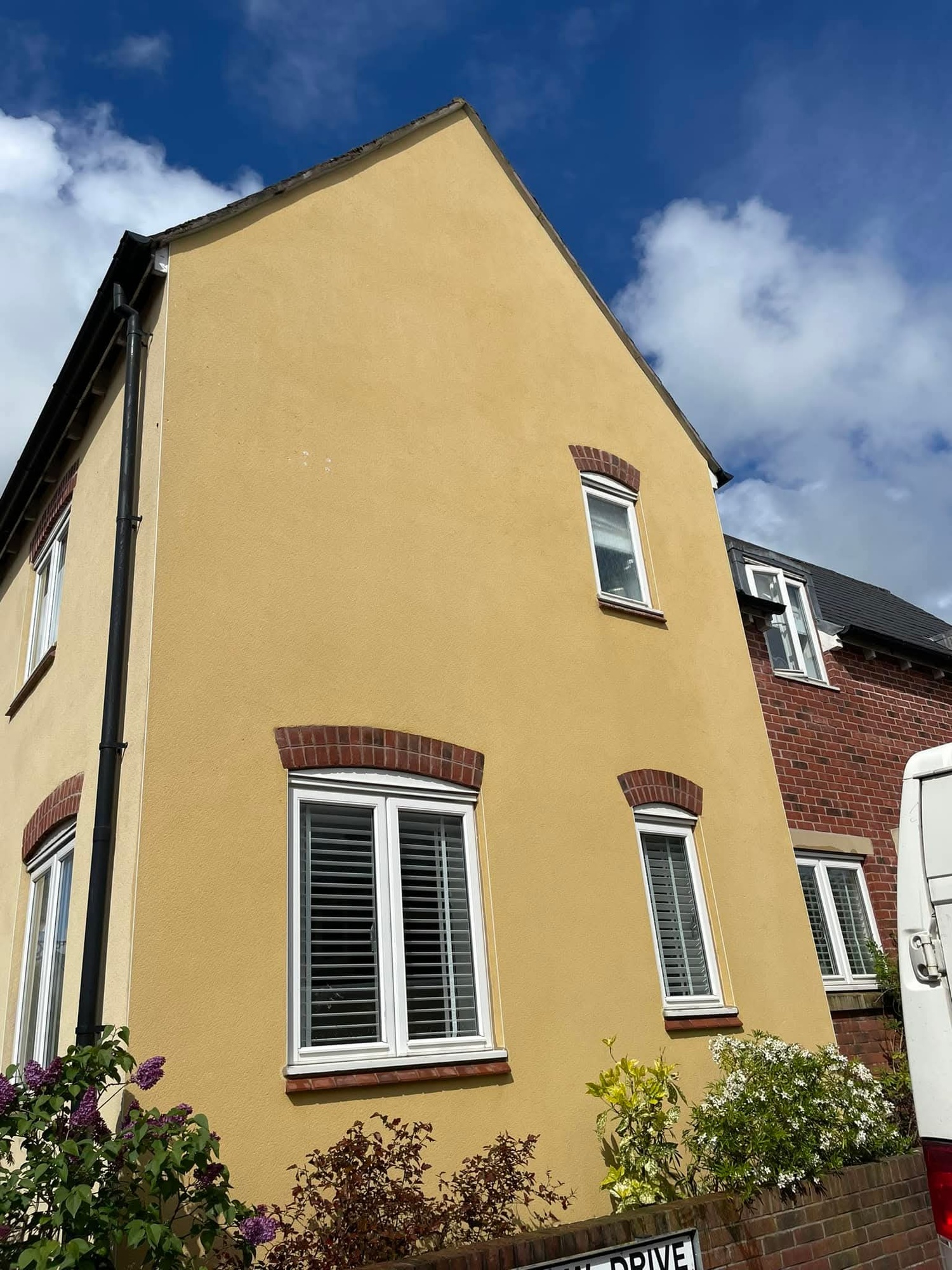
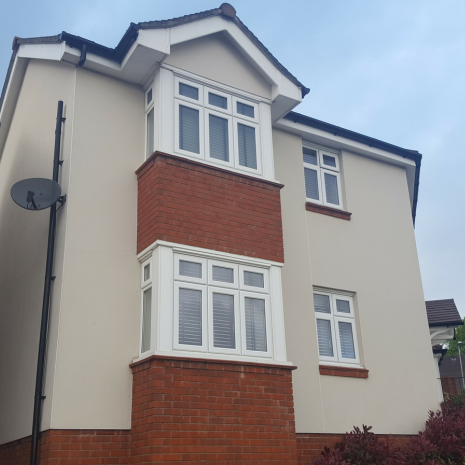

Green filming and black spotting are the two complaints that account for most K Rend enquiries, and they are frequently discussed as though they were the same problem. They are not, and treating them identically is why some walls come out half clean. Algal filming is a surface-level colonisation. It spreads as a continuous green cast, concentrated on shaded elevations and heaviest where a wall stays damp longest. It responds well to biocidal treatment at moderate dilution and clears comparatively quickly. Black spotting is fungal. It appears as discrete dark specks rather than a film, it sits deeper in the texture, and its root structures extend below what is visible. It needs a stronger specification and a considerably longer dwell period. Where a wall carries both, applying a single dilution suited to the algae leaves the spotting largely untouched, and the elevation dries with the green gone and the black still there. K Rend cleaning as we specify it accounts for the mix present rather than assuming one organism. Both are handled within the same low pressure application, using strengths judged at survey. What stays constant is the restraint. Silicone render cleaning permits nothing abrasive under any circumstances. The colour runs through the material and cannot be reinstated, the texture cannot be repaired, and manufacturer guidance excludes high pressure. Everything is achieved chemically. Render mould removal succeeds or fails on whether the treatment reached the root structure. House render cleaning judged a fortnight after the visit, rather than on the afternoon, is the fair test of whether it did.
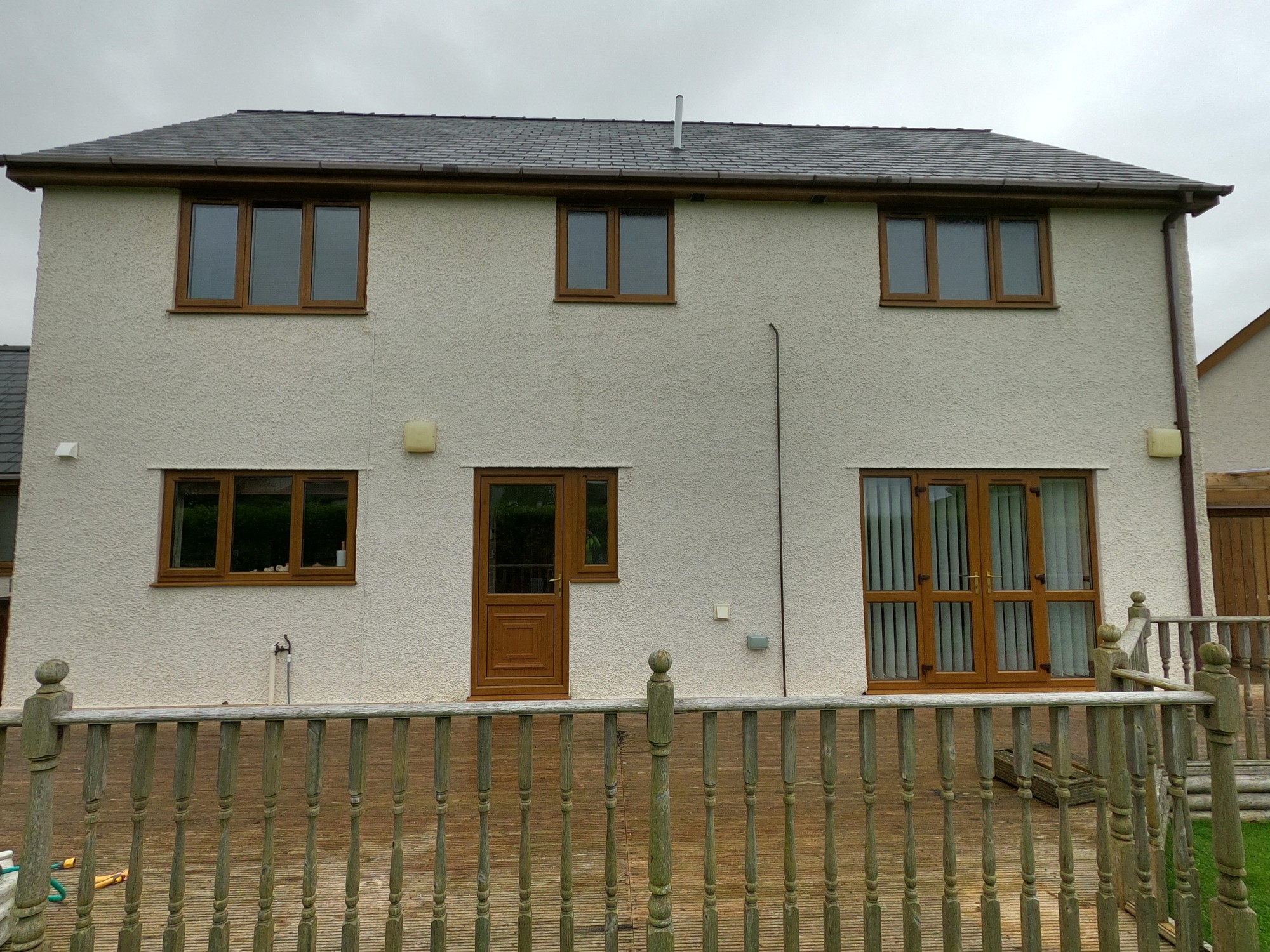
Monocouche is worth understanding as a product before considering how to clean it. It is a single-coat render, applied at substantial thickness in one operation rather than built up in layers, with the colour pigment mixed through the material itself. Once applied, the surface is scraped back while still curing to expose the fine aggregate within, which produces the characteristic granular face. Every property of the finished wall follows from that. There is no separate coating on top, so nothing can be touched up. The colour is mineral and integral, so it is extremely stable but impossible to match. The scraped surface is open and lightly bound at the face, so aggregate detaches readily under abrasion. And the texture holds moisture in its profile long after a smooth wall would have dried. Monocouche render cleaning is designed around those four facts. Treatment is applied at low pressure and in sufficient volume to flow down into the texture rather than resting on the high points. It is given a full dwell period so it destroys growth at root level. It is then rinsed gently, with no brushing and no agitation at any stage. Areas where water concentrates need separate consideration within that specification. Beneath bead lines, under sills and along the base course, growth is consistently denser and the soiling is partly mineral rather than organic. Render restoration on this finish works because the pigment underneath is essentially unchanged. Residential render cleaning reveals the original tone rather than approximating it, and render maintenance thereafter is a matter of years rather than seasons.
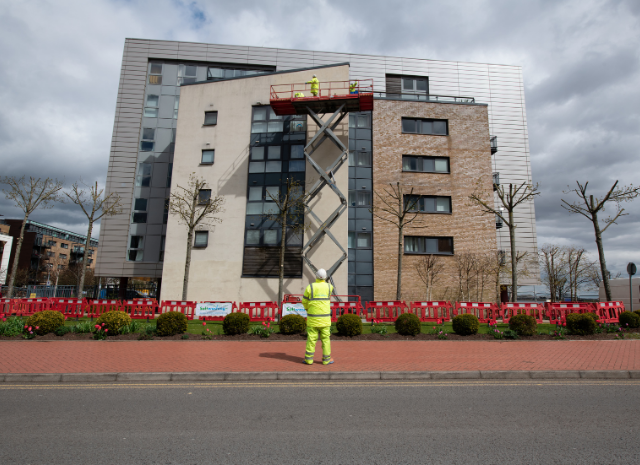

Hospitality premises live or die by first impressions, and a rendered frontage is usually the first thing a customer assesses. Streaking down a pub or hotel elevation, green filming across a pale wall, or a grey base course reads as poor upkeep before anyone has looked at a menu, and it undermines everything that has been spent on the interior. Softwashing UK approach commercial render cleaning on hospitality sites as a presentation exercise with an operational constraint attached. The premises stay open, customers keep arriving, and outdoor areas need to remain usable. We survey first, agree which elevations can be worked when, and schedule around service periods, which in practice usually means early mornings or the quieter part of the week. Exclusion zones are set out with proper signage, entrances stay usable, and anything at ground level within the working area is protected or moved. The low pressure method helps considerably here, because there is very little noise and no spray drifting across seating or approaches. Documentation is provided ahead of attendance as standard, covering method statements, risk assessments and insurance, and operatives hold current working at height certification. Technically, the priority on any substantial frontage is uniformity. Render facade cleaning must hold identical dilution and continuous wet edges across the elevation, since a wall completed across separate sessions dries with visible bands recording exactly where each one stopped. For hospitality businesses around Bretforton, a planned cycle keeps the building consistently presentable through the year and avoids the situation where a frontage needs rescuing at the point it matters most.
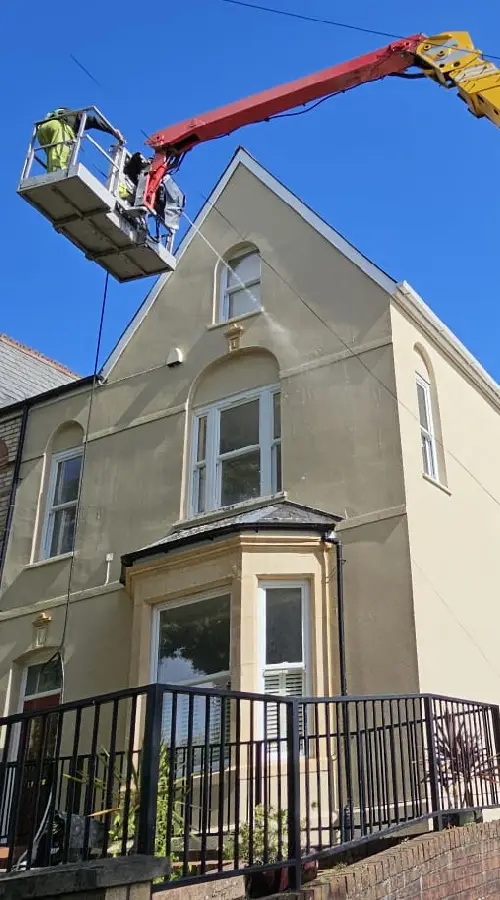
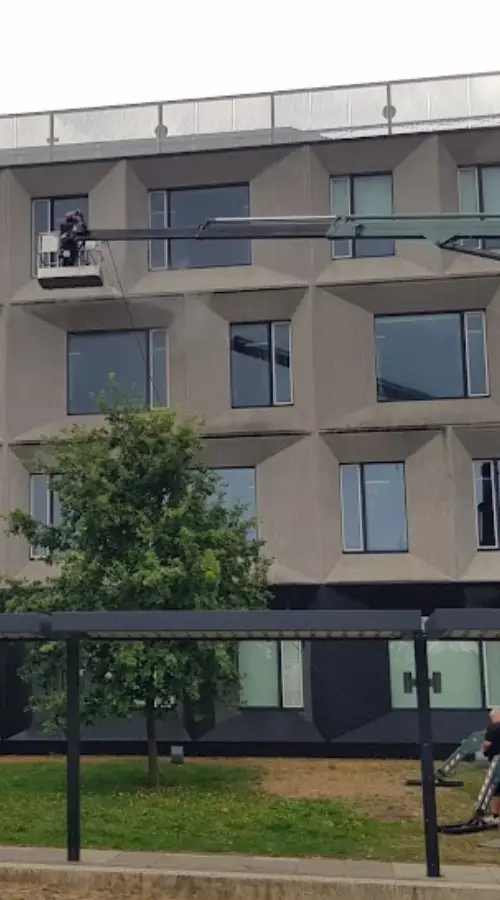
Paperwork is a dull subject and a revealing one. Ask any exterior contractor for their public liability certificate, their working at height certification and a written method statement, and the response tells you most of what you need to know about how the job will go. All three are available here before anyone attends. Our public liability cover is current and specific to the work we carry out, not a general trade policy that quietly excludes work above ground level. Every operative holds up-to-date height certification. Method statements and risk assessments are issued in advance on commercial work and available on request for domestic jobs. This matters more than it might seem on a house. Most of the growth on a rendered property sits high up, on shaded gables and upper elevations, and treating those safely requires equipment and training rather than a ladder and optimism. If something goes wrong on your property, the cover in place is what determines who carries the consequences. Professional render cleaning also means a written quotation rather than a verbal figure. Ours is itemised, sets out what is included, and holds. Render cleaning prices are established at survey and do not change afterwards. Beyond the documentation, the practical commitments are straightforward. Planting, paving, drainage and external fittings are protected before anything is applied. Dilutions are controlled rather than mixed strong for speed. Everything is cleared and checked before we leave. As render cleaning specialists rather than a general exterior maintenance outfit, this is the only work we do, and the standards around it are built for it rather than adapted from something else.
Bretforton falls within our regular working area and is covered in full. There is no minimum job value, no travel surcharge and no distinction between properties in the centre of the village and those on the outer roads. Coverage is worth defining properly, because it means more than being willing to drive somewhere. It means surveys are offered within a reasonable timescale rather than whenever a route happens to pass. It means the same operatives and the same equipment attend as would attend anywhere else on our books. And it means that if something needs revisiting after the work, coming back is straightforward rather than a favour. Practically, we programme jobs by area. When we are working in a particular village we prefer to be there for a full day or more, which keeps travel cost out of the individual quotations and allows us to fit properties in around each other. If neighbours are considering the same work, arranging within the same period usually improves the figure for everyone involved. The rendered properties here vary considerably in age and finish, and that is the reason every job is surveyed rather than priced from a description over the phone. Older coatings that have been repaired and painted over time need testing before treatment. Modern through-coloured systems need protecting from abrasion entirely. Some buildings carry both. Surveys take around twenty minutes and do not require anyone to be at home provided all elevations can be reached. The written quotation follows by email, itemised by elevation so the basis of the figure is visible rather than assumed.
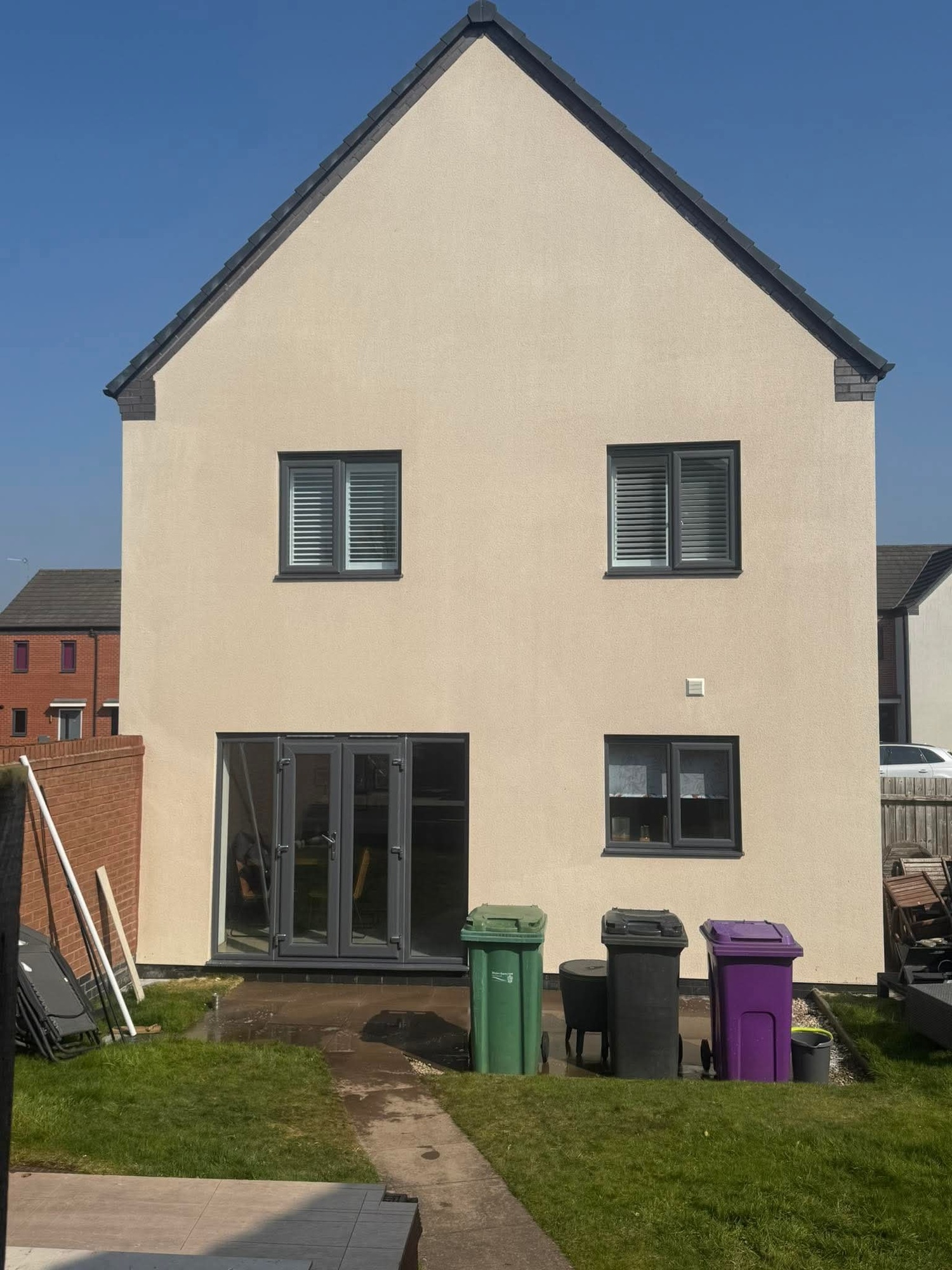
Most properties in Bretforton benefit from professional render cleaning every 3 to 5 years, although this depends on the surrounding environment. Properties near trees, woodland, busy roads or coastal areas may require more frequent cleaning due to algae, mould and airborne contaminants. Our soft washing process removes existing growth and helps keep your render cleaner for longer.
Yes. Soft washing is specifically designed for delicate surfaces such as K-Rend, silicone render, monocouche render and painted render. Unlike high-pressure washing, it cleans at low pressure while treating biological growth at its source, reducing the risk of damage to the render finish.
We clean virtually all external render finishes, including K-Rend, Monocouche, Weber, Sto, silicone render, acrylic render, painted render, roughcast and pebble dash. Every cleaning method is tailored to the specific render type to achieve the best possible results.
Yes. Our specialist soft washing treatments are highly effective at removing green algae, red algae, black mould, mildew, lichen and other organic staining. We also apply professional biocide treatments to kill spores and slow down regrowth.
Because our process targets the biological growth rather than simply washing the surface, results typically last much longer than pressure washing alone. The exact lifespan depends on weather conditions, surrounding vegetation and the property’s location.
No. Our soft washing process is specifically designed to clean render safely. We use low-pressure application methods and specialist cleaning solutions that remove contamination without damaging the render surface when carried out by trained professionals.
The UK’s damp climate provides ideal conditions for algae, mould and other biological growth to develop on rendered surfaces. Areas with limited sunlight, nearby trees or persistent moisture are especially susceptible. Professional soft washing safely removes these contaminants and restores your property’s appearance.










































WhatsApp us