The most common complaint about render cleaning is not that it did not work but that it did not last. A wall is cleaned, looks excellent for a few months, and is visibly greening again by the following spring. The explanation is nearly always the same, and it is worth setting out. Growth on render is not a deposit sitting on the surface. It is a living colony with structures extending into the texture and the pores of the coating. A method that removes what is visible, whether by pressure, brushing or a quick chemical wipe and immediate rinse, takes the top of the colony and leaves the rest in place. Regeneration then starts from an established base, and because the surface has often been opened up in the process, it happens faster than before. That is the whole argument for dwell-based treatment. Our render cleaning services apply a biocidal solution at controlled dilution and leave it to work, which takes time and looks like nothing is happening. During that period it penetrates to root level and sterilises the colonised depth of the coating. Recolonisation afterwards has to begin from airborne spores landing on a clean surface, which is a process measured in years. Render algae removal, render moss removal and render mould removal all follow the same logic at different strengths and dwell periods depending on the organism. Exterior render cleaning done this way is slower on the day and considerably cheaper over a decade. Across the variety of rendered housing found around Bromsgrove, the difference in interval between the two approaches is routinely four or five times.
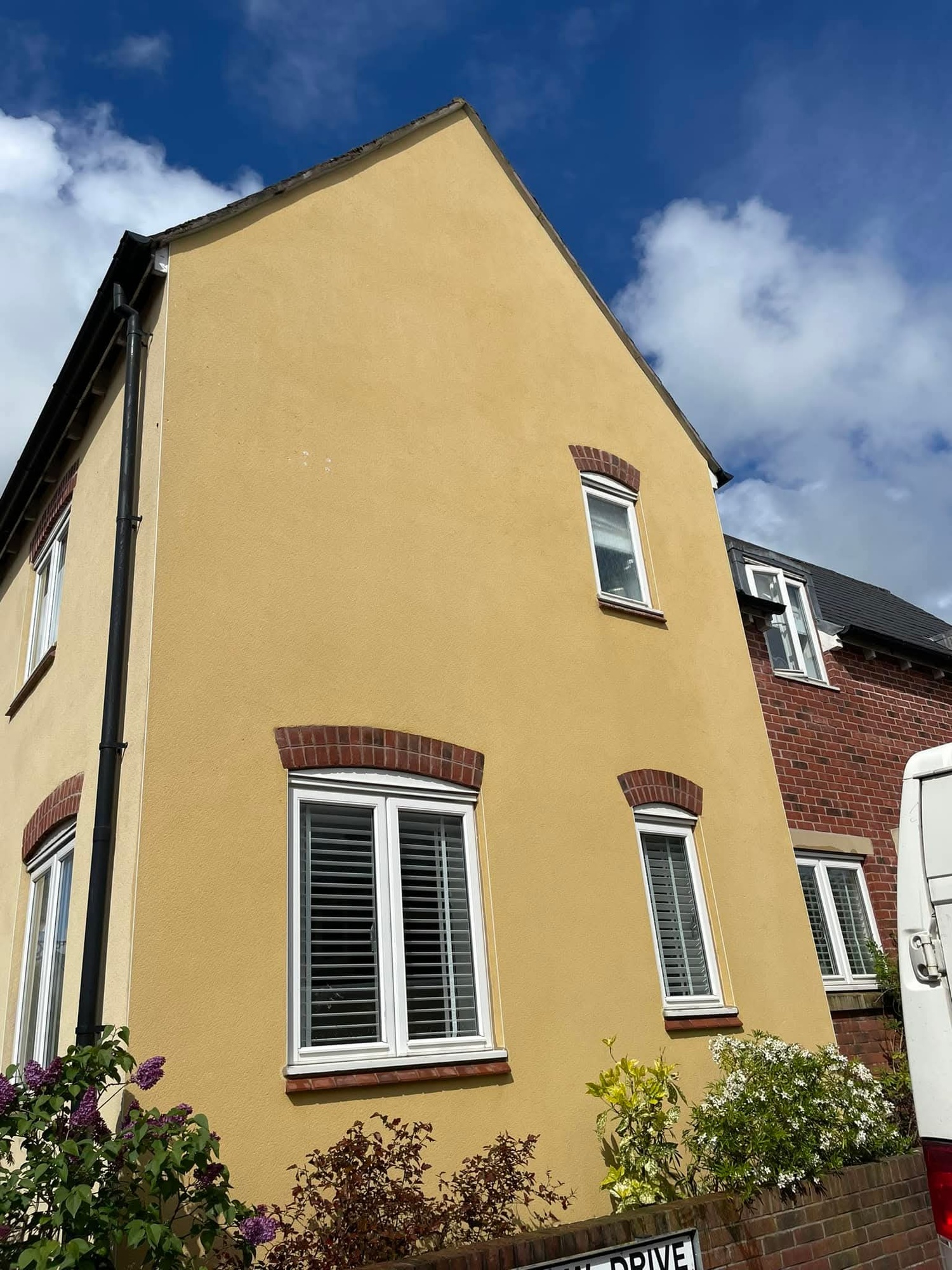
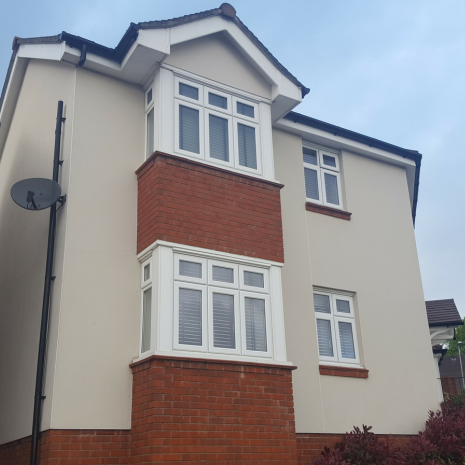

Large silicone-rendered elevations bring one problem that smaller walls do not: keeping everything consistent from the first section treated to the last. On a modest frontage this looks after itself. On a substantial three-storey gable, or on a property with long continuous walls, it becomes the main technical challenge of the job. The difficulty is that treatment applied to a partly dried section behaves differently from treatment applied to a wet one, and dilution that drifts even slightly between mixes produces a wall that dries with visible tonal variation. On a through-coloured finish such as K Rend, that variation is permanent until the next clean, and it shows most clearly in low sunlight when nobody wants it to. K Rend cleaning on a large elevation is therefore planned before it is started. The wall is worked as a single unit with continuous live edges, dilution is mixed consistently throughout, and enough personnel are on site to complete each elevation in one pass rather than returning to it after a break. Nothing else changes. Silicone render cleaning remains entirely chemical, at pressures low enough to be safe against a hand, with no brushing or agitation at any point. The colour is integral and cannot be reinstated if the surface is disturbed. Coloured render cleaning on large areas is also where poor access shows up in the finish. If part of a wall can only be reached awkwardly, it tends to receive less product and shorter dwell, and it dries visibly behind. Resolving access properly at survey is what prevents it. House render cleaning on a substantial property is judged on uniformity across the whole elevation.
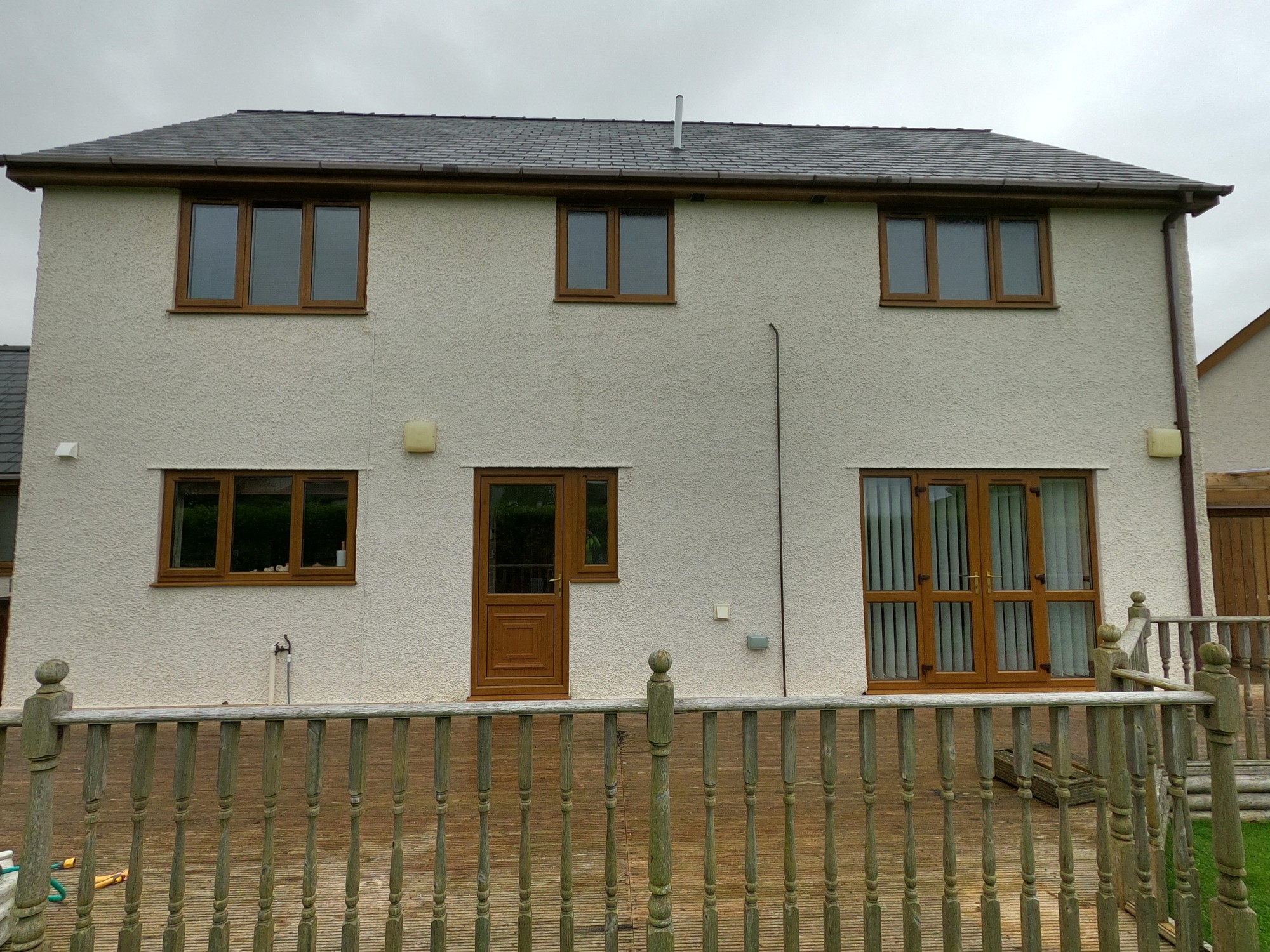
Softwashing UK see monocouche walls in every condition from nearly new to badly neglected, and the single factor that determines whether the finish can be brought back is whether the texture is intact. Everything else is recoverable. Surface damage is not. Monocouche is scraped back during application to expose a fine aggregate face, and that aggregate is only lightly bound where it sits at the surface. Pressure, brushing or any form of mechanical agitation detaches it, leaving areas that are smoother than their surroundings and reflect light differently. On a through-coloured render there is nothing to make good with, so the difference stays for the life of the coating. Monocouche render cleaning is built entirely around not doing that. Treatment is applied at low pressure and in volume, so it flows into the depth of the texture where the growth actually lives rather than sitting on the ridges. It is left to dwell for as long as the colonisation requires. It is then rinsed gently, without force and without contact. Working this way also means resisting the temptation to attack stubborn areas. Where growth is heavier, the answer is more product and more time rather than more effort, and areas that concentrate water are given their own treatment within the overall specification. Render restoration on an undamaged monocouche elevation is genuinely repeatable. The same wall can be brought back in five years and again five years after that, because nothing is being taken off it. Residential render cleaning done this way protects the asset rather than trading appearance now against condition later, and render maintenance intervals stay long throughout.
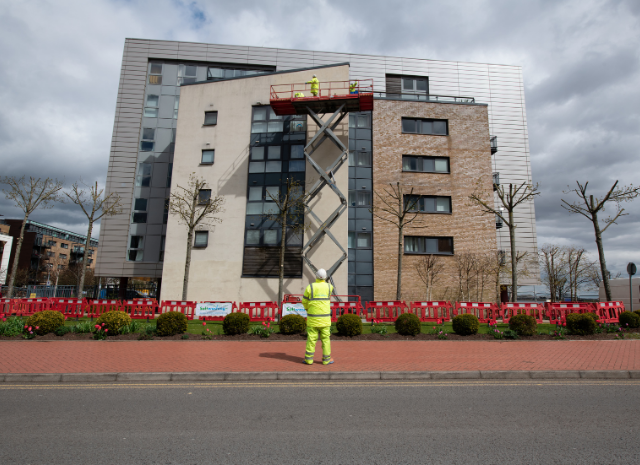

Mixed-use and town-centre buildings with rendered elevations are among the more complicated jobs we handle, and almost all of the complication is organisational rather than technical. There may be retail at ground level, offices or residential above, separate ownership between floors, pedestrian traffic below and limited space to work from. Commercial render cleaning on this type of building begins with establishing who needs to be told what. Occupiers of every part of the building, adjoining premises where elevations are continuous, and anyone responsible for the public route below all need notice and a clear programme. We provide the information required for that circulation rather than leaving it to the managing agent to construct. Access is resolved at survey. Elevation height, pavement width, overhead obstructions and available standing all determine what equipment can be used, and we price against what is actually achievable. Where powered access or a working platform is required, it is in the quoted figure rather than raised afterwards. Documentation is issued in advance as standard, covering insurance, method statements and risk assessments, and every operative holds current working at height certification. The technical requirement is uniformity across a tall elevation. Render facade cleaning must maintain identical dilution and continuous wet edges from top to bottom, since banding on a multi-storey wall is highly visible and difficult to remedy without redoing the whole face. For building owners around Bromsgrove, the practical benefit of a planned cycle is that these organisational costs are incurred once and then repeated at reduced scale, while the coating itself stays dry and lasts materially longer.
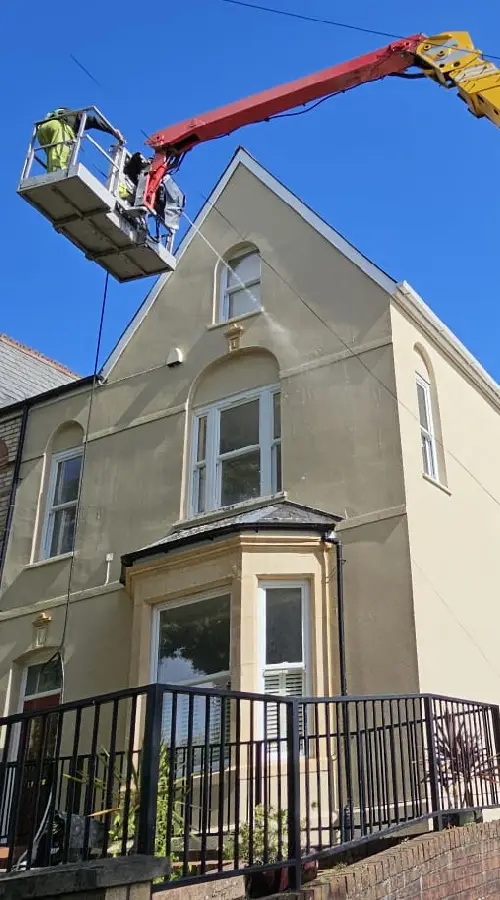
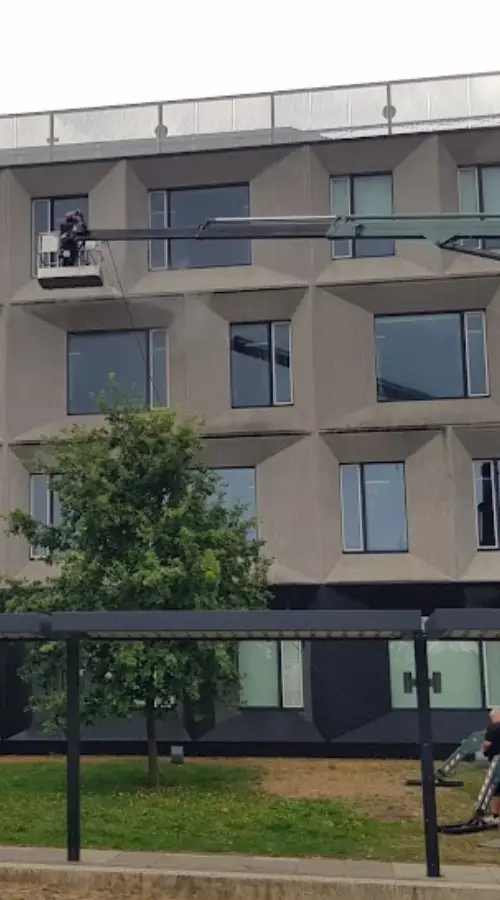
Who actually turns up is a fair question to ask any contractor, and in this trade the answer is often unclear. Work is won by one firm, passed to another, and carried out by whoever is available that week with no continuity between the survey and the job. We do not subcontract. The person who surveys your property works alongside the team that treats it, and the specification written at survey is the specification that gets applied. Nothing is interpreted second-hand, and there is no gap between what was assessed and what happens on site. That continuity matters because so much of this work is judgement. Recognising a silicone system from a polymer-modified one, spotting paint that has begun to chalk, deciding that a particular elevation needs a longer dwell than the rest of the building: these are decisions made by experience, and they are worthless if the person making them is not there when the work is done. Our render cleaning specialists work on rendered elevations exclusively. That is the only discipline we operate in, and the training, equipment and insurance are all built for it rather than adapted from general exterior maintenance. Professional render cleaning also means the commercial side being straightforward. A free survey, a written itemised figure, a fixed price that does not move, and full public liability cover with current working at height certification available on request. As a local render cleaning company we rely on repeat work and recommendation, which is the strongest incentive there is to leave a property properly finished.
Our coverage takes in Bromsgrove together with Bournheath, Dodford, Finstall, Lickey End and Sidemoor, all served on identical terms with no travel loading and no minimum job size. A town-scale area brings a wider spread of property types than a village does, and that shapes how the work is organised. There are terraced and semi-detached frontages where the rendered area is modest and the job is straightforward from ground level. There are post-war estates where whole streets carry similar finishes of similar age, which makes clustering particularly effective. And there are larger detached properties with multiple elevations, extensions in different systems and access requiring proper assessment. Bournheath, Dodford, Finstall, Lickey End and Sidemoor each contribute their own mix to that, and we survey each property individually rather than assuming that a rate established on one street transfers to the next. Coating type, elevation height, aspect and the extent of colonisation all vary independently of each other. Clustering is worth raising at the enquiry stage. Where several properties on the same road book within the same period, mobilisation is shared and each individual quotation reduces accordingly. On estates with consistent house types this often works particularly well, since the specification is similar from one property to the next. Access is generally good across the area, and where frontages are tight or parking is restricted, our hose runs allow the vehicle to stay clear while treatment still reaches every elevation. Surveys can usually be arranged within the week, take around twenty minutes, and do not require anyone to be at home provided all elevations are reachable.
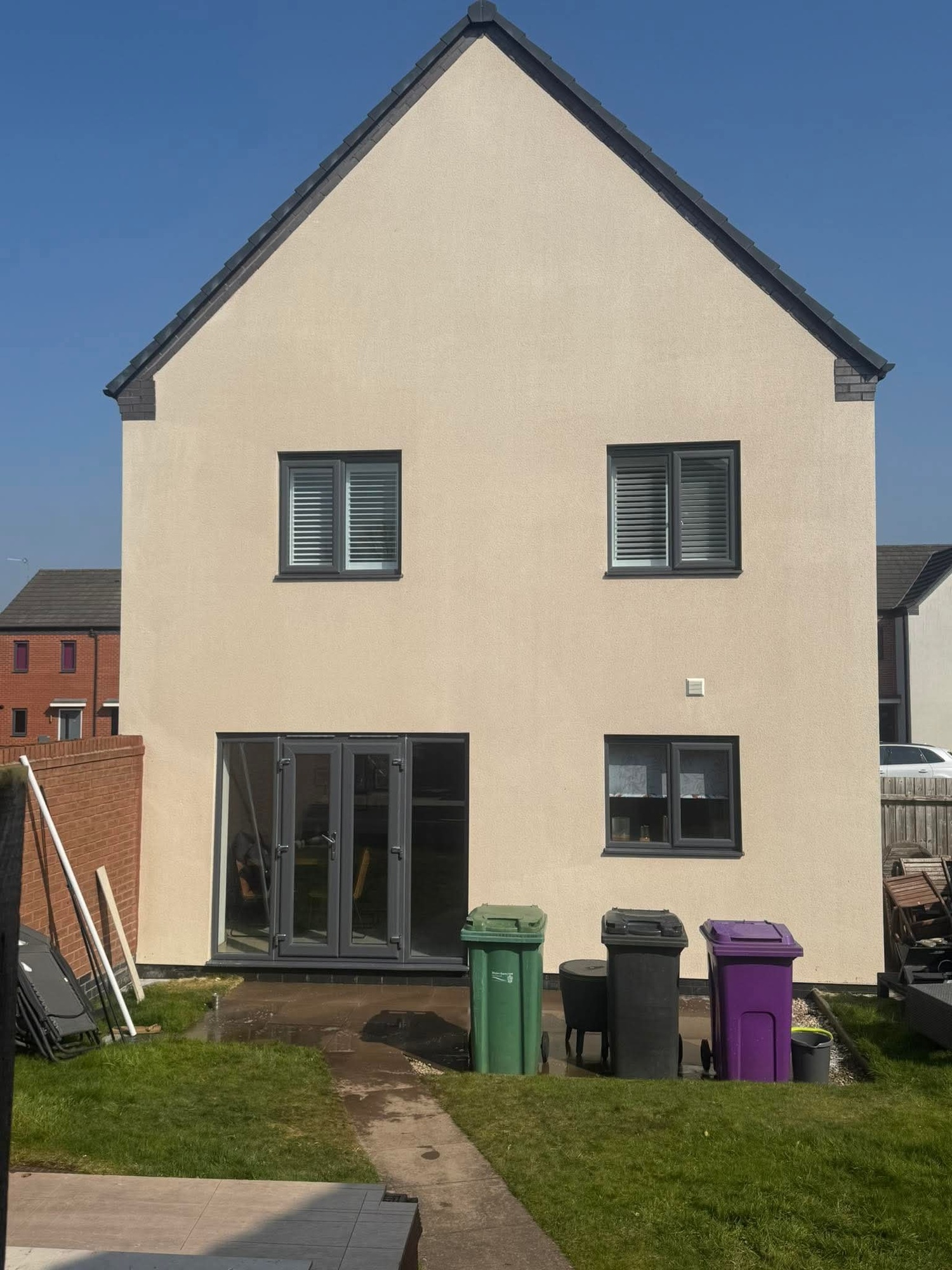
Most properties in Bromsgrove benefit from professional render cleaning every 3 to 5 years, although this depends on the surrounding environment. Properties near trees, woodland, busy roads or coastal areas may require more frequent cleaning due to algae, mould and airborne contaminants. Our soft washing process removes existing growth and helps keep your render cleaner for longer.
Yes. Soft washing is specifically designed for delicate surfaces such as K-Rend, silicone render, monocouche render and painted render. Unlike high-pressure washing, it cleans at low pressure while treating biological growth at its source, reducing the risk of damage to the render finish.
We clean virtually all external render finishes, including K-Rend, Monocouche, Weber, Sto, silicone render, acrylic render, painted render, roughcast and pebble dash. Every cleaning method is tailored to the specific render type to achieve the best possible results.
Yes. Our specialist soft washing treatments are highly effective at removing green algae, red algae, black mould, mildew, lichen and other organic staining. We also apply professional biocide treatments to kill spores and slow down regrowth.
Because our process targets the biological growth rather than simply washing the surface, results typically last much longer than pressure washing alone. The exact lifespan depends on weather conditions, surrounding vegetation and the property’s location.
No. Our soft washing process is specifically designed to clean render safely. We use low-pressure application methods and specialist cleaning solutions that remove contamination without damaging the render surface when carried out by trained professionals.
The UK’s damp climate provides ideal conditions for algae, mould and other biological growth to develop on rendered surfaces. Areas with limited sunlight, nearby trees or persistent moisture are especially susceptible. Professional soft washing safely removes these contaminants and restores your property’s appearance.









































WhatsApp us