People often ask when render should be cleaned, and the honest answer is that most of the year works provided the conditions on the day are right. What matters is not the month but whether the treatment can be applied, allowed to dwell and rinsed without being disrupted. Rain during application is the main constraint. A biocidal solution diluted by heavy rain before it has had time to work will not achieve what it should, so we move dates rather than push through and deliver a compromised result. Strong wind is the other limitation, both because it disperses treatment before it reaches the wall and because it makes work at height unsafe. Beyond that, seasonal preference is largely practical. Spring and early summer are popular because growth is at its most visible after winter and owners want the elevation looking right for the months ahead. Autumn work has its own logic, since clearing colonisation before the wet months removes the moisture-holding layer that carries a wall through winter in a permanently damp state. Winter treatment is entirely possible on suitable days and is often easier to book at short notice. Our render cleaning services are specified the same way regardless of season. Biocidal treatment at a dilution matched to the organisms present, applied at low pressure, given genuine dwell time so growth is destroyed at root level, then rinsed gently. Render algae removal and render moss removal work identically in February and in July. The one seasonal variable worth knowing is how quickly results appear. Exterior render cleaning carried out on a property in Catshill during warmer months tends to weather clean faster, simply because the wall dries more often between wettings.
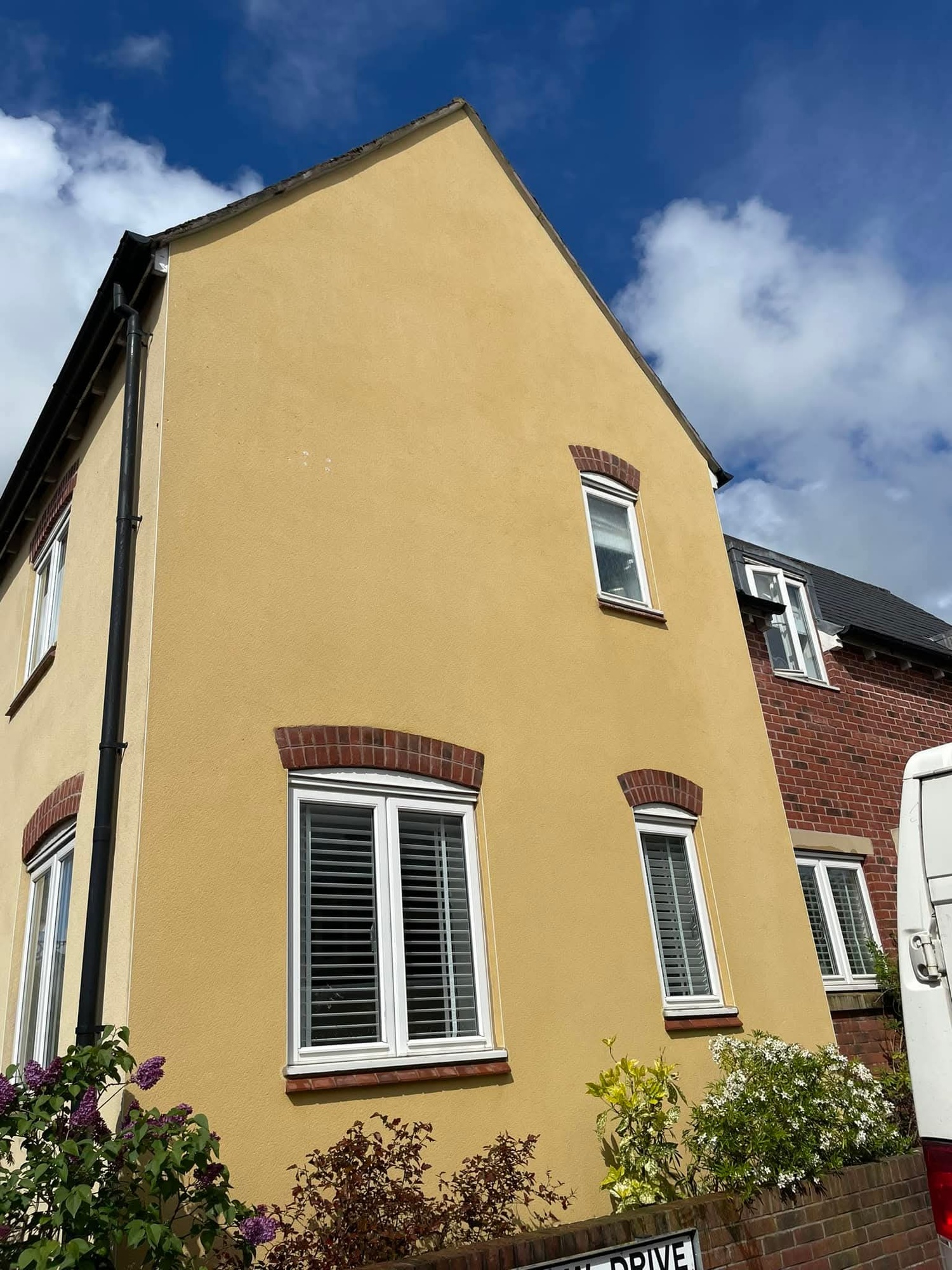
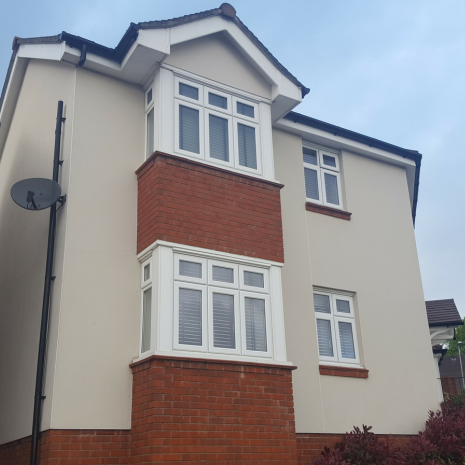

Softwashing UK are asked regularly what actually happens during a K Rend clean, and setting out the sequence explains why the method takes the time it does. The first stage is assessment on arrival. The organisms present, their density and their distribution across each elevation are confirmed against what was recorded at survey, since a few wet weeks between quoting and attending can change the picture. Dilution and dwell are set from that. Second, protection. Everything at ground level within the working area is covered or isolated, and openings on the elevation being treated are closed. Third, application. A biocidal solution is delivered at very low pressure across a complete elevation, usually through a telescopic lance so upper areas are reached from the ground. Coverage is continuous with a live wet edge throughout, because on a through-coloured finish any break in the sequence records itself as tonal variation once dry. Fourth, dwell. This is where the work is done. The treatment penetrates the texture and destroys colonies at root level, and nothing appears to be happening for a substantial period. Cutting this stage short is why so many walls green over again quickly after being cleaned elsewhere. Fifth, rinsing at low pressure, worked in sequence so no area dries part-treated. Sixth, the weeks afterwards. Silicone render cleaning continues improving as broken-down growth weathers off, particularly where lichen or heavy black spotting was present. Nothing at any stage involves brushing, agitation or raised pressure. House render cleaning on a K Rend elevation succeeds through chemistry and patience, and render mould removal in particular depends entirely on the fourth stage being given its full time.
The lowest metre of a monocouche wall almost always looks worse than everything above it, and the explanation has nothing to do with the render. Rain striking hard ground splashes back onto the base of the elevation repeatedly, driving soil, grit and organic matter into the texture and keeping that band wetter than the rest of the wall for longer after every shower. Where a border, path or hard surface sits directly against the render, the effect intensifies. Where a bellcast bead terminates the coating just above ground level, water is also concentrated along that line as it sheds, adding to the loading immediately beneath. Monocouche render cleaning has to treat that band as its own problem. Applying a single uniform specification across the elevation leaves the base course visibly behind once everything dries, because the colonisation there is denser and part of the soiling is mineral rather than biological. We specify stronger treatment and a longer dwell for the lower section, and address non-organic staining separately where it is present. Above that, the standard principles apply throughout. The scraped face holds aggregate loosely, so nothing abrasive is used at any point. Treatment is applied in volume at low pressure so it reaches the base of the texture rather than sitting on the ridges, given a full dwell period, and rinsed gently. Render restoration on the lower part of an elevation frequently produces the most obvious change of the whole job, simply because that band had degraded furthest from the original tone. Residential render cleaning that ignores it produces a wall that looks finished from a distance and unfinished from the path.
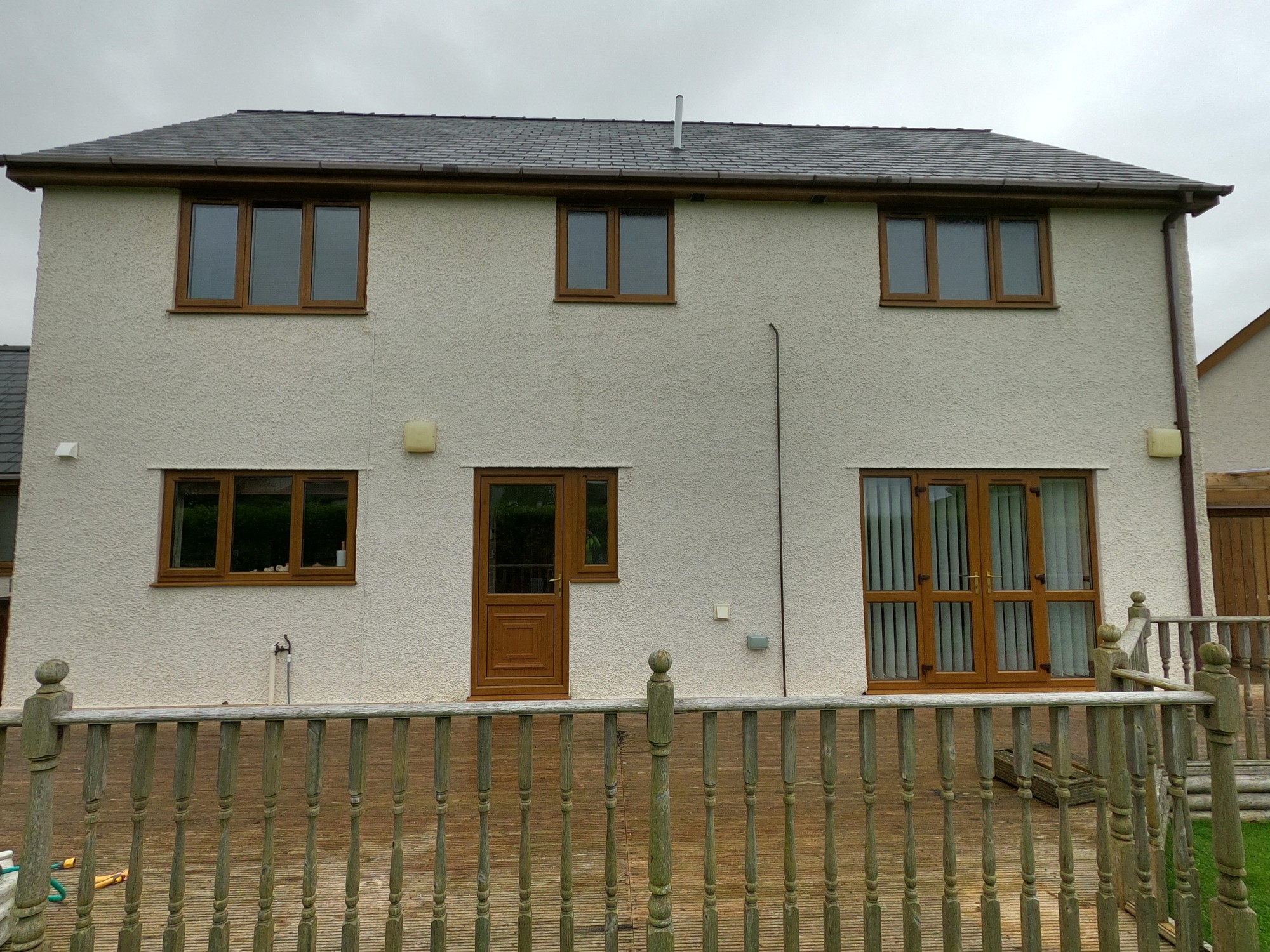
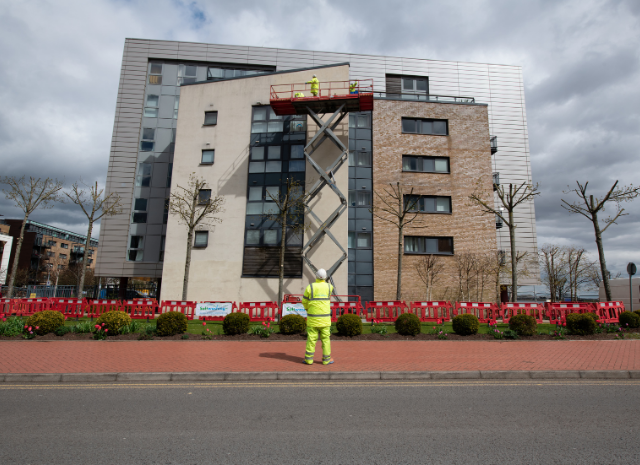

Warehousing, distribution units and light industrial buildings with rendered elevations tend to have very large areas of continuous wall and very little in the way of visual interruption. Organic growth on that kind of surface is visible from a long distance, streaking runs uninterrupted down the full height, and the building reads as neglected regardless of how well the operation inside is run. Commercial render cleaning on these sites is dominated by scale and access. Elevations are often long, sometimes tall, and frequently obstructed at ground level by parking, stock, plant or vehicle movements. We survey all of it before quoting, establishing what can be treated safely from the ground, where powered access is genuinely required and which areas need coordination with site operations. Working around the site is the operational priority. Yards stay live, deliveries continue, and staff need clear routes throughout. Exclusion zones are agreed and signed, and where a site runs its own induction or permit system we complete it before attending. Insurance, method statements and risk assessments are supplied in advance, and operatives hold current working at height certification. Technically, long runs demand consistency. Soft wash render cleaning must hold identical dilution and continuous wet edges across the full elevation, because a wall completed across disconnected sessions dries with visible banding that records exactly where each one stopped, and correcting that means treating the whole face again. The maintenance case is simple enough. Growth keeps a coating permanently damp and brings forward the point at which a large elevation needs recoating, which on a building of this size is a substantial expense. Planned render wall cleaning defers it considerably.
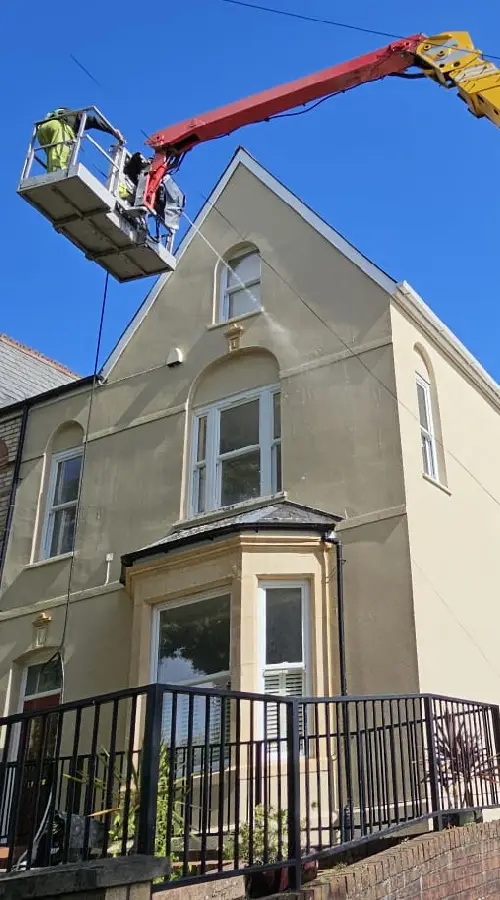
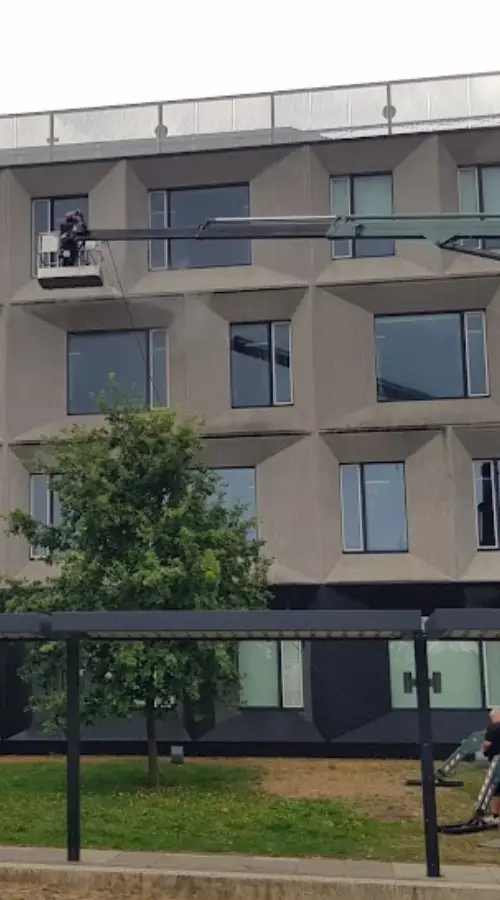
Exterior work should leave no trace of itself beyond the result, and a surprising amount of the effort on any job goes into making sure it does. The preparation stage takes longer than most owners expect, and it is included in the quoted figure rather than trimmed to save time. Before anything is mixed, planting within reach of the working area is covered or thoroughly pre-wetted, hard surfaces beneath the elevation are protected, and drainage points are identified so run-off can be directed sensibly. External sockets, light fittings, vents and any openings on the wall being treated are masked or isolated. Vehicles, garden furniture and anything else standing in the way is moved clear rather than worked around. Dilution is set to what the growth requires rather than mixed strong for speed, which is the single biggest factor in whether anything at ground level suffers. Eco friendly render cleaning is our standard approach on every job, not an option offered at extra cost. When the treatment and rinsing are finished, protection is lifted, surfaces beneath the working area are rinsed down, borders are checked, and everything is returned to where it started. The property should look exactly as it did apart from the walls. Render cleaning prices are agreed at survey and cover all of this. There is no separate line for preparation and no shortcut taken when a job runs longer than expected. Professional render cleaning is largely judged on what the owner finds when they come outside afterwards, and leaving a property in disarray is a quick way to lose the recommendation that most of our work comes from.
Catshill sits within our standard working area and is covered in full, with the same survey process, pricing basis and scheduling applied to every property. It is worth setting out how a job actually gets booked, since the process is simpler than most people expect. An enquiry needs only an address and a rough description of the property. From that we can confirm coverage immediately and arrange a survey, usually within the same week. The survey takes around twenty minutes. We identify the coating on each elevation, assess its condition, establish which organisms are present and at what density, measure the areas involved, and work out how each wall can be reached safely. Nobody needs to be at home provided all elevations are accessible, though we are happy to attend at a time that suits if you would rather discuss it in person. The quotation follows by email, itemised per elevation so the basis of the figure is visible rather than assumed. It holds for a stated period and does not change afterwards. If we find something that makes cleaning inadvisable, such as chalking paintwork or open cracking, that is explained in the quotation rather than discovered on the day. Once accepted, you get a confirmed date and an arrival window, and notice in advance if weather forces a change. Work is programmed by area, so properties booking within the same period share the mobilisation cost and see it reflected in their individual figures. If others on your road are considering the same work, it is worth mentioning when you enquire.
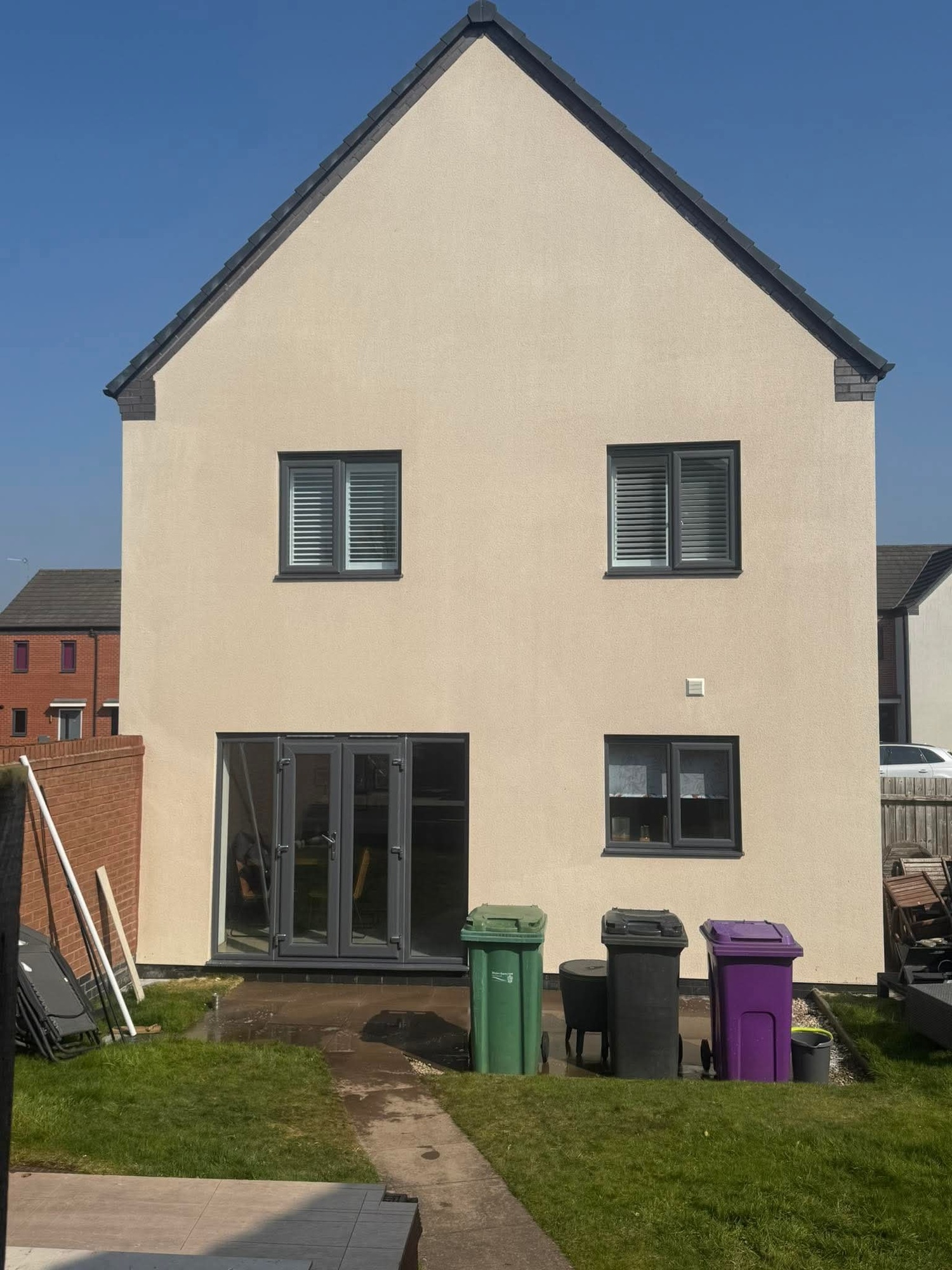
Most properties in Catshill benefit from professional render cleaning every 3 to 5 years, although this depends on the surrounding environment. Properties near trees, woodland, busy roads or coastal areas may require more frequent cleaning due to algae, mould and airborne contaminants. Our soft washing process removes existing growth and helps keep your render cleaner for longer.
Yes. Soft washing is specifically designed for delicate surfaces such as K-Rend, silicone render, monocouche render and painted render. Unlike high-pressure washing, it cleans at low pressure while treating biological growth at its source, reducing the risk of damage to the render finish.
We clean virtually all external render finishes, including K-Rend, Monocouche, Weber, Sto, silicone render, acrylic render, painted render, roughcast and pebble dash. Every cleaning method is tailored to the specific render type to achieve the best possible results.
Yes. Our specialist soft washing treatments are highly effective at removing green algae, red algae, black mould, mildew, lichen and other organic staining. We also apply professional biocide treatments to kill spores and slow down regrowth.
Because our process targets the biological growth rather than simply washing the surface, results typically last much longer than pressure washing alone. The exact lifespan depends on weather conditions, surrounding vegetation and the property’s location.
No. Our soft washing process is specifically designed to clean render safely. We use low-pressure application methods and specialist cleaning solutions that remove contamination without damaging the render surface when carried out by trained professionals.
The UK’s damp climate provides ideal conditions for algae, mould and other biological growth to develop on rendered surfaces. Areas with limited sunlight, nearby trees or persistent moisture are especially susceptible. Professional soft washing safely removes these contaminants and restores your property’s appearance.












































WhatsApp us