Follow the water across a rendered elevation and you can predict almost exactly where it will discolour first. Rain does not wet a wall uniformly. It is shed from every projecting detail and concentrated into paths, and those paths carry both moisture and whatever the water has collected on the way. Beneath sills, water leaves at the ends rather than across the width, producing two darker lines rather than an evenly damp band. At bead terminations it collects along the edge before dropping. Around openings it tracks down the reveals. Where any surface above discharges onto the render, it lands in a concentrated stream. And at ground level, rain striking hard surfaces splashes back into the base course repeatedly. Every one of those locations stays wetter for longer than the open wall between them, and every one of them colonises first and heaviest. Anyone who has looked closely at a soiled elevation will recognise the pattern once it is pointed out. Our render cleaning services are specified against that map rather than treating a wall as a single uniform area. The open elevation receives what it needs, and the concentration points receive stronger treatment and longer dwell within the same visit. Render moss removal at the base course and render algae removal across the general wall are different jobs on the same building. Treatment is biocidal, applied at low pressure, allowed to work at root level, then rinsed gently. Exterior render cleaning that ignores where water travels finishes with clean walls and dark lines beneath every detail, which draws attention to exactly what nobody previously noticed.
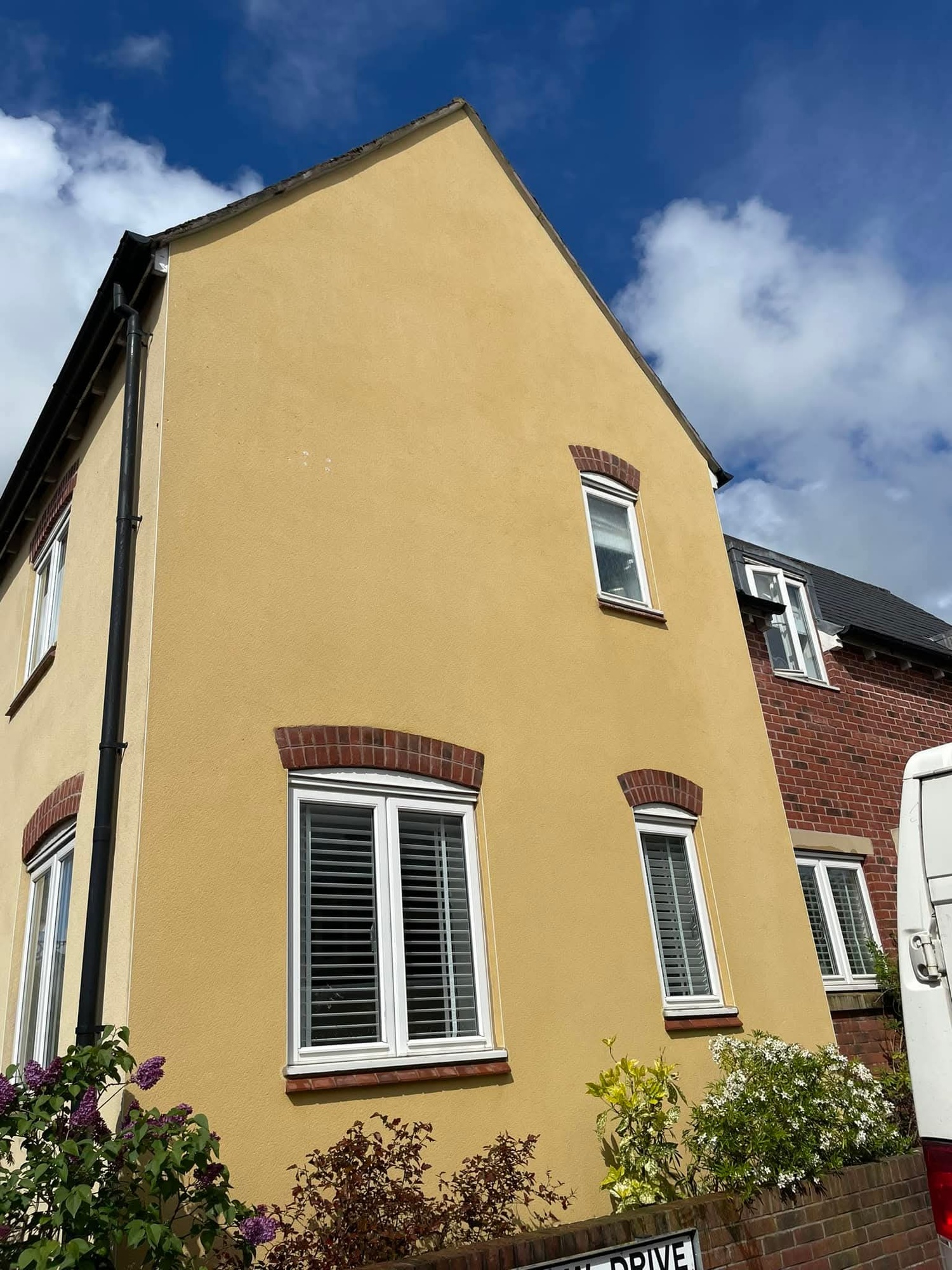
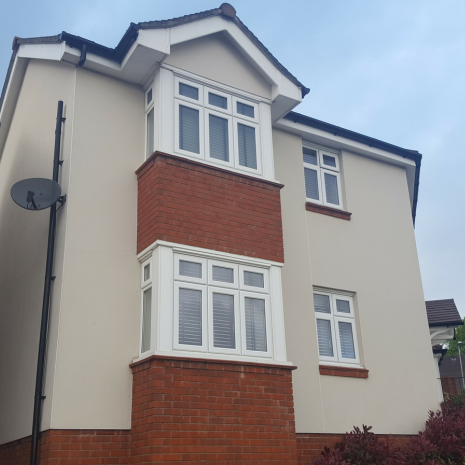

How often silicone render needs cleaning is a fair question with an unsatisfying answer, because it depends almost entirely on the wall rather than on any general rule. The controlling factor is drying time. A south-facing elevation with open ground in front of it and good air movement may go five or six years between treatments and still look acceptable. A north-facing wall sheltered by planting close to the building might need attention in half that. On the same house, one elevation can be due while three others are not. The second factor is what was done last time. A wall that was cleaned properly, with treatment given enough dwell to destroy colonies at root level, starts from a sterile surface and recolonises slowly. A wall that was pressure washed retains root structures within an opened-up texture and greens again within a season or two. K Rend cleaning specified by us aims to lengthen the interval as far as the wall allows. Treatment is chemical, applied at very low pressure, matched in strength to the organisms present, and given the dwell time the colonisation actually requires rather than the time available. We then give interval advice per elevation rather than proposing an annual return for the whole property. Where a wall genuinely will not need attention for four or five years, that is what we say. Silicone render cleaning done on that basis is a recurring but infrequent item. Render mould removal in particular holds well once the fungal root structure has been destroyed, and house render cleaning becomes something you think about occasionally rather than every spring.
Setting a realistic maintenance interval for monocouche is more useful than cleaning it on a fixed schedule, and the difference usually saves money. The variables are straightforward. Aspect determines how quickly an elevation dries after rain. Shelter from planting or adjacent structures reduces air movement and extends the damp period. Overhanging vegetation adds both shade and spore load. Anything that keeps a particular area persistently wet, such as a discharging outlet or a border sitting hard against the wall, will bring that section forward independently of the rest. Because those factors vary around a single building, the sensible interval varies too. It is entirely normal for one elevation of a monocouche property to need treating twice before another needs it once, and treating the whole building each time simply because it is convenient wastes money on walls that were fine. Monocouche render cleaning done properly lengthens every interval, because growth is destroyed at root level rather than removed from view. Treatment is applied at low pressure and in volume so it penetrates the scraped texture, left to dwell fully, then rinsed gently with nothing brushed or agitated at any stage. The surface aggregate stays where it belongs, which is what makes the process repeatable indefinitely. We give interval guidance per elevation as part of the quotation, based on what we have actually seen at the property rather than on a general figure. Render maintenance planned that way is a modest recurring cost. Residential render cleaning that keeps the coating dry also defers the far larger expense of recoating, and render restoration remains achievable throughout because nothing has been taken off the wall.
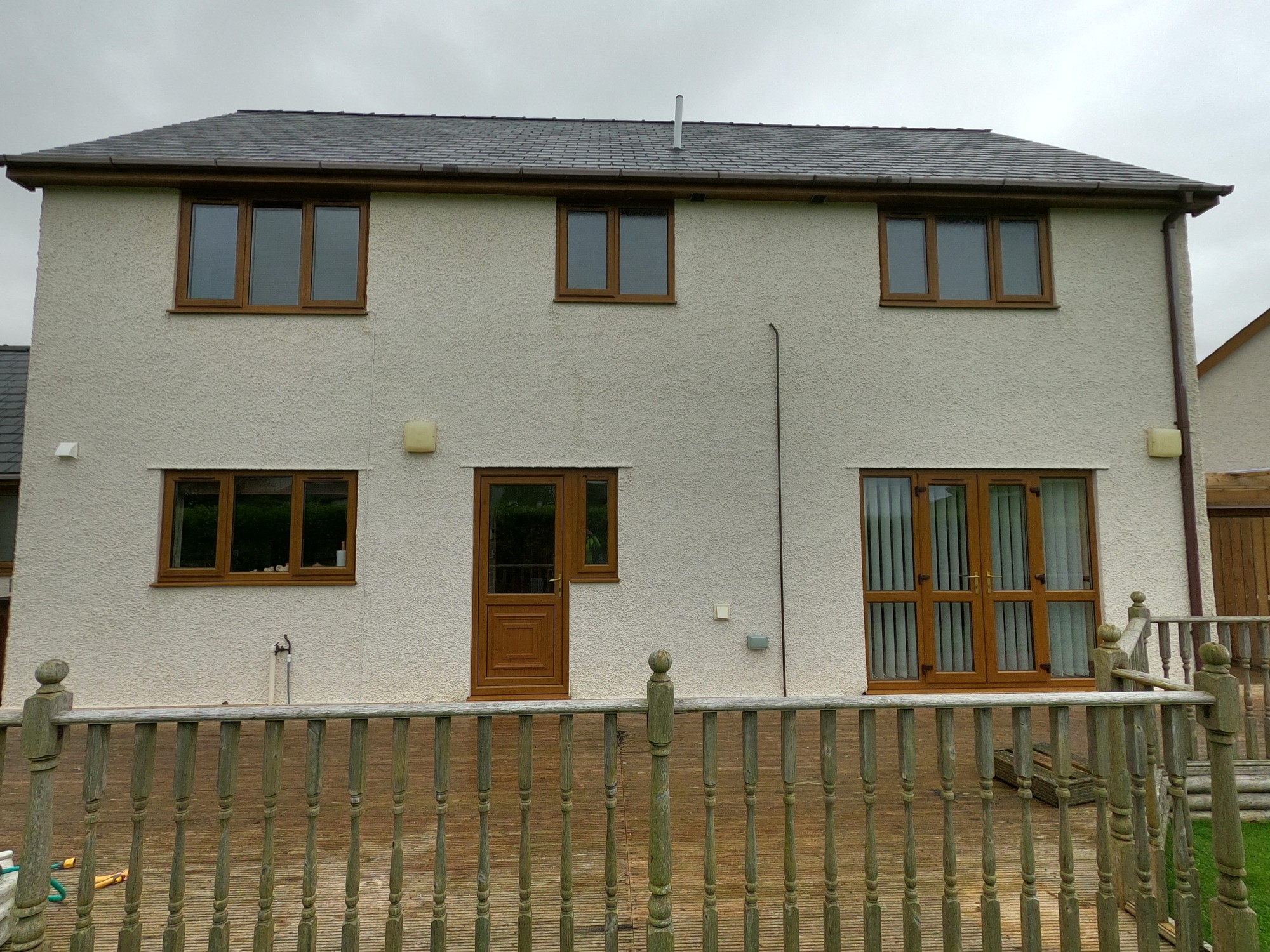
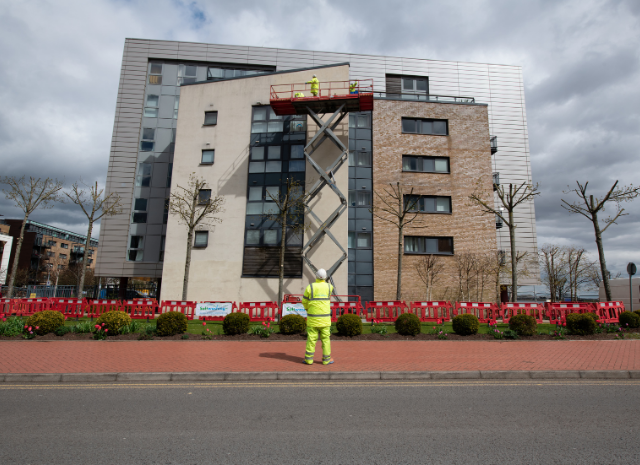

New-build developments finished in render present a specific version of this work, usually at handover or shortly afterwards. Plots complete over a long period, elevations finished early sit exposed while later phases are still under construction, and by the time the site is ready to present, the first houses have accumulated construction dust, splashback and often the beginnings of organic growth. Commercial render cleaning at this stage is about consistency across the development rather than rescuing any individual property. Purchasers compare plots directly, and a frontage that reads differently from the one beside it is immediately noticeable. We survey the site as a whole, identify which elevations need what, and programme the work so that plots are completed in a sequence matching handover dates. Access is planned around ongoing site activity, and we work within whatever induction and permit system the principal contractor operates. Method statements, risk assessments and insurance are provided in advance. The technical requirement is uniformity, both across each elevation and between plots. Render facade cleaning holds identical dilution throughout and maintains live wet edges, and where adjacent properties carry the same finish they are treated to the same specification so the terrace or run reads consistently. The low pressure method matters particularly on new render. Coatings are relatively young, warranties are live, and manufacturer guidance excludes high pressure and abrasive methods entirely. Cleaning that falls outside that guidance can create a problem where none existed. For developments around Cladswell, a handover clean carried out properly presents the site as intended and leaves the coating undisturbed for the purchasers who take it on.
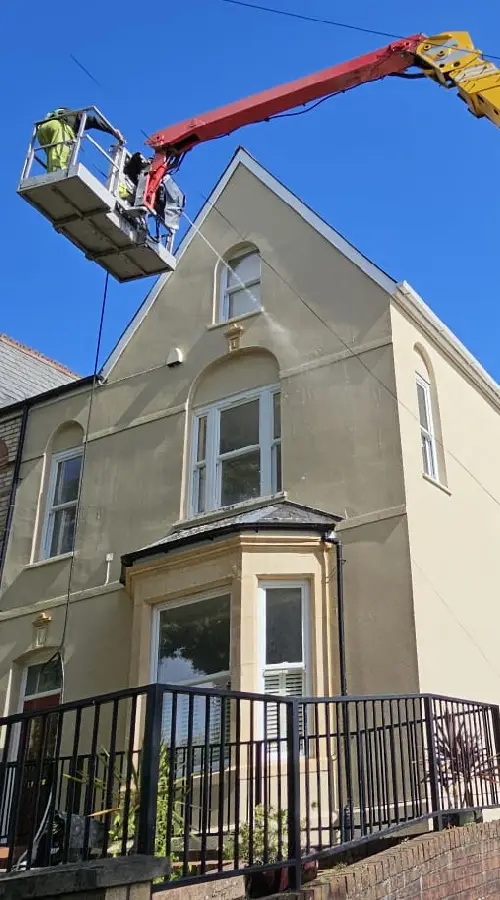
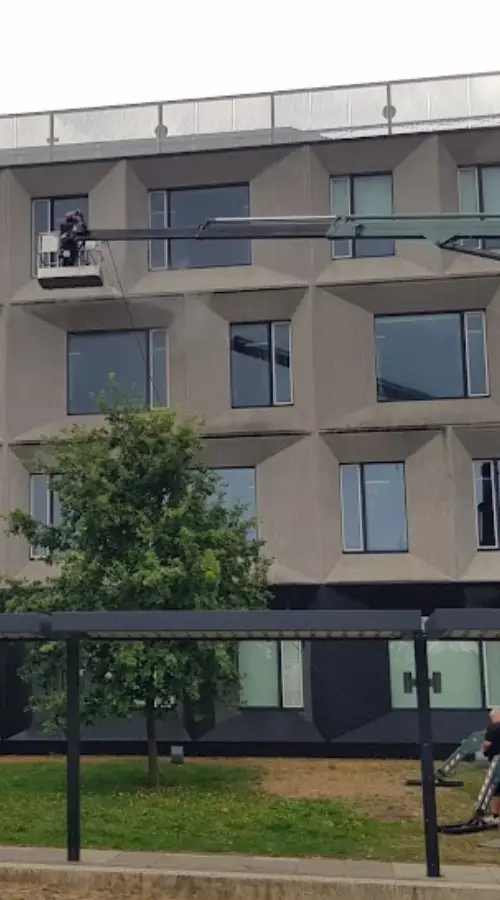
Being told what something costs and why is not much to ask, and in exterior maintenance it is unusually hard to get. We try to be plain about it. Render cleaning cost is driven by four things. Height comes first, because anything that cannot be reached safely from ground level changes the access requirement and therefore the price. Total rendered area is second, though it matters less than people assume. Coating type is third, since some finishes require slower and more careful handling than others. And the extent of colonisation is fourth, because a heavily mossed elevation needs more product and considerably more time than one carrying light filming. Those four are established at the survey, which is free and takes around twenty minutes. The quotation that follows is itemised per elevation, so you can see which wall is driving the figure and why. If one gable accounts for half the cost, that is visible rather than buried in a single total. The figure then holds. There is no mid-job revision, no discovery that access was never included, and no separate charge for preparation or protection. Render cleaning prices agreed at survey are what gets invoiced. Affordable render cleaning means the price reflects the work rather than being cut by leaving things out. The things most often left out elsewhere are preparation, dwell time and proper access, and all three determine whether the result lasts. We are fully insured with current height certification, and as a local render cleaning company we would rather explain a figure than defend it later.
Softwashing UK cover Cladswell in full, with no minimum job value, no travel surcharge and the same survey and pricing process applied to every property on our books. It helps to know what we need at the enquiry stage, because it makes the whole thing quicker. An address is enough to confirm coverage immediately. Beyond that, a rough description of the property is useful: how many storeys, roughly how much of it is rendered, and whether you know what the finish is. Nobody is expected to identify a coating accurately, and a guess is fine, since we confirm it at survey. If you already know which elevations are the problem, saying so helps. Most properties have one wall considerably worse than the others, and knowing where it is lets us plan the survey sensibly. Photographs taken on a phone are genuinely useful and often let us give a realistic indication before attending. Access details are worth mentioning if anything is unusual: a shared approach, restricted parking, a long drive, or gates that need arranging. None of these are obstacles, since our hose runs let the vehicle stay clear of the building, but knowing in advance saves time on the day. Finally, if you have a deadline, tell us. Work booked ahead of a sale, a letting or photographs benefits from being scheduled with a few weeks in hand, because a soft washed wall continues improving after the visit as dead growth weathers off. Surveys are usually available within the week, take around twenty minutes, and produce an itemised written quotation by email broken down per elevation.
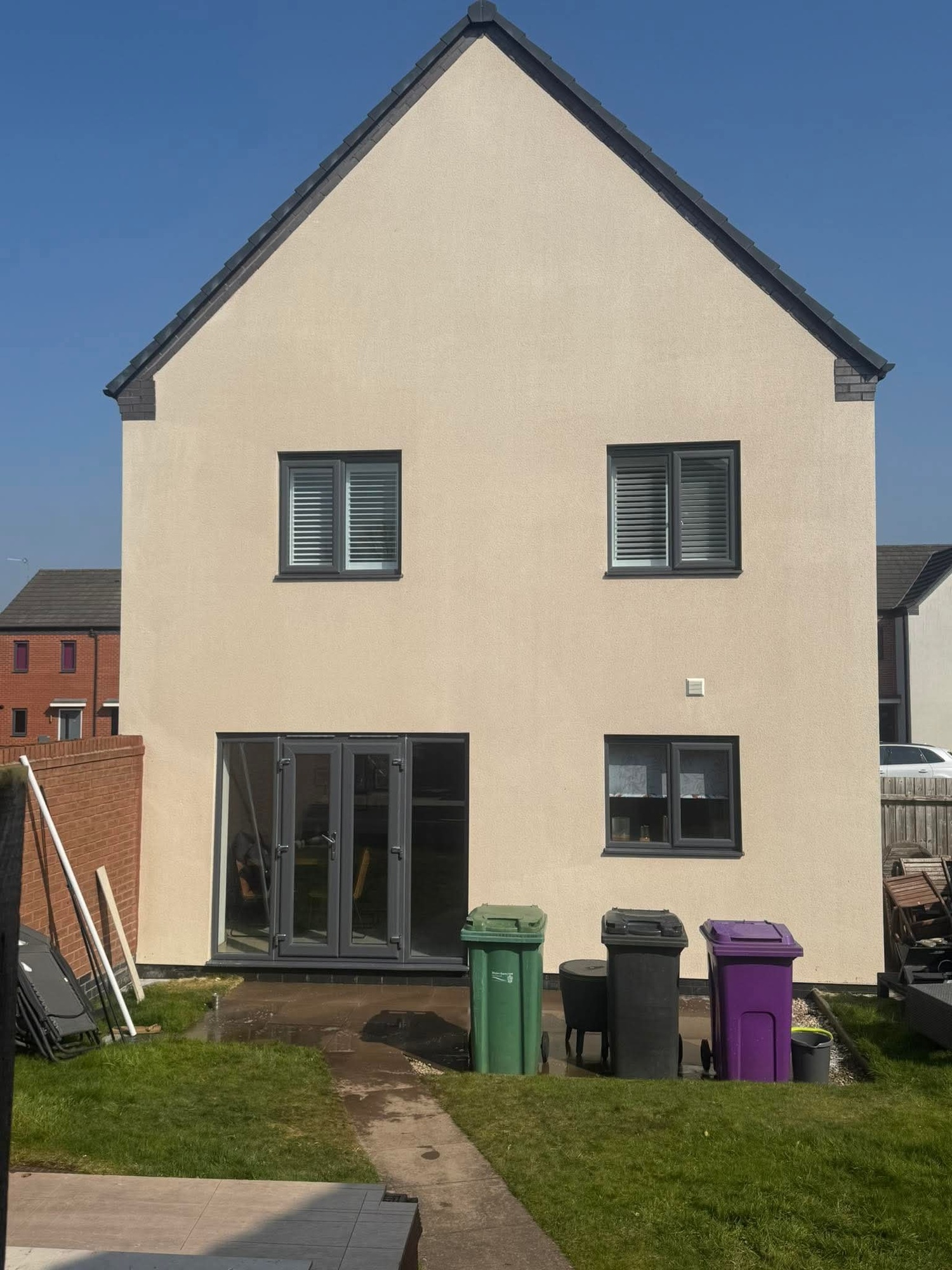
Most properties in Cladswell benefit from professional render cleaning every 3 to 5 years, although this depends on the surrounding environment. Properties near trees, woodland, busy roads or coastal areas may require more frequent cleaning due to algae, mould and airborne contaminants. Our soft washing process removes existing growth and helps keep your render cleaner for longer.
Yes. Soft washing is specifically designed for delicate surfaces such as K-Rend, silicone render, monocouche render and painted render. Unlike high-pressure washing, it cleans at low pressure while treating biological growth at its source, reducing the risk of damage to the render finish.
We clean virtually all external render finishes, including K-Rend, Monocouche, Weber, Sto, silicone render, acrylic render, painted render, roughcast and pebble dash. Every cleaning method is tailored to the specific render type to achieve the best possible results.
Yes. Our specialist soft washing treatments are highly effective at removing green algae, red algae, black mould, mildew, lichen and other organic staining. We also apply professional biocide treatments to kill spores and slow down regrowth.
Because our process targets the biological growth rather than simply washing the surface, results typically last much longer than pressure washing alone. The exact lifespan depends on weather conditions, surrounding vegetation and the property’s location.
No. Our soft washing process is specifically designed to clean render safely. We use low-pressure application methods and specialist cleaning solutions that remove contamination without damaging the render surface when carried out by trained professionals.
The UK’s damp climate provides ideal conditions for algae, mould and other biological growth to develop on rendered surfaces. Areas with limited sunlight, nearby trees or persistent moisture are especially susceptible. Professional soft washing safely removes these contaminants and restores your property’s appearance.











































WhatsApp us