Whether to clean render or recoat it is a decision worth making with the actual numbers in front of you, because the gap between the two is larger than most owners expect. Recoating means preparing the existing surface, arranging access across the full elevation, and applying new material over the whole area. On a two-storey property it is a project measured in days and thousands of pounds. On anything larger, scaffolding usually becomes necessary and the figure rises accordingly. It is entirely the right answer where a coating has genuinely failed, is debonded, or is cracked beyond repair. It is the wrong answer for a wall that is structurally sound and simply dirty, which describes the large majority of the elevations we are called to. A sound render carrying heavy colonisation looks far worse than its condition warrants, and owners frequently conclude the finish has reached the end of its life when it has not. Our render cleaning services address that directly. Biocidal treatment applied at low pressure, given full dwell so growth is destroyed at root level, then rinsed gently. Render moss removal and render algae removal restore appearance without touching the coating itself. There is a preservation argument alongside the cost one. Growth holds moisture permanently against the render, and a coating that never dries deteriorates faster than one that does. Cleaning regularly genuinely extends the point at which recoating becomes necessary. Exterior render cleaning on a sound wall in Eckington typically costs a small fraction of recoating it, and where the coating has failed we say so rather than taking the work.
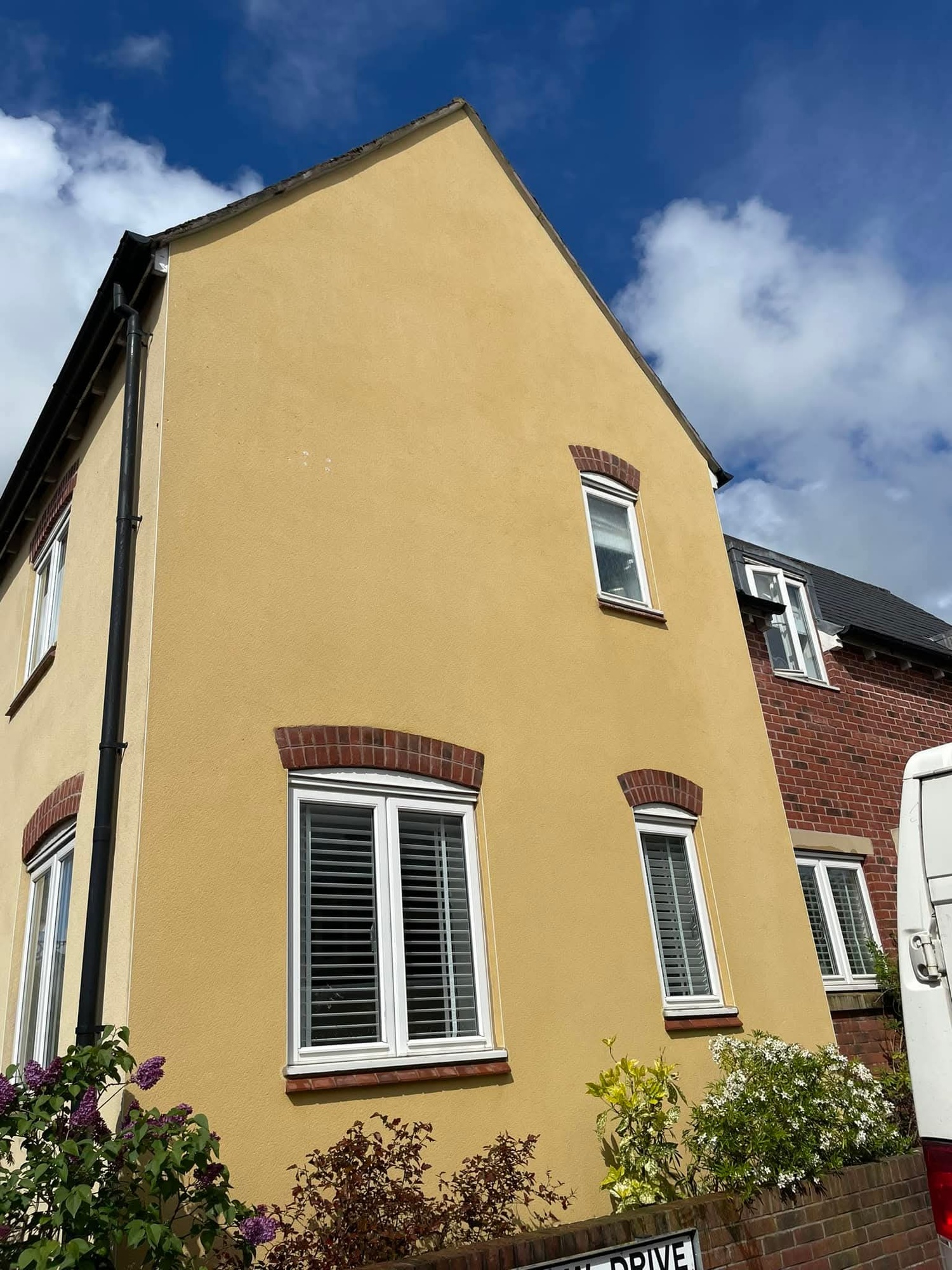
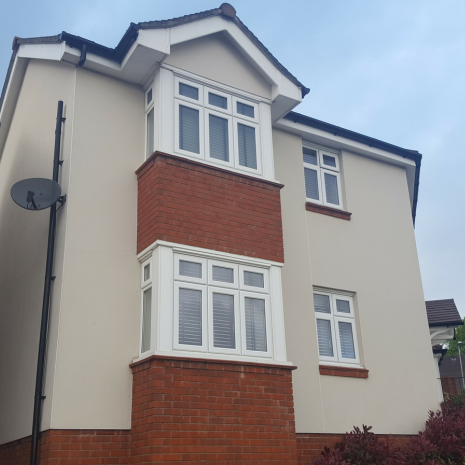

Knowing what a properly cleaned silicone render should look like makes it much easier to judge whether work has been done well, and the test is more specific than simply whether the wall is no longer green. Look first at uniformity. The elevation should read as a single continuous tone from any angle and in any light. Tonal variation, banding, or a visible line where one section meets another means the wall was treated in parts rather than as a unit, and on through-coloured render that difference will remain. Look next at the detailing. Reveals, returns, the undersides of sills and the lines beneath bead terminations should read as cleanly as the open wall. Where they are noticeably darker, they were caught in passing rather than treated deliberately. Look at the base course, which is the area most often left behind. It carries splashback soiling as well as biological growth and needs its own specification. Look at the texture in raking light. Smoothed or shiny patches indicate abrasion, which means aggregate or pigment has been removed and the damage is permanent. Finally, look again a month later. K Rend cleaning done by dwell rather than force continues improving as dead growth weathers off, so the wall should be better at four weeks than at one. Silicone render cleaning judged on those five points tells you whether the method was right, and it is a more useful test than simply standing back and deciding the wall looks better than it did. House render cleaning that passes all of them has left the coating undisturbed, which is what produces intervals measured in years rather than seasons.
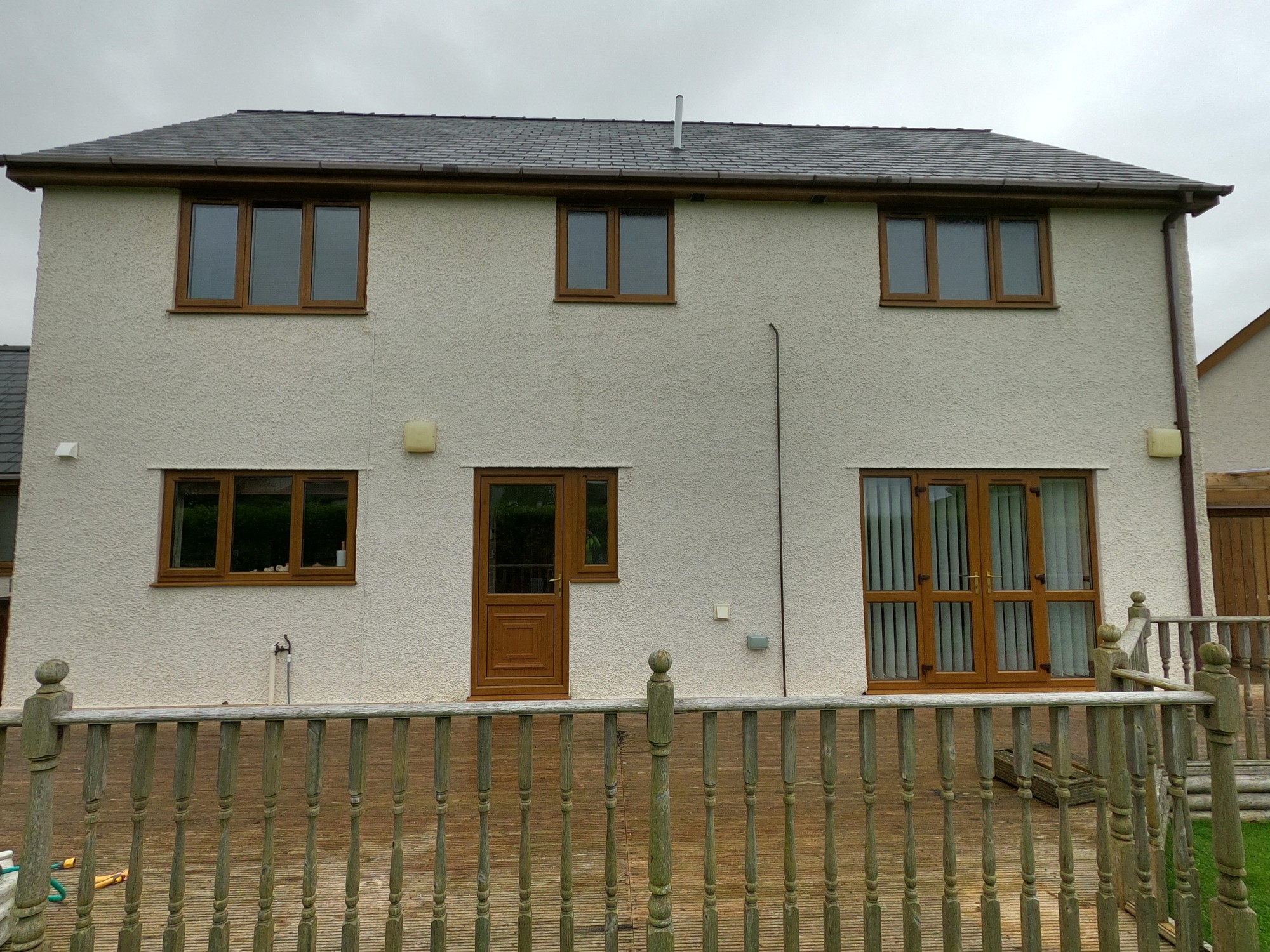
Whether to clean or recoat a monocouche elevation is a question we are asked frequently, and the answer is usually clearer on this finish than on most. Monocouche is applied thickly, is mineral pigmented throughout and is extremely durable. It does not fade in any meaningful sense, and provided it has not been physically damaged, a monocouche wall that looks tired is almost always a sound wall carrying a layer of growth and atmospheric deposit. Recoating it would replace a functioning coating for cosmetic reasons at considerable expense. Cleaning restores it instead, because the colour underneath is unchanged. Monocouche render cleaning applies treatment at low pressure and in volume so it reaches the base of the scraped texture, dwells fully so growth is destroyed at root level, and rinses gently with nothing brushed or agitated. The aggregate stays where it belongs and the original tone reappears. The exceptions are worth stating honestly. Where a coating has debonded, is cracked through, or has been damaged by previous aggressive cleaning such that pigment has been lifted in patches, cleaning will reveal that rather than resolve it. We identify those conditions at survey and say so rather than proceeding. Where the render is sound, which is the overwhelming majority of cases, render restoration through cleaning is a fraction of the cost of recoating and can be repeated across the life of the finish. Residential render cleaning on a planned interval also defers recoating further, since a coating kept dry between wettings deteriorates far more slowly than one held permanently damp by moss and algal growth.
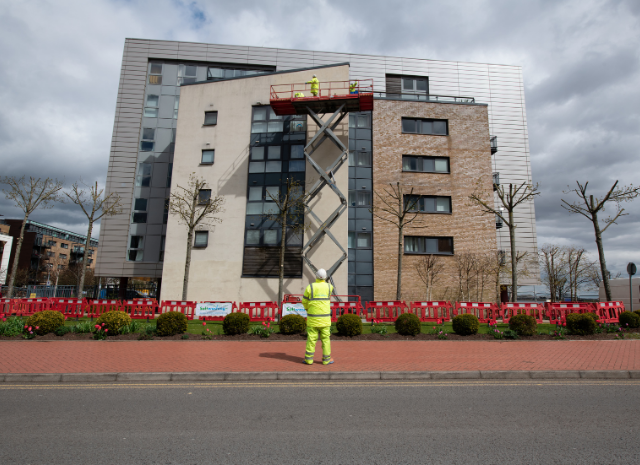

Places of worship and church halls with rendered elevations combine high visibility, limited maintenance budgets and buildings that often matter a great deal to the people responsible for them. Commercial render cleaning on these buildings needs a fixed, clearly explained figure that a committee can consider properly. We survey first and provide an itemised quotation per elevation, showing what has been assessed and what is included, rather than a single total that has to be taken on trust. Scheduling works around use. Services, hall bookings and community activities often run across most of the week, so we plan around whatever window the calendar allows and complete the work in as few visits as the size of the building permits. Access routes and entrances stay usable throughout, with exclusion zones agreed and signed. The low pressure method is particularly appropriate on buildings of this kind. There is very little noise, no machine running continuously, and no spray driven at a structure that may include older fabric and detailing. Insurance, method statements and risk assessments are supplied ahead of attendance, and operatives hold current working at height certification. Where a building is used by children or vulnerable people, any checks required are completed in advance. Technically, tall elevations and large gables demand consistency. Render facade cleaning holds identical dilution and continuous wet edges so the finished wall reads uniformly rather than recording the sequence in which it was treated. For places of worship around Eckington, cleaning a sound rendered elevation is a modest cost against the alternative, and keeping the coating dry meaningfully extends how long it lasts.
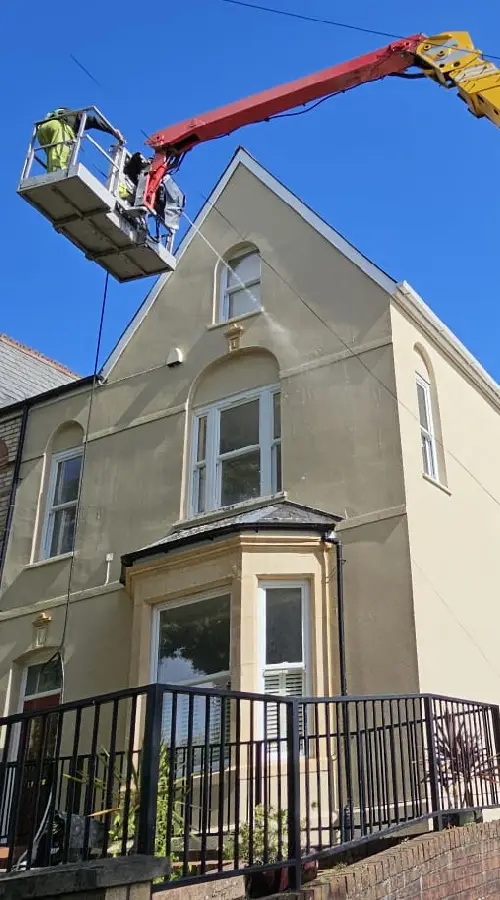
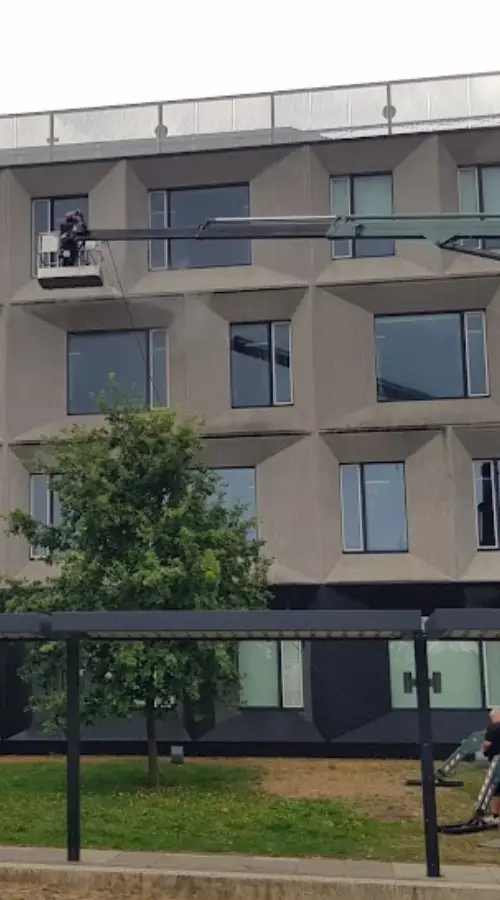
Softwashing UK begin every job with a survey that costs nothing and carries no obligation, and it is worth explaining why we offer it that way rather than charging for the visit or quoting blind over the phone. Quoting from a description cannot work. Coating type, texture depth, condition, growth density, elevation height and access all materially change the specification, and none of them can be established reliably without looking. A figure given on the phone is either padded to cover the unknowns or revised later when reality intervenes. Charging for the survey creates a different problem. It puts pressure on the owner to proceed regardless, and it puts pressure on us to find work rather than to give an honest assessment. Neither serves anyone well. So the survey is free, takes around twenty minutes, and produces an itemised written quotation per elevation. If the answer is that a wall does not need doing yet, that is what the quotation says. If the answer is that cleaning is not the right next step, we explain why. There is no follow-up pressure. We do not chase quotations, and nobody will telephone repeatedly to ask whether you have decided. The figure holds for a stated period and is there if you want it. Render cleaning cost quoted this way reflects what the property genuinely requires, and render cleaning prices do not change afterwards. Affordable render cleaning is largely a matter of not paying for work that is not needed. As a local render cleaning company most of our jobs arrive through recommendation, which only happens where the assessment was honest in the first place.
Eckington is covered in full, with the same survey process, pricing basis and scheduling applied to every property and no travel loading regardless of position. Once a quotation is accepted, the process is straightforward and worth describing so there are no unknowns. You are given a confirmed date and an arrival window rather than a vague half-day. If weather forces a change, which happens occasionally because treatment applied into heavy rain is diluted before it can work, you hear from us in advance rather than waiting. On the morning, the team walks the elevations to confirm what was recorded at survey, since a wet spell between quoting and attending can change growth density slightly. Protection is then laid out: planting covered or pre-wetted, hard surfaces sheeted, external fittings masked, and anything moveable in the working area shifted clear. Treatment is applied elevation by elevation at the specified dilution, worked as a continuous operation with a live wet edge so nothing dries part-treated. Dwell runs while very little appears to be happening, which is the stage doing the work. Low pressure rinsing follows, then clearing down and a check of borders and hard surfaces before we leave. Most domestic properties here are completed within a single day, and many in less. Afterwards the wall continues improving for two to four weeks as dead growth weathers off. We are reachable throughout and afterwards, and if an area has genuinely not responded after that period we return and treat it again. Surveys can usually be arranged within the week, and the written quotation follows by email itemised per elevation.
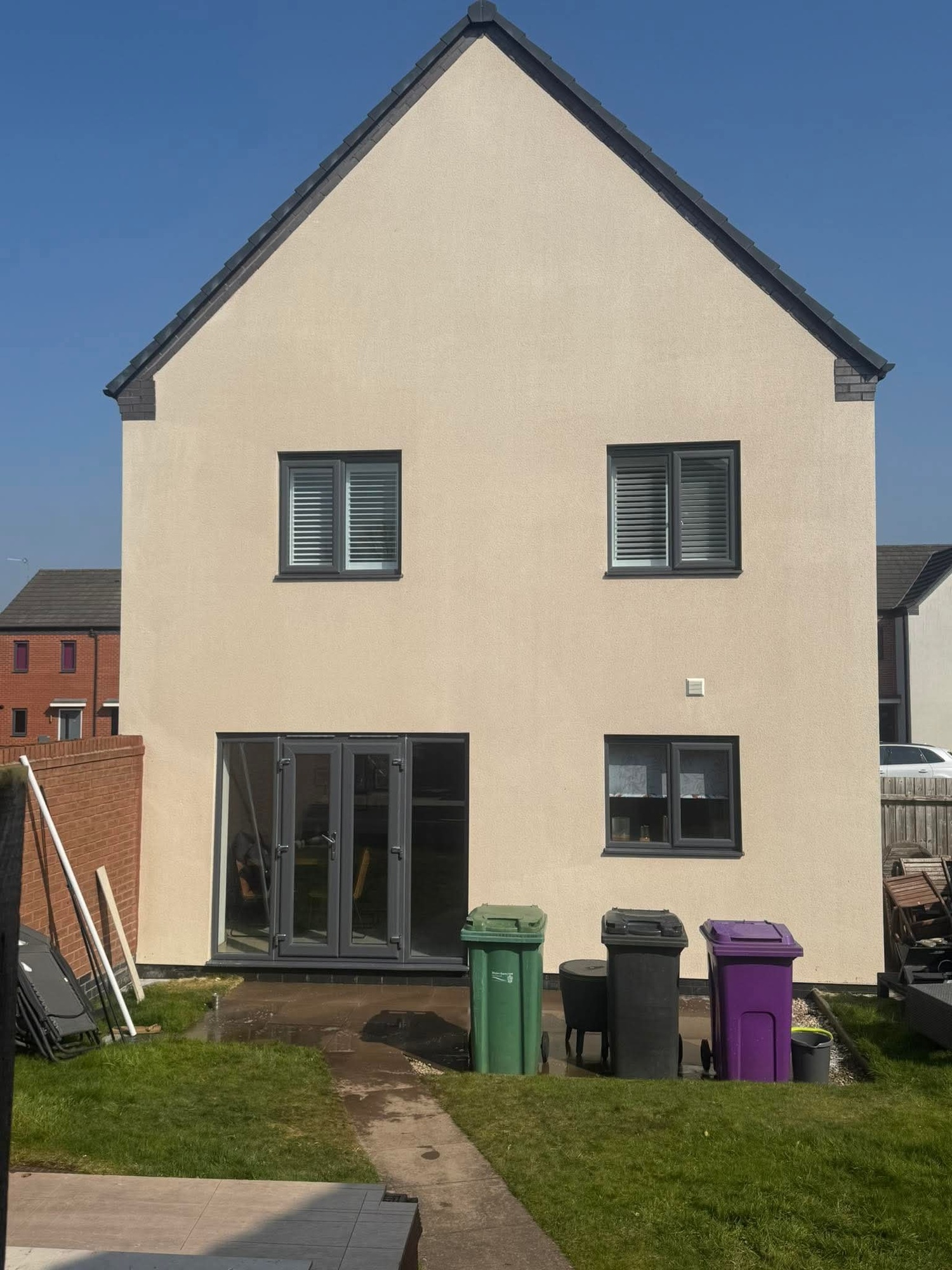
Most properties in Eckington benefit from professional render cleaning every 3 to 5 years, although this depends on the surrounding environment. Properties near trees, woodland, busy roads or coastal areas may require more frequent cleaning due to algae, mould and airborne contaminants. Our soft washing process removes existing growth and helps keep your render cleaner for longer.
Yes. Soft washing is specifically designed for delicate surfaces such as K-Rend, silicone render, monocouche render and painted render. Unlike high-pressure washing, it cleans at low pressure while treating biological growth at its source, reducing the risk of damage to the render finish.
We clean virtually all external render finishes, including K-Rend, Monocouche, Weber, Sto, silicone render, acrylic render, painted render, roughcast and pebble dash. Every cleaning method is tailored to the specific render type to achieve the best possible results.
Yes. Our specialist soft washing treatments are highly effective at removing green algae, red algae, black mould, mildew, lichen and other organic staining. We also apply professional biocide treatments to kill spores and slow down regrowth.
Because our process targets the biological growth rather than simply washing the surface, results typically last much longer than pressure washing alone. The exact lifespan depends on weather conditions, surrounding vegetation and the property’s location.
No. Our soft washing process is specifically designed to clean render safely. We use low-pressure application methods and specialist cleaning solutions that remove contamination without damaging the render surface when carried out by trained professionals.
The UK’s damp climate provides ideal conditions for algae, mould and other biological growth to develop on rendered surfaces. Areas with limited sunlight, nearby trees or persistent moisture are especially susceptible. Professional soft washing safely removes these contaminants and restores your property’s appearance.












































WhatsApp us