Rendered elevations do not always belong to one person. A terrace shares a continuous face across several properties, a semi-detached pair shares a gable line, and a converted building may have one owner responsible for the structure and several occupying it. That changes how a clean has to be organised long before it changes anything technical. The practical difficulty is that render reads as a single surface. Treating one property within a terrace leaves an obvious boundary where the work stopped, and the contrast is usually more noticeable than the original growth was. Our render cleaning services are therefore quoted per property but scheduled together wherever the occupiers are willing, so a whole run finishes at the same time and looks like one wall again. Where that is not possible the work is still worth doing, and we will say honestly how visible the join is likely to be. On a lightly affected frontage the difference is modest; on a heavily colonised one it is stark. The treatment itself is unchanged. A biocidal solution is applied at low pressure across whole elevations, dwelled long enough that render algae removal happens at root level, then rinsed gently, with render moss removal on copings and shared parapets handled by a second application rather than by anything mechanical. Professional render cleaning of a property in Grove is a scheduling exercise as much as a technical one where a building is shared, and house render cleaning arranged jointly costs each owner less than doing it alone. Exterior render cleaning works best when a whole elevation is treated as a whole elevation.
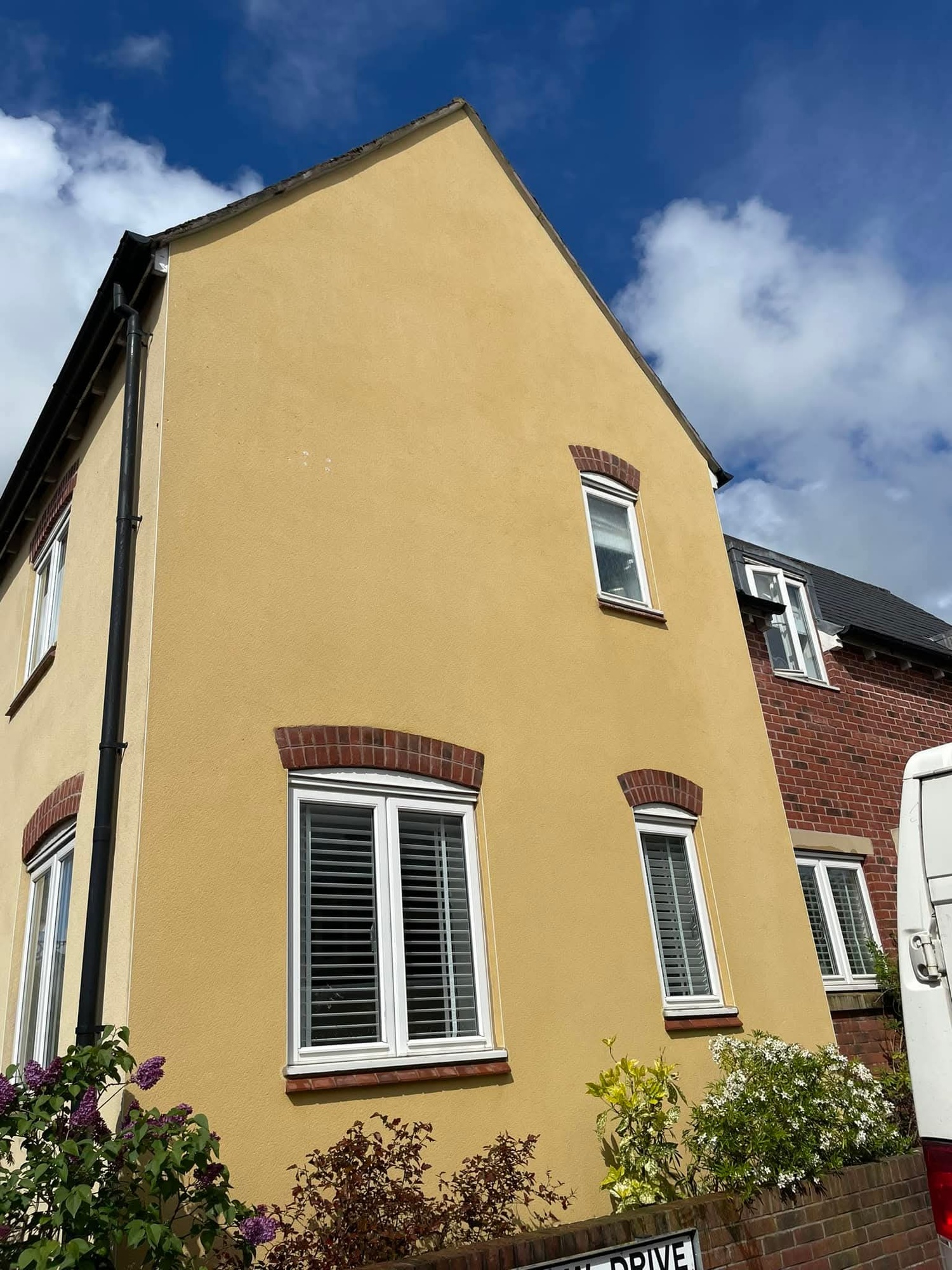
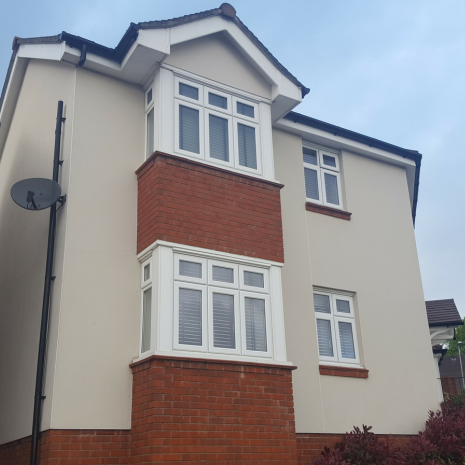

Modern developments use silicone systems across whole terraces and apartment blocks, applied in one operation to a continuous elevation. The colour and texture are consistent along the entire run, which is exactly why partial cleaning shows so clearly. K Rend cleaning on a shared building is best arranged for the whole face at once. Where a block is managed, the freeholder or managing agent usually holds responsibility for the external walls, and the work is straightforward to arrange in one instruction. Where a terrace is individually owned it takes a little coordination, and we are happy to hold dates open while that happens. Coordinating three or four households usually takes a fortnight and is worth the wait. The method does not vary with the arrangement. Soft wash render cleaning applies a biocidal solution at a pressure barely above hose flow, dwells long enough to destroy algae and lichen at root level, then rinses gently, with no mechanical contact anywhere because pigment runs through the material and abrasion removes it permanently. Silicone render cleaning also needs generous volume to keep a hydrophobic face wet, applied evenly along the full length rather than concentrated on the worst section. Render stain removal is quoted per property rather than per elevation, since the marks belong to individual buildings. Iron bleed from ties and brackets, cement residue at fixing points and dark runs beneath a leaking joint each need a specific product and a test patch first. On a Grove property those are set out separately so each owner sees only what applies to their own wall. Marks around a shared boundary are attributed to whichever property they sit on.
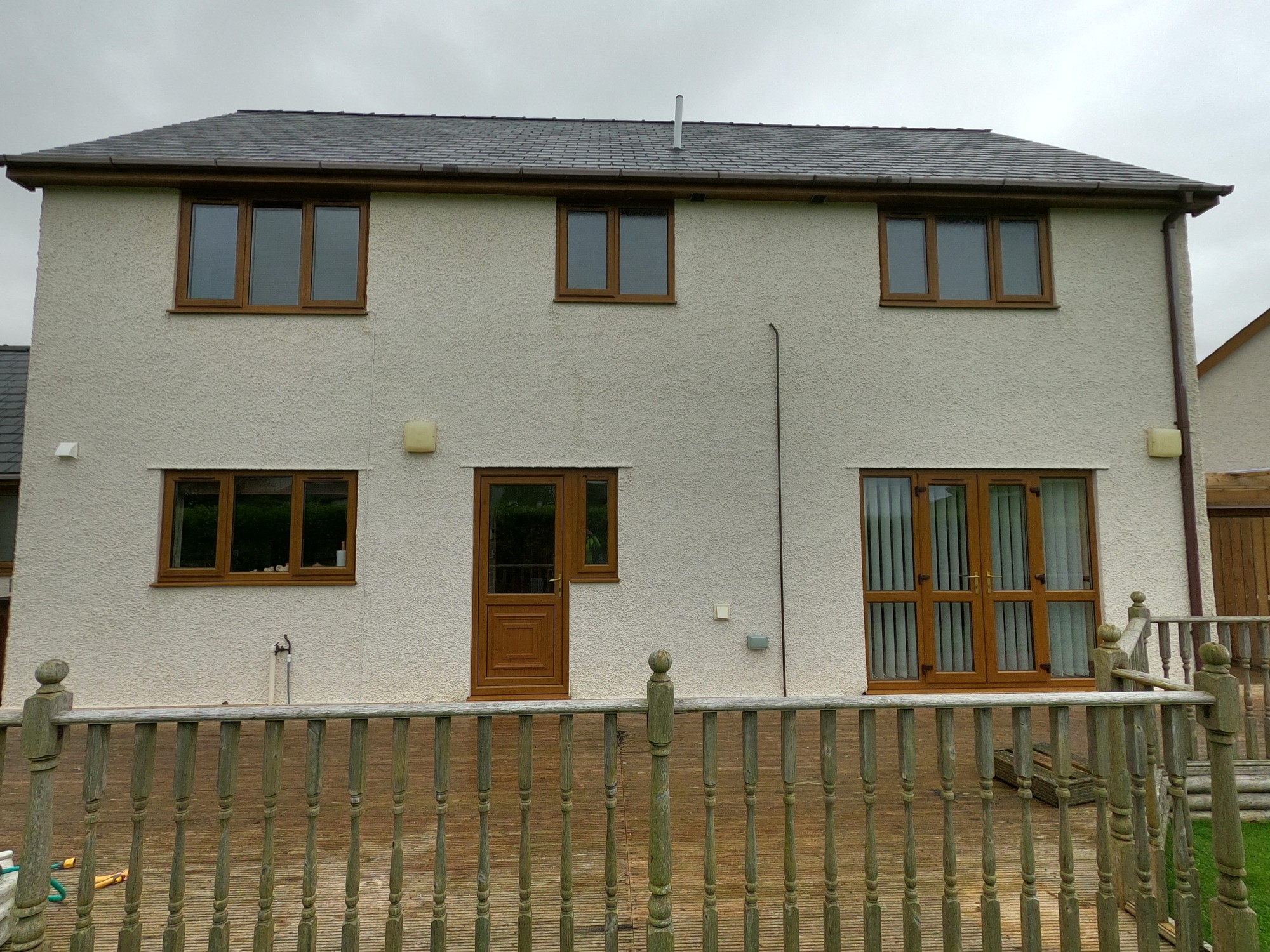
Monocouche on a shared elevation is the strongest possible argument for treating the whole run at once. The colour is integral and consistent along the entire length, so a cleaned section beside an untreated one produces a contrast far sharper than anything a painted finish would show. Monocouche render cleaning stopping at a party wall line is visible from the far side of a road. The eye finds a straight vertical join far more readily than a gradual change. The work is otherwise routine. Solution is applied at low pressure in enough volume to soak through the depth of the scraped texture rather than glaze the peaks, dwells long enough to kill growth at root level, is repeated on the heaviest deposits along copings and projecting bands, and is rinsed softly and evenly across the full face. Where several properties are treated together the whole length is worked as one elevation. Render pressure washing is excluded absolutely, and on a shared building the consequences extend beyond one owner. A lance flattens the scrape, exposes the aggregate beneath and leaves tracking that runs across a continuous elevation, and coloured render cleaning offers no top coat to renew over it, so putting it right means recoating a length of wall belonging to more than one household. Where a whole run is treated together, render wall cleaning of monocouche returns the entire elevation to a single uniform tone. On buildings around Grove where growth had obscured the specified colour for years, the recovery across the following weeks amounts to a genuine render restoration along the full length rather than in patches. Nothing about the finished wall indicates where one ownership ends and the next begins.
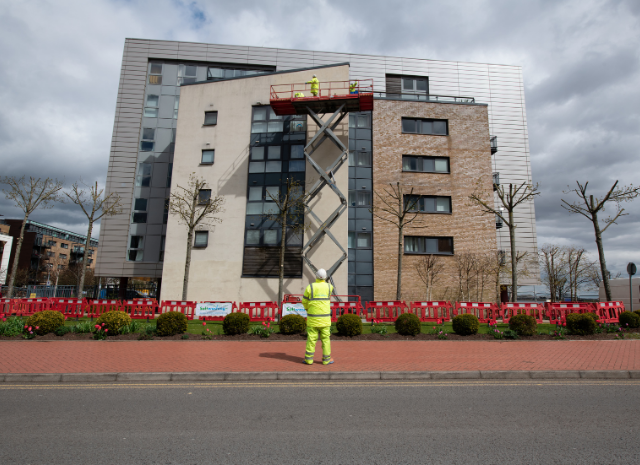

Managed buildings bring their own arrangements, and knowing who instructs the work is usually the first question. On blocks and estates the external walls typically sit with the freeholder or the managing agent, funded through a service charge, and commercial render cleaning is specified and tendered on that basis rather than negotiated with occupiers. That makes the process straightforward once a survey is done. Each elevation is recorded with its aspect, height, access requirement, coating type and condition, so the instruction can be costed and approved in one go. Access is then established — powered platforms, tower scaffold or extended pole systems according to height and standing ground — with the programme written around occupancy, deliveries and resident movement, and method statements and risk assessments issued in advance. Render soft washing is what makes a large shared elevation practical. It gives even coverage along a full flank so the whole building finishes consistently, uses very low water volumes, keeps run-off directable clear of entrances and parking, and produces negligible drift near occupied doorways and open windows. Render facade cleaning carried out in sections over months on a managed block invites exactly the complaints a service charge is meant to avoid. Residents compare their own elevation with the one opposite rather than with how it looked before. Render mould removal on shaded and north-facing elevations remains the recurring item, and on a large block those faces are often the ones residents raise first. Putting premises in Grove onto a render maintenance cycle spreads the cost predictably across the service charge year. Predictable figures are considerably easier to budget than occasional large ones.
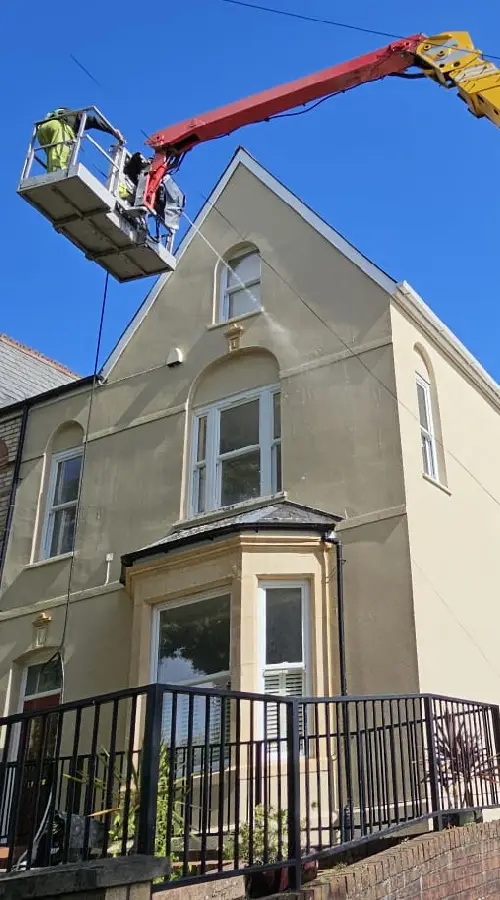
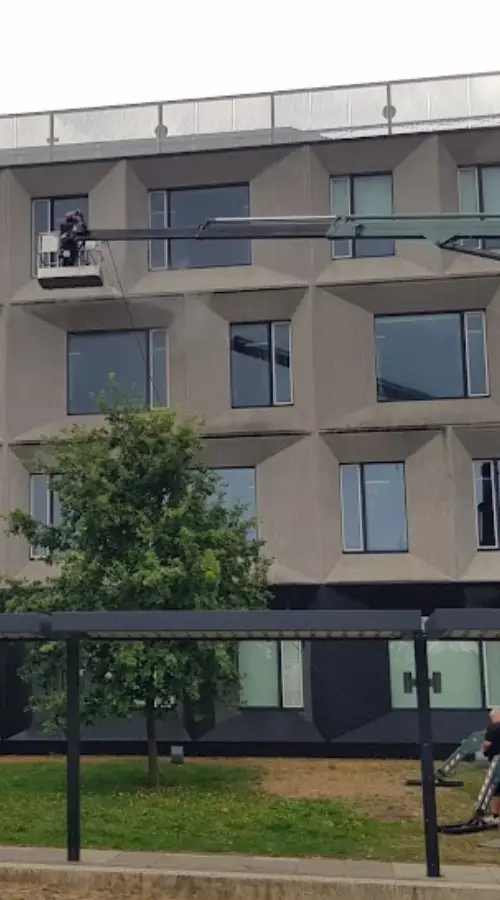
Softwashing UK quotes each property separately even when several are being treated on the same day, so nobody is paying towards anybody else’s wall and nobody has to handle the money on behalf of the group. Each owner receives their own written figure and their own invoice. Nobody is asked to collect from anybody else. Render cleaning prices are established at an assessment from elevation count, working height, access arrangements and the extent of the growth on that particular property. The written render cleaning cost holds. Where several properties are booked together the set-up, access equipment and travel are shared, and affordable render cleaning on a terrace or a pair usually works out noticeably cheaper per household than a single property treated alone. The saving comes from the set-up rather than from cutting the treatment. The crews are render cleaning specialists rather than general exterior cleaners, which matters on a shared building because the coating may not be identical along its length. Sections rendered or repaired at different times behave differently, and recognising an overpainted length, a fragile bead or cracking that would carry solution behind a coating is what keeps a continuous elevation looking continuous. All treatments are eco friendly render cleaning products chosen because they break down safely once their work is complete, which matters where run-off reaches several gardens rather than one. Anyone comparing firms in search of the best render cleaning service for a shared building should ask how the quotation is split. A single figure for a terrace tends to create more problems than it solves. Separate invoices also mean one household can proceed while another decides.
Grove sits within our regular working patch, and it is worth knowing what will be asked on a first call so the conversation is a short one. None of it is difficult. Most people can answer the lot in under a minute. How many storeys, and whether there is a gable. Whether the property is detached, semi-detached or part of a terrace, since that affects both access and whether anybody else might want the work done at the same time. Whether the render is smooth, textured or dashed, and roughly what colour. How long since it was last treated, if ever. And whether there is anything at the back that would be hard to reach. A locked side gate or a rear elevation only reachable through the house is worth mentioning early. None of that produces a price. Residential render cleaning is quoted after somebody has seen the building, because elevation count, working height, access and the extent of the growth all have to be established properly. What the call does is establish whether an assessment is worth arranging at all, and occasionally the answer is that a wall does not need doing yet. That conversation costs nothing and saves a wasted visit. The visit itself takes about twenty minutes and produces a written quotation the same day. There is no travel charge, no minimum job size and no charge for the assessment. Anyone searching render cleaning near me should expect a local render cleaning company to ask a handful of sensible questions rather than quoting a figure before knowing any of the answers. The questions are the useful part of the call.
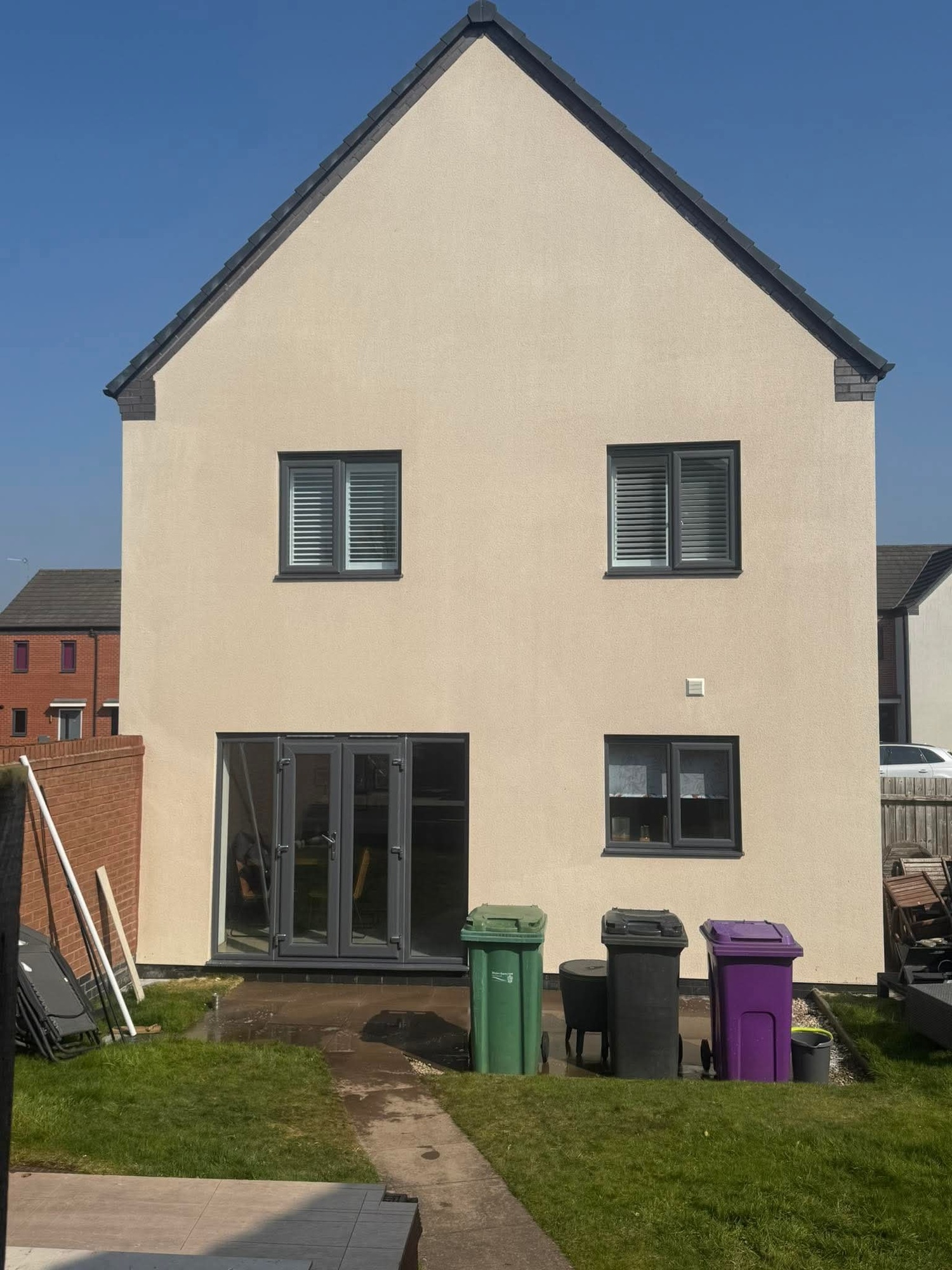
Most properties in Grove benefit from professional render cleaning every 3 to 5 years, although this depends on the surrounding environment. Properties near trees, woodland, busy roads or coastal areas may require more frequent cleaning due to algae, mould and airborne contaminants. Our soft washing process removes existing growth and helps keep your render cleaner for longer.
Yes. Soft washing is specifically designed for delicate surfaces such as K-Rend, silicone render, monocouche render and painted render. Unlike high-pressure washing, it cleans at low pressure while treating biological growth at its source, reducing the risk of damage to the render finish.
We clean virtually all external render finishes, including K-Rend, Monocouche, Weber, Sto, silicone render, acrylic render, painted render, roughcast and pebble dash. Every cleaning method is tailored to the specific render type to achieve the best possible results.
Yes. Our specialist soft washing treatments are highly effective at removing green algae, red algae, black mould, mildew, lichen and other organic staining. We also apply professional biocide treatments to kill spores and slow down regrowth.
Because our process targets the biological growth rather than simply washing the surface, results typically last much longer than pressure washing alone. The exact lifespan depends on weather conditions, surrounding vegetation and the property’s location.
No. Our soft washing process is specifically designed to clean render safely. We use low-pressure application methods and specialist cleaning solutions that remove contamination without damaging the render surface when carried out by trained professionals.
The UK’s damp climate provides ideal conditions for algae, mould and other biological growth to develop on rendered surfaces. Areas with limited sunlight, nearby trees or persistent moisture are especially susceptible. Professional soft washing safely removes these contaminants and restores your property’s appearance.













































WhatsApp us