Low pressure is the defining characteristic of how we clean render, and it is worth explaining what that means in practice because the term is used loosely across the trade. A domestic pressure washer typically operates somewhere between one hundred and two hundred bar. That is enough to strip material from a rendered face, drive water into a coating and lift pigment from a through-coloured finish. Turning it down helps, but the machine is designed to clean by force and it does so even at reduced settings. Soft wash equipment works differently. Delivery pressure is closer to that of a garden hose, low enough to be entirely safe against a hand, and it exists to distribute solution evenly rather than to remove anything. All the removal is done chemically during the dwell period. The practical consequences around a house are considerable. Nothing is driven into the coating. Water volumes are modest, so gardens are not flooded and paving does not turn into a working pond. There is no aerosol cloud drifting across a boundary. Noise is minimal, because there is no high pressure pump running continuously. And nobody is holding a lance capable of injuring at a distance. Our render cleaning services rely entirely on that approach. Render algae removal, render moss removal and render mould removal are all achieved through chemistry and time rather than force. The trade-off is honest: the wall keeps improving for weeks afterwards rather than being finished on the day. In exchange, the coating is untouched and the result holds for years. Exterior render cleaning on a property in Hopwood is a quiet, low-impact operation by design.
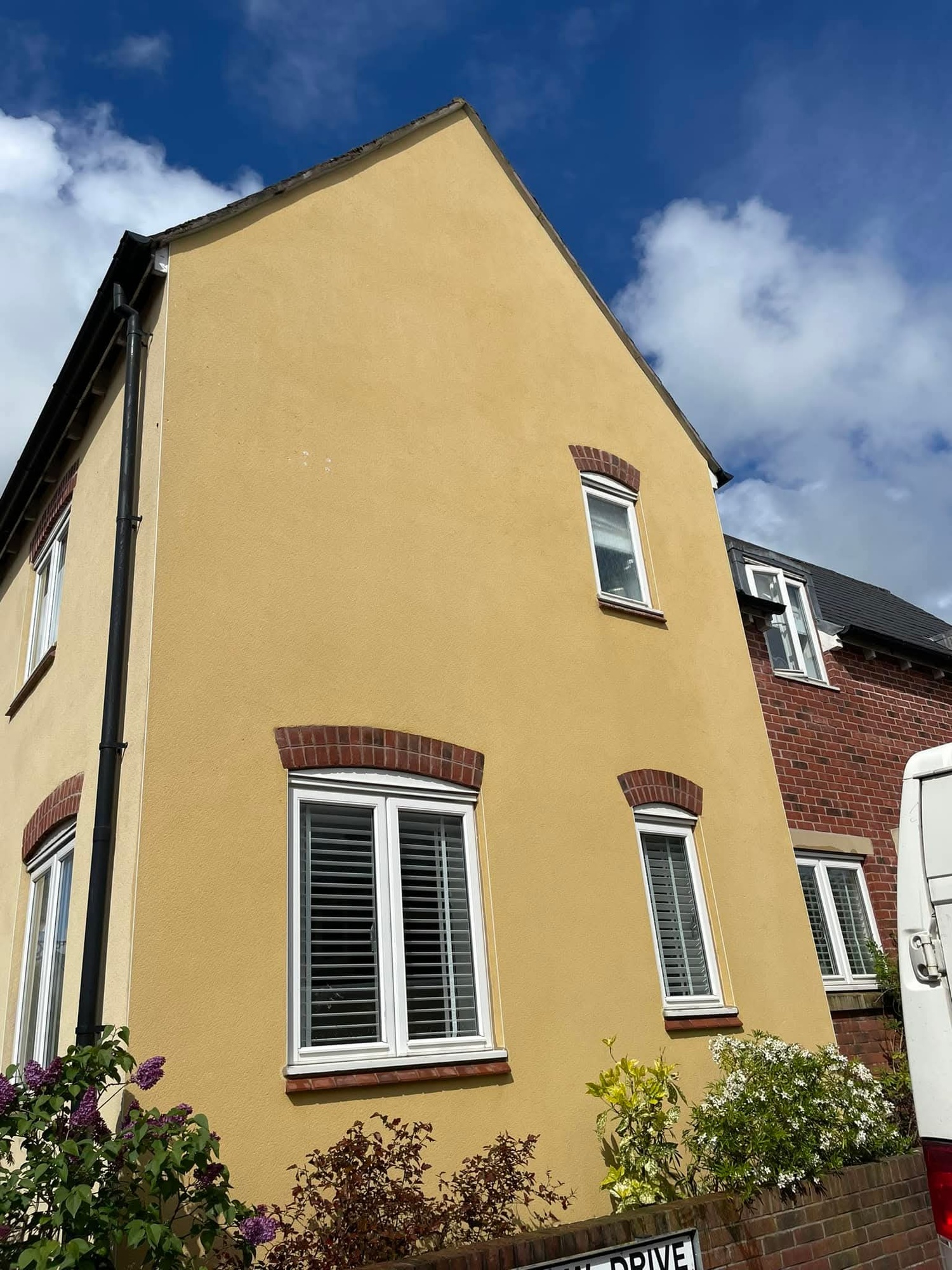
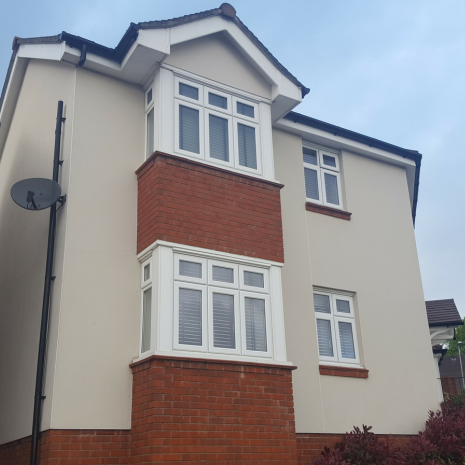

Algal filming and black fungal spotting distribute themselves differently across a property, and the pattern is consistent enough to be useful when judging what a wall needs. Algae favours sustained dampness above all else. It establishes most heavily on the elevations that dry slowest, which usually means north and east facing walls, sheltered aspects and anywhere planting restricts air movement. It appears as a continuous green cast spreading outwards from the areas that stay wettest, and on a badly affected wall it covers the whole surface fairly evenly. Black spotting behaves less predictably. The fungus responsible tolerates a wider range of conditions and appears as discrete specks rather than a film, often scattered across elevations that carry little or no algal growth. It is common to find a sunny frontage with no green cast at all but noticeable dark specking, which owners frequently mistake for dirt. The practical implication is that a property can need two different specifications. The shaded gable needs treatment weighted towards heavy algal colonisation with an extended dwell. The frontage needs a strength judged for fungal structures, which is generally higher, applied over a wall that otherwise looks reasonably clean. K Rend cleaning specified per elevation reflects that rather than applying one mix across the building. Silicone render cleaning stays chemical throughout regardless: very low pressure, nothing brushed or agitated, complete elevations worked with live wet edges at consistent dilution. Render mould removal is the part most often underspecified, because the wall it is on does not look particularly dirty. House render cleaning judged a month later is where that shows.
Damage at low level on monocouche is nearly always caused by contact rather than by weather, and most of it is easily avoided once the cause is recognised. Storage against the wall is the commonest. Anything leaned or stacked against render holds moisture permanently in place, prevents air movement across the surface and, where it is moved regularly, abrades the face. The result is a band of heavy colonisation with smoothed patches through it. Equipment is the second. Ladders footed against the wall, tools propped up and hoses dragged across the surface all mark a scraped face, and on a through-coloured finish those marks cannot be touched out. Soil level is the third. Where a border has been built up over the years and now sits against or above the base of the render, the wall is permanently in contact with damp ground. Vegetation is the fourth, with foliage in contact holding water and preventing any drying. Monocouche render cleaning will remove the growth in all four cases, but it cannot restore a surface that has been physically abraded, and it cannot prevent recurrence where the cause remains. We point out what we find and explain which factors will shorten the interval. The treatment itself is unchanged: low pressure, generous volume to reach the base of the texture, full dwell, gentle rinsing, nothing brushed or agitated. Render maintenance advice given honestly includes the things an owner can change. Moving stored items clear, cutting back foliage and lowering soil against the base course all make a real difference, and residential render cleaning lasts considerably longer where they are addressed.
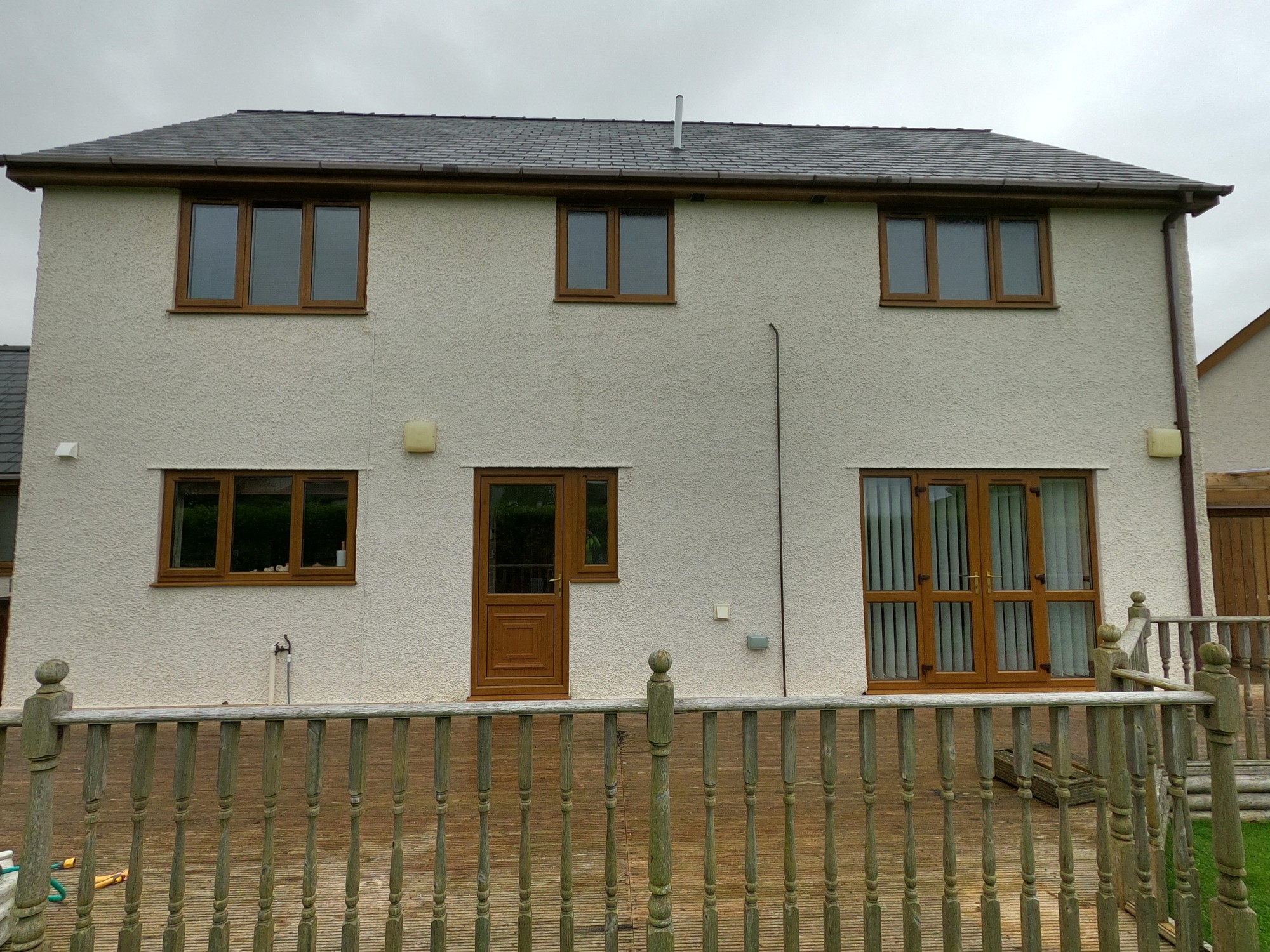
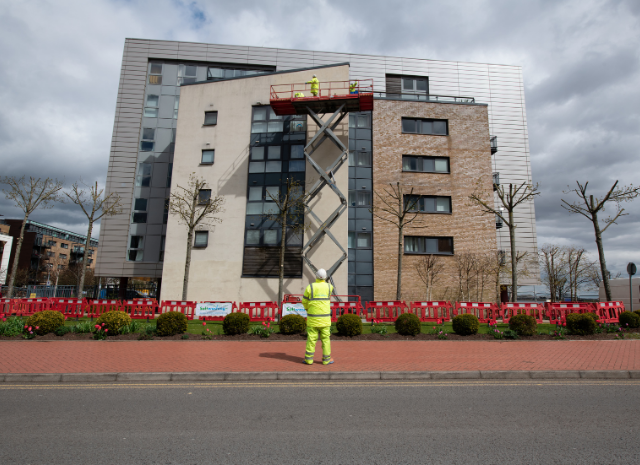

Coach depots, taxi bases and transport premises with rendered elevations soil quickly and are seen constantly by drivers, customers and visiting operators. Exhaust particulate and traffic film deposit continuously, and much of that soiling is atmospheric rather than biological. Commercial render cleaning at these sites therefore needs a dual specification. Biocidal treatment addresses whatever growth has established, while render stain removal handles the particulate and film that biocide will not shift. Treating only one leaves the building visibly half done. Operationally, vehicle movement governs everything. Depots run to schedules, vehicles depart and return through the day, and parking areas cannot be closed wholesale. We survey first, phase the work so only one elevation is affected at a time, and schedule into whatever window has the most vehicles out. Anything within reach of a working elevation is moved or sheeted, and fuelling points, washing areas and external plant are identified and protected. Exclusion zones are agreed and signed, with vehicle routes maintained rather than blocked. Insurance, method statements and risk assessments are supplied ahead of attendance, and operatives hold current working at height certification. Site induction and permit systems are completed before starting. Technically these premises usually present long single-storey or low two-storey elevations. Soft wash render cleaning must hold identical dilution and continuous wet edges along the full run, since banding on an unbroken wall of that length is immediately obvious from across a yard. For transport premises around Hopwood, a planned interval is realistically the only way to keep the building presenting properly given the rate at which it soils.
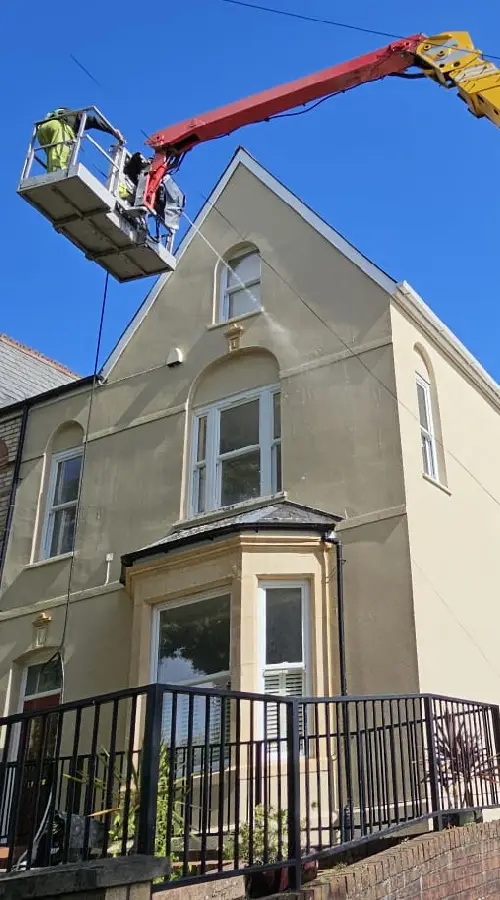
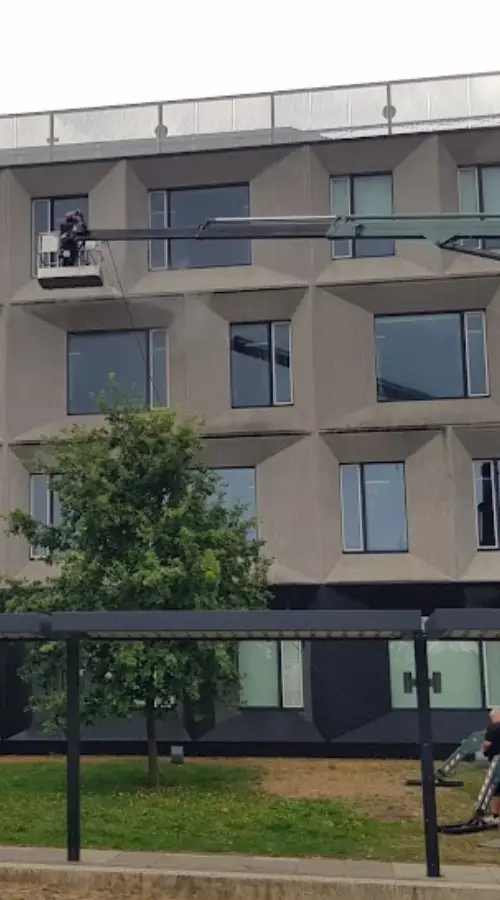
Keeping written records of every property we treat matters more than it might appear, and it works to the customer’s advantage in several specific ways. For each elevation we record the coating identified, the texture grade, the surface condition including any defects or previous repairs, which organisms were present and at what density, the dilution and volume applied, the dwell allowed, the access used and anything excluded or flagged. That means a return visit does not start from scratch. The survey is quicker, the specification is already known, and the figure is lower because the work is genuinely smaller once colonisation has been eliminated at root level rather than removed from view. It also lets us check our own advice. If we predicted five years on a particular elevation and it needed attention in three, that is useful information about the property and improves what we tell you next time. And it provides a factual account if a question arises afterwards, rather than a recollection of what was probably done. Follow-up is part of the same approach. If an area has genuinely not responded within four to six weeks, we return and treat it again at no charge. That commitment only means something from a contractor who will still be working the same area, which as a local render cleaning company we will be. Render cleaning prices are fixed at survey and include preparation, treatment, dwell, rinsing, clearing down and any access identified. Professional render cleaning treated as an ongoing relationship rather than a series of unrelated transactions works out cheaper for the property over any reasonable period.
Softwashing UK cover Hopwood in full, with the same survey process and pricing basis applied to every property and no travel loading. A fair number of enquiries begin with someone unsure whether their render needs attention at all, and that is a perfectly reasonable position to start from. Colonisation develops gradually enough that most owners genuinely cannot tell whether what they are looking at is normal weathering, dirt or something that ought to be treated. The survey answers that question at no cost and with no obligation. We look at each elevation at close range, identify what is actually present, and tell you plainly. Sometimes the answer is that a wall is carrying early filming and would benefit from treatment now, while it is still a small job. Sometimes it is that one gable needs doing and the rest of the property does not. Occasionally it is that nothing needs doing yet and we will happily look again in a couple of years. That last answer is given more often than people expect. There is no advantage to us in selling work a property does not need, because it would be obvious the following year and we depend almost entirely on recommendation. Where treatment is worthwhile, the itemised written quotation shows what was found on each elevation and what is specified, so the reasoning is visible rather than implied. There is no follow-up pressure and no chasing. The figure holds for a stated period. Surveys take around twenty minutes and can be carried out without anyone at home provided every elevation is reachable.
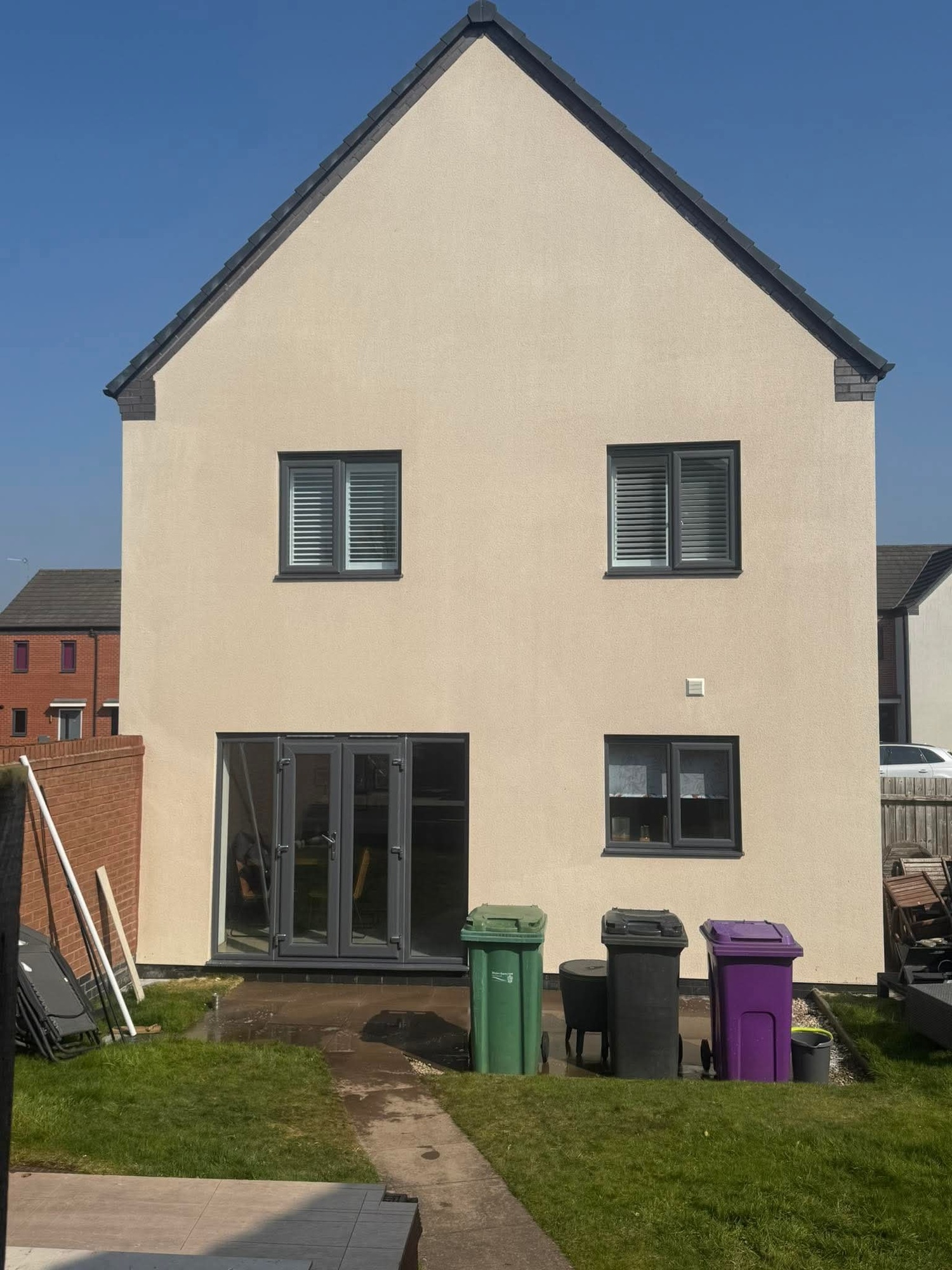
Most properties in Hopwood benefit from professional render cleaning every 3 to 5 years, although this depends on the surrounding environment. Properties near trees, woodland, busy roads or coastal areas may require more frequent cleaning due to algae, mould and airborne contaminants. Our soft washing process removes existing growth and helps keep your render cleaner for longer.
Yes. Soft washing is specifically designed for delicate surfaces such as K-Rend, silicone render, monocouche render and painted render. Unlike high-pressure washing, it cleans at low pressure while treating biological growth at its source, reducing the risk of damage to the render finish.
We clean virtually all external render finishes, including K-Rend, Monocouche, Weber, Sto, silicone render, acrylic render, painted render, roughcast and pebble dash. Every cleaning method is tailored to the specific render type to achieve the best possible results.
Yes. Our specialist soft washing treatments are highly effective at removing green algae, red algae, black mould, mildew, lichen and other organic staining. We also apply professional biocide treatments to kill spores and slow down regrowth.
Because our process targets the biological growth rather than simply washing the surface, results typically last much longer than pressure washing alone. The exact lifespan depends on weather conditions, surrounding vegetation and the property’s location.
No. Our soft washing process is specifically designed to clean render safely. We use low-pressure application methods and specialist cleaning solutions that remove contamination without damaging the render surface when carried out by trained professionals.
The UK’s damp climate provides ideal conditions for algae, mould and other biological growth to develop on rendered surfaces. Areas with limited sunlight, nearby trees or persistent moisture are especially susceptible. Professional soft washing safely removes these contaminants and restores your property’s appearance.










































WhatsApp us