Organic growth on render needs three things, and the one least discussed is nutrient supply. Moisture and spores are obvious. What sustains a colony once it has established is the organic material that continuously arrives on the wall. Airborne particulate carries a surprising amount of it. Pollen, fragments of leaf and bark, insect debris and soil dust all settle onto elevations and lodge in the texture, where they break down and provide exactly what algae and fungi require. A wall downwind of substantial vegetation receives far more of this than one facing open hard standing. Direct deposition adds to it. Leaf fall against a wall, debris caught behind planting, and material washed down from above all concentrate in specific areas. Splashback at low level drives soil and organic matter into the base course continuously. The practical consequence is that nutrient-rich walls colonise faster and more densely than clean-air ones in identical drying conditions, and they recolonise faster after treatment. It is one of the main reasons two properties with the same aspect need different intervals. Our render cleaning services take that into account in both specification and advice. Render algae removal on a nutrient-loaded wall needs a thorough application, and the honest interval afterwards is shorter than on an exposed elevation. Render moss removal at the base course is a particular case, since debris accumulating there feeds growth directly. Exterior render cleaning around Inkberrow frequently involves properties in exactly this position, and we say plainly at survey where the surroundings will bring the next treatment forward rather than quoting an optimistic interval that the setting will not support.
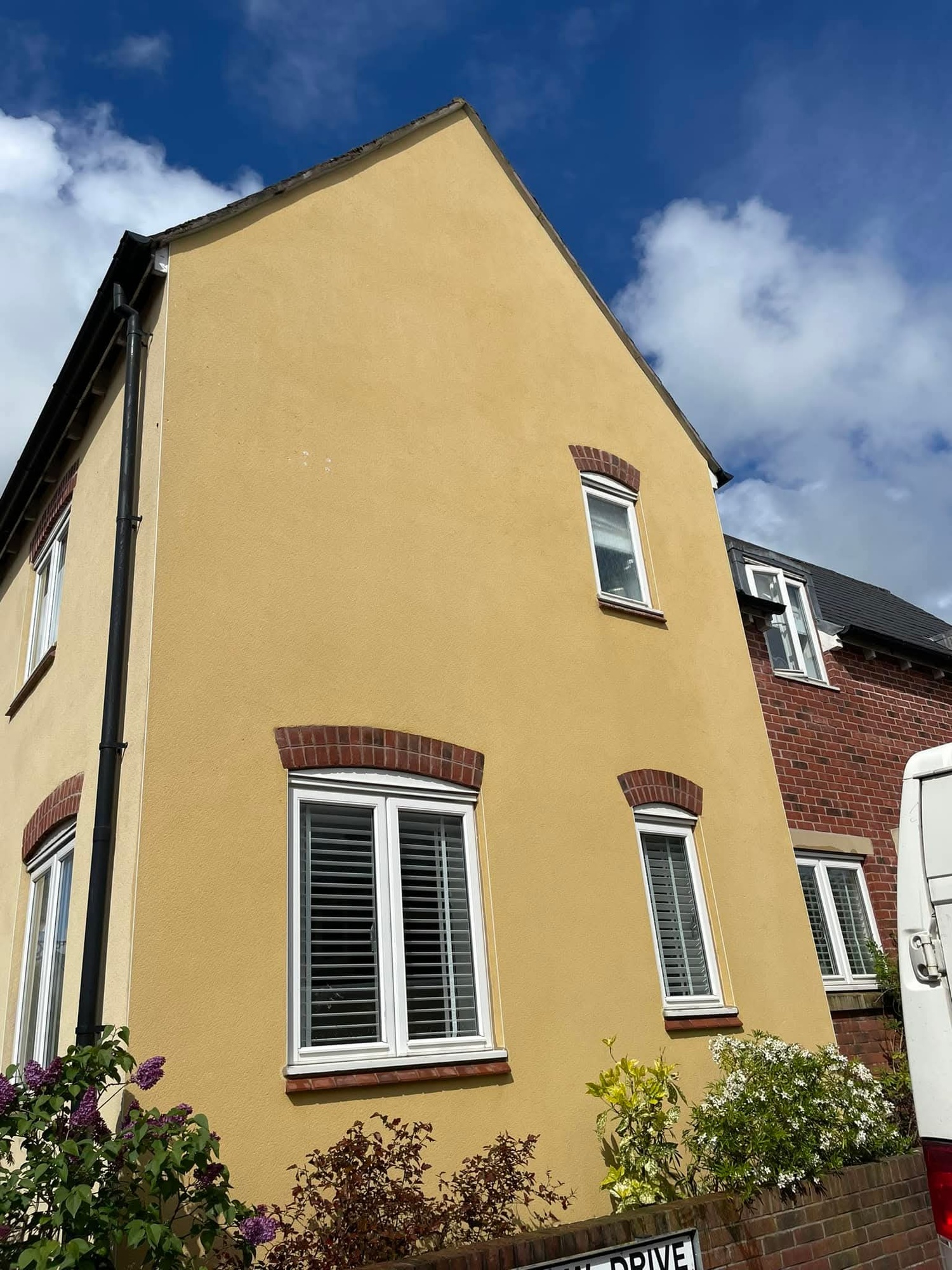
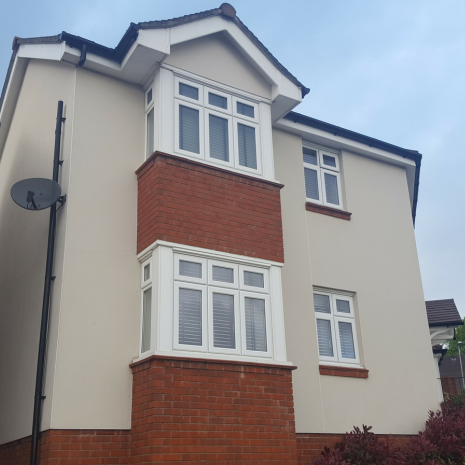

Softwashing UK are asked frequently which K Rend colours show growth worst, and the answer affects both how quickly owners notice and how a wall should be specified. Pale creams, whites and light buffs show algal filming earliest. Even a thin biofilm reads as a greenish or greyish cast because contrast against a pale background is high. That is useful, because it means the wall gets attention while colonisation is still shallow and the job is small. Mid greys and stone tones sit in an awkward middle. Filming registers as a general dulling rather than an obvious colour change, so it goes unremarked for longer, and by the time it is noticed the growth is well established. Dark greys, anthracites and deep earth colours conceal the most. Black spotting in particular blends almost entirely with the base colour until density becomes high, and what owners eventually notice is a loss of richness rather than any specific discolouration. The practical implication is that darker elevations are frequently more heavily colonised than they appear, and a specification written from a distance will underestimate them. We assess at close range on every wall for exactly that reason. K Rend cleaning also demands the most even application on darker colours, since any inconsistency in coverage shows plainly in raking light on a deep tone. Silicone render cleaning stays chemical throughout regardless of colour: very low pressure, nothing brushed or agitated, complete elevations worked with a live wet edge. Coloured render cleaning on a dark finish often recovers more depth than owners expected was still there.
A first monocouche clean and every one after it are genuinely different jobs, and understanding why explains the difference in cost between them. A first clean on an untreated elevation deals with colonisation that has had years to work down into the scraped texture. Growth is dense, rooted at the base of the profile, usually layered with more than one organism, and often accompanied by mineral soiling driven into the base course by splashback. Treatment has to be applied in volume to reach the bottom of the texture, at strengths judged for the most resistant organism present, and left to dwell considerably longer than a light case needs. On a badly neglected wall the result continues developing for six weeks afterwards. A maintenance clean a few years later is a smaller job in every respect. Because the earlier treatment destroyed colonies at root level rather than removing them from view, whatever has returned began from airborne spores landing on a sterile surface. It is shallow, recent and clears readily. Volume, dwell and time on site all reduce. We price accordingly, so a returning property is quoted lower than a new one of the same size. It is not a loyalty gesture; the work is genuinely less. Monocouche render cleaning is identical in method either way. Low pressure, generous application, full dwell, gentle rinsing, nothing brushed or agitated, since exposed aggregate detaches permanently under abrasion. Render maintenance planned on that basis is a modest recurring item, and render restoration remains achievable indefinitely because nothing is ever taken off the wall.
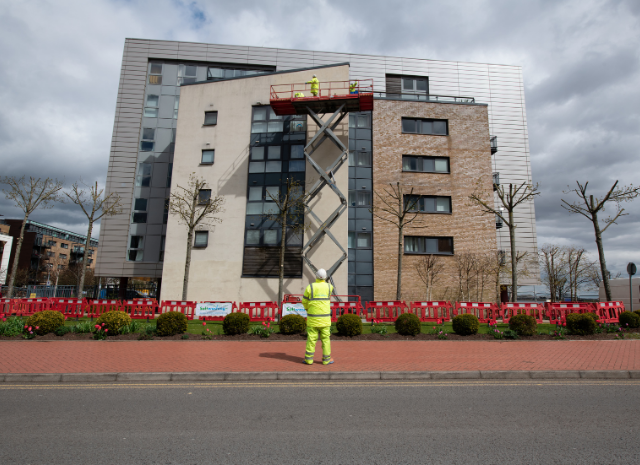

Dental practices, opticians and similar clinical premises operating from rendered buildings are judged on precision and cleanliness, and a soiled exterior contradicts that before a patient reaches reception. Commercial render cleaning at these premises is scheduled around appointment books rather than trading hours. Arrivals are concentrated at fixed times, waiting areas are usually at the front of the building, and parking is generally tight. We survey first, agree which elevations can be treated when, and plan around clinic sessions, which in practice often means an early start or a closing day. The low pressure method is a considerable advantage here. There is no machine running continuously, minimal noise carrying into treatment rooms, and no spray drifting across an entrance or car park. Ventilation, external plant and any opening on the working elevation are masked or isolated before treatment is applied. Exclusion zones are agreed and signed so patients are kept clear without entrances being obstructed, and anything at ground level within the working area is protected or moved. Insurance, method statements and risk assessments are supplied ahead of attendance, and operatives hold current working at height certification. Most premises of this size are completed within a single visit, which limits the window in which any disruption could occur. Technically the requirement matches any elevation. Render facade cleaning maintains consistent dilution and live wet edges so the finished wall reads uniformly rather than showing where the work paused. For clinical premises around Inkberrow, a clean every few years is a modest cost against the impression the building creates, and keeps the coating dry into the bargain.
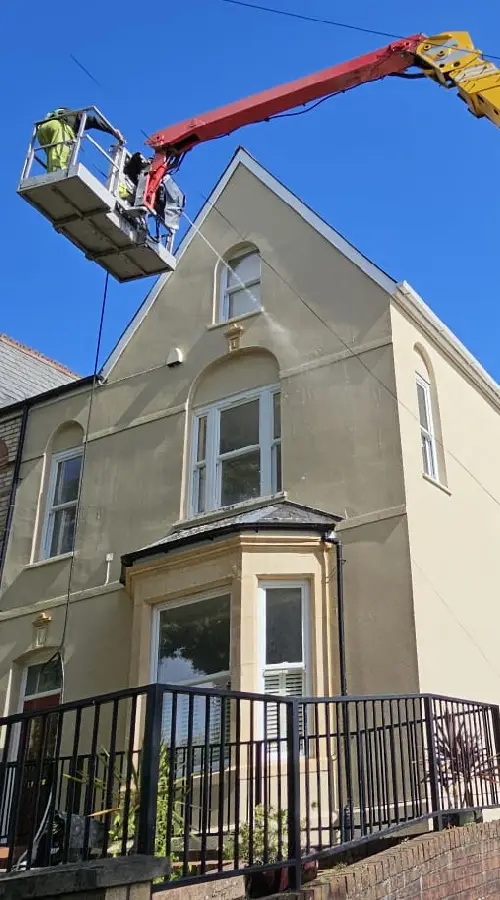
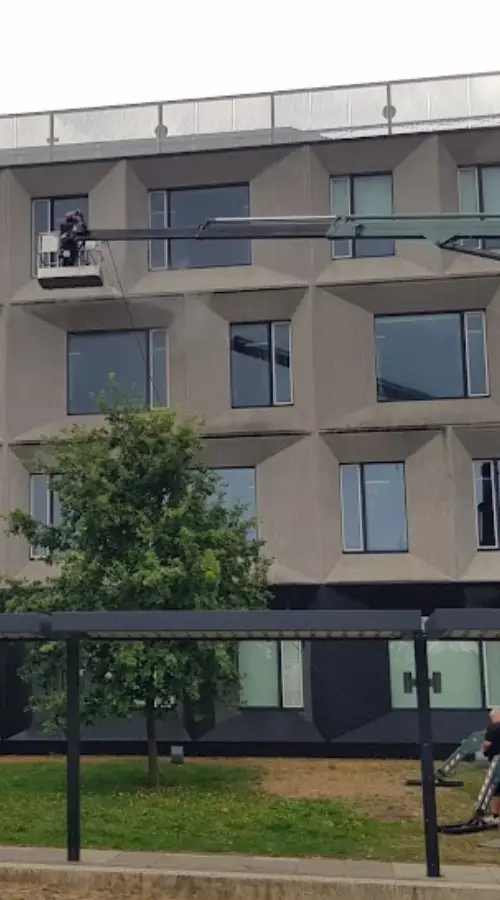
Written records are kept for every property we treat, and the follow-up that goes with them is part of what the price covers rather than an optional extra. The record sets out, elevation by elevation, what coating was identified, what texture grade was found, what condition the surface was in, which organisms were present and at what density, what dilution and volume were applied, how long the treatment was left to dwell, how the wall was reached and anything that was excluded or flagged. That makes the next visit faster and cheaper, because the assessment does not have to be rebuilt and the specification is already known. It also lets us check whether the interval we predicted was accurate, which sharpens the advice given to the next customer with a similar wall. Follow-up is the other half. A soft washed elevation continues improving for two to four weeks as dead growth weathers off, and heavier lichen can take six weeks or more. If an area has genuinely not responded within that period, we return and treat it again at no charge, and the record tells us exactly what was applied the first time. Render cleaning prices are fixed at survey and include preparation, treatment, dwell, rinsing, clearing down and any access identified. There is no separate line for coming back. Our render cleaning specialists work on rendered elevations exclusively, and as a local render cleaning company we are still here when a property comes round again. Professional render cleaning judged over years rather than days is what the records exist to support.
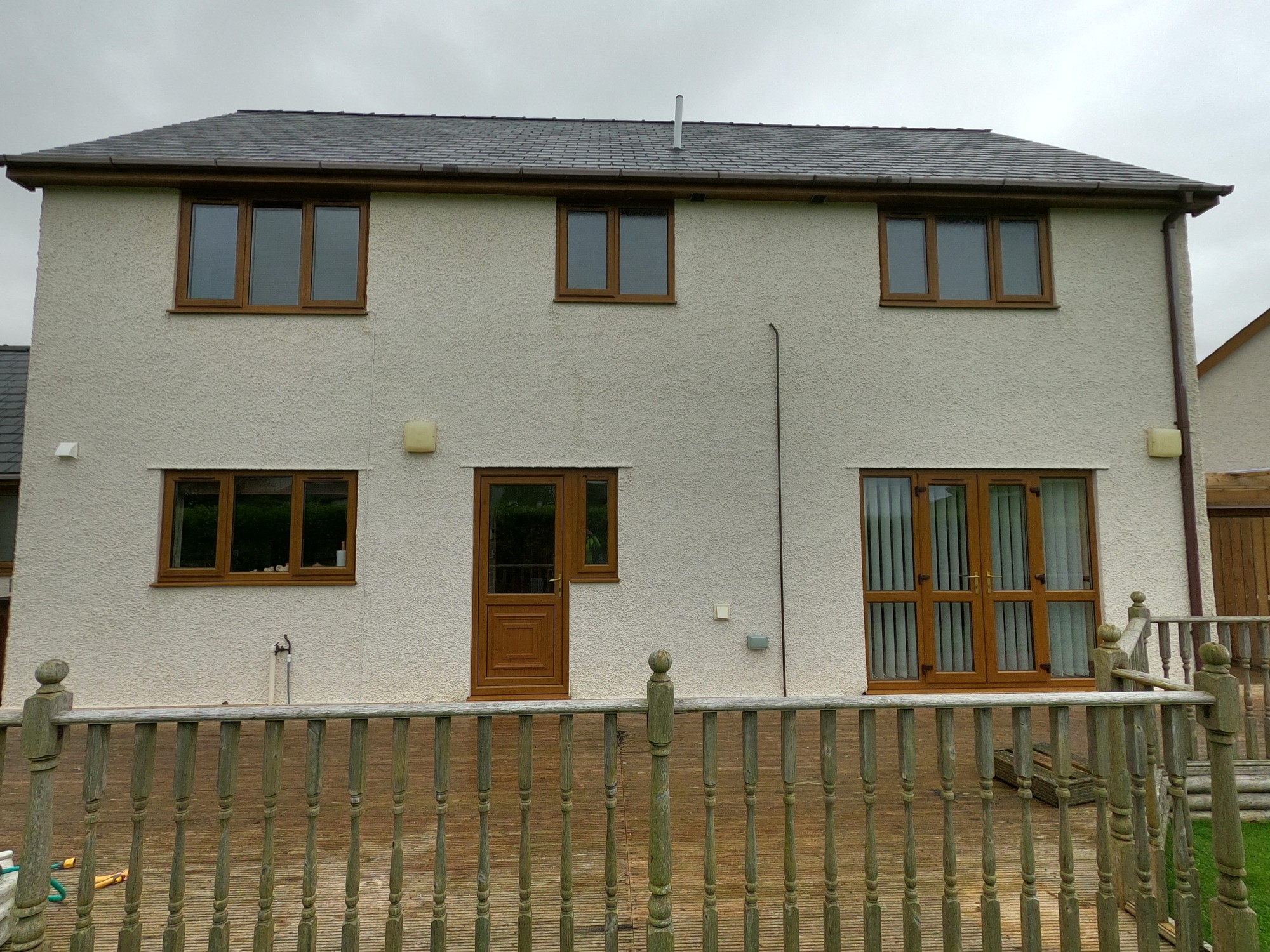
Coverage takes in Inkberrow together with Dormston, Flyford Flavell, Grafton Flyford, Holberrow Green, Kington, Libbery, Little Inkberrow and Stock Green, all on identical terms with no travel loading. Across a spread of settlements this wide, the important point is that every property is surveyed on its own terms. Nothing carries over, because the variables move independently. Coating type varies between and within properties. Older buildings frequently carry traditional render repaired and recoated across decades, where absorbency differs across a single elevation and any paint film governs whether cleaning is advisable. Newer builds and extensions carry modern through-coloured systems that clean up well but tolerate no abrasion. Both on one house is entirely normal. Texture grade varies within each of those, and it determines how much treatment is applied and how long it must dwell. Condition varies with age, previous repairs and whether junctions remain sound. Growth density varies with aspect, shelter and proximity to vegetation, often substantially between walls on the same building. Access varies with height and how the property sits on its plot. Two houses of similar size and apparent age can therefore need genuinely different specifications, and quoting by measured area would misprice at least one of them. The written quotation is itemised per elevation, showing the coating identified, the growth graded, the treatment specified and how each wall will be reached. Properties across these settlements are typically individual and often set within their own grounds, with elevations facing every direction. Surveys take around twenty minutes, can be carried out unattended provided every elevation is reachable, and produce an itemised written figure by email.
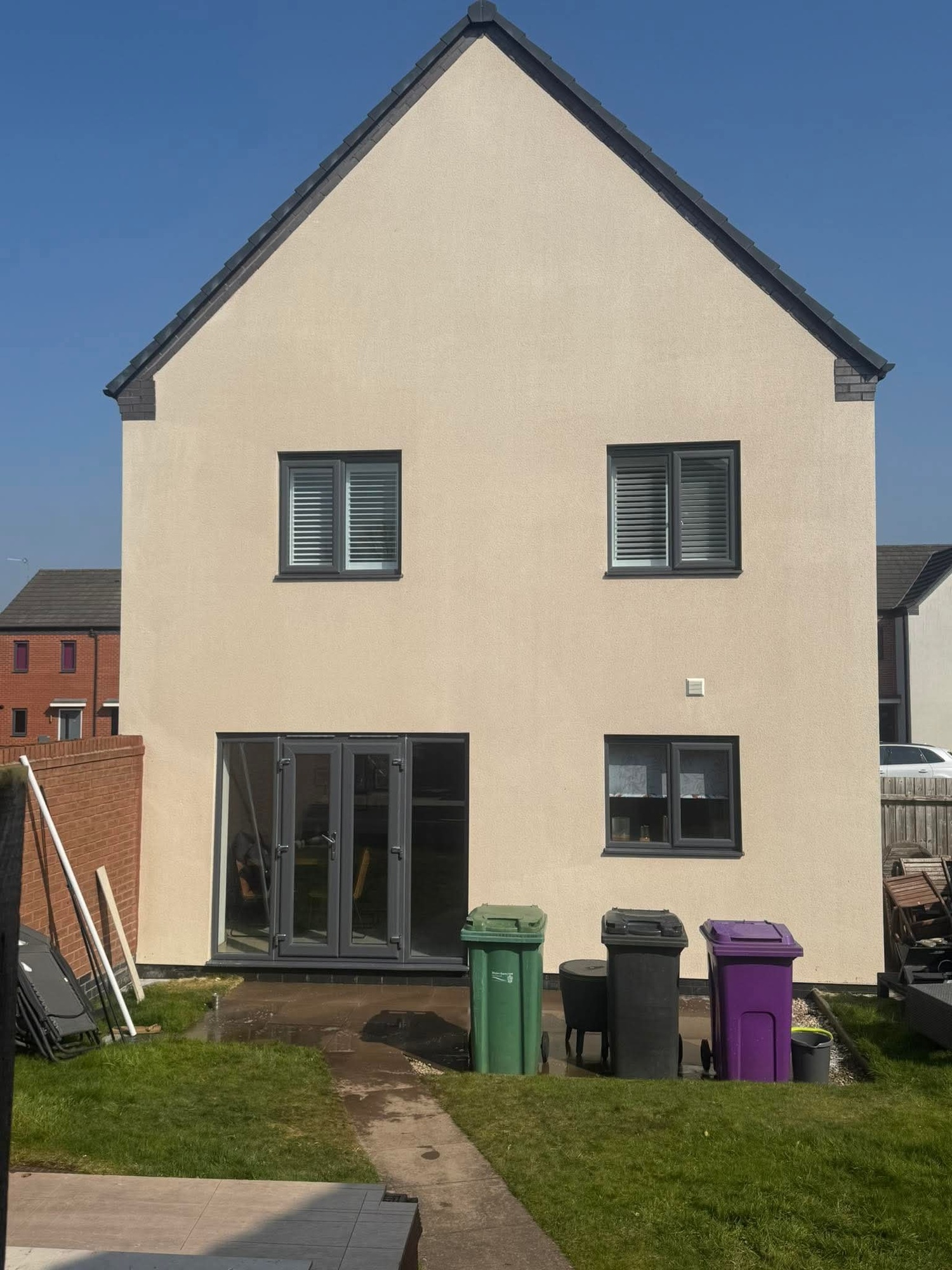
Most properties in Inkberrow benefit from professional render cleaning every 3 to 5 years, although this depends on the surrounding environment. Properties near trees, woodland, busy roads or coastal areas may require more frequent cleaning due to algae, mould and airborne contaminants. Our soft washing process removes existing growth and helps keep your render cleaner for longer.
Yes. Soft washing is specifically designed for delicate surfaces such as K-Rend, silicone render, monocouche render and painted render. Unlike high-pressure washing, it cleans at low pressure while treating biological growth at its source, reducing the risk of damage to the render finish.
We clean virtually all external render finishes, including K-Rend, Monocouche, Weber, Sto, silicone render, acrylic render, painted render, roughcast and pebble dash. Every cleaning method is tailored to the specific render type to achieve the best possible results.
Yes. Our specialist soft washing treatments are highly effective at removing green algae, red algae, black mould, mildew, lichen and other organic staining. We also apply professional biocide treatments to kill spores and slow down regrowth.
Because our process targets the biological growth rather than simply washing the surface, results typically last much longer than pressure washing alone. The exact lifespan depends on weather conditions, surrounding vegetation and the property’s location.
No. Our soft washing process is specifically designed to clean render safely. We use low-pressure application methods and specialist cleaning solutions that remove contamination without damaging the render surface when carried out by trained professionals.
The UK’s damp climate provides ideal conditions for algae, mould and other biological growth to develop on rendered surfaces. Areas with limited sunlight, nearby trees or persistent moisture are especially susceptible. Professional soft washing safely removes these contaminants and restores your property’s appearance.













































WhatsApp us