A dirty rendered wall and a damaged one need entirely different responses, and telling them apart before commissioning work saves a great deal of disappointment. A dirty wall is structurally sound and simply carrying a layer of growth and atmospheric deposit. The coating beneath is intact, the colour is unchanged, and removing what has accumulated returns the elevation close to its original appearance. The overwhelming majority of walls we are called to fall into this category, even where the owner has concluded the render has reached the end of its life. A damaged wall is a different proposition. Pigment lifted unevenly by previous pressure washing, aggregate stripped from a textured face, hollow-sounding areas where the coating has debonded, open cracking, or paintwork that has begun chalking and lifting. None of that is caused by growth and none of it is corrected by cleaning. The two are frequently confused because growth disguises damage. A uniformly colonised elevation reads as one surface, and the variation underneath only becomes visible once the wall is clean. Our render cleaning services begin with establishing which is which. Where a wall is sound, treatment is straightforward and the result is genuinely restorative. Where damage is present, we explain plainly what cleaning will reveal rather than what it will fix, and where a defect means water should not be introduced at all, we say so and decline the work. Render algae removal and render moss removal address the first case. Exterior render cleaning on a property in Lower Heath is quoted against an honest assessment of which situation applies, and the written quotation states it.
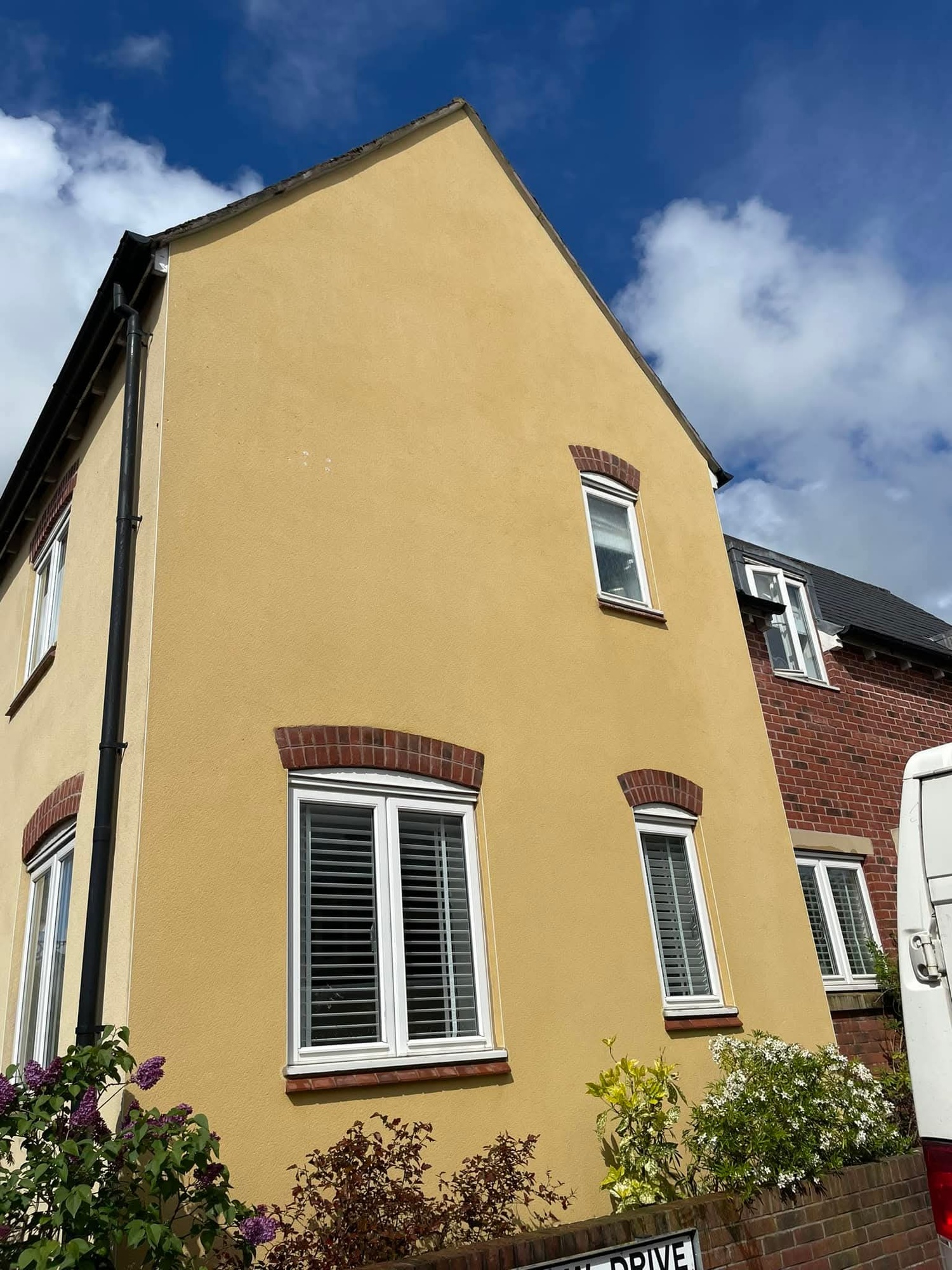
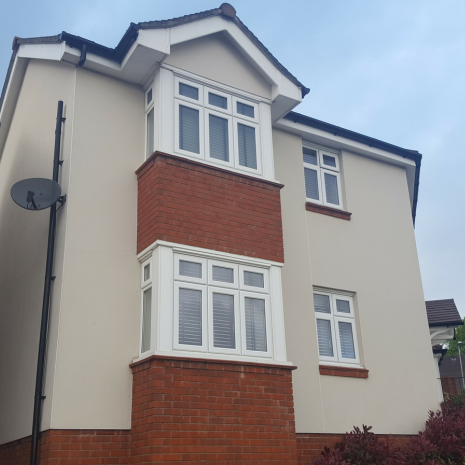

Softwashing UK judge silicone render texture partly by touch, and it is a useful thing for an owner to try before commissioning work, because depth governs how the wall should be treated. Run a hand lightly across the surface. A fine thin-coat feels granular but shallow, with the aggregate close to a continuous plane. A medium grade has noticeable relief, with individual grains standing distinctly. A coarse or heavily scraped finish has real depth, and a fingertip drops between the high points rather than riding across them. That depth is what determines everything about the specification. A deep profile has several times the effective surface area of a shallow one, holds moisture long after the flat plane has dried, and shelters colonies at the base of the texture where nothing casual will reach. The practical consequence is that both the volume of treatment applied per square metre and the dwell period have to rise with depth. Applying at a fine-finish rate on a coarse wall bridges the high points, leaves growth alive underneath, and produces an elevation that clears superficially and returns within a season. K Rend cleaning is therefore specified against the actual texture rather than against the branded system name, and it is one of the reasons two apparently similar properties carry different figures. Everything else stays constant regardless of grade. Silicone render cleaning is chemical throughout, at very low pressure, with nothing brushed or agitated, and complete elevations worked with a live wet edge. Render mould removal on a deep texture is the fairest test of whether an application rate was judged correctly.
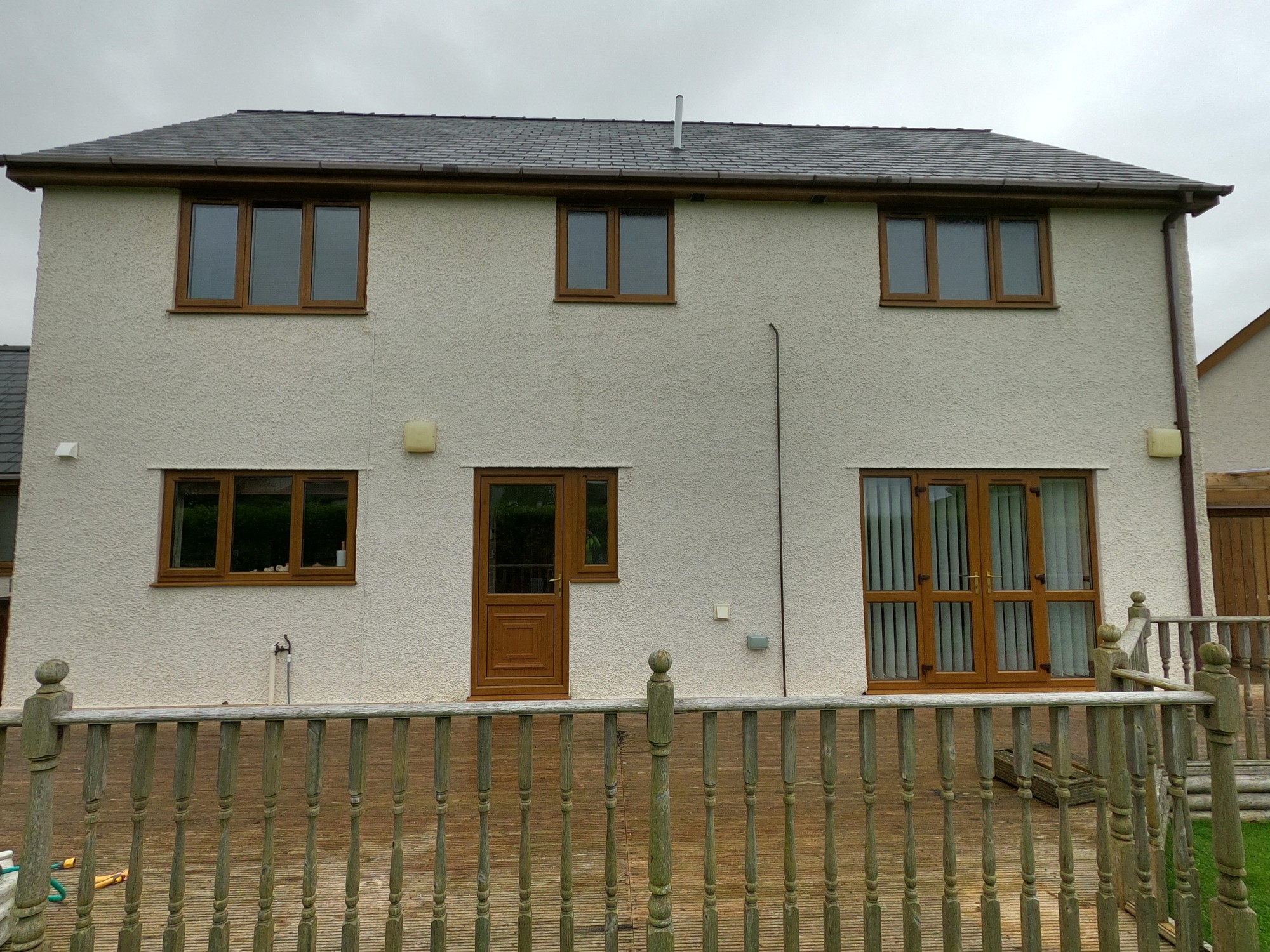
Hairline crazing on monocouche is common, generally harmless and frequently misinterpreted, so it is worth explaining what it is before deciding whether it changes anything. Fine crazing appears as a network of very shallow surface lines, usually visible only at close range and often more apparent when the wall is damp. It results from minor shrinkage during curing or from ordinary thermal movement, and on a thick single-coat render it typically affects only the outermost skin rather than passing through the material. It matters for cleaning in one respect: crazing holds moisture slightly longer than an uncrazed surface and gives spores marginally more purchase, so a crazed elevation may colonise a little faster. It does not mean the render has failed and it is not a reason to avoid treatment. What does matter is distinguishing it from genuine cracking. A crack that has opened, particularly at the corner of an opening where movement concentrates, is a different matter, and introducing water to it is a poor idea whatever the pressure. We look for that at survey and say plainly where treatment should wait. Monocouche render cleaning on a crazed but sound elevation proceeds exactly as on any other: treatment applied at low pressure and in volume so it reaches the base of the scraped texture, a full dwell period so growth is destroyed at root level, then gentle rinsing with nothing brushed or agitated. Render restoration is unaffected by crazing, since the mineral pigment beneath is unchanged. Residential render cleaning on a crazed wall may simply need repeating at a slightly shorter interval, and we say so rather than treating it as a defect.
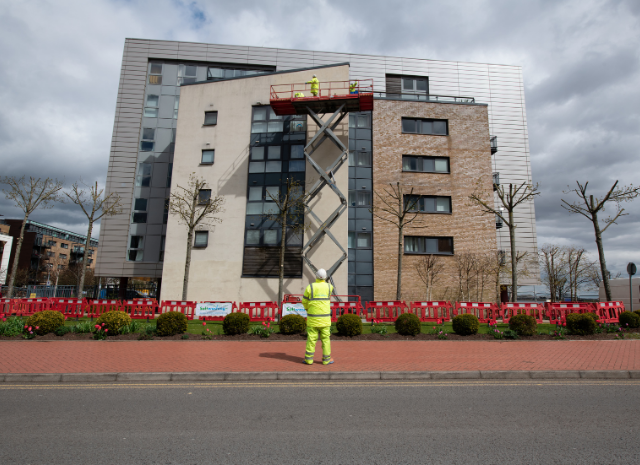

Builders’ merchants, trade counters and material suppliers with rendered elevations combine heavy vehicle traffic, dust from stored materials and long opening hours, all of which soil buildings quickly. Commercial render cleaning at these sites needs a dual specification, because much of what accumulates is mineral rather than biological. Dust from aggregates and cutting, traffic film from constant deliveries and general particulate all work into the texture and will not respond to biocidal treatment. Render stain removal handles that alongside treatment for whatever growth has established. Operationally, yards govern the schedule. Forklifts and delivery vehicles move continuously, loading areas cannot be closed, and trade customers arrive from early morning. We survey first, phase the work so only one elevation is affected at a time, and agree timings and routes with site management before attending. Stored materials within reach of a working elevation are protected or moved, and racking, signage and external fittings are masked or isolated. Exclusion zones are agreed and physically barriered rather than taped, given the vehicle movement involved. Insurance, method statements and risk assessments are supplied ahead of attendance, and operatives hold current working at height certification. Site induction and permit systems are completed before starting. Technically these premises present long, largely uninterrupted elevations. Soft wash render cleaning must hold identical dilution and continuous wet edges across the full run, since banding on an unbroken industrial wall is obvious from across a yard. For trade premises around Lower Heath, a planned interval is realistically the only way to keep a building presenting properly given how quickly it soils.
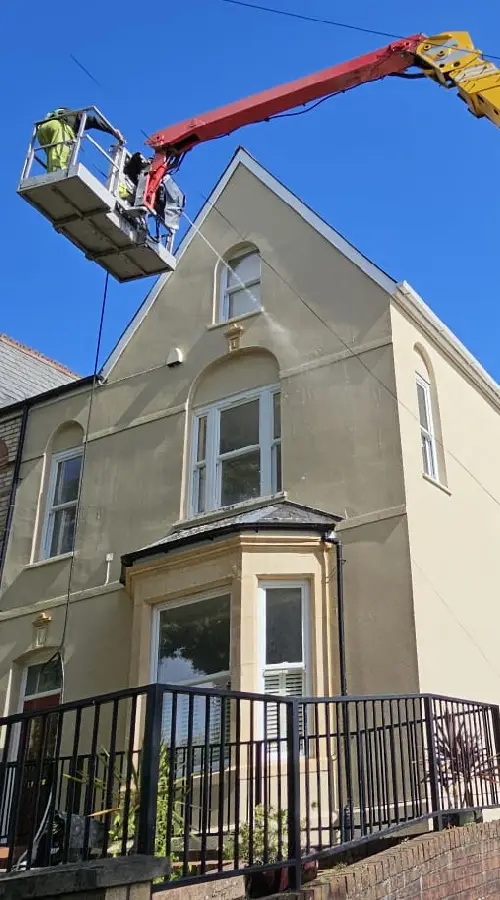
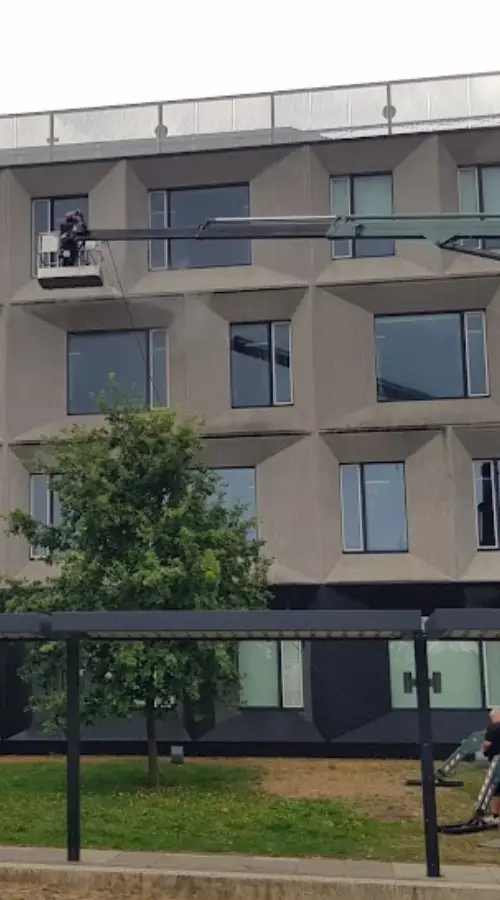
A fixed price should mean something specific, and it is worth setting out exactly what ours covers so there is nothing to interpret afterwards. It covers the survey, which is free and carries no obligation whether or not you proceed. It covers all preparation and protection: covering planting, pre-wetting where appropriate, sheeting hard surfaces, masking external fittings and moving anything within the working area. It covers treatment at whatever dilution and volume each elevation requires, not a standard mix applied until it runs out. It covers the full dwell period, which is the stage most often shortened elsewhere because nobody can see it. It covers rinsing with purified water, clearing down and checking the site. It covers any access equipment identified at survey. If a gable needs reaching in a particular way, that is in the figure rather than appearing later. And it covers a return visit where an area has genuinely not responded within four to six weeks. What it does not cover is anything we have not quoted for, and the quotation says plainly what is excluded. If a wall needs attention of a different sort first, or a particular stain is unlikely to clear entirely, that appears in writing rather than being discovered. Render cleaning cost established that way does not move. Render cleaning prices are itemised per elevation so the reasoning is visible. Full public liability cover and current working at height certification are available on request before booking, and our render cleaning specialists work on rendered elevations exclusively rather than fitting this in around general exterior maintenance.
Lower Heath is covered in full, with the same survey process and pricing basis applied to every property and no travel loading regardless of position. One thing worth explaining is how we quote when only part of a property needs attention, since that is more often the case than owners expect. Buildings very rarely soil evenly. A shaded gable can be several stages further advanced than a frontage receiving good light and air movement, and it is entirely normal for one elevation to account for most of the work while the others need comparatively little or nothing at all. We survey each wall separately and quote per elevation, which means the itemised figure shows exactly which one is driving the cost. Where an elevation genuinely does not need doing yet, the quotation says so rather than including it silently to inflate the total. That lets you make an informed decision. Sometimes treating the problem wall alone is the sensible answer, particularly where the others are years from needing anything. Sometimes it makes more sense to do everything while we are at the property, since the marginal cost of an additional elevation is far lower than a separate visit later. The one caveat we raise is appearance. On a through-coloured render, treating one wall and leaving another can leave a visible difference at the corner where they meet, and we flag that at survey so the decision is informed rather than discovered. There is no minimum job size. A single elevation is quoted at the same rates as a full property, and surveys take around twenty minutes.
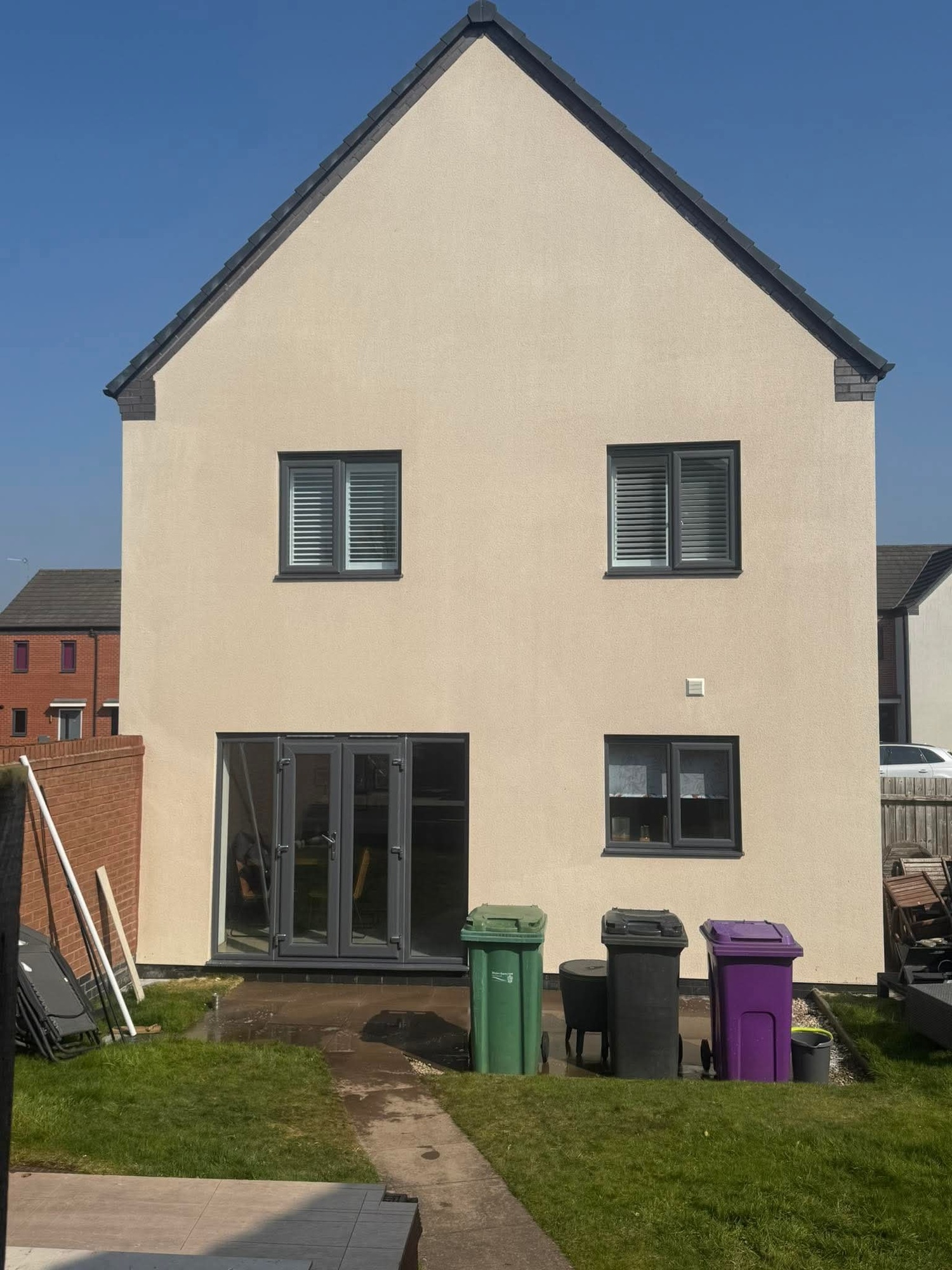
Most properties in Lower Heath benefit from professional render cleaning every 3 to 5 years, although this depends on the surrounding environment. Properties near trees, woodland, busy roads or coastal areas may require more frequent cleaning due to algae, mould and airborne contaminants. Our soft washing process removes existing growth and helps keep your render cleaner for longer.
Yes. Soft washing is specifically designed for delicate surfaces such as K-Rend, silicone render, monocouche render and painted render. Unlike high-pressure washing, it cleans at low pressure while treating biological growth at its source, reducing the risk of damage to the render finish.
We clean virtually all external render finishes, including K-Rend, Monocouche, Weber, Sto, silicone render, acrylic render, painted render, roughcast and pebble dash. Every cleaning method is tailored to the specific render type to achieve the best possible results.
Yes. Our specialist soft washing treatments are highly effective at removing green algae, red algae, black mould, mildew, lichen and other organic staining. We also apply professional biocide treatments to kill spores and slow down regrowth.
Because our process targets the biological growth rather than simply washing the surface, results typically last much longer than pressure washing alone. The exact lifespan depends on weather conditions, surrounding vegetation and the property’s location.
No. Our soft washing process is specifically designed to clean render safely. We use low-pressure application methods and specialist cleaning solutions that remove contamination without damaging the render surface when carried out by trained professionals.
The UK’s damp climate provides ideal conditions for algae, mould and other biological growth to develop on rendered surfaces. Areas with limited sunlight, nearby trees or persistent moisture are especially susceptible. Professional soft washing safely removes these contaminants and restores your property’s appearance.







































WhatsApp us