Rural properties collect a great deal more than rain. Dust from field work, pollen through the spring, seed heads and leaf fragments through the autumn, and a general fall of organic material across the whole year all settle on a rendered wall and lodge in whatever texture it has. None of that discolours a wall by itself, but it is exactly what an algal colony needs in order to establish, and it is why buildings in open country frequently green up faster than equivalent properties in a town. Our render cleaning services are specified with that loading in mind. A wall carrying years of accumulated organic debris within its texture needs more solution to wet through and a longer dwell to reach growth sheltering beneath the deposit, and quoting it at a standard rate underestimates the work. Horizontal surfaces suffer worst. Copings, sills, string courses, the tops of beads and any projecting band collect debris that then holds moisture permanently, and render moss removal on those details is nearly always the slowest part of a rural job. Render algae removal across the open faces is more straightforward, though it too benefits from treatment applied generously rather than sparingly. Professional render cleaning of a house in Milborne St Andrew has to clear the debris layer as well as the growth within it, and house render cleaning that only addresses the visible green leaves the conditions for it to return. Exterior render cleaning in open country is a slightly larger job than the same wall would be elsewhere, and it is quoted that way.
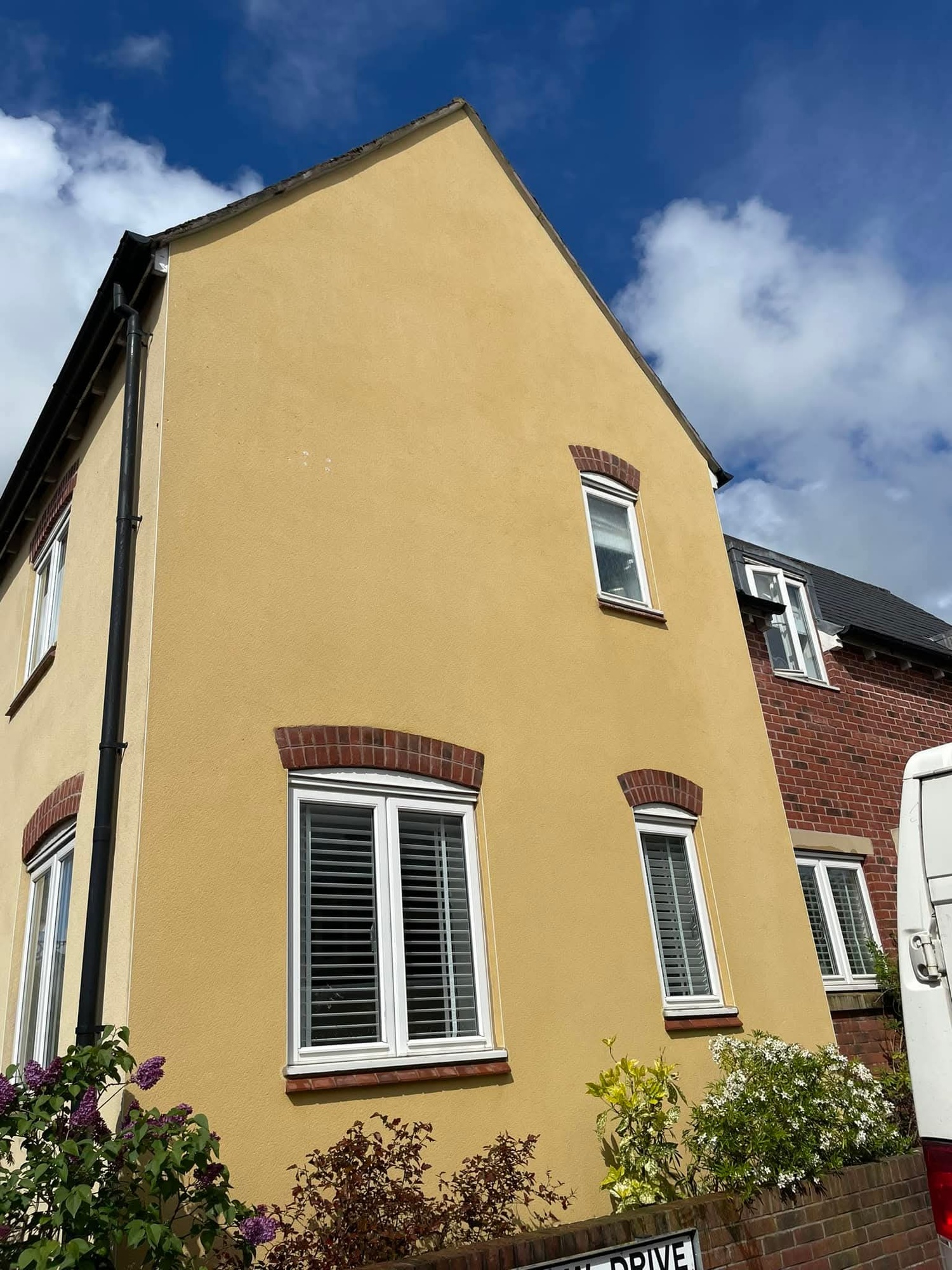
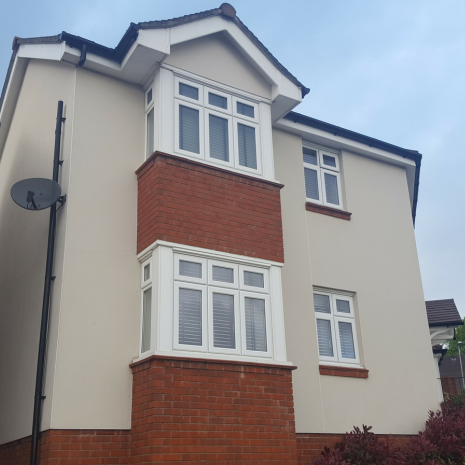

Silicone systems handle a debris-heavy position better than most finishes, because the surface is smooth enough and water-repellent enough that a good deal of what lands on it washes off in rain rather than lodging. K Rend cleaning on a rural property is generally less demanding than the same job on a heavily textured wall in the same position. Where it does establish, growth tends to concentrate at the details rather than across the panels — the tops of beads, sill returns, the line above a bell-cast, and anywhere a horizontal surface has allowed debris to sit. Soft wash render cleaning is applied more generously at those points and given a longer dwell, while the open faces take a standard application. Concentrating the volume where the deposits are is what keeps the whole job efficient. The method itself is unchanged: a biocidal solution at a pressure barely above hose flow, a long dwell to destroy algae and lichen at root level, then a gentle rinse, with no mechanical contact anywhere because pigment runs through the material and abrasion removes it permanently. Silicone render cleaning also needs generous volume to keep a hydrophobic face wet. Render stain removal on a rural building brings one additional item worth mentioning. Alongside iron bleed from ties and brackets, cement residue at fixing points and dark runs beneath a leaking joint, tannin staining from overhanging planting is common and needs its own treatment. On a Milborne St Andrew property each is tested on a small area first and quoted separately from the general soft wash. Tannin in particular behaves differently from anything else on a wall.
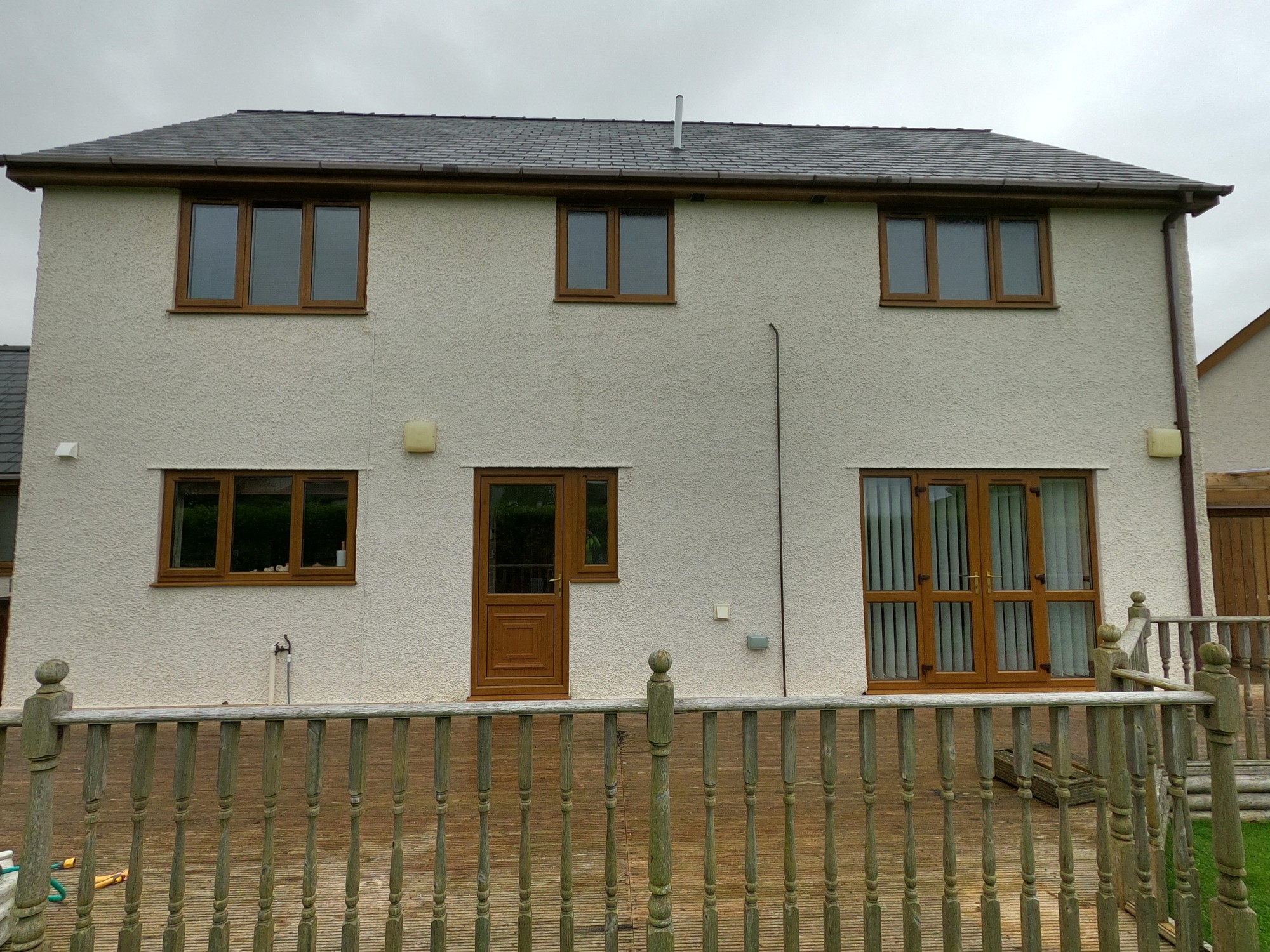
A scraped monocouche finish in an exposed rural position is the most debris-retentive combination we work on. The open texture catches everything that lands on it and holds it, and once organic material has lodged in the profile it stays damp long after the surface around it has dried. Monocouche render cleaning on this sort of property is quoted for more product and more time than the same wall would need on a sheltered plot. The approach is entirely a matter of volume and patience. Solution is applied at low pressure until the texture is genuinely wet through rather than glazed on the peaks, dwells long enough to kill growth at root level, and is repeated on copings, projecting bands and any detail where deposits have built up. The rinse is soft and even across each full face. Nothing is worked at, and nothing is hurried at any point. Render pressure washing is the tempting shortcut and remains excluded. It clears the debris quickly by removing the texture holding it, exposing the aggregate beneath and leaving permanent tracking, and coloured render cleaning offers no top coat to renew over that damage. A wall cleared that way looks better for a season and worse for a decade. Treated properly, render wall cleaning of monocouche leaves the profile intact and empty rather than intact and full, which is what determines how long the result holds. On buildings around Milborne St Andrew where a decade of accumulated growth had darkened the finish well beyond its original tone, the colour recovered over the following weeks is the specified one, and render restoration describes that accurately.
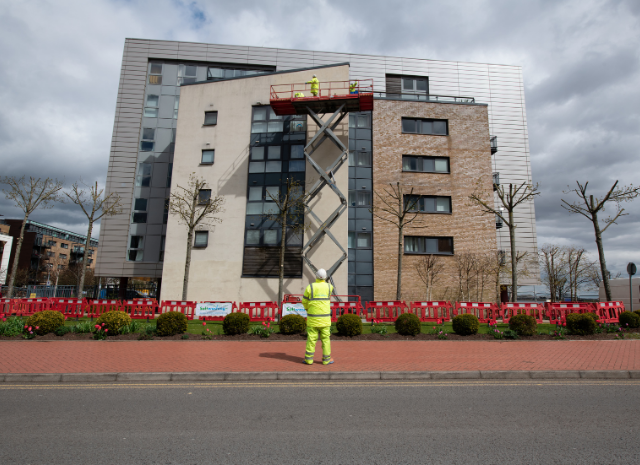

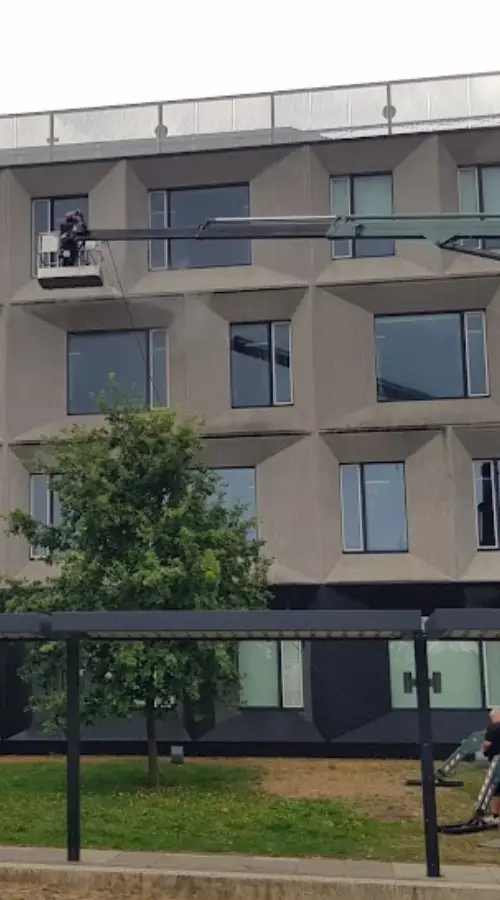
Commercial buildings on working rural sites collect a particular kind of loading. Vehicle movement across unmade ground raises dust, storage areas generate organic material, and open surroundings mean anything airborne eventually lands on the elevations. Commercial render cleaning on that sort of premises is scoped for heavier deposits than an equivalent building in a built-up position. The practical answer is usually a shorter interval rather than a harder treatment. Gentle work carried out more often is easier on the coating and cheaper each time. Access is established first — powered platforms, tower scaffold or extended pole systems according to height and standing ground — with the programme written around operating hours, deliveries and staff movement, and method statements and risk assessments issued in advance. Render soft washing suits these sites well. It uses very low water volumes, which matters where drainage is limited or where run-off would otherwise cross an unmade surface; it keeps that run-off directable clear of entrances and parking; and coverage stays even along a full flank. Render facade cleaning attempted with pressure equipment on a rural site tends to move as much material around the yard as off the wall. Containing run-off on unmade ground is considerably harder than avoiding it. Render mould removal on shaded and north-facing elevations remains the recurring item, and on debris-heavy sites those faces come back fastest of all. Putting premises in Milborne St Andrew onto a render maintenance cycle with the interval set by observation rather than by a standard figure is what keeps the treatment gentle and the buildings consistently presentable. Observation beats a standard figure on any site with unusual loading.
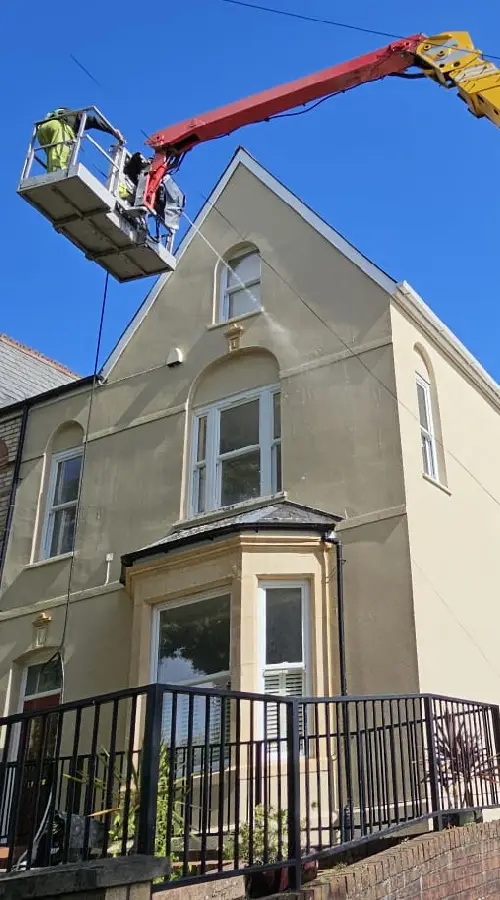
Softwashing UK is straightforward about the fact that some properties need attention more often than others. A building surrounded by open ground, mature trees or working land will accumulate organic debris faster than a sheltered one and will come back round sooner, and saying so at the first visit is far more useful than presenting it as a surprise three years later. Render cleaning prices are established at an assessment from elevation count, working height, access arrangements and the extent of the growth, with an honest estimate of the likely interval attached. The written render cleaning cost then holds. Affordable render cleaning on a property that colonises quickly usually means treating it a little more often rather than waiting until the job has doubled in size. Two modest visits generally cost less than one large one. The crews are render cleaning specialists rather than general exterior cleaners, which matters where the deposits are heavy. Judging how much solution a debris-laden texture will absorb, recognising an overpainted section, spotting a fragile bead or identifying cracking that would carry solution behind a coating are all part of getting a rural job right first time. Everything used is an eco friendly render cleaning product chosen because it breaks down safely once its work is complete, which matters particularly where run-off reaches open ground and planting. Anyone comparing firms in search of the best render cleaning service should ask how long the result is expected to hold on their particular building. A single answer given for every property is not an answer at all. Intervals vary by years between buildings a mile apart.
Quotations across this patch are issued in writing on the same day as the assessment, and they hold for three months from the date given. That matters more on rural property than people expect, since a wall carrying heavy organic debris will genuinely be a slightly larger job six months later than it is today. Residential render cleaning at Milton Abbas, Cheselbourne and Melcombe Horsey is quoted element by element — main elevations, garage, outbuilding, boundary wall — so the work can be taken in full or in parts without anybody having to ask for a revised figure. Nothing is bundled together in a way that hides where the cost sits. The Winterborne addresses, including Winterborne Houghton, Winterborne Stickland and Winterborne Zelston, along with Winterbourne Stickland, tend to bring larger and older properties where the quotation also records the condition of the coating itself. Where a second application looks likely it is included in the original figure rather than raised afterwards, and where an outbuilding is too fragile to treat we say so rather than quoting for it. There is no benefit in a larger figure for work that should not be done. Nobody is chased. A quotation is sent, and if nothing comes back that is the end of it unless you get in touch. There is no travel charge, no minimum job size and no charge for the assessment. Anyone searching render cleaning near me should expect a written figure they can consider at leisure, and a local render cleaning company that puts everything in writing on the day has already done the harder half of the job properly. The rest is a day on site.
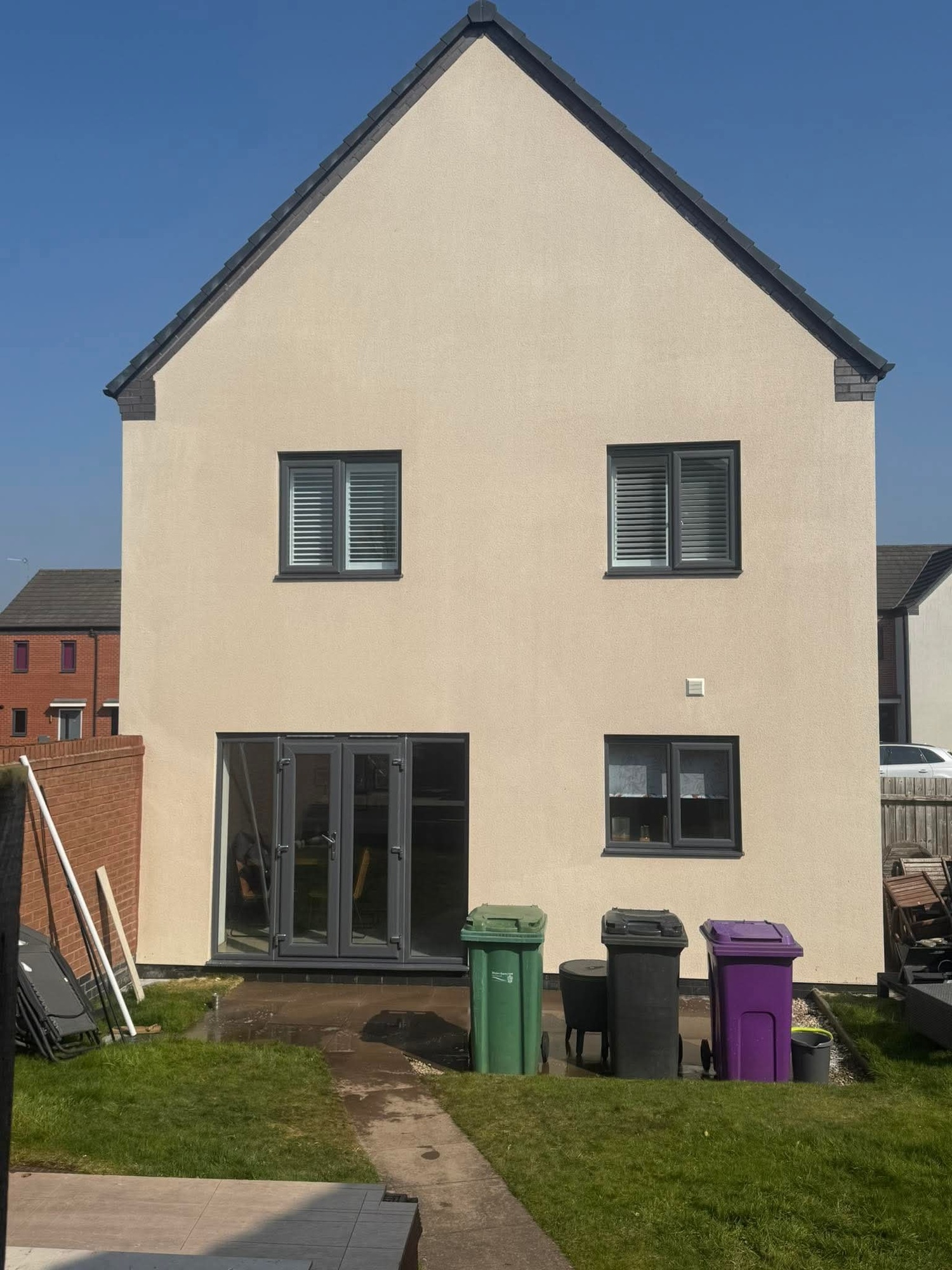
Most properties in Milborne St Andrew benefit from professional render cleaning every 3 to 5 years, although this depends on the surrounding environment. Properties near trees, woodland, busy roads or coastal areas may require more frequent cleaning due to algae, mould and airborne contaminants. Our soft washing process removes existing growth and helps keep your render cleaner for longer.
Yes. Soft washing is specifically designed for delicate surfaces such as K-Rend, silicone render, monocouche render and painted render. Unlike high-pressure washing, it cleans at low pressure while treating biological growth at its source, reducing the risk of damage to the render finish.
We clean virtually all external render finishes, including K-Rend, Monocouche, Weber, Sto, silicone render, acrylic render, painted render, roughcast and pebble dash. Every cleaning method is tailored to the specific render type to achieve the best possible results.
Yes. Our specialist soft washing treatments are highly effective at removing green algae, red algae, black mould, mildew, lichen and other organic staining. We also apply professional biocide treatments to kill spores and slow down regrowth.
Because our process targets the biological growth rather than simply washing the surface, results typically last much longer than pressure washing alone. The exact lifespan depends on weather conditions, surrounding vegetation and the property’s location.
No. Our soft washing process is specifically designed to clean render safely. We use low-pressure application methods and specialist cleaning solutions that remove contamination without damaging the render surface when carried out by trained professionals.
The UK’s damp climate provides ideal conditions for algae, mould and other biological growth to develop on rendered surfaces. Areas with limited sunlight, nearby trees or persistent moisture are especially susceptible. Professional soft washing safely removes these contaminants and restores your property’s appearance.














































WhatsApp us