Not all render is the same, and almost everything that goes wrong during a clean comes from somebody assuming it is. Sand and cement finishes, pebbledash, painted render, thin-coat polymer systems, mineral single-coats and silicone through-coloured products all behave differently under treatment, and the first job on any property is establishing which one is in front of us. That identification drives everything else. Age gives a strong hint, texture gives another, and how the surface responds to water tells you a great deal — a face that beads is behaving very differently from one that darkens instantly. Our render cleaning services are specified only once that is settled, because dilution, dwell time and rinse pressure all shift depending on the answer. The clean itself follows the same principles regardless. Biocidal solution applied at low pressure across whole elevations, held long enough to break the colony down at root level, then rinsed gently. Render algae removal is achieved chemically rather than mechanically on every substrate, and render moss removal on ledges, copings and behind rainwater goods is handled by repeating the application rather than by scraping deposits away. What changes with the coating is the margin for error. A painted render will tolerate more than a scraped mineral finish; a through-coloured system tolerates almost nothing. Professional render cleaning means knowing where that line sits before starting rather than discovering it partway through. Exterior render cleaning carried out this way in Sherborne leaves the coating exactly as it was found, minus several years of organic growth, and house render cleaning done to that standard is the version that lasts.
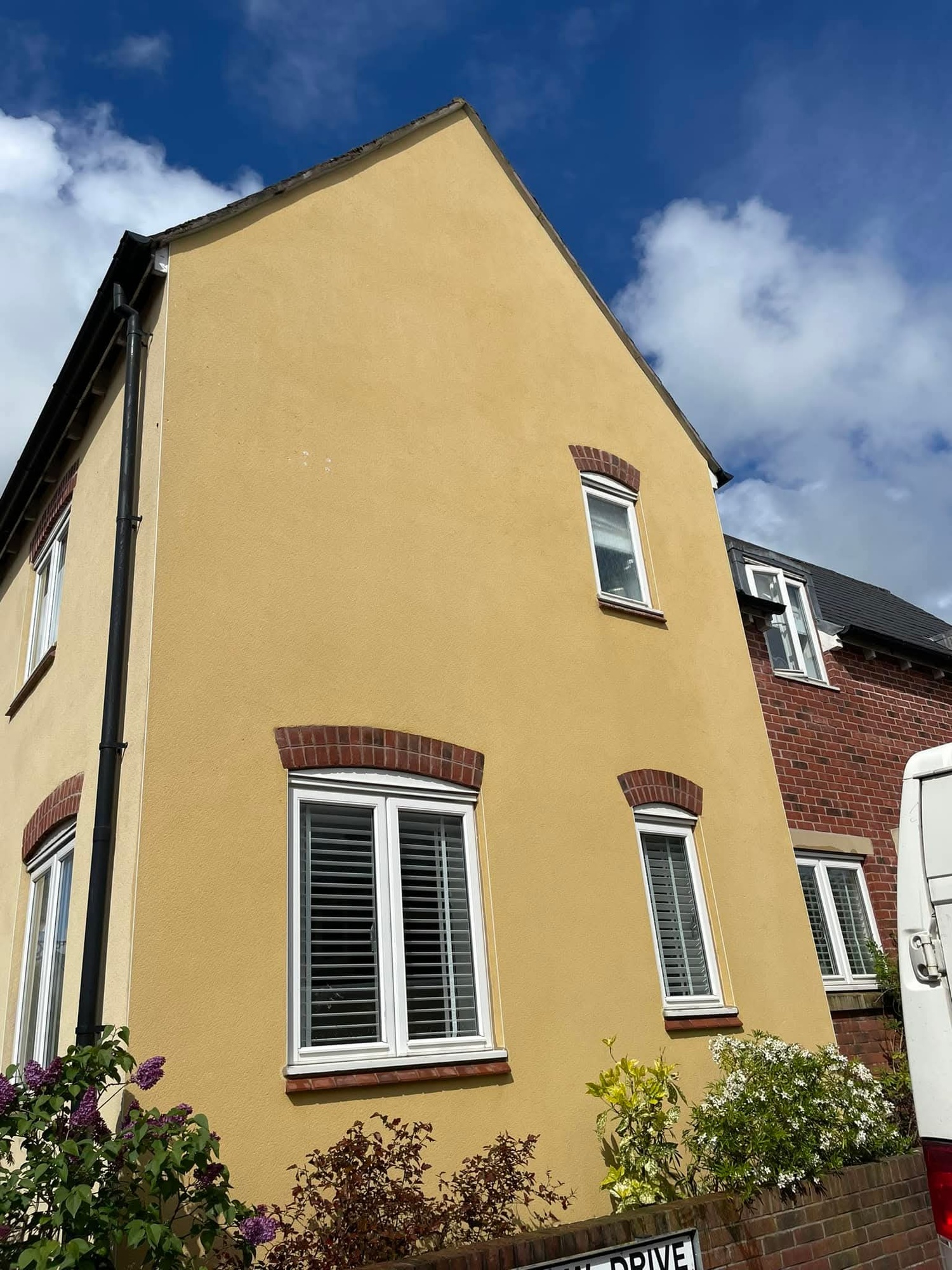
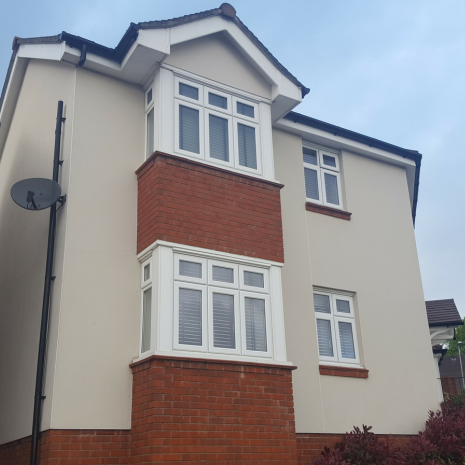

A fair proportion of the K Rend work we take on is remedial. Somebody has already had the elevation cleaned, a lance was used, and the wall now carries pale banding where pigment has been removed or a mottled finish where the surface was polished in places and not in others. None of that can be undone, which is the strongest possible argument for getting K Rend cleaning right the first time. The correct method involves no physical contact whatsoever. Soft wash render cleaning lays a biocidal solution onto the face at negligible pressure, allows a long dwell for it to break down algae and lichen through the full depth of the colony, then rinses with gentle controlled flow. Texture is untouched, pigment is untouched, and the finish comes out of the process exactly as it went in. Silicone render cleaning has its own working demands. The surface repels water by design, so solution runs rather than sits, and keeping it in contact long enough requires correct volume, correct dilution and sensible sequencing of elevations so nothing is applied to a face baking in direct sun. Render stain removal deals with everything a biocide cannot: iron bleed from fixings and brackets, cement residue from the original installation, dark runs where a joint or outlet has been leaking. These are separate treatments with separate products, always tested on a small area first. On most Sherborne properties the complete job is a full-elevation soft wash plus a handful of targeted spot treatments, quoted transparently as two elements rather than buried in one figure.
The quickest way to price a mistake on monocouche is to ask what a recoat costs. That figure — scaffold, materials, labour and colour matching across a whole building — is what sits behind every decision made on these elevations, because damage to a through-coloured single-coat finish cannot be patched. Monocouche render cleaning is carried out with that consequence permanently in view. Growth on this material is not sitting on top of anything. The scraped face is full of open pores and both algae and lichen root down into them, which is why a quick wash takes the colour off the deposits without removing the organism. Treatment therefore has to soak in. Solution goes on at low pressure in enough volume to wet the texture through, dwells long enough to kill at root level, and is repeated on the heaviest areas rather than worked at with anything mechanical. Render pressure washing does the opposite. It shears the scrape flat, brings aggregate to the surface and leaves lance tracks that read as light streaks in any raking sun. With coloured render cleaning there is no top coat to renew over that, and a partial repair will never match, so the whole elevation goes. That means scaffold, a full colour batch and several days of work, all to undo half an hour with a lance. Done properly, the finished wall shows nothing of the process — render wall cleaning with no banding, no bright patches and no start or stop lines. On buildings around Sherborne where the finish had darkened to near-grey across fifteen or twenty years, the original colour returning is close enough to new that render restoration describes it accurately.
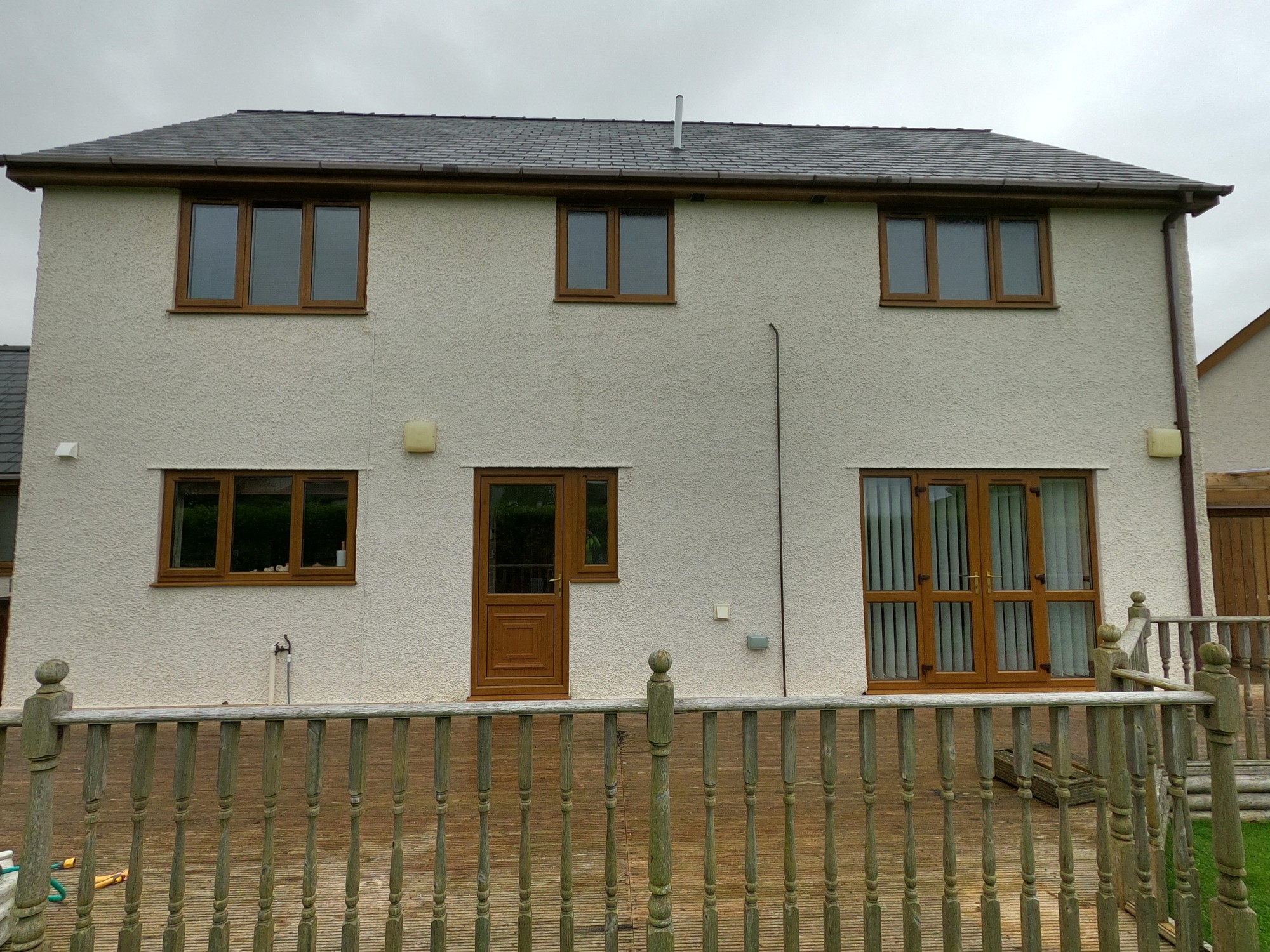
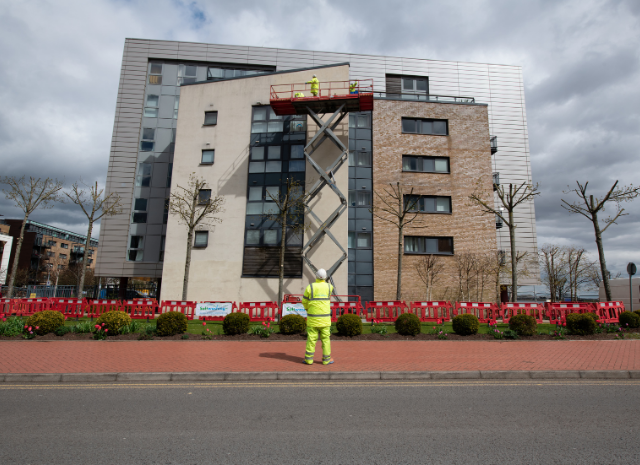

Commercial render work is often put out to tender with a single line of specification, and the results reflect it. Two quotations that look comparable on paper can describe completely different jobs — one a chemical treatment across full elevations with proper dwell times, the other a fast pressure wash that will look identical for a season and considerably worse afterwards. Commercial render cleaning is worth specifying properly. What a good submission covers is straightforward: the access method, the product, the dwell, the rinse, the programme and the reinstatement. Access is settled first, whether that means powered platforms, tower scaffold or pole systems, and works are then scheduled around operating hours so entrances, parking and deliveries continue as normal. Method statements and risk assessments precede the crew. Render facade cleaning at scale needs consistency more than speed. A long flank is taken in at a single glance, so any variation in coverage between one end and the other is immediately visible. Render soft washing delivers that evenness while using a fraction of the water pressure equipment needs, keeping run-off directable around doorways and vehicles and producing negligible drift near occupied space. Render mould removal on shaded and north-facing elevations is the item that determines whether the job holds. Growth killed at root level stays gone for years; growth washed off returns inside twelve months. Once that difference is understood, most operators put their buildings onto a render maintenance cycle with a fixed interval and an agreed annual figure, which is how premises in Sherborne stay presentable without anyone having to notice they needed attention.
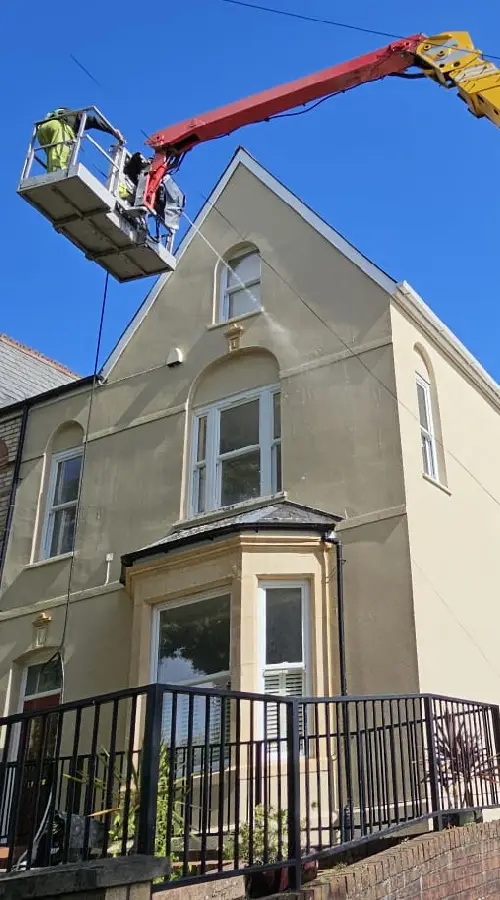
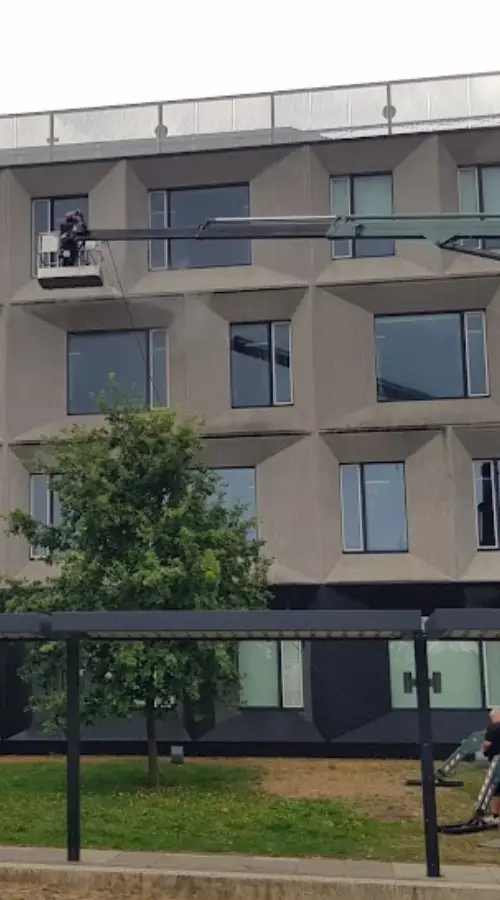
There will usually be somebody cheaper, and it is worth understanding what the saving buys. A low quote almost always assumes a pressure washer, a short visit and no assessment, and on the right substrate that can be perfectly acceptable. On a textured or through-coloured finish it is a permanent mistake dressed up as a bargain. We quote after looking at the property, and the figure reflects real variables. Render cleaning prices depend on how many elevations there are, how high they run, what access is needed and how many years of growth have accumulated. Once assessed, the render cleaning cost is fixed in writing. Affordable render cleaning is achieved by working efficiently — right equipment, one visit, no return trips — rather than by shortening the dwell or thinning what goes on the wall. Our crews are render cleaning specialists in the literal sense: rendered elevations are what they work on, week after week. That shows in whether they notice an overpainted section, a bead that will not take handling, or a hairline crack that will draw solution in behind the coating. Every treatment used is an eco friendly render cleaning product chosen to break down after use, because run-off from any wall reaches planting and drainage regardless of how carefully it is directed. When people set out to find the best render cleaning service, the most useful question is not what it costs but what happens if something on the wall turns out to be more fragile than expected. The answer separates the trade quickly. A firm willing to stop, reassess and tell you an elevation needs a different approach is worth considerably more than one determined to finish by four o’clock.
Softwashing UK plans work around Sherborne in trips rather than as individual jobs, and where several properties can be scheduled together the travel stops being a factor for any of them. Castleton and Oborne sit close enough in that residential render cleaning there is usually slotted alongside town work in the same week. A second group takes in the Caundle addresses — Bishop’s Caundle, Caundle Marsh, Purse Caundle and Stourton Caundle — along with Holwell, Lillington, Holnest and Boys Hill. These are mostly older properties on open ground, frequently carrying render that has never been treated, and the growth reflects it. Longer dwell times are assumed in the quotation and the occasional second visit is agreed in advance rather than raised afterwards. Lichen that has been building for thirty years does not release on one application, and pretending otherwise only produces a disappointing result. To the north, Poyntington, Goathill, Sandford Orcas, Trent and Clifton Maybank tend to bring larger buildings where access has to be planned properly, and the same applies at Compton, Over Compton, Nether Compton and Folke. Those are always quoted from a site visit, because standing ground and boundary planting decide whether a wall is a pole job or a platform job. Haydon completes the picture, and like everywhere else it carries no travel charge and no minimum job size, with work there usually grouped alongside other bookings in the same week so travel is shared rather than passed on. Someone searching render cleaning near me from a single cottage gets the same assessment, the same products and the same crew as a large detached property, which is the only version of a local render cleaning company that means anything at all.
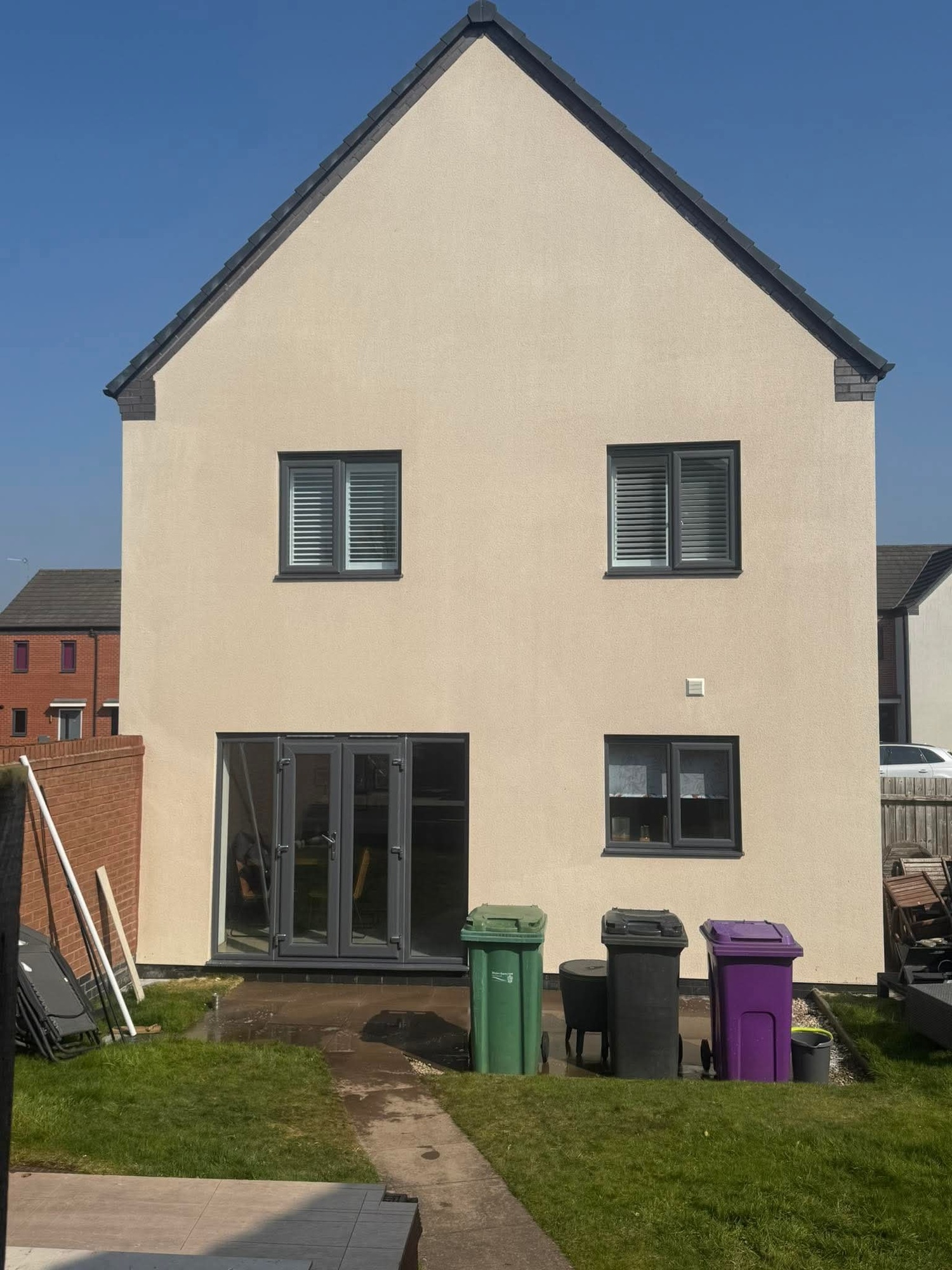
Most properties in Sherborne benefit from professional render cleaning every 3 to 5 years, although this depends on the surrounding environment. Properties near trees, woodland, busy roads or coastal areas may require more frequent cleaning due to algae, mould and airborne contaminants. Our soft washing process removes existing growth and helps keep your render cleaner for longer.
Yes. Soft washing is specifically designed for delicate surfaces such as K-Rend, silicone render, monocouche render and painted render. Unlike high-pressure washing, it cleans at low pressure while treating biological growth at its source, reducing the risk of damage to the render finish.
We clean virtually all external render finishes, including K-Rend, Monocouche, Weber, Sto, silicone render, acrylic render, painted render, roughcast and pebble dash. Every cleaning method is tailored to the specific render type to achieve the best possible results.
Yes. Our specialist soft washing treatments are highly effective at removing green algae, red algae, black mould, mildew, lichen and other organic staining. We also apply professional biocide treatments to kill spores and slow down regrowth.
Because our process targets the biological growth rather than simply washing the surface, results typically last much longer than pressure washing alone. The exact lifespan depends on weather conditions, surrounding vegetation and the property’s location.
No. Our soft washing process is specifically designed to clean render safely. We use low-pressure application methods and specialist cleaning solutions that remove contamination without damaging the render surface when carried out by trained professionals.
The UK’s damp climate provides ideal conditions for algae, mould and other biological growth to develop on rendered surfaces. Areas with limited sunlight, nearby trees or persistent moisture are especially susceptible. Professional soft washing safely removes these contaminants and restores your property’s appearance.





































WhatsApp us