One of the least visible effects of a proper render clean is the most valuable, and it is worth explaining because it is the reason the work is preventative rather than cosmetic. A rendered wall carrying established growth does not dry the way it was designed to. Moss and heavy algal colonisation form a layer that holds water against the surface continuously, so an elevation that should clear within hours of rain stays saturated for days, and through the wetter months it may not dry at all between wettings. Once the colony is destroyed at root level and the dead material has weathered off, that changes immediately. The surface is exposed to air movement again, water runs off rather than being held in a mat of growth, and the wall returns to drying at the rate the coating was specified for. Three benefits follow. Freeze-thaw cycling through winter acts on a drier coating rather than a saturated one. Ordinary weathering slows, since a permanently wet surface degrades faster than one that dries. And recolonisation is slower, because spores landing on a wall that dries quickly have a much narrower window in which to establish. That last point compounds the first. The interval before the next treatment is longer not only because the colony was killed but because the wall now behaves differently. Our render cleaning services are specified with that in mind. Render moss removal in particular changes how an elevation performs rather than only how it looks. Exterior render cleaning on a property in Uphampton buys drying behaviour as much as appearance, and the drying is what protects the coating.
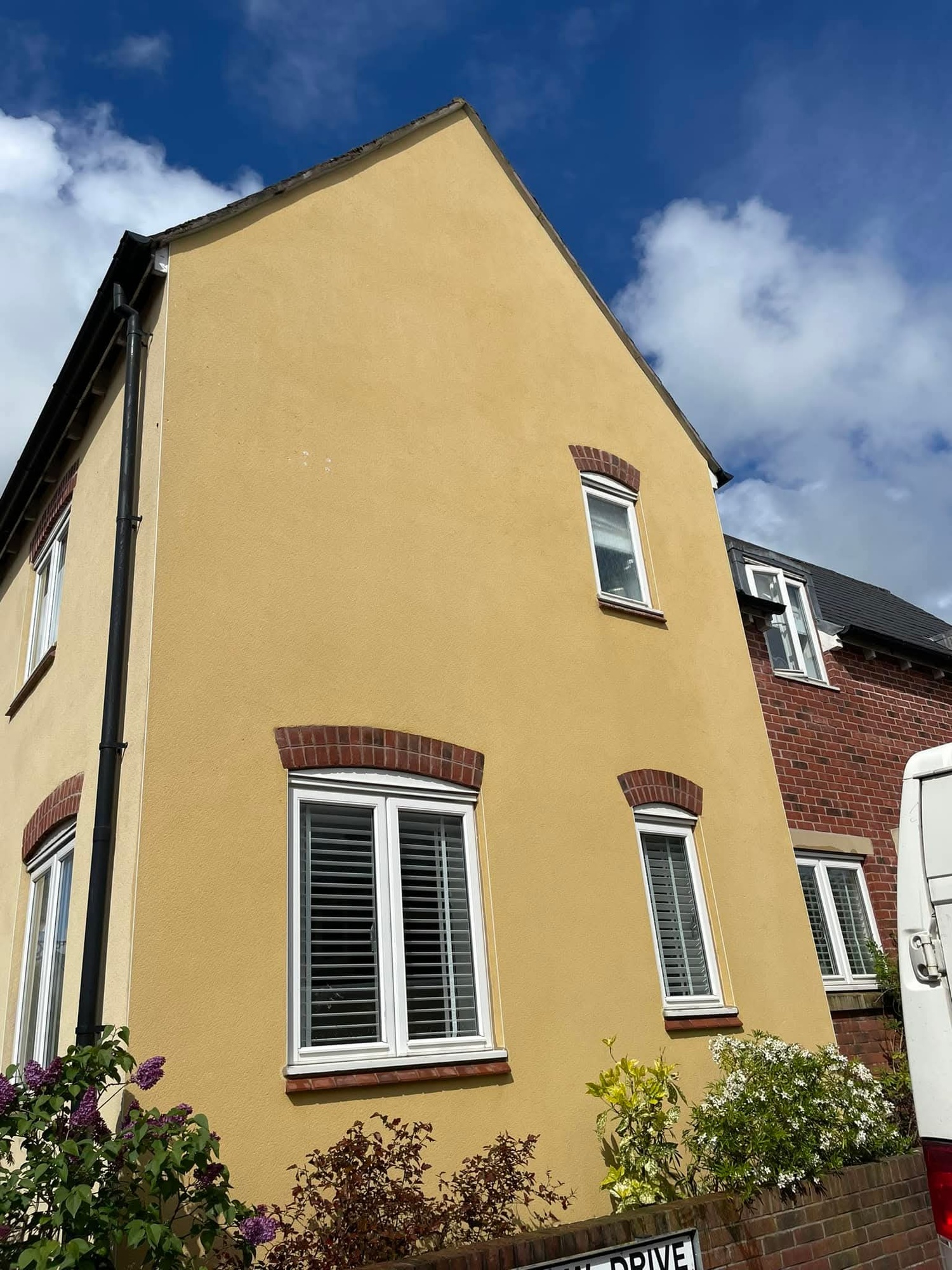
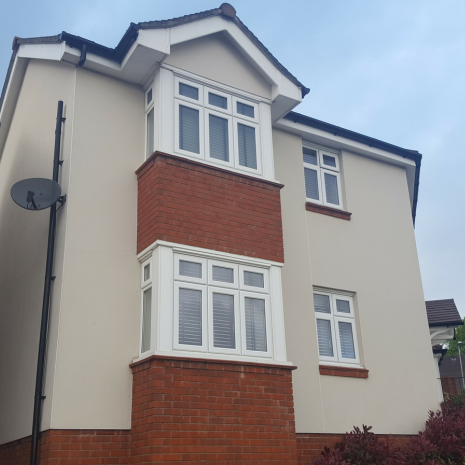

How a silicone rendered wall behaves after treatment is worth understanding, since the change in drying is what determines how long the result lasts. Before treatment, an established colony holds moisture against the surface. The wall wets during rain and then stays wet, because the growth acts as a mat retaining water and blocking air movement across the face. On a shaded elevation through winter, drying can effectively stop. After treatment, and once the dead material has weathered off over the following weeks, the surface is exposed again. Water repellency built into the silicone system works as intended, rain beads and runs off, and air movement clears the residual moisture. The elevation dries at the rate it was designed to. That matters more than appearance. A dry wall is a poor host: spores landing on it have a narrow window before the surface dries, and germination largely fails. A permanently damp wall is an ideal one. So the interval after a proper clean is long not only because the colony was destroyed but because the elevation now resists recolonisation in a way it could not while carrying growth. K Rend cleaning by pressure produces the opposite. Root structures survive, the texture is opened up so it holds moisture more readily, and the wall recolonises faster than before. Silicone render cleaning at our specification is chemical throughout: very low pressure, nothing brushed or agitated, full dwell, complete elevations worked with a live wet edge at consistent dilution. Render mould removal holds particularly well once the elevation is drying properly again, since fungal colonisation depends heavily on sustained surface damp.
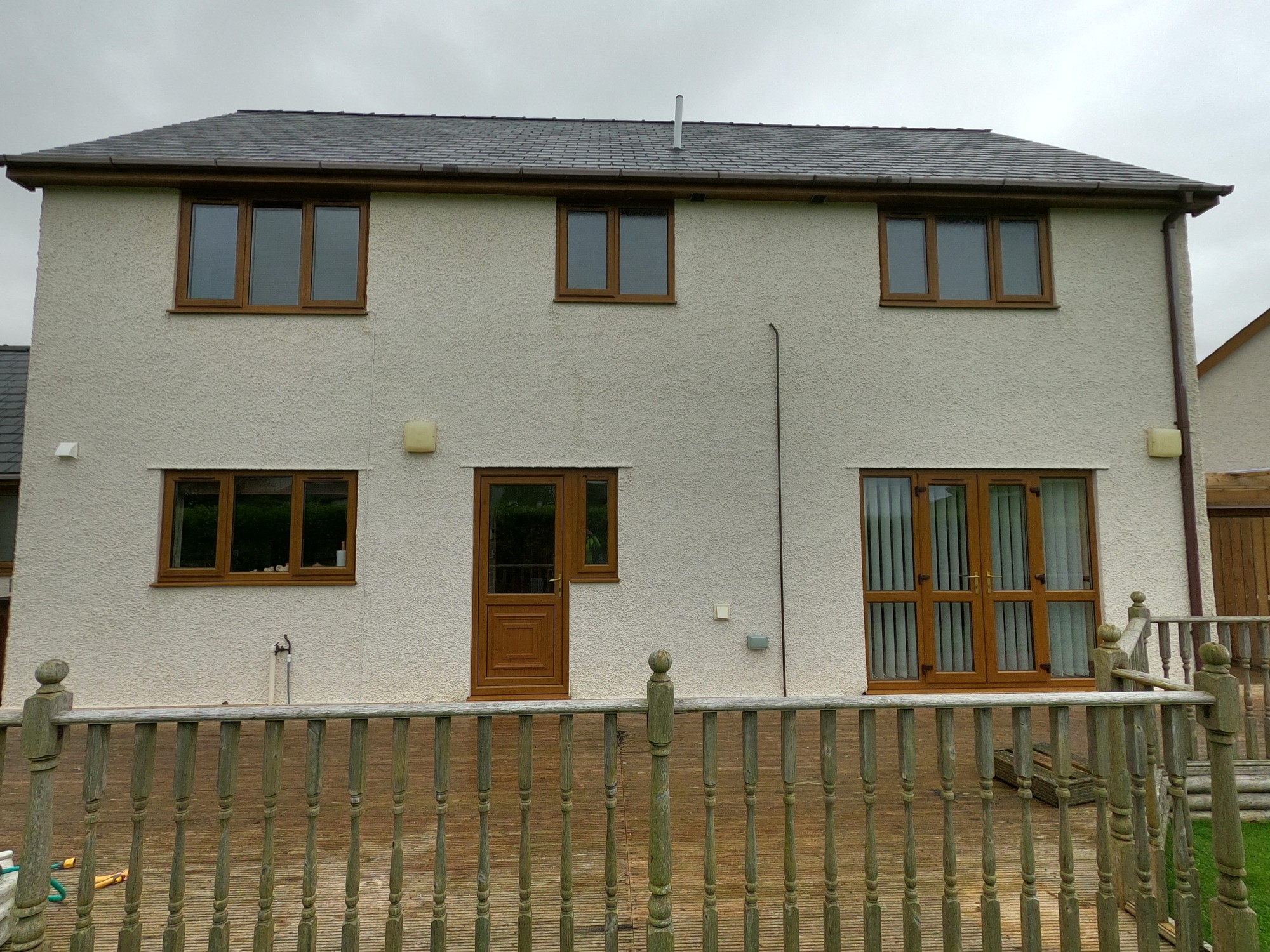
Monocouche takes longer to dry than most finishes at the best of times, and what a proper clean changes is how much longer. The scraped face holds moisture in its profile well after the flat plane of a smooth wall would have shed it. Add a mat of established growth across that profile and drying slows dramatically, since the growth both retains water and prevents air movement reaching the surface. On a shaded elevation the wall can remain damp more or less continuously through the wetter months. Removing the colony at root level restores the finish to its designed behaviour. Monocouche is breathable and moisture moves through it as intended, the profile drains and dries between wettings, and the elevation is no longer sitting wet for weeks at a time. That is the preventative value. A coating that dries normally is subject to far less freeze-thaw cycling, weathers more slowly and resists recolonisation more effectively, since spores landing on a drying surface have a narrow window in which to establish. It also explains why pressure washing is counterproductive on this finish. Aggregate stripped from the face leaves a surface that holds water differently, root structures survive within the texture, and the wall greens over faster than it did before. Monocouche render cleaning at our specification uses low pressure, generous volume to reach the base of the texture, full dwell and gentle rinsing, with nothing brushed or agitated. Render maintenance planned around that drying behaviour is why intervals on a properly treated wall are measured in years. Residential render cleaning that preserves the texture is therefore protecting the drying behaviour as much as the appearance.
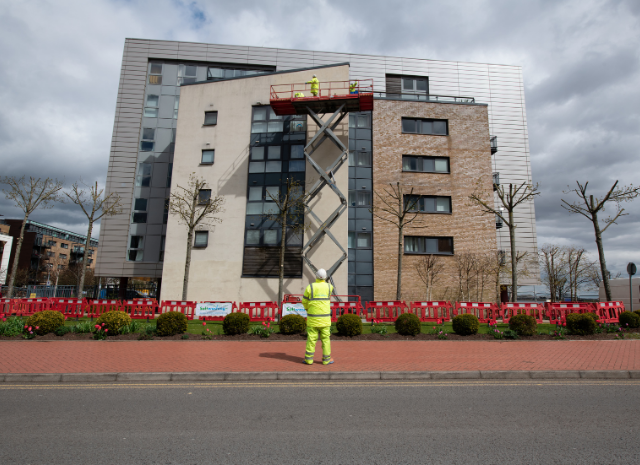

Village shops, post offices and general stores with rendered frontages share a set of constraints consistent enough to be worth describing. Opening hours are long, often seven days, and the shop is frequently the only one in its settlement, so closing is not a realistic option. Deliveries arrive early. The pavement outside cannot be obstructed while customers are coming and going. Commercial render cleaning at these premises therefore goes into an early morning slot before opening, or occasionally onto a half-day closing. Buildings of this size are almost always completed within a single visit. Anything on the pavement or forecourt is cleared and protected, and signage, lighting, alarms, cash machines and any opening on the elevation are masked or isolated before treatment is applied. Exclusion zones are agreed and signed so passers-by are kept clear without the doorway being blocked. The low pressure method helps considerably, with no machine noise carrying into the premises and no spray drifting across an entrance. Insurance, method statements and risk assessments are provided ahead of attendance, and operatives hold current working at height certification. Where the shop forms part of a continuous run of buildings, we confirm boundaries and coordinate with the properties either side, since one cleaned frontage reads differently from those around it. Render facade cleaning maintains consistent dilution and live wet edges so the elevation reads uniformly. For village premises around Uphampton, a clean every few years is modest against the visibility it buys. Softwashing UK schedule around all of it rather than expecting the shop to work around us.
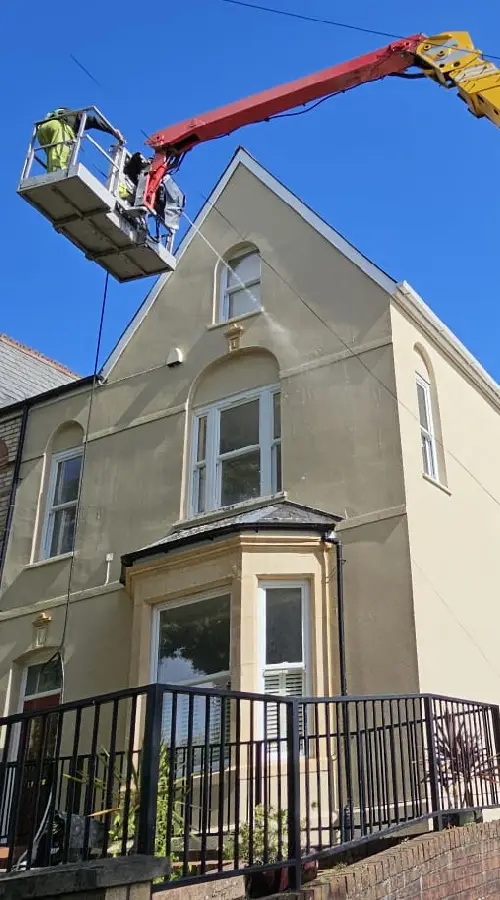
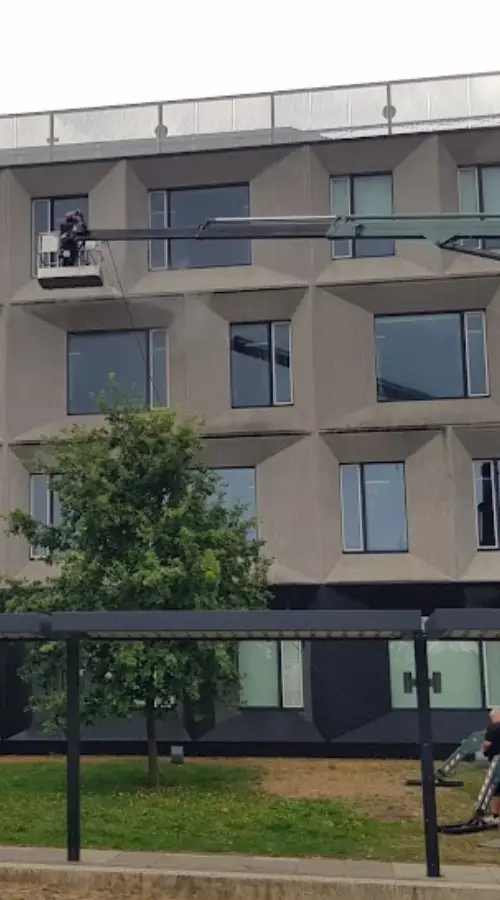
The survey costs nothing and carries no obligation, and it is worth explaining why we structure it that way rather than charging for the visit. Charging creates a poor incentive on both sides. It pressures the customer to proceed having already paid for something, and it pressures us to find work rather than give an honest assessment. Neither produces a good outcome, and the assessment is the part that determines whether the job succeeds. So the visit is free. It takes around twenty minutes, does not require anyone to be at home provided every elevation is reachable, and produces an itemised written quotation per elevation that holds for a stated period. If the answer is that one wall needs attention and three do not, the quotation says so. If the answer is that nothing needs doing yet, we say that too and are happy to look again in a couple of years. That happens more often than people expect, and there is no advantage in selling work a property does not need, since it would be obvious the following season. There is no follow-up chasing. Nobody will telephone repeatedly to ask whether you have decided, and the figure is there if you want it. Render cleaning prices are fixed at that point and cover preparation, treatment, dwell, rinsing, clearing down and any access identified. Full public liability cover and current working at height certification are available on request before booking, and our render cleaning specialists work on rendered elevations exclusively. Most of our work arrives through recommendation, which only follows from assessments being honest in the first place.
Uphampton is covered in full, with the same survey process and pricing basis applied to every property and no travel loading regardless of position. There is no minimum job size, which is worth stating plainly since a number of contractors decline smaller work in outlying settlements or price it punitively. A single elevation, a bungalow frontage or one problem gable is entirely welcome and quoted at the same rates as a full property. That is possible because work is programmed by area: jobs in the same locality are grouped and completed together, so a short job fits alongside longer ones in the same day rather than carrying the cost of a separate visit. It also reflects how the work should be approached. Treating one problem elevation early, before colonisation spreads to the rest of the building, is considerably cheaper than waiting until everything needs doing. Discouraging that with minimum charges would be poor advice presented as pricing. So if one wall is troubling you, that is what we will quote for, and the written figure will state plainly whether the others need attention or not. Where they genuinely do not, we say so rather than including them silently. The one thing we flag is appearance, since on a through-coloured render a treated wall can read differently from an untreated one at the corner where they meet. Flexibility on timing helps with smaller jobs particularly, and surveys take around twenty minutes and produce an itemised written figure by email. Where several properties nearby arrange within the same period, mobilisation is shared and each quotation reflects it.
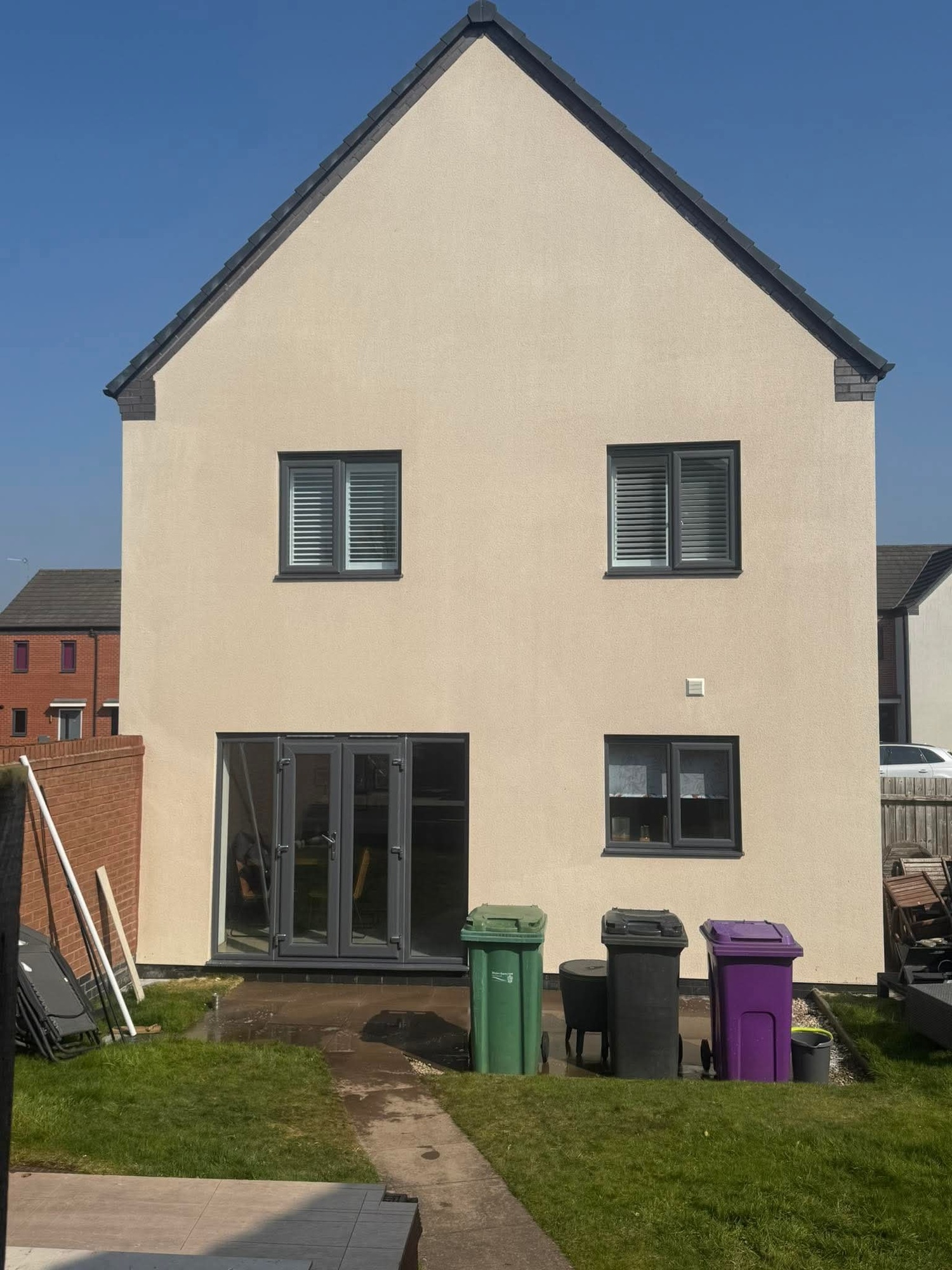
Most properties in Uphampton benefit from professional render cleaning every 3 to 5 years, although this depends on the surrounding environment. Properties near trees, woodland, busy roads or coastal areas may require more frequent cleaning due to algae, mould and airborne contaminants. Our soft washing process removes existing growth and helps keep your render cleaner for longer.
Yes. Soft washing is specifically designed for delicate surfaces such as K-Rend, silicone render, monocouche render and painted render. Unlike high-pressure washing, it cleans at low pressure while treating biological growth at its source, reducing the risk of damage to the render finish.
We clean virtually all external render finishes, including K-Rend, Monocouche, Weber, Sto, silicone render, acrylic render, painted render, roughcast and pebble dash. Every cleaning method is tailored to the specific render type to achieve the best possible results.
Yes. Our specialist soft washing treatments are highly effective at removing green algae, red algae, black mould, mildew, lichen and other organic staining. We also apply professional biocide treatments to kill spores and slow down regrowth.
Because our process targets the biological growth rather than simply washing the surface, results typically last much longer than pressure washing alone. The exact lifespan depends on weather conditions, surrounding vegetation and the property’s location.
No. Our soft washing process is specifically designed to clean render safely. We use low-pressure application methods and specialist cleaning solutions that remove contamination without damaging the render surface when carried out by trained professionals.
The UK’s damp climate provides ideal conditions for algae, mould and other biological growth to develop on rendered surfaces. Areas with limited sunlight, nearby trees or persistent moisture are especially susceptible. Professional soft washing safely removes these contaminants and restores your property’s appearance.








































WhatsApp us