Planning render maintenance across several years is more useful than treating each clean as an isolated event, and the approach is straightforward once the intervals are known. The starting point is that walls on the same building behave differently. A well-lit elevation with reasonable air movement will commonly hold four to six years after proper dwell-based treatment. A shaded gable enclosed by planting may need attention in two to three. Treating everything at once each time spends money on walls that were fine. A sensible plan therefore staggers the work. The problem elevation is treated when it needs it, the rest of the building when they need it, and only occasionally do all of them coincide. Because the marginal cost of adding an elevation while we are already at the property is low, the practical answer is often to treat the problem wall plus anything within a year or two of needing it, and leave the remainder. The second element is early action. Concentration lines beneath sills and bead terminations darken first, before general filming spreads, and treating at that stage is a fraction of the cost of waiting until the whole elevation has gone. The third is recording what was done, which makes each subsequent visit quicker and cheaper. Our render cleaning services are quoted with an expected interval per elevation stated in writing, so a plan can be built from actual figures. Render algae removal caught early and render moss removal left late are very different jobs. Exterior render cleaning on a property in Waresley is cheapest when it follows a rhythm rather than a crisis.
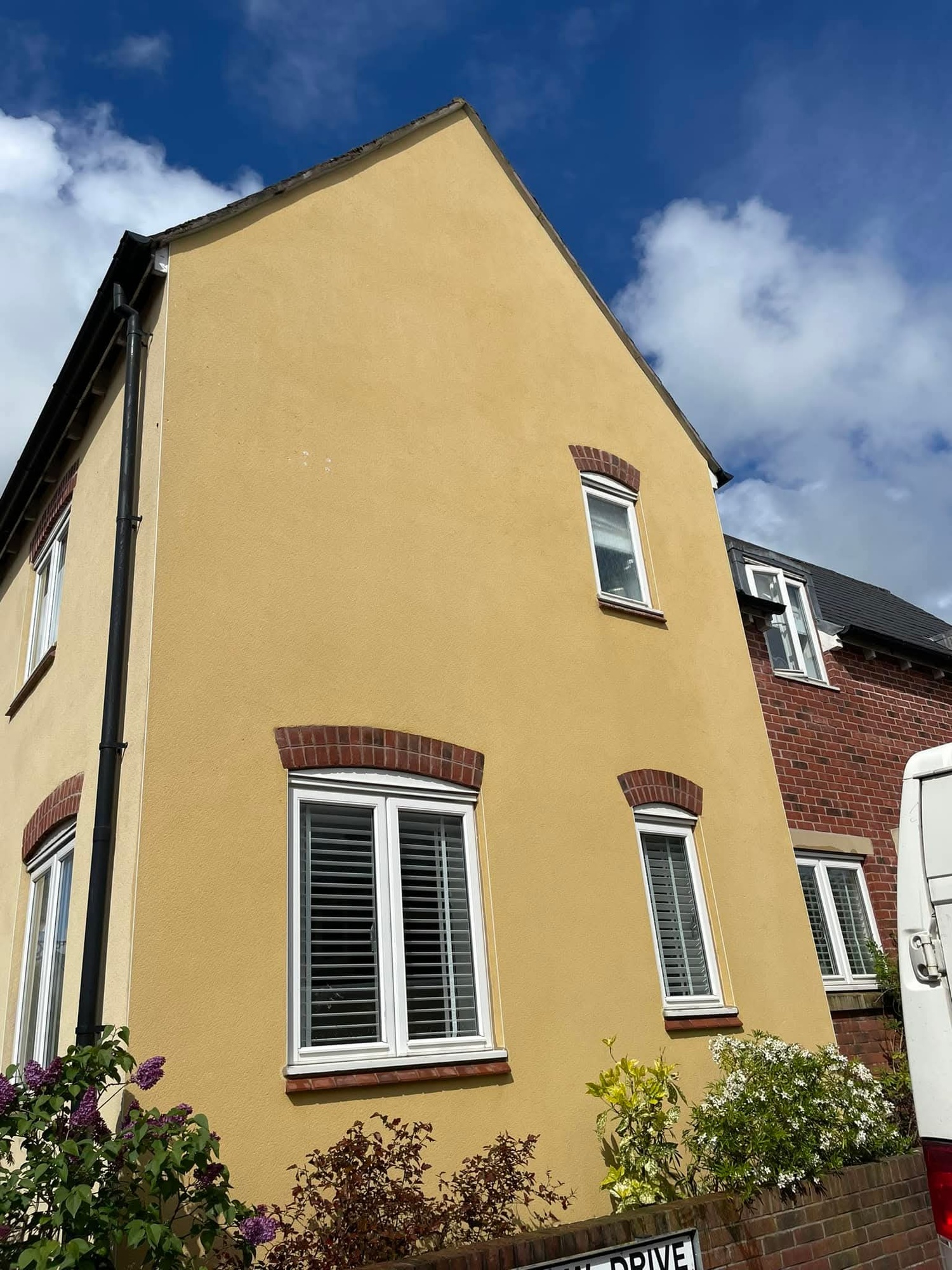
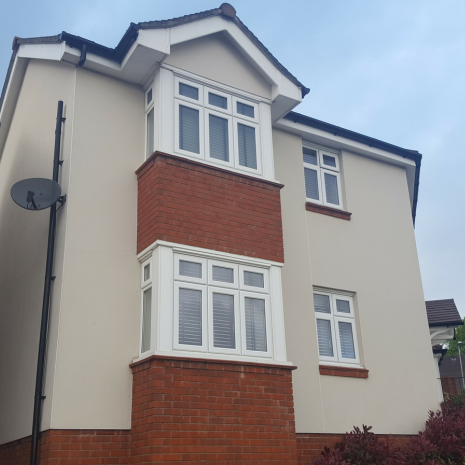

Planning silicone render maintenance across a decade is worth doing deliberately, and the arithmetic is more favourable than most owners expect. A first clean on an untreated property is the largest job. Colonisation has had years to establish, several organisms are usually present, treatment needs greater volume and longer dwell, and on badly neglected walls a second application may be required. Every clean after that is smaller. Because growth was destroyed at root level rather than removed from view, recolonisation began from airborne spores landing on a sterile surface, so what returns is shallow and recent. Volume, dwell and time on site all reduce, and we quote returning properties lower for that reason. Over ten years, a property treated on sensible intervals therefore costs considerably less than one left and rescued twice, and it looks better throughout. It also spends those ten years drying normally between wettings rather than holding moisture permanently, which is what protects the coating. K Rend cleaning planned this way relies on accurate interval advice, which we give per elevation rather than for the building, based on aspect, shelter, texture depth and proximity to vegetation. We keep a written record of what was applied to each wall, which makes each subsequent survey faster and the specification already known. Silicone render cleaning is chemical throughout on every visit: very low pressure, nothing brushed or agitated, full dwell, complete elevations worked with a live wet edge at consistent dilution. Render mould removal on a maintained property is usually straightforward, which is the practical argument for not leaving a wall a decade.
Monocouche rewards planned maintenance more than most finishes, because the coating can be brought back indefinitely provided nothing is ever taken off it. The material is mineral pigmented and extremely stable. A monocouche elevation cleaned properly at sensible intervals will look essentially as supplied across decades, since each treatment removes only what has accumulated and leaves the scraped face untouched. The alternative is a slow decline. A wall cleaned by pressure or brushing loses a little aggregate each time, and each clean starts from a slightly worse baseline than the last. After two or three cycles the elevation reads as blotchy regardless of how clean it is, and the only remedy is recoating. So the plan matters. We give an expected interval per elevation, based on aspect, shelter, texture grade and surroundings, and record what was applied so the next visit is faster and cheaper. Returning properties are quoted lower because a maintained wall is genuinely a smaller job. Treating early also helps. Concentration lines beneath sills, bead terminations and along the base course darken well before general filming spreads, and catching a wall at that stage is a fraction of the cost of waiting. Monocouche render cleaning is unchanged on every visit: low pressure, generous volume to reach the base of the texture, full dwell so growth is destroyed at root level, gentle rinsing, nothing brushed or agitated. Render restoration remains achievable throughout the life of the coating, and render maintenance planned properly is a modest recurring item rather than an eventual large expense. Render maintenance planned per elevation rather than per building is also what keeps each individual visit short and inexpensive.
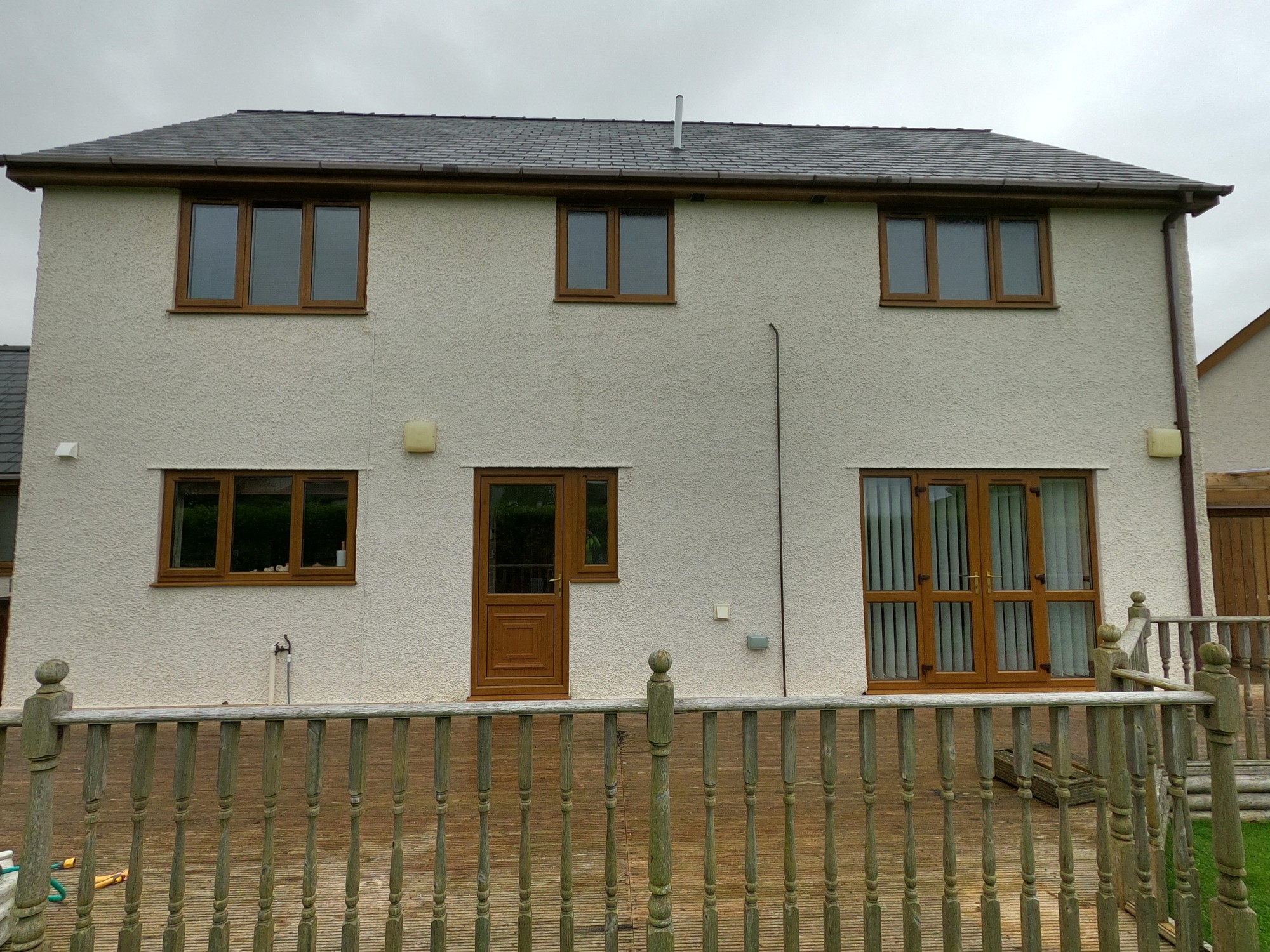
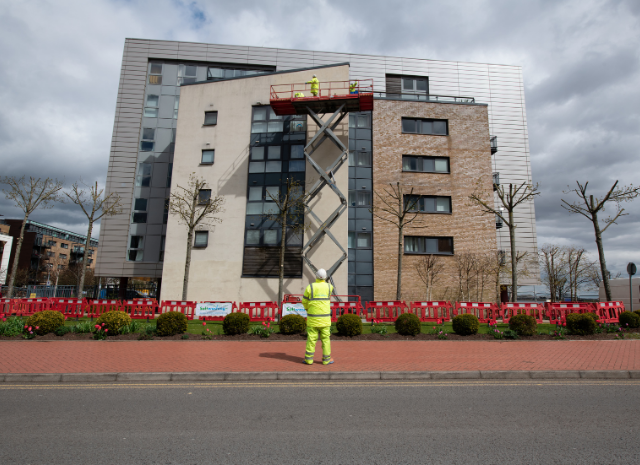

Plant hire depots and equipment yards with rendered buildings combine constant heavy vehicle movement with dust and residue that soils elevations quickly, much of it mineral rather than biological. Commercial render cleaning at these sites therefore needs a dual specification: render stain removal with appropriate chemistry for the deposit, alongside biocidal treatment for whatever growth has established. Treating only one leaves the building visibly half done. Operationally, yards run from early and vehicles move continuously. We survey first, phase the work so only one elevation is affected at a time, and agree routes and timings with depot management so collections and returns continue uninterrupted. Plant and equipment within reach of a working elevation is moved or sheeted, and fuelling points, wash bays and external services are identified and protected. Exclusion zones are agreed and physically barriered given the vehicle movement involved. Insurance, method statements and risk assessments are supplied ahead of attendance, and operatives hold current working at height certification. Site induction and permit systems are completed before starting. Technically these premises present long single-storey or low two-storey elevations, usually with large openings and considerable plain wall between them. Soft wash render cleaning must hold identical dilution and continuous wet edges across each run, since banding on an unbroken wall of that length is obvious from across a yard. For depot premises around Waresley, a planned interval is realistically the only way to keep the buildings presenting properly given the rate at which they soil, and it protects a large area of coating. Where an operator runs more than one depot, programming them together reduces the cost per site and keeps presentation consistent.
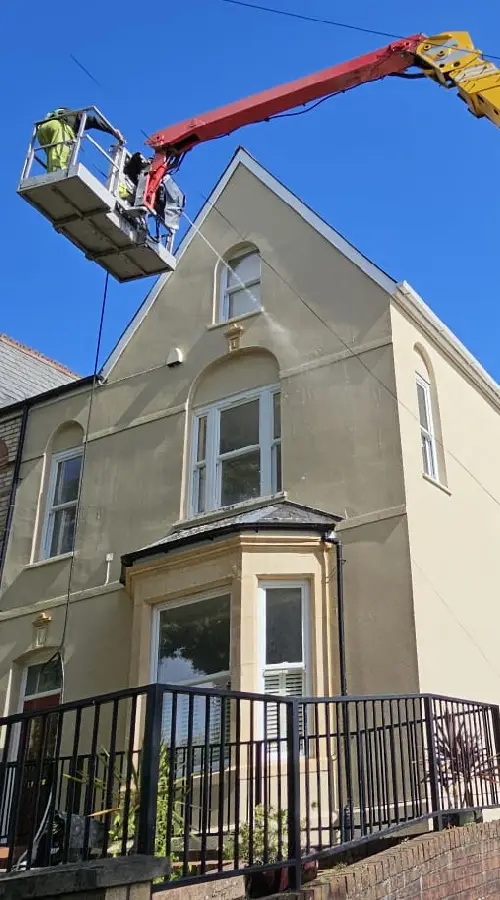
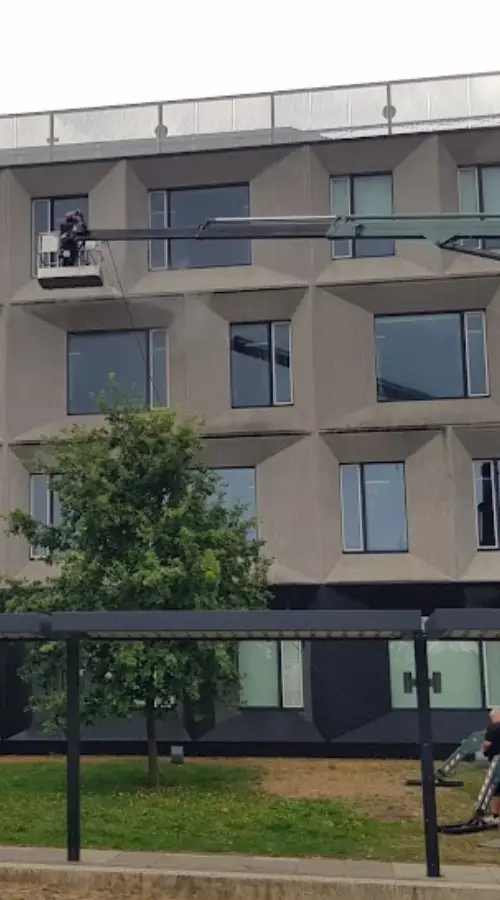
The person who surveys your property works alongside the team that carries out the job, and it makes a practical difference worth explaining. Nearly every important decision about a render clean is made at the survey. Which coating is on each elevation. Whether the surface is sound enough to treat. Which organisms are present and at what density. What dilution and volume each wall requires and how long it must dwell. How every part of the elevation will be reached. Whether anything should be excluded. Those are close-range judgements, and where the person making them is not present when the work happens, all of it has to be transmitted second-hand. In practice a good deal gets lost, and what arrives on site is a price, a date and an address. Softwashing UK do not subcontract. The specification written at survey is the specification applied at the property, and nothing is interpreted at a distance. It also means the written quotation can be specific rather than generic, listing each elevation with the coating identified, the growth graded, the treatment specified and the access stated, because those details are going to be used. Render cleaning cost is fixed at that point and does not move. Full public liability cover and current working at height certification are in place and cover the people who will actually be at your property. As a local render cleaning company, the team that treats a wall is the team that returns if anything needs revisiting within four to six weeks. Everything from the first walk round the property to the final check of the borders is carried out by the same people.
Waresley is covered in full, with the same survey process and pricing basis applied to every property and no travel loading regardless of position. Survey timing is more flexible than most people expect, and saying so removes the main practical obstacle to getting a figure. The visit takes around twenty minutes and involves walking the outside of the property, examining each elevation at close range, identifying the coating, grading the texture, checking condition, recording which organisms are present and at what density, measuring the areas involved and working out how every wall will be reached. None of that needs access to the interior. Provided every elevation can be reached without going through the house, we attend at whatever time suits our route and send the itemised written quotation by email afterwards. You are not waiting in and we are not restricted to a particular slot. Where a rear or side elevation sits behind a locked gate, we arrange a time or ask that access be left open, and evening and weekend visits are both possible if that is easier. If you would rather be present, that is welcome and often useful where there are specific concerns about a particular wall or where you want the reasoning explained on site. Photographs sent with an enquiry help and often allow a realistic indication beforehand, though they cannot replace the survey since texture depth, condition and organism type all need close inspection. There is no charge, no obligation and no follow-up chasing. The quotation holds for a stated period and is itemised per elevation so the basis of the figure is visible.
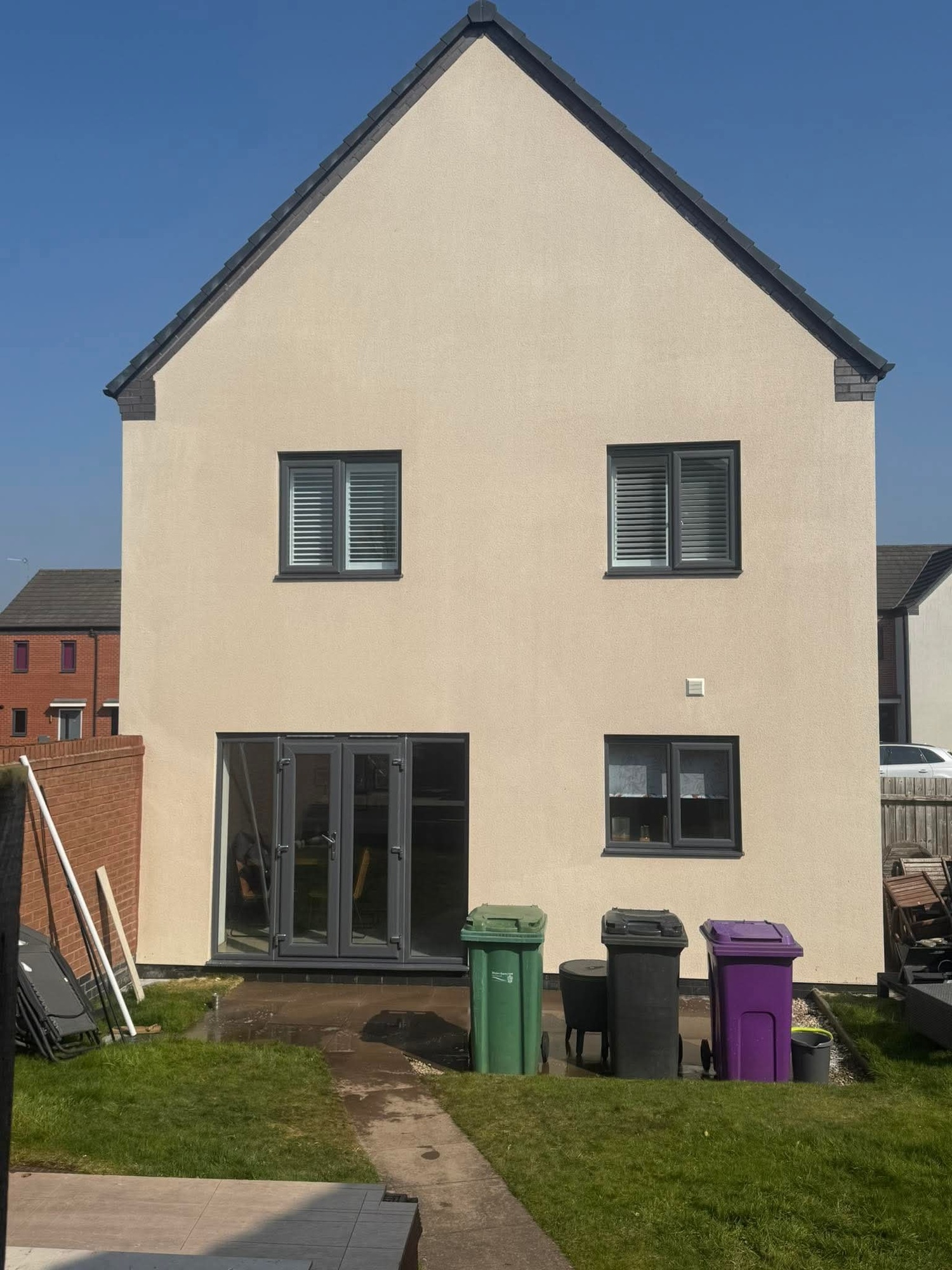
Most properties in Waresley benefit from professional render cleaning every 3 to 5 years, although this depends on the surrounding environment. Properties near trees, woodland, busy roads or coastal areas may require more frequent cleaning due to algae, mould and airborne contaminants. Our soft washing process removes existing growth and helps keep your render cleaner for longer.
Yes. Soft washing is specifically designed for delicate surfaces such as K-Rend, silicone render, monocouche render and painted render. Unlike high-pressure washing, it cleans at low pressure while treating biological growth at its source, reducing the risk of damage to the render finish.
We clean virtually all external render finishes, including K-Rend, Monocouche, Weber, Sto, silicone render, acrylic render, painted render, roughcast and pebble dash. Every cleaning method is tailored to the specific render type to achieve the best possible results.
Yes. Our specialist soft washing treatments are highly effective at removing green algae, red algae, black mould, mildew, lichen and other organic staining. We also apply professional biocide treatments to kill spores and slow down regrowth.
Because our process targets the biological growth rather than simply washing the surface, results typically last much longer than pressure washing alone. The exact lifespan depends on weather conditions, surrounding vegetation and the property’s location.
No. Our soft washing process is specifically designed to clean render safely. We use low-pressure application methods and specialist cleaning solutions that remove contamination without damaging the render surface when carried out by trained professionals.
The UK’s damp climate provides ideal conditions for algae, mould and other biological growth to develop on rendered surfaces. Areas with limited sunlight, nearby trees or persistent moisture are especially susceptible. Professional soft washing safely removes these contaminants and restores your property’s appearance.












































WhatsApp us