A rendered property maintained properly over twenty years looks very different from one that was not, and the comparison is worth drawing because the cost difference runs the other way. The maintained property has been cleaned on sensible intervals, per elevation rather than all at once. Each treatment destroyed growth at root level, so the wall spent those decades drying normally between wettings rather than holding moisture permanently. Freeze-thaw cycling acted on a dry coating. Ordinary weathering proceeded at the expected rate. The colour is still close to what was supplied, because the pigment was never abraded and each clean took nothing off the surface. The render is where it should be after twenty years, and recoating is not yet in prospect. The neglected property looks its age and then some. Layered colonisation, embedded soiling in the texture, a base course that has gone grey, and a coating that has spent most of two decades saturated. Cleaning it now produces a substantial improvement rather than a complete one, since embedded material responds partially. Recoating is a live consideration. The third case is the worst: a property cleaned repeatedly by pressure. Growth removed and regenerated faster each time, aggregate stripped, pigment lifted unevenly, and a wall that reads as blotchy however clean it is. Our render cleaning services aim at the first outcome. Render moss removal and render algae removal at root level, repeated on sensible intervals, take nothing off the wall. Exterior render cleaning on a property in Wickhamford is best understood as protecting a coating rather than tidying one.
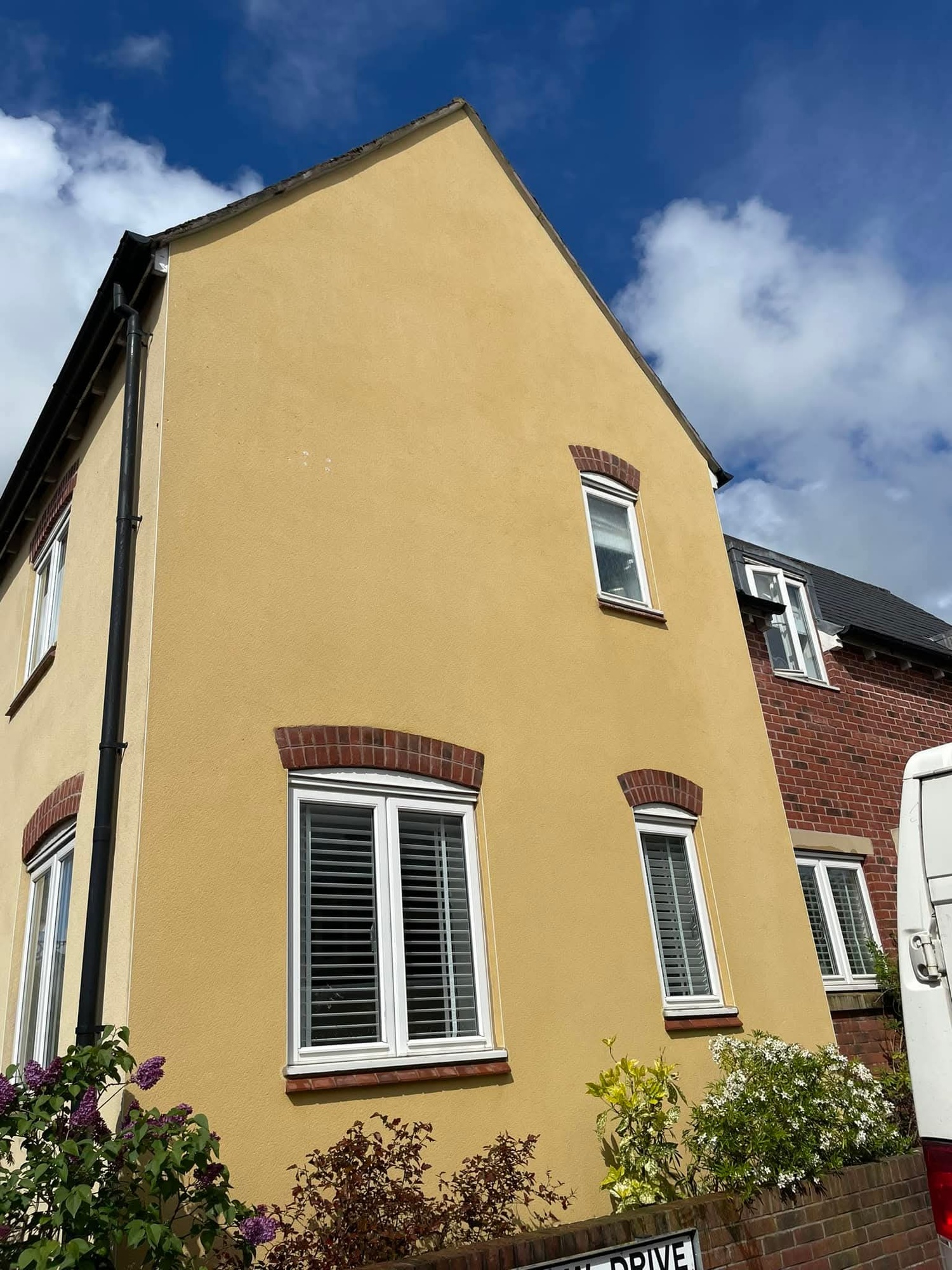
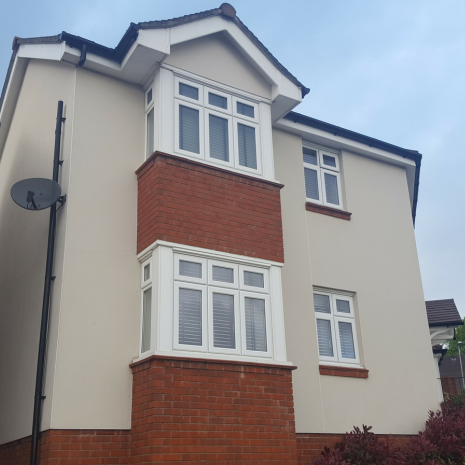

A silicone render kept clean across twenty years behaves differently from one that was not, and the difference is largely about what the coating was doing during that time. On a maintained elevation, each treatment destroyed the colony at root level, and the wall then dried normally between wettings for the years that followed. Water repellency worked as intended, rain beaded and ran off, and air movement cleared residual moisture. The coating spent two decades mostly dry. On a neglected one, growth held water against the surface continuously. The wall was wet far more of the time than the system was designed for, absorbency increased faster as a result, and each successive year of colonisation established more readily than the last. The visible outcome after twenty years is a maintained wall close to its supplied colour and a neglected one carrying embedded soiling that will only partly clear. The less visible outcome matters more. A coating that dried normally is nearer the end of its expected service life than past it, while one held permanently damp has weathered considerably faster. K Rend cleaning on sensible intervals is therefore cheaper across two decades than two rescues would be, and it produces a better wall throughout. Silicone render cleaning is identical on every visit: very low pressure, nothing brushed or agitated, full dwell, complete elevations worked with a live wet edge at consistent dilution. Nothing is ever taken off the surface, which is what makes the process repeatable indefinitely. Silicone render cleaning repeated on sensible intervals therefore protects the coating as much as the appearance of the building.
Monocouche is the finish that most clearly demonstrates what twenty years of maintenance does, because the material itself changes so little. The pigment is mineral, distributed through the body of the render, and it does not fade in any meaningful sense. The coating is thick, durable and breathable. Provided the scraped face is never abraded, a monocouche elevation cleaned properly at sensible intervals looks essentially as supplied two decades later. The failure mode is not the render giving up but the surface being damaged by how it was cleaned. Aggregate stripped by pressure or brushing leaves smoothed patches that never blend back, and each subsequent clean starts from a slightly worse baseline. After several cycles the wall reads as blotchy regardless of how clean it is, and recoating becomes the only remedy. The other failure mode is neglect. A wall left for two decades accumulates embedded material through the full depth of the profile, and while cleaning improves it substantially it will not always return it entirely. Monocouche render cleaning done properly takes nothing off the wall. Low pressure, generous volume to reach the base of the texture, full dwell so growth is destroyed at root level, gentle rinsing, nothing brushed or agitated. Render maintenance planned on realistic intervals per elevation is therefore an investment in the coating rather than a cosmetic expense, and render restoration remains achievable throughout because the surface is preserved on every visit. Monocouche render cleaning carried out on that basis is one of the better value pieces of building maintenance available. Owners who assume a twenty-year-old monocouche wall has faded are almost always looking at a clean wall under two decades of accumulation.
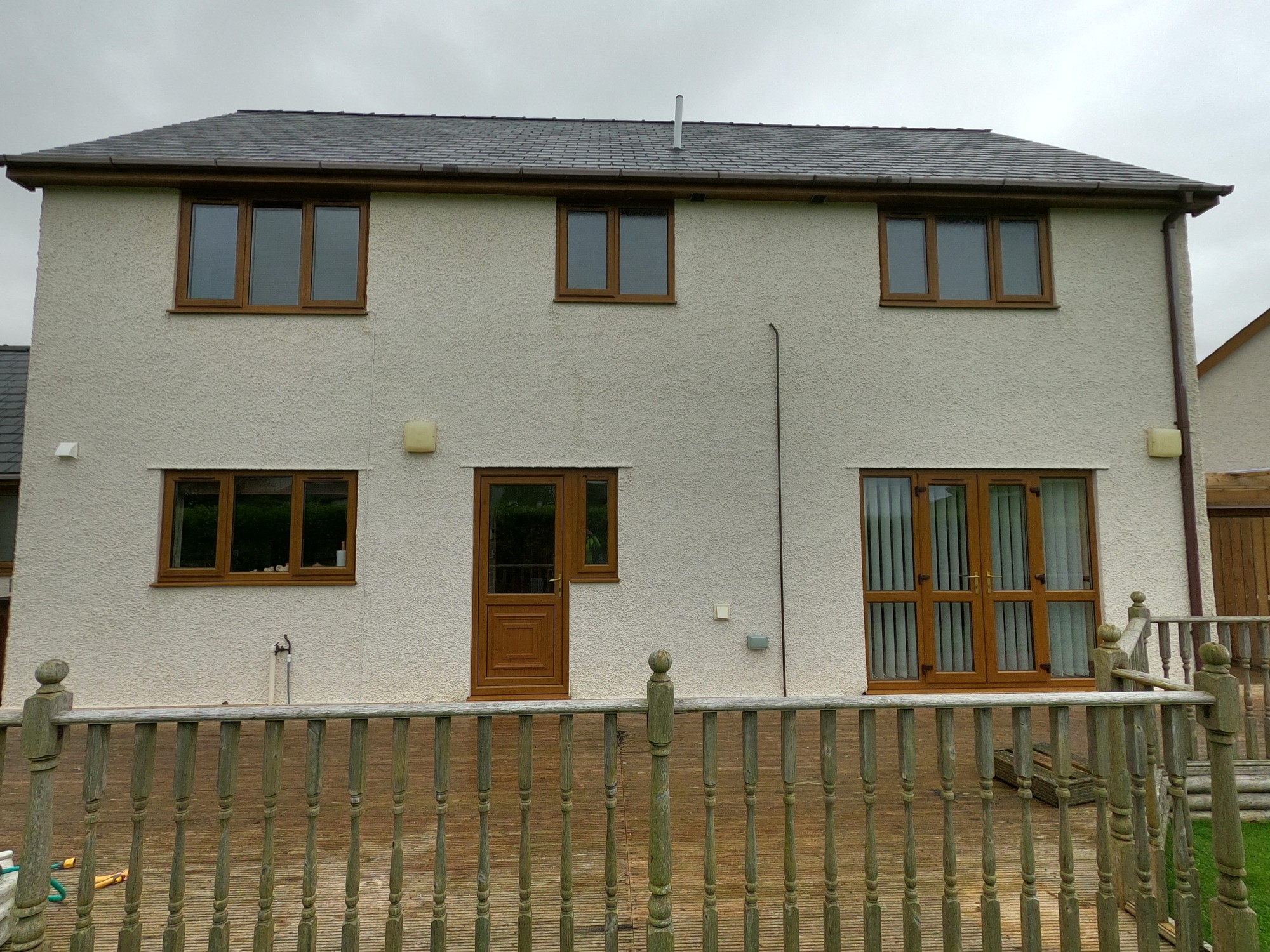
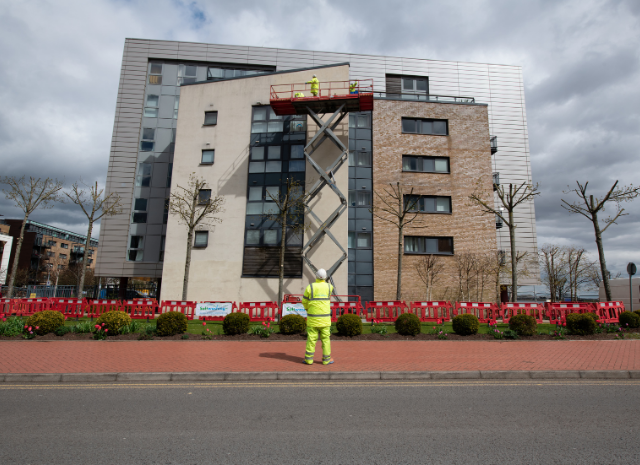

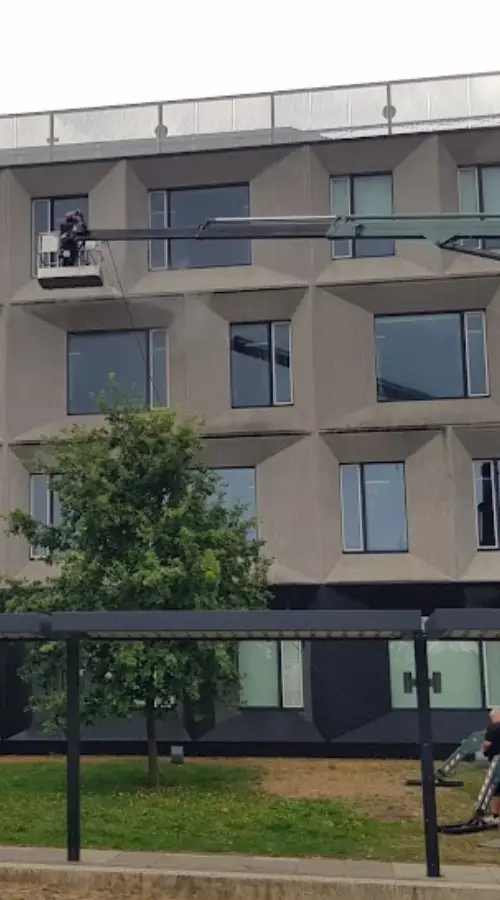
Florists, small independent retailers and specialist shops with rendered frontages trade on presentation and usually have no maintenance budget to speak of, so the work needs to be proportionate. Commercial render cleaning at these premises is straightforward technically. Most are single or two-storey frontages treatable entirely from ground level using telescopic delivery, which keeps access costs out of the figure and means the job is completed within a single visit, often in a few hours. Scheduling is the main constraint. Opening hours are long, deliveries arrive early, and the pavement cannot be obstructed during trading. In practice the work goes into an early morning slot before opening or onto a closing day. Anything on the pavement or forecourt is cleared and protected, and displays, signage, lighting and any opening on the elevation are masked or isolated. Where stock is displayed outside, it is moved rather than covered where possible. The low pressure method helps considerably: no machine noise carrying into the premises, no spray drifting across a display, and modest water volumes. Exclusion zones are agreed and signed so passers-by stay clear without the doorway being blocked. Insurance, method statements and risk assessments are provided ahead of attendance, and operatives hold current working at height certification. Where the shop forms part of a continuous run, we confirm boundaries and coordinate with the businesses either side, since treating several together is both better looking and cheaper per unit. For small retail premises around Wickhamford, a clean every few years is modest against the visibility it buys. Where several units in a parade arrange together, mobilisation is shared and the whole run reads consistently afterwards.
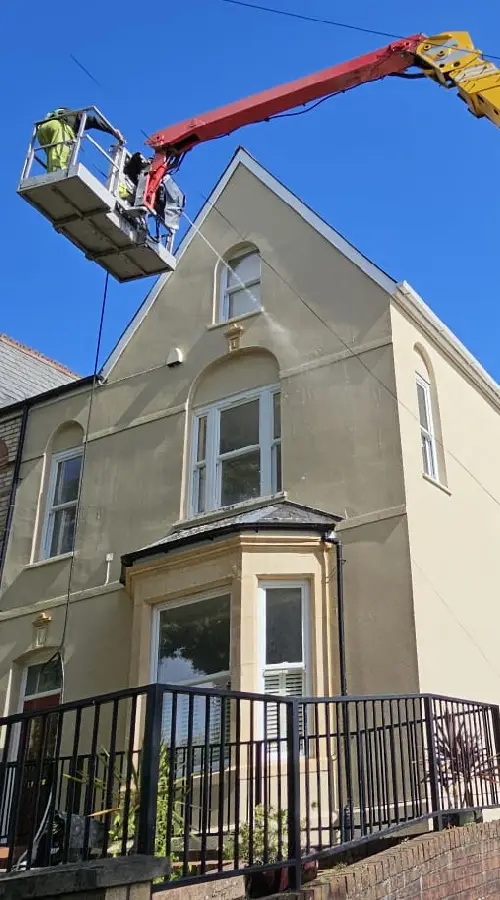
Interval advice is where we are most likely to lose work, and giving it honestly is worth more than the jobs it costs. The reason is straightforward. A properly treated rendered elevation does not need annual attention. Where growth has been destroyed at root level rather than removed from view, recolonisation begins again from airborne spores landing on a sterile surface, and that takes years. Recommending yearly returns would mean either treating walls that do not need it or admitting the original work was not thorough. So we assess each wall and give a realistic figure for it. A well-lit frontage with reasonable air movement and no planting close by will commonly hold four to six years. A shaded gable enclosed by mature planting may need attention in two to three. Those are different numbers on the same building and quoting one for the property would be inaccurate for both. We also explain what would extend the interval, including cutting back foliage in contact with a wall, lowering soil built up against the base course, and moving stored items clear. Some of that is easily addressed and some is simply how the property sits. Where a wall genuinely does not need doing yet, the quotation says so. Returning customers are quoted lower because a maintained wall is a genuinely smaller job, not as a loyalty gesture. Render cleaning prices are fixed at survey. Full public liability cover and current working at height certification are available on request, and our render cleaning specialists work on rendered elevations exclusively. There is no advantage to us in selling work a property does not need, since it would be obvious the following season.
Softwashing UK cover Wickhamford in full, with the same survey process and pricing basis applied to every property and no travel loading regardless of position. It helps to know what is useful at the enquiry stage, since it makes everything quicker. An address is enough to confirm coverage immediately. Beyond that, a rough description of the property is useful: how many storeys, roughly how much of it is rendered, and whether you know what the finish is. Nobody is expected to identify a coating accurately and a guess is entirely fine, since we confirm it at survey. If you already know which elevations are the problem, saying so helps. Most properties have one wall considerably worse than the others, and knowing where it is lets the survey be planned sensibly. Photographs taken on a phone are genuinely useful and often allow a realistic indication of cost before we attend, though they cannot replace the survey since texture depth, surface condition and organism type all need close inspection. Access details are worth mentioning if anything is unusual: a shared approach, restricted parking, a long drive or gates needing arrangement. None are obstacles, since our hose runs let the vehicle stay clear of the building, but knowing in advance saves time. And if you have a deadline, say so. Work booked ahead of a sale, a letting or photographs benefits from a few weeks in hand, since a treated wall keeps improving after the visit. Surveys are usually available within the week. The itemised written quotation follows by email, holds for a stated period and does not change afterwards.
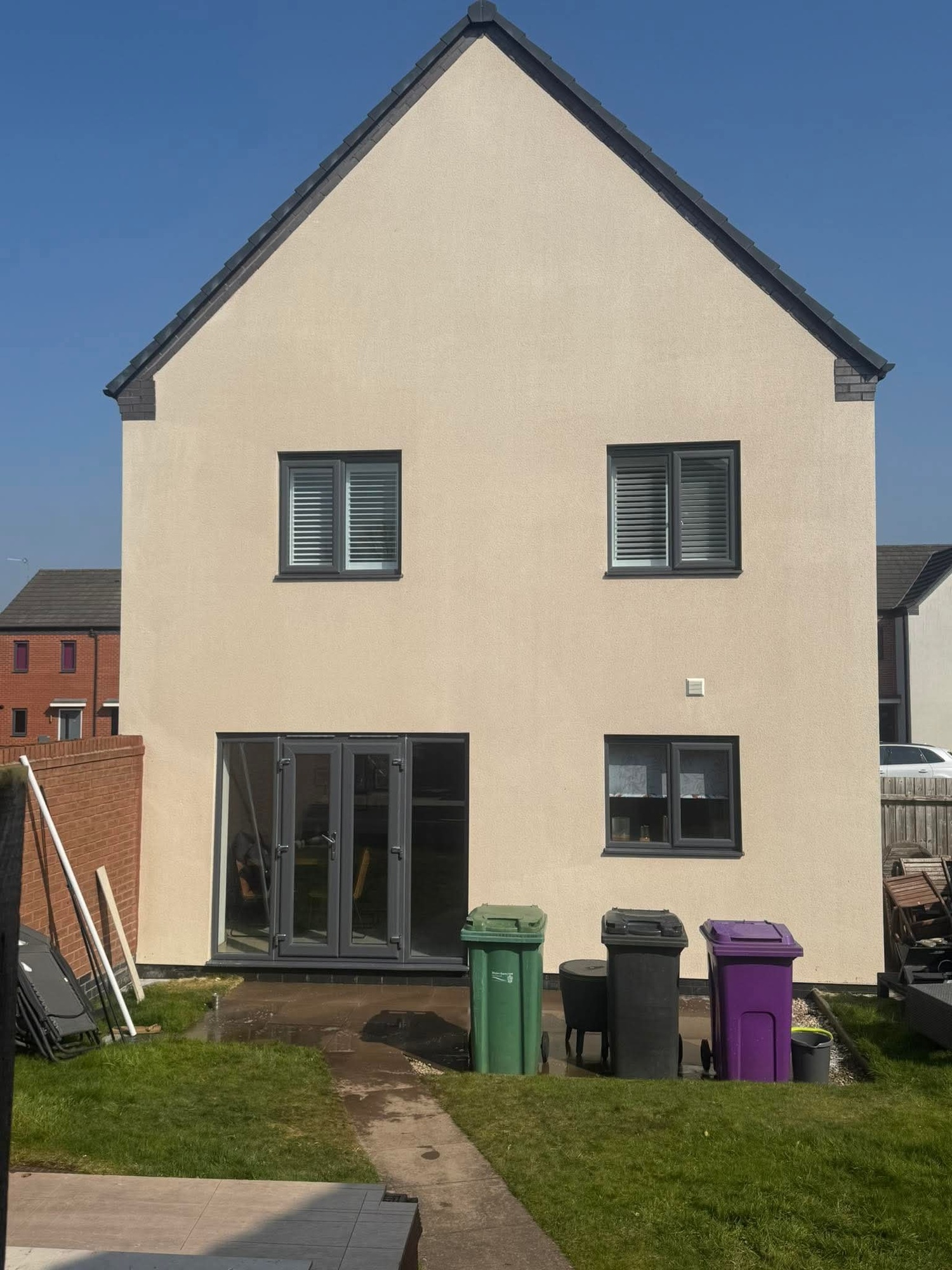
Most properties in Wickhamford benefit from professional render cleaning every 3 to 5 years, although this depends on the surrounding environment. Properties near trees, woodland, busy roads or coastal areas may require more frequent cleaning due to algae, mould and airborne contaminants. Our soft washing process removes existing growth and helps keep your render cleaner for longer.
Yes. Soft washing is specifically designed for delicate surfaces such as K-Rend, silicone render, monocouche render and painted render. Unlike high-pressure washing, it cleans at low pressure while treating biological growth at its source, reducing the risk of damage to the render finish.
We clean virtually all external render finishes, including K-Rend, Monocouche, Weber, Sto, silicone render, acrylic render, painted render, roughcast and pebble dash. Every cleaning method is tailored to the specific render type to achieve the best possible results.
Yes. Our specialist soft washing treatments are highly effective at removing green algae, red algae, black mould, mildew, lichen and other organic staining. We also apply professional biocide treatments to kill spores and slow down regrowth.
Because our process targets the biological growth rather than simply washing the surface, results typically last much longer than pressure washing alone. The exact lifespan depends on weather conditions, surrounding vegetation and the property’s location.
No. Our soft washing process is specifically designed to clean render safely. We use low-pressure application methods and specialist cleaning solutions that remove contamination without damaging the render surface when carried out by trained professionals.
The UK’s damp climate provides ideal conditions for algae, mould and other biological growth to develop on rendered surfaces. Areas with limited sunlight, nearby trees or persistent moisture are especially susceptible. Professional soft washing safely removes these contaminants and restores your property’s appearance.













































WhatsApp us