A few questions asked before booking any render clean will tell you most of what you need to know about the contractor, and they are worth having ready. What method will be used? If the answer involves pressure washing at any setting, that is a different job with a different outcome, and on a through-coloured finish it carries a real risk of permanent damage. How long will the treatment be left to dwell? Dwell is where the work happens, and shortening it is the commonest way a clean is compromised. A contractor who cannot answer has not thought about it. What coating do you think is on my wall? Silicone, acrylic, monocouche, an insulated system or traditional render carrying paint all need different handling, and an answer that avoids the question is informative in itself. Is preparation and protection included, or is it assumed to take five minutes? Is access included, or will it appear later if a gable cannot be reached? What happens if an area has not responded after a month? And what interval should I expect before the next treatment, per elevation? Our answers are consistent: soft washing only, dwell judged against the organisms present, coating identified at survey, all preparation included, access identified and priced at survey, a free return visit where needed, and honest interval advice per wall. Render cleaning prices are itemised and fixed. Exterior render cleaning on a property around Wolverley is quoted on that basis and the written quotation states all of it. Any contractor comfortable answering all seven is worth taking seriously, and the ones who are not will usually change the subject to price.
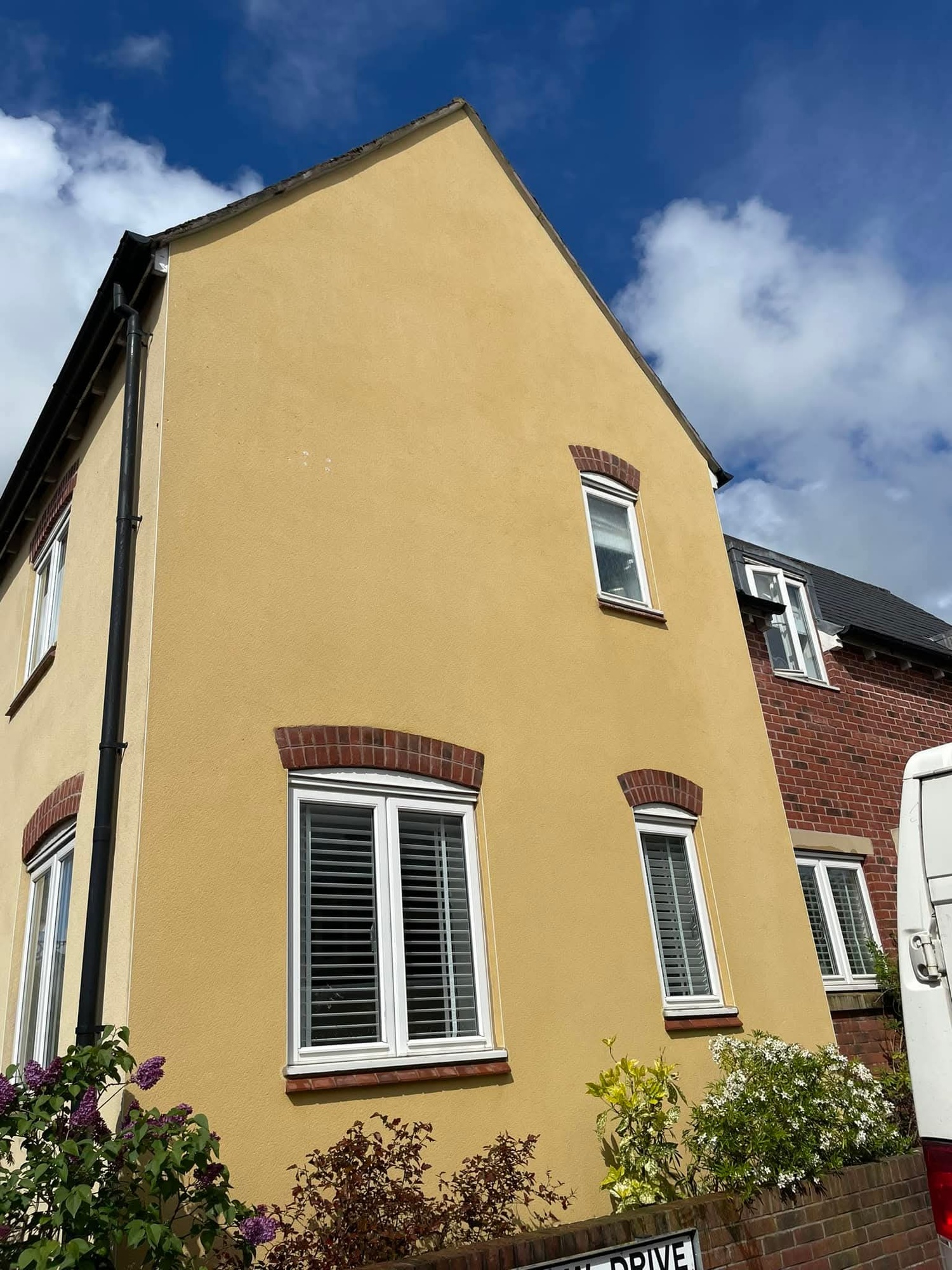
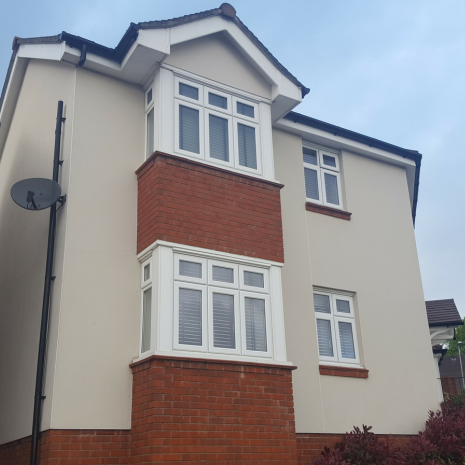

Softwashing UK are asked what to ask about a silicone render clean specifically, and the questions differ slightly from general exterior work. Which system is it? K Rend and comparable silicone finishes behave differently from acrylic thin-coats, which are less water repellent and can draw treatment into the coating rather than holding it where the growth is. What texture grade? Depth determines both the volume applied and the dwell period, and two properties in the same branded system can differ noticeably. Which organisms are present? Algal filming and fungal black spotting need different strengths, and a mix judged for green filming leaves dense specking largely untouched. How will the elevation be worked? It should be treated as a single continuous unit with a live wet edge, because a through-coloured finish records any break as tonal variation once dry. How will the corners and detailing be handled? Reveals, returns, sill undersides and bead lines colonise more heavily than open wall and need treating as their own zones. Is manufacturer guidance being followed? It excludes high pressure and abrasive methods on every system we have seen, and damage from inappropriate cleaning falls outside any warranty. Our silicone render cleaning answers all six the same way each time: chemical throughout, very low pressure, nothing brushed or agitated, full dwell judged per elevation, complete walls worked with a live wet edge at consistent dilution. House render cleaning quoted against those answers is comparable against anything else on the doormat. Coloured render cleaning judged from the corner of the building rather than square on to each wall is where the answers show.
What to ask about a monocouche clean is worth knowing, since the finish is less familiar to most owners than thin-coat systems and the consequences of the wrong approach are permanent. Has the coating been identified as monocouche rather than a coarse thin-coat? The two look similar and monocouche needs materially more treatment per square metre and a longer dwell. What texture grade was assessed? Depth governs volume, dwell and the realistic interval, and it varies with the applicator’s technique as much as the product. How will the base course be treated? It carries splashback soiling as well as biological growth and needs its own specification, and it is the area most often left behind. How will detailing be handled? Bellcast beads, reveals, returns and any projecting features concentrate water and colonise more heavily than the open wall. Will anything touch the surface? Nothing should. Exposed aggregate is lightly bound and detaches permanently under brushing or pressure, leaving smoothed patches that never blend back. What interval should be expected, per elevation? And what will not clear? Embedded soiling in a deep profile responds partially rather than completely on a long-neglected wall. Monocouche render cleaning quoted with all seven answered is comparable and predictable. Render restoration remains achievable across the life of the coating provided the surface is preserved on every visit, and residential render cleaning done that way takes nothing off the wall. Render maintenance planned from honest answers to all seven is predictable rather than a matter of hoping for the best. An owner who asks all seven will get a quotation that can be compared properly rather than one that has to be taken on trust.
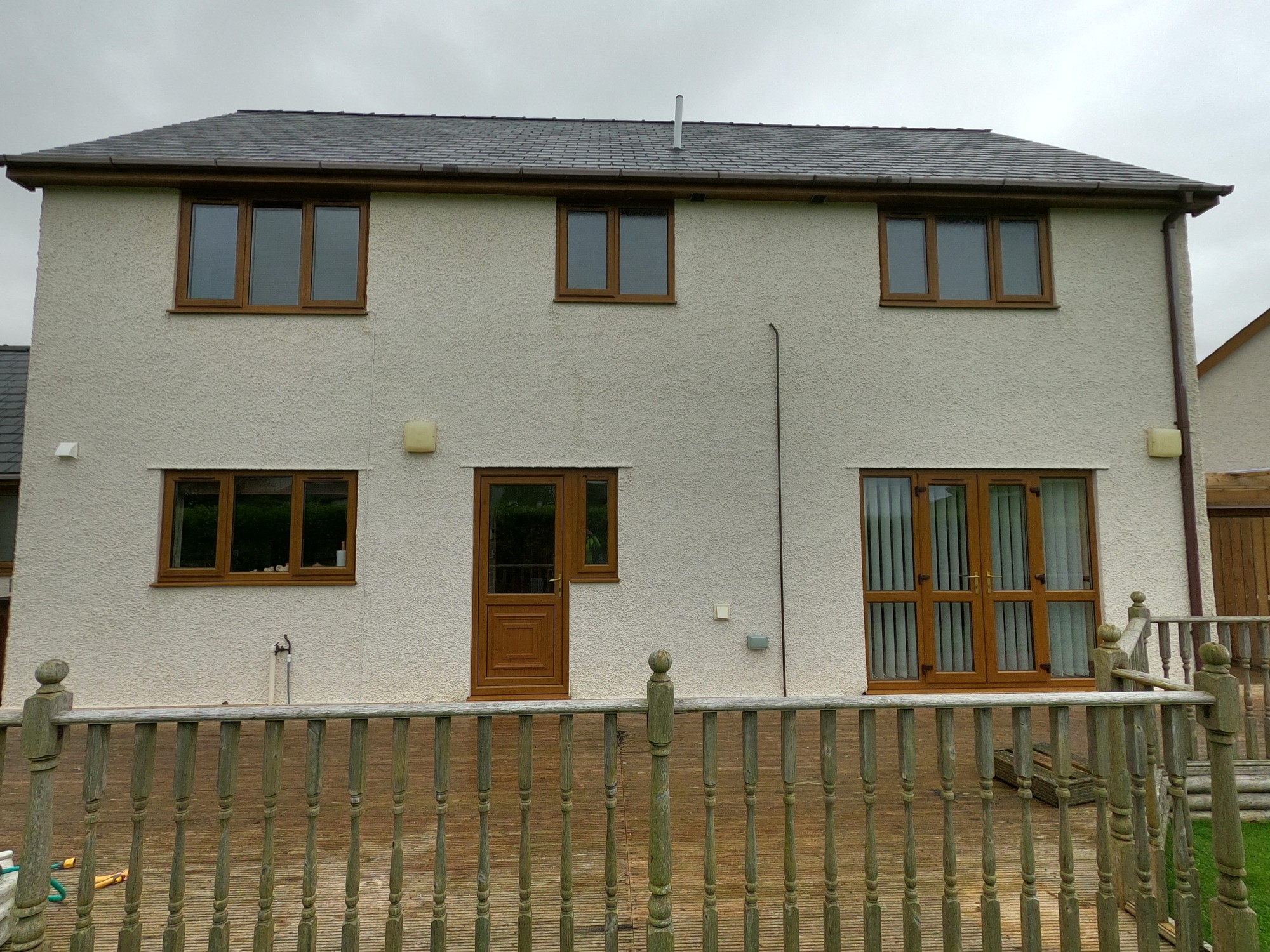
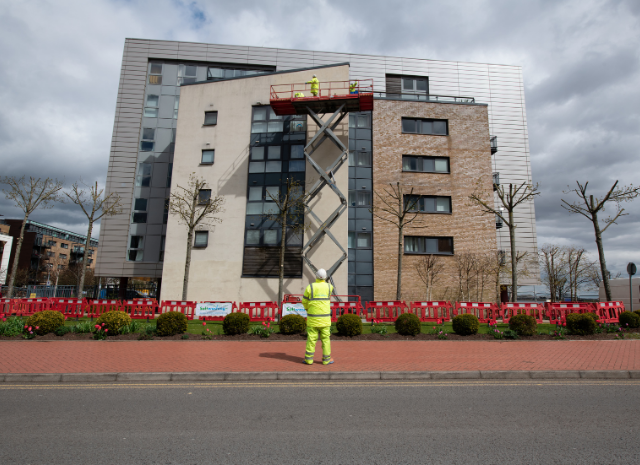

Timber merchants, sawmills and joinery suppliers with rendered buildings accumulate a distinctive mix of soiling, with fine wood dust and airborne particulate settling continuously alongside ordinary biological growth. Commercial render cleaning at these sites therefore uses a dual specification. Render stain removal with appropriate chemistry handles the deposit, while biocidal treatment addresses whatever has colonised. Dust worked into a textured face will not respond to biocide alone, and treating only the growth leaves the building visibly half done. Operationally, yards run from early with continuous vehicle movement and stock handling. We survey first, phase the work so only one elevation is affected at a time, and agree routes and timings with site management so loading continues uninterrupted. Stacked material within reach of a working elevation is covered or moved, and extraction, dust handling plant and any external services are identified and isolated before treatment is applied. Exclusion zones are agreed and physically barriered given the plant movement involved. Insurance, method statements and risk assessments are supplied ahead of attendance, and operatives hold current working at height certification. Site induction and permit systems are completed first. Technically these premises present long elevations with large openings and substantial plain wall between them. Soft wash render cleaning must hold identical dilution and continuous wet edges across each run, since banding on an unbroken wall of that length is obvious from across a yard. For timber and joinery premises around Wolverley, a planned interval keeps the buildings presenting properly and protects a large area of coating from permanent damp. Where a business runs more than one yard, treating them in a single programme reduces the cost per site.
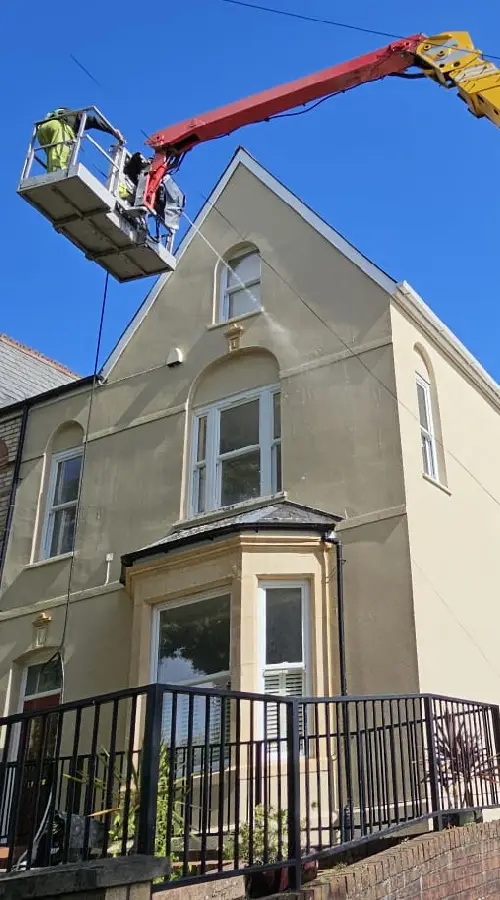
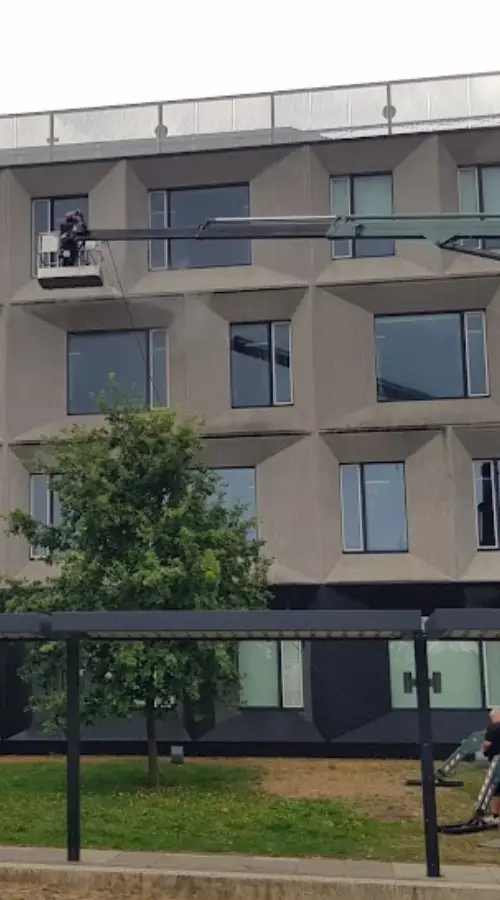
Accountability is easier to demonstrate than to claim, and the practical form it takes is being findable afterwards. We work a defined area continuously rather than travelling between regions, so a property treated badly stays visible to us and to everyone who passes it. That is a stronger incentive than any written guarantee. We keep a record of every property treated, setting out per elevation what coating was identified, what texture grade was found, what condition the surface was in, which organisms were present, what dilution and volume were applied, how long the treatment dwelled and how each wall was reached. If a question arises later there is a factual account rather than a recollection. We return without charge where an area has genuinely not responded within four to six weeks, and we quote returning properties lower because a maintained wall is a genuinely smaller job. We take no deposit and invoice after completion, so nothing is paid before the work is done. And most of our work arrives through recommendation rather than advertising, which only continues while the walls we treated years ago still look right. Render cleaning prices are fixed at survey and itemised per elevation. Full public liability cover and current working at height certification are available on request before booking, and they cover the people who will actually attend. As a local render cleaning company with render cleaning specialists working on rendered elevations exclusively, being straightforward to find later is simply part of how the work continues. Render cleaning cost quoted on that basis reflects work we expect to be judged on for years rather than days.
Wolverley, Shatterford and Upper Arley are all within our standard coverage, surveyed and priced on identical terms with no travel loading applied to any of them. Coating variety across these settlements is the thing that most affects how a property is quoted, and it is why we survey rather than pricing from a description. Older buildings frequently carry traditional render repaired, made good and coated at intervals across many decades. A single elevation of that kind can present several different absorbencies, and where a paint film is present its condition determines whether cleaning is advisable at all. A film that has begun to chalk or lift will detach further during treatment however gentle, so the honest answer is sometimes that the wall should not be cleaned. Mid-century properties carry render of a different character again, sometimes coated and sometimes bare, with condition varying considerably according to how it has been maintained. Newer builds and extensions are generally finished in modern through-coloured systems, silicone-based or monocouche. Both clean up extremely well, both tolerate no abrasion whatsoever, and manufacturer guidance on both excludes high pressure entirely. Finding two of these on one building is entirely normal where an extension has been added, which means a single property can require two separate specifications applied at different strengths and volumes. Properties in Shatterford and Upper Arley are assessed on exactly the same basis, individually and quoted per elevation. Surveys take around twenty minutes, can be carried out unattended provided every wall is reachable, and produce an itemised written figure by email. Where several properties in these settlements book within the same period, the mobilisation is shared and each figure reduces accordingly.
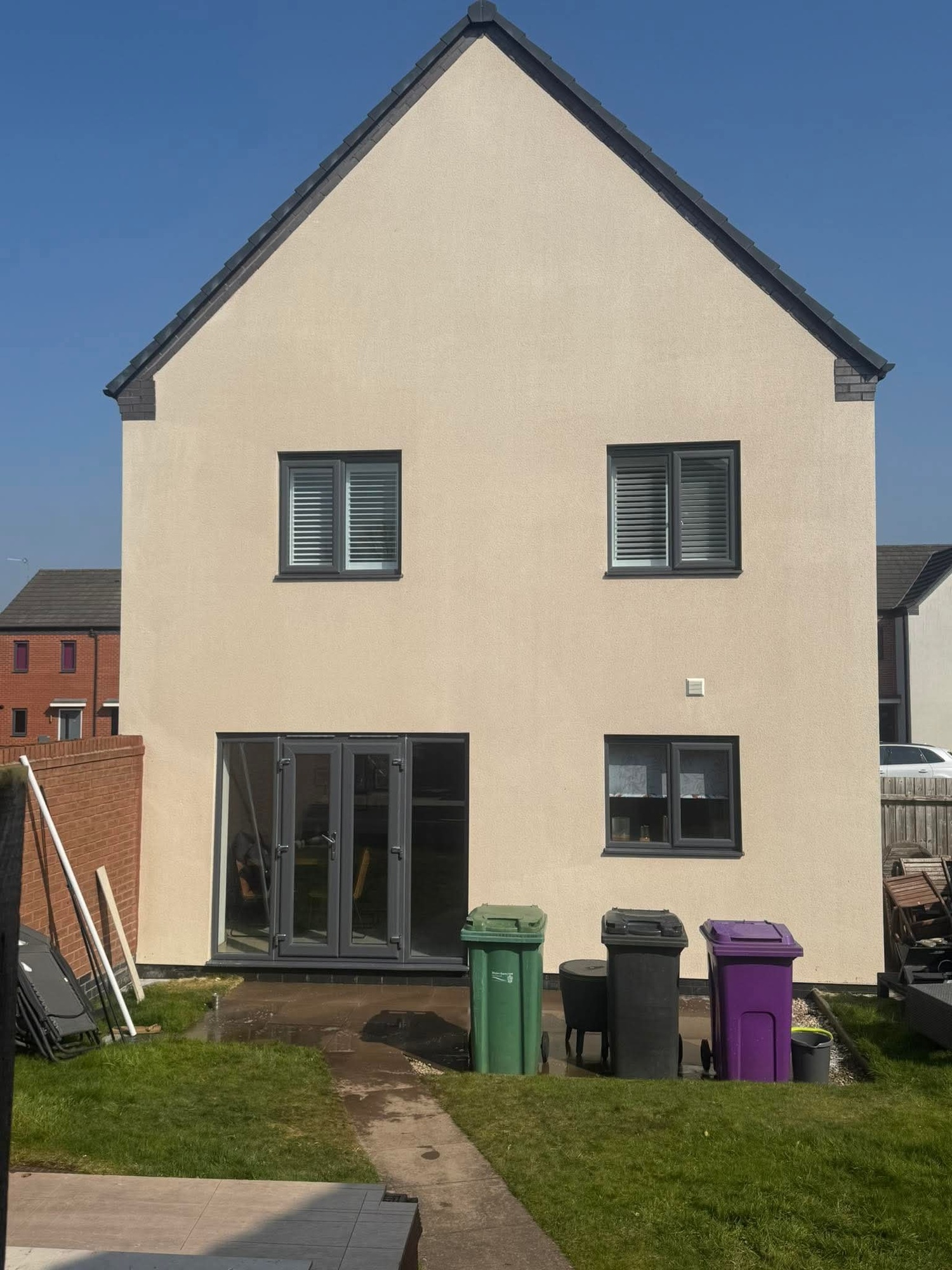
Most properties in Wolverley benefit from professional render cleaning every 3 to 5 years, although this depends on the surrounding environment. Properties near trees, woodland, busy roads or coastal areas may require more frequent cleaning due to algae, mould and airborne contaminants. Our soft washing process removes existing growth and helps keep your render cleaner for longer.
Yes. Soft washing is specifically designed for delicate surfaces such as K-Rend, silicone render, monocouche render and painted render. Unlike high-pressure washing, it cleans at low pressure while treating biological growth at its source, reducing the risk of damage to the render finish.
We clean virtually all external render finishes, including K-Rend, Monocouche, Weber, Sto, silicone render, acrylic render, painted render, roughcast and pebble dash. Every cleaning method is tailored to the specific render type to achieve the best possible results.
Yes. Our specialist soft washing treatments are highly effective at removing green algae, red algae, black mould, mildew, lichen and other organic staining. We also apply professional biocide treatments to kill spores and slow down regrowth.
Because our process targets the biological growth rather than simply washing the surface, results typically last much longer than pressure washing alone. The exact lifespan depends on weather conditions, surrounding vegetation and the property’s location.
No. Our soft washing process is specifically designed to clean render safely. We use low-pressure application methods and specialist cleaning solutions that remove contamination without damaging the render surface when carried out by trained professionals.
The UK’s damp climate provides ideal conditions for algae, mould and other biological growth to develop on rendered surfaces. Areas with limited sunlight, nearby trees or persistent moisture are especially susceptible. Professional soft washing safely removes these contaminants and restores your property’s appearance.











































WhatsApp us