A large urban area contains a wider range of rendered property than anywhere else we work, and the practical consequence is that almost nothing transfers between jobs. At one end there are terraced and semi-detached frontages with modest rendered areas, straightforward from ground level and completed within a few hours. Many carry traditional render that has been repaired and coated repeatedly over decades, so a single elevation can present several absorbencies and the condition of any paint film determines whether cleaning is advisable at all. Then there are post-war and later estates where whole roads share construction, finish and elevation height. These are predictable once one property has been assessed, and they clean up consistently. Then there are newer developments finished in modern through-coloured systems, silicone-based or monocouche, which clean up extremely well and tolerate no abrasion whatsoever. And there are larger detached properties with three-storey gables, extensions in different systems from the original walls, and access that needs proper assessment before quoting. Softwashing UK survey every address rather than pricing by measured area, because coating type, texture grade, condition, growth density and access all vary independently of one another. A modest wall in older coated render can be a more careful job than a larger modern elevation. Our render cleaning services are specified per elevation on that basis, with the written quotation showing what was found on each wall. Render algae removal, render moss removal and render stain removal are applied at strengths judged for each. Exterior render cleaning across Worcester is quoted from what is actually there rather than from a category.
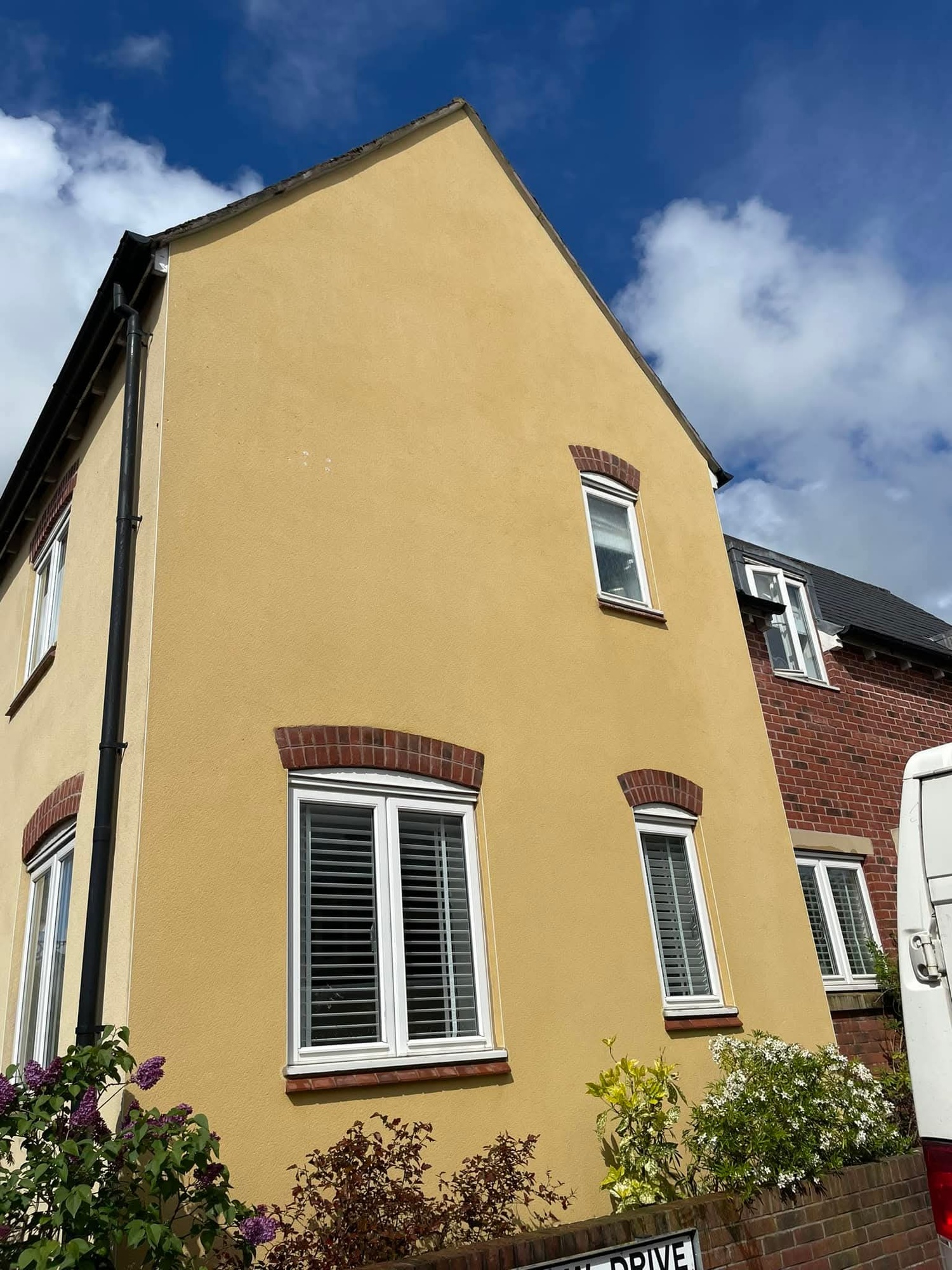
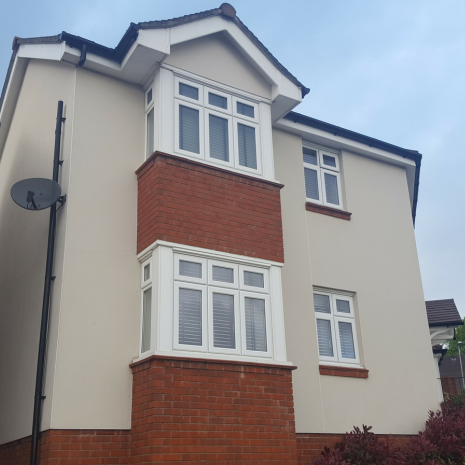

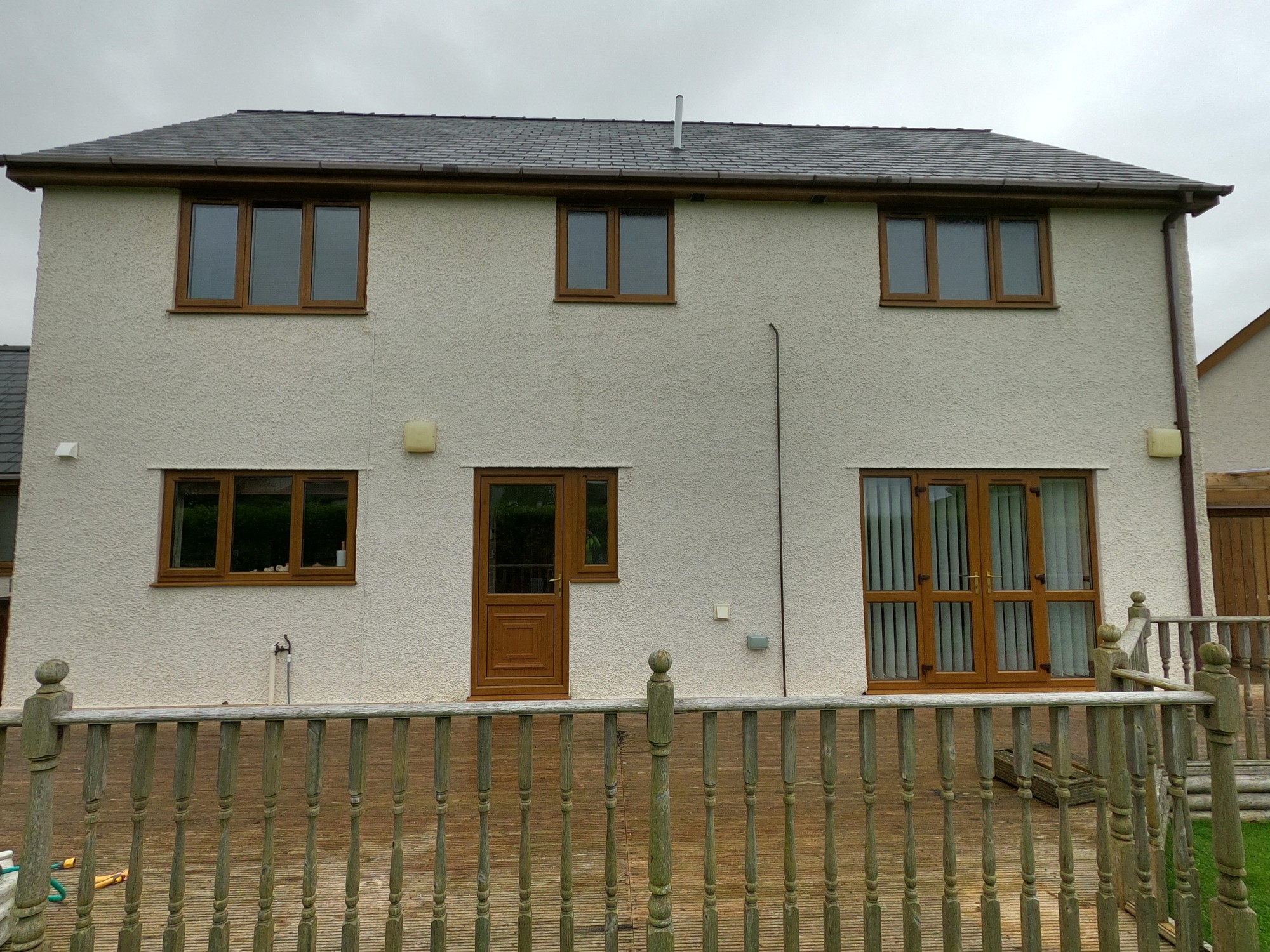
Silicone render appears across a very wide range of housing, and the same product behaves differently depending on where it has been applied. On a modern estate house, the system is usually recent, the texture is consistent across the building, the elevations are regular and access is straightforward. Colonisation is comparatively shallow, treatment reaches root level readily, and the job is predictable. On a refurbished older property, the render has often been applied over an existing wall as part of a wider upgrade. Absorbency can vary across a single elevation depending on what lies beneath and how the base coat was built up, and treatment is taken up at different rates as a result. On an extended house, silicone render on the newer section frequently meets something quite different on the original walls, and the two need separate specifications since absorbency, texture depth and tolerance all differ. On a larger detached property, the elevations are substantial and uninterrupted, which makes uniformity the main technical challenge rather than the growth itself. K Rend cleaning is therefore specified per elevation and sometimes per section rather than per property. We identify the system, grade the texture, record the organisms present and establish how every part of each wall will be reached before quoting. Silicone render cleaning is constant in method throughout: chemical, at very low pressure, with nothing brushed or agitated, complete elevations worked with a live wet edge at consistent dilution, and dwell judged against what is actually growing on that wall. House render cleaning quoted per wall rather than per property is what keeps the figure proportionate on buildings of very different kinds.
Monocouche turns up across an unusually broad spread of housing, from single plots to whole developments, and the differences between them affect how the work is planned rather than how it is carried out. On a development where many properties share the same specification, texture grade is consistent, elevations are regular and access is generally simple. These are efficient jobs, particularly where several properties are treated in the same period and mobilisation is shared. On an individual house, the grade may be quite different, since scraping technique varies between applicators and even between one day and another. That changes both the volume applied and the dwell required. On a converted or refurbished building, monocouche has often been applied over an existing wall, and the substrate beneath can be uneven or variable in absorbency. Detailing is usually more complex too, with deeper reveals and projecting features that concentrate water and colonise more heavily. On a larger property where the render wraps the entire envelope, consistency across the whole building becomes the priority, since it reads as one continuous surface and any variation between elevations is exposed at the corners. Monocouche render cleaning is unchanged in method throughout: low pressure, generous volume so treatment reaches the base of the scraped texture, full dwell so growth is destroyed at root level, gentle rinsing, and nothing brushed or agitated because exposed aggregate detaches permanently. Render restoration is achievable on all of them, and residential render cleaning quoted per elevation reflects what each wall genuinely requires. Where several properties on one development book together, mobilisation is shared and each individual figure comes down accordingly.
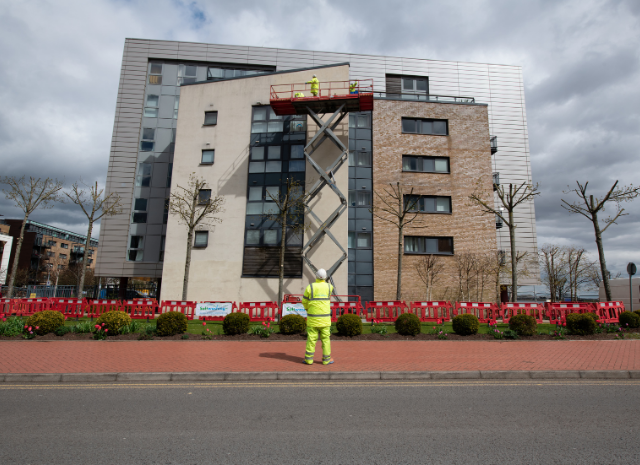

Managed commercial portfolios with rendered buildings present a different set of requirements from single premises, and most of the difference is in the documentation and the programming. Commercial render cleaning for a portfolio starts with surveys that produce something usable in a budget: measured elevations, coatings identified, colonisation graded, access requirements stated and a fixed itemised figure per building. Contingencies discovered mid-contract are what managing agents least want, so access questions are resolved before quoting rather than afterwards. Programming several buildings together is where the saving sits. Mobilisation is shared across the group, and where buildings carry similar finishes the specification transfers, which shortens each survey and each visit. Occupiers are the operational consideration throughout. Tenants need notice of when work reaches their elevation, which windows to keep closed and where parking will be restricted, and we supply the information agents need to circulate rather than leaving it to be assembled. Insurance, method statements and risk assessments are issued ahead of every attendance, and operatives hold current working at height certification. Where individual sites run permit systems, we work through them. Technically the requirement is uniformity across each building. Render facade cleaning holds identical dilution and continuous wet edges along every run, since a section treated separately reads differently from those either side. The fabric argument tends to carry most weight with freeholders. Growth holds moisture against a coating permanently, and recoating a large rendered building is a major expense that planned render wall cleaning defers considerably. Each subsequent visit across a portfolio is shorter and cheaper than the first, since the specification is known and there is far less to clear.
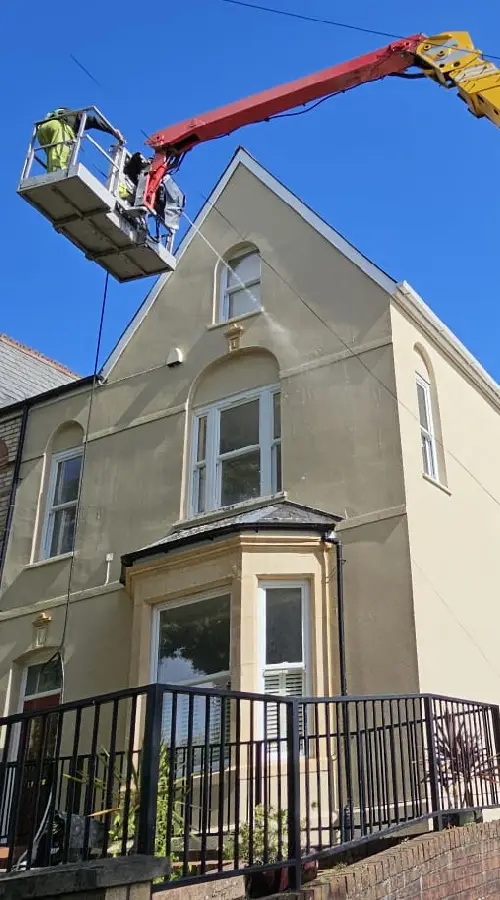
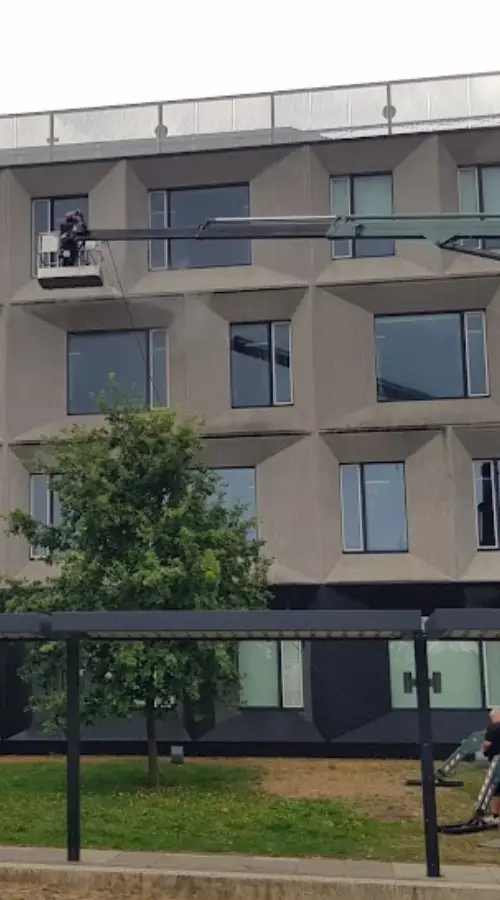
Covering a large area properly requires both capacity and organisation, and it is worth explaining how we manage the combination. Capacity first. Every elevation has to be treated, dwelled and rinsed as a single continuous operation, since treatment allowed to dry part-worked records itself on the finished wall as banding. On a substantial elevation that means enough operatives to keep a wet edge live across the full width, and enough water and treatment carried to complete each wall without a change of batch. Organisation second. Work is programmed by locality rather than property by property, so travel and set-up are shared across several jobs in the same area. That keeps mobilisation out of individual figures and is why we can quote the same rates across the whole of our coverage without travel surcharges or minimum job values. On estate housing it works particularly well, since specifications often transfer between properties of identical construction and several can be completed in a day. Where a job needs a larger team or a second vehicle, that is established at survey and built into the figure rather than discovered on the morning. Render cleaning prices are fixed at that point and do not move. Full public liability cover and current working at height certification are in place, and our render cleaning specialists work on rendered elevations exclusively. Professional render cleaning on a larger property or a group of them is largely a planning exercise, and a quotation that looks low against others usually means the planning has not been done. Surveys are free, carry no obligation and produce an itemised written quotation per elevation that holds without revision.
Coverage takes in Worcester together with Dines Green, Henwick, Prestwick, Red Hill, Warndon and Whittington, all on identical terms with no travel loading and no minimum job value. A working area of this size contains every kind of rendered property, and the way work is organised reflects that. Estate housing benefits most from clustering. Where a road was built at one time, properties frequently share render system, texture grade, elevation height and access, so once one has been surveyed the specification largely transfers. Several can then be completed in a day, mobilisation is shared, and each individual figure comes down. It is genuinely worth mentioning at the enquiry stage if others nearby are considering the same work, and we are happy to survey several addresses in one visit and quote each separately. There is an appearance argument alongside the cost one. On a through-coloured render, one cleaned property in a run of similar houses reads differently from those either side, and where a rendered elevation runs continuously between properties the difference is a line down a single wall. What does not transfer between identical houses is growth density, since aspect, shelter and planting vary from plot to plot. Each address is surveyed on its own terms and quoted per elevation. Access ranges from tight frontages with restricted parking to properties set well back, and neither is a difficulty, since our hose runs allow the vehicle to stay clear while treatment reaches every wall. Surveys can usually be arranged within the week and produce an itemised written quotation by email.
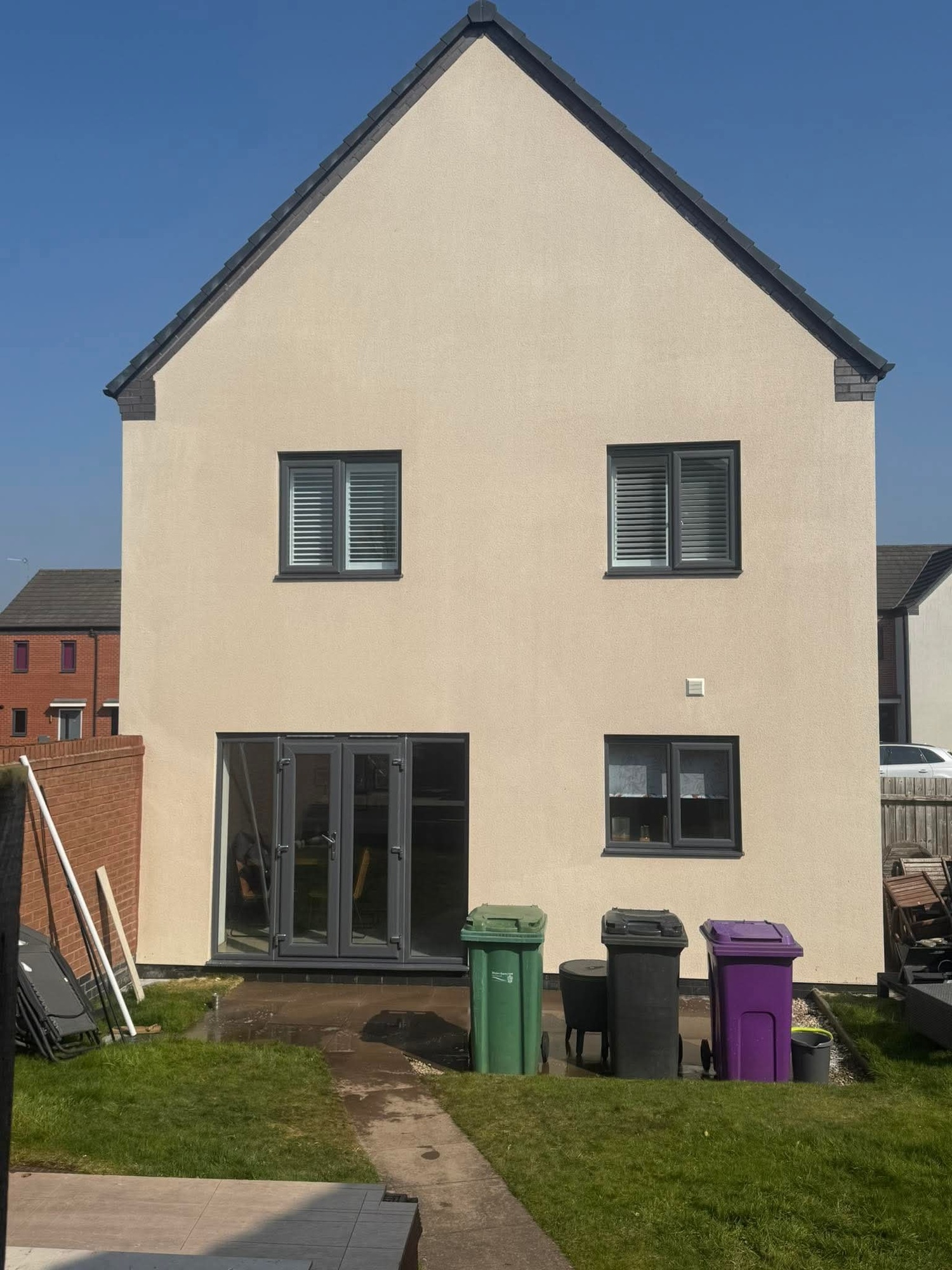
Most properties in Worcester benefit from professional render cleaning every 3 to 5 years, although this depends on the surrounding environment. Properties near trees, woodland, busy roads or coastal areas may require more frequent cleaning due to algae, mould and airborne contaminants. Our soft washing process removes existing growth and helps keep your render cleaner for longer.
Yes. Soft washing is specifically designed for delicate surfaces such as K-Rend, silicone render, monocouche render and painted render. Unlike high-pressure washing, it cleans at low pressure while treating biological growth at its source, reducing the risk of damage to the render finish.
We clean virtually all external render finishes, including K-Rend, Monocouche, Weber, Sto, silicone render, acrylic render, painted render, roughcast and pebble dash. Every cleaning method is tailored to the specific render type to achieve the best possible results.
Yes. Our specialist soft washing treatments are highly effective at removing green algae, red algae, black mould, mildew, lichen and other organic staining. We also apply professional biocide treatments to kill spores and slow down regrowth.
Because our process targets the biological growth rather than simply washing the surface, results typically last much longer than pressure washing alone. The exact lifespan depends on weather conditions, surrounding vegetation and the property’s location.
No. Our soft washing process is specifically designed to clean render safely. We use low-pressure application methods and specialist cleaning solutions that remove contamination without damaging the render surface when carried out by trained professionals.
The UK’s damp climate provides ideal conditions for algae, mould and other biological growth to develop on rendered surfaces. Areas with limited sunlight, nearby trees or persistent moisture are especially susceptible. Professional soft washing safely removes these contaminants and restores your property’s appearance.










































WhatsApp us