A rendered wall tells you a good deal about the property if you know how to read it, and much of what a survey involves is exactly that. Where the growth is heaviest indicates how the building sits. A single elevation carrying far more than the others points to shade, shelter or planting close by. Heavy colonisation on an otherwise well-lit wall usually means something is keeping it wet. Concentration lines show where water travels. Dark tracks beneath a particular sill, below a bead termination or descending from a specific point indicate where the elevation sheds water, and a track that starts abruptly usually means something above is discharging onto the wall. A base course far worse than the wall above indicates splashback, a border sitting against the render, or soil built up to or above the base of the coating. Patchiness that follows working patterns rather than weathering patterns indicates previous cleaning, usually by pressure, and tells us the texture has been opened up and that recolonisation will be faster than the elapsed time suggests. Crazing, cracking at the corners of openings and hollow-sounding areas indicate conditions that need addressing before any water is introduced. Our render cleaning services are specified from that reading rather than from a general impression. Render moss removal at a persistently wet track and render algae removal across a shaded elevation are different jobs on the same building. Exterior render cleaning on a property in Wyre Piddle is quoted after the wall has been read properly, which is what the twenty minutes at survey is for.
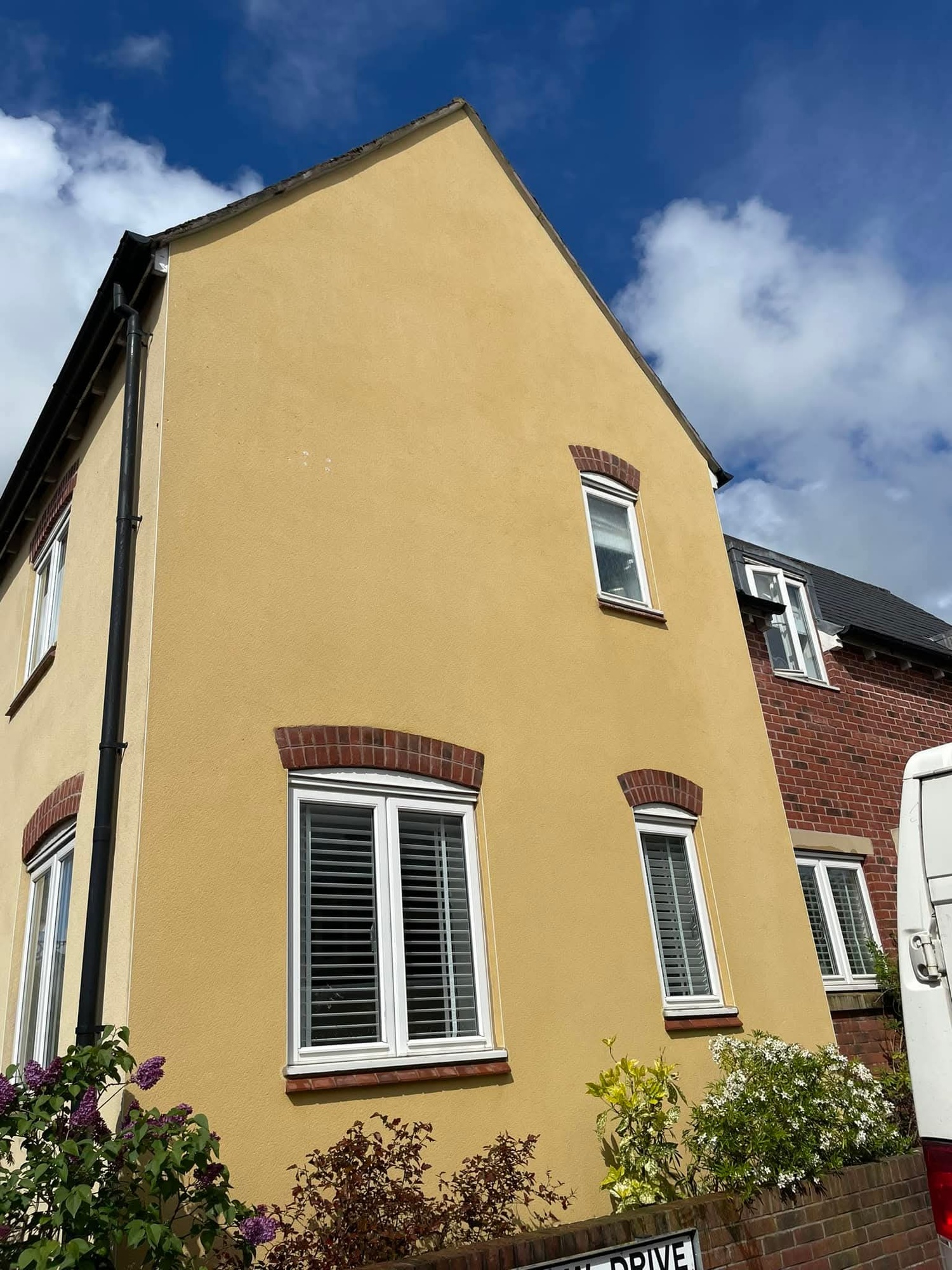
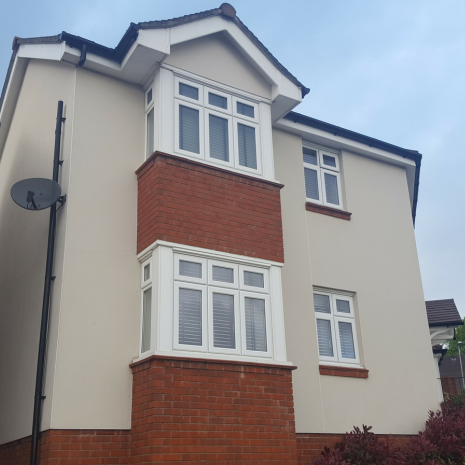

Reading a silicone rendered elevation properly tells you what it needs, and the indicators are specific enough to be worth listing. A general flatness in the colour, with no obvious green or streaking, usually means early filming across the surface. Comparing against a sheltered area beneath a deep sill confirms it, and treatment at this stage is straightforward and inexpensive. Vertical darker lines from sills, bead terminations or projecting details mean the concentration points have established and the open wall is next. A distinct difference between one elevation and another means the shaded wall is well ahead, and it usually accounts for most of the eventual cost. Fine dark specking visible at close range is fungal rather than dirt, and it needs a higher strength and longer dwell than algal filming does. It frequently appears on walls that look clean from the road. Raised crusty patches are lichen, which bonds physically as well as biologically and needs an extended dwell with results developing over six weeks or more. Smoothed or shiny areas in raking light mean previous abrasion, which cleaning will reveal rather than correct. K Rend cleaning is specified from that reading, wall by wall. Silicone render cleaning is chemical throughout at very low pressure, with nothing brushed or agitated, and dwell judged against the specific organisms present rather than applied as a standard. House render cleaning quoted from a proper close-range reading is what produces an even result rather than a partial one. As a local render cleaning company working the same area continuously, we are easy to find when a property comes round again.
Reading a monocouche elevation before quoting is largely about texture and about where water goes, and the signs are consistent. Run a hand across the face first. Depth of the scrape determines how much treatment is needed and how long it must dwell, and it varies between properties finished in the same product. Then look at the base course, which on this finish is almost always the worst band. Splashback drives grit and soil into the profile, the area dries last, and where a border sits against the wall the local conditions are damper still. What is there is usually part biological and part embedded mineral, needing separate handling. Then the detailing. Bellcast beads, sills, reveals and returns concentrate water and colonise more heavily than the open wall, and an elevation cleaned as a flat plane leaves every one of them visibly outlined. Then the aspect differences between elevations, which on monocouche are frequently stark because the deep texture exaggerates the effect of slow drying. Then the surface itself, in raking light. Smoothed or shiny patches mean aggregate has been detached by earlier pressure or brushing, and no treatment restores them. Monocouche render cleaning is specified from that reading, with each zone given its own strength and dwell. The method is unchanged throughout: low pressure, generous volume to reach the base of the texture, full dwell, gentle rinsing, nothing brushed or agitated. Render restoration follows from reading the wall correctly far more than from anything done with equipment. Silicone render cleaning specified from that reading is why two apparently similar properties can carry quite different figures.
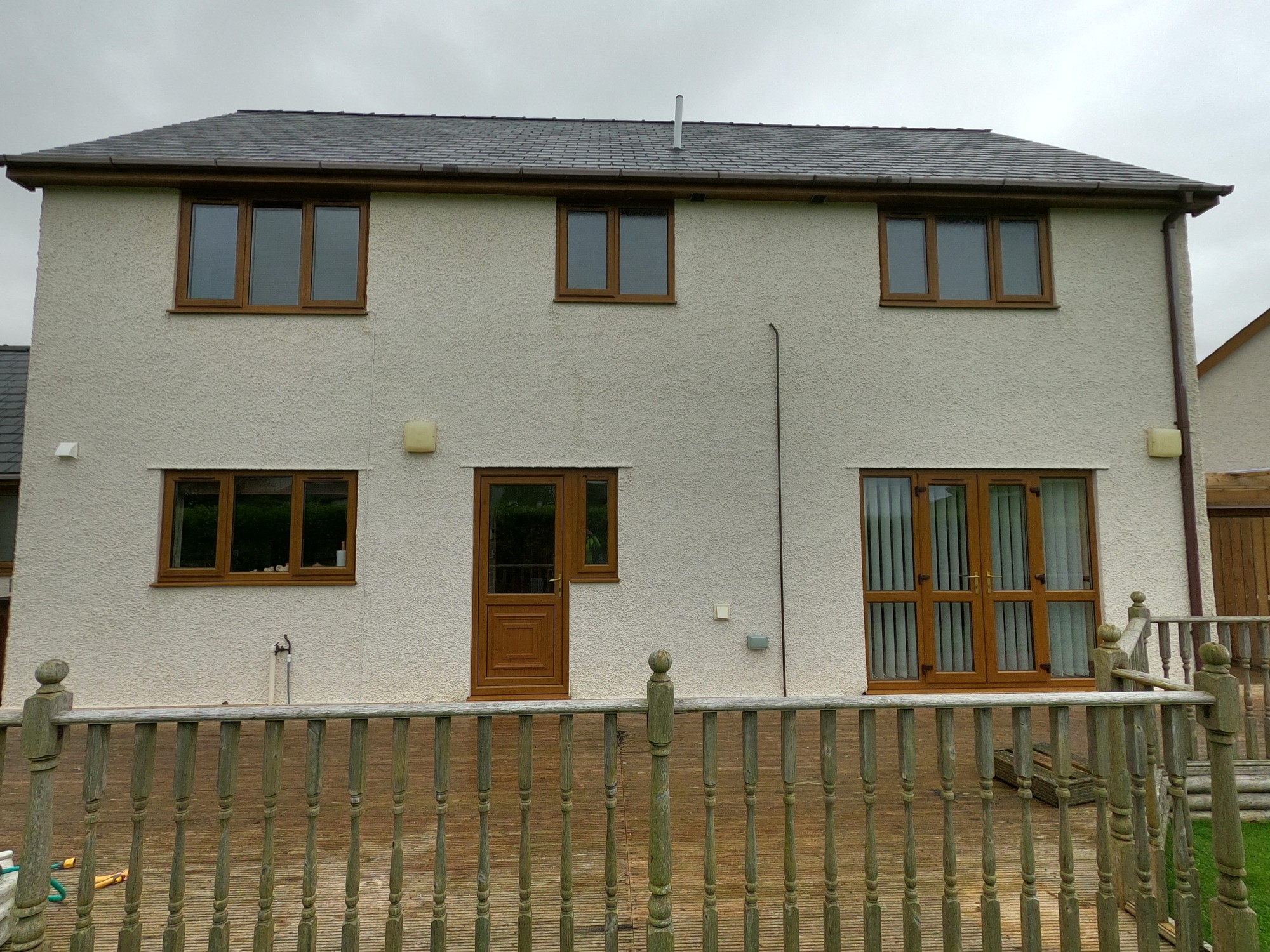
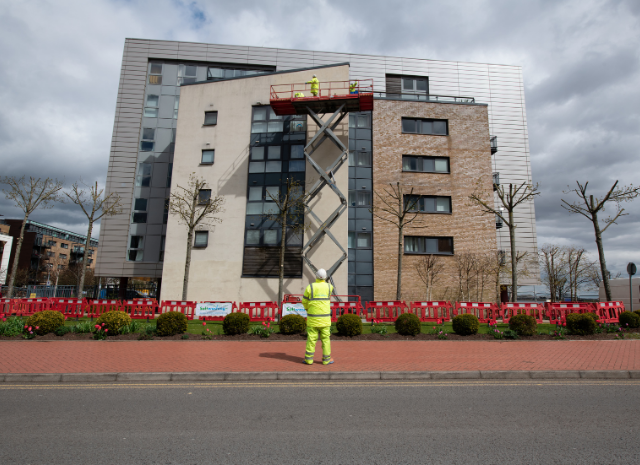

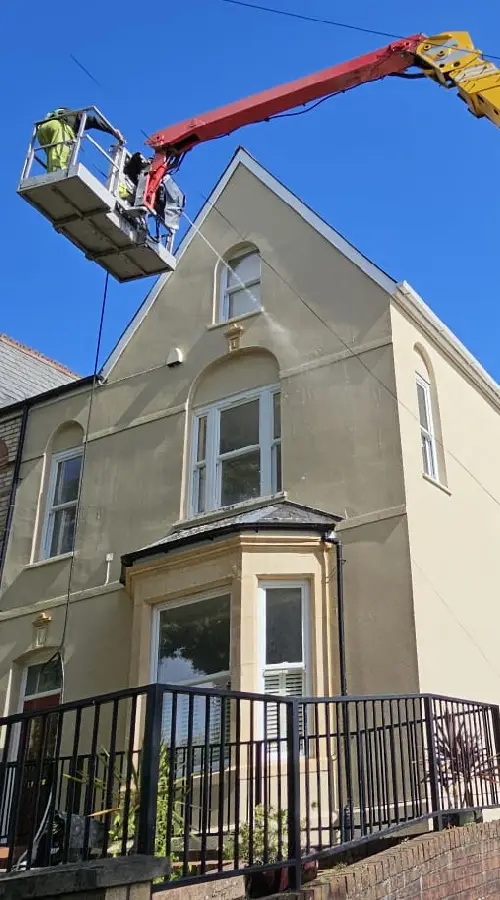
Converted farm buildings, rural business units and countryside offices with rendered elevations occupy an environment that soils walls faster than most, and the pattern is worth understanding. Spore load from surrounding vegetation and open ground is high, air movement around buildings is often restricted by planting or adjacent structures, and dust from tracks and yards adds a mineral component that biocidal treatment alone will not shift. Commercial render cleaning at these premises therefore uses a dual specification where required, with render stain removal alongside biocidal treatment, both applied at low pressure since abrasion cannot be corrected on a through-coloured finish. Operationally these sites are usually straightforward. Buildings stand clear, hard standing is generally available and access is good, and our hose runs mean the vehicle does not need to be brought close to each structure. Where a site includes several buildings, treating them in one visit is the most economical arrangement. Occupiers need notice where units are individually let, and we supply what a landlord or agent needs to circulate. Insurance, method statements and risk assessments are supplied ahead of attendance, and operatives hold current working at height certification. Technically these are usually single-storey or low two-storey elevations, often long and uninterrupted. Soft wash render cleaning holds identical dilution and continuous wet edges across each run so every building reads uniformly. For rural business premises around Wyre Piddle, intervals are generally shorter than in more open positions, and we say so honestly rather than quoting a general figure. Residential render cleaning quoted from a close-range reading of the texture is what produces an even result rather than a partial one.
Softwashing UK keep a written record of every property treated, and the return visit commitment sits alongside it. Both are worth explaining because they matter over years rather than on the day. The record sets out, elevation by elevation, what coating was identified, the texture grade found, the condition of the surface, which organisms were present and at what density, the dilution and volume applied, the dwell allowed, how each wall was reached and anything excluded or flagged at the time. That makes a return visit faster and cheaper. The assessment does not have to be rebuilt, the specification is already known, and the work itself is genuinely smaller because the earlier treatment destroyed colonies at root level rather than removing them from view. Returning properties are quoted lower for that reason. It also lets us check our own interval advice, and it answers the questions a new owner cannot, since most people buying a rendered property have no idea what finish they have or when it was last treated. The return commitment is separate. Where an area has genuinely not responded within four to six weeks of treatment, we come back and treat it again at no charge. Where we anticipated a second application at survey, it was included in the original figure. Render cleaning prices are fixed at survey. There is no deposit, invoicing follows completion, and full public liability cover and current working at height certification are available on request before booking. Reading a wall properly is also what allows an accurate interval to be quoted rather than a general figure applied to every property.
Wyre Piddle is covered in full, with the same survey process and pricing basis applied to every property and no travel loading regardless of position. It is worth setting out exactly what the survey covers, since it costs nothing and it is where the entire job is decided. We identify the coating on each elevation, which governs the whole approach. We grade the texture, since depth determines how much treatment is applied and how long it must dwell. We check condition, looking for chalking paintwork, open cracking, failed sealant at junctions and hollow areas indicating debonding, any of which may mean a wall should not be treated yet. We establish which organisms are present and at what density, elevation by elevation, since algal filming, fungal spotting, lichen and moss all need different strengths and dwell periods. We measure the areas involved and work out how every part of each wall will be reached safely. We note what surrounds the building: planting close to elevations, borders at the base, hard surfaces producing splashback, drainage points and anything needing protection. And we look for what cleaning will reveal rather than fix, including patch repairs, previous pressure washing damage and embedded staining, using a sheltered reference area as a realistic target. From that comes an itemised written quotation per elevation stating what was found, what is specified and what is excluded. It holds for a stated period and does not change. The visit takes around twenty minutes and does not require anyone to be at home. Where several properties in the village arrange within the same period, mobilisation is shared and each quotation reduces accordingly.
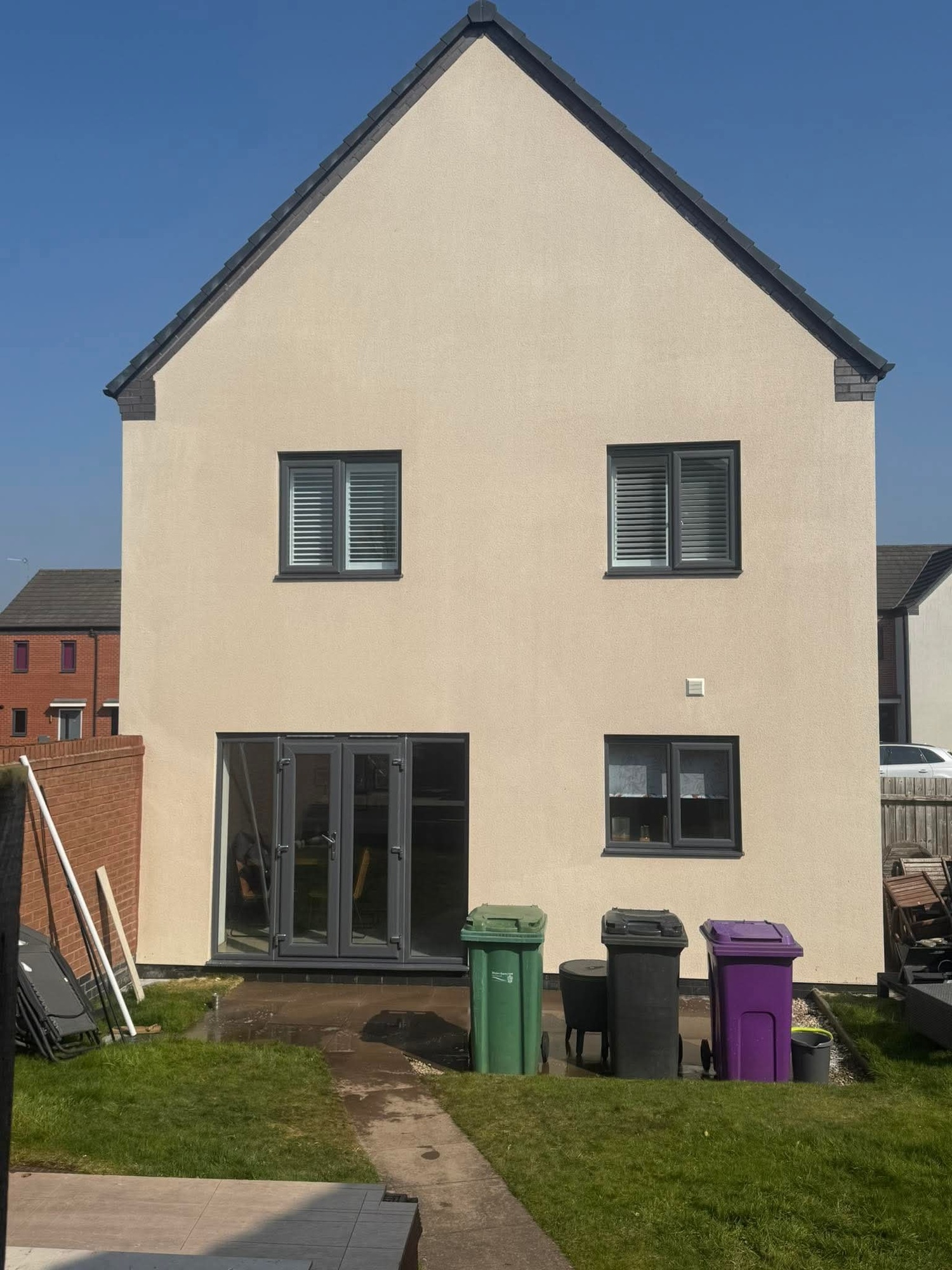
Most properties in Wyre Piddle benefit from professional render cleaning every 3 to 5 years, although this depends on the surrounding environment. Properties near trees, woodland, busy roads or coastal areas may require more frequent cleaning due to algae, mould and airborne contaminants. Our soft washing process removes existing growth and helps keep your render cleaner for longer.
Yes. Soft washing is specifically designed for delicate surfaces such as K-Rend, silicone render, monocouche render and painted render. Unlike high-pressure washing, it cleans at low pressure while treating biological growth at its source, reducing the risk of damage to the render finish.
We clean virtually all external render finishes, including K-Rend, Monocouche, Weber, Sto, silicone render, acrylic render, painted render, roughcast and pebble dash. Every cleaning method is tailored to the specific render type to achieve the best possible results.
Yes. Our specialist soft washing treatments are highly effective at removing green algae, red algae, black mould, mildew, lichen and other organic staining. We also apply professional biocide treatments to kill spores and slow down regrowth.
Because our process targets the biological growth rather than simply washing the surface, results typically last much longer than pressure washing alone. The exact lifespan depends on weather conditions, surrounding vegetation and the property’s location.
No. Our soft washing process is specifically designed to clean render safely. We use low-pressure application methods and specialist cleaning solutions that remove contamination without damaging the render surface when carried out by trained professionals.
The UK’s damp climate provides ideal conditions for algae, mould and other biological growth to develop on rendered surfaces. Areas with limited sunlight, nearby trees or persistent moisture are especially susceptible. Professional soft washing safely removes these contaminants and restores your property’s appearance.











































WhatsApp us