


Housing associations are responsible for maintaining thousands of homes across the UK, and the external appearance of these properties plays an important role in resident satisfaction, neighbourhood pride and long-term asset management. Clean, well-maintained buildings not only create a positive first impression but also help protect rendered surfaces from unnecessary deterioration caused by biological growth and environmental contamination.
Modern housing developments often feature rendered façades because they provide an attractive, contemporary appearance while offering excellent weather protection. However, without regular maintenance, render can quickly become stained by green algae, red algae, black mould, pollution and general dirt.
Professional render cleaning restores the appearance of housing association properties using specialist soft washing techniques that are designed to clean delicate render safely without causing damage. At Softwashing UK, specialist render cleaning services are available for housing associations, local authorities and property managers looking to maintain high standards across their housing stock.
Why Housing Association Properties Need Render Cleaning
Housing association homes are exposed to the same environmental conditions as any other residential property, but because many developments contain multiple buildings with consistent render finishes, contamination often becomes highly noticeable.
Common causes of render staining include:
- Green algae
- Red algae
- Black mould
- Atmospheric pollution
- Vehicle emissions
- Bird droppings
- Tree sap
- Dust and airborne debris
- Water run-off marks
- Organic staining
North-facing elevations usually experience the greatest level of contamination because they remain damp for longer periods, creating ideal conditions for biological growth.
Properties located near woodland, parks, rivers or busy roads often require more frequent maintenance than those in open locations.
| Cause | Typical Appearance | Relative Impact |
|---|---|---|
| Green algae | Green patches | Moderate |
| Red algae | Red or pink staining | High |
| Black mould | Dark discolouration | High |
| Pollution | Grey film | Moderate |
| Bird droppings | White staining | Localised |
| Water run-off | Vertical streaks | Moderate |
Benefits of Professional Render Cleaning
Regular cleaning provides far more than cosmetic improvements.
Housing associations benefit from:
- Improved kerb appeal
- Better resident satisfaction
- Cleaner communal areas
- Longer-lasting render finishes
- Reduced long-term maintenance costs
- Consistent appearance across developments
- Improved property presentation
- Protection against excessive biological growth
Maintaining clean buildings also demonstrates proactive asset management, which can positively influence resident perception and prospective tenants.
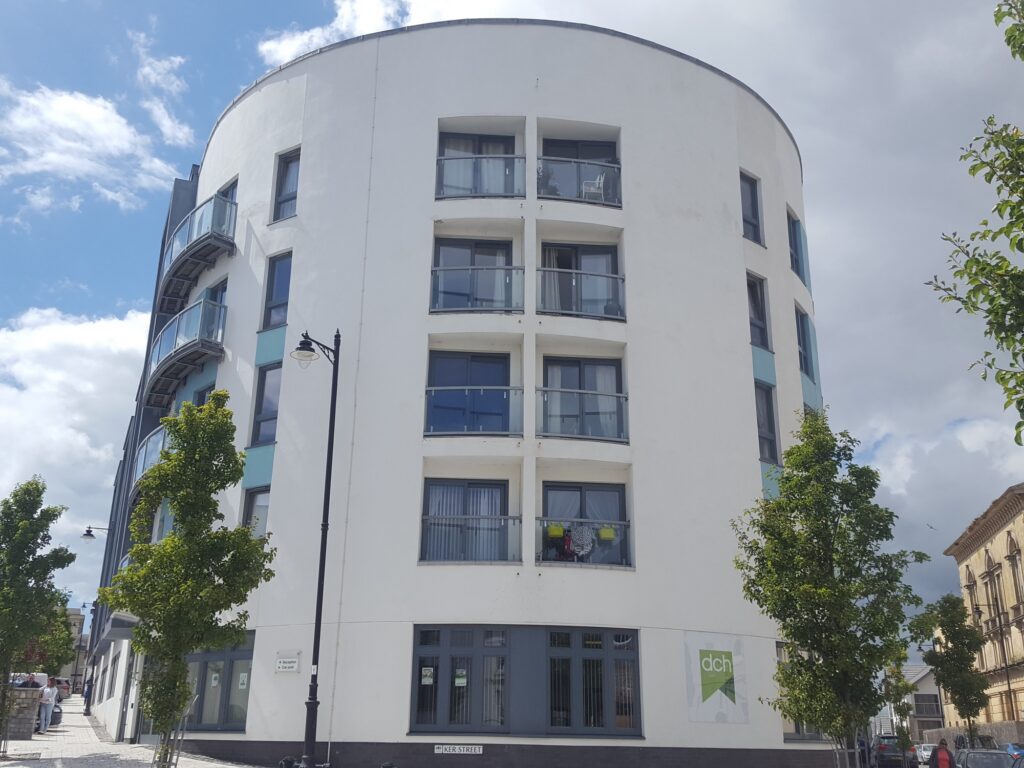
Why Soft Washing Is Preferred
Render is not designed to withstand aggressive pressure washing.
High-pressure cleaning can:
- Damage protective finishes
- Remove coloured coatings
- Force water into cracks
- Leave cleaning marks
- Increase future contamination
- Shorten the lifespan of the render
Professional soft washing uses specially formulated cleaning solutions to break down contamination before low-pressure rinsing removes the residue.
This approach provides excellent cleaning results while significantly reducing the risk of surface damage.
Types of Housing Association Properties That Benefit
Render cleaning is suitable for a wide variety of residential buildings.
Examples include:
| Property Type | Typical Cleaning Interval |
|---|---|
| Low-rise flats | Every 3–5 years |
| Apartment blocks | Every 3–5 years |
| Sheltered housing | Every 3–4 years |
| Modern housing estates | Every 4–5 years |
| Retirement housing | Every 3–5 years |
| Mixed-use developments | Every 3–4 years |
Environmental exposure ultimately determines how frequently cleaning is required.
The Render Cleaning Process
Every project begins with careful planning.
Initial Survey
An experienced surveyor assesses:
- Render type
- Building condition
- Existing damage
- Biological contamination
- Access requirements
- Drainage
- Parking arrangements
- Resident access
The survey helps determine the safest and most effective cleaning method.
Site Preparation
Before cleaning starts, the site is prepared to minimise disruption.
Preparation may include:
- Protecting landscaping
- Checking drainage routes
- Creating safe working zones
- Positioning access equipment
- Informing residents
- Protecting sensitive surfaces
Proper preparation allows the project to run smoothly from start to finish.
Application of Cleaning Solution
Specialist soft washing solutions are carefully applied across the rendered surfaces.
The solution works by breaking down:
- Green algae
- Red algae
- Black mould
- Organic staining
- Surface dirt
Allowing the cleaning solution sufficient dwell time significantly improves cleaning performance.
Low-Pressure Cleaning
Once contaminants have been treated, the render is cleaned using low-pressure equipment.
Unlike pressure washing, this process is specifically designed to protect delicate render finishes while producing an even appearance across the building.
Final Inspection
Every elevation is inspected after cleaning.
This ensures:
- Consistent results
- Remaining contamination identified
- High-quality finish
- Safe completion of all work
Access Equipment
Housing association properties vary considerably in height.
Professional contractors may use:
| Access Method | Best Suited For |
|---|---|
| Cherry pickers | Multi-storey housing |
| Mobile elevated work platforms | Medium-height buildings |
| Scissor lifts | Large flat elevations |
| Specialist access systems | Restricted locations |
The safest access method depends on the building layout and surrounding environment.
Factors Affecting Cleaning Costs
No two developments are identical.
Pricing is influenced by several factors.
These include:
- Building height
- Number of properties
- Total render area
- Level of contamination
- Access requirements
- Parking restrictions
- Site logistics
- Frequency of previous cleaning
- Complexity of the development
Buildings that receive routine maintenance generally require less intensive cleaning, reducing future costs.
Typical Housing Association Render Cleaning Costs
The following figures provide a general budgeting guide.
| Property Size | Approximate Cost |
|---|---|
| Small residential block | £1,500–£3,000 |
| Medium housing development | £3,000–£7,000 |
| Large estate | £7,000–£15,000+ |
| Multiple developments | Site survey required |
Premium specialist contractors often charge more because of their experience, specialist equipment, comprehensive insurance and high-quality soft washing methods.
Health and Safety Considerations
Safety is one of the most important aspects of any housing association cleaning project.
Professional contractors should carry out detailed risk assessments before work begins.
Important considerations include:
- Resident safety
- Pedestrian routes
- Vehicle access
- Working at height
- Chemical handling
- Weather conditions
- Emergency procedures
- Equipment inspections
Careful planning helps minimise disruption while maintaining a safe environment for residents and contractors alike.
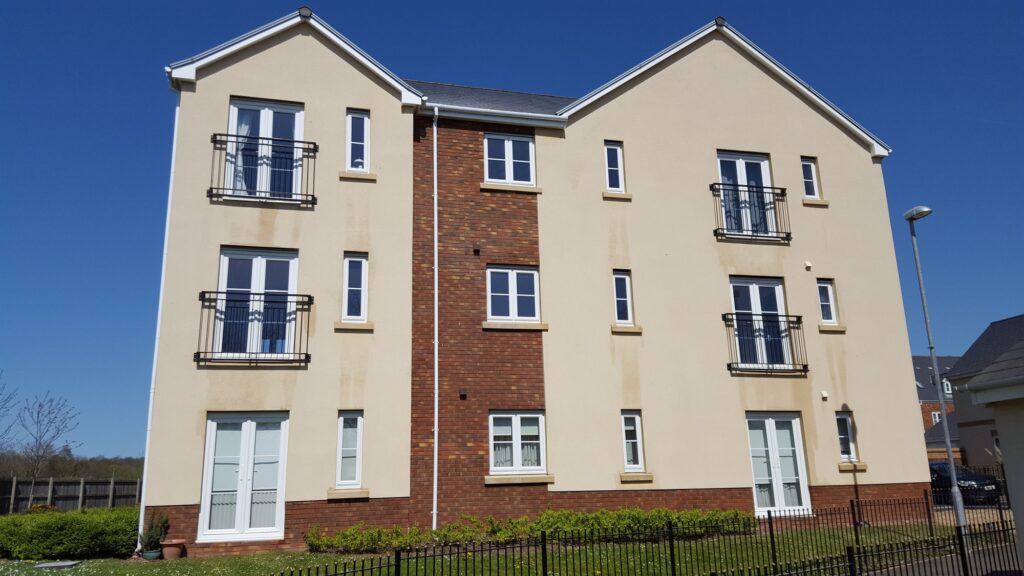
Minimising Disruption to Residents
Housing associations understandably want maintenance work to interfere as little as possible with residents’ daily routines.
Professional planning can significantly reduce inconvenience by:
- Scheduling work during appropriate hours
- Maintaining access to entrances wherever possible
- Providing advance notice to residents
- Using clearly marked safety barriers
- Completing work in manageable phases
- Keeping communal areas tidy throughout the project
Good communication before and during the project helps ensure residents understand what work is taking place and how long it is expected to last.
Planned Maintenance Programmes
Many housing associations choose planned maintenance rather than waiting until buildings become heavily stained.
A preventative maintenance programme offers several advantages:
- Consistently attractive buildings
- Easier future cleaning
- Reduced biological growth
- Improved budgeting
- Lower long-term maintenance costs
- Extended life of decorative render finishes
By cleaning render before heavy contamination becomes established, housing providers can maintain their properties to a consistently high standard while avoiding more extensive restoration work in the future.
Frequently Asked Questions
Is render cleaning suitable for occupied properties?
Yes. Most housing association render cleaning projects are completed while residents remain in their homes. Careful planning ensures disruption is kept to a minimum.
Will soft washing remove all staining?
Most green algae, red algae, black mould and general environmental contamination can usually be removed successfully. Permanent staining caused by previous damage or weathering may remain visible.
How often should housing association render be cleaned?
Most rendered housing developments benefit from cleaning every three to five years, although properties in damp or shaded environments may require more frequent maintenance.
Is soft washing better than pressure washing?
For most render systems, yes. Soft washing is designed to clean delicate surfaces safely while reducing the risk of damage associated with aggressive high-pressure cleaning.
Why choose a specialist render cleaning contractor?
Render requires specialist knowledge, appropriate cleaning solutions and safe access equipment. Using experienced professionals helps achieve consistent results while protecting the building’s exterior.
At Softwashing UK, every housing association project begins with a detailed survey to assess the render type, contamination levels and access requirements. Using specialist soft washing techniques, properties can be restored safely and effectively, helping housing providers maintain attractive, well-presented homes across their developments while protecting rendered surfaces for years to come.
Common Render Problems on Housing Association Properties
Housing association properties often have similar render finishes across an entire estate or development. While this creates a uniform appearance when the buildings are new, it also means that dirt, algae and staining become noticeable across multiple properties at the same time.
Some of the most frequently encountered issues include:
| Problem | Cause | Recommended Action |
|---|---|---|
| Green algae | Damp conditions and shaded elevations | Professional soft washing |
| Red algae | Airborne spores and prolonged moisture | Specialist treatment and soft washing |
| Black mould | Moisture retention | Professional cleaning |
| Traffic film | Roads and vehicle emissions | Regular maintenance cleaning |
| Water staining | Overflowing gutters or leaking downpipes | Repair water source and clean render |
| Patchy appearance | Uneven weather exposure | Complete elevation cleaning |
By treating contamination early, housing associations can often avoid more extensive cleaning requirements later.
The Importance of Regular Property Inspections
Routine inspections allow housing associations to identify potential problems before they become widespread.
During inspections, property managers should check for:
- Early signs of green algae
- Areas affected by red algae
- Cracked or damaged render
- Water staining beneath gutters
- Leaking downpipes
- Blocked gutters
- Overflowing hopper heads
- Vegetation growing against walls
- Damage caused by impact or vandalism
Addressing these issues promptly not only improves the appearance of the buildings but can also help prevent unnecessary repair costs.
Many housing providers include external inspections as part of their cyclical maintenance programme, making it easier to schedule cleaning before contamination becomes severe.
Environmental Factors That Affect Render
Not every housing development becomes dirty at the same rate. Local environmental conditions have a significant impact on how quickly render becomes contaminated.
Factors that commonly accelerate biological growth include:
- Dense tree cover creating permanent shade
- North-facing elevations receiving limited sunlight
- High rainfall throughout the year
- Poor air circulation between buildings
- Nearby woodland
- Rivers, lakes or canals
- Busy roads producing airborne pollution
- Coastal locations with increased moisture
Developments exposed to several of these factors may require cleaning more frequently than those situated in open, well-ventilated areas.
Budgeting for Planned Render Cleaning
Housing associations often work within carefully planned maintenance budgets, making it important to forecast future cleaning requirements.
Rather than waiting until every property requires extensive restoration, phased cleaning programmes can spread costs more evenly over several financial years.
For example:
| Maintenance Strategy | Typical Outcome |
|---|---|
| Reactive cleaning only | Higher long-term costs and inconsistent appearance |
| Planned maintenance programme | Better budgeting and consistently clean properties |
| Cleaning before heavy contamination develops | Lower future cleaning costs |
| Regular inspections with scheduled cleaning | Improved asset management |
Planned maintenance also reduces the likelihood of resident complaints relating to the appearance of communal buildings.
Improving Resident Satisfaction
The appearance of external communal areas often influences how residents feel about where they live.
Clean render contributes towards:
- Greater pride in the local community
- Improved first impressions for visitors
- More attractive neighbourhoods
- Better presentation for prospective tenants
- A visible commitment to ongoing property maintenance
Although render cleaning is primarily a maintenance activity, it can have a positive impact on how an entire housing development is perceived.
Why Experience Matters
Cleaning render across multiple occupied properties requires specialist knowledge and careful project management.
Every development presents different challenges, including varying render types, restricted access, landscaped communal areas and the need to minimise disruption for residents.
An experienced contractor will carefully assess:
- The condition of the render
- The most suitable cleaning solutions
- Safe working methods
- Access equipment requirements
- Resident safety measures
- Environmental considerations
- Drainage protection
- Project scheduling
This level of planning helps ensure the work is completed efficiently while maintaining high standards of safety and workmanship.
At Softwashing UK, each housing association render cleaning project is individually surveyed and planned to suit the specific development. Using specialist soft washing techniques, rendered façades can be restored safely without relying on aggressive high-pressure cleaning, helping housing providers maintain attractive, well-presented properties while protecting the long-term condition of their render finishes.