


Render is one of the most popular exterior finishes on UK homes thanks to its clean appearance, durability and ability to protect masonry from the elements. However, because render is constantly exposed to the weather, it naturally changes over time.
Rain, sunshine, frost, wind and pollution all have an impact on the condition and appearance of render. While quality render systems are designed to withstand the British climate, understanding how different weather conditions affect them can help homeowners spot problems early and keep their property looking its best.
At Softwashing UK, we regularly clean and restore rendered properties using professional soft washing techniques that safely remove green algae, red algae and other contaminants without exposing the render to unnecessary high-pressure damage.
Why Weather Has Such a Big Impact
Unlike internal walls, exterior render is exposed to changing weather every day of the year.
Throughout the seasons it experiences:
- Heavy rainfall
- Strong winds
- UV sunlight
- Frost
- Temperature fluctuations
- Air pollution
- Biological growth
Over many years these conditions gradually affect both the appearance and performance of the render.
| Weather Condition | Effect on Render |
|---|---|
| Rain | Moisture absorption |
| Sunlight | UV ageing |
| Frost | Expansion and contraction |
| Wind | Dirt and debris |
| Humidity | Encourages algae |
| Pollution | Surface staining |
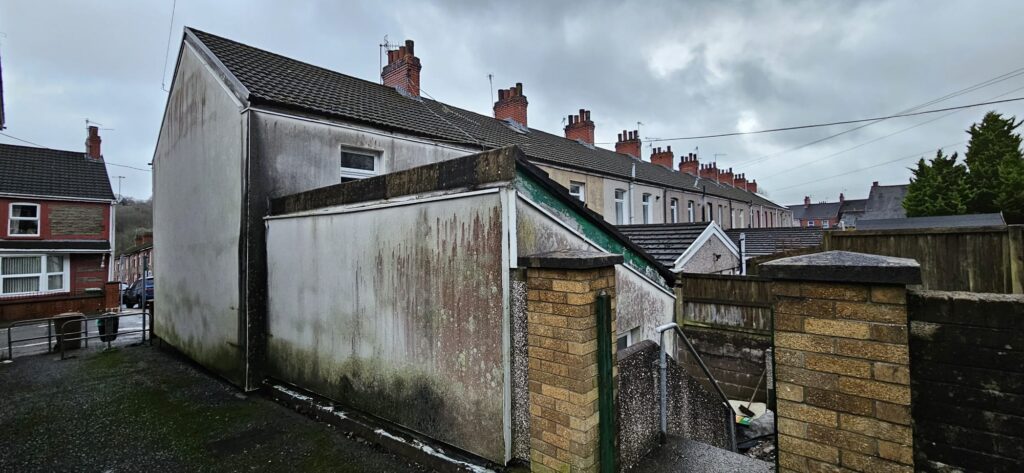
Rain Is the Biggest Influence
The UK receives significant rainfall throughout the year.
Although render is designed to resist water, repeated exposure means the surface spends a large proportion of the year damp.
This encourages:
- Green algae
- Red algae
- Black mould
- Lichen
- Dirt build-up
Rainwater also carries airborne contamination that settles on rendered walls.
Damp Conditions Encourage Biological Growth
Moisture alone doesn’t damage most render systems.
The problem is what grows because of it.
When render remains damp, biological contamination develops much more quickly.
Common examples include:
- Green algae
- Red algae
- Moss
- Lichen
- Black mould
These organisms retain additional moisture against the wall, allowing the problem to become progressively worse.
Humidity Slows Drying
Many homeowners only think about rainfall.
Humidity is equally important.
Even on dry days, high humidity slows evaporation.
As a result:
- Render stays damp longer.
- Algae spreads more easily.
- Dirt sticks more readily.
- Drying after cleaning takes longer.
High humidity is particularly common during autumn and winter.
Frost and Freezing Temperatures
Render expands and contracts naturally as temperatures change.
During freezing weather:
- Moisture can freeze.
- Ice expands.
- Small cracks may widen.
- Existing defects become more noticeable.
This is one reason why small cracks should always be repaired before they develop into larger problems.
| Winter Weather | Possible Effect |
|---|---|
| Frost | Expansion |
| Freeze-thaw cycles | Hairline cracks |
| Snow | Temporary moisture |
| Ice | Increased stress on damaged render |
Sunshine Can Also Affect Render
Although sunshine helps dry render, prolonged UV exposure gradually ages many exterior finishes.
Over time sunlight may contribute to:
- Colour fading
- Surface weathering
- Reduced flexibility in older coatings
- General ageing
Modern render systems generally resist UV damage well, but no exterior finish remains completely unchanged forever.
Wind Carries Dirt Onto Your Walls
Strong winds don’t simply blow against render.
They also carry:
- Dust
- Sand
- Pollution
- Organic debris
- Tree residue
These particles settle on damp surfaces where they gradually accumulate.
Wind-driven rain can also concentrate staining on exposed elevations.
North-Facing Walls Stay Wetter
Every side of a property experiences different weather conditions.
North-facing walls receive very little direct sunlight.
They therefore remain damp much longer than south-facing elevations.
These walls are most likely to develop:
- Green algae
- Red algae
- Black mould
- Lichen
This explains why only one side of many homes appears dirty.
South-Facing Walls Weather Differently
South-facing elevations receive the greatest amount of sunlight.
While this helps them dry quickly, it also means greater exposure to UV light.
Common characteristics include:
- Faster drying
- Less algae
- More colour fading over many years
- Greater temperature fluctuations
Every elevation therefore ages differently.
Trees Create Their Own Weather
Large trees dramatically change the environment around render.
They produce:
- Shade
- Moisture
- Falling leaves
- Organic staining
- Reduced airflow
Properties surrounded by mature trees often experience much faster biological growth than homes in open locations.
Coastal Weather Creates Extra Challenges
Properties near the coast experience additional weather exposure.
This includes:
- Salt-laden air
- Strong winds
- Driving rain
- Airborne sand
These factors can accelerate general weathering and leave render looking dirty sooner than inland properties.
Air Pollution Causes Surface Staining
Even countryside homes collect atmospheric pollution.
Urban areas often experience greater contamination from:
- Traffic emissions
- Industrial pollution
- Construction dust
- Smoke particles
These contaminants adhere particularly well to damp render.
| Location | Common Contamination |
|---|---|
| Rural | Organic debris |
| Coastal | Salt and sand |
| Urban | Pollution and traffic residue |
| Woodland | Green algae, red algae and moss |
Temperature Changes Cause Movement
All building materials expand and contract.
Render is no exception.
Daily temperature changes create continual movement.
Although properly installed render accommodates this movement, existing cracks may slowly worsen over time.
This is why routine inspections remain important.
Heavy Rain Doesn’t Clean Render
Many people believe winter rain naturally washes render clean.
In reality, rain often deposits more contamination than it removes.
Rainwater carries:
- Dust
- Airborne spores
- Pollution
- Organic material
Combined with constant moisture, this encourages biological growth.
Why Render Looks Worse During Winter
Winter creates almost perfect conditions for staining.
The combination of:
- Rain
- Cold temperatures
- Reduced sunshine
- High humidity
means render often remains damp for days.
This encourages rapid growth of green algae and red algae.
Summer Isn’t Completely Problem-Free
Although summer generally offers faster drying, it brings different challenges.
These include:
- UV exposure
- Dust
- Pollen
- Heat expansion
Fortunately, biological growth is usually less active than during colder months.
How Weather Affects Painted Render
Painted render experiences similar weather effects.
However, trapped moisture beneath paint can eventually cause:
- Bubbling
- Blistering
- Flaking
- Peeling
This is why render should always be fully dry before repainting.
Signs Weather Is Affecting Your Render
Regular inspections help identify problems early.
Look for:
- Green staining
- Red staining
- Black mould
- Hairline cracks
- Discolouration
- Lichen
- Damp patches
Early treatment often prevents larger maintenance issues later.
Does New Render Resist Weather Better?
Modern render systems generally include improved weather resistance.
However, they still experience:
- Rain
- UV exposure
- Dirt accumulation
- Biological growth
Even newly rendered homes can develop green algae and red algae within only a few years if conditions remain consistently damp.
How Different Weather Conditions Affect Cleaning
Professional cleaning is planned around weather forecasts.
Ideal conditions include:
- Mild temperatures
- Dry weather
- Moderate humidity
- Little wind
Unsuitable conditions include:
- Frost
- Heavy rain
- Extreme heat
- High winds
Choosing the correct weather window helps achieve the best results.
| Weather | Suitable for Cleaning? |
|---|---|
| Mild and dry | ✔ Excellent |
| Cloudy but dry | ✔ Very Good |
| Light breeze | ✔ Good |
| Heavy rain | ✖ No |
| Frost | ✖ No |
| Strong winds | Sometimes unsuitable |
Weather and Drying Times
After cleaning, render requires time to dry.
Drying speed depends upon:
- Temperature
- Wind
- Humidity
- Sunshine
- Render type
Warm, breezy weather usually provides the fastest drying conditions.
Cold, humid conditions require considerably longer.
Seasonal Weather Comparison
| Season | Main Effect on Render |
|---|---|
| Spring | Removes winter moisture but encourages early algae growth |
| Summer | Fast drying and UV exposure |
| Autumn | Increased rainfall and leaf debris |
| Winter | High humidity, algae growth and slower drying |
Each season affects render differently, which is why year-round maintenance is beneficial.
Protecting Render from the Weather
Although weather cannot be prevented, homeowners can reduce its impact by carrying out regular maintenance.
Helpful steps include:
- Keeping gutters clear
- Repairing leaking downpipes
- Trimming vegetation away from walls
- Inspecting render for cracks
- Removing biological growth promptly
- Arranging professional cleaning before contamination becomes severe
These simple measures help reduce moisture retention and keep render looking cleaner for longer.
Why Professional Soft Washing Helps Weatherproof Your Maintenance
Weather is unavoidable, but the damage caused by prolonged biological growth and contamination doesn’t have to be.
Professional soft washing helps by:
- Removing green algae and red algae safely
- Treating mould, lichen and organic staining
- Using low-pressure cleaning that protects render finishes
- Reducing moisture-retaining contamination
- Restoring the appearance of weather-stained walls
- Helping maintain the property between decorating cycles
Whether your render is silicone, acrylic, monocouche or traditional cement, regular maintenance from Softwashing UK helps minimise the visible effects of the British weather while preserving the clean, attractive appearance of your property’s exterior.
How Extreme Weather Events Can Affect Render
The UK has experienced more frequent periods of extreme weather in recent years, including prolonged heatwaves, intense rainfall and severe storms. These conditions can place additional stress on exterior render.
Heavy rainfall may expose weaknesses that were previously unnoticed, while strong winds can drive rain into small cracks and joints. During prolonged hot weather, render expands as temperatures rise before contracting again overnight.
Over time, these repeated cycles can contribute to natural ageing, particularly if minor defects are left unrepaired.
| Extreme Weather | Potential Effect on Render |
|---|---|
| Heavy rainfall | Increased surface moisture |
| Storms | Wind-driven dirt and debris |
| Heatwaves | Expansion and UV exposure |
| Rapid temperature changes | Expansion and contraction cycles |
| Extended damp periods | Increased biological growth |
Regular inspections after severe weather can help identify small issues before they develop into more costly repairs.
Why Some Properties Stay Cleaner Than Others
It’s common to see neighbouring houses with noticeably different levels of staining, even when they were built at the same time.
This is usually due to environmental factors rather than differences in the render itself.
Factors that influence how quickly render becomes dirty include:
- Direction the property faces
- Amount of surrounding vegetation
- Shelter from neighbouring buildings
- Local weather exposure
- Nearby roads or traffic
- General airflow around the property
For example, a south-facing house on an open plot may remain cleaner for considerably longer than a north-facing property surrounded by mature trees.
The Importance of Regular Inspections
Weather affects render gradually, making it easy to overlook small changes.
A quick inspection every few months can help you identify:
- Early green algae growth
- Red algae staining
- Small hairline cracks
- Black mould around windows
- Overflowing gutters causing damp patches
- Areas where water regularly collects
Spotting these issues early allows them to be addressed before they become more widespread or require more extensive maintenance.
Weather Never Stops Affecting Render
Unlike interior walls, exterior render is exposed to changing weather every single day of the year. Rain, frost, sunshine, humidity and wind all play a role in how clean and well-maintained it remains.
While it’s impossible to prevent the effects of the British climate, regular maintenance can significantly reduce the impact. Removing green algae, red algae and other biological contamination before it becomes established helps the render dry more efficiently and maintain its appearance for longer.
Professional soft washing from Softwashing UK safely removes weather-related contamination using low-pressure cleaning techniques designed to protect modern and traditional render finishes. Combined with routine inspections and timely maintenance, this helps homeowners keep rendered properties looking their best despite the challenges posed by the UK’s ever-changing weather.