


If you’ve noticed that one side of your property always seems dirtier than the others, you’re certainly not alone. In many cases, the north-facing elevation develops staining, algae growth and general discolouration much sooner than any other wall. Understanding why this happens can help homeowners protect their property’s appearance and avoid more expensive restoration work later.
Professional exterior cleaning from Soft Washing UK is designed to safely remove biological growth from rendered surfaces while helping to slow down future contamination.
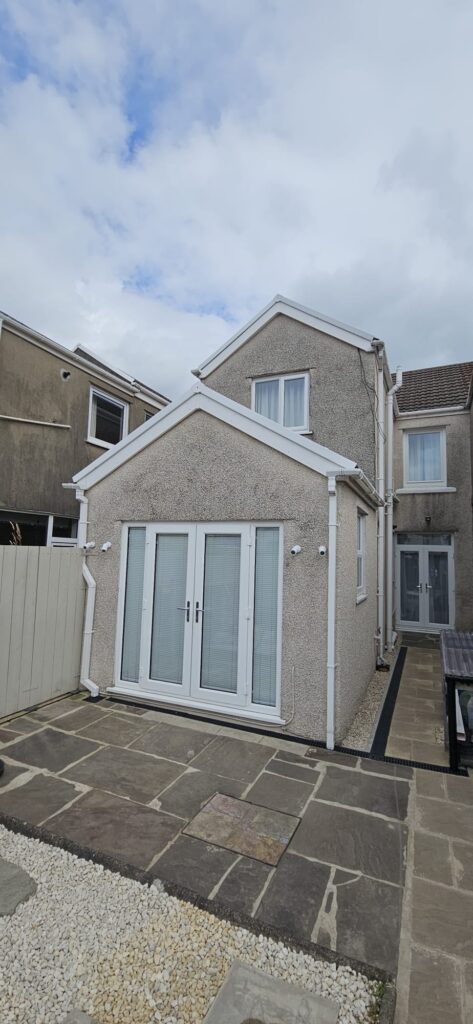
Why Does North-Facing Render Stay Dirtier?
The simple answer is sunlight.
North-facing walls receive significantly less direct sunlight throughout the year compared to south-facing elevations. Without regular sunlight to dry moisture from the render, damp conditions remain for much longer after rain, dew or fog.
Moisture is exactly what biological contaminants need to grow.
These include:
- Green algae
- Red algae
- Moss
- Lichen
- Mould
- Airborne bacteria
The longer moisture remains trapped within the surface texture, the easier it becomes for these organisms to establish themselves.
| Factor | North-Facing Wall | South-Facing Wall |
|---|---|---|
| Direct sunlight | Very little | High |
| Drying speed | Slow | Fast |
| Surface moisture | High | Low |
| Algae growth | High risk | Lower risk |
| General staining | Appears sooner | Develops slower |
Moisture Is the Biggest Problem
Modern render systems are designed to withstand weather, but they still become damp.
Sources of moisture include:
- Rainfall
- Overnight dew
- Morning condensation
- High humidity
- Snow melt
- Mist
- Nearby vegetation
On sunny elevations this moisture evaporates relatively quickly.
On north-facing walls it can remain for hours longer every single day.
That repeated cycle creates ideal growing conditions for biological contamination.
Why Green Algae and Red Algae Love North Walls
Both green algae and red algae thrive in damp environments.
Although they often appear together, they behave differently.
Green algae
Green algae usually develops first.
It often appears as:
- Green patches
- Vertical streaks
- Dark green films
- Slippery surfaces
It spreads rapidly once moisture levels remain consistently high.
Red algae
Red algae is becoming increasingly common across the UK.
Unlike green algae, it often produces:
- Pink staining
- Orange streaks
- Rust-coloured patches
- Red discolouration
Red algae can be particularly difficult to remove if left untreated because it penetrates deeper into surface pores.
Professional soft washing treatments are specifically designed to eliminate both green algae and red algae without damaging delicate render finishes.
Shade Makes the Problem Worse
Sunlight naturally inhibits biological growth.
Anything that blocks light can increase contamination.
Common causes include:
- Large trees
- High fences
- Garages
- Conservatories
- Neighbouring buildings
- Dense hedges
If your north-facing wall is also shaded by trees, it may stay damp almost continuously during wetter months.
Render Is Slightly Textured
Most rendered properties have a lightly textured finish.
Even smooth render contains microscopic pores.
These tiny imperfections collect:
- Dust
- Air pollution
- Tree pollen
- Organic debris
- Spores
When moisture combines with these particles, it creates an ideal surface for algae to establish itself.
| Render Finish | Dirt Retention |
|---|---|
| Smooth silicone render | Low |
| Fine textured render | Medium |
| Rough textured render | High |
| Older weathered render | Very High |
Air Pollution Also Plays a Role
Many homeowners assume staining is always algae.
In reality, several contaminants build up together.
These include:
- Vehicle emissions
- Industrial pollution
- Carbon deposits
- Airborne dust
- Pollen
- Organic debris
The damp surface effectively traps these particles.
Over time, the wall gradually changes from bright and clean to dull grey or black.
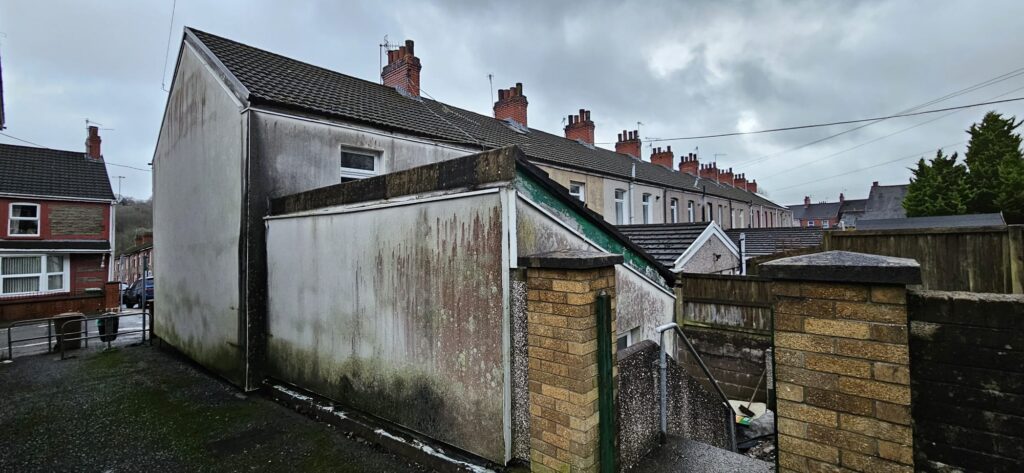
Why One Wall Looks Worse Than the Others
Many homes have only one noticeably dirty elevation.
That’s because every side of a property experiences different environmental conditions.
| Direction | Typical Condition |
|---|---|
| North | Dampest, highest algae growth |
| East | Morning moisture with moderate drying |
| South | Warmest and driest |
| West | Exposed to driving rain and wind |
The north-facing wall often combines:
- Reduced sunlight
- Longer drying times
- Increased humidity
- Cooler temperatures
This combination explains why it usually deteriorates first.
Trees Can Accelerate Contamination
Trees provide welcome shade during summer but can create several problems for rendered walls.
Nearby trees increase:
- Humidity
- Leaf debris
- Bird activity
- Moss spores
- Algae spores
- Reduced airflow
Overhanging branches also prevent sunlight reaching the render.
Pruning trees where appropriate can improve drying without affecting the property’s appearance.
Poor Airflow Slows Drying
Air movement helps remove moisture from exterior walls.
Properties located in enclosed spaces often experience:
- Higher humidity
- Less wind
- Longer drying times
Examples include:
- Narrow side passages
- Courtyards
- Properties surrounded by fences
- Dense housing developments
Without airflow, damp conditions persist much longer.
Modern Render Isn’t Maintenance Free
Many homeowners believe silicone or coloured render never requires cleaning.
Although these systems resist water absorption better than older cement renders, they still accumulate biological growth.
Manufacturers generally recommend periodic cleaning to preserve appearance and prevent long-term staining.
Ignoring contamination allows growth to mature and spread across larger areas.
How Quickly Does Render Become Dirty?
This depends on several factors.
| Property Condition | Expected Appearance Changes |
|---|---|
| Open, sunny location | Several years |
| Moderate shade | 2–4 years |
| Heavy shade | 1–3 years |
| North-facing with trees | Can develop within 12 months |
Properties near woodland or rivers may see even faster biological growth due to higher humidity.
Common Signs Your Render Needs Cleaning
Look for:
- Green staining
- Red staining
- Black spots
- Dark vertical streaks
- Moss around window reveals
- Dirty patches beneath gutters
- Uneven colouring
- Dull appearance
Cleaning these signs early usually produces better results than waiting until the entire wall is affected.
Why Pressure Washing Isn’t Usually Recommended
Many people assume pressure washing is the quickest solution.
However, render can be surprisingly delicate.
Excessive pressure may:
- Damage coatings
- Remove paint finishes
- Leave tiger stripes
- Force water behind render
- Increase future contamination
Professional soft washing uses specialist cleaning solutions that target biological growth rather than relying on excessive force.
Soft Washing Removes More Than Surface Dirt
Unlike basic washing, professional soft washing treats the underlying biological contamination.
The process generally includes:
- Inspection of the render.
- Selection of suitable cleaning products.
- Safe application of specialist treatments.
- Removal of dead biological growth.
- Optional preventative biocide treatment.
This helps achieve longer-lasting results.
How Much Does Professional Render Cleaning Cost?
Pricing varies depending on:
- Property size
- Height
- Amount of contamination
- Accessibility
- Type of render
- Additional treatments required
As a guide:
| Property Type | Typical Professional Cost |
|---|---|
| Small bungalow | £500–£800 |
| Semi-detached house | £700–£1,200 |
| Detached house | £1,000–£2,000+ |
| Large executive property | £2,000+ |
Premium services often include specialist treatments, comprehensive insurance, experienced technicians and longer-lasting results, providing better value over the life of the cleaned render rather than simply choosing the lowest quotation.
Preventing Future Contamination
Although no render stays spotless forever, several steps can slow biological growth.
These include:
- Regular inspections
- Trimming overhanging trees
- Clearing blocked gutters
- Repairing leaking downpipes
- Maintaining good drainage
- Applying professional biocide treatments where appropriate
- Booking periodic maintenance cleaning
These measures reduce moisture retention and make conditions less favourable for both green algae and red algae.
Why Professional Assessment Matters
Every rendered property is different.
Cleaning methods suitable for one home may not be appropriate for another, particularly where specialist finishes such as silicone, acrylic, monocouche or painted render are involved.
Before beginning any cleaning work, experienced technicians assess:
- The render type
- Existing coatings
- Biological contamination
- Surface condition
- Access requirements
- Areas requiring additional protection
This tailored approach helps ensure the safest and most effective cleaning process. If your north-facing render has developed staining, algae or discolouration, the specialists at Soft Washing UK can assess the condition of your property and recommend a professional soft washing solution designed to restore the appearance of your render while helping to reduce future biological growth.
How Seasonal Weather Affects North-Facing Render
The UK’s changing seasons have a significant impact on how quickly render becomes dirty. While contamination can develop throughout the year, certain seasons accelerate biological growth more than others.
| Season | Effect on North-Facing Render |
|---|---|
| Spring | Increased rainfall and rising temperatures encourage algae growth. |
| Summer | Limited sunlight on north-facing walls means moisture can still linger despite warmer weather. |
| Autumn | Falling leaves, increased rainfall and organic debris create ideal growing conditions. |
| Winter | Frost, snow and persistent dampness keep render wet for extended periods. |
Unlike south-facing walls, which often dry quickly after rainfall, north-facing elevations can remain damp for days during the colder months.
This prolonged dampness allows microorganisms to multiply continuously.
The Impact of Rainfall
Rain itself does not make render dirty.
Instead, rain provides the moisture that algae, mould and other organisms require to survive.
Following heavy rainfall, north-facing walls typically remain wet for much longer than other elevations because they receive little direct sunshine.
Frequent rain combined with poor drying conditions creates an almost permanent moisture cycle.
Over several months this results in:
- Faster algae development
- Increased staining
- Greater dirt retention
- More visible discolouration
Properties in western parts of the UK, where annual rainfall is generally higher, often experience faster render contamination than those in drier regions.
Condensation Is Often Overlooked
Many homeowners think only rainfall causes damp render.
However, overnight condensation contributes significantly.
When temperatures drop overnight, moisture forms on external surfaces.
On south-facing walls this evaporates quickly once the sun rises.
On north-facing elevations it may remain well into the afternoon.
This repeated daily cycle provides algae with a reliable water source even during relatively dry weather.
Why Window Areas Become Dirtier
Take a close look at many rendered homes and you’ll notice darker staining around windows.
Several factors contribute to this:
- Rainwater running from window frames
- Condensation from glazing
- Dirt collecting beneath window sills
- Reduced airflow around reveals
Window corners also create small shaded areas where moisture remains trapped.
Over time these become ideal locations for algae to establish itself before spreading across larger sections of render.
Gutters and Downpipes Can Make Things Worse
Leaking gutters are one of the biggest contributors to localised staining.
Even a small drip can create constant dampness.
Signs include:
- Dark streaks beneath gutter joints
- Green patches around downpipes
- Black staining below overflowing gutters
- Moss growth near roof edges
Keeping guttering in good condition helps reduce unnecessary moisture reaching rendered walls.
Professional render cleaning often produces the best results when combined with routine gutter maintenance.
Coastal Properties Face Additional Challenges
Homes located near the coast often become dirty more quickly.
Sea air contains microscopic salt particles that settle onto exterior surfaces.
When combined with moisture and airborne contaminants, these deposits encourage staining and biological growth.
Coastal properties may also experience:
- Higher humidity
- Stronger winds carrying sand and debris
- Increased salt deposits
- More frequent damp conditions
North-facing elevations on coastal homes often require cleaning more frequently than inland properties.
Urban Versus Rural Properties
Location has a surprisingly large influence on render contamination.
Urban environments
City properties typically collect:
- Vehicle emissions
- Carbon deposits
- Construction dust
- Industrial pollution
These particles stick readily to damp render.
Rural environments
Countryside homes usually experience:
- Tree pollen
- Agricultural dust
- Moss spores
- Algae spores
- Higher humidity
Neither environment is immune from dirty render—they simply produce different types of contamination.
| Environment | Most Common Cause of Staining |
|---|---|
| City | Pollution and traffic deposits |
| Village | Organic growth and airborne spores |
| Woodland | Moss, algae and leaf debris |
| Coastal | Salt deposits and humidity |
Why New Builds Can Become Dirty Surprisingly Quickly
Many homeowners are surprised when a property that’s only a few years old develops green or red staining.
Modern render systems are attractive and durable, but they are not self-cleaning.
Several factors contribute:
- Fresh render retains slight surface texture.
- New housing estates often have limited mature landscaping, creating exposed damp areas.
- Newly planted trees quickly increase shade.
- Tight spacing between properties can reduce airflow.
A north-facing wall on a new-build home can begin showing signs of biological growth within a relatively short period if environmental conditions are favourable.
Does Render Colour Make a Difference?
Yes, although not in the way many people expect.
Lighter render colours don’t necessarily become dirty faster—they simply show contamination more clearly.
Popular colours such as:
- White
- Cream
- Light grey
- Ivory
highlight even small amounts of algae or atmospheric pollution.
Darker renders can also develop biological growth, but it may remain less noticeable until contamination becomes more severe.
Why DIY Cleaning Often Gives Short-Term Results
Many homeowners try cleaning render themselves using household products or pressure washers.
While the wall may initially look cleaner, the underlying biological contamination often remains alive.
Without appropriate treatment:
- Algae quickly regrows.
- Staining returns.
- Cleaning becomes more frequent.
- Surface damage becomes more likely.
Professional soft washing focuses on killing the biological organisms responsible for staining rather than simply removing their visible appearance.
The Benefits of Routine Maintenance
Waiting until render looks heavily stained usually means more extensive cleaning is required.
Instead, regular maintenance offers several advantages.
| Maintenance Benefit | Why It Matters |
|---|---|
| Cleaner appearance | Enhances kerb appeal throughout the year. |
| Slower algae growth | Preventative treatments reduce recolonisation. |
| Longer render lifespan | Reduced biological activity helps preserve surface coatings. |
| Lower long-term costs | Light maintenance is often more economical than extensive restoration. |
| Improved property value | Well-maintained exteriors create a positive first impression. |
Routine inspections also allow minor issues, such as leaking gutters or overflowing downpipes, to be addressed before they contribute to larger staining problems.
Choosing the Right Time for Professional Cleaning
Although render can be cleaned throughout much of the year, weather conditions influence the effectiveness of treatments.
Dry, mild conditions generally provide the best environment for cleaning products to work effectively.
Many homeowners arrange cleaning:
- During spring after winter contamination.
- In early summer before algae becomes well established.
- During autumn before winter moisture returns.
Scheduling maintenance before heavy contamination develops often produces the longest-lasting results while keeping north-facing render looking clean and well cared for.