Treating part of a property rather than all of it is a reasonable decision in some circumstances and a mistake in others, and the difference is worth understanding before booking. The case for partial treatment is straightforward. Buildings do not soil evenly. A shaded gable can be several stages further advanced than a frontage, and where the other elevations are genuinely years from needing anything, treating only the problem wall is sensible and considerably cheaper. The case against is appearance. On a through-coloured render, a treated elevation returns to its original tone while an untreated one stays as it is, and where the two meet at a corner the difference can be marked. It is most obvious when the untreated wall carries moderate rather than negligible growth, because there is enough contrast to notice but not enough for the difference to read as deliberate. There is also a maintenance argument. The marginal cost of adding an elevation while we are already at the property is far lower than a separate visit later, so a wall that will need doing within a year or two is usually better done now. Our render cleaning services are quoted per elevation so that decision can be made with the figures in front of you. The itemised quotation shows what each wall requires and states plainly where one does not need attention yet. Render algae removal on a single problem gable is entirely normal work for us, and there is no minimum job size. Exterior render cleaning on a property in Major’s Green is priced honestly for whatever portion of it genuinely needs treating.
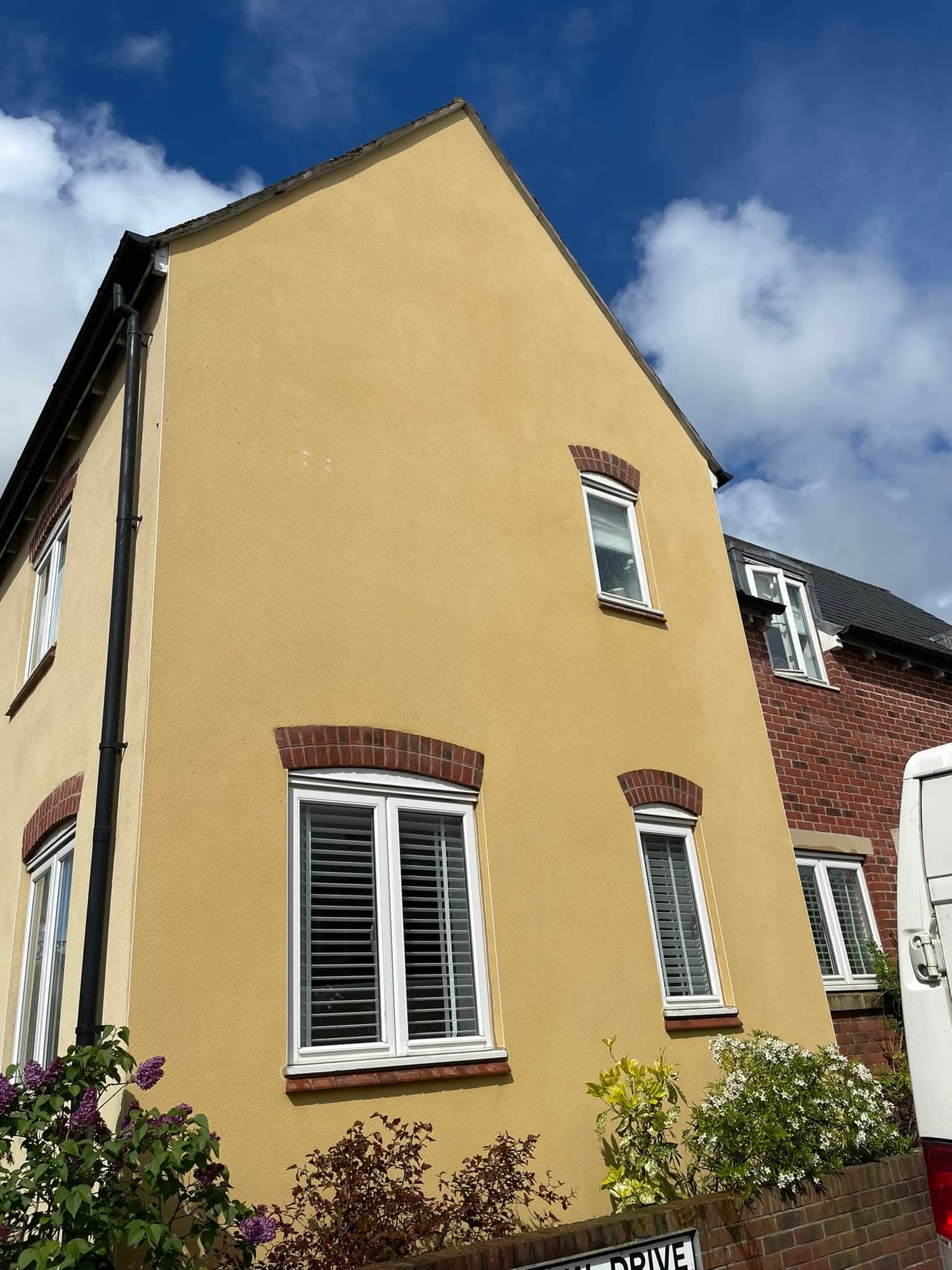
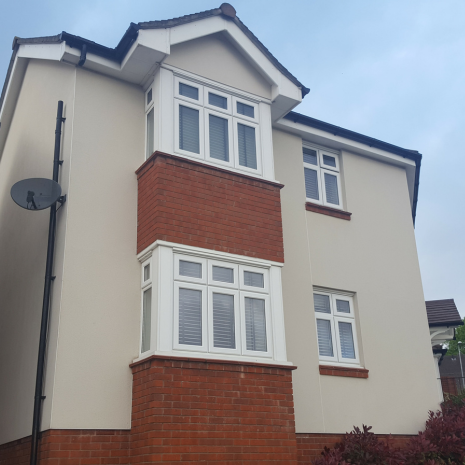

Porches, bays and small projections are where silicone render cleaning is most often left incomplete, and the reason is that they take disproportionate time relative to their area. A bay has three or four faces plus returns, each needing treatment applied squarely rather than at an angle. A porch has a junction at its head, side cheeks, and an underside that is permanently shaded. Projecting features have returns and undersides that cannot be reached with a lance held from directly in front. All of them concentrate water, sit in shade for more of the day than the flat wall around them, and colonise more heavily as a result. And all of them are fiddly, which is exactly why a contractor working to a tight schedule covers the main elevation and gives them a passing sweep. The visible outcome is a property where the flat walls read cleanly and every projection reads darker, which draws the eye to precisely the features that were previously unremarkable. K Rend cleaning here treats each projection as its own zone within the specification, with treatment applied directly onto every face, return and underside at appropriate strength and with the same dwell as the main wall. Access is part of that. Reaching an underside or a recessed cheek squarely sometimes needs a different position or a different approach, and that is planned at survey rather than improvised. Silicone render cleaning is otherwise unchanged: chemical throughout, very low pressure, nothing brushed or agitated. House render cleaning judged from the path rather than the road is where projections show, and coloured render cleaning that ignores them has done most of the job rather than all of it.
Softwashing UK treat a good many monocouche bays and projecting features, and they need more attention than their surface area suggests. The geometry is the issue. A bay presents several narrow faces meeting at angles, each of which needs treatment applied squarely rather than glancing across it. The returns are shaded for most of the day. The undersides of any projection receive almost no direct light and very little rain to wash them, so they colonise heavily while looking, from the front, like a small part of the elevation. On a scraped monocouche face this matters more than on a smooth finish, because treatment applied at an oblique angle does not flow into the depth of the texture. It runs across the high points and leaves the growth at the base of the profile alive, which is exactly the outcome that produces a wall greening again within a season on the features while the flat areas hold. Monocouche render cleaning therefore treats bays, porches and projections as separate zones, with generous application onto every face and underside and the same full dwell as the main wall. Nothing abrasive is used anywhere, since exposed aggregate detaches permanently and the smoothed patches that result are most obvious on the narrow faces where light catches them directly. Rinsing is gentle and worked so no face is left part-rinsed. Render restoration on a property with substantial projections is judged largely on those features, because they are what give the elevation its character. Residential render cleaning quoted with them itemised reflects the additional time honestly rather than absorbing it and then rushing.
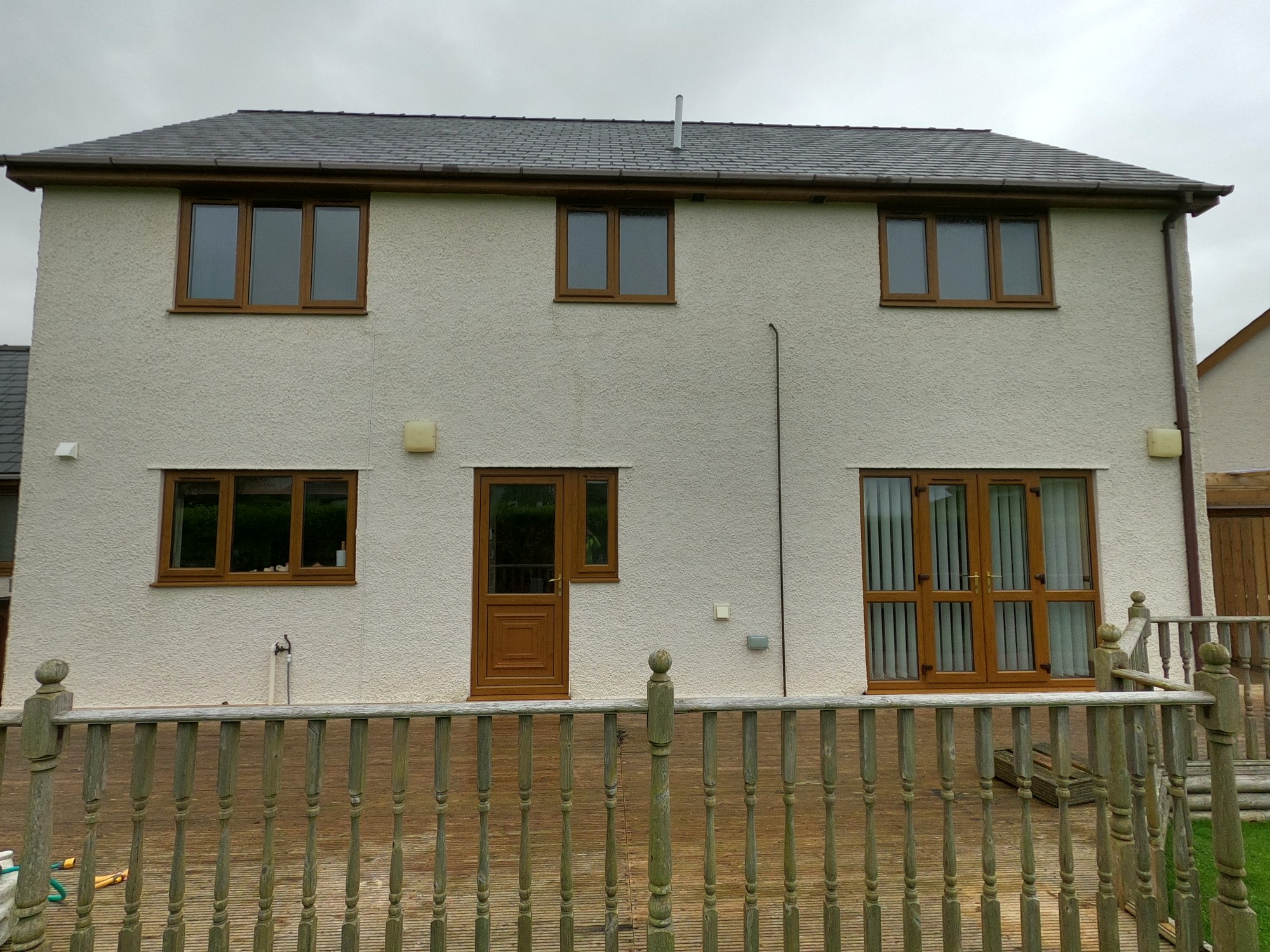
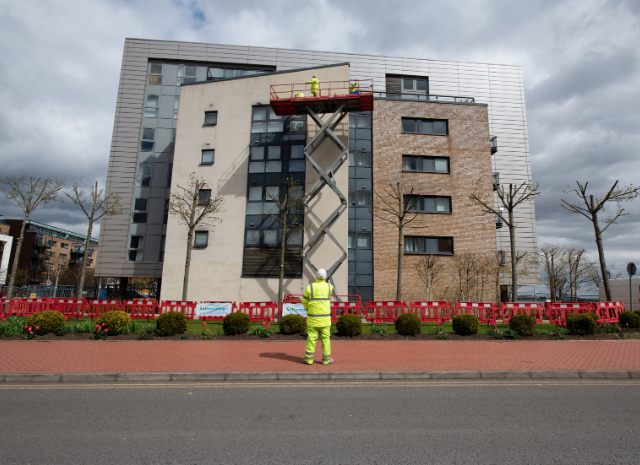

Dance schools, performing arts studios and similar teaching premises operating from rendered buildings run on timetables that leave very little room for exterior work, and planning around them is the main task. Classes typically run from late afternoon into the evening on weekdays, with substantial weekend activity, and the quiet periods are mid-morning and early afternoon. Commercial render cleaning at these premises is scheduled into that window, and most buildings of this size are completed within a single visit. Arrivals and departures are concentrated and often involve children being collected, so exclusion zones are agreed and physically barriered rather than taped, with pedestrian routes maintained around them and entrances kept clear throughout. The low pressure method is a real advantage. There is no machine running continuously, minimal noise carrying into a studio where music and instruction are audible, and no spray drifting across an entrance or car park. Where safeguarding checks are required for personnel working on site during occupied hours, they are completed in advance, and we work to whatever visitor procedure the premises operate. Insurance, method statements and risk assessments are supplied ahead of attendance, and operatives hold current working at height certification. Technically these buildings often present large plain elevations, sometimes with substantial gables over a hall space. Render facade cleaning must hold identical dilution and continuous wet edges across the full run, since banding on a large uninterrupted wall is immediately visible. For teaching premises around Major’s Green, a clean every few years keeps the building presenting properly to visiting parents at a modest recurring cost.
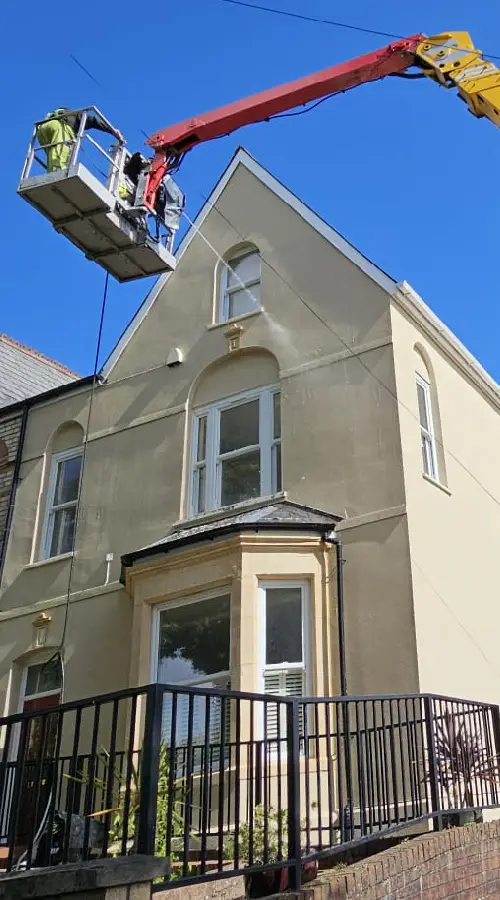
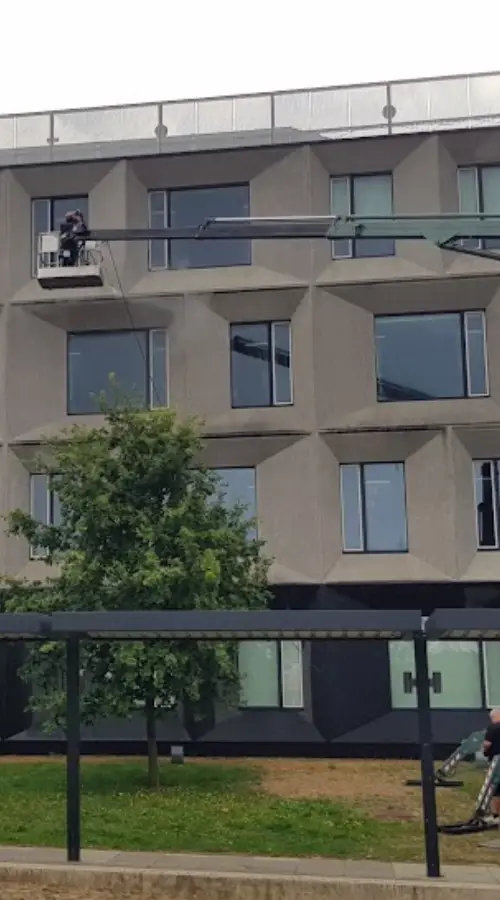
What we carry on the vehicle determines a great deal about how a job goes, and it is worth setting out because the equipment is specified for render specifically rather than adapted from general exterior work. Water is carried in bulk, which means we are not dependent on a mains connection at the property, not limited by whatever pressure and flow an outside tap provides, and not asking to run a hose through your house. Treatment is dosed and diluted at source rather than mixed by eye. Consistency of strength across a whole elevation is what prevents tonal variation on a coloured render, and that comes from the system rather than the operator’s judgement on the day. Hose runs are long enough to reach elevations at considerable distance, so the vehicle stays on hard standing or at the roadside and nothing is dragged over lawns or borders. Telescopic delivery reaches most domestic elevations, including gables at three storeys, from ground level. That removes access equipment from the majority of jobs, which is both safer and cheaper. Purified water is carried for rinsing, so no mineral deposit is left behind as the wall dries. Rinsing a freshly treated pale elevation with hard water leaves a faint haze that partially undoes the improvement. Protection materials, masking and covers are carried as standard rather than improvised. Professional render cleaning depends on all of it working together. Our render cleaning specialists invest in this equipment because rendered elevations are the only thing we work on, and render cleaning prices reflect a job done properly with the right kit.
Major’s Green is covered in full, with the same survey process and pricing basis applied to every property and no travel loading regardless of position. What gets protected before any treatment is mixed is worth describing, since it is the part of the job that takes longest and produces nothing visible. Planting within reach of the working elevation is covered, or thoroughly pre-wetted where covering is impractical, because a wet plant absorbs far less of anything landing on it than a dry one. Borders running along the base of a wall are sheeted. Lawns beneath the working area are protected where run-off would otherwise collect. Hard surfaces are covered or, where that is not practical, rinsed down thoroughly afterwards. Drainage points are identified before we start so run-off can be directed sensibly rather than allowed to pool. External sockets, light fittings, alarm boxes, vents and any opening on the elevation being treated are masked or isolated individually. Anything moveable within the working area is shifted clear rather than worked around, including garden furniture, stored items and vehicles. Dilution is then set to what the growth actually requires rather than mixed strong for speed, which is the single most effective protection for everything at ground level. Afterwards, protection comes up, surfaces beneath the working area are rinsed down, borders are checked and everything is returned to where it started. All of it is included in the quoted figure rather than treated as an extra. The property should look exactly as it did apart from the walls themselves, and surveys take around twenty minutes and produce an itemised written quotation by email.
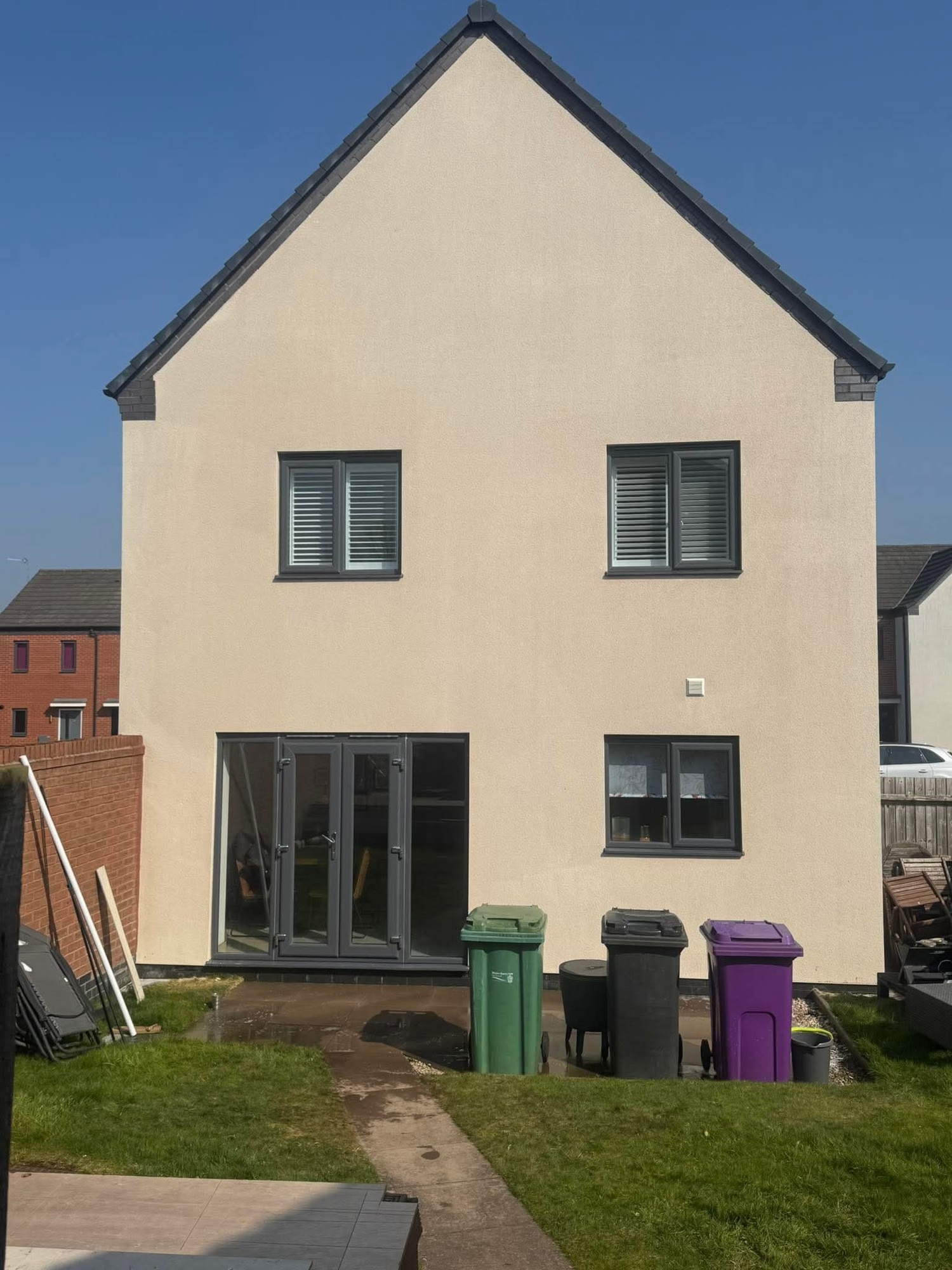
Most properties in Major’s Green benefit from professional render cleaning every 3 to 5 years, although this depends on the surrounding environment. Properties near trees, woodland, busy roads or coastal areas may require more frequent cleaning due to algae, mould and airborne contaminants. Our soft washing process removes existing growth and helps keep your render cleaner for longer.
Yes. Soft washing is specifically designed for delicate surfaces such as K-Rend, silicone render, monocouche render and painted render. Unlike high-pressure washing, it cleans at low pressure while treating biological growth at its source, reducing the risk of damage to the render finish.
We clean virtually all external render finishes, including K-Rend, Monocouche, Weber, Sto, silicone render, acrylic render, painted render, roughcast and pebble dash. Every cleaning method is tailored to the specific render type to achieve the best possible results.
Yes. Our specialist soft washing treatments are highly effective at removing green algae, red algae, black mould, mildew, lichen and other organic staining. We also apply professional biocide treatments to kill spores and slow down regrowth.
Because our process targets the biological growth rather than simply washing the surface, results typically last much longer than pressure washing alone. The exact lifespan depends on weather conditions, surrounding vegetation and the property’s location.
No. Our soft washing process is specifically designed to clean render safely. We use low-pressure application methods and specialist cleaning solutions that remove contamination without damaging the render surface when carried out by trained professionals.
The UK’s damp climate provides ideal conditions for algae, mould and other biological growth to develop on rendered surfaces. Areas with limited sunlight, nearby trees or persistent moisture are especially susceptible. Professional soft washing safely removes these contaminants and restores your property’s appearance.









































WhatsApp us