


Having the render professionally cleaned can completely transform the appearance of a property. Years of weathering, dirt and biological contamination can leave rendered walls looking tired, stained and considerably older than they actually are. However, when arranging exterior cleaning, it is worth thinking beyond your own boundary.
Your neighbours may be affected temporarily by access requirements, equipment, hoses, water, noise or vehicles associated with the work. In terraced and semi-detached properties in particular, neighbouring buildings can be extremely close to the area being cleaned.
A little communication and professional planning can make the entire process much easier.
Softwashing UK provides professional render and exterior cleaning throughout the UK, using specialist low-pressure softwashing techniques to clean contaminated exterior surfaces.
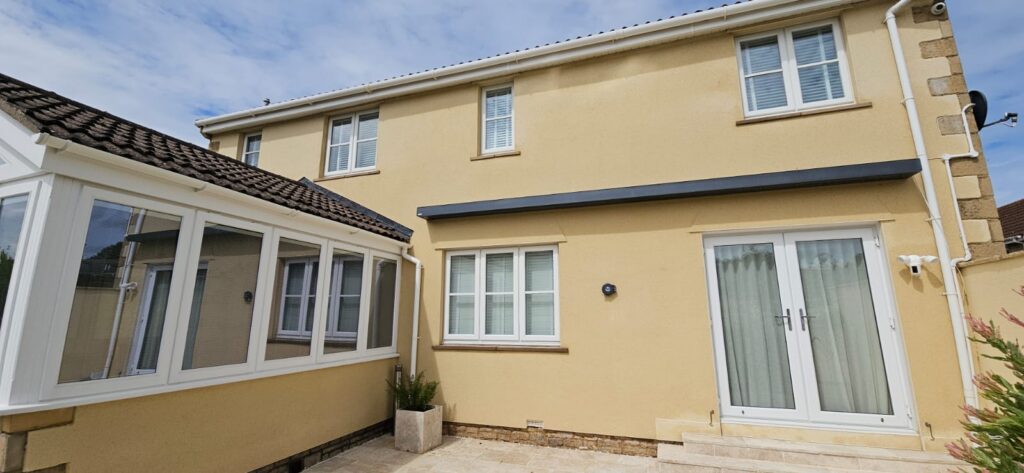
Why Neighbours Should Be Considered Before Render Cleaning
Most domestic render cleaning projects are straightforward, but the layout of UK properties means neighbouring homes can sometimes be very close together.
Semi-detached houses may share driveways or narrow side passages, while terraced properties can have adjoining gardens, paths and walls. Even detached houses may have neighbouring driveways or conservatories positioned close to a boundary.
This means it is sensible to consider how the work could temporarily affect people living nearby.
| Consideration | Why It Matters |
|---|---|
| Access | Equipment or hoses may need space around the property |
| Parking | Work vehicles may require convenient access |
| Boundaries | Neighbouring gardens can be close to the cleaning area |
| Windows | Open neighbouring windows could be affected by mist or spray |
| Washing | Laundry hanging outside may need temporarily bringing indoors |
| Pets | Animals should be kept away from working areas |
| Shared paths | Hoses or equipment may temporarily cross access routes |
| Noise | Some equipment may be audible during working hours |
| Garden furniture | Items close to boundaries may need consideration |
Not every project will involve all these issues, but thinking about them beforehand can prevent unnecessary inconvenience.
Tell Your Neighbours in Advance
One of the simplest things a homeowner can do is tell immediate neighbours that exterior cleaning is scheduled.
This does not need to be a complicated formal notification. A quick conversation explaining what is happening and approximately when the work will take place is usually enough.
Neighbours may appreciate the opportunity to close windows, bring washing inside, move garden furniture or make arrangements for pets.
Advance notice is particularly useful if somebody works from home, has young children or regularly uses a shared access route.
It is simply good neighbourly communication.
Do You Need Your Neighbour’s Permission?
Whether permission is required will depend on what is needed to complete the work.
If the entire cleaning project can be completed from your own property, neighbouring access may not be necessary.
However, situations can arise where accessing an elevation is significantly easier from an adjoining driveway, path or garden.
You should never assume that because work is being carried out on your property you automatically have permission to use somebody else’s land.
If neighbouring access could be required, discuss the situation before the work begins.
| Situation | Sensible Approach |
|---|---|
| Work entirely within your boundary | Informing neighbours may still be courteous |
| Equipment needs neighbouring access | Discuss permission beforehand |
| Shared driveway involved | Agree how access will be maintained |
| Shared path involved | Explain when temporary disruption may occur |
| Neighbour’s garden is very close | Give advance notice |
| Boundary is unclear | Establish access arrangements before work |
Resolving access questions beforehand is much easier than attempting to deal with them once equipment has arrived.
Semi-Detached Properties Need Extra Planning
Semi-detached houses are extremely common throughout the UK and present some particular considerations for render cleaning.
The dividing line between two properties may run directly through an elevation, driveway or adjoining structure. One homeowner may have rendered their half of the property while the neighbour has a different finish.
Cleaning therefore needs to remain controlled.
Professional exterior cleaning should take account of changes in surface material, boundaries and adjoining areas rather than simply treating everything in the vicinity.
Softwashing UK specialises in low-pressure exterior cleaning, including professional render cleaning for domestic properties.
Terraced Houses and Restricted Access
Terraced properties can create an entirely different access challenge.
Front elevations may open directly onto pavements or small front gardens, while rear access might involve narrow passages or shared routes.
Hoses and equipment consequently need to be positioned carefully.
Where access is restricted, planning becomes especially important. The cleaning team needs to understand how equipment can reach the required elevations while keeping disruption to neighbouring households as limited as reasonably possible.
Homeowners should mention shared paths, alleyways or restricted entrances when arranging the work.
Overspray and Mist
One concern neighbours may have is whether exterior cleaning will result in water being sprayed across their property.
Professional softwashing is fundamentally different from indiscriminate high-pressure washing. Controlled application is an important part of the process.
Nevertheless, exterior cleaning involves liquids, and factors such as wind direction need to be considered.
Strong winds can make exterior applications harder to control. A professional team can assess conditions and determine whether work can proceed appropriately.
This is particularly important where neighbouring cars, windows, conservatories or gardens are situated close to the elevation being cleaned.
Ask Neighbours to Close Nearby Windows
If neighbouring windows are positioned close to the working area, asking the occupants to close them before cleaning begins is a sensible precaution.
This can be especially important during warm weather when windows are more likely to be left open.
Consider doors too.
French doors, patio doors and bifold doors may remain open throughout summer, particularly at the rear of properties.
A quick message to your neighbour before work starts gives them an opportunity to secure the areas closest to the cleaning zone.
Washing on the Line
Few things are likely to annoy a neighbour more than discovering their freshly washed clothes were hanging outside immediately beside exterior cleaning work.
If your neighbour has a washing line close to your boundary, advance warning allows them to plan around the appointment.
The same applies to outdoor cushions, blankets and other fabrics.
This is one reason why telling neighbours about the work beforehand is worthwhile even when their property will not be directly involved.
Neighbouring Cars and Driveways
Vehicles can sometimes be parked surprisingly close to the exterior elevation being cleaned.
This is particularly common with modern housing developments where driveways run alongside neighbouring houses.
If a neighbour’s vehicle is directly beside the working area, it may be sensible for them to move it temporarily.
This can provide additional working space while reducing the possibility of water or loosened exterior dirt reaching the vehicle.
| Nearby Item | Possible Preparation |
|---|---|
| Car | Temporarily move away from immediate work area |
| Motorcycle | Relocate where practical |
| Bicycle | Store away from working area |
| Garden furniture | Move further from the boundary |
| Children’s toys | Put away temporarily |
| Washing | Bring indoors |
| Outdoor cushions | Store somewhere protected |
Protecting Neighbouring Gardens
Your own garden is not the only outdoor space that should be considered.
Flower beds, shrubs and lawns belonging to neighbouring properties may be positioned directly beside a boundary.
Where vegetation sits close to the elevation being cleaned, it should form part of the overall site assessment.
This becomes particularly important in small terraced gardens where neighbouring plants may only be a short distance from the wall.
Good planning allows the contractor to understand what surrounds the property before cleaning starts.
Green Algae and Red Algae Can Cross Visual Boundaries
Biological staining does not conveniently stop where one property ends and another begins.
Green algae and red algae can appear across adjoining exterior surfaces where environmental conditions are suitable. Shaded areas, damp elevations and walls with reduced airflow can develop noticeable staining regardless of property boundaries.
This can occasionally create a visual difference after one property is cleaned.
For example, one half of a semi-detached building may look significantly brighter once its render has been professionally cleaned, making contamination on the neighbouring half more noticeable.
That does not mean the neighbouring property needs to be cleaned. It simply means homeowners should be aware that restoring one elevation can emphasise differences between adjoining surfaces.
Different Render Types on Adjoining Homes
Even properties that originally looked identical may no longer have identical exterior finishes.
One homeowner might have replaced or repaired their render, while another may have painted theirs. Extensions can also introduce completely different materials.
A pair of semi-detached houses could therefore contain several exterior surfaces.
Professional cleaning needs to account for those differences.
A technique suitable for one surface should not automatically be applied to every neighbouring material without assessment.
Noise and Working Hours
Render cleaning is not usually comparable with major building work, but exterior cleaning equipment and activity can still create some temporary noise.
Giving neighbours advance notice is particularly considerate if they work from home.
If someone has an important online meeting or works night shifts, knowing when cleaning is planned gives them an opportunity to make arrangements.
The objective is not to eliminate every sound associated with maintaining a property. It is simply to minimise avoidable disruption.
Shared Driveways
Shared driveways deserve particular attention.
Equipment should not unnecessarily prevent neighbours from accessing their vehicles or property.
If a shared driveway forms part of the working area, discuss this when arranging your render clean.
You can also ask your neighbour whether they expect to need their vehicle during the working period.
A few minutes of planning can prevent a situation where equipment needs to be moved unexpectedly because somebody needs to leave.
Shared Access Routes
Some properties have rear access through shared alleyways or paths.
These routes may be used by several households for bins, bicycles, garden access and general movement.
Hoses and other equipment should therefore be managed carefully.
Where temporary obstruction cannot reasonably be avoided, keeping neighbours informed can reduce inconvenience.
| Shared Area | What to Consider |
|---|---|
| Driveway | Vehicle access |
| Alleyway | Pedestrian movement |
| Side passage | Hoses and equipment |
| Rear entrance | Regular household access |
| Bin storage area | Collection days |
| Shared courtyard | Access for multiple properties |
Pets in Neighbouring Gardens
Dogs and other pets should be considered where gardens share boundaries.
A neighbour may routinely allow their dog into the garden without supervision. If exterior cleaning is taking place nearby, letting them know beforehand allows them to keep the animal away from the immediate working area.
This also prevents pets approaching workers through open gates or becoming tangled around hoses and equipment.
Again, communication solves many potential problems before they occur.
What If Your Neighbour Is Concerned About the Cleaning Process?
Some neighbours may naturally have questions, particularly if they have never seen professional softwashing carried out before.
Explain that you have arranged professional exterior cleaning rather than attempting the work yourself with domestic equipment.
If they have specific concerns about their property, garden or vehicle, raise these before work begins so they can be considered as part of the site assessment.
Softwashing UK has more than 20 years of commercial and domestic exterior cleaning experience and specialises in render and stone cleaning using low-pressure softwashing techniques.
Avoid DIY Cleaning Near Property Boundaries
Neighbouring properties are another reason homeowners should be cautious about attempting render cleaning themselves.
Using unsuitable pressure, uncontrolled spraying or inappropriate cleaning products can potentially affect more than your own wall.
When properties are close together, maintaining control over the cleaning process becomes even more important.
Professional equipment, appropriate cleaning methods and careful site preparation provide greater control over how the work is carried out.
Weather Matters When Properties Are Close Together
Wind direction is especially important where neighbouring buildings and gardens are only metres away.
Conditions can change throughout the day, so exterior cleaning needs to account for what is happening at the time rather than simply what the forecast predicted.
| Weather Condition | Neighbour Consideration |
|---|---|
| Strong wind | Greater potential for spray movement |
| Heavy rain | Additional runoff |
| Hot weather | Neighbours may have windows and doors open |
| Calm conditions | Easier control of application |
| Changing wind | Working approach may need adjustment |
A professional contractor should consider environmental conditions as part of the overall job.
Boundary Fences, Walls and Gates
Boundary structures can also affect access.
Tall fences may make it difficult to reach certain sections of an elevation, while locked gates can restrict access routes.
If a neighbour owns a fence or gate that could affect the work, discuss the situation beforehand rather than attempting to move or alter anything without permission.
Homeowners should also point out any known fragile fencing or structures before equipment is positioned nearby.
Preparing for Your Render Cleaning Appointment
A small amount of preparation can help keep the experience straightforward for everyone.
Before Softwashing UK arrives, consider which neighbours are closest to the elevations being cleaned and whether they could be temporarily affected.
Let them know when the work is taking place, ask them to close nearby windows and suggest moving vehicles or outdoor belongings where appropriate.
You should also tell Softwashing UK about shared driveways, access restrictions, neighbouring gardens or any other circumstances that may influence how the work is completed.
A Simple Neighbour Checklist
| Before Cleaning | Check |
|---|---|
| Tell immediate neighbours | Give reasonable advance notice |
| Check neighbouring windows | Ask for nearby windows to be closed |
| Look for washing outside | Give neighbours time to bring it indoors |
| Check parked vehicles | Move them where appropriate |
| Identify shared access | Discuss how it will remain usable |
| Mention neighbouring pets | Ask owners to keep them away from the work area |
| Identify delicate planting | Tell the cleaning team |
| Discuss access permission | Arrange it before the appointment |
| Check gates and pathways | Make sure required access is available |
Professional Render Cleaning With Softwashing UK
Being considerate towards neighbours does not need to make render cleaning complicated. In most situations, straightforward communication combined with professional site planning is enough.
The important point is to think about the entire working environment rather than just the wall being cleaned.
Neighbouring windows, vehicles, gardens, shared driveways, access routes and property boundaries can all influence how a render cleaning project should be approached.
By discussing these factors beforehand, homeowners can help minimise disruption while still achieving the improvement they want for their property.
Softwashing UK provides professional exterior cleaning across the UK and specialises in render cleaning using advanced low-pressure softwashing techniques designed to remove organic contamination and staining while protecting exterior surfaces.
What If Your Neighbour Is Away?
Sometimes a neighbouring property may be empty when your render cleaning appointment is scheduled. Your neighbour could be on holiday, away for work or simply unavailable during the planned cleaning period.
If you know they will be away and their property is particularly close to the elevation being cleaned, it can be helpful to tell them about the appointment beforehand.
This gives them an opportunity to close windows, move vehicles or remove items from their garden before leaving.
You should not enter a neighbour’s property or move their belongings without permission simply because they are unavailable. Where neighbouring access is necessary, arrangements should be made in advance.
If access cannot be obtained, tell Softwashing UK so the situation can be assessed before work begins.
Extensions Can Create Unusual Boundary Situations
Extensions often make the relationship between neighbouring properties more complicated.
A side or rear extension may have an elevation positioned extremely close to a neighbouring fence, driveway or garden. In some cases, there may only be a narrow gap between the rendered wall and the boundary.
This can affect both access and how the cleaning process needs to be managed.
| Extension Situation | Potential Consideration |
|---|---|
| Wall beside neighbour’s driveway | Vehicles and access |
| Render beside a boundary fence | Restricted working space |
| Rear extension | Nearby patios and garden furniture |
| Two-storey extension | Access to higher elevations |
| Wall beside neighbouring planting | Vegetation protection |
| Narrow side return | Equipment and hose positioning |
Tell Softwashing UK about restricted areas when discussing the project so appropriate access requirements can be considered.
Conservatories and Outbuildings Next Door
Neighbouring structures can sometimes sit very close to the wall being cleaned.
Conservatories, sheds, garages, greenhouses and garden offices are increasingly common in UK gardens. On smaller properties, these structures may be positioned directly against or close to a boundary.
They should be considered during the initial assessment.
A neighbouring greenhouse, for example, may contain delicate plants, while a conservatory could have doors or windows open during warmer weather.
Giving your neighbour advance notice allows them to prepare these areas appropriately.
Children Playing in Nearby Gardens
Families with adjoining gardens should also think about children using the outdoor space.
Hoses, equipment and an active working area can be interesting to young children. For safety and to avoid disruption, children should be kept away from the immediate cleaning area while work is underway.
If neighbouring children regularly play close to the boundary, mentioning the appointment to their parents beforehand is sensible.
They can then plan garden activities around the work if necessary.
This is especially relevant during school holidays when neighbouring gardens may be used throughout the day.
Home Offices and Remote Working
Working from home has become common throughout the UK, meaning daytime exterior maintenance can sometimes coincide with meetings, telephone calls and video conferences.
Render cleaning is temporary, but there may still be periods of activity and equipment noise around the property.
If you know your immediate neighbour works from home, advance notice can be particularly helpful.
They may decide to close the windows during an important meeting or work from another room while the elevation closest to their property is being treated.
You do not need to arrange your property maintenance entirely around somebody else’s working day. However, a simple warning can prevent unnecessary frustration.
Consider Neighbours With Limited Mobility
Shared access becomes particularly important where a neighbour has limited mobility.
A pathway that appears easy to step around may be essential for somebody using a wheelchair, walking frame or mobility aid.
Where hoses or equipment could temporarily affect a shared route, make Softwashing UK aware of this before work begins.
Access arrangements can then form part of the planning for the project.
| Access User | Possible Consideration |
|---|---|
| Wheelchair user | Keep suitable route accessible |
| Person using a walking frame | Avoid unnecessary obstacles |
| Pushchair | Maintain adequate pathway width |
| Regular deliveries | Keep entrances accessible |
| Carer visits | Avoid blocking essential access |
| Emergency access | Must remain available |
Small details like these can make a considerable difference to neighbouring households.
Deliveries and Tradespeople
Your neighbour may also have deliveries, contractors or visitors arriving while your render is being cleaned.
If a shared driveway or access route is involved, think about whether temporary equipment positioning could create difficulties.
Professional planning should aim to keep essential access available wherever reasonably possible.
This is another reason why homeowners should provide accurate information about the property layout when booking exterior cleaning rather than waiting until work starts.
What If Both Properties Need Cleaning?
Sometimes professional cleaning of one property highlights similar contamination on the adjoining home.
This is particularly noticeable with semi-detached properties where the two elevations were originally finished in the same colour.
Green algae and red algae, atmospheric contamination and other organic staining may affect both sides because the properties experience similar environmental conditions.
However, each homeowner should make their own decision about whether they want cleaning carried out.
Do not assume your neighbour wants their property treated simply because your home is being cleaned.
If they are interested, they can make their own enquiry with Softwashing UK.
Be Clear About Which Surfaces Belong to You
Property boundaries are not always obvious.
Walls, fences and shared structures can sometimes create uncertainty about which areas belong to each household.
Before cleaning begins, make sure you understand which rendered surfaces form part of your property.
This is particularly important with extensions, garages, shared entrances and adjoining boundary walls.
If there is any genuine uncertainty about ownership, resolve it before authorising work to the surface.
Professional exterior cleaning should not become the cause of a boundary disagreement.
Preventing Dirt From Being Transferred Elsewhere
Render cleaning removes contamination from the exterior surface, which means surrounding areas also require consideration.
Dirt and organic matter should not simply be allowed to create unnecessary mess on neighbouring surfaces.
This is especially important where two properties share a narrow driveway or where a neighbouring patio sits immediately beside the boundary.
Careful working practices and appropriate management of the surrounding area help keep the cleaning process controlled.
Bin Collection Days Can Affect Access
An easily overlooked consideration is household waste collection.
On narrow streets, terraced properties or homes with shared access, bins can significantly reduce the available working space.
If your appointment coincides with bin collection day, think about where bins will be positioned and whether collection vehicles need access.
Neighbouring households may also need to move their bins through a shared side passage.
A little planning can prevent hoses or equipment obstructing the route.
Parking Considerations on Narrow Roads
Some UK residential streets offer very limited parking.
If exterior cleaning equipment and work vehicles need to be positioned close to the property, consider whether this could temporarily affect neighbouring parking arrangements.
You should not reserve public parking spaces that you have no entitlement to control, but informing immediate neighbours that contractors will be attending can still be courteous.
Where you have your own driveway, keeping suitable access available before the team arrives can make the setup process easier.
What About Flats and Managed Developments?
Render cleaning around flats, maisonettes and managed residential developments can involve additional considerations because exterior areas may be shared.
Communal pathways, parking areas, entrances and landscaped spaces may all need to remain accessible.
There may also be management arrangements governing exterior maintenance.
| Shared Feature | Consideration |
|---|---|
| Communal entrance | Maintain safe access |
| Shared car park | Consider vehicle movement |
| Communal garden | Protect surrounding areas |
| Walkways | Manage hoses and equipment |
| Bin stores | Maintain resident access |
| Shared gates | Keep appropriate routes available |
Where exterior maintenance responsibilities are unclear, establish who is authorised to arrange the work before booking the cleaning.
Neighbouring Solar Panels and Roof Areas
Some neighbouring properties may have solar panels, rooflights or other exterior features close to the working elevation.
Although these may not be part of the render cleaning project, their location should still be considered during planning.
The same applies to satellite dishes, exterior lighting, security cameras and other equipment positioned close to the boundary.
Pointing out unusual or easily overlooked features can help ensure the surrounding working environment is properly understood.
Good Communication Doesn’t Need to Be Complicated
There is no need to turn a straightforward render cleaning appointment into a major neighbourhood announcement.
For most properties, simply speaking to the households immediately affected is sufficient.
A useful conversation might cover:
- The day the cleaning is scheduled
- The approximate area of the property being cleaned
- Whether nearby windows should be closed
- Whether vehicles need moving
- Whether washing should be brought inside
- Whether shared access will be affected
- Whether pets should be kept away
- Whether access to neighbouring land has been agreed
This takes very little time but can prevent misunderstandings.
Tell Softwashing UK About Potential Neighbour Issues Early
If you already know there is a potential access complication, do not wait until the day of the appointment to mention it.
Perhaps the side elevation can only be approached through a narrow shared driveway. Maybe a neighbour has a greenhouse immediately beside the boundary, or there is an extension that makes one section particularly difficult to reach.
These details can influence how the project needs to be approached.
When arranging render cleaning with Softwashing UK, explain any known restrictions, shared areas or neighbouring features that could affect the work.
Providing accurate information beforehand allows the property and surrounding environment to be considered together.
Keeping Things Friendly After the Work
Once the cleaning has been completed, it can be worth checking the areas closest to neighbouring properties.
Garden furniture can be returned to its usual position, shared access routes can be fully cleared and any temporary arrangements can be removed.
If a neighbour allowed access through their property, thanking them afterwards is a simple courtesy.
Render cleaning is ultimately routine property maintenance. With sensible preparation, professional working practices and straightforward communication, there is no reason for it to create unnecessary tension between neighbours.
For homeowners considering professional render cleaning, Softwashing UK can assess the exterior surfaces, access requirements and surrounding environment so that practical considerations are identified before cleaning begins.