


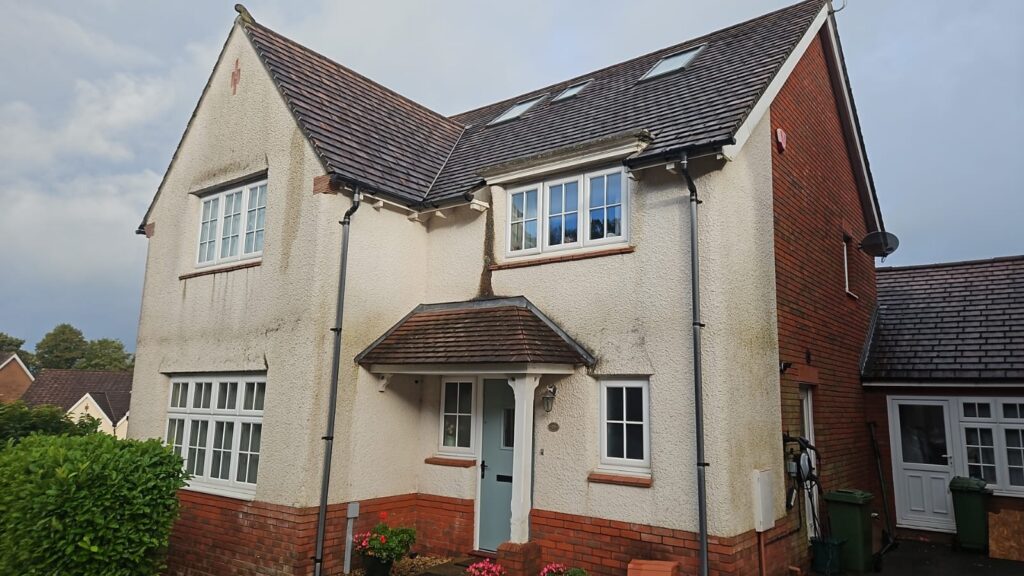
Modern render systems are designed to keep homes looking clean, contemporary and well protected from the British weather. However, even the highest-quality render will eventually be exposed to moisture, pollution and biological growth. Over time, many homeowners begin to notice both green algae and red algae appearing on their walls, particularly on shaded or north-facing elevations.
To combat this problem, manufacturers and property owners often consider anti-algae render coatings. These specialist coatings are designed to slow the growth of biological organisms and help render remain cleaner for longer.
But are they worth the investment? The answer depends on several factors, including the condition of the render, the environment around your property and your long-term maintenance expectations.
At Soft Washing UK, professional render cleaning using specialist soft washing techniques helps remove algae and organic contamination safely while preserving the appearance of rendered surfaces.
What Are Anti-Algae Render Coatings?
Anti-algae render coatings are protective surface treatments designed to reduce the growth of biological organisms.
Rather than preventing contamination completely, they aim to make the render less attractive to algae, mould and similar organisms.
These coatings may help reduce:
- Green algae
- Red algae
- Black mould
- Surface staining
- Organic contamination
However, no coating can guarantee that render will remain permanently clean.
How Do They Work?
Most anti-algae coatings work by creating a protective surface that makes it harder for biological growth to establish itself.
Some coatings also contain additives designed to inhibit algae and fungal growth.
Their effectiveness depends on factors including:
| Factor | Influence on Performance |
|---|---|
| Local climate | Higher rainfall increases contamination |
| Shade | Damp conditions encourage algae |
| Property orientation | North-facing walls stay wetter |
| Tree cover | Reduces drying |
| Maintenance | Regular inspections improve performance |
The surrounding environment still plays a major role.
Why Does Algae Grow in the First Place?
Understanding the cause of algae helps explain why coatings are not a permanent solution.
Render is constantly exposed to:
- Rain
- Airborne spores
- Moisture
- Pollution
- Dust
When these conditions combine, biological growth begins to develop.
The most common organisms include:
- Green algae
- Red algae
- Black mould
- Lichen
Removing the underlying causes is impossible, but managing them is achievable through proper maintenance.
Benefits of Anti-Algae Coatings
There are several potential advantages.
| Benefit | Explanation |
|---|---|
| Cleaner appearance | Slower biological growth |
| Reduced maintenance | Cleaning may be needed less often |
| Better kerb appeal | Property stays attractive for longer |
| Surface protection | Additional protective layer |
| Easier future cleaning | Less contamination becomes established |
These benefits can be particularly valuable on properties prone to repeated algae growth.
Are They Suitable for Every Property?
Not always.
Some properties benefit more than others.
They are often most useful where buildings experience:
- Persistent dampness
- Heavy shade
- Tree cover
- Coastal exposure
- High rainfall
Properties in open, sunny locations may see less noticeable improvement.
The Importance of Cleaning First
One common misconception is that coatings can simply be applied over dirty render.
Professional preparation is essential.
Before any protective coating is considered, the render should be free from:
- Green algae
- Red algae
- Mould
- Dirt
- Organic staining
- Pollution deposits
Applying coatings over contaminated surfaces can reduce their effectiveness.
Soft Washing Before Coating
Professional soft washing provides an excellent preparation method.
It removes biological contamination while helping preserve delicate render finishes.
Benefits include:
| Soft Washing Benefit | Why It Matters |
|---|---|
| Removes algae | Cleaner surface |
| Eliminates mould | Better preparation |
| Gentle cleaning | Protects render |
| Even finish | Improved coating performance |
Proper preparation helps any coating perform more effectively.
Can Coatings Replace Cleaning?
No.
Even the best protective coatings require ongoing maintenance.
They cannot prevent:
- Airborne dirt
- Dust
- Pollution
- Weathering
- Natural ageing
Professional cleaning will still be needed eventually.
How Long Do They Last?
The lifespan varies considerably.
Several factors influence durability:
| Factor | Effect |
|---|---|
| Weather exposure | Faster wear |
| Sunlight | May affect ageing |
| Heavy rainfall | Increased contamination |
| Biological growth | Greater maintenance needs |
| Product quality | Longer-lasting protection |
No coating remains effective indefinitely.
Are They Worth the Cost?
This depends on the property.
Potential advantages include:
- Reduced cleaning frequency
- Longer-lasting appearance
- Improved kerb appeal
- Easier maintenance
However, they also represent an additional investment.
Homeowners should consider whether the long-term maintenance savings justify the initial cost.
Properties That May Benefit Most
Certain homes naturally experience more biological growth.
Examples include:
| Property Type | Likely Benefit |
|---|---|
| North-facing homes | High |
| Tree-lined gardens | High |
| Woodland properties | High |
| Coastal homes | Moderate to high |
| Open sunny locations | Moderate |
Environmental conditions remain one of the biggest deciding factors.
Why Shade Matters
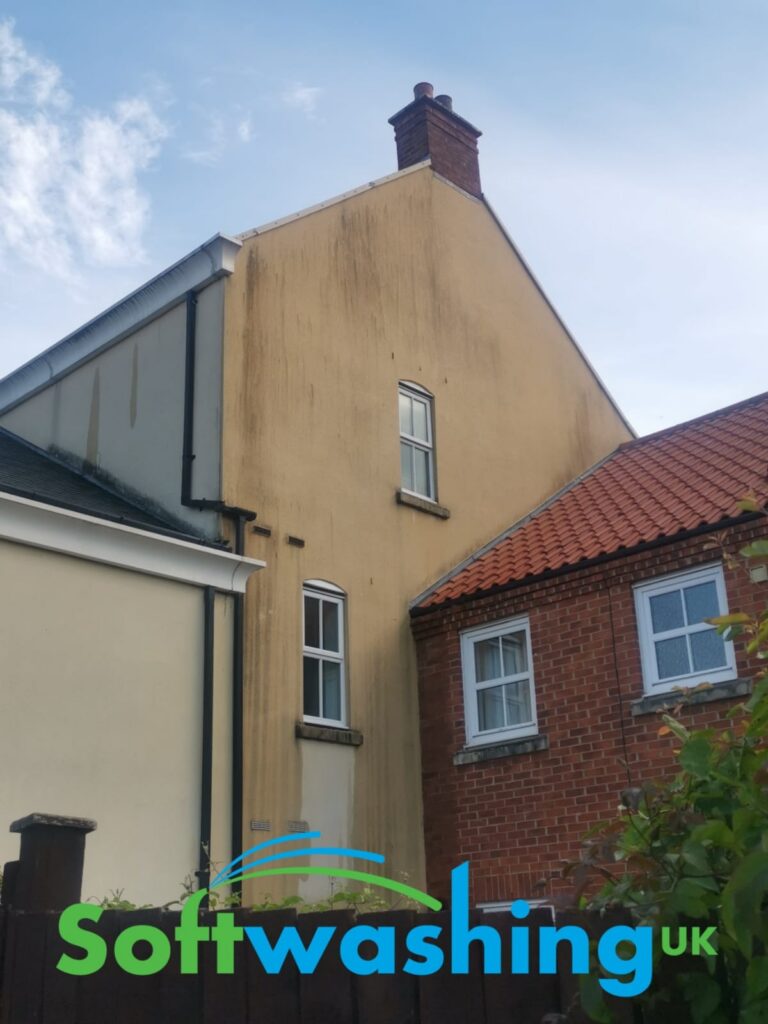
Shade is one of the largest contributors to algae growth.
Walls that rarely receive direct sunlight stay damp for much longer after rainfall.
This creates ideal conditions for:
- Green algae
- Red algae
- Mould
Even with protective coatings, these elevations generally require more maintenance than sunnier walls.
What Happens If You Don’t Maintain the Coating?
Like any exterior surface treatment, anti-algae coatings benefit from routine care.
Ignoring maintenance can allow:
- Dirt accumulation
- Biological growth
- Surface staining
- Reduced coating performance
Regular inspections help identify problems before they become widespread.
Trees Can Still Cause Problems
Protective coatings don’t remove environmental influences.
Large trees continue to produce:
- Shade
- Organic debris
- Moisture retention
- Airborne spores
Properties surrounded by mature trees may still require periodic professional cleaning despite having protective coatings.
Gutter Maintenance Still Matters
Overflowing gutters remain one of the biggest causes of localised render staining.
Even coated render can become affected if water continually runs down the wall.
Regular gutter maintenance helps protect both the render and any applied coating.
Can You Apply Coatings Yourself?
DIY products are available, but professional application generally provides more consistent results.
Professional preparation helps ensure:
| Professional Step | Benefit |
|---|---|
| Thorough cleaning | Better adhesion |
| Surface inspection | Identifies defects |
| Even application | Consistent protection |
| Correct coverage | Improved durability |
Preparation is often just as important as the coating itself.
Anti-Algae Doesn’t Mean Algae-Proof
This is an important distinction.
Anti-algae products are designed to reduce biological growth—not eliminate it entirely.
Given enough time and the right environmental conditions, green algae, red algae and other organic contaminants can still develop.
Setting realistic expectations helps homeowners understand the purpose of these treatments.
When Should You Consider a Coating?
Protective coatings are often considered after:
- Professional render cleaning
- Newly installed render
- Repainting
- Restoration work
Applying coatings to a clean, sound surface generally provides the best opportunity for long-lasting performance.
Other Ways to Reduce Algae Growth
A protective coating should be viewed as one part of a wider maintenance strategy rather than a complete solution.
Simple measures that may help include:
| Maintenance Task | Potential Benefit |
|---|---|
| Keep gutters clear | Reduces water staining |
| Trim overhanging branches | Improves sunlight and airflow |
| Cut back shrubs | Lowers humidity around walls |
| Repair leaks promptly | Prevents constant damp patches |
| Arrange regular inspections | Identifies early biological growth |
Combining good maintenance with professional cleaning often produces the best long-term results.
Professional Cleaning Remains Essential
Even if your render has an anti-algae coating, periodic cleaning remains an important part of maintaining its appearance.
Professional soft washing safely removes accumulated contamination while helping preserve the integrity of both the render and any protective coating. By removing biological growth before it becomes well established, maintenance is generally simpler and more effective than leaving the render until heavy staining develops.
For homeowners considering anti-algae coatings or looking to restore existing render before applying one, professional cleaning provides the ideal starting point.
To learn more about specialist soft washing and render maintenance, visit the Soft Washing UK homepage for expert guidance on keeping rendered properties cleaner for longer.
Not All Anti-Algae Coatings Are the Same
There are many different products available, and their performance can vary depending on their formulation and intended use.
Some are designed specifically for:
- Silicone render
- Acrylic render
- Mineral render
- Traditional cement render
Others are marketed as multi-purpose exterior wall coatings.
Before any product is considered, it’s important to establish that it is compatible with the existing render system.
| Consideration | Why It Matters |
|---|---|
| Render type | Ensures compatibility |
| Surface condition | Affects adhesion |
| Existing coatings | Prevents application issues |
| Age of render | Influences preparation requirements |
Breathability Is Important
Many modern render systems are designed to allow moisture vapour to escape from the wall.
This characteristic is often referred to as breathability.
Applying an unsuitable coating could reduce this natural performance.
Professional assessment helps determine whether an anti-algae coating is appropriate without affecting the render’s intended function.
The Condition of the Existing Render
Protective coatings are not designed to repair damaged render.
Before application, the surface should be checked for:
- Cracks
- Loose sections
- Hollow areas
- Failed sealant
- Water ingress
Addressing these issues first helps provide a sound foundation for any future protective treatment.
Why Surface Preparation Is So Important
Preparation is often the biggest factor influencing how well a coating performs.
Professional preparation typically involves:
| Preparation Stage | Purpose |
|---|---|
| Inspection | Assess condition |
| Soft washing | Remove contamination |
| Biological treatment | Eliminate organic growth |
| Drying period | Prepare the surface |
| Final assessment | Confirm readiness |
Skipping any of these steps may reduce the effectiveness and lifespan of the coating.
Coatings Don’t Prevent Dirt
A common misconception is that anti-algae coatings repel every form of contamination.
In reality, they primarily help reduce biological growth.
Render can still collect:
- Airborne dust
- Vehicle pollution
- Pollen
- Bird droppings
- General dirt
Routine maintenance is therefore still required to keep the property looking its best.
The Local Environment Still Wins
No matter how advanced a coating may be, the surrounding environment has a major influence on how quickly render becomes dirty.
Properties located near:
- Woodland
- Busy roads
- Farmland
- Rivers
- Coastal areas
will naturally experience different maintenance requirements.
Environmental conditions should always be considered before deciding whether an anti-algae coating represents good value.
Coatings Can Support Long-Term Maintenance
Rather than replacing maintenance, protective coatings can become part of an ongoing care programme.
A sensible long-term approach may include:
- Annual visual inspections.
- Keeping gutters clean.
- Trimming nearby vegetation.
- Promptly repairing leaks.
- Professional soft washing when required.
This combination often delivers better long-term results than relying on a coating alone.
New-Build Properties
Many homeowners consider anti-algae coatings soon after purchasing a newly built property.
Although modern render systems are designed to resist weathering, they remain exposed to the same environmental conditions as older homes.
Applying a protective coating may appeal to owners who want to preserve the fresh appearance of the property for as long as possible.
However, maintaining the render through regular inspections and cleaning remains equally important.
Can Coatings Improve Property Appearance?
A freshly applied protective coating may help the render maintain a cleaner appearance between maintenance visits.
Potential cosmetic benefits include:
| Possible Improvement | Explanation |
|---|---|
| Reduced biological staining | Slower algae growth |
| More consistent colour | Less uneven contamination |
| Improved kerb appeal | Cleaner-looking exterior |
| Easier future maintenance | Less established growth |
These benefits vary depending on the environment and the property’s exposure to moisture.
The Role of Professional Advice
Every property is different.
A detached home in an open rural location will behave very differently from a shaded townhouse surrounded by mature trees.
Professional advice helps homeowners decide whether:
- Cleaning alone is sufficient.
- A protective coating may provide additional benefits.
- Repairs should be completed first.
- Maintenance intervals need adjusting.
Tailoring recommendations to the individual property generally produces the best long-term outcome.
Why Expectations Should Be Realistic
Perhaps the most important point to understand is that anti-algae coatings are not miracle products.
They can help reduce the rate at which biological growth develops, but they cannot completely eliminate the effects of:
- Rainfall
- Humidity
- Airborne spores
- Pollution
- Shade
Eventually, all rendered properties require maintenance regardless of the products applied.
Coatings and Property Value
Keeping render clean and well maintained contributes to a property’s overall presentation.
A well-presented exterior can:
- Create a stronger first impression.
- Improve kerb appeal.
- Reflect ongoing maintenance.
- Enhance the appearance of the entire property.
While a coating alone is unlikely to increase the value of a home, maintaining clean render can certainly make the property appear more attractive to visitors and potential buyers.
The Importance of Regular Inspections
Whether or not your render has a protective coating, regular inspections remain worthwhile.
Homeowners should periodically check for:
| What to Look For | Why It Matters |
|---|---|
| Green algae | Early treatment is easier |
| Red algae | Prevent widespread staining |
| Cracks | Avoid moisture penetration |
| Overflowing gutters | Prevent water streaks |
| Damaged sealant | Maintain weather protection |
Identifying issues early often keeps maintenance simpler and less expensive.
Professional Soft Washing and Protective Coatings Work Together
Rather than viewing professional cleaning and anti-algae coatings as competing options, it’s often more accurate to see them as complementary.
Soft washing safely removes:
- Green algae
- Red algae
- Black mould
- Organic staining
- Dirt
Once the render has been thoroughly cleaned and assessed, homeowners are in a much better position to decide whether an additional protective coating is appropriate for their property and its environment.
Making an Informed Decision
Whether an anti-algae render coating is worth the investment depends on several factors, including the property’s location, the amount of shade, surrounding vegetation and how much ongoing maintenance you’re prepared to undertake.
For some homes, particularly those surrounded by trees or affected by persistent dampness, a protective coating may help slow the return of biological growth. For others, routine professional soft washing combined with sensible property maintenance may provide all the protection needed.
Whatever approach you choose, keeping the render clean, addressing moisture issues promptly and arranging professional maintenance when required will help preserve both its appearance and longevity.
If you’re considering restoring your render before applying a protective coating, or simply want expert advice on maintaining rendered walls, visit the Soft Washing UK homepage to learn more about its specialist soft washing services and long-term render care.