


Render is designed to protect your property while creating a clean, modern appearance. Whether your home has silicone, monocouche, acrylic, mineral or painted render, it is constantly exposed to rain, pollution, organic growth and changing weather conditions. Over time, staining can appear, making even relatively new properties look tired.
Many homeowners wonder whether they can simply clean render themselves instead of paying for a professional service. While there are certainly small maintenance jobs that can be carried out safely, render cleaning is often far more complicated than people expect. Using the wrong equipment or chemicals can leave permanent damage that costs far more than professional cleaning would have in the first place.
If you’re considering cleaning your render yourself, it’s worth understanding the risks before starting. Professional companies such as SoftWashing UK invest in specialist equipment, safe access methods and render-specific cleaning systems that protect the finish while delivering long-lasting results.
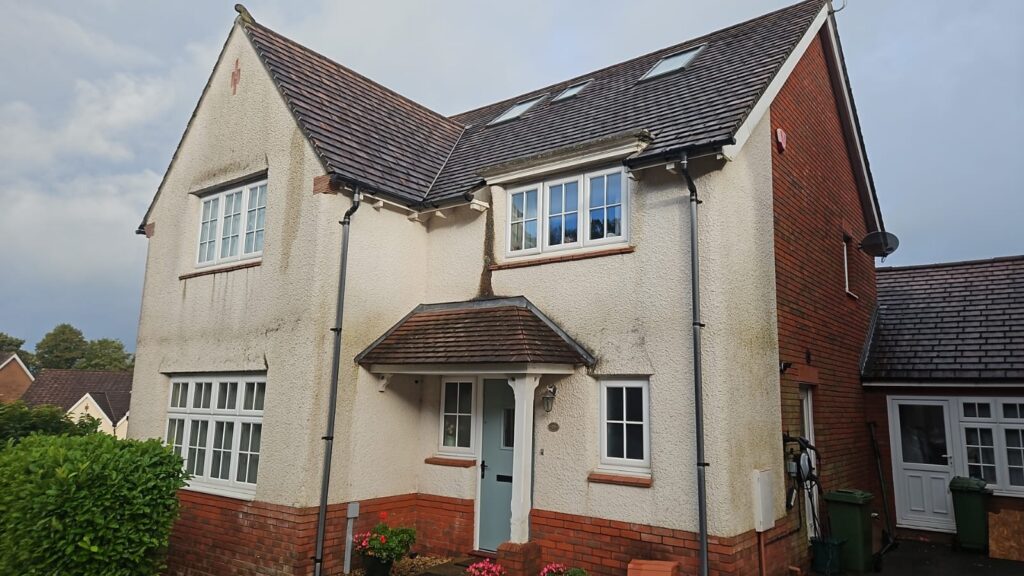
Why Does Render Become Dirty?
Render is constantly exposed to environmental contaminants. Depending on your property’s location, you may notice staining developing much sooner than expected.
Common causes include:
- Atmospheric pollution
- Airborne dust
- Traffic emissions
- Bird droppings
- Tree sap
- Organic staining
- Green algae
- Red algae
- Moss
- Lichen
- Black mould
One important point is that green algae and red algae are different organisms. Both can stain render heavily and often require different treatment strengths depending on the severity of contamination.
What Type of Render Do You Have?
Different render systems require different cleaning methods.
| Render Type | DIY Friendly? | Risk Level |
|---|---|---|
| Silicone render | Sometimes | Low to Medium |
| Monocouche render | Limited | Medium |
| Acrylic render | Limited | Medium |
| Mineral render | Difficult | High |
| Painted render | Sometimes | Medium |
| Older cement render | Difficult | High |
Before cleaning begins, you should always identify which render system is installed. Using incorrect chemicals or excessive pressure may void warranties on newer render systems.
Can You Actually Clean Render Yourself?
The short answer is yes—but only under certain circumstances.
Simple dirt, pollen and light dust can often be removed carefully using appropriate cleaning products and soft washing techniques.
However, once biological growth has become established, DIY cleaning becomes considerably more difficult.
Professional cleaning usually involves:
- Specialist biocides
- Controlled application rates
- Soft washing systems
- Low-pressure rinsing
- Careful dwell times
- Surface-specific techniques
Without this knowledge, many homeowners simply remove the visible staining while leaving the biological growth alive beneath the surface.
This often results in rapid regrowth within months.
The Biggest DIY Mistakes
Many render problems are caused by good intentions rather than neglect.
Here are some of the most common mistakes.
| DIY Mistake | Possible Result |
|---|---|
| Pressure washing | Surface damage |
| Strong bleach | Colour fading |
| Wire brushes | Permanent scratching |
| Patio cleaners | Chemical burns |
| Scrubbing too hard | Surface abrasion |
| Cleaning on hot days | Patchy drying |
| Ignoring algae treatment | Rapid regrowth |
These mistakes often leave render looking worse than before.
Why Pressure Washing Can Be Dangerous
One of the biggest misconceptions is that render can simply be pressure washed.
In reality, high-pressure water can:
- Remove protective coatings
- Open tiny pores within the render
- Force water behind the surface
- Increase future staining
- Cause cracking
- Remove coloured finishes
- Leave patchy cleaning marks
Modern silicone render is especially vulnerable because its surface is designed to repel water while remaining breathable.
Excessive pressure can permanently alter this finish.
Are Household Cleaning Products Safe?
Many DIY guides suggest using products already found around the home.
These include:
- Bleach
- Washing-up liquid
- Patio cleaner
- Brick acid
- Vinegar
- Laundry detergents
Unfortunately, many of these products are unsuitable for render.
Some may temporarily improve appearance while gradually damaging the protective finish.
Others can react unpredictably with coloured render systems.
Working at Height
One of the biggest safety risks has nothing to do with cleaning products.
It is access.
Cleaning upper-storey render often requires:
- Ladders
- Roof access
- Scaffold towers
- Elevated platforms
Unfortunately, falls from ladders remain one of the most common causes of serious injuries during DIY home maintenance.
Professional render cleaners use appropriate access equipment while following safe working practices, allowing difficult areas to be cleaned without unnecessary risk.
Can Soft Washing Be Done Yourself?
Soft washing is far safer than pressure washing.
It generally uses:
- Low pressure
- Specialist cleaning solutions
- Controlled rinsing
- Biological treatments
However, professional soft washing involves much more than spraying chemicals onto walls.
The correct product must be:
- Correctly diluted
- Applied evenly
- Left for the correct dwell time
- Safely rinsed
- Environmentally controlled
Incorrect application can lead to uneven cleaning or damage to surrounding plants and surfaces.
DIY Costs Compared With Professional Cleaning
Many people assume DIY cleaning saves large amounts of money.
The reality can be different.
| DIY Item | Approximate Cost |
|---|---|
| Specialist cleaner | £30–£70 |
| Garden sprayer | £25–£60 |
| Soft brushes | £20–£50 |
| Protective equipment | £30–£80 |
| Extension poles | £40–£100 |
| Ladder hire | £40–£100 per day |
| Miscellaneous equipment | £30–£70 |
A larger property may easily require several hundred pounds in equipment before any cleaning begins.
If mistakes occur, repair costs can quickly exceed the original saving.
Professional services are typically more expensive because they include specialist equipment, experienced technicians, commercial-grade products, insurance and long-lasting treatment rather than simply washing the surface.
Areas That Need Extra Care
Not every part of the property should be treated the same way.
Some areas require particular attention.
| Area | Additional Care Needed |
|---|---|
| Around windows | Prevent streaking |
| Expansion joints | Avoid damage |
| External lighting | Protect electrics |
| Timber cladding | Prevent overspray |
| Painted surfaces | Chemical compatibility |
| Decorative features | Gentle cleaning |
Professionals spend considerable time preparing these areas before cleaning begins.
Weather Makes a Difference
Cleaning render is heavily affected by weather conditions.
Ideal conditions include:
- Mild temperatures
- Dry weather
- Light winds
- No strong sunshine
Cleaning during poor weather can reduce the effectiveness of cleaning products or create uneven drying marks.
Hot weather can also cause chemicals to dry before they have had sufficient time to work.
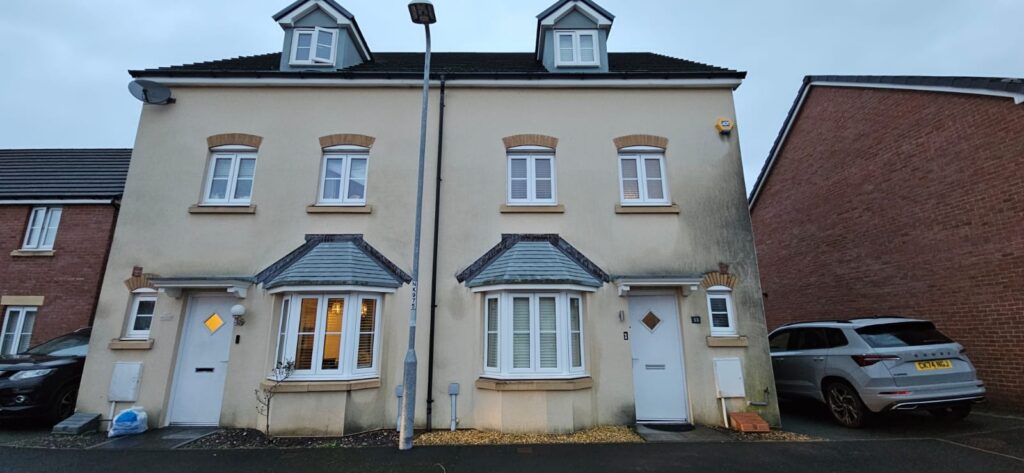
Will DIY Cleaning Remove Algae?
Sometimes.
Light biological growth may respond to careful treatment.
Heavy contamination often requires:
- Multiple applications
- Professional biocides
- Longer dwell times
- Follow-up treatments
Many homeowners become disappointed because they remove visible staining but leave microscopic spores behind.
This is particularly true with both green algae and red algae, which often return surprisingly quickly if not fully treated.
Protecting Landscaping
Cleaning chemicals don’t just affect render.
Nearby areas requiring protection include:
- Lawns
- Shrubs
- Flower beds
- Fish ponds
- Decking
- Natural stone
- Vehicles
Professional preparation helps minimise the risk of accidental damage during cleaning.
Signs You Should Stop DIY Cleaning
There are situations where continuing yourself may not be the safest option.
These include:
- Cracks appearing
- Colour coming away
- Water entering the wall
- Patchy cleaning
- Persistent staining
- Heavy algae growth
- Two-storey access
- Delicate render finishes
If any of these occur, further cleaning may worsen the problem.
How Professionals Achieve Better Results
Professional render cleaning isn’t simply about stronger chemicals.
The biggest differences usually involve experience.
A professional assessment considers:
| Assessment Area | Why It Matters |
|---|---|
| Render type | Determines cleaning method |
| Age of render | Influences chemical strength |
| Existing damage | Prevents further deterioration |
| Biological growth | Chooses correct treatment |
| Previous cleaning | Identifies potential issues |
| Weather conditions | Improves results |
| Access requirements | Maintains safety |
Every property is different, meaning there is rarely a single cleaning method that suits every home.
Long-Term Maintenance
One advantage of professional cleaning is that it often forms part of a longer-term maintenance approach rather than simply making the walls look cleaner for a few weeks.
Routine inspections can help identify:
- Early algae growth
- Small cracks
- Water staining
- Blocked gutters causing splashback
- Poor drainage
- Areas shaded by trees where moisture remains for longer
Addressing these issues early helps preserve both the appearance and lifespan of the render.
Homeowners can also reduce future staining between professional cleans by keeping gutters clear, trimming back vegetation that restricts airflow and avoiding soil or mulch being piled directly against rendered walls. These simple maintenance tasks won’t remove established contamination, but they can slow the conditions that encourage algae and organic growth.
Is DIY Ever the Right Choice?
For some homeowners, the answer is yes. If the render is relatively new, only lightly soiled, easily accessible from ground level and you have the correct cleaning products, careful DIY maintenance may be appropriate.
However, once staining becomes extensive or access involves working at height, the balance often shifts towards professional cleaning. The combination of specialist knowledge, controlled soft washing techniques and appropriate safety equipment significantly reduces the likelihood of accidental damage.
If you’re unsure whether your render can be cleaned safely, arranging an assessment through SoftWashing UK allows the condition of the render to be evaluated before any work begins. Their experienced team can identify the type of render, assess whether green algae, red algae, mould or other contamination is present, and recommend the safest cleaning approach for your particular property.
Questions to Ask Before Attempting DIY Render Cleaning
Before buying equipment or chemicals, ask yourself the following questions honestly.
| Question | If the Answer is “No” |
|---|---|
| Do I know what type of render I have? | Stop and identify the render first. |
| Can every area be reached safely from ground level? | Consider professional access equipment. |
| Am I using products designed specifically for render? | Avoid experimenting with unsuitable chemicals. |
| Do I understand the correct application and rinsing process? | Incorrect use may cause permanent marking. |
| Can I protect nearby plants, paving and windows? | Preparation is essential before cleaning begins. |
| Am I prepared for repeat treatments if staining remains? | One application is not always enough. |
Taking time to answer these questions can prevent costly mistakes and help you decide whether DIY cleaning is genuinely suitable or whether a professional service would provide a safer, longer-lasting solution.
Understanding the Difference Between Dirt and Biological Growth
One of the biggest reasons DIY render cleaning often falls short is that homeowners mistake biological growth for ordinary dirt.
Surface dirt is usually made up of:
- Dust
- Air pollution
- Vehicle emissions
- General grime
- Pollen
This type of contamination normally sits on the surface and can often be removed relatively easily using appropriate cleaning methods.
Biological growth is completely different.
Green algae, red algae, mould, moss and lichen are living organisms. Although you may only see staining on the surface, their microscopic structures can extend into the tiny pores of the render. Simply washing away the visible marks rarely removes the underlying growth.
This explains why many homeowners clean their render only to find the staining returns a few months later.
Professional soft washing focuses on treating the organism itself rather than just improving the appearance.
Why Every Wall May Need a Different Approach
A common surprise for homeowners is that one side of the house often looks much dirtier than another.
This happens because each elevation experiences different environmental conditions.
| Property Elevation | Typical Problems |
|---|---|
| North-facing | Green algae, red algae, moss, damp staining |
| South-facing | Dust, UV fading, pollution |
| East-facing | Morning moisture encouraging algae |
| West-facing | Rain exposure and wind-driven dirt |
Trees, neighbouring buildings and garden walls can also create shaded areas where moisture remains for much longer.
These damp conditions encourage biological growth, meaning a cleaning solution that works well on one wall may need longer treatment times on another.
The Hidden Cost of Damaged Render
Many people focus purely on the cost of cleaning.
However, it’s equally important to consider what happens if the render becomes damaged.
Repairs to coloured render can be surprisingly expensive because matching the existing finish isn’t always straightforward.
Potential repair costs can include:
| Repair Required | Typical Cost Range |
|---|---|
| Small patch repair | £250–£600 |
| Colour matching | £200–£500 |
| Localised re-rendering | £500–£1,500 |
| Entire elevation | £2,000–£5,000+ |
Even minor mistakes made during DIY cleaning can result in repairs that cost significantly more than arranging professional cleaning from the outset.
Why Patch Testing Matters
Professional cleaners rarely begin treating an entire property immediately.
Instead, they normally carry out a small test area first.
Patch testing helps determine:
- How the render reacts to cleaning products
- Whether staining is biological or environmental
- The correct chemical strength
- Suitable dwell times
- Whether multiple applications will be required
Skipping this stage is one of the most common DIY errors.
Applying an unsuitable product across an entire wall before testing could leave widespread discolouration.
Don’t Forget About Render Warranties
Many newer homes have render systems that remain under manufacturer warranties.
These warranties often contain conditions relating to maintenance.
Using:
- High-pressure washing
- Abrasive cleaning
- Unapproved chemicals
- Aggressive scrubbing
may invalidate parts of the warranty.
Before attempting DIY cleaning, it’s worth checking any paperwork supplied when the render was installed.
Environmental Considerations
Cleaning render isn’t only about the wall itself.
Run-off must also be considered.
Professional companies take measures to reduce environmental impact by carefully controlling where cleaning solutions flow.
Areas requiring particular attention include:
- Surface water drains
- Garden ponds
- Vegetable patches
- Lawns
- Flower beds
- Wildlife habitats
Simply allowing chemicals to wash into drainage systems may not always be appropriate.
Planning ahead helps protect both your property and the surrounding environment.
Why Timing Can Affect the Final Finish
Many homeowners choose to clean render when they have a free weekend.
Unfortunately, the weather doesn’t always cooperate.
Some factors that influence cleaning results include:
| Condition | Effect on Cleaning |
|---|---|
| Heavy rain | Reduces chemical effectiveness |
| Strong sunshine | Causes rapid drying |
| Frost | Prevents proper treatment |
| High winds | Uneven application |
| High humidity | Slower drying times |
Professional cleaners often monitor forecasts carefully before carrying out larger render cleaning projects.
Choosing the right conditions helps achieve a more even finish.
Can Steam Cleaning Be Used?
Some homeowners consider steam cleaning as a gentler alternative to pressure washing.
While lower-pressure steam can be suitable in certain specialist situations, it isn’t automatically safe for every render system.
Factors that must be considered include:
- Surface temperature
- Age of render
- Protective coatings
- Existing cracks
- Moisture content
Applying excessive heat to some finishes may lead to unexpected problems, particularly on older or previously repaired render.
Maintaining Render After Cleaning
Whether the render has been professionally cleaned or carefully maintained yourself, ongoing care can help extend the clean appearance.
Simple maintenance includes:
- Inspecting walls every few months
- Keeping gutters flowing freely
- Trimming overhanging branches
- Reducing constant shade where possible
- Washing away light surface dirt before it builds up
- Checking downpipes for leaks
Small preventative measures often reduce the speed at which biological growth becomes established.
Common Myths About DIY Render Cleaning
There are many misconceptions online that encourage homeowners to use methods that aren’t suitable.
| Myth | Reality |
|---|---|
| Any pressure washer will do. | Pressure can permanently damage render. |
| Bleach fixes everything. | Incorrect concentrations may cause staining or fading. |
| Scrubbing harder gives better results. | Abrasive cleaning often damages the finish. |
| Once cleaned, algae won’t return. | Without proper treatment, regrowth is common. |
| All render is cleaned the same way. | Different render systems require different methods. |
Understanding these myths helps homeowners make informed decisions before starting any cleaning project.
When Professional Cleaning Offers Better Value
Professional render cleaning is often viewed purely as an expense, but value should also be considered.
A professional service generally provides:
- Correct identification of the render system
- Suitable cleaning products
- Specialist soft washing equipment
- Safe access methods
- Experienced technicians
- Longer-lasting treatment
- Reduced risk of accidental damage
Although this usually places professional cleaning at a higher price point than DIY, it also reduces the likelihood of costly repairs and repeat cleaning.
For homeowners who have invested thousands of pounds in modern rendered finishes, protecting that investment is often more important than simply choosing the cheapest cleaning option.
Before You Decide to Do It Yourself
If you’re still considering DIY render cleaning, take a realistic look at both the size of the project and your own experience.
Ask yourself:
- Is every section safely accessible?
- Do I know exactly what type of render is on my property?
- Am I confident selecting the correct cleaning products?
- Can I recognise the difference between dirt, green algae, red algae, mould and lichen?
- Do I have enough time to carry out the work properly rather than rushing it?
- Am I prepared for the possibility that multiple treatments may be needed?
Answering these questions honestly can help determine whether the job is suitable for DIY maintenance or whether professional expertise is likely to provide a safer, more durable result.
For larger properties, heavily stained render or homes where access is difficult, arranging an inspection with SoftWashing UK allows the render to be assessed properly before any cleaning begins. Their specialist approach is designed to clean delicate render safely while helping to preserve its appearance and lifespan for years to come.