


If you’re planning to repaint your property’s exterior, one of the most important steps is making sure the render is properly cleaned first. Fresh paint applied to a dirty surface is far more likely to peel, blister, stain or fail prematurely, leading to unnecessary expense and disappointment.
Many homeowners wonder whether they should tackle render cleaning themselves or invest in a professional service before decorating. While DIY cleaning may appear to save money initially, the wrong techniques can permanently damage render or create problems that become much more expensive than hiring specialists in the first place.
At Soft Washing UK, professional render cleaning is carried out using specialist soft washing methods designed to safely remove organic contamination without damaging delicate rendered surfaces.
Why Cleaning Render Before Painting Matters
Render is designed to protect your property’s structure while providing an attractive finish. Over time it naturally collects:
- Dirt
- Pollution
- Dust
- Bird droppings
- Cobwebs
- Organic staining
- Moss
- Lichen
- Green algae
- Red algae
- Black mould
Many of these contaminants become embedded deep within textured render.
Painting directly over contamination simply seals problems underneath the new coating.
Problems Caused by Painting Dirty Render
| Problem | Likely Result |
|---|---|
| Dust left behind | Poor paint adhesion |
| Green algae remaining | Regrowth beneath paint |
| Red algae staining | Visible staining through lighter paints |
| Black mould | Paint failure and discolouration |
| Organic growth | Peeling and blistering |
| Loose surface particles | Flaking paint |
Proper preparation dramatically increases paint lifespan.
Why Render Is More Delicate Than People Think
Many people assume render is as tough as brickwork.
It isn’t.
Modern render systems are often relatively thin decorative coatings designed to repel water whilst remaining breathable.
These include:
- Silicone render
- Monocouche render
- Acrylic render
- Mineral render
- Lime render
- Traditional sand and cement render
Each responds differently to aggressive cleaning.
Using excessive pressure can cause:
- Surface erosion
- Hairline cracking
- Loss of colour
- Patchy appearance
- Water penetration
- Permanent texture damage
This is why professional soft washing has become the preferred method.
DIY Render Cleaning
DIY cleaning generally involves homeowners using:
- Garden hose
- Pressure washer
- Stiff brush
- Bucket of detergent
- Household bleach
- Patio cleaner
Although this sounds straightforward, render behaves very differently from paving or brick.
Typical DIY Costs
| Item | Approximate Cost |
|---|---|
| Pressure washer | £120–£400 |
| Brushes | £15–£40 |
| Cleaning chemicals | £20–£80 |
| PPE | £20–£60 |
| Ladder hire | £40–£90 per day |
| Scaffold tower hire | £120–£250 |
While the equipment may already be owned, there are still hidden costs.
Advantages of DIY Cleaning
DIY cleaning does have some benefits.
Lower initial cost
For small areas of lightly soiled render, basic cleaning can cost less than professional services.
Flexible timing
You can clean whenever convenient.
Suitable for minor dirt
If the render only has light dust deposits and no biological contamination, gentle cleaning may be sufficient.
The Biggest Risks of DIY Cleaning
The problems usually begin when homeowners underestimate how delicate render actually is.
Incorrect Pressure
Pressure washers are one of the biggest causes of damaged render.
Too much pressure can:
- Remove coloured coatings
- Strip textured finishes
- Create visible lines
- Leave permanent patchiness
Once damaged, repainting alone may not hide the defects.
Wrong Chemicals
Household chemicals are rarely designed for exterior render.
Using unsuitable products can lead to:
- Bleaching
- Surface etching
- Chemical burns
- White streaking
- Long-term discolouration
Professional cleaning products are specifically selected for exterior render systems.
Incomplete Removal of Algae
One common mistake is removing only what is visible.
Scrubbing often removes surface staining but leaves microscopic spores behind.
This means:
- Green algae returns quickly.
- Red algae can reappear through fresh paint.
- Black mould continues growing underneath decorative coatings.
Water Saturation
Render is breathable.
Flooding it with water using a pressure washer can:
- Force moisture into walls
- Delay painting
- Encourage future biological growth
- Increase drying times significantly
Professional Render Cleaning
Professional companies use dedicated soft washing systems that focus on treating contamination rather than blasting it away.
Instead of relying purely on pressure, specialist cleaning solutions break down:
- Organic growth
- Algae
- Mould
- Fungal spores
- Atmospheric staining
The contamination is safely removed with minimal risk to the render.
What Is Soft Washing?
Soft washing uses:
- Low pressure
- Specialist cleaning solutions
- Controlled application
- Appropriate dwell times
- Gentle rinsing where required
This process kills biological growth at its source.
Unlike pressure washing, soft washing focuses on cleaning rather than force.
DIY vs Professional Cleaning Comparison
| Feature | DIY Cleaning | Professional Soft Washing |
|---|---|---|
| Initial cost | Lower | Higher |
| Risk of damage | High | Very low |
| Paint preparation | Variable | Excellent |
| Removes algae spores | Usually no | Yes |
| Removes red algae | Often incomplete | Yes |
| Removes black mould | Often incomplete | Yes |
| Equipment required | Yes | Included |
| Insurance | None | Professional cover |
| Results | Variable | Consistent |
| Long-term value | Moderate | Excellent |
Why Paint Manufacturers Recommend Proper Preparation
Exterior paint manufacturers spend significant time developing durable coatings.
However, even premium paints rely on proper preparation.
Paint performs best when applied to surfaces that are:
- Clean
- Dry
- Stable
- Free from contamination
- Structurally sound
Skipping proper cleaning can reduce the lifespan of even premium exterior masonry paints.
Biological Growth Is the Real Problem
Most homeowners focus on visible dirt.
The bigger issue is biological contamination.
This includes:
- Green algae
- Red algae
- Black mould
- Lichen
- Moss
These organisms actively grow into porous render.
Simply washing away the visible surface doesn’t eliminate the root cause.
Why Red Algae Should Never Be Ignored
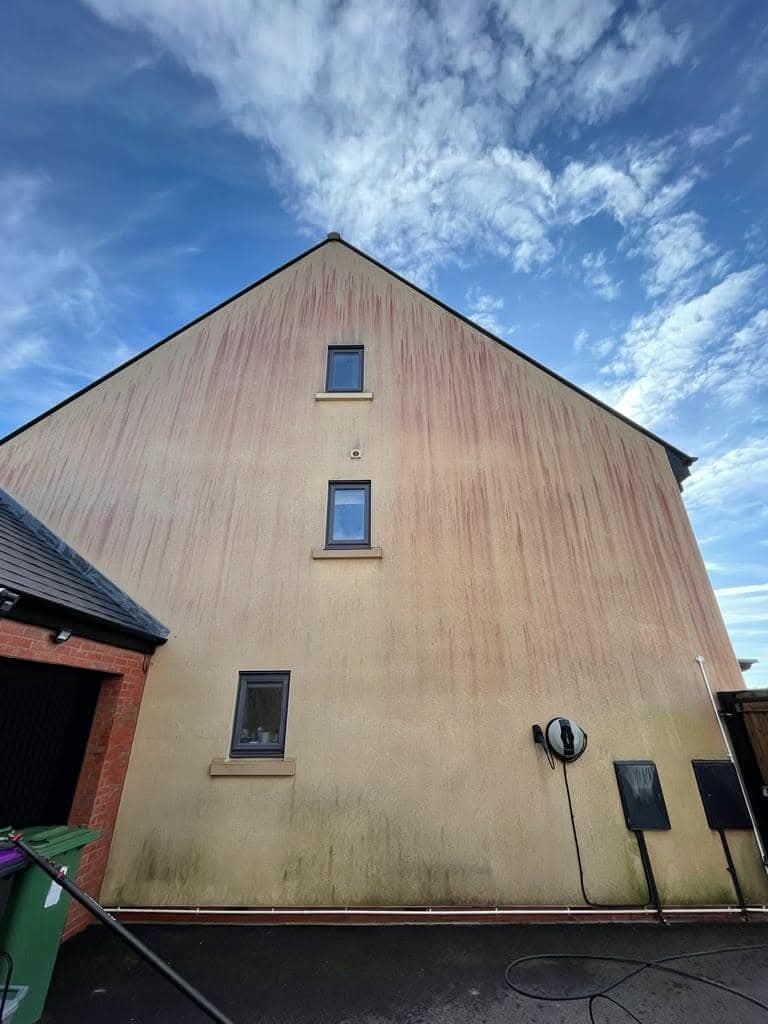
Red algae is becoming increasingly common across the UK.
Unlike green algae, it often appears as:
- Pink streaks
- Orange staining
- Red patches
- Rust-coloured marks
It thrives on damp rendered surfaces.
Painting over it rarely solves the issue because the contamination often survives beneath the paint film.
Professional treatment removes both the visible staining and the underlying biological growth.
Safety Considerations
Working on exterior walls involves more than simply cleaning.
Potential hazards include:
- Working at height
- Chemical handling
- Slippery surfaces
- Electrical cables
- Conservatories
- Fragile landscaping
Professional contractors use suitable access equipment and safe working practices.
When DIY Might Be Suitable
DIY cleaning may be appropriate if:
| Situation | DIY Suitable? |
|---|---|
| Small garden wall | Yes |
| Light dust only | Yes |
| Recently cleaned render | Yes |
| Ground-level access | Yes |
| Small test patch | Yes |
| Entire house | Usually no |
| Heavy algae | No |
| Before repainting | Usually no |
Preparing Render Before Painting
Professional preparation generally follows a structured process.
| Stage | Purpose |
|---|---|
| Inspection | Identify contamination and damage |
| Surface assessment | Determine render type |
| Soft wash treatment | Kill biological growth |
| Cleaning | Remove contamination |
| Drying period | Allow moisture to escape |
| Inspection | Confirm paint-ready finish |
Each stage helps maximise the lifespan of the new paint.
Why Drying Time Is So Important
Fresh paint should never be applied to damp render.
Professional cleaning allows sufficient drying before decoration.
Factors affecting drying include:
- Weather
- Temperature
- Humidity
- Thickness of render
- Previous moisture content
Allowing adequate drying greatly improves paint adhesion.
Common DIY Mistakes Before Painting
Many homeowners unintentionally create problems during preparation.
| Mistake | Possible Outcome |
|---|---|
| Pressure washing too closely | Damaged render |
| Painting too soon | Peeling paint |
| Using bleach incorrectly | Surface damage |
| Ignoring red algae | Staining returns |
| Ignoring green algae | Regrowth beneath paint |
| Scrubbing aggressively | Texture damage |
| Using patio cleaner | Chemical staining |
Hidden Costs of DIY Mistakes
Although DIY appears cheaper initially, mistakes often become expensive.
Potential costs include:
| Problem | Possible Cost |
|---|---|
| Repainting failed areas | £300–£1,000+ |
| Render repairs | £500–£3,000+ |
| Full repaint | £2,000–£8,000+ |
| Scaffold hire again | £500–£2,000 |
| Additional labour | Hundreds of pounds |
These costs frequently exceed the price of professional cleaning.
How Professional Cleaning Helps Paint Last Longer
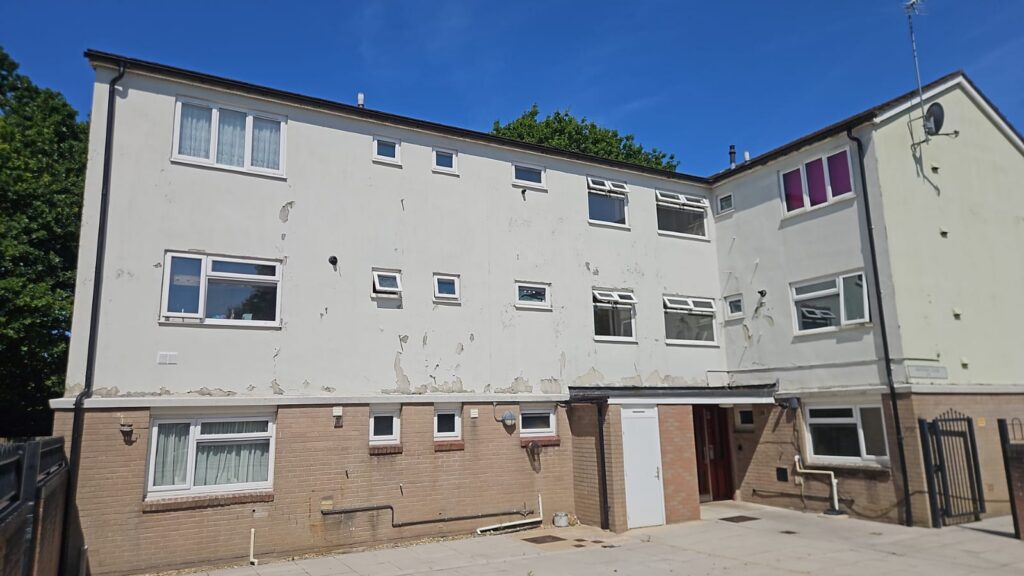
Removing contamination before decorating improves several aspects of paint performance.
Benefits include:
- Better adhesion
- More even colour
- Reduced blistering
- Less peeling
- Longer service life
- Improved appearance
- Fewer maintenance costs
For homeowners investing thousands of pounds in exterior painting, proper preparation is one of the best ways to protect that investment.
Choosing the Right Time of Year
The best cleaning and painting conditions generally include:
- Mild temperatures
- Dry weather
- Limited rainfall
- Low humidity
- No frost
Cleaning well before decorating allows sufficient drying time while ensuring contaminants are fully removed.
Is Professional Cleaning Worth the Investment?
Professional render cleaning is typically more expensive than attempting the work yourself, but it also significantly reduces the risk of costly mistakes.
When compared with the overall cost of exterior painting—which can easily run into several thousand pounds—the cleaning stage represents a relatively small proportion of the total project cost while playing a major role in its long-term success.
Choosing a professional service before painting helps ensure:
| Benefit | Why It Matters |
|---|---|
| Thorough contamination removal | Provides a cleaner surface for paint adhesion |
| Safe cleaning methods | Protects delicate render finishes |
| Specialist products | Removes organic growth more effectively |
| Reduced likelihood of paint failure | Helps maximise the lifespan of the new coating |
| Professional assessment | Identifies areas needing repair before painting |
| Long-term value | Protects your investment in exterior decoration |
For homeowners preparing rendered properties for repainting, investing in professional cleaning can often prevent premature paint failure, reduce ongoing maintenance and deliver a cleaner, more uniform finish.
If you’re planning to repaint your render, arranging a professional clean beforehand through Soft Washing UK provides an effective way to prepare the surface using specialist soft washing techniques designed specifically for delicate rendered walls.
How Weather Exposure Affects Render Before Painting
Render is constantly exposed to the elements throughout the year. Even if it appears relatively clean from a distance, weather can leave behind contaminants that affect how well new paint bonds to the surface.
Common environmental factors include:
- Rain washing dirt into textured finishes
- Wind-blown dust becoming trapped in pores
- Air pollution creating grey or black staining
- Tree sap and pollen leaving sticky deposits
- Bird droppings causing localised staining
- Moisture encouraging biological growth
Properties located near busy roads often accumulate traffic pollution more quickly, while homes surrounded by trees may experience faster moss, lichen, green algae and red algae growth due to increased shade and moisture.
Cleaning these contaminants before painting creates a much more stable surface for decorative coatings.
Identifying Existing Render Problems Before Painting
Cleaning isn’t just about improving appearance. It also provides an opportunity to inspect the render properly before investing in repainting.
A professional inspection may identify:
| Issue | Why It Matters Before Painting |
|---|---|
| Hairline cracks | May require repair before decoration |
| Hollow areas | Could indicate render separation |
| Loose render | Paint will not solve structural issues |
| Damp patches | Need investigating before repainting |
| Previous poor repairs | May require remedial work |
| Surface erosion | Could affect the final finish |
Painting over damaged render can hide problems temporarily, but the defects often reappear within months.
Why Even Newer Render Can Need Cleaning
Many homeowners assume recently installed render doesn’t require cleaning before painting or maintenance.
However, even relatively new render can accumulate:
- Construction dust
- Cement residues
- Airborne pollution
- Organic spores
- Algae in shaded areas
- General environmental dirt
A thorough clean ensures these contaminants don’t become trapped beneath the new paint finish.
Protecting Your Investment
Repainting a rendered property is rarely inexpensive. Depending on the size of the home and the quality of materials chosen, exterior painting can represent a significant investment.
By ensuring the render is properly cleaned beforehand, homeowners help protect:
- The cost of premium exterior paint
- Labour costs for decorators
- Access equipment hire
- Overall kerb appeal
- Future maintenance budgets
Spending a little more on professional preparation often reduces the likelihood of paying for repairs or repainting far sooner than expected.
Signs Your Render Should Be Cleaned Before Painting
Sometimes contamination is obvious, but in many cases it is much less noticeable.
You should strongly consider cleaning the render first if you notice:
- Green staining on shaded elevations
- Red or pink streaks running down walls
- Black spotting around windows
- Moss around the base of walls
- Lichen attached to the render surface
- Patchy areas that remain damp after rain
- General discolouration or uneven colouring
Even if these marks appear minor, they can interfere with paint adhesion and shorten the life of the finished coating.
Why Professional Equipment Makes a Difference
Professional render cleaning isn’t simply about using better chemicals—it’s also about using equipment designed specifically for delicate exterior surfaces.
Specialist systems allow technicians to:
- Apply cleaning solutions evenly
- Control application rates accurately
- Reach high elevations safely
- Minimise overspray
- Use low-pressure rinsing where appropriate
- Treat large properties consistently
This controlled approach produces a much more uniform result than most domestic equipment can achieve.
For homeowners preparing render for repainting, choosing specialist soft washing from Soft Washing UK helps ensure the surface is thoroughly cleaned, biological contamination is effectively treated, and the render is properly prepared for a high-quality, long-lasting painted finish.