


Soft washing has become one of the most effective and widely recommended methods for cleaning exterior surfaces throughout the UK. Whether you own a residential property, commercial building, housing development or managed estate, maintaining the appearance and condition of external surfaces is essential.
Over time, roofs, render, walls, patios, driveways and cladding can become covered in biological growth and environmental contamination. Green algae, red algae, moss, lichen, mould, mildew and atmospheric pollution can all leave surfaces looking tired, neglected and weathered.
Unlike traditional high-pressure cleaning methods, soft washing focuses on eliminating contamination at its source. This approach provides longer-lasting results while helping to protect delicate surfaces from unnecessary damage.
Professional soft washing services from Soft Washing UK are designed to safely restore and maintain a wide variety of exterior surfaces, helping property owners protect their investment while improving kerb appeal.
What Is Soft Washing?
Soft washing is a specialised exterior cleaning method that uses low-pressure water application combined with professional cleaning solutions to remove biological growth, staining and dirt.
Rather than relying on force to blast contaminants away, soft washing treats and kills organic growth before gently rinsing surfaces clean.
The process is highly effective against:
- Green algae
- Red algae
- Moss
- Lichen
- Mould
- Mildew
- Bacteria
- Atmospheric pollution
- Organic staining
This makes soft washing particularly suitable for surfaces that may be damaged by aggressive pressure washing.
Soft Washing vs Pressure Washing
Many people assume pressure washing and soft washing are the same thing. While both involve exterior cleaning, they work in very different ways.
| Feature | Soft Washing | Pressure Washing |
|---|---|---|
| Water pressure | Low | High |
| Biological treatment | Yes | Limited |
| Surface damage risk | Low | Higher |
| Suitable for render | Yes | Often not recommended |
| Suitable for roofs | Yes | Often not recommended |
| Long-lasting results | Excellent | Moderate |
| Kills algae spores | Yes | Not always |
Soft washing focuses on treating the cause of contamination rather than simply removing visible staining.
How Does Soft Washing Work?
Soft washing follows a systematic process designed to provide thorough cleaning while minimising risk to surfaces.
Step 1: Inspection
Every surface is assessed to determine:
- Type of contamination
- Surface condition
- Cleaning requirements
- Access requirements
- Safety considerations
Step 2: Preparation
The surrounding area is prepared before treatment begins.
This may include:
- Protecting sensitive areas
- Managing runoff
- Clearing loose debris
- Establishing safe working zones
Step 3: Application of Cleaning Solutions
Specialist soft washing treatments are applied to the affected surfaces.
The cleaning solutions begin breaking down:
- Green algae
- Red algae
- Moss
- Lichen
- Fungal growth
- Organic staining
Step 4: Dwell Time
The treatment remains on the surface for an appropriate period, allowing it to penetrate and eliminate contamination.
Step 5: Rinsing
Low-pressure rinsing removes dead growth and residue while preserving the surface beneath.
What Surfaces Can Be Soft Washed?
One of the major advantages of soft washing is its versatility.
It can be used on a wide range of residential and commercial surfaces.
| Surface Type | Suitable for Soft Washing |
|---|---|
| Roof tiles | Yes |
| Render | Yes |
| Brickwork | Yes |
| Stonework | Yes |
| Cladding | Yes |
| Fencing | Yes |
| Conservatories | Yes |
| UPVC | Yes |
| Patios | Yes |
| Driveways | Yes |
Professional assessment ensures the correct cleaning process is used for each material.
Why Do Surfaces Become Dirty?
Exterior surfaces are constantly exposed to environmental conditions.
Rainfall, moisture, pollution and organic matter all contribute to contamination.
Common causes include:
| Contaminant | Source |
|---|---|
| Green algae | Damp conditions and shade |
| Red algae | Moist environments |
| Moss | Persistent moisture |
| Lichen | Long-term surface exposure |
| Mould | Humid conditions |
| Mildew | Organic moisture |
| Pollution | Traffic and industry |
| Dirt | Airborne particles |
The UK climate provides ideal conditions for many of these contaminants to thrive.
The Problem with Green Algae and Red Algae
Green algae and red algae are among the most common issues affecting external surfaces.
Green algae typically appears as:
- Green streaks
- Green patches
- Slippery surfaces
- Discoloured walls
Red algae can appear as:
- Red staining
- Pink discolouration
- Orange patches
- Rust-coloured marks
Although both forms of algae affect appearance, they can also contribute to long-term maintenance issues if left untreated.
Soft washing targets both green algae and red algae at their source, helping to reduce rapid regrowth.
Benefits of Soft Washing
Soft washing offers numerous advantages over traditional cleaning methods.
1. Gentle Cleaning
Soft washing relies on treatment rather than pressure.
This helps reduce the risk of:
- Surface erosion
- Cracking
- Water ingress
- Coating damage
2. Longer Lasting Results
By killing biological growth rather than simply removing visible contamination, soft washing often delivers cleaner surfaces for longer.
3. Improved Appearance
Property exteriors can be restored to a much cleaner condition.
4. Reduced Maintenance
Longer-lasting results can help reduce cleaning frequency.
5. Suitable for Delicate Surfaces
Render, roofs and decorative finishes often benefit from soft washing rather than pressure washing.
| Benefit | Advantage |
|---|---|
| Surface protection | Reduced damage risk |
| Biological treatment | Kills contamination |
| Improved kerb appeal | Cleaner appearance |
| Longer-lasting results | Reduced maintenance |
| Versatility | Suitable for many surfaces |
Soft Washing Roofs
Roof cleaning is one of the most popular applications of soft washing.
Roofs frequently suffer from:
- Moss growth
- Lichen infestation
- Green algae
- Red algae
- General staining
Removing contamination can significantly improve the appearance of a property.
Why Roofs Need Careful Cleaning
Roof tiles are designed to protect the structure beneath.
Aggressive cleaning methods can damage:
- Tile coatings
- Tile surfaces
- Ridge systems
- Mortar joints
Soft washing provides a safer alternative.
| Roof Issue | Soft Washing Benefit |
|---|---|
| Moss | Effective removal |
| Lichen | Deep treatment |
| Green algae | Kills growth |
| Red algae | Eliminates contamination |
| Surface staining | Restores appearance |
Soft Washing Render
Modern render systems have become increasingly popular throughout the UK.
However, render is particularly susceptible to:
- Green algae
- Red algae
- Atmospheric pollution
- Surface staining
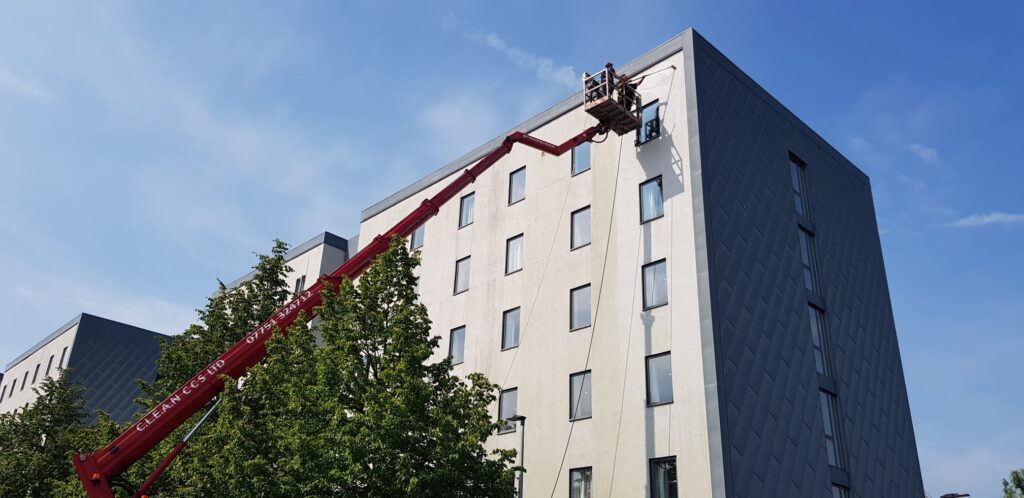
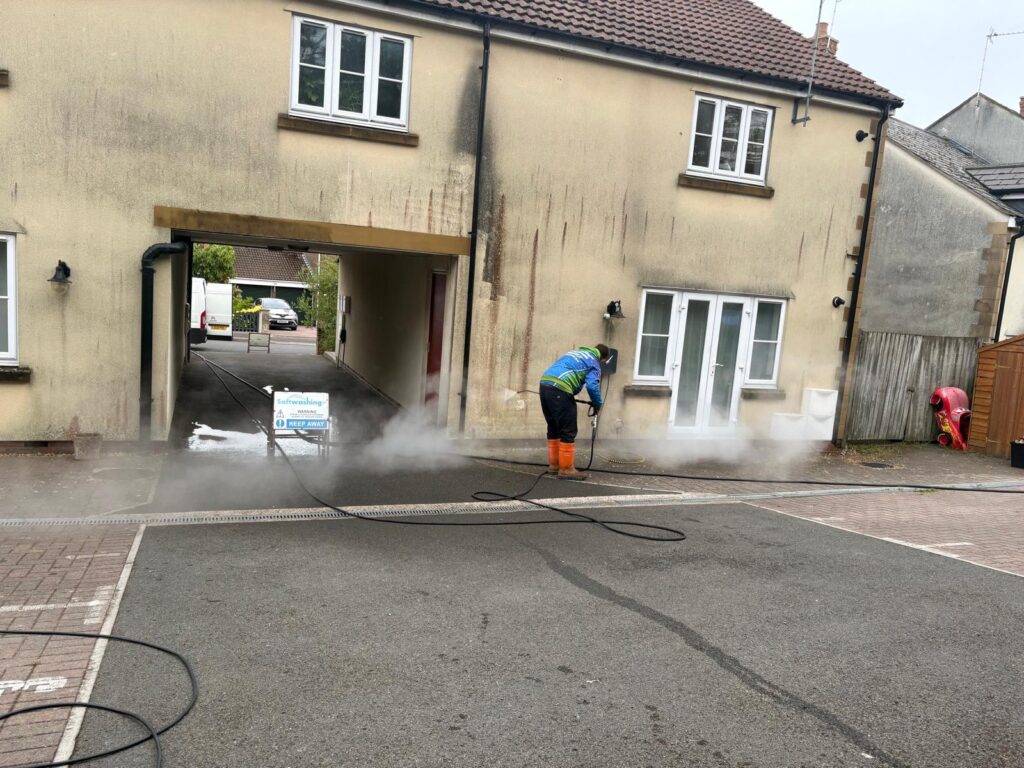
Soft washing allows render to be cleaned without exposing the finish to high-pressure damage.
Common render types include:
| Render Type | Soft Wash Suitable |
|---|---|
| Silicone render | Yes |
| Monocouche render | Yes |
| Acrylic render | Yes |
| Coloured render | Yes |
| Cement render | Yes |
Soft Washing Cladding
Commercial and residential properties often feature external cladding systems.
Cladding can become stained by:
- Pollution
- Algae
- Dirt
- Organic growth
Soft washing can restore appearance while protecting coatings and finishes.
| Cladding Material | Suitable for Soft Washing |
|---|---|
| UPVC | Yes |
| Composite | Yes |
| Metal | Yes |
| Fibre cement | Yes |
| Painted surfaces | Yes |
Soft Washing Patios and Driveways
Patios and driveways experience constant exposure to:
- Foot traffic
- Weather conditions
- Organic contamination
Soft washing can help improve appearance while reducing slippery biological growth.
Common contaminants include:
- Moss
- Green algae
- Red algae
- Black spot staining
- General dirt
The result is a cleaner and safer outdoor surface.
Commercial Soft Washing
Businesses often rely on first impressions.
Dirty exteriors can negatively affect customer perceptions.
Soft washing is commonly used on:
- Offices
- Retail premises
- Hotels
- Schools
- Healthcare facilities
- Industrial buildings
Commercial Benefits
| Benefit | Impact |
|---|---|
| Cleaner appearance | Professional image |
| Long-lasting results | Reduced disruption |
| Surface protection | Lower maintenance costs |
| Improved presentation | Better customer impressions |
Residential Soft Washing
Homeowners choose soft washing for a variety of reasons.
These include:
- Improving kerb appeal
- Preparing properties for sale
- Maintaining exterior finishes
- Removing algae growth
- Protecting property value
A professionally cleaned exterior can transform the appearance of a home.
How Long Do Soft Washing Results Last?
Results vary depending on environmental conditions.
Factors influencing longevity include:
- Shade levels
- Tree coverage
- Moisture levels
- Property orientation
- Local climate
In many cases, soft washing delivers substantially longer-lasting results than pressure washing because biological growth has been treated rather than simply removed.
| Factor | Influence on Results |
|---|---|
| Heavy shade | Faster regrowth |
| Open sunny locations | Slower regrowth |
| Nearby trees | Increased contamination |
| Coastal locations | Variable |
| Regular maintenance | Improved longevity |
Why Professional Soft Washing Matters
Soft washing involves more than simply applying cleaning products.
Professionals understand:
- Surface compatibility
- Treatment selection
- Safe application methods
- Environmental considerations
- Risk management
Incorrect cleaning techniques can lead to:
- Surface damage
- Incomplete cleaning
- Poor results
- Premature regrowth
Professional services from Soft Washing UK ensure exterior surfaces are assessed and treated appropriately.
Signs Your Property Could Benefit from Soft Washing
Many forms of contamination develop gradually.
Property owners should watch for:
| Warning Sign | Possible Cause |
|---|---|
| Green staining | Green algae |
| Pink or red patches | Red algae |
| White spotting | Lichen |
| Thick growth | Moss |
| Black staining | Mould or pollution |
| Dull appearance | General contamination |
Addressing these issues early can help maintain appearance and reduce long-term maintenance requirements.
Areas Most Prone to Biological Growth
Some parts of a property are particularly vulnerable.
These commonly include:
- North-facing walls
- Roof slopes in shade
- Areas beneath trees
- Damp corners
- Poorly ventilated elevations
- Sheltered garden walls
These conditions encourage the growth of green algae, red algae, moss and lichen.
Regular inspections can help identify contamination before it becomes widespread.
Industries That Frequently Use Soft Washing
Soft washing is used across a broad range of sectors.
| Industry | Common Applications |
|---|---|
| Residential | Roofs, render, patios |
| Property management | Communal areas |
| Hospitality | Hotels and restaurants |
| Education | Schools and colleges |
| Healthcare | Clinics and care facilities |
| Retail | Shopfronts and exteriors |
| Industrial | Warehouses and units |
The flexibility of soft washing makes it suitable for many different environments while providing effective treatment for biological growth and environmental contamination.
Common Misconceptions About Soft Washing
As soft washing has grown in popularity across the UK, several misconceptions have emerged regarding how the process works and what results property owners can expect.
One of the most common myths is that soft washing is simply pressure washing performed at a lower setting. In reality, the two methods are fundamentally different. Pressure washing relies primarily on force to remove contamination, whereas soft washing uses specialist treatments to break down and eliminate biological growth before surfaces are rinsed clean.
Another misconception is that soft washing only improves appearance. While visual improvement is certainly one of the most noticeable benefits, the process also helps remove organisms that can contribute to ongoing staining and deterioration.
| Myth | Reality |
|---|---|
| Soft washing is low-pressure washing | Soft washing uses specialist treatments as well as low pressure |
| Results are temporary | Results often last longer than pressure washing |
| Only roofs can be soft washed | Many exterior surfaces can be treated |
| It only removes dirt | It targets biological contamination |
| All algae are the same | Green algae and red algae require professional treatment |
Understanding these differences helps property owners make more informed decisions about exterior maintenance.
Seasonal Soft Washing Considerations
The UK’s changing weather conditions can influence the rate at which biological growth develops.
Spring and autumn are often periods when property owners notice increased levels of contamination due to moisture and mild temperatures.
During wetter months, surfaces may remain damp for extended periods, creating ideal conditions for:
- Green algae
- Red algae
- Moss
- Lichen
- Mould
Seasonal inspections can help identify early signs of contamination before extensive staining develops.
| Season | Common Issues |
|---|---|
| Spring | Algae growth becomes visible |
| Summer | Growth may accelerate in shaded areas |
| Autumn | Increased moisture and leaf debris |
| Winter | Damp conditions encourage contamination |
Soft washing can be carried out throughout much of the year, depending on weather conditions and surface requirements.
The Impact of Trees and Shade
Properties surrounded by mature trees often experience higher levels of biological growth than those in open locations.
Trees can contribute to contamination in several ways:
- Reduced sunlight
- Increased moisture retention
- Organic debris accumulation
- Reduced airflow
- Greater surface dampness
These conditions are particularly favourable for green algae and red algae, which thrive on persistently damp surfaces.
Property owners may notice contamination developing on:
- Roof slopes beneath tree canopies
- North-facing walls
- Garden walls
- Rendered elevations
- Cladding systems
Regular soft washing can help manage these environmental challenges and maintain a cleaner appearance.
Soft Washing as Part of a Property Maintenance Plan
Many homeowners and commercial property managers now view soft washing as an important part of preventative maintenance.
Rather than waiting for contamination to become severe, scheduled cleaning programmes can help maintain consistent standards throughout the year.
Benefits of planned maintenance include:
- Cleaner exterior surfaces
- Reduced staining
- Improved kerb appeal
- Longer intervals between major cleaning projects
- Better protection for exterior finishes
| Maintenance Strategy | Potential Benefit |
|---|---|
| Reactive cleaning | Addresses visible issues |
| Scheduled cleaning | Maintains appearance |
| Annual inspections | Early issue detection |
| Professional soft washing | Longer-lasting cleanliness |
For larger properties, housing developments and commercial premises, planned maintenance can help preserve presentation standards while reducing the likelihood of significant contamination becoming established.
Why Exterior Appearance Matters
The exterior of a property is the first thing visitors, customers, tenants or prospective buyers see.
Even well-maintained buildings can appear neglected if roofs, render, walls or cladding become stained by algae and environmental contamination.
Soft washing helps restore a cleaner appearance across multiple surfaces while protecting materials from unnecessary wear.
A professionally maintained exterior can contribute to:
- Enhanced kerb appeal
- Greater pride of ownership
- Improved customer perception
- Stronger professional image
- Better overall property presentation
Whether the objective is maintaining a family home, presenting a commercial premises professionally or preserving the appearance of a property portfolio, soft washing provides an effective solution for tackling green algae, red algae, moss, lichen and other forms of biological contamination commonly found throughout the UK.