


If you’ve recently had your render, roof, patio or exterior walls professionally cleaned, one of the first questions you’ll probably ask is, “How long before the algae comes back?”
The honest answer is that it depends on several factors, including the cleaning method used, your property’s location, the surrounding environment and whether a professional biocide treatment has been applied.
Many homeowners assume that once algae has been removed it won’t return for years, while others expect it to reappear within months. In reality, both scenarios can happen depending on how the cleaning was carried out.
At Soft Washing UK, we don’t simply remove visible staining—we treat the microscopic spores responsible for future growth. That helps properties stay cleaner for significantly longer while protecting delicate render and painted surfaces.
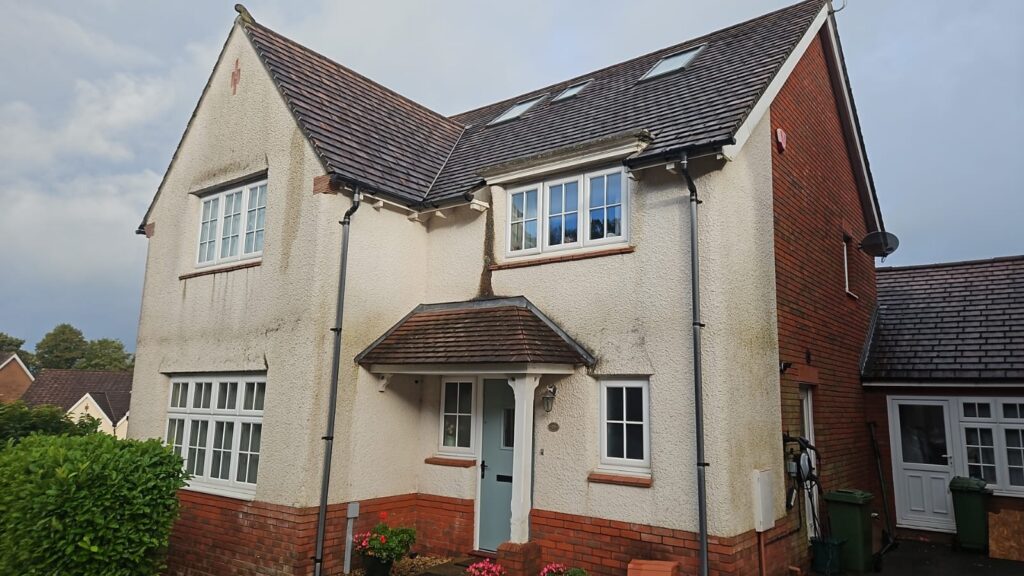
Why Does Algae Always Come Back Eventually?
Algae is a naturally occurring organism. Tiny airborne spores are constantly landing on every outdoor surface.
Once moisture and shade are present, those spores begin growing again.
Common places where algae develops include:
- Render
- Brickwork
- Roof tiles
- Stone walls
- Patios
- Driveways
- Fencing
- Garden walls
Even after a thorough clean, new spores continue landing every day. Cleaning removes existing growth—it doesn’t stop nature.
The goal is to dramatically slow regrowth.
Different Types of Exterior Algae
Many people think all algae is the same.
It isn’t.
The two most common types found on UK properties are green algae and red algae.
| Type | Appearance | Common Location | Difficulty to Remove |
|---|---|---|---|
| Green algae | Green film or streaks | North-facing walls, render, patios | Moderate |
| Red algae | Red, pink or orange staining | Coloured render, silicone render | Much harder |
Red algae is particularly stubborn because it penetrates deeper into textured render finishes than green algae.
Without specialist soft washing and biocide treatment, red algae often returns much faster.
Average Time Before Algae Returns
Although every property is different, professional cleaning followed by the correct treatment usually keeps surfaces clean far longer than pressure washing alone.
| Cleaning Method | Typical Time Before Regrowth |
|---|---|
| Pressure washing only | 3–12 months |
| Manual cleaning only | 6–12 months |
| Soft washing with biocide | 3–5 years |
| Premium professional treatment | Often 4–6 years depending on conditions |
The biggest difference isn’t how clean the property looks immediately afterwards.
It’s how long it stays clean.
Why Some Houses Stay Cleaner Than Others
Two neighbouring houses can be cleaned on the same day yet one develops algae years before the other.
Several environmental factors influence this.
Trees
Large trees constantly drop moisture, pollen and organic matter onto walls.
They also create shade.
That combination allows algae to grow much faster.
North-Facing Walls
Walls that receive little direct sunlight stay damp for longer.
Moisture is one of algae’s favourite conditions.
These elevations usually develop green algae and red algae first.
Nearby Water
Homes close to:
- Rivers
- Lakes
- Streams
- Ponds
often experience increased airborne moisture.
Higher humidity means algae spores can establish themselves more quickly.
Poor Drainage
Overflowing gutters or leaking downpipes regularly wet render.
Constant dampness dramatically shortens the time before algae returns.
The Biggest Mistake Homeowners Make
One of the biggest mistakes is assuming that pressure washing completely solves the problem.
Pressure washing removes visible growth.
Unfortunately, it rarely kills the microscopic spores embedded deep inside porous surfaces.
Those spores simply begin growing again.
That’s why some patios look dirty again within six months.
Professional soft washing works differently.
Instead of blasting the surface, specialist cleaning chemicals eliminate biological growth at its source.
Why Biocide Makes Such a Big Difference
Biocide is designed to kill the living organisms responsible for staining.
Rather than simply washing algae away, it destroys remaining spores that cannot be seen with the naked eye.
Benefits include:
| Without Biocide | With Professional Biocide |
|---|---|
| Spores survive | Spores destroyed |
| Faster regrowth | Slower regrowth |
| Frequent cleaning | Longer cleaning intervals |
| Surface quickly discolours | Surface stays cleaner |
This is why professional soft washing normally produces much longer-lasting results than standard pressure washing.
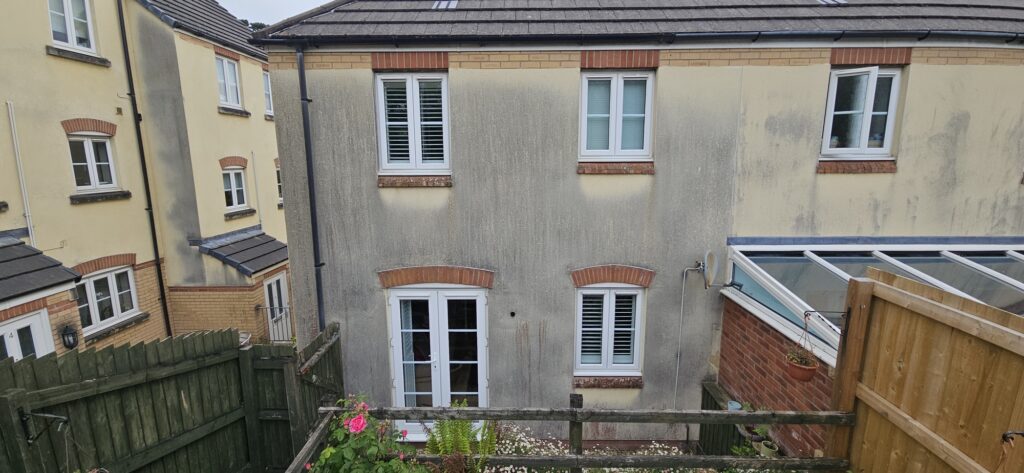
How Weather Affects Regrowth
British weather plays a huge role.
Warm, damp conditions create the perfect environment.
Faster regrowth
- Mild winters
- Wet summers
- Long periods of rain
- Heavy morning dew
Slower regrowth
- Dry summers
- Good airflow
- Strong sunshine
- Low humidity
The weather cannot be controlled, but choosing the correct cleaning process gives algae fewer opportunities to return quickly.
Does the Type of Surface Matter?
Absolutely.
Some materials naturally hold more moisture than others.
| Surface | Likelihood of Algae Returning |
|---|---|
| Silicone render | Moderate |
| Painted render | Moderate |
| Traditional render | High |
| Natural stone | High |
| Concrete | High |
| Roof tiles | Moderate |
| Block paving | High |
Highly porous materials absorb water more easily.
More moisture generally means faster biological growth.
Can You Stop Algae Coming Back Permanently?
No.
No cleaning company can honestly guarantee algae will never return.
Because algae is naturally occurring, spores will always continue landing on exterior surfaces.
Professional cleaning simply delays the process as much as possible.
This is why regular maintenance remains important.
Signs Algae Is Beginning to Return
Early detection makes future cleaning much easier.
Look out for:
- Slight green patches
- Faint red staining
- Dark streaks
- Small damp areas
- Discolouration near gutters
- Green film around windows
- Shaded corners becoming darker
Addressing these signs early usually prevents heavier growth developing.
How Often Should Properties Be Professionally Cleaned?
There isn’t a universal schedule.
Instead, most properties fall into general maintenance intervals.
| Property Condition | Suggested Cleaning Frequency |
|---|---|
| Open sunny location | Every 4–6 years |
| Average suburban property | Every 3–5 years |
| Tree-covered property | Every 2–4 years |
| Heavy algae environment | Every 2–3 years |
Routine maintenance is often far more economical than waiting until heavy contamination develops.
Does Cheap Cleaning Last as Long?
Price often reflects the amount of work involved.
Lower-cost services sometimes focus on achieving immediate visual results rather than delivering long-term protection.
Professional soft washing generally involves:
- Careful surface assessment
- Appropriate cleaning solutions
- Specialist application equipment
- Professional biocide treatment
- Correct dwell times
- Safe rinsing techniques
- Experienced technicians
These additional steps increase the initial investment but usually reduce the frequency of future cleaning.
For many homeowners, paying more for a longer-lasting result represents better long-term value than repeatedly paying for short-term cosmetic cleaning.
How Maintenance Helps Extend Results
Homeowners can also help keep surfaces cleaner between professional treatments.
Simple maintenance includes:
| Maintenance Task | Benefit |
|---|---|
| Clear gutters | Reduces constant moisture |
| Trim overhanging trees | Increases sunlight |
| Remove moss from roofs | Prevents spores spreading |
| Fix leaking downpipes | Stops damp patches |
| Improve airflow | Helps surfaces dry faster |
These small improvements can often add years before noticeable algae returns.
Why Professional Soft Washing Lasts Longer
Soft washing is designed around treating the cause rather than simply the symptom.
Visible algae is only part of the problem.
The microscopic organisms beneath the surface continue growing unless properly treated.
Professional soft washing targets:
- Surface contamination
- Embedded spores
- Organic staining
- Biofilm
- Early biological growth
This comprehensive approach is why professionally treated properties often remain cleaner for several years instead of just one season.
Is Winter More Likely to Cause Regrowth?
Many homeowners assume algae only grows during summer.
In reality, the UK’s mild winters often encourage biological growth because surfaces stay damp for extended periods.
During autumn and winter:
- Less sunlight reaches walls.
- Moisture evaporates more slowly.
- Leaves trap additional dampness.
- Frost followed by thawing creates prolonged wet conditions.
Although growth may appear slower visually, algae spores can continue developing throughout much of the year. By spring, homeowners often notice green algae and red algae becoming much more visible.
Choosing Long-Lasting Exterior Cleaning
When comparing cleaning services, ask what happens after the visible dirt has been removed.
Questions worth asking include:
| Question | Why It Matters |
|---|---|
| Is a professional biocide applied? | Helps delay regrowth |
| Is the surface suitable for soft washing? | Prevents unnecessary damage |
| Is the treatment designed for render? | Different materials require different methods |
| How long are results typically expected to last? | Sets realistic expectations |
| Is maintenance advice provided? | Helps maximise the lifespan of the clean |
For homeowners looking for results that last rather than simply looking clean for a few months, investing in a professional soft washing service is often the most cost-effective option over time.
If you’re looking to restore your property’s appearance while achieving longer-lasting protection against both green algae and red algae, the team at Soft Washing UK uses specialist soft washing techniques designed to clean delicate exterior surfaces thoroughly and help keep them looking their best for years rather than months.
How Property Design Influences Algae Growth
The design of your home can have a surprising impact on how quickly algae returns after cleaning. Some architectural features naturally trap moisture or reduce airflow, creating ideal conditions for biological growth.
Modern homes with deep roof overhangs, recessed entrances and decorative cladding may look attractive, but these features often create shaded areas that remain damp long after rain has stopped.
Older properties can also present challenges, particularly if they have solid walls that retain moisture or traditional render finishes that are more porous than modern alternatives.
| Property Feature | Effect on Algae Regrowth |
|---|---|
| Deep roof overhangs | Creates permanent shade |
| Narrow side passages | Reduces airflow |
| Large hedges close to walls | Traps moisture |
| Decorative stonework | Provides textured surfaces for spores |
| Poorly ventilated gardens | Slower drying after rainfall |
Understanding these factors helps explain why some parts of a property may need attention sooner than others.
Why Soft Washing Is Safer for Render
Many homeowners instinctively think that more pressure equals a better clean. However, when it comes to render, the opposite is often true.
High-pressure washing can strip protective coatings, damage painted finishes and force water deep into porous materials. This trapped moisture can actually encourage algae to return more quickly once the surface dries.
Soft washing uses specially formulated cleaning solutions alongside low-pressure application, allowing contaminants to be removed without damaging the surface underneath.
This is particularly important for:
- Coloured render
- Silicone render
- Acrylic render
- K-Rend
- Monocouche render
- Painted masonry
Protecting the surface means the finish lasts longer while reducing the likelihood of unnecessary repair costs.
Seasonal Maintenance Makes a Difference
Rather than waiting until algae has completely covered a wall, regular inspections throughout the year can significantly extend the time between professional cleans.
A simple seasonal checklist can help.
Spring
- Inspect shaded walls.
- Check gutters after winter.
- Remove moss from roof valleys.
- Wash away accumulated debris.
Summer
- Trim back vegetation.
- Allow sunlight to reach external walls.
- Check irrigation systems are not spraying the house.
Autumn
- Remove fallen leaves.
- Clear blocked gullies.
- Inspect downpipes for leaks.
Winter
- Monitor damp areas.
- Watch for overflowing gutters during heavy rain.
- Avoid allowing standing water to build up around walls.
Small preventative tasks often stop algae becoming established before it develops into heavy staining.
Why Algae Often Returns Around Windows First
Many homeowners notice green algae or red algae beginning around windows before it appears elsewhere.
This isn’t a coincidence.
Window sills, seals and frames naturally collect moisture from rainfall and condensation. Dirt also accumulates in corners, providing nutrients that algae can use to grow.
Common problem areas include:
- Window sills
- Air vents
- Pipe penetrations
- External taps
- Utility boxes
- Meter cupboards
Keeping these areas clean helps reduce the amount of organic matter available for algae to feed on.
Does Colour Affect Algae Growth?
The colour of your render doesn’t directly cause algae, but it certainly affects how noticeable it becomes.
Light-coloured finishes such as white, cream and pale grey tend to show both green algae and red algae much sooner than darker finishes.
| Render Colour | Visibility of Algae |
|---|---|
| White | Very high |
| Cream | High |
| Light grey | High |
| Beige | Moderate |
| Dark grey | Lower |
| Charcoal | Lower |
Although darker colours may disguise staining for longer, algae is still growing beneath the surface.
Regular inspections remain important regardless of colour.
How Nearby Vegetation Speeds Up Regrowth
Gardens are wonderful for biodiversity, but they can also create ideal conditions for algae.
Plants release moisture into the air through transpiration, increasing local humidity around your property.
The following can all contribute to faster regrowth:
- Ivy growing against walls
- Dense shrubs
- Climbing plants
- Tall hedges
- Large flower beds directly against render
- Moss-covered garden features
Maintaining a small gap between vegetation and external walls allows better airflow and helps surfaces dry more quickly after rain.
Why Professional Assessment Matters
Every property is different, which is why experienced professionals assess more than just the visible staining before recommending a cleaning programme.
Factors typically considered include:
| Assessment Area | Why It Matters |
|---|---|
| Building orientation | Determines sun exposure |
| Surface material | Influences cleaning method |
| Existing coatings | Prevents accidental damage |
| Level of contamination | Helps choose suitable treatment |
| Surrounding environment | Predicts likely regrowth speed |
This tailored approach usually delivers longer-lasting results than applying the same cleaning method to every property.
The Cost of Waiting Too Long
Some homeowners delay exterior cleaning because the algae seems purely cosmetic.
However, allowing biological growth to build up over several years can make cleaning more difficult and potentially more expensive.
Heavy contamination may require:
- Longer treatment times
- Multiple applications of cleaning solution
- More extensive preparation
- Greater labour input
As a result, routine maintenance often proves more cost-effective over the lifetime of a property.
Although premium exterior cleaning services may have a higher initial price, they are designed to deliver lasting value by reducing the frequency of repeat treatments.
Common Myths About Algae Regrowth
There are plenty of misconceptions surrounding exterior cleaning.
Myth: Pressure washing kills algae.
Reality: It usually removes visible growth but may leave microscopic spores behind.
Myth: Algae only grows on old houses.
Reality: New-build homes frequently experience algae growth, particularly on modern render systems.
Myth: South-facing walls never get algae.
Reality: While they generally dry faster, shaded sections can still develop both green algae and red algae.
Myth: Bleach from a DIY shop provides the same results.
Reality: Professional soft washing uses specialist products, application methods and dwell times that are designed specifically for exterior surfaces.
Investing in Longer-Lasting Results
Choosing an experienced specialist isn’t simply about achieving an impressive transformation on the day of cleaning.
It’s about ensuring the property stays cleaner for as long as possible while protecting the surface from unnecessary wear.
At Soft Washing UK, every project is approached with long-term performance in mind. By combining specialist soft washing techniques with professional biocide treatments, the aim is to slow the return of green algae and red algae, helping homeowners enjoy cleaner render, walls and exterior surfaces for years rather than just a few months.