


Silicone render is popular across UK homes because of its attractive finish, flexibility and water-repellent properties. However, describing silicone render as low maintenance does not mean that it is maintenance-free. Like any external surface, it remains exposed to rain, airborne pollution, dust, organic growth, bird mess and changing weather conditions throughout the year.
Professional cleaning can restore the appearance of silicone render, but what happens between cleans can have a significant impact on how long that clean appearance lasts. Good maintenance is largely about preventing small problems from developing into widespread staining or biological growth.
At Softwashing UK, silicone render can be professionally assessed and cleaned using methods suited to delicate exterior finishes. Between professional visits, homeowners can also take several practical steps to keep rendered elevations looking their best.
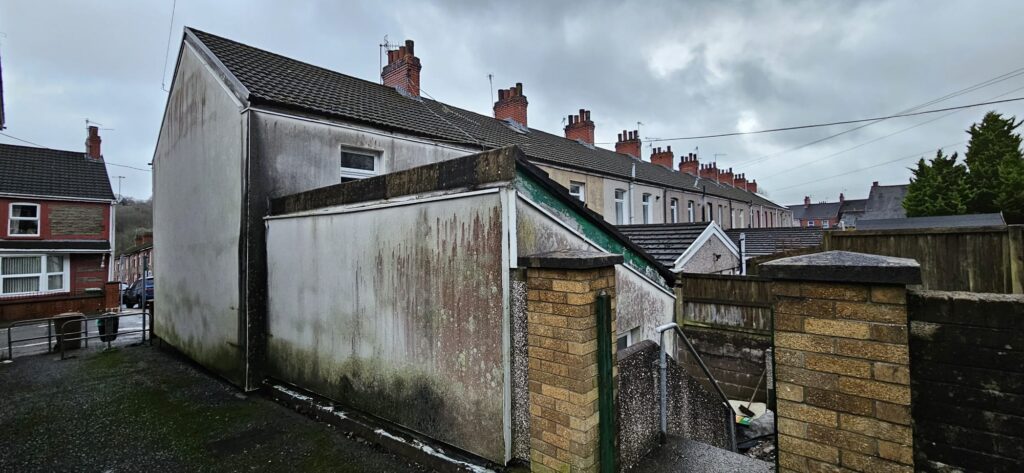
Inspect Your Render Regularly
One of the simplest maintenance measures is regular visual inspection. You do not need specialist equipment to notice many of the early warning signs associated with dirty or contaminated render.
Walk around the property every couple of months and look for:
- Small dark spots or discolouration
- Green algae and red algae
- Black or grey staining
- Dirt around window sills
- Marks beneath gutters and downpipes
- Splashback staining near ground level
- Bird droppings
- Areas that remain damp longer than surrounding render
- Cracks, chips or damaged sections
Early detection matters because contamination can initially affect relatively small areas. If environmental conditions remain favourable, it may gradually become more noticeable across an elevation.
Pay particular attention after winter and periods of prolonged wet weather.
Understand Why Some Walls Get Dirtier Faster
It is completely normal for one side of a rendered property to look different from another.
A wall receiving plenty of sunlight and airflow may dry rapidly after rainfall. Another elevation could remain shaded for much of the day, particularly where it faces neighbouring buildings, trees or dense vegetation.
| Property condition | Possible effect on silicone render |
|---|---|
| Heavily shaded wall | Slower drying after rain |
| Trees close to property | Increased organic debris and shade |
| Leaking gutter | Persistent localised moisture |
| Busy road nearby | Greater exposure to airborne contamination |
| Poor drainage | Increased moisture around lower elevations |
| Overhanging vegetation | Reduced airflow and increased debris |
| Exposed elevation | Greater exposure to wind-driven rain |
| Damaged downpipe | Concentrated water staining |
Understanding these differences can help homeowners identify why staining repeatedly develops in particular areas rather than simply treating the visible symptoms.
Keep Gutters Working Properly
Gutter maintenance and render maintenance are closely connected.
Blocked, overflowing or leaking gutters can repeatedly direct water down rendered walls. Even a relatively minor gutter problem can produce a concentrated wet area that takes considerably longer to dry.
Check gutters periodically for leaves, moss and other debris, particularly during autumn and after storms. Watch the property during rainfall where practical, as this can reveal overflowing joints or sections that are not draining correctly.
Downpipes should also be checked. Water escaping from a damaged connection can create a persistent stain down an otherwise clean elevation.
Fixing the source of excess moisture may help prevent the same staining from continually returning.
Manage Vegetation Around Rendered Walls
Trees, shrubs and climbing plants can make gardens attractive, but vegetation positioned directly against rendered walls can create maintenance problems.
Dense plants may reduce airflow around the surface, while leaves and branches can continually brush against the render. Trees can also deposit pollen, sap and organic material onto walls.
You do not necessarily need to remove established planting. Instead, consider maintaining enough separation to allow air to circulate and prevent branches from constantly contacting the render.
This is particularly useful on shaded elevations where drying conditions are already less favourable.
Be Careful With Pressure Washing
One of the biggest mistakes homeowners can make is assuming that visible staining means the render simply needs aggressive pressure washing.
Silicone render should be treated according to the requirements and condition of the particular system. Excessive pressure can potentially damage delicate surfaces, affect the finish or produce uneven results.
A powerful jet may also address the visible appearance without appropriately dealing with the underlying biological contamination.
Professional softwashing takes a different approach. Softwashing UK can assess the render and select a cleaning process suited to the surface and contamination rather than automatically relying on aggressive mechanical force.
| Maintenance approach | Consideration |
|---|---|
| Regular visual checks | Helps identify problems early |
| Gutter maintenance | Reduces unnecessary water exposure |
| Vegetation management | Improves airflow around walls |
| Aggressive pressure washing | May be unsuitable for delicate render |
| Professional assessment | Identifies appropriate treatment |
| Prompt attention to leaks | Helps reduce recurring damp areas |
Deal With Splashback Around the Bottom of Walls
The bottom section of rendered elevations often becomes dirty faster than areas higher up.
Rain hitting soil, gravel, paving or other surfaces can splash dirt onto the render. Over time, a distinct dirty band can develop around the base of the building.
Check whether landscaping is contributing to the problem. Poor drainage, standing water or soil directly against the wall can increase staining.
Keeping nearby paving clean can also reduce the amount of dirt being splashed back onto the elevation during rainfall.
Avoid repeatedly scrubbing stubborn marks with abrasive brushes. Silicone render is a finished surface, and aggressive physical cleaning may alter its appearance.
Do Not Ignore Green Algae and Red Algae
Biological growth is not simply ordinary dirt.
Green algae and red algae can develop where environmental conditions provide sufficient moisture. Shaded walls, areas around leaking gutters and elevations with limited airflow can therefore be particularly susceptible.
If you notice green algae or red algae beginning to appear, monitor how quickly the affected area is developing.
Simply washing away visible colour does not necessarily address the contamination effectively. This is one reason professional softwashing can be more appropriate than repeatedly trying to scrub or pressure wash the surface.
The sooner biological contamination is recognised, the easier it is to prevent the property from reaching the stage where entire elevations appear heavily discoloured.
Watch Window Sills and Architectural Features
Window sills, ledges, decorative bands and other projecting features can influence how rainwater moves across an elevation.
Dirt frequently collects on horizontal surfaces before being washed down the wall during rainfall. This can create streaks beneath windows and other architectural details.
Regularly removing leaves and loose debris from accessible sills can therefore help.
Also look at the staining pattern. A mark repeatedly developing beneath one particular window may indicate that water is being directed onto the wall differently in that location.
The pattern of staining can often provide useful clues about its source.
Avoid Random Household Cleaning Chemicals
When a small mark appears on an otherwise clean wall, reaching for a general-purpose household cleaner can be tempting.
However, products designed for kitchens, bathrooms, patios or other materials are not automatically suitable for silicone render.
Different chemicals may react differently with the finish or contamination. Using the wrong concentration or leaving a product on the surface incorrectly could potentially create discolouration or an uneven appearance.
Avoid experimenting with strong household chemicals, bleach mixtures or abrasive products simply because they happen to be available.
For significant staining or biological contamination, professional advice is safer than trial-and-error cleaning.
Check Render After Building and Garden Work
Home improvement projects can unexpectedly affect rendered walls.
Cutting paving, landscaping, drilling, painting, roofing and building work can all create dust or debris. Wet trades can also leave splashes on nearby elevations.
After contractors have finished working around the property, inspect the render rather than waiting several months to notice contamination.
Particular attention should be given after:
- Patio or driveway installation
- Roof repairs
- Gutter replacement
- Window installation
- Landscaping
- Exterior painting
- Building extensions
- Groundworks
Fresh contamination can sometimes be easier to identify and appropriately address than marks that have remained on the surface for an extended period.
Pay Attention to Weather Exposure
UK weather places exterior surfaces through repeated wetting and drying cycles. Wind direction, rainfall, shade and temperature can all affect individual elevations differently.
Following extended periods of rain, look for walls that remain visibly wet after other elevations have dried.
This does not automatically mean there is a defect. However, repeated moisture patterns are worth monitoring, particularly if staining begins appearing in exactly the same locations.
Seasonal inspections can be useful.
| Time of year | Useful maintenance check |
|---|---|
| Spring | Inspect for winter staining and organic growth |
| Summer | Check shaded elevations and vegetation |
| Autumn | Clear leaves and inspect gutters |
| Winter | Watch for overflowing gutters and persistent wet areas |
| After storms | Check gutters, downpipes and debris |
| After building work | Inspect for dust, splashes and marks |
Keep Soil and Garden Materials Away From the Render
Flowerbeds positioned directly alongside rendered walls require a little extra care.
Soil, compost and mulch can be thrown against the wall during gardening or heavy rainfall. Watering plants with a hose can create a similar problem.
Try to avoid spraying the wall when watering the garden and prevent soil from being piled directly against rendered surfaces.
When mowing lawns or using garden machinery, be conscious of wet grass and debris being thrown against lower elevations.
These are small habits, but they can reduce unnecessary contamination over the course of a year.
Monitor Cracks Rather Than Cleaning Over Them
Maintenance is not exclusively about cleanliness.
If you notice cracking, damaged edges or sections where the render appears compromised, these should be investigated separately. Cleaning is not a substitute for repairing a physical defect.
Take photographs of questionable areas so you can compare them over time. If a crack appears to be changing, appropriate professional advice should be sought.
Water entering through defects can potentially create different problems from ordinary surface contamination, so identifying the difference is important.
Do Not Wait Until the Render Looks Extremely Dirty
Homeowners sometimes view professional exterior cleaning as something that should only happen once the building looks heavily contaminated.
A maintenance-based approach can be more sensible.
Allowing contamination to become progressively heavier means the property’s appearance can deteriorate considerably before anything is done about it. Instead, keep track of how quickly different elevations are changing following a professional clean.
There is no universal cleaning interval that suits every silicone-rendered property.
A detached home in an open, sunny location could behave differently from a shaded property surrounded by mature trees. Local environmental conditions are an important part of determining suitable maintenance.
Keep a Simple Maintenance Record
For larger rendered properties, keeping a basic record can be surprisingly useful.
Take photographs immediately following a professional clean and then repeat photographs from similar positions periodically.
You can then see which elevations change first.
For example, you might discover that the rear elevation remains clean while one side of the property begins showing contamination much sooner. You can then investigate environmental factors such as shade, vegetation, guttering or drainage.
A simple record might include:
| Date | Area checked | Observation | Action required |
|---|---|---|---|
| March | Front elevation | Clean and dry | None |
| March | Side elevation | Minor staining near gutter | Check gutter |
| June | Rear elevation | No visible change | None |
| September | Shaded wall | Early biological growth | Arrange assessment |
| November | All elevations | Leaves in gutters | Clear gutters |
This turns render care into planned property maintenance rather than waiting for staining to become severe.
Know When DIY Maintenance Should Stop
There is an important difference between maintaining the surroundings of silicone render and attempting to professionally clean the render itself.
Homeowners can sensibly manage vegetation, gutters, drainage, loose debris and routine inspections. However, once widespread staining, green algae and red algae or other biological contamination becomes established, specialist treatment may be appropriate.
Working at height also creates obvious safety considerations. Trying to reach upper-storey render from ladders while carrying cleaning equipment is very different from inspecting accessible areas from ground level.
Professional exterior cleaning equipment and appropriate application methods allow larger elevations to be treated more consistently.
Make Professional Cleaning Part of Property Maintenance
Silicone render is often chosen because it provides a modern, attractive exterior finish. Protecting that appearance means looking beyond occasional cleaning and considering the conditions surrounding the building.
The most effective between-clean maintenance usually involves controlling unnecessary moisture, keeping gutters functioning, managing vegetation, monitoring contamination and avoiding unsuitable DIY cleaning techniques.
Rather than automatically cleaning according to a fixed calendar, watch how your particular property responds to its environment.
When the render begins showing established staining, green algae and red algae, or other contamination that ordinary property maintenance cannot address, Softwashing UK can assess the condition of the exterior and recommend an appropriate professional cleaning approach.
Preparing Your Property for Its Next Professional Clean
A little preparation can also make ongoing render maintenance easier.
Before a professional visit, note any areas where staining appeared particularly quickly after the previous clean. Mention persistent damp patches, recurring marks beneath gutters or sections affected by nearby vegetation. This information can help build a clearer picture of why certain areas are deteriorating faster.
It can also be useful to make sure access around the property remains reasonably clear. Garden furniture, pots and other movable objects positioned directly beside rendered walls can trap debris and make routine inspection difficult.
After the render has been professionally cleaned, take the opportunity to establish a new visual baseline. Photograph each elevation while it is clean and periodically compare its condition.
Maintaining silicone render is ultimately an ongoing process of observation and prevention. Small changes to drainage, vegetation, gutter maintenance and everyday garden habits can all help reduce unnecessary staining and make it easier to recognise when professional attention is required.
Protect Render When Cleaning Windows
Window cleaning is easy to overlook when thinking about render maintenance, but the two surfaces sit directly alongside one another. Water, cleaning solutions and dirty runoff from window frames can travel onto the render below, potentially leaving noticeable streaks once the wall has dried.
If you clean your own windows, avoid allowing large quantities of dirty water to repeatedly run down the rendered elevation. Pay particular attention to upper-storey windows, where runoff can travel a considerable distance before reaching the ground.
Window frames themselves can also accumulate grime around drainage channels, seals and corners. When rainfall washes this material out, marks can appear immediately beneath the frame. Keeping frames reasonably clean can therefore help reduce another source of contamination between professional render cleans.
Check External Fixtures for Rust and Runoff
Exterior walls often have far more attached to them than homeowners initially realise. Lights, brackets, satellite equipment, security cameras, house numbers, pipes and decorative fixtures can all influence the appearance of the render around them.
Metal components should be checked occasionally for corrosion. Rust-coloured runoff can create highly visible marks, particularly on pale silicone render. Rather than repeatedly attempting to remove the stain from the wall, identifying and dealing with the corroding component can prevent fresh staining from continuing.
The same principle applies to fixtures that collect dirt. A bracket positioned above a clean rendered wall can hold dust and debris until heavy rain washes it down the elevation.
| External feature | What to watch for |
| Metal brackets | Rust-coloured runoff |
| Exterior lights | Dirt collecting around fittings |
| Satellite equipment | Streaking beneath fixings |
| Security cameras | Localised dirt and water trails |
| Pipes and vents | Marks developing directly underneath |
| House signs | Grime collecting around edges |
Recognising the source is important because cleaning the wall alone will not prevent a recurring mark if the fixture causing it remains unchanged.
Be Mindful When Using Barbecues and Fire Pits
Outdoor cooking and entertaining areas are frequently positioned close to the house, especially where patios adjoin the rear elevation. Smoke, grease and airborne particles from barbecues can settle on nearby surfaces, including silicone render.
Whenever possible, position barbecues away from rendered walls rather than directly beside them. The same consideration applies to fire pits and other equipment that produces smoke.
Repeated exposure can gradually create discolouration that is quite different from ordinary weather-related dirt. Keeping heat and smoke-producing equipment at a sensible distance also reduces the chance of accidental heat damage to nearby exterior materials.
Prevent Bin and Storage Marks
Wheelie bins, garden storage boxes, bicycles and other everyday items are often stored against the side or rear of a property. Over time, repeated contact can leave rubbing marks on rendered surfaces.
Items positioned tightly against a wall can also create sheltered pockets where the surface receives less airflow than the surrounding elevation. Moving frequently used objects slightly away from the wall provides separation and makes the area behind them easier to keep tidy.
Be especially careful when moving heavy bins or garden equipment. Silicone render should not be treated as a surface against which bulky objects can be repeatedly dragged or knocked.
Look for Marks Around Boiler Flues and Vents
Modern properties can have numerous vents, extractor outlets and other penetrations through external walls. Because these interrupt an otherwise continuous elevation, staining patterns may develop around them.
If you notice discolouration repeatedly appearing around a particular outlet, do not automatically assume that the render itself is responsible. The location and shape of the mark can indicate that the external fitting or the way moisture and air move around it is contributing to the problem.
Any concerns about the operation, installation or condition of a boiler flue or other specialist building component should be directed to an appropriately qualified professional rather than altered as part of render maintenance.
Take Extra Care During Exterior Decorating
Painting timber, metalwork, doors or other exterior features can introduce an entirely different type of staining risk. Paint splashes on silicone render may be far more difficult to address than ordinary atmospheric dirt.
Before decorating, protect adjacent rendered areas properly. Do not rely on being able to wipe away accidental splashes afterwards. Preparation is particularly important when painting soffits, fascias, pipes or window surrounds positioned immediately beside finished render.
The same applies to wood treatments, oils and other decorating products. Preventing contact is preferable to trying to correct a noticeable mark later.
Understand the Difference Between Surface Dirt and Biological Growth
Not every mark on silicone render has the same cause. This distinction matters when deciding whether routine maintenance is sufficient or specialist cleaning is required.
Airborne dust may create a generally dull appearance, while traffic-related contamination can produce darker deposits. Green algae and red algae are biological contamination and may behave differently from ordinary dirt. Other marks can originate from rust, building materials, paint, organic debris or external fixtures.
Treating every form of discolouration as though it were identical can lead to inappropriate DIY cleaning attempts. Where the cause is uncertain, Softwashing UK can assess the surface and determine an appropriate approach.
Consider How Nearby Roof Surfaces Affect the Walls
Render does not exist independently from the rest of the exterior. Porches, extensions, conservatory roofs, garage roofs and other structures can all change the way rainwater and debris reach adjoining walls.
For example, debris collecting on a small roof immediately beside a rendered elevation may eventually be washed towards the wall during heavy rain. Similarly, water bouncing from a lower roof can repeatedly affect a concentrated section of render above or beside it.
When an unusual stain appears, look beyond the wall itself. Observing the surrounding rooflines and structures can sometimes explain why one isolated section is becoming dirty faster than everything around it.
Protect the Render During Seasonal Garden Maintenance
Certain gardening jobs create short bursts of contamination that can be avoided with a little care. Hedge trimming, leaf blowing, pressure cleaning garden furniture and cutting back dense planting can all send debris towards exterior walls.
Where possible, direct machinery away from the property. If hedge clippings or wet leaves land against the render, remove them rather than allowing them to remain there and break down.
Seasonal maintenance can be organised with the rendered exterior in mind:
| Garden task | Render-friendly precaution |
| Hedge trimming | Keep cuttings away from walls |
| Leaf blowing | Direct debris away from the property |
| Cleaning garden furniture | Move furniture away from render first |
| Potting plants | Avoid throwing compost against walls |
| Using sprinklers | Position spray away from elevations |
| Applying garden treatments | Prevent overspray reaching the render |
These precautions are particularly worthwhile because accidental contamination from garden products may require a different response from normal environmental staining.
Include Silicone Render in General Exterior Care
Silicone render is easier to maintain when it is considered as part of the whole exterior rather than as an isolated decorative surface. Rooflines, windows, fixtures, patios, garden equipment and external structures can all contribute to how clean the walls remain.
This broader approach makes it easier to spot cause and effect. If a new streak suddenly develops, consider what sits above it. If a patch becomes dirty after a garden alteration, consider what changed around that section of the building. If staining continually returns in one precise location, investigate the surrounding exterior features before assuming that another quick wash will solve it.
When contamination has progressed beyond straightforward preventative maintenance, professional treatment can restore the appearance without relying on unsuitable aggressive cleaning. Softwashing UK specialises in exterior cleaning and can assess silicone render according to its condition, the type of contamination present and the characteristics of the property.