


Many people assume pebbledash and render can be cleaned using exactly the same methods. While both are common exterior wall finishes found on UK properties, they differ significantly in their construction, texture and maintenance requirements.
Understanding these differences is important because using the wrong cleaning technique can lead to unnecessary damage or disappointing results. Whether your property has traditional pebbledash or a modern render system, choosing the appropriate cleaning method will help preserve its appearance and extend its lifespan.
If your exterior walls have become stained by dirt, green algae, red algae or other biological growth, Softwashing UK provides specialist cleaning services designed to safely restore both rendered and pebbledashed surfaces.
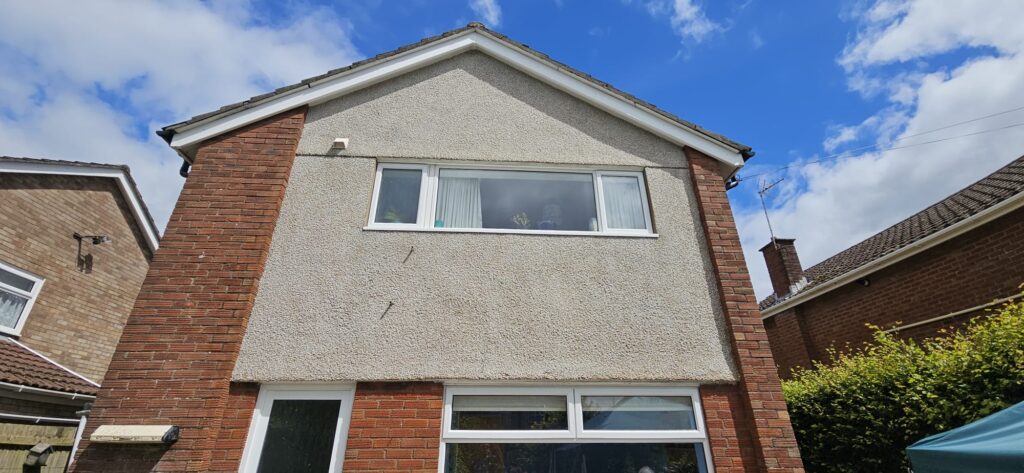
What Is Pebbledash?
Pebbledash is a traditional exterior wall finish created by throwing small stones or gravel onto a layer of wet render.
Once cured, the stones become firmly embedded within the render, producing a highly textured and durable surface.
Pebbledash has been widely used throughout the UK for decades because it offers:
- Excellent weather resistance
- Long service life
- Low maintenance
- Good protection against driving rain
- A distinctive textured appearance
Although durable, the rough surface tends to trap dirt and organic growth more readily than smoother finishes.
What Is Render?
Render is a smooth or lightly textured coating applied to external walls.
Modern render systems include:
- Silicone render
- Acrylic render
- Monocouche render
- Mineral render
- Traditional sand and cement render
- Lime render
Many modern renders are available in a wide range of colours, while older systems are often painted after installation.
Comparing Pebbledash and Render
| Feature | Pebbledash | Render |
|---|---|---|
| Surface texture | Very rough | Smooth to lightly textured |
| Appearance | Traditional | Modern |
| Dirt retention | Higher | Lower |
| Cleaning complexity | Higher | Lower |
| Risk of damage | Moderate | Depends on render type |
| Maintenance frequency | Moderate | Moderate |
Both finishes benefit from regular inspections and professional cleaning.
Why Exterior Walls Become Dirty
Regardless of the surface type, exterior walls are constantly exposed to the elements.
Common contaminants include:
- Dirt
- Dust
- Air pollution
- Bird droppings
- Moss
- Lichen
- Green algae
- Red algae
- Black mould
The difference lies in how these contaminants attach to the surface.
How Pebbledash Holds Dirt
Pebbledash has countless small gaps between the stones.
These tiny recesses trap:
- Airborne dust
- Leaf debris
- Organic material
- Moisture
This creates an ideal environment for biological growth.
Because moisture remains trapped for longer, green algae and red algae often establish themselves more quickly than on smoother rendered walls.
How Render Becomes Dirty
Smooth render usually accumulates contamination across the surface rather than within deep recesses.
Common issues include:
- Pollution staining
- Water streaks
- Algae growth
- Mould
- General weathering
Although render may appear easier to clean, the surface itself can be much more delicate than pebbledash.
Cleaning Challenges
Pebbledash
Cleaning pebbledash requires removing contamination from around thousands of individual stones.
The uneven texture means every area must be treated thoroughly.
Challenges include:
- Deeply embedded dirt
- Organic growth between stones
- Lichen attachment
- Uneven drying
Render
Render presents different challenges.
Modern render systems often require extremely gentle cleaning to avoid damaging:
- Surface coatings
- Colour pigments
- Protective finishes
- Breathable surfaces
Professional assessment is particularly important.
Why Pressure Washing Isn’t Always the Answer
Pressure washing is frequently misunderstood.
Higher pressure does not necessarily produce better results.
Potential risks include:
| Pebbledash | Render |
|---|---|
| Loose stones | Surface erosion |
| Damaged mortar | Colour loss |
| Water penetration | Cracking |
| Joint damage | Moisture ingress |
Professional cleaning focuses on selecting appropriate pressure rather than simply using maximum power.
Soft Washing Explained
Soft washing uses specialist cleaning solutions together with carefully controlled low-pressure application.
Rather than relying on force, soft washing removes contamination chemically before gentle rinsing where required.
Benefits include:
- Safe cleaning
- Biological treatment
- Longer-lasting results
- Lower damage risk
- Suitable for delicate surfaces
This approach is particularly effective for both rendered and pebbledashed properties affected by green algae and red algae.
Biological Growth on Exterior Walls
The UK’s damp climate creates ideal conditions for organic growth.
The most common problems include:
Green Algae
Green algae frequently develops first, particularly on shaded elevations.
It often appears as green streaks or patches.
Red Algae
Red algae is becoming increasingly common on exterior walls.
It can produce reddish or pink staining and often proves more stubborn if left untreated.
Black Mould
Black mould prefers damp, poorly ventilated areas.
It commonly develops around roof overhangs and beneath leaking gutters.
Lichen
Lichen forms a stronger attachment than algae and usually requires specialist treatment.
Which Surface Needs More Cleaning?
Neither finish necessarily requires more maintenance overall, but their maintenance priorities differ.
| Surface | Typical Maintenance Focus |
|---|---|
| Pebbledash | Removing trapped dirt and organic growth |
| Render | Protecting delicate finishes while removing staining |
Routine inspections remain important for both.
Cleaning Frequency
The surrounding environment largely determines cleaning frequency.
| Property Location | Recommended Cleaning |
|---|---|
| Urban | Every 3–4 years |
| Countryside | Every 3–5 years |
| Woodland | Every 2–3 years |
| Coastal | Every 2–3 years |
| Heavy shade | Every 2 years |
North-facing elevations may require more frequent attention.
The Importance of Gutters
Many exterior wall problems actually begin with faulty rainwater systems.
Blocked gutters allow water to overflow repeatedly onto walls.
This encourages:
- Green algae
- Red algae
- Mould
- Water staining
- Dirt accumulation
Keeping gutters clear forms an important part of any maintenance programme.
DIY Cleaning Considerations
Many homeowners consider cleaning their own walls.
However, caution should always be exercised.
Avoid:
- Excessive pressure
- Wire brushes
- Strong bleach
- Acid cleaners
- Abrasive pads
- Unapproved chemicals
These products may permanently damage render or loosen pebbledash.
Typical Professional Cleaning Costs
Prices depend on:
- Property size
- Accessibility
- Degree of contamination
- Surface type
- Equipment required
| Property Type | Typical Cost |
|---|---|
| Small bungalow | £500–£800 |
| Semi-detached | £700–£1,100 |
| Detached property | £900–£1,600 |
| Large executive home | £1,600+ |
Professional cleaning often represents better long-term value than repairing accidental damage caused by unsuitable DIY methods.
Signs Your Exterior Walls Need Cleaning
Watch for:
- Green patches
- Red staining
- Black spots
- Water streaks
- Moss
- Lichen
- General dull appearance
- Bird staining
Treating contamination early generally produces the best results.
Seasonal Maintenance
| Season | Recommended Checks |
|---|---|
| Spring | Inspect for winter damage |
| Summer | Arrange professional cleaning |
| Autumn | Clear gutters and trim vegetation |
| Winter | Monitor drainage and damp areas |
Regular inspections reduce long-term maintenance costs.
Pebbledash vs Render Maintenance Comparison
| Maintenance Task | Pebbledash | Render |
|---|---|---|
| Visual inspections | Twice yearly | Twice yearly |
| Gutter checks | Essential | Essential |
| Vegetation trimming | Important | Important |
| Biological treatment | Highly beneficial | Highly beneficial |
| Professional cleaning | Every few years | Every few years |
Both systems benefit from preventative maintenance rather than waiting for heavy staining to develop.
Choosing the Right Cleaning Method
No single cleaning technique is suitable for every property.
Several factors influence the best approach, including:
- Age of the building
- Type of render or pebbledash
- Previous repairs
- Existing coatings
- Severity of contamination
- Accessibility
Professional assessment allows cleaning methods to be tailored to the property’s specific requirements.
Common Mistakes to Avoid
Many exterior cleaning problems result from well-intentioned but unsuitable maintenance.
Common mistakes include:
| Mistake | Possible Result |
|---|---|
| Using maximum pressure | Surface damage |
| Ignoring leaking gutters | Persistent staining |
| Leaving algae untreated | Increased biological growth |
| Cleaning during unsuitable weather | Reduced treatment effectiveness |
| Scrubbing aggressively | Surface wear |
Taking a careful approach helps preserve both appearance and structural integrity.
Frequently Asked Questions
Is pebbledash harder to clean than render?
Generally, yes. The textured surface traps more dirt and moisture, making contamination more difficult to remove than on smoother render.
Can soft washing be used on both?
Yes. Professional soft washing is suitable for many types of pebbledash and render because it focuses on treating contamination rather than relying solely on pressure.
Why does algae return?
Green algae and red algae reproduce using airborne spores that are naturally present throughout the environment. Although cleaning removes existing growth, regular maintenance helps reduce future outbreaks.
Can cleaning improve kerb appeal?
Absolutely. Removing years of dirt, pollution and biological growth can dramatically improve the appearance of both pebbledash and rendered properties, often making them look significantly brighter and better maintained.
Long-Term Care for Exterior Walls
Whether your home has traditional pebbledash or modern render, routine maintenance is the key to protecting its appearance and longevity. Regular inspections, prompt gutter repairs, vegetation management and professional soft washing all help reduce the build-up of dirt and biological growth.
By treating green algae, red algae and other contaminants before they become established, homeowners can preserve the condition of their exterior walls while reducing the likelihood of more extensive cleaning or repair work in the future.
For properties requiring specialist exterior wall cleaning, Softwashing UK uses carefully selected soft washing methods designed to clean pebbledash and render safely while helping maintain the integrity of the surface.
Environmental Factors That Affect Pebbledash and Render Differently
Although both finishes are exposed to the same weather conditions, they respond differently depending on their texture and composition.
Pebbledash naturally creates thousands of tiny recesses where moisture can collect. This means walls may stay damp for longer after rainfall, encouraging biological growth to establish more quickly.
Smooth render generally dries faster, but contaminants such as pollution, dust and water staining can be much more noticeable because there are no stones to disguise them.
| Environmental Factor | Pebbledash | Render |
|---|---|---|
| Heavy rainfall | Moisture retained between stones | Surface usually dries faster |
| Tree cover | Greater build-up of organic debris | Increased algae on shaded walls |
| Air pollution | Dirt trapped within texture | Surface staining more visible |
| Coastal conditions | Salt and sand become trapped | Salt deposits may appear on surface |
| Frost | Moisture between stones can freeze | Existing cracks may become more noticeable |
Understanding these differences helps homeowners choose the most appropriate maintenance schedule for their property.
The Importance of Early Treatment
One of the biggest mistakes homeowners make is waiting until exterior walls appear heavily stained before arranging cleaning.
Small patches of green algae or red algae are much easier to remove than widespread contamination that has been allowed to develop over several years.
Early treatment offers several benefits:
- Less biological growth to remove.
- Reduced risk of permanent staining.
- Improved appearance throughout the year.
- Lower long-term maintenance costs.
- Longer-lasting cleaning results.
Regular inspections often identify problems long before they become obvious from the street.
Access Can Influence Cleaning Costs
The type of wall finish is only one factor that affects the complexity of a cleaning project.
Accessibility also plays an important role.
Properties that may require additional planning include:
- Three-storey homes.
- Buildings with conservatories.
- Steep gardens.
- Narrow side access.
- Commercial premises.
- Properties built on sloping ground.
Professional contractors assess access requirements before work begins to ensure every area can be cleaned safely and thoroughly.
Maintaining Kerb Appeal
The exterior of a property creates the first impression for visitors, neighbours and potential buyers.
Even structurally sound pebbledash or render can make a home appear neglected if covered in dirt, green algae or red algae.
Routine maintenance helps maintain:
| Benefit | Why It Matters |
|---|---|
| Cleaner appearance | Improves overall presentation |
| Consistent colour | Reduces patchy staining |
| Better first impressions | Particularly important when selling a property |
| Longer-lasting finish | Helps preserve the exterior surface |
| Reduced future maintenance | Prevents contamination becoming deeply established |
Keeping exterior walls clean is one of the simplest ways to enhance the overall appearance of a property without major renovation work.
Professional Maintenance Provides Long-Term Value
Both pebbledash and render are designed to provide many years of weather protection, but neither is completely maintenance-free.
A planned approach that combines regular inspections with professional soft washing when required helps prevent dirt and biological growth from becoming deeply embedded.
Rather than relying on aggressive cleaning methods, specialist treatments are designed to remove contamination while protecting the underlying surface. This approach not only restores the appearance of the property but also helps maintain the integrity of the wall finish for years to come.
Whether your home features traditional pebbledash or modern render, investing in routine maintenance can help preserve its appearance, protect your investment and reduce the likelihood of costly repairs in the future.