


Render cleaning can dramatically improve the appearance of a property, removing years of biological staining, dirt and environmental contamination. However, the rendered walls are only one part of the property that needs consideration during the cleaning process. For homeowners with established gardens, lawns, flower beds, shrubs, trees and carefully maintained landscaping, protecting surrounding vegetation is equally important.
Professional render cleaning requires preparation. Cleaning solutions need to be applied in a controlled manner, runoff needs to be considered and delicate plants may require additional protection. This is particularly important where rendered walls sit directly alongside borders, climbing plants, lawns or valuable landscaping.
Softwashing UK specialises in professional exterior cleaning throughout the UK and uses low-pressure softwashing techniques designed to restore rendered surfaces without relying on aggressive high-pressure cleaning.
Why Garden Protection Matters During Render Cleaning
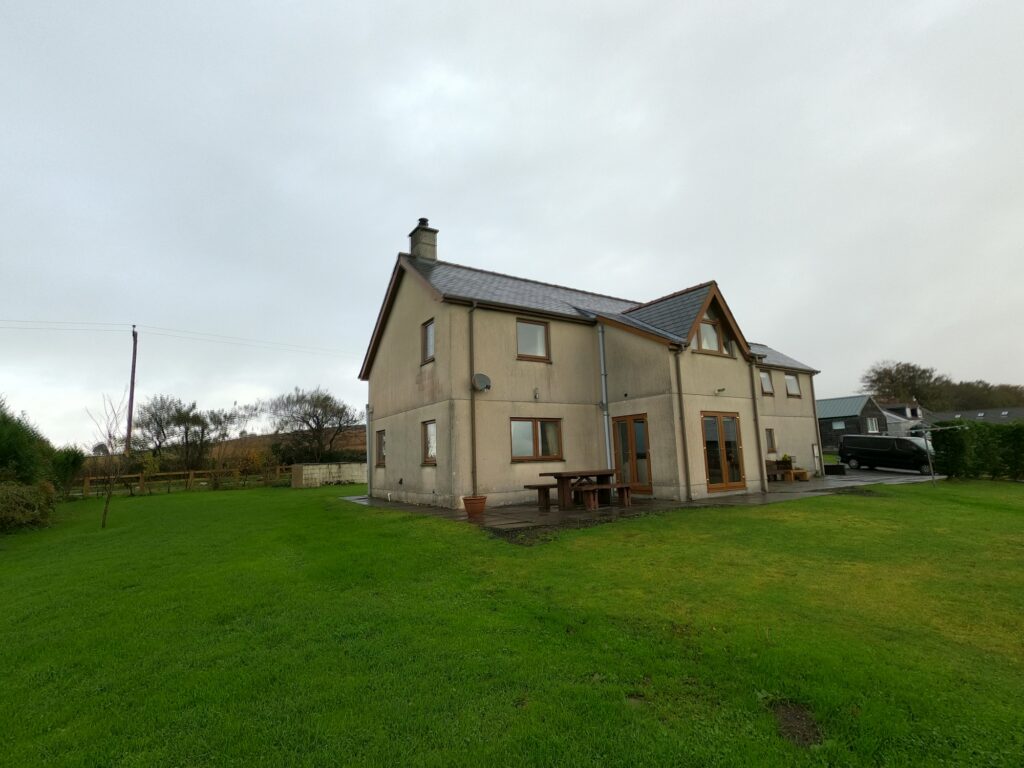
Rendered walls frequently sit immediately beside gardens. A detached or semi-detached house may have narrow borders around the walls, while larger properties can have extensive landscaped areas positioned directly beneath the elevations being cleaned.
This creates several considerations.
| Garden Feature | Why It Needs Consideration |
|---|---|
| Lawns | Runoff can travel from walls onto surrounding grass |
| Flower beds | Delicate plants may sit directly below the working area |
| Shrubs | Leaves can come into contact with spray or runoff |
| Climbing plants | Vegetation may be attached directly to the rendered wall |
| Trees | Low branches can restrict access to the render |
| Pots and planters | These can often be moved away from the working area |
| Garden furniture | Overspray and debris may settle on exposed surfaces |
| Ponds and water features | These require particular care to prevent contamination |
| Artificial grass | Runoff and cleaning residues should be managed appropriately |
Garden protection should therefore form part of the preparation rather than being considered after cleaning has already started.
A Professional Assessment Comes First
Before render cleaning begins, the property and its surroundings should be assessed.
The condition and type of render need to be considered, but so does the layout of the garden. A professional contractor can identify areas where vegetation is particularly close to the building and determine how access and runoff will be managed.
A garden containing little more than an open lawn presents a very different working environment from one containing mature shrubs, climbing plants, raised beds and ornamental planting.
The assessment may consider:
- How close plants are to the rendered walls
- Whether vegetation restricts access
- The location of lawns and borders
- Where water will naturally drain
- Whether there are ponds or water features nearby
- Whether garden furniture can be moved
- The presence of delicate or particularly valuable plants
- Access routes required by the cleaning team
- Existing drainage arrangements
- The condition of the render itself
Softwashing UK uses professional render cleaning methods intended to treat biological contamination while protecting the integrity of the surface.
Why Softwashing Is Different From Aggressive Pressure Cleaning
A common misconception is that dirty render simply needs to be blasted with a pressure washer. Render can be a relatively delicate exterior finish, and excessive pressure can potentially damage textured surfaces, coatings or weakened areas.
Softwashing takes a different approach.
Instead of depending entirely on mechanical force, professional softwashing combines specialist treatments with controlled, low-pressure cleaning techniques. This allows biological contamination to be targeted without subjecting the render to unnecessarily aggressive pressure.
Typical render contamination can include:
| Contamination | Typical Appearance |
|---|---|
| Green algae | Green films or patches |
| Red algae | Pink, reddish or orange-toned staining |
| Black mould | Dark spotting and patches |
| Lichen | White, grey or yellowish growth |
| Moss | Raised organic growth |
| Atmospheric contamination | Grey or dark discolouration |
| General dirt | Dull or uneven appearance |
Green algae and red algae are particularly common where walls remain damp or receive limited sunlight. Properties surrounded by trees, hedges and dense planting can therefore experience more biological contamination because vegetation may restrict airflow and create shaded conditions.
Wetting Plants Before Work Begins
One of the measures that can be used when protecting garden vegetation is pre-wetting.
Plants, leaves, surrounding soil and other appropriate garden areas can be thoroughly wetted with clean water before treatment begins. This provides an additional layer of protection when professional cleaning products are being used nearby.
It is not simply a case of giving plants a quick spray. The protection strategy should be appropriate for the plants and the cleaning process being undertaken.
Professional preparation is especially valuable when walls are positioned directly above flower beds or dense shrubs.
Covering Delicate Plants
Some garden areas may benefit from temporary physical protection.
Protective coverings can help shield sensitive vegetation from direct spray while the adjacent elevation is treated. However, plants should not simply be wrapped tightly and forgotten about.
Vegetation still requires consideration for temperature and airflow, particularly during warmer weather.
The appropriate approach depends on the garden.
| Situation | Possible Approach |
|---|---|
| Established hardy shrubs | Pre-wetting and controlled application |
| Delicate planting | Additional temporary protection |
| Moveable pots | Relocate away from working area |
| Dense borders | Careful preparation and runoff management |
| Climbing plants | Assess individually before cleaning |
| Pond-side planting | Additional control around the entire area |
Professional judgement is important because gardens differ considerably from one property to another.
Move Pots and Containers Where Possible
One of the easiest ways homeowners can prepare their garden is by moving portable items away from the building.
Potted plants, hanging baskets and small containers can often be moved temporarily to another part of the garden. This gives the cleaning team better access while reducing the amount of vegetation immediately underneath the rendered walls.
The same principle applies to other garden items.
Before the appointment, it may be useful to move:
- Potted plants
- Hanging baskets where accessible
- Children’s outdoor toys
- Barbecues
- Lightweight garden furniture
- Decorative ornaments
- Watering cans
- Gardening equipment
- Outdoor cushions
- Portable planters
Large or heavy objects should only be moved where it is safe and practical to do so.
Protecting Lawns
Lawns frequently run directly up to rendered walls, making them one of the largest garden surfaces potentially affected by runoff.
A professional render cleaning process should take the surrounding ground into account. Clean water can be used where appropriate as part of managing surrounding areas, while the application of cleaning treatments should remain controlled.
The condition of the lawn should also be considered. Newly laid turf, recently seeded areas or stressed grass may require additional care compared with an established lawn.
Homeowners should mention any recently completed landscaping before work begins.
Flower Beds Immediately Beneath Render
Flower beds can present a greater challenge because plants may extend directly against the property.
In some cases, vegetation can physically prevent access to the render. Large shrubs may cover substantial sections of the wall, while dense planting can make controlled treatment more difficult.
Homeowners may therefore be advised to carry out light trimming before the appointment.
This does not necessarily mean dramatically cutting plants back. The aim is simply to provide reasonable access to the wall while maintaining the appearance and health of the garden.
A small amount of preparation can make a significant difference.
Climbing Plants Require Special Consideration
Climbing plants deserve particular attention because they may be growing directly against the surface that needs cleaning.
Ivy, climbing roses, clematis and other established climbers can cover substantial sections of exterior walls.
There are two separate issues here.
First, the vegetation may prevent the cleaning treatment from reaching the render. Second, the plant itself needs to be considered during the cleaning process.
The appropriate solution depends on how established the plant is, how much of the wall it covers and whether it can safely be moved or tied back.
Where substantial vegetation is attached to a rendered wall, it is sensible to discuss it with Softwashing UK before the scheduled cleaning.
Protecting Garden Ponds and Water Features
Ponds require particular attention during exterior cleaning.
Unlike soil or a lawn, pond water forms a contained environment. Fish, amphibians, aquatic plants and microorganisms can all be sensitive to changes in water chemistry.
For that reason, ponds and water features located close to the building should always be identified before work starts.
| Water Feature | Consideration |
|---|---|
| Fish pond | Prevent cleaning products or runoff entering the water |
| Wildlife pond | Protect the aquatic environment |
| Fountain | Consider location and water circulation |
| Raised water feature | Protect against overspray |
| Swimming pool | Prevent contamination and manage surrounding runoff |
Never assume a cleaning contractor will automatically see a small pond hidden behind planting. Tell the team about it when the work is being discussed.
Controlling Runoff
Garden protection is not only about what comes directly from the spray equipment.
Water applied to a wall eventually travels downwards. That means runoff management is an important part of planning render cleaning.
The route taken by runoff can depend on the property.
A paved path may direct water towards a drain, whereas a border beneath the wall may absorb water into the soil. Sloping gardens can cause water to move towards other landscaped areas.
Before cleaning, the surrounding environment should therefore be considered as a whole.
Typical Runoff Considerations
| Factor | Why It Matters |
|---|---|
| Ground slope | Determines where water travels |
| Drain locations | Helps manage water appropriately |
| Soil borders | Can receive runoff from the elevation |
| Patios | Water can travel across hard surfaces |
| Raised beds | May sit directly beneath walls |
| Ponds | Must be protected from contamination |
| Neighbouring gardens | Runoff should remain controlled |
What About Pets?
Garden protection also means thinking about how the outside space is used.
Dogs, cats and other pets should generally be kept away from the immediate working area while professional exterior cleaning is taking place. This also prevents pets getting underneath equipment, hoses or workers.
If your pet normally has unrestricted access to the garden, make arrangements before the cleaning team arrives.
Once work has been completed, follow any instructions provided by the professional cleaning team regarding access to treated areas.
Weather Conditions Can Affect Garden Protection
Weather can influence both the render cleaning process and how the surrounding garden is managed.
Strong winds, for example, can make spray harder to control. Very warm conditions can cause surfaces and vegetation to dry more rapidly, while heavy rain can affect treatment dwell times and runoff.
| Weather Condition | Potential Consideration |
|---|---|
| Strong wind | Increased risk of spray travelling beyond the target area |
| Heavy rain | Reduced control over runoff and treatment |
| Hot sunshine | Faster drying of surfaces and vegetation |
| Mild overcast weather | Often provides more controlled working conditions |
| Frost | Can make exterior cleaning unsuitable |
Professional render cleaning should therefore take current conditions into account rather than following exactly the same procedure regardless of the weather.
Garden Preparation Before Softwashing UK Arrives
Homeowners can make the process easier by carrying out a few straightforward tasks before the scheduled visit.
Portable items can be moved away from the walls, access gates can be unlocked and the cleaning team can be informed about anything in the garden requiring particular attention.
You should also highlight features that may not be immediately obvious, such as a small wildlife pond, newly planted border, irrigation system or particularly valuable plant.
Good communication makes it easier to plan the work around the property rather than treating the garden as an afterthought.
After the Render Has Been Cleaned
Garden care continues after the main cleaning work has finished.
Surrounding areas can be checked and, where appropriate, rinsed with clean water. Protective coverings can be removed promptly and moveable pots returned once the working area is ready.
It is also an ideal opportunity to look at why the render became contaminated in the first place.
Dense vegetation close to exterior walls can create shade and reduce airflow. This can encourage walls to remain damp for longer following rainfall, creating conditions where biological contamination can establish itself.
Keeping shrubs and other vegetation sensibly maintained can therefore benefit both the garden and the building.
Trees, Hedges and Future Render Maintenance
You do not need to remove attractive landscaping simply because your property has rendered walls.
However, maintaining some separation between dense vegetation and the building can help.
Trees and hedges can reduce sunlight and airflow around exterior walls. Organic debris such as leaves can also accumulate around gutters, roofs and lower elevations.
A sensible maintenance programme might include:
- Trimming shrubs away from walls
- Maintaining established hedges
- Keeping gutters clear
- Removing accumulated leaves and organic debris
- Checking areas that remain shaded
- Watching for early biological staining
- Inspecting render periodically for cracks or deterioration
Early attention to staining can make ongoing maintenance more manageable.
Why Professional Preparation Makes a Difference
A professional render clean is about considerably more than applying a product to a wall.
The render type, contamination, access, surrounding surfaces, drainage and landscaping all need to be considered.
For properties with extensive gardens, this preparation becomes even more important.
Softwashing UK provides professional render cleaning using specialist low-pressure softwashing methods. Their approach is designed to target algae and other organic contamination while avoiding the unnecessary force associated with aggressive pressure washing.
Protecting Both the Render and the Surrounding Property
The best render cleaning project should improve the building without treating everything surrounding it as an inconvenience.
A mature garden may have taken many years to establish. Trees, borders, shrubs and landscaped areas can represent a significant amount of time and care, so they deserve proper consideration when exterior maintenance is carried out.
This is why garden protection should be incorporated into the cleaning plan from the beginning.
From pre-wetting suitable vegetation and moving containers to considering drainage, runoff, ponds and delicate planting, each measure contributes to a more carefully controlled process.
For homeowners concerned about how their landscaping will be managed during exterior cleaning, Softwashing UK can assess the property, its rendered elevations and the surrounding environment before determining the most appropriate cleaning approach.
Questions to Discuss Before Render Cleaning
If you have a particularly established or complex garden, it can be useful to discuss it when arranging the work.
| Question | Why Ask It? |
|---|---|
| How will plants beside the walls be protected? | Helps you understand the preparation process |
| Should I move my pots beforehand? | Makes access easier |
| Do shrubs need trimming? | Ensures the complete wall can be reached |
| What happens if I have a pond? | Allows additional protection to be planned |
| How will runoff be managed? | Important for borders, lawns and drainage |
| Can garden furniture remain in place? | Determines what needs moving |
| What happens with climbing plants? | These may need individual assessment |
| Will weather affect the appointment? | Conditions can influence safe application |
Providing this information in advance allows Softwashing UK to consider the garden as part of the overall render cleaning project, helping protect the landscaping while restoring the appearance of the property.
Protecting Newly Planted Gardens During Render Cleaning
Newly landscaped gardens can require additional consideration during render cleaning because young plants may not yet be as established as mature shrubs and trees.
A recently planted border may contain young perennials, bedding plants, ornamental grasses or shrubs that are still developing their root systems. Newly laid turf can also be more vulnerable to disturbance than an established lawn.
If landscaping work has recently been completed, tell Softwashing UK before render cleaning begins. This allows the surrounding area to be considered when planning access, application and protection.
| Recently Completed Garden Work | Consideration During Cleaning |
|---|---|
| Newly laid turf | Avoid unnecessary traffic and consider runoff |
| New flower borders | Identify young and delicate plants |
| Recently planted shrubs | Protect foliage close to the wall |
| Freshly seeded lawn | Minimise disturbance |
| New raised beds | Consider their position beneath the render |
| New garden drainage | Identify where runoff may travel |
| Recently planted climbers | Assess before moving or tying back |
The more information available before work starts, the easier it is to plan the cleaning process around the garden.
Avoiding Unnecessary Foot Traffic Across Lawns and Borders
Garden protection is not limited to managing cleaning solutions. Access also matters.
Exterior cleaning may involve hoses, equipment and repeated movement around different elevations of a property. Without proper planning, unnecessary foot traffic could damage lawns, compact wet soil or disturb flower beds.
A sensible access route should therefore be established wherever possible.
If there is a paved path running around the property, this may provide the most suitable route. Where equipment needs to cross a lawn, the condition of the ground should be considered.
A lawn that is firm and dry presents a very different situation from saturated ground following several days of heavy rain.
Homeowners can help by pointing out particularly sensitive areas before work begins, including recently seeded sections, hidden irrigation pipes or areas where drainage is poor.
Don’t Forget Vegetable Gardens and Edible Plants
Vegetable patches, herb gardens and fruit plants should always be identified when they are situated close to the property.
Many UK homeowners grow herbs, tomatoes, strawberries, raspberries and other edible produce against sunny exterior walls. Raised beds can also be positioned immediately alongside rendered elevations.
These areas deserve careful consideration during the cleaning process.
Where possible, pots containing herbs or edible plants can be moved away from the immediate working area. Permanent vegetable beds and established fruit plants cannot simply be relocated, so their position should be discussed before treatment begins.
Tell Softwashing UK about edible planting close to the elevations being cleaned so the surrounding area can be assessed appropriately.
Garden Irrigation Systems Can Be Easy to Miss
Modern gardens increasingly contain automatic irrigation systems.
These may include pop-up sprinklers, drip irrigation, soaker hoses and underground pipework. Some components can be almost invisible when surrounded by dense planting.
A cleaning contractor cannot take something into consideration if its location is unknown.
Before work starts, identify any irrigation equipment close to the building.
| Irrigation Feature | What to Consider |
|---|---|
| Drip irrigation | Lines may run through borders beside the property |
| Soaker hoses | Can be hidden underneath vegetation |
| Pop-up sprinklers | Avoid unnecessary equipment movement over them |
| Automatic timers | May need temporarily adjusting |
| Outdoor taps | Keep accessible where required |
| Underground systems | Point out vulnerable or known shallow areas |
You may also want to temporarily adjust automatic watering schedules while exterior cleaning is taking place.
Protecting Garden Structures
Plants are not the only things surrounding a property.
Pergolas, trellises, fencing, sheds, greenhouses and decorative structures can all sit close to rendered elevations. Some may restrict access, while others may need protection from overspray.
A wooden trellis attached directly to a rendered wall, for example, can make sections of render difficult to access. A greenhouse positioned close to the property may also require additional care.
The cleaning team should be made aware of anything particularly delicate or valuable.
Where lightweight structures can safely be moved, temporarily relocating them can improve access. Permanent structures will need to be incorporated into the working plan.
Managing Garden Furniture and Outdoor Living Areas
Modern gardens increasingly function as outdoor living spaces.
Patios may contain dining tables, outdoor sofas, fire pits, parasols, children’s play equipment and decorative accessories. These items can restrict access and provide additional surfaces on which water, dirt or debris can settle.
Removing smaller items before cleaning makes the working area easier to manage.
Larger furniture does not necessarily need to leave the garden entirely. Where practical, it can simply be moved sufficiently far away from the elevation being treated.
Outdoor cushions and other absorbent materials should be stored somewhere dry and protected.
What Happens to Dirt Removed From the Render?
When a rendered elevation is cleaned, the material being removed has to go somewhere.
Biological contamination, atmospheric dirt and surface debris are loosened from the wall during the cleaning process. This makes surrounding hard surfaces and garden areas part of the overall job.
A professional approach should therefore consider the area beneath the render as well as the render itself.
Patios, paths and other appropriate surrounding surfaces can be checked after cleaning so that loosened contamination is not simply left behind.
This is particularly relevant on heavily contaminated elevations where substantial staining has accumulated over several years.
Why Heavy Vegetation Can Make Render Cleaning More Difficult
A beautifully planted garden can sometimes make exterior maintenance more complicated.
Large shrubs growing directly against a wall may physically prevent sections of render from being accessed. Dense vegetation can also make it harder to see the condition of the surface underneath.
In addition, vegetation that constantly touches an exterior wall can contribute to damp conditions.
This does not mean homeowners need to create a large empty space around the house. Sensible maintenance is usually sufficient.
Keeping shrubs lightly trimmed away from the render can improve airflow while making future inspection and maintenance easier.
Shaded Gardens and Biological Growth
Properties surrounded by mature trees and established gardens can sometimes experience more persistent exterior staining.
Shade means exterior walls may take longer to dry after rainfall. Limited airflow can increase this effect.
When moisture remains on the render for extended periods, conditions can become favourable for biological contamination.
Green algae and red algae can become particularly noticeable on affected elevations, alongside other organic staining.
North-facing walls and elevations shaded by large trees or neighbouring buildings can consequently require different levels of maintenance from sunny, exposed elevations.
Cleaning the render addresses the existing contamination, while sensible garden maintenance can help improve the conditions surrounding the wall.
Check Your Garden After the Work
Once render cleaning has been completed, take a walk around the property.
This gives you an opportunity to return pots and garden furniture to their usual locations and check whether any temporary protective measures still need removing.
It can also reveal how much difference the cleaning has made to areas that were previously hidden by furniture or vegetation.
Avoid immediately pushing large pots or dense shrubs tightly back against freshly cleaned walls where this can reasonably be avoided. Maintaining a little separation can improve airflow and make it easier to inspect the render in the future.
Planning Future Garden Changes Around Rendered Walls
If you are redesigning your garden after having the property professionally cleaned, it may be worth considering future exterior maintenance as part of the landscaping plan.
Leaving practical access around rendered elevations can make future inspection and cleaning considerably easier.
| Garden Design Decision | Potential Benefit |
|---|---|
| Leave access beside walls | Easier future maintenance |
| Avoid dense planting directly against render | Improved airflow |
| Use moveable containers | Easier access when cleaning is required |
| Maintain sensible drainage | Helps control water around the property |
| Keep shrubs manageable | Reduces obstruction |
| Position delicate features thoughtfully | Easier protection during maintenance |
| Consider access to exterior taps | Useful for ongoing property maintenance |
Good landscaping and exterior property maintenance do not have to compete with each other. With thoughtful planning, homeowners can have attractive gardens while maintaining practical access to their rendered elevations.
Tell Softwashing UK About Your Garden Before Work Starts
Every garden is different, which is why there should not be a single approach to protecting outdoor areas during render cleaning.
One property may have a simple lawn and patio. Another might contain mature planting, a wildlife pond, climbing plants, raised vegetable beds and extensive landscaping immediately alongside the building.
Providing information beforehand helps the cleaning process to be planned around those individual circumstances.
When discussing render cleaning with Softwashing UK, mention anything around the property that you are particularly concerned about. This might include rare plants, newly completed landscaping, ponds, vegetable beds, delicate garden structures or areas where access is restricted.
That information can then form part of the preparation for the work, allowing the rendered elevations and surrounding garden to be considered together rather than as completely separate areas of the property.