


When arranging professional render cleaning, most homeowners focus on how the render will be cleaned rather than how the cleaning team will actually reach it. However, access is one of the most important parts of any render cleaning project.
Every property is different. A single-storey bungalow may require very little specialist access equipment, while a three-storey townhouse or commercial building could need a completely different approach. Choosing the correct access method helps ensure the work is carried out safely, efficiently and without causing unnecessary disruption.
At Soft Washing UK, every project begins with an assessment of the property to determine the safest and most suitable access method before cleaning starts.
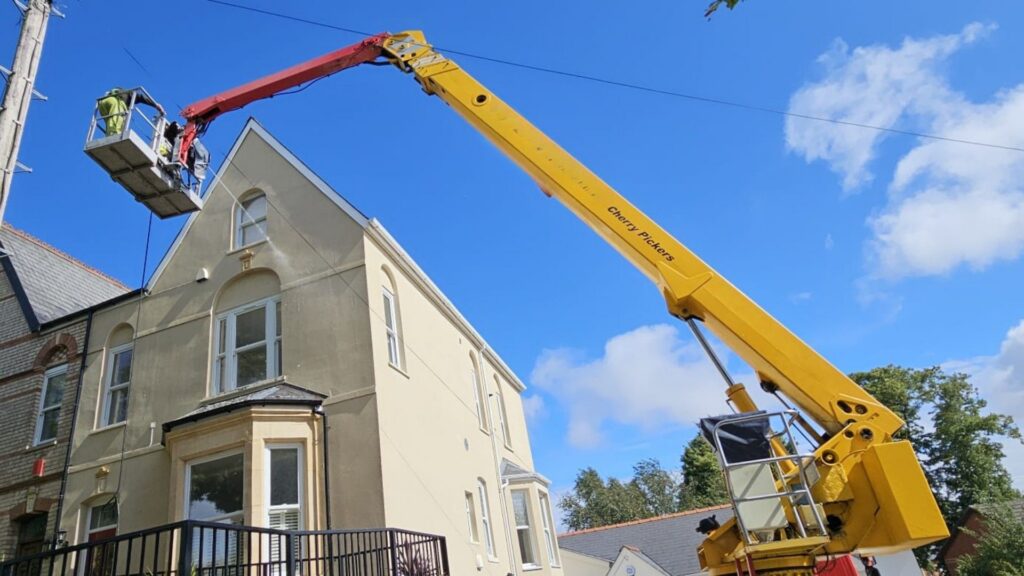
Why Access Matters
Render is a delicate surface that requires careful treatment.
Professional access methods help technicians:
- Apply cleaning products evenly
- Inspect the render closely
- Work safely at height
- Achieve consistent cleaning results
- Reduce the risk of accidental damage
Choosing the wrong access method can make cleaning more difficult and may compromise safety.
No Two Properties Are the Same
Every building presents different access challenges.
Factors affecting access include:
- Property height
- Ground conditions
- Garden layout
- Conservatories
- Extensions
- Sloping land
A professional survey allows the most appropriate solution to be selected before work begins.
Common Render Cleaning Access Methods
Several different access options may be used depending on the property.
| Access Method | Best Suited For |
|---|---|
| Ladders | Small domestic areas |
| Reach poles | Lower elevations |
| Scaffolding | Long-duration projects |
| Mobile towers | Medium-height work |
| Specialist access equipment | Difficult locations |
Each option has advantages depending on the building being cleaned.
Using Ladders
Ladders remain one of the most common access methods for certain types of render cleaning.
They are often suitable for:
- Two-storey houses
- Small repairs
- Inspections
- Limited access areas
Advantages include:
| Advantage | Benefit |
|---|---|
| Quick setup | Reduced preparation time |
| Minimal space required | Suitable for small gardens |
| Cost-effective | No large access structures |
| Easy repositioning | Flexible working |
However, ladders are not appropriate for every situation.
Limitations of Ladders
Although useful, ladders have practical limitations.
They may be unsuitable where:
- Work takes several hours in one location
- The ground is uneven
- Access is restricted
- High elevations need cleaning
- Large commercial buildings are involved
Professional contractors assess these risks before deciding whether ladders are appropriate.
What Are Reach Poles?
Reach poles are lightweight extension systems that allow cleaning products to be applied from ground level.
They are commonly used with soft washing equipment.
Benefits include:
- Reduced need to work at height
- Faster setup
- Less disruption
- Improved safety
- Excellent reach for many domestic properties
They are particularly useful for applying treatments to upper elevations without requiring extensive access equipment.
When Reach Poles Work Best
Reach poles are ideal in many situations.
Examples include:
| Property Type | Suitable? |
|---|---|
| Bungalows | ✔ Excellent |
| Two-storey homes | ✔ Often suitable |
| Garden walls | ✔ Yes |
| Garage walls | ✔ Yes |
| Three-storey buildings | Depends on height |
Professional assessment determines whether reach poles provide sufficient access.
Benefits of Ground-Level Working
Whenever practical, working from the ground offers several advantages.
These include:
- Reduced working-at-height risks
- Faster project completion
- Less equipment required
- Easier movement around the property
Modern soft washing systems allow many cleaning tasks to be completed efficiently without extensive access equipment.
When Scaffolding Is the Better Choice
Some projects require longer periods of work at height.
Scaffolding provides:
- Stable working platforms
- Safe movement
- Continuous access
- Greater flexibility for larger buildings
It is particularly useful where cleaning is combined with repairs or inspections.
Advantages of Scaffolding
| Benefit | Why It Helps |
|---|---|
| Stable platform | Improved operator safety |
| Full wall access | Easier detailed cleaning |
| Longer working periods | Greater comfort |
| Multiple technicians | Improved efficiency |
Although scaffolding involves more preparation, it can be the safest solution for complex projects.
Does Every Job Need Scaffolding?
No.
Many domestic render cleaning projects can be completed successfully without it.
Whether scaffolding is needed depends on:
- Building height
- Property layout
- Access restrictions
- Cleaning requirements
- Safety considerations
Installing scaffolding unnecessarily may increase project costs without providing additional benefits.
Mobile Scaffold Towers
Mobile towers provide another option for medium-height work.
They offer:
- Good stability
- Easier repositioning
- Smaller footprint than fixed scaffolding
- Suitable access for many domestic projects
These towers can often provide an excellent balance between flexibility and safety.
Difficult Access Properties
Some homes present unique challenges.
Examples include:
- Steep gardens
- Narrow side passages
- Conservatories
- Large extensions
- Retaining walls
Professional planning ensures these obstacles are considered before work begins.
Cleaning Around Conservatories
Conservatories often restrict ladder placement.
Professional contractors assess:
| Consideration | Importance |
|---|---|
| Roof strength | Prevent accidental damage |
| Working space | Safe equipment positioning |
| Access routes | Efficient movement |
| Surrounding landscaping | Property protection |
Alternative access methods may be required where conservatories limit safe ladder use.
Why Ground Conditions Matter
Access equipment can only be used safely on suitable ground.
Professional surveys assess:
- Slopes
- Soft lawns
- Gravel
- Block paving
- Concrete
- Drain covers
Stable ground helps ensure safe working throughout the project.
Working Around Trees
Trees create both cleaning and access challenges.
They may:
- Restrict ladder placement
- Block reach poles
- Increase shade
- Encourage biological growth
Properties surrounded by mature trees often experience increased levels of both green algae and red algae, making specialist soft washing particularly beneficial.
Property Height Influences Access
Different building heights often require different solutions.
| Property Height | Typical Access Method |
|---|---|
| Single storey | Reach poles |
| Two storey | Reach poles or ladders |
| Three storey | Towers or scaffolding |
| Commercial buildings | Specialist access planning |
The safest solution always depends on the individual property.
Why Safe Access Improves Cleaning Quality
Good access isn’t only about safety.
Being positioned correctly allows technicians to:
- Apply treatments evenly
- Inspect staining closely
- Remove contamination consistently
- Avoid missed areas
This often produces noticeably better results compared with attempting to clean from awkward positions.
Access and Property Protection
Professional contractors should also consider protecting your property while setting up equipment.
Precautions may include:
- Protecting lawns
- Avoiding damage to flower beds
- Keeping paths clear
- Protecting decorative paving
- Maintaining safe access for homeowners
Careful planning helps minimise disruption throughout the project.
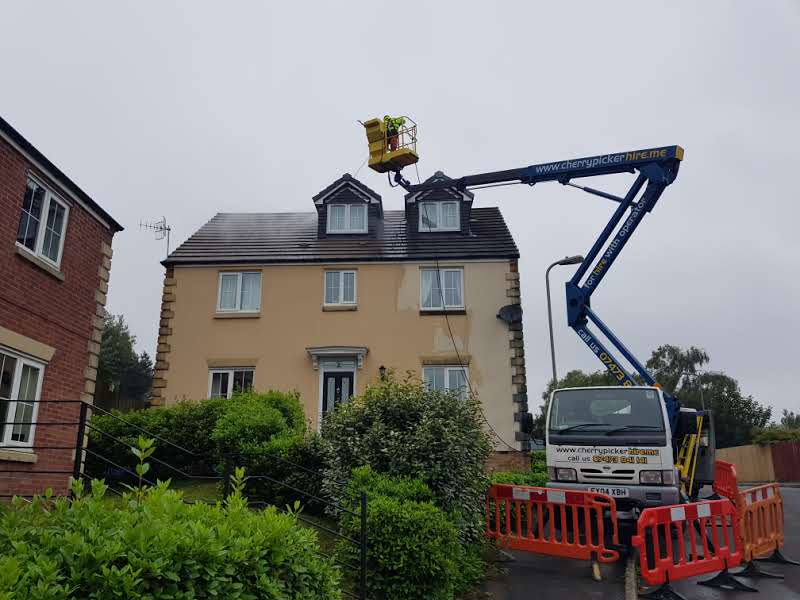
Access Around Commercial Buildings
Commercial properties often require more detailed planning than domestic homes.
Additional considerations include:
| Commercial Challenge | Possible Solution |
|---|---|
| Public access | Temporary exclusion zones |
| Vehicle movements | Planned working areas |
| Larger elevations | Extended reach equipment |
| Multiple storeys | Scaffold towers or specialist access |
Careful planning ensures cleaning can be completed safely while minimising disruption to daily operations.
Weather Can Influence Access Decisions
The weather plays an important role when working at height.
Professional contractors will assess conditions before deciding whether work can proceed safely.
Factors include:
- Strong winds
- Heavy rain
- Frost
- Very hot weather
If conditions are unsuitable, work may need to be postponed until it is safe to continue.
Planning Before Equipment Arrives
One advantage of using an experienced render cleaning specialist is that access planning begins well before the cleaning team arrives.
During the survey they will consider:
- Parking for equipment
- Access through gates
- Space around the property
- Nearby power lines
- Obstacles in the garden
- Emergency access routes
Good preparation allows the work to proceed more efficiently on the day.
Choosing the Right Access Method
There is no universal solution for render cleaning access. A bungalow, detached family home and commercial premises all present different challenges, and the safest approach depends on the specific property rather than a standard process.
Professional render cleaning specialists assess every project individually, selecting access methods that balance safety, efficiency and the protection of your property. Whether that involves ladders for limited work, reach poles for ground-level application or scaffolding for larger projects, the goal remains the same: to achieve high-quality cleaning while preserving the condition of the render.
For homeowners and businesses looking for professional render cleaning using specialist soft washing techniques and carefully planned access methods, visit the Soft Washing UK homepage to learn more about its approach to safe and effective render maintenance.
Can Reach Poles Clean Every Part of a Property?
Reach poles have transformed the exterior cleaning industry, allowing many areas of a property to be cleaned safely from ground level.
However, they aren’t suitable for every situation.
Factors that influence their effectiveness include:
| Factor | Effect on Reach Pole Use |
|---|---|
| Building height | Taller buildings may exceed safe working range |
| Obstacles | Trees and extensions can limit access |
| Roof overhangs | May restrict the angle of application |
| Narrow side passages | Can reduce manoeuvrability |
| Uneven ground | May affect operator positioning |
A professional assessment will determine whether reach poles alone are sufficient or if additional access equipment is needed.
Access for Detached Homes
Detached properties generally provide the easiest access for render cleaning because technicians can move freely around the building.
Advantages include:
- Space for ladders
- Good reach pole positioning
- Easier movement between elevations
- Better equipment access
This flexibility often allows work to be completed more efficiently than on properties with restricted boundaries.
Challenges with Semi-Detached and Terraced Houses
Properties built close together often present additional access considerations.
Examples include:
- Narrow alleyways
- Shared driveways
- Limited working space
- Boundary fences
- Nearby parked vehicles
Professional planning ensures these challenges are addressed before work begins, helping minimise disruption to neighbours as well as the homeowner.
Working Around Extensions
Modern extensions can create awkward rooflines and hard-to-reach areas.
A render cleaning specialist will assess:
- Height differences
- Access above flat roofs
- Conservatory positioning
- Garden access
- Equipment placement
This allows the safest and most practical cleaning method to be chosen for every section of the property.
Why Stability Is So Important
Regardless of the equipment being used, stability is one of the key priorities.
Professional contractors avoid placing access equipment on:
- Soft flower beds
- Loose gravel
- Muddy ground
- Sloping surfaces
- Unstable paving
Taking time to establish a safe working position helps reduce risks while allowing technicians to focus on achieving an even cleaning result.
Access and Cleaning Quality Go Hand in Hand
The easier it is to reach the render safely, the easier it is to apply cleaning treatments consistently.
Good positioning helps technicians:
| Benefit | Result |
|---|---|
| Maintain even application | Consistent finish |
| Inspect the surface closely | Better identification of staining |
| Reach difficult areas | Fewer missed patches |
| Apply treatments accurately | Longer-lasting results |
Proper access isn’t simply about reaching the wall—it’s about cleaning it thoroughly.
Protecting Your Garden During Access Setup
Professional render cleaning companies should take care not only of your walls but also of the surrounding landscape.
Care may be taken around:
- Lawns
- Flower beds
- Decorative borders
- Garden ornaments
- Outdoor lighting
- Water features
Planning equipment routes before work begins helps minimise unnecessary disturbance.
Access for Apartment Buildings
Larger residential buildings require additional planning.
Factors commonly considered include:
- Resident access
- Shared pathways
- Multiple entrances
- Parking arrangements
- Building height
Cleaning these properties safely often involves more preparation than a typical family home.
Access on Sloping Sites
Homes built on hillsides or uneven ground can create unique challenges.
A property that appears to be two storeys from the front may actually be three storeys at the rear.
Professional surveys identify these differences early, ensuring suitable access methods are chosen for every elevation.
Why Preparation Saves Time
Although planning access may seem like an extra step, it usually makes the cleaning process much more efficient.
Preparation allows contractors to:
- Position equipment correctly
- Avoid unnecessary delays
- Reduce equipment movement
- Complete the work safely
- Deliver more consistent results
Good preparation benefits both the contractor and the customer.
Access Around Outdoor Living Spaces
Many modern homes include patios, outdoor kitchens and seating areas close to rendered walls.
Professional companies should consider protecting:
| Feature | Why It Matters |
|---|---|
| Outdoor furniture | Prevent overspray |
| Barbecues | Keep clean during work |
| Hot tubs | Avoid contamination |
| Children’s play equipment | Maintain safety |
| Decorative paving | Reduce unnecessary mess |
A tidy working area reflects a professional approach throughout the project.
Does Every Wall Need the Same Access?
Not necessarily.
Different elevations of the same property can require completely different solutions.
For example:
- The front elevation may be accessible using reach poles.
- The rear could require ladders because of a conservatory.
- A side elevation might only need ground-level treatment.
This flexible approach helps keep the project safe and efficient.
Working Around Windows and Doors
Render cleaning often takes place close to windows, doors and decorative trims.
Professional technicians will work carefully around these areas to ensure treatments are applied accurately without unnecessary overspray.
Attention to detail around architectural features contributes to a more uniform finished appearance.
Why Access Planning Is Essential for Soft Washing
Soft washing relies on applying cleaning treatments evenly across the surface.
To achieve this, technicians need stable, comfortable access that allows controlled application rather than rushing the work from awkward positions.
Well-planned access helps ensure:
- Consistent coverage
- Proper dwell times
- Thorough treatment of stained areas
- Reduced risk of missed sections
This is one reason why experienced render cleaning companies spend time assessing access before the project begins.
Biological Growth Often Appears in Difficult-to-Reach Areas
Interestingly, the areas that are hardest to reach are often where biological growth is most severe.
These locations commonly include:
- High gable ends
- Sheltered corners
- Areas beneath roof overhangs
- North-facing elevations
- Walls shaded by mature trees
These conditions encourage both green algae and red algae, making careful access planning even more important to ensure every affected area receives the appropriate treatment.
Access Equipment Should Match the Property
Professional contractors don’t arrive expecting to use the same equipment on every project.
Instead, access methods are chosen to suit the individual building.
| Property Feature | Likely Access Consideration |
|---|---|
| Narrow side access | Reach poles or ladders |
| Large detached home | Combination of methods |
| Three-storey property | Scaffold tower or specialist access |
| Conservatory | Alternative positioning required |
| Steep rear garden | Additional planning |
Tailoring the approach to the property helps improve both safety and cleaning quality.
Why Professional Planning Makes the Difference
Successful render cleaning begins long before the first cleaning treatment is applied. Careful planning, thorough surveys and selecting the correct access method all contribute to achieving safe, efficient and high-quality results.
Whether a property requires ladders for a small section, reach poles for ground-level application or scaffolding for larger elevations, the objective is always the same: to clean the render thoroughly while protecting both the building and everyone working around it.
For homeowners looking for specialist render cleaning carried out using carefully planned access methods and professional soft washing techniques, visit the Soft Washing UK homepage to find out more about maintaining rendered properties safely and effectively.