Before any work starts on a property there should be something in writing, and it should say a great deal more than a price. A proper quotation names the elevations included, describes the products being used, sets out the access method, states how long the work will take, and explains what the wall will look like immediately afterwards as opposed to a month later. Our render cleaning services are quoted that way as standard, because almost every dispute in this trade comes from something that was never written down. The document also records what is not included. Where a mineral stain will lighten rather than disappear, where a defect needs attention before treatment can be effective, or where a second application may prove necessary, it is stated at the outset. Render algae removal is highly predictable; mineral marking is not, and pretending otherwise simply moves the difficult conversation to the end of the job. Alongside the quotation comes evidence rather than assurance: current public liability cover, a method statement describing the sequence of work, and confirmation of how the upper elevations will be reached. Render moss removal, dwell times, protection arrangements and reinstatement are all covered in the same document, so nothing about the day should come as a surprise. Professional render cleaning of a house in Alderholt is a straightforward job carried out by careful people, and putting it in writing costs nothing. House render cleaning arranged on a verbal figure and a handshake usually works out perfectly well, but exterior render cleaning arranged in writing works out well every time.
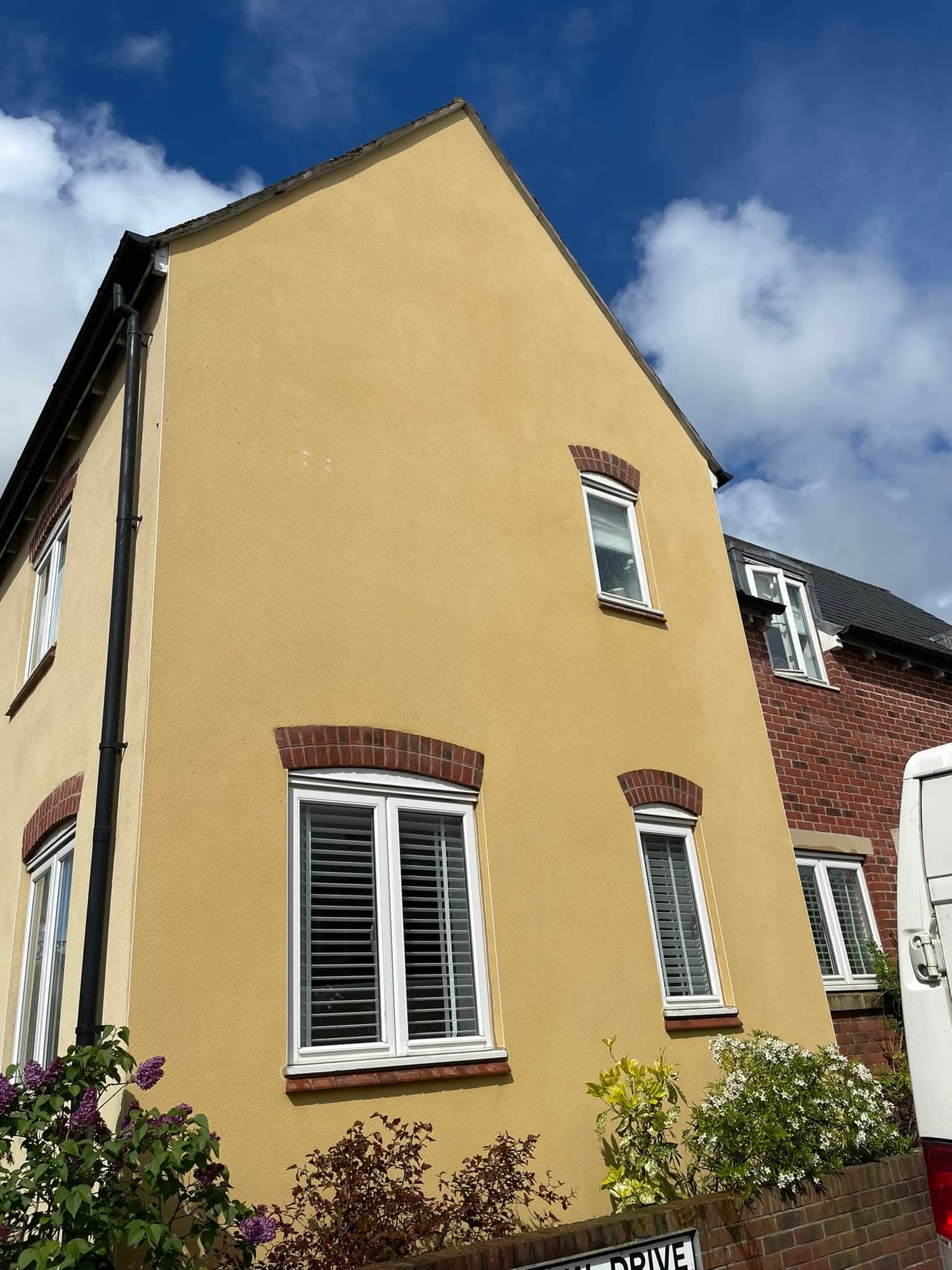
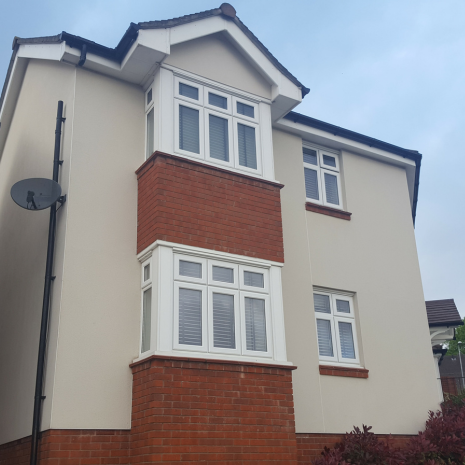

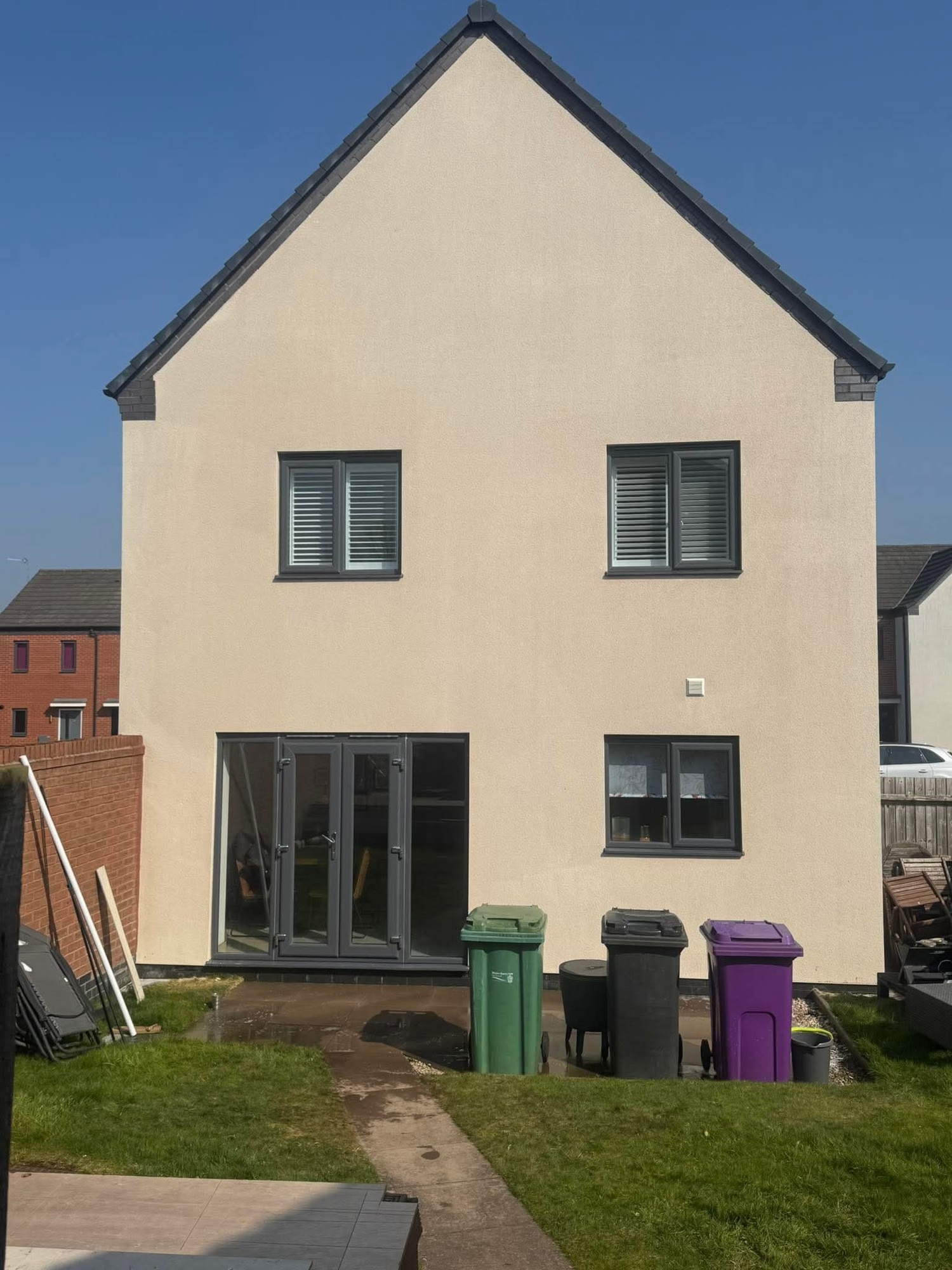
On newer housing it is worth recording the condition of a K Rend elevation before anything is applied to it, and Softwashing UK photographs each face as part of the assessment. That protects everybody. Existing hairline cracking, a chipped bead, a mark around a fixing or an area where the finish was never right from installation is documented before treatment rather than becoming a question afterwards. The clean itself is entirely chemical. Soft wash render cleaning applies a biocidal solution at a pressure barely above hose flow, dwells long enough to destroy algae and lichen at root level, then rinses gently. Nothing mechanical touches the surface, because pigment runs through the material and abrasion removes it permanently. Silicone render cleaning also requires adequate volume on a water-repellent face and sensible sequencing of elevations, both of which are set out in the method statement so the customer knows what is planned rather than watching and guessing. K Rend cleaning done properly should leave no evidence at all that anyone was there apart from the change in colour. The photographs taken beforehand make that easy to demonstrate rather than merely claim. Render stain removal is quoted as a separate line in every case. Iron bleed from ties and brackets, cement residue at a fixing point and dark runs beneath a leaking joint need individual products and a test patch first, and the likely outcome for each mark is stated in advance. On an Alderholt property that occasionally means writing down that a particular stain will improve substantially without disappearing, which is far better said before the work than explained after it. Nobody minds a limitation that was declared; people mind one that was discovered.
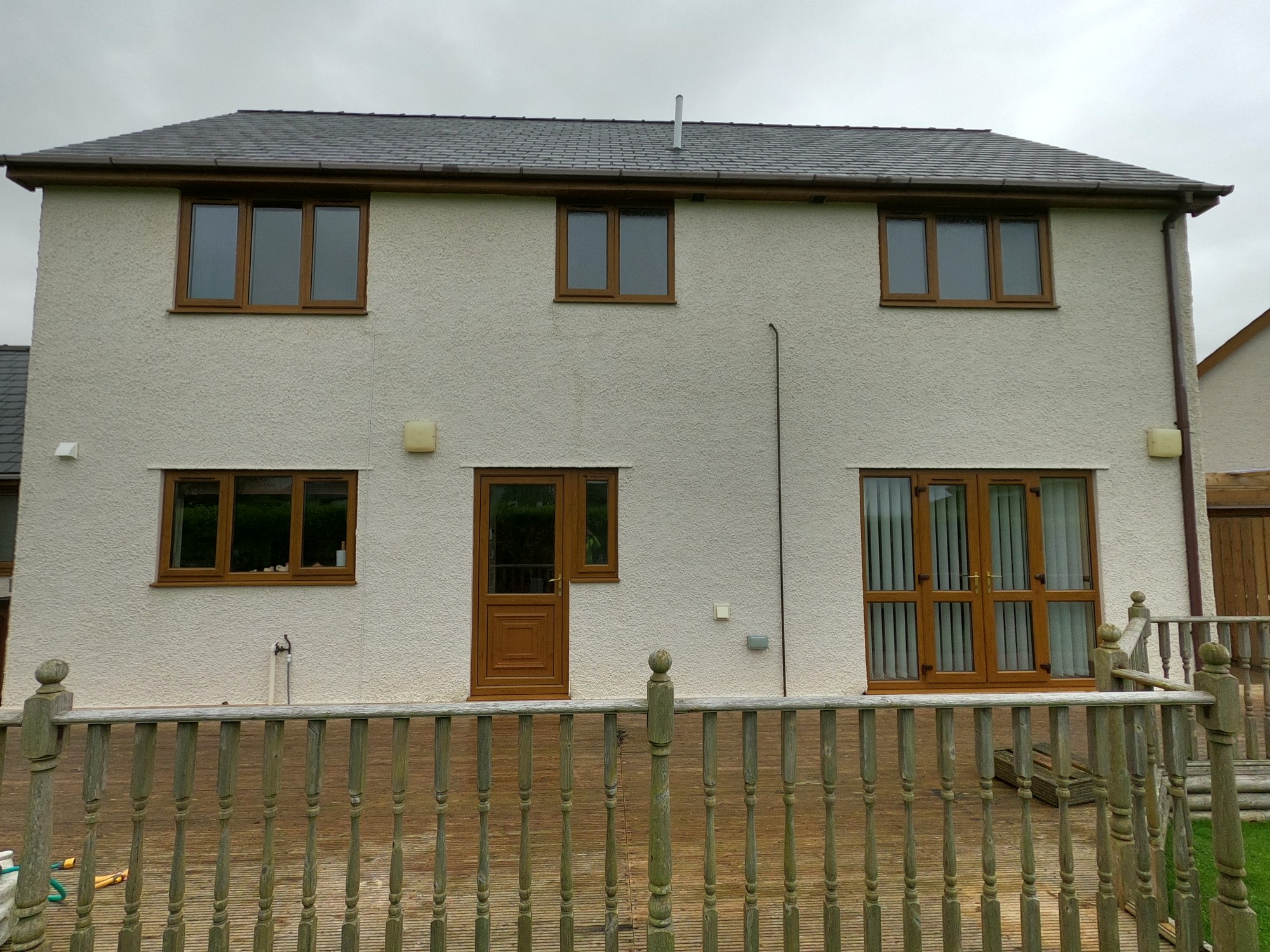
There is no finish where a written record matters more than monocouche, because damage to it cannot be repaired and therefore always becomes a question of who caused it. A lance mark, a bruised area where something rested against the wall, a chipped bead at a corner — all of them are permanent and none can be blended out later. Monocouche render cleaning is documented from the assessment onwards for exactly that reason. The method itself is straightforward and stated in advance: solution applied at low pressure in enough volume to soak through the scraped texture rather than glaze it, a long dwell to kill algae and lichen at root level, a repeat application on the heaviest deposits along copings and projecting bands, then a soft, even rinse across each full face. Render pressure washing appears nowhere in that description and never will. It flattens the profile, exposes the aggregate beneath and leaves tracking visible in low sun for the life of the building, and coloured render cleaning has no top coat to renew over the damage, so the correction is recoating an entire elevation. Carried out as specified, render wall cleaning of monocouche leaves a uniform face and a written record showing the wall came out of the process in the same condition it went in, minus the growth. On buildings around Alderholt where a decade of colonisation had obscured the finish, what returns over the following weeks is the original specified colour, and render restoration is a reasonable term for it given that nothing was added to the surface at any point.
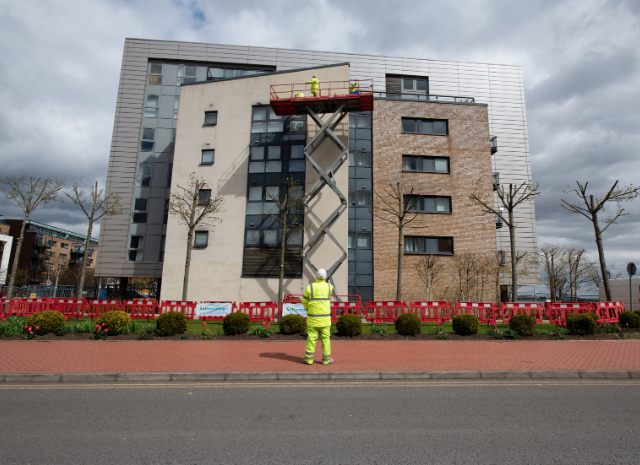

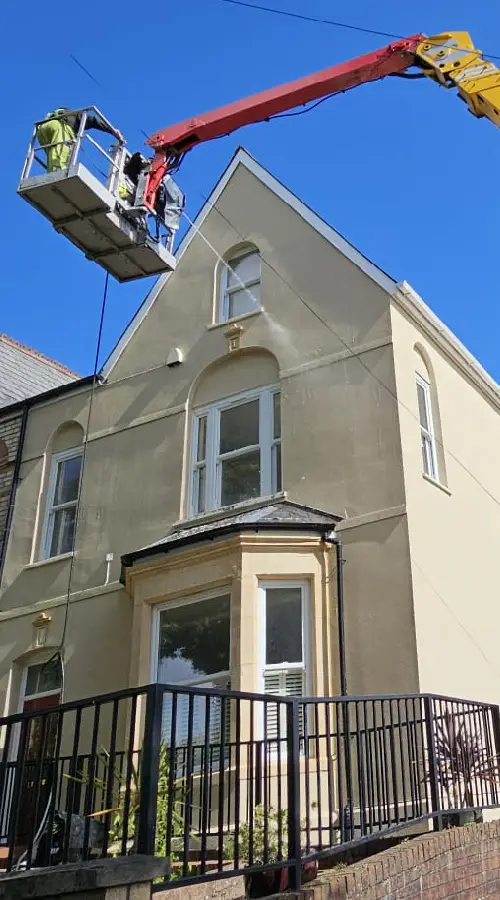
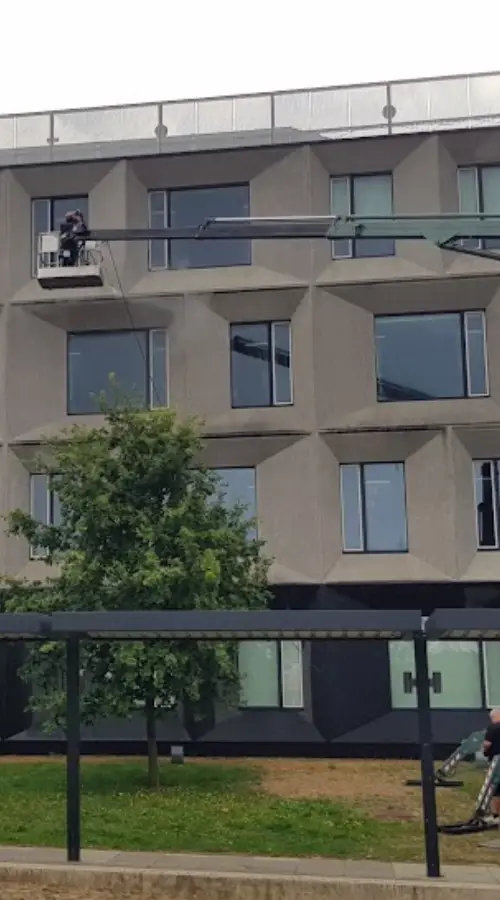
A commercial site will normally want a documentation pack before anybody arrives, and it is worth knowing what should be in it. Current public liability cover. A method statement describing the sequence, the products and the reinstatement. A risk assessment covering work at height, run-off, pedestrian movement and any specific hazards on the building. Safety data sheets for everything being applied. Commercial render cleaning without all of that is a job waiting to be stopped at the gate. Assembling it after arrival wastes a day that somebody has to pay for. Access is confirmed within the same pack — powered platforms, tower scaffold or extended pole systems according to height and standing ground — along with the programme, which is written around trading hours, deliveries and staff movement. Exclusion areas and daily arrangements are agreed with the site contact in advance. Where an induction is required it is completed before the first working day rather than on it. Render soft washing is described in full within the method statement, including the low pressures involved, the dwell times required and how run-off will be directed clear of entrances, parking and drainage. Render facade cleaning explained properly on paper tends to be approved quickly, because the low water volumes and negligible drift answer most of the questions a site would otherwise raise. Render mould removal on shaded and north-facing elevations is normally identified in the survey as the item requiring the shortest interval. Once a building is on a render maintenance cycle the entire pack is already approved and simply reissued, which is why subsequent visits to premises in Alderholt mobilise faster and cost less than the first one did.
An aftercare commitment is only worth having if it is specific. Ours is this: if an elevation has not settled properly six weeks after treatment, we return and reapply at no cost. Six weeks is the point at which dead growth has finished weathering off, so it is the earliest fair moment to judge a job and the latest anybody should have to wait to find out. Everything before that is set out in advance. Render cleaning prices are calculated from elevation count, working height, access arrangements and the extent of growth, all established at an assessment. The written render cleaning cost holds unless the scope changes, and any change is discussed before the work rather than added to an invoice afterwards. Affordable render cleaning comes from an accurate quotation and an efficient single visit. Nothing about it depends on doing less to the wall than the wall needs. The crews are render cleaning specialists rather than general exterior cleaners, and that consistency is what makes the commitment sustainable. Firms that damage coatings or cut dwell times cannot offer to come back, because they would be coming back constantly. A guarantee is only ever as good as the method sitting behind it. Every treatment used is an eco friendly render cleaning product chosen because it breaks down safely after use, which matters when run-off reaches planting and drainage regardless of how carefully it is managed. Anyone comparing firms to find the best render cleaning service should ask what the aftercare actually commits to. A promise of satisfaction means very little; a stated period, a stated test and a stated remedy means a great deal more.
Whatever the size of the job, the paperwork is the same. Residential render cleaning at Cashmoor, Chettle and Farnham is often a single-day visit on a modest property, and it still comes with a written quotation naming the elevations, the products and the access method, along with evidence of insurance if it is wanted. That consistency matters more on scattered rural addresses than people assume, because it is precisely where verbal arrangements tend to take over. Gussage All Saints, Gussage St. Andrew, Gussage St. Michael, Manswood and Minchington bring plenty of older properties carrying render that has never been treated, and where a second application is likely it is written into the original figure rather than mentioned in passing. Knowlton, Stubhampton, Woodcutts, Pentridge and Tollard Farnham are much the same, as are Monkton Up Wimborne, Wimborne St Giles and New Town Deanland. On buildings of that age the assessment also records the condition of the coating itself, since a soft or failing render changes what can safely be applied and how gently it must be rinsed. Anything found is put in writing before the work is booked. None of these addresses attracts a travel charge and none is too small to take on, with a single elevation quoted on the same basis as a whole building. Anyone searching render cleaning near me should expect a written quotation rather than a figure over the phone, and a local render cleaning company that puts everything on paper for a one-day job is one that will do the same for a larger one.
Most properties in Alderholt benefit from professional render cleaning every 3 to 5 years, although this depends on the surrounding environment. Properties near trees, woodland, busy roads or coastal areas may require more frequent cleaning due to algae, mould and airborne contaminants. Our soft washing process removes existing growth and helps keep your render cleaner for longer.
Yes. Soft washing is specifically designed for delicate surfaces such as K-Rend, silicone render, monocouche render and painted render. Unlike high-pressure washing, it cleans at low pressure while treating biological growth at its source, reducing the risk of damage to the render finish.
We clean virtually all external render finishes, including K-Rend, Monocouche, Weber, Sto, silicone render, acrylic render, painted render, roughcast and pebble dash. Every cleaning method is tailored to the specific render type to achieve the best possible results.
Yes. Our specialist soft washing treatments are highly effective at removing green algae, red algae, black mould, mildew, lichen and other organic staining. We also apply professional biocide treatments to kill spores and slow down regrowth.
Because our process targets the biological growth rather than simply washing the surface, results typically last much longer than pressure washing alone. The exact lifespan depends on weather conditions, surrounding vegetation and the property’s location.
No. Our soft washing process is specifically designed to clean render safely. We use low-pressure application methods and specialist cleaning solutions that remove contamination without damaging the render surface when carried out by trained professionals.
The UK’s damp climate provides ideal conditions for algae, mould and other biological growth to develop on rendered surfaces. Areas with limited sunlight, nearby trees or persistent moisture are especially susceptible. Professional soft washing safely removes these contaminants and restores your property’s appearance.

































WhatsApp us