Every job starts with a survey, and it is worth explaining what actually happens during one, because the quality of everything that follows depends on it. The first task is identifying the coating. Silicone, acrylic, polymer-modified, traditional sand and cement, painted or unpainted: each behaves differently under treatment, and getting this wrong is how walls get damaged. Age, texture, absorbency and the presence of any previous coating all feed into that judgement. Next comes assessing the growth itself. Algal filming, black fungal spotting, lichen and moss are different organisms with different tolerances, and the dilution that clears one may barely touch another. We look at which is present, how far it has progressed and whether more than one is involved, which on older elevations is usually the case. Then the wall’s condition. Hairline cracking, failed sealant at junctions, spalling at low level, hollow-sounding areas indicating debonding. Render cleaning services should never be sold on a wall that needs attention of a different kind first, and we will say so if that is what we find. Applying water to a substrate with an open defect is not a favour to anyone. Aspect and surroundings finish the picture. A north facing elevation with planting against it will always need more than a south facing wall on the same property, and pricing that reflects reality is more useful than an average. Only then does the specification get written: product, dilution, dwell time, rinse pressure, sequence and access method. Professional render cleaning is largely decided at this stage rather than on the day. A house in Badsey and one three miles away can need genuinely different approaches, and that only becomes apparent by looking.
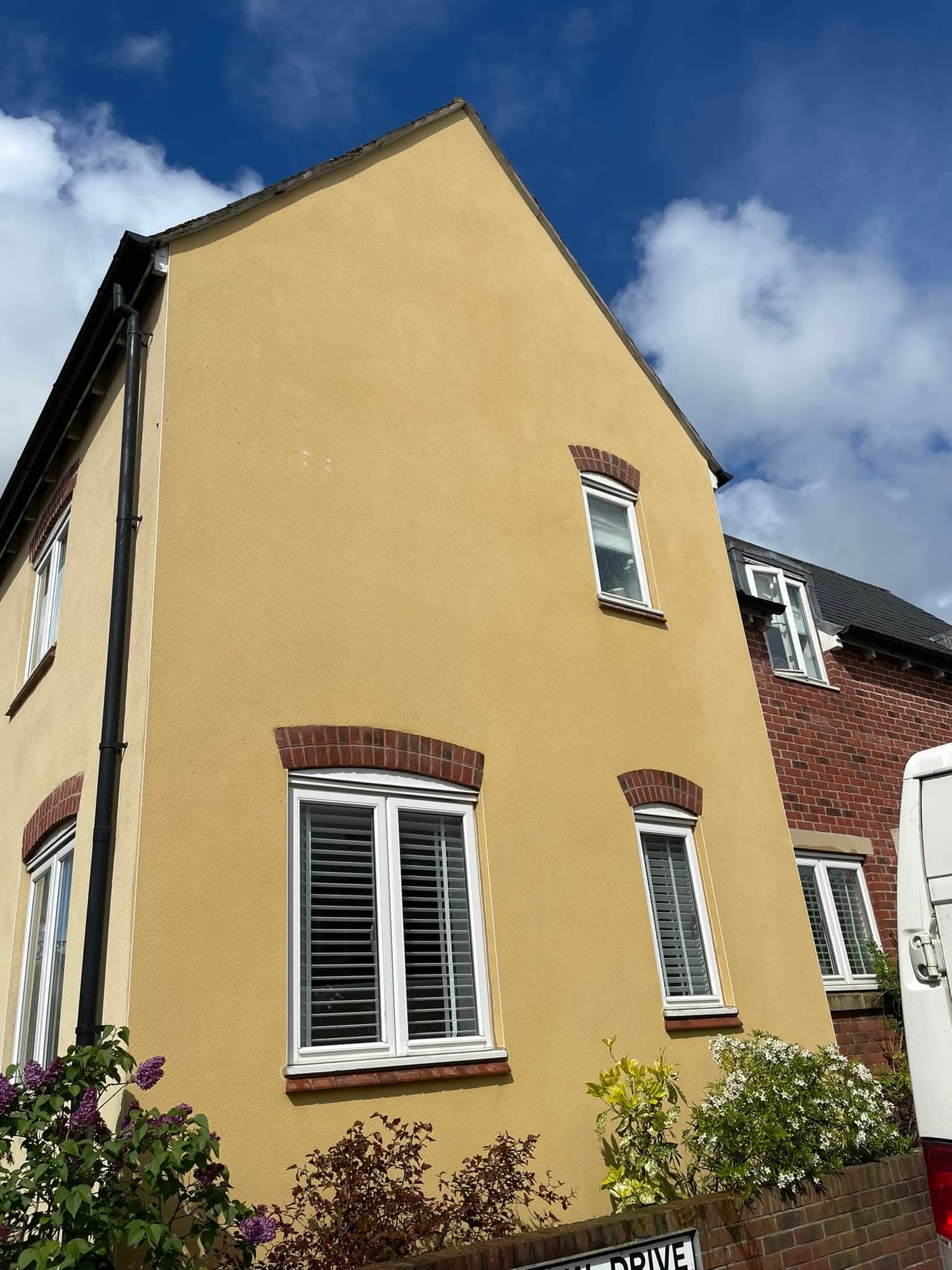
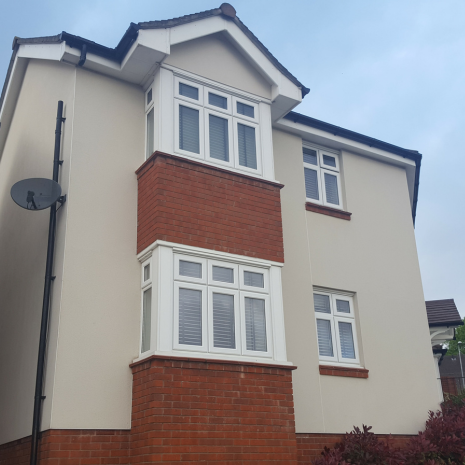

Owners of K Rend properties often first contact us within five to eight years of the house being built, and the trigger is usually the same: a wall that no longer matches the rest of the house. Because these systems are through-coloured and applied to entire elevations at once, any unevenness in how they weather is immediately obvious. One shaded gable greening while the front stays clean makes the whole property look poorly maintained. K Rend cleaning is entirely achievable, but only with the right method. The colour cannot be restored if it is damaged, since there is no surface coating to reinstate, and the silicone technology within the render is compromised by abrasive treatment. We use a purely chemical process at low pressure, matched in dilution to the specific growth present on that elevation. Black spotting is the most persistent problem on these finishes. It is fungal, its root structure penetrates below the visible surface, and anything that only removes the top layer guarantees a return within a season. Our treatment is left to dwell long enough to work through that root structure before rinsing begins. Render stain removal covers a different set of issues on the same wall. Rain tracking below sills, deposit lines under projecting details and marking around fixings are not biological and do not respond to biocide alone. These are identified at survey and handled separately with appropriate treatment. Silicone render cleaning is finished elevation by elevation, never in partial sections, so the wall has no visible join. On a K Rend property in Badsey, the intended result is a frontage that reads as a single consistent colour again, close to how it was supplied and applied.
Softwashing UK see a great many monocouche elevations that owners believe have faded. In the overwhelming majority of cases they have not. Monocouche pigment is mineral, integral to the render and extremely stable, and what looks like fading is a layer of biological growth and atmospheric deposit sitting across the face and dulling the tone. Remove it correctly and the colour is still there. The obstacle to removing it correctly is the texture. Monocouche is scraped to an open face, and that face is fragile in a specific way. Aggregate at the surface is only lightly bound, so brushing or pressure detaches it, leaving areas that are smoother, shinier and permanently different from their surroundings. Once that has happened there is no remedy short of recoating. Monocouche render cleaning is therefore chemical and patient. Treatment is applied at very low pressure so it flows into the depth of the texture rather than sitting on the ridges, given time to work at the base of the profile where the growth is rooted, and then rinsed gently. The aggregate stays where it belongs. Attention concentrates on the areas that always suffer first. Below bead lines, under sills, at reveals and along the base course where splashback keeps the render wet, growth is invariably heavier and needs its own handling rather than a single pass at uniform strength. Render restoration on this finish tends to produce the most satisfying results of any coating we work on, precisely because the underlying colour survives so well. Residential render cleaning of a monocouche elevation that has been left for a decade can return it to something close to its original appearance in one visit.
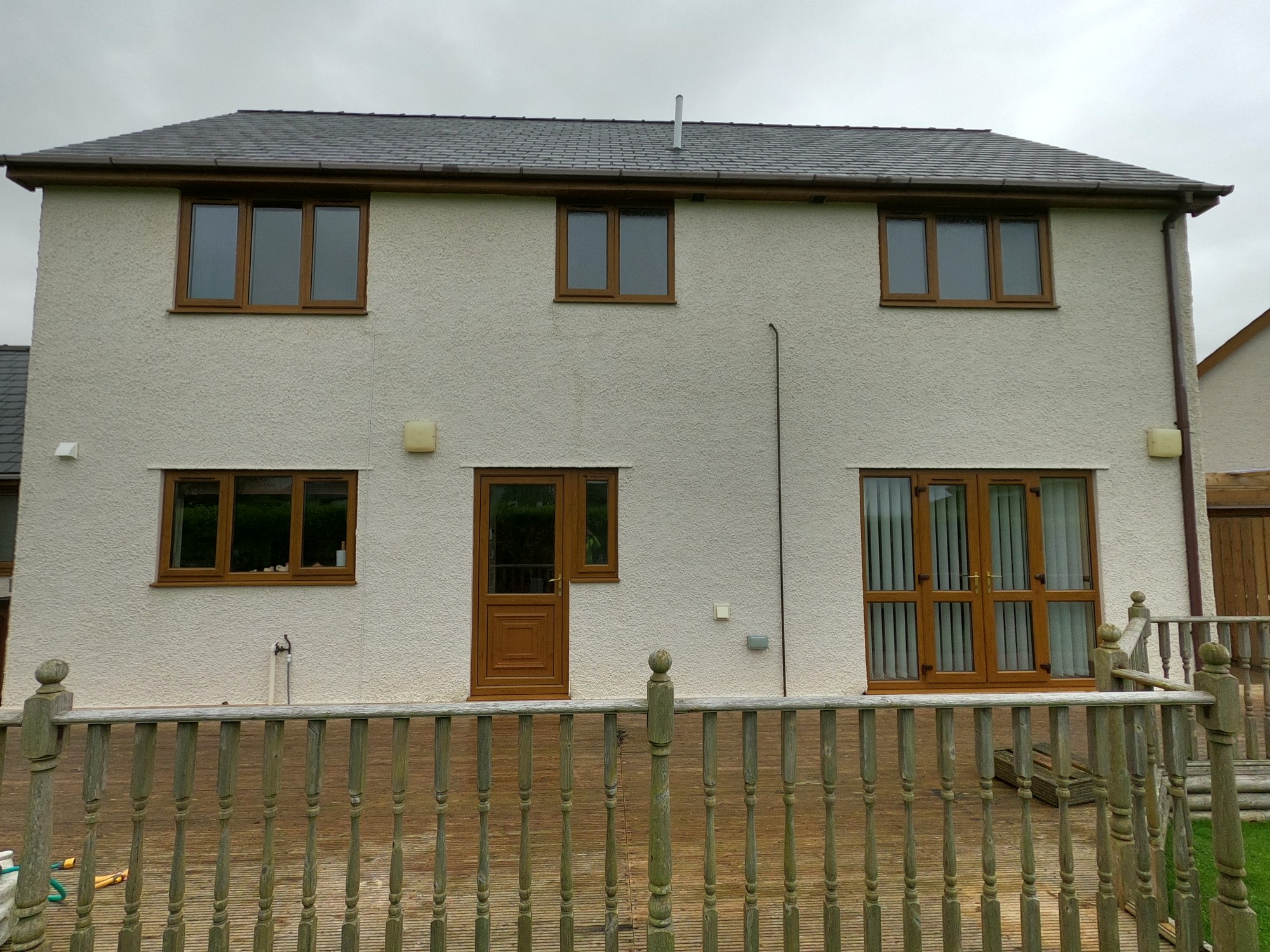
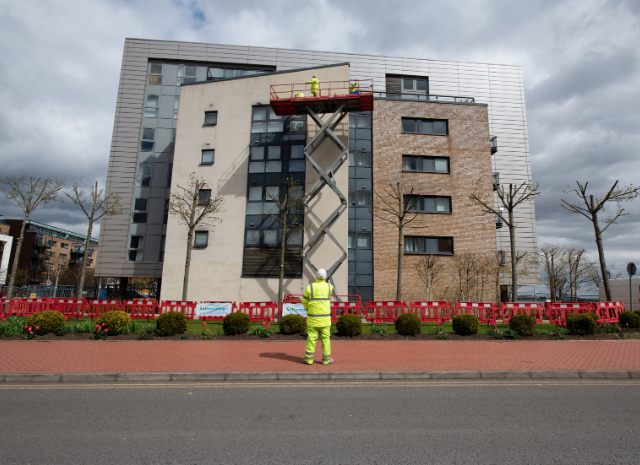

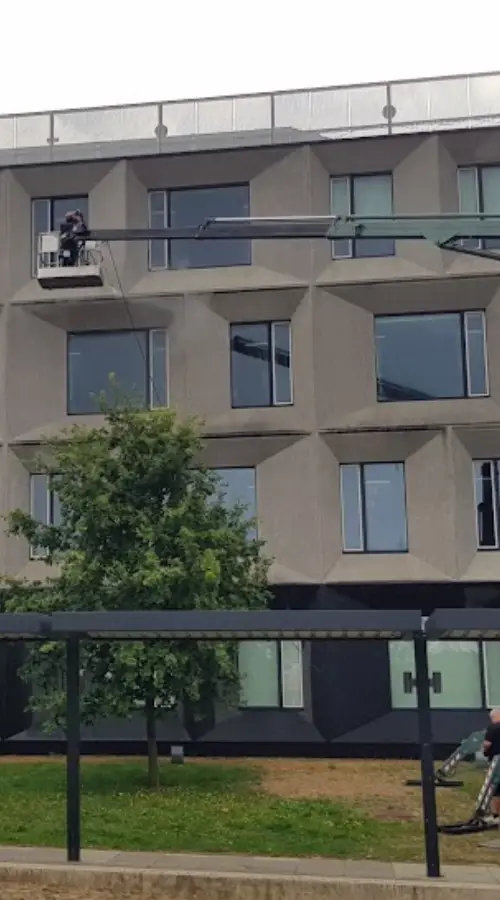
Rendered elevations on commercial premises have a habit of being nobody’s specific responsibility until they become a problem. Interiors get refurbished, signage gets replaced, but the walls holding it all up stay on the list without ever reaching the top of it. By the time the building genuinely looks tired, the growth has had years to establish. Commercial render cleaning starts with an honest survey of scale. We measure the elevations, assess how much can be reached safely from ground level, identify where access equipment is genuinely required, and price on that basis rather than adding contingency for the unknown. Clients get a figure they can put into a budget. Scheduling follows the business rather than the other way round. Retail units, offices, industrial premises and hospitality venues all have different quiet periods, and we plan around them. Early mornings, evenings and weekends are all workable, and on occupied sites we agree exclusion zones and signage before anything begins. The technical requirement on larger buildings is consistency. Render facade cleaning across an extensive elevation needs identical dilution from the first section to the last and continuous wet edges throughout, otherwise the finished wall shows the sequence in which it was cleaned. That takes planning and sufficient personnel on site, not a single operative working across several days. The commercial case is straightforward enough. A frontage that presents well supports everything else the business does, and a coating kept dry lasts materially longer than one held permanently damp by moss and algae. Businesses in Badsey that move onto a planned cycle after their first clean generally find subsequent visits both quicker and cheaper.
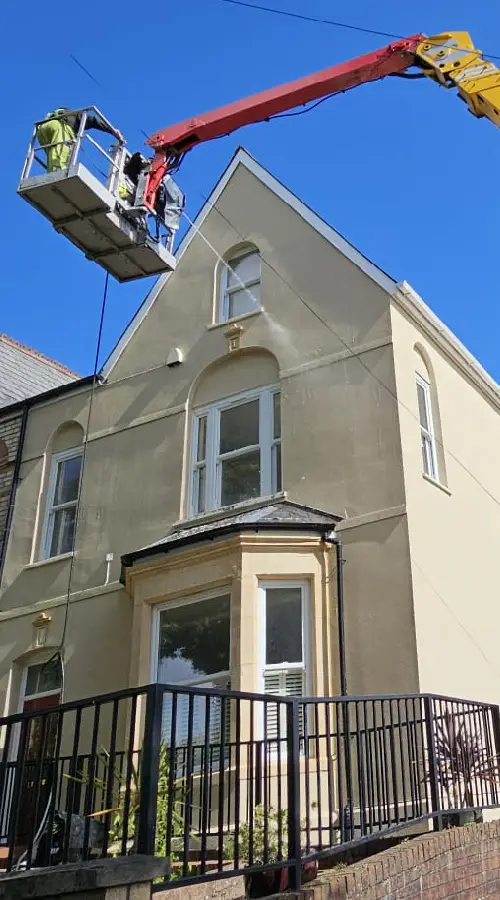
Getting a straight answer about render cleaning cost is harder than it should be. Some firms will not quote without a site visit and then charge for the visit. Others give a figure over the phone that turns into something else once they arrive. Neither approach is much use if you are trying to budget. Our position is simple. Surveys are free and carry no obligation. The figure that comes out of the survey is fixed, itemised and holds for a stated period. If we get something wrong in our own assessment, that is our cost to absorb, not yours to discover halfway through the job. Render cleaning prices genuinely do vary, and it is fair to explain why rather than pretend otherwise. Height is the main driver, because anything above two storeys changes the access requirement. Total rendered area matters. Coating type matters, since some finishes need more careful and therefore slower handling. And the severity of colonisation makes a real difference, because a heavily mossed elevation needs more product and more time than one with light filming. What does not change is the standard of work. Affordable render cleaning here means the same method and the same care regardless of the size of the job. We do not have a budget approach and a premium approach. Everything is backed by full insurance and current height safety certification, and our operatives are trained render cleaning specialists rather than general labour. As a local render cleaning company we depend almost entirely on recommendation, which is a strong incentive to leave every property in a state the owner is happy to point at.
Badsey and Aldington are both served on standard terms, with the same survey process, pricing basis and scheduling for each. Neither is treated as an outlying job with travel added on top. The village housing here covers a broad span of construction dates, and that is the most useful thing to know when planning render cleaning work. Older properties often carry traditional coatings that have been maintained and recoated across many decades, and these need careful assessment before anything is applied, since previous treatments and repairs can leave a wall with several different absorbencies across one elevation. Newer builds and extensions typically carry modern through-coloured systems that behave predictably but tolerate no abrasion whatsoever. It is common to find both on the same property. Aldington properties are frequently set among established gardens and hedging, and the difference that makes to a rendered wall is easy to underestimate. Shelter reduces air movement, walls stay damp for hours longer after rain, and spore load from surrounding vegetation is higher. Elevations in that position colonise noticeably faster and need treating at longer intervals rather than being written off as somehow more prone to problems. Access is usually straightforward at both, though narrow lanes and limited frontage parking mean we prefer to confirm arrangements at the survey rather than arrive and improvise. Our equipment runs at distance from the vehicle, so a tight approach is rarely an obstacle. We can usually offer a survey appointment within the same week, and where several properties on one road book together, mobilisation is shared and the individual figures reduce accordingly. A postcode is enough to confirm coverage before you arrange anything.
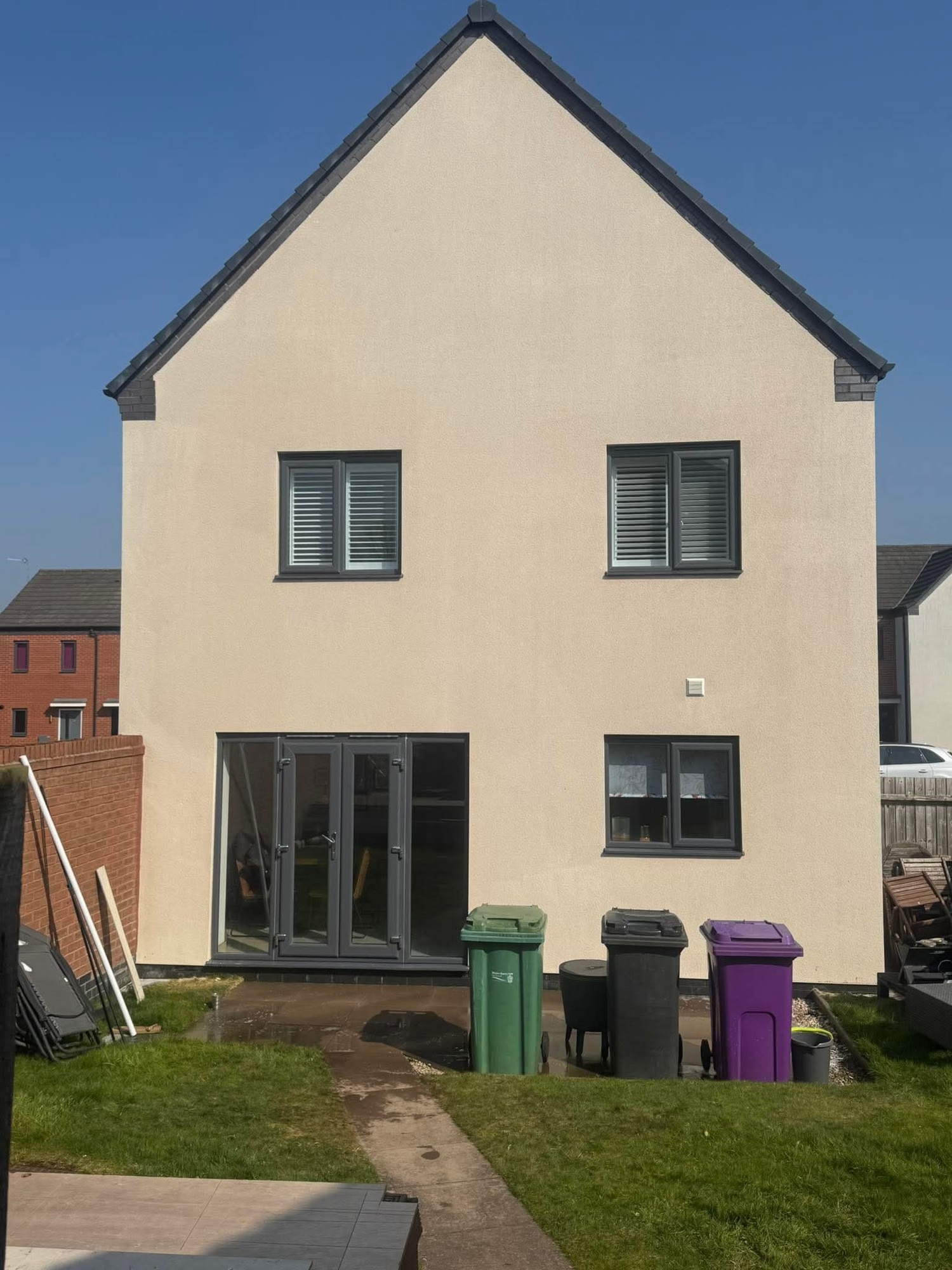
Most properties in Badsey benefit from professional render cleaning every 3 to 5 years, although this depends on the surrounding environment. Properties near trees, woodland, busy roads or coastal areas may require more frequent cleaning due to algae, mould and airborne contaminants. Our soft washing process removes existing growth and helps keep your render cleaner for longer.
Yes. Soft washing is specifically designed for delicate surfaces such as K-Rend, silicone render, monocouche render and painted render. Unlike high-pressure washing, it cleans at low pressure while treating biological growth at its source, reducing the risk of damage to the render finish.
We clean virtually all external render finishes, including K-Rend, Monocouche, Weber, Sto, silicone render, acrylic render, painted render, roughcast and pebble dash. Every cleaning method is tailored to the specific render type to achieve the best possible results.
Yes. Our specialist soft washing treatments are highly effective at removing green algae, red algae, black mould, mildew, lichen and other organic staining. We also apply professional biocide treatments to kill spores and slow down regrowth.
Because our process targets the biological growth rather than simply washing the surface, results typically last much longer than pressure washing alone. The exact lifespan depends on weather conditions, surrounding vegetation and the property’s location.
No. Our soft washing process is specifically designed to clean render safely. We use low-pressure application methods and specialist cleaning solutions that remove contamination without damaging the render surface when carried out by trained professionals.
The UK’s damp climate provides ideal conditions for algae, mould and other biological growth to develop on rendered surfaces. Areas with limited sunlight, nearby trees or persistent moisture are especially susceptible. Professional soft washing safely removes these contaminants and restores your property’s appearance.










































WhatsApp us