The chemistry behind render cleaning is worth understanding, because it explains why the visible result differs so much between methods. Algae, lichen and black fungal spotting are living organisms. They are not deposits sitting on the wall like dust; they are colonies with structures anchored into the surface, drawing moisture from the substrate and nutrients from airborne particulate. Removing what you can see does not remove what is producing it. A biocidal treatment works differently. Applied at appropriate dilution and left to dwell, it breaks down cell walls and destroys root structures throughout the colonised depth of the coating. The visible growth then loses its bond, its pigmentation breaks down, and much of it weathers off over the following weeks without further intervention. What is left rinses away at very low pressure. This is why a soft wash render cleaning result and a pressure washed result diverge so sharply over time. The pressure washed wall is stripped to visibly clean and reseeded immediately, because the roots that survived in the texture start regenerating within days. The soft washed wall is sterile, and recolonisation has to start from nothing again, which takes years rather than months. Render algae removal and render mould removal both follow this principle, though the dilutions and dwell times differ between organisms. Correct identification at survey is what determines the specification. Exterior render cleaning by this route is also considerably kinder to the coating. No aggregate is displaced, no water is driven behind the render, no pigment is lifted. For owners of substantial rendered properties in Barnt Green, where a full elevation recoat would be a significant expense, that distinction is more than academic.
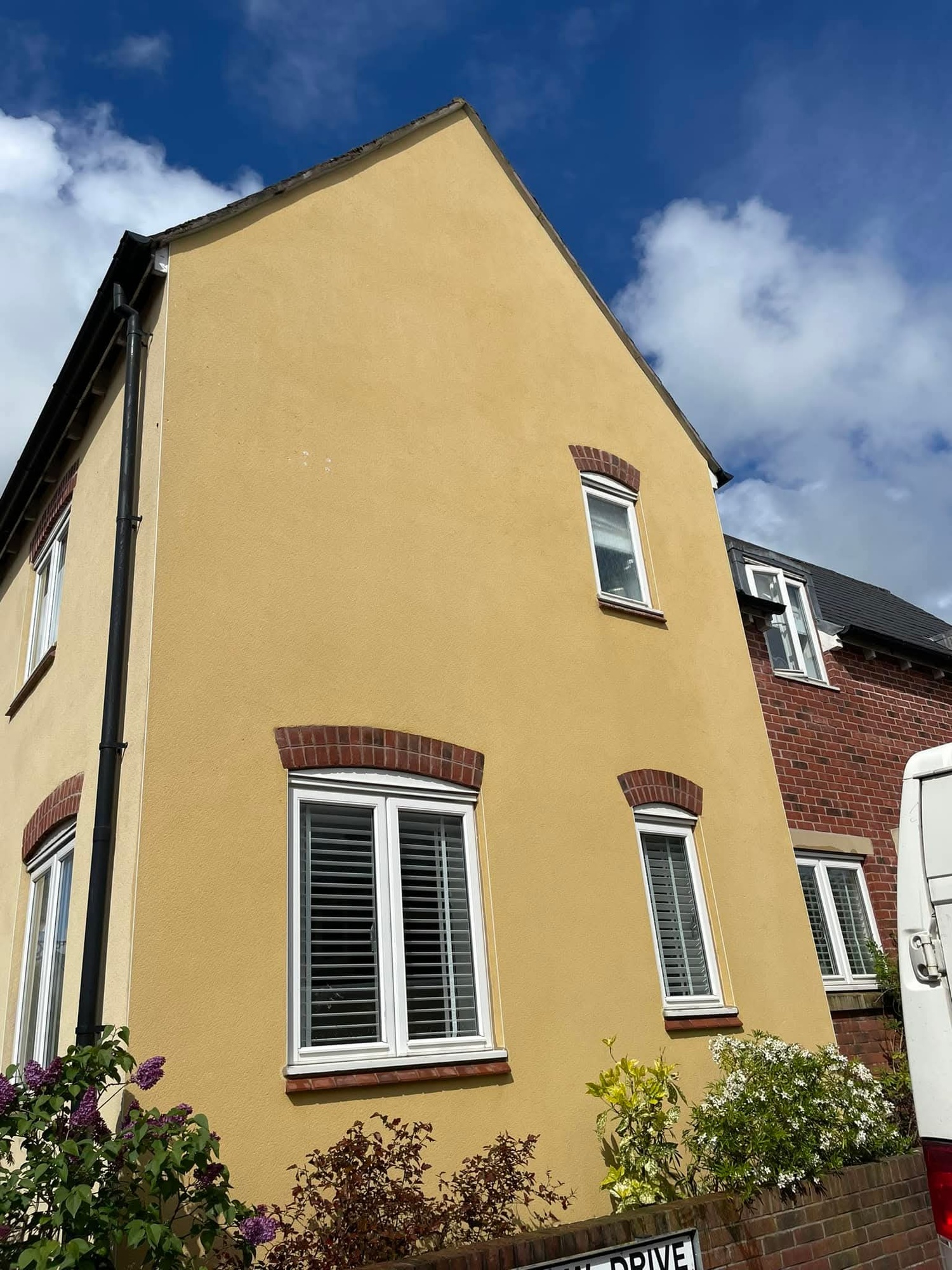
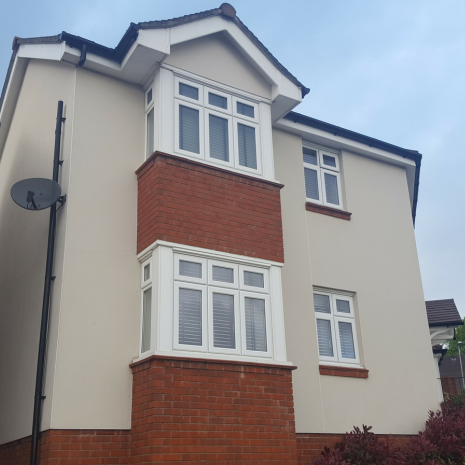

K Rend and comparable silicone systems present a specific challenge that is easy to describe and hard to solve badly: everything that reaches the wall stays on the wall until something removes it, but almost nothing can safely be used to do the removing. The finish is through-coloured, so abrasion permanently alters appearance. Silicone content means the surface is engineered for water behaviour, and aggressive treatment compromises that. The texture holds spores in a way smooth surfaces do not. Manufacturer guidance is consistently against high pressure. That narrows the field considerably. K Rend cleaning as we carry it out uses biocidal chemistry applied at pressures that would not disturb dust, with dwell time doing the work that force would otherwise do badly. Coverage is even across the full elevation, applied wet on wet, with no partial sections that could dry at different rates and leave a record of the process. Coloured render cleaning demands this discipline more than any other finish. On a wall where colour is integral, inconsistent application produces tonal variation that is visible for years in low sunlight. Working systematically is not perfectionism, it is the only way to get an acceptable result. Black spotting and green algal filming are the usual complaints, and they often coexist on the same elevation at different densities depending on aspect. Render mould removal on the shaded side may need a longer dwell than the same treatment on the front, and that is planned rather than improvised. House render cleaning on a silicone system should return the wall to manufacturer colour with no shadowing, no specking and no evidence of where the operator started. On the larger detached properties common around Barnt Green, that consistency across big elevations is the whole test.
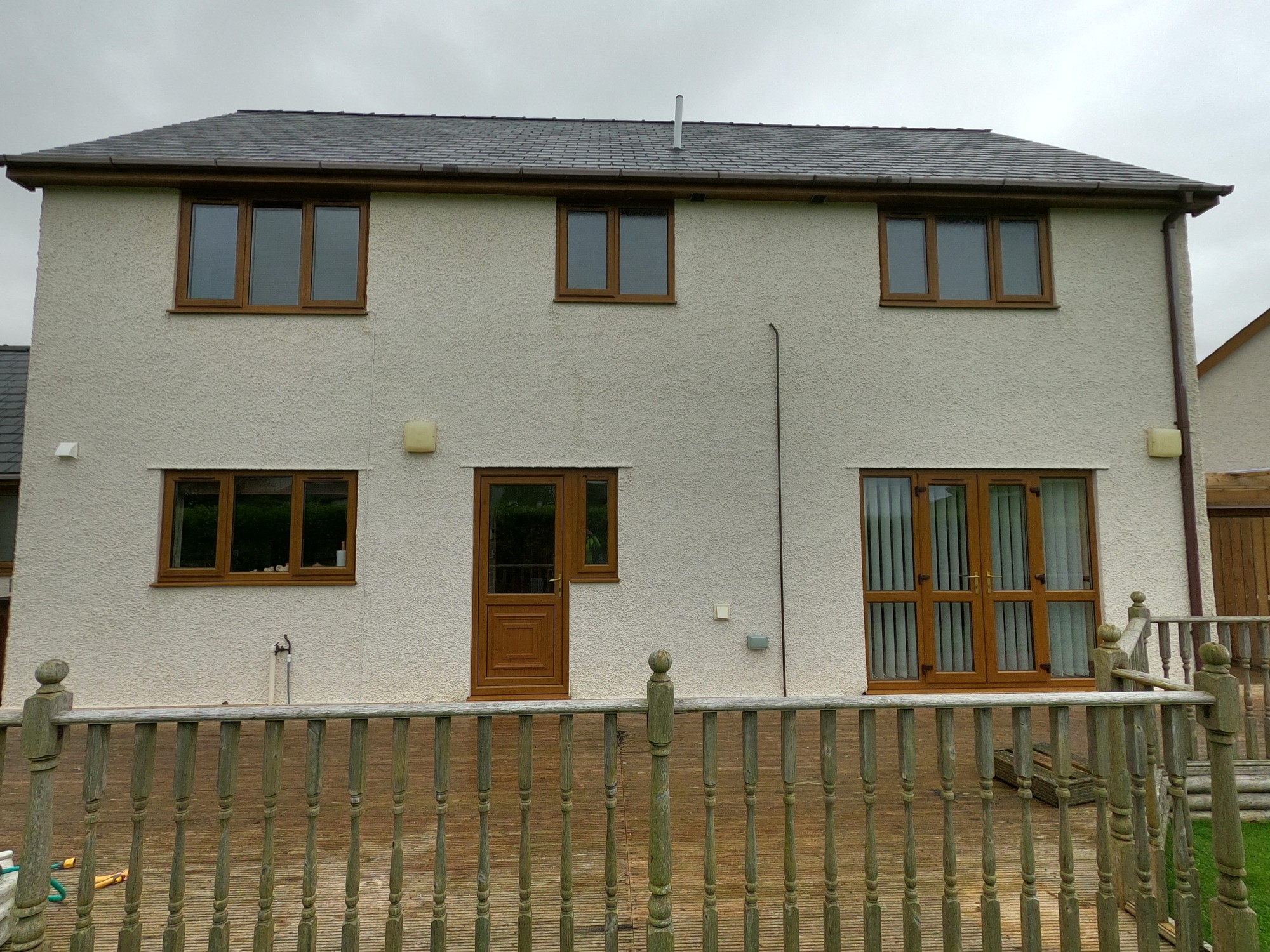
Monocouche is a one-coat, through-coloured render, usually finished by scraping the surface back to expose a fine aggregate face. It is durable, breathable and generally excellent, and it collects organic growth for precisely the reasons that make it look good. The texture that gives the finish its depth also gives spores thousands of sheltered points to establish in, and holds moisture in the profile long after a smooth wall would have dried. Monocouche render cleaning has to work with that. The treatment needs to reach the base of the texture, not just wet the ridges, which means applying generously at low pressure and allowing genuine dwell time rather than rushing to the rinse. Growth killed only at the surface leaves the wall looking clean and greening again within weeks. Equally, nothing abrasive can be used. The aggregate at a scraped face is lightly held, and brushing or pressure pulls it out, producing smoothed patches that reflect light differently and never blend back. That damage is permanent and obvious in raking light. Detail areas take separate handling. Bead lines, sills and base courses concentrate water and consequently growth, and treating them at the same rate as open wall leaves them visibly behind when the job is finished. Render maintenance on monocouche is genuinely low once the wall has been properly sterilised. We give realistic intervals based on aspect, shelter and planting rather than recommending annual returns as standard, because most properly treated elevations do not need them. Render restoration through this method regularly surprises owners who assumed their wall had faded. The mineral pigment is stable and almost always intact. What has changed is only what has grown across it.
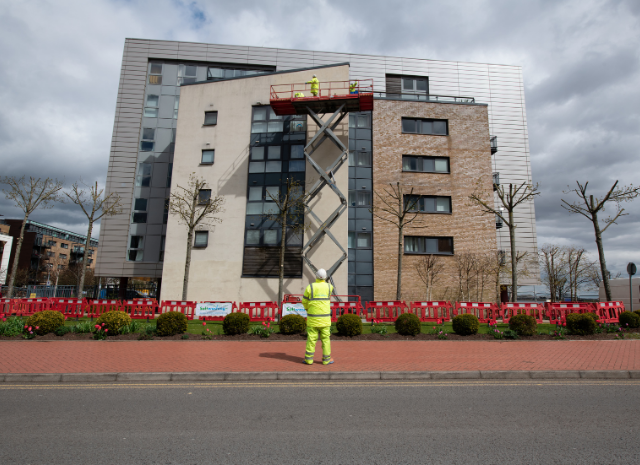

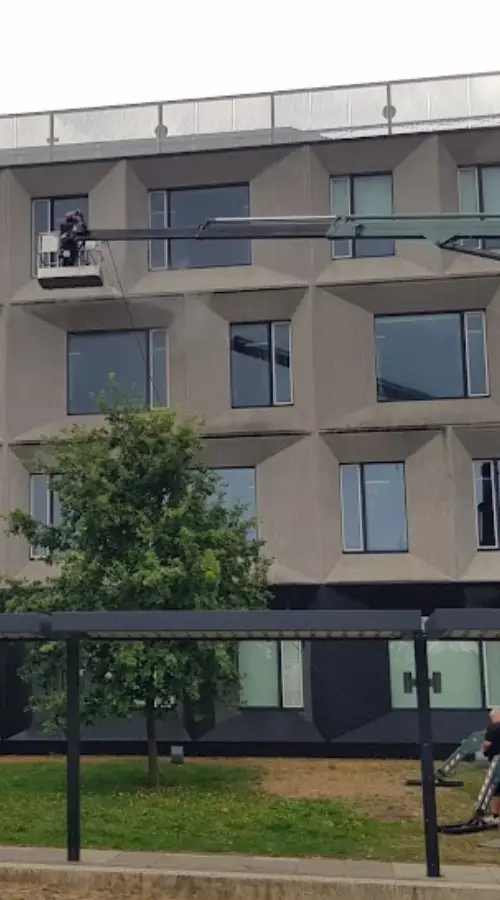
Commercial premises with rendered elevations tend to fall into two groups: those on a maintenance schedule, and those that will be on one after the first serious clean. The second group usually arrive with several years of accumulated growth and a frontage that no longer reflects the business behind it. Commercial render cleaning begins with access. Elevation height, ground conditions, overhead obstructions and safe working positions all determine what equipment is required and therefore what the job costs. We establish this at survey and quote against it, rather than pricing optimistically and returning with a revised figure. Operationally, the aim is that the work barely registers. Sites stay open, staff keep working, customers keep arriving. We agree exclusion zones, protect entrances and parked vehicles, and schedule around trading patterns including early, late and weekend working where that suits. Method statements, risk assessments and insurance certification are provided before attendance as a matter of course. Consistency is the technical priority on any substantial elevation. Render facade cleaning has to maintain identical dilution and continuous wet edges across the full run, because a wall cleaned in disconnected sections shows exactly that once it dries. Adequate personnel on site is part of achieving it. The financial argument is about fabric as much as appearance. Moss and algal growth retain water against the coating continuously, and a wall that never dries deteriorates measurably faster than one that does. Regular render wall cleaning defers recoating, which is an order of magnitude more expensive. Businesses operating around Barnt Green typically move to a planned interval after the initial visit, at which point each subsequent clean is shorter, simpler and cheaper than the first.
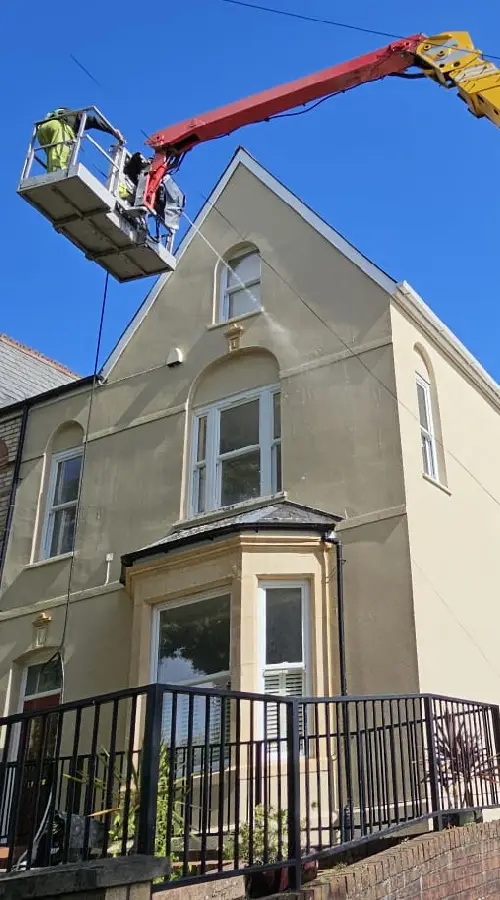
There is a version of this work that involves a van, a machine and an afternoon, and there is a version that involves surveying, specifying, protecting and treating. Softwashing UK do the second, and it is worth being clear about what that actually buys you. It buys correct coating identification, so the method matches the material rather than the other way round. It buys the right dilution for the organism present, established at survey rather than guessed. It buys protection of planting, paving, drainage and electrical points before anything is applied. It buys operatives who are certified for working at height and insured for the work they are doing. And it buys a fixed figure that does not move. Professional render cleaning also means being told when not to proceed. If an elevation has open cracking, failed sealant or debonded areas, applying water to it is a poor idea, and we will explain that rather than take the booking. That honesty occasionally costs us work. It has also produced a great deal of it through recommendation. Eco friendly render cleaning is our standard method. Dilutions are controlled to what the job requires, run-off is managed, and nothing is applied at strength for speed. Gardens, borders and lawns are protected throughout and checked before we leave. For anyone weighing quotations, the useful questions are what method will be used, whether the firm is insured specifically for height work, and whether the price is fixed. As render cleaning specialists working as a local render cleaning company rather than a national franchise, we answer all three the same way every time, and we are around afterwards if you need us.
Barnt Green sits fully within our standard working area, and coverage extends to every part of it without distinction between the more central streets and the properties on longer plots further out. The rendered housing here skews towards larger detached and semi-detached properties, and that shapes how the work is planned. Bigger elevations mean more surface to keep consistent, taller frontages mean access has to be resolved before quoting, and properties with extensions built at different times frequently carry two or three different coatings across one building. It is entirely normal to find modern through-coloured render on a rear extension and an older painted finish on the original elevations, and the two cannot be treated identically. Plot layout is the other factor. Where a property sits back from the road behind established planting, elevations receive less direct sun and less air movement, and both conditions favour organic growth. Mature trees close to a gable are the single most reliable predictor of heavy colonisation we encounter. We assess that at survey and specify per elevation rather than pricing the building as a single uniform area. Access on larger plots is generally good, though gravel drives, planted borders and garden features mean careful positioning matters. Our systems run at length from the vehicle, so equipment does not need to be brought close to the wall, and nothing is dragged across lawns or beds. Surveys take around twenty minutes and can be carried out without anyone needing to be home, provided access to all elevations is possible. The quotation follows by email the same day or the next, itemised by elevation so you can see exactly what drives the figure.
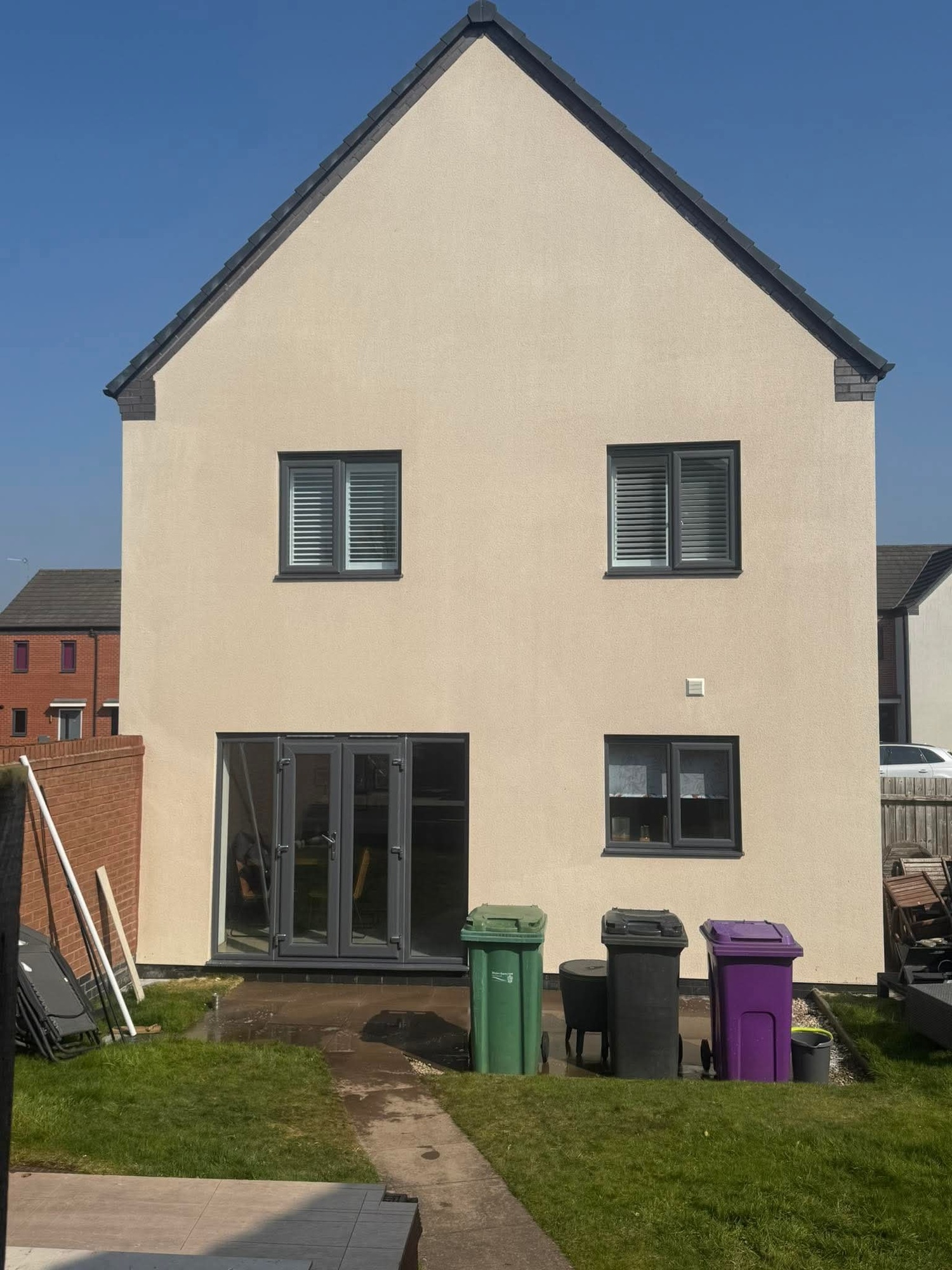
Most properties in Barnt Green benefit from professional render cleaning every 3 to 5 years, although this depends on the surrounding environment. Properties near trees, woodland, busy roads or coastal areas may require more frequent cleaning due to algae, mould and airborne contaminants. Our soft washing process removes existing growth and helps keep your render cleaner for longer.
Yes. Soft washing is specifically designed for delicate surfaces such as K-Rend, silicone render, monocouche render and painted render. Unlike high-pressure washing, it cleans at low pressure while treating biological growth at its source, reducing the risk of damage to the render finish.
We clean virtually all external render finishes, including K-Rend, Monocouche, Weber, Sto, silicone render, acrylic render, painted render, roughcast and pebble dash. Every cleaning method is tailored to the specific render type to achieve the best possible results.
Yes. Our specialist soft washing treatments are highly effective at removing green algae, red algae, black mould, mildew, lichen and other organic staining. We also apply professional biocide treatments to kill spores and slow down regrowth.
Because our process targets the biological growth rather than simply washing the surface, results typically last much longer than pressure washing alone. The exact lifespan depends on weather conditions, surrounding vegetation and the property’s location.
No. Our soft washing process is specifically designed to clean render safely. We use low-pressure application methods and specialist cleaning solutions that remove contamination without damaging the render surface when carried out by trained professionals.
The UK’s damp climate provides ideal conditions for algae, mould and other biological growth to develop on rendered surfaces. Areas with limited sunlight, nearby trees or persistent moisture are especially susceptible. Professional soft washing safely removes these contaminants and restores your property’s appearance.






































WhatsApp us