


Painting render is one of the quickest ways to transform the appearance of a property. A fresh coat of quality masonry paint can make even an older home look modern, clean and well maintained. However, many homeowners make one costly mistake before opening the first tin of paint—they skip the render cleaning stage.
While it may seem like an unnecessary expense or an easy shortcut, painting over dirty render almost always leads to disappointing results. Paint relies on a clean, stable surface to bond correctly, and any contamination left behind can significantly reduce the lifespan of the finish.
At Soft Washing UK, professional render cleaning prepares exterior walls properly before decorating, helping homeowners achieve a longer-lasting, more attractive result while protecting their investment.
Why Render Gets Dirty
Render is constantly exposed to the British climate.
Throughout the year it collects:
- Green algae
- Red algae
- Black mould
- Lichen
- Moss
- Air pollution
- Dust
- Organic staining
- Bird droppings
- Tree sap
These contaminants don’t simply wash away with rainfall. Many become embedded within the tiny pores of the render, gradually becoming more difficult to remove.
Common Render Contamination
| Contaminant | Typical Appearance | Risk Before Painting |
|---|---|---|
| Green algae | Green streaks | Prevents paint adhesion |
| Red algae | Red or pink patches | Can continue growing beneath paint |
| Black mould | Black spotting | Causes staining and moisture retention |
| Lichen | White or yellow growth | Creates an uneven surface |
| Moss | Thick green clumps | Holds water against render |
| Pollution | Grey film | Stops paint bonding evenly |
Why Cleaning Matters More Than Painting
Many homeowners spend hundreds or even thousands of pounds on premium exterior paint while overlooking the condition of the wall underneath.
In reality, surface preparation has a greater impact on the final result than the paint itself.
Even the highest-quality masonry paint cannot properly adhere to:
- Dirt
- Organic growth
- Dust
- Pollution
- Loose particles
- Biological contamination
Without cleaning first, the paint bonds to the contamination instead of the render.
What Happens When You Skip Render Cleaning?
The problems rarely appear immediately.
Fresh paint often looks excellent for the first few weeks before defects gradually develop.
Common issues include:
- Bubbling
- Flaking
- Peeling
- Blistering
- Uneven colour
- Staining bleeding through
- Moisture becoming trapped
These problems frequently result in expensive repainting far sooner than expected.
Paint Failure Timeline
| Time After Painting | Likely Result |
|---|---|
| Immediately | Fresh appearance |
| 3–6 months | Minor staining returns |
| 6–12 months | Blisters begin developing |
| 1–2 years | Paint starts peeling |
| 2–5 years | Full repaint often required |
Biological Growth Doesn’t Stop Under Paint
One of the biggest myths is that paint kills algae and mould.
It doesn’t.
Unless contamination is removed properly beforehand, green algae and red algae can continue living beneath the paint film.
Over time they may:
- Lift the paint
- Cause staining
- Retain moisture
- Reduce adhesion
- Encourage further biological growth
Professional cleaning removes the source of the problem instead of simply hiding it.
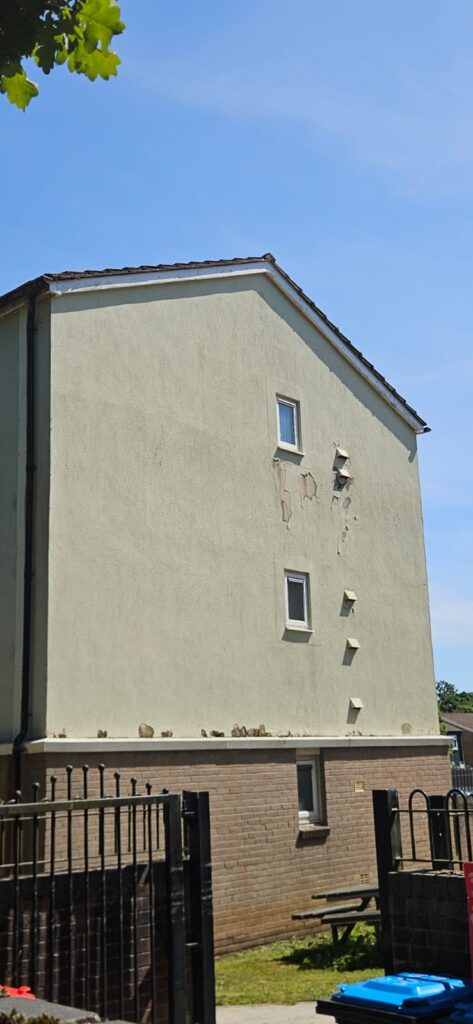
Dirt Prevents Proper Adhesion
Paint needs direct contact with the render.
When dirt or algae sits between the render and the coating, adhesion becomes much weaker.
Think of it like sticking tape onto a dusty surface—it may hold initially, but eventually it peels away.
The same principle applies to exterior masonry paint.
Professional Cleaning Removes More Than Visible Dirt
Many homeowners believe their walls only need a quick rinse.
However, professional render cleaning targets contamination that cannot always be seen.
This includes:
- Microscopic algae
- Invisible mould spores
- Organic residue
- Atmospheric pollution
- Surface bacteria
Removing these contaminants creates a clean foundation for decorating.
Visible vs Hidden Contamination
| Visible to the Eye | Often Hidden |
|---|---|
| Green staining | Algae spores |
| Red staining | Organic residue |
| Black mould | Microscopic mould growth |
| Moss | Pollution particles |
| Lichen | Biological film |
Pressure Washing Isn’t Always Suitable
Pressure washing is commonly used on patios and driveways, but render requires a much more careful approach.
Excessive pressure can:
- Damage decorative finishes
- Remove protective coatings
- Force water behind render
- Widen cracks
- Leave patchy surfaces
Soft washing uses specialist cleaning solutions alongside low-pressure application, making it much more suitable for delicate rendered walls.
Different Render Types Require Different Cleaning Methods
Every render system behaves differently.
Older cement render reacts differently from modern silicone or acrylic render.
Professional assessment helps determine the safest cleaning approach.
Common Render Types
| Render Type | Recommended Preparation |
|---|---|
| Silicone render | Specialist soft washing |
| Monocouche render | Gentle cleaning treatment |
| Acrylic render | Low-pressure cleaning |
| Mineral render | Controlled cleaning process |
| Cement render | Inspection before treatment |
Moisture Is Another Hidden Problem
Dirty render often traps moisture.
Painting over damp contamination seals that moisture beneath the coating.
Potential consequences include:
- Blistering
- Peeling
- Damp patches
- White salt deposits
- Reduced paint lifespan
Cleaning allows the wall to dry properly before painting begins.
Better Paint Coverage
Clean render usually absorbs paint more evenly.
Benefits include:
- Consistent colour
- Fewer visible patches
- Improved finish
- Better coverage
- More uniform sheen
Professional preparation often produces a noticeably higher-quality finish.
Benefits of Cleaning Before Painting
| Benefit | Why It Matters |
|---|---|
| Better adhesion | Longer paint life |
| Cleaner appearance | Improved kerb appeal |
| Removes biological growth | Less staining |
| Identifies defects | Easier repairs |
| Better paint coverage | More even finish |
| Improved durability | Reduced maintenance |
Cleaning Helps Identify Repairs
Contamination often hides defects within the render.
Once cleaned, it’s much easier to identify:
- Hairline cracks
- Hollow areas
- Failed repairs
- Loose render
- Water ingress
Repairing these issues before decorating produces a much better long-term result.
Why Shaded Walls Need Extra Attention
North-facing elevations and shaded areas generally stay wetter for longer.
This encourages:
- Green algae
- Red algae
- Mould
- Lichen
- Moss
These elevations almost always require more thorough cleaning before repainting.
Areas Most Likely to Need Cleaning
| Area | Common Problem |
|---|---|
| North-facing walls | Heavy algae growth |
| Under trees | Organic staining |
| Around gutters | Water marks |
| Near gardens | Moss and algae |
| Behind shrubs | Damp conditions |
Saving Money by Cleaning First
Skipping preparation may appear cheaper initially.
However, failed paint usually means paying for:
- Additional paint
- Labour
- Scaffold hire
- Surface preparation
- Paint removal
Professional cleaning helps avoid these unnecessary expenses.
Typical Cost Comparison
| Approach | Initial Cost | Long-Term Value |
|---|---|---|
| Paint without cleaning | Lower | Often poor |
| Professional render cleaning then painting | Higher | Better long-term investment |
Premium preparation generally delivers significantly better value over the lifespan of the paint.
How Professional Render Cleaning Works
Every property is different, but the preparation process generally includes several key stages.
Typical steps include:
- Inspection of the render.
- Identification of biological contamination.
- Selection of suitable cleaning products.
- Application of specialist soft washing treatment.
- Removal of dirt and organic growth.
- Allowing sufficient drying time.
- Final inspection before decorating.
This systematic process helps create the ideal surface for paint.
Common Signs Your Render Should Be Cleaned First
You should avoid painting immediately if you notice:
- Green streaks
- Red staining
- Black spots
- White patches
- Yellow lichen
- Moss growth
- Dirty appearance
- Uneven colouring
Even if contamination seems minor, microscopic biological growth may still be present across much of the surface.
Quick Inspection Checklist
| Observation | Clean Before Painting? |
|---|---|
| Green algae | Yes |
| Red algae | Yes |
| Black mould | Yes |
| Lichen | Yes |
| Heavy pollution | Yes |
| Fresh, clean render | Usually suitable following inspection |
Weather Conditions Also Affect Results
Preparation doesn’t end with cleaning.
Paint should only be applied when suitable weather conditions allow proper curing.
Poor conditions include:
- Heavy rain
- High humidity
- Frost
- Strong winds
- Very hot direct sunlight
Allowing cleaned render to dry fully before decorating is equally important.
Why Professional Preparation Protects Your Investment
Exterior painting represents a significant investment, particularly on larger properties where access equipment, labour and premium masonry paint contribute to the overall cost.
Professional render cleaning helps ensure that investment lasts as long as possible.
At Soft Washing UK, specialist render cleaning removes green algae, red algae, mould, lichen and deeply embedded contamination using soft washing techniques designed specifically for rendered surfaces. This careful preparation creates the ideal foundation for decorating while reducing the likelihood of premature paint failure.
Rather than simply improving appearance, proper render cleaning addresses the underlying contamination that often causes peeling, blistering and staining after repainting. By preparing the surface correctly, homeowners can achieve a cleaner finish, better adhesion, improved durability and longer intervals before future maintenance becomes necessary.
A properly prepared surface doesn’t just look better on the day it’s painted—it helps the entire coating system perform as intended, protecting both the render and the property’s appearance for years to come.
Why DIY Cleaning Often Isn’t Enough
Many homeowners try to prepare render themselves using a garden hose, stiff brush or off-the-shelf cleaning products. While this may remove loose dirt from the surface, it rarely deals with the deeper biological contamination that causes paint problems later.
Render is naturally porous, meaning algae, mould and other organic matter can penetrate below the visible surface.
A simple rinse may leave behind:
- Algae spores
- Mould spores
- Organic residue
- Deep staining
- Embedded dirt
These contaminants can continue affecting the paint long after the walls appear clean.
Professional soft washing is designed to treat the root cause of contamination rather than simply improving the appearance for a few days.
The Importance of Allowing Render to Dry
Cleaning is only one part of preparation.
Render also needs adequate drying time before any paint is applied.
If moisture remains within the render, it can interfere with paint adhesion and curing.
Potential problems include:
| Problem | Cause |
|---|---|
| Blistering | Moisture trapped beneath paint |
| Peeling | Paint cannot bond properly |
| White staining | Salts moving through damp render |
| Patchy finish | Uneven drying rates |
| Reduced lifespan | Coating cures incorrectly |
Professional contractors understand that patience during preparation often leads to a much better finished result.
New Render Still Needs Cleaning
Many people assume that newly applied render can be painted immediately because it looks clean.
However, new render may still require preparation before decorating.
During construction, render can collect:
- Site dust
- Cement residue
- Builder’s dirt
- Airborne pollution
- Finger marks
- Organic contamination if left exposed for several months
A thorough inspection before painting ensures the surface is completely clean and suitable for decoration.
Previously Painted Render Can Also Benefit
Cleaning isn’t only important before the first coat of paint.
Previously painted render often accumulates years of contamination.
This can include:
- Green algae growing on the paint surface
- Red algae in shaded areas
- Black mould around windows
- Traffic pollution
- Cobwebs and dirt
- Chalking from old paint
Applying fresh paint over these contaminants often leads to poor adhesion between the old and new coatings.
Cleaning removes loose material and creates a much more stable surface for repainting.
Trees and Gardens Increase Contamination
Properties surrounded by mature trees or dense planting generally require more frequent render cleaning.
Nearby vegetation creates ideal conditions for biological growth by:
- Increasing shade
- Holding moisture against walls
- Depositing organic debris
- Encouraging moss and algae growth
- Reducing airflow
This is why homes near woodland or heavily landscaped gardens often experience staining much sooner than exposed properties.
Commercial Properties Benefit Too
Render cleaning before painting isn’t only important for domestic homes.
Commercial buildings, offices, apartment blocks, schools and retail premises all benefit from proper preparation.
Advantages include:
| Benefit | Commercial Importance |
|---|---|
| Better appearance | Improves customer perception |
| Longer paint life | Reduces maintenance budgets |
| Consistent finish | Enhances professional image |
| Fewer future repairs | Minimises disruption |
| Better value | Protects refurbishment investment |
Large commercial repainting projects represent substantial investments, making preparation even more important.
Choosing the Right Time of Year
Timing can have a significant impact on both cleaning and painting.
Generally, the best periods are when weather conditions are relatively mild and stable.
Spring and early autumn are often popular because:
- Temperatures are moderate.
- Excessive heat is less common.
- Drying conditions are usually favourable.
- Paint cures more consistently.
Winter can present challenges due to frost and persistent dampness, while very hot summer days may cause paint to dry too quickly.
Paint Manufacturers Recommend Proper Preparation
Most premium masonry paint manufacturers include detailed preparation instructions.
These commonly advise removing:
- Dirt
- Dust
- Algae
- Mould
- Loose coatings
- Surface contamination
Ignoring these recommendations can affect not only the appearance of the paint but also its expected lifespan.
Following the manufacturer’s preparation guidance gives the coating the best opportunity to perform as intended.
Why Kerb Appeal Starts Before the Paint Goes On
Homeowners often focus on choosing the perfect paint colour, but colour alone cannot compensate for poor preparation.
A beautifully chosen shade applied over dirty render may still suffer from:
- Uneven texture
- Visible staining
- Premature peeling
- Blistering
- Patchy coverage
Conversely, properly cleaned render provides a smooth, consistent surface that allows the paint colour to look its very best.
Whether the property is being refreshed for personal enjoyment or prepared for sale, preparation plays a major role in the final appearance.
Cleaning First Supports Longer Maintenance Cycles
One of the biggest benefits of professional render cleaning before painting is that it can help extend the time before major maintenance is required again.
A properly prepared surface is more likely to provide:
- Stronger paint adhesion.
- Better weather resistance.
- Reduced risk of biological staining.
- Improved resistance to peeling.
- Lower long-term maintenance costs.
Instead of repainting after only a few years due to coating failure, homeowners can enjoy a finish that remains attractive for considerably longer when preparation has been carried out correctly.
For many properties, the cleaning stage is the least visible part of the decorating process—but it is often the stage that has the greatest influence on how successful the finished paint job will ultimately be.