Cleaning a rendered wall reveals it, and that is worth knowing before the work is booked. Under an established layer of moss and algal growth, a great deal can be hidden: hairline cracking, previous patch repairs in slightly different colour, failed sealant at junctions, small areas of debonding, and marking around fixings. None of it is created by cleaning. All of it becomes visible once what was covering it has gone. We survey specifically for this, and we tell owners what we expect to find rather than letting it emerge on completion. A wall with patch repairs beneath the growth will read unevenly once cleaned. An elevation with open cracking should not be treated at all until the cracking has been dealt with, because introducing water to an open defect is a poor idea whatever the pressure. That last point genuinely does lose us work occasionally, and we would rather it did. Render cleaning services applied to a compromised substrate produce a bad outcome for everyone. Where the wall is sound, the process is straightforward. Biocidal treatment at a dilution matched to the growth, applied at low pressure across the full elevation, given proper dwell time so it destroys colonies at root level, then rinsed gently. Render moss removal in particular tends to expose the most, since heavy moss both conceals the surface and holds moisture against it long enough to cause its own problems. Exterior render cleaning on properties around Blakedown that have been left for a decade or more almost always produces some findings. Knowing about them in advance turns a surprise into a plan.
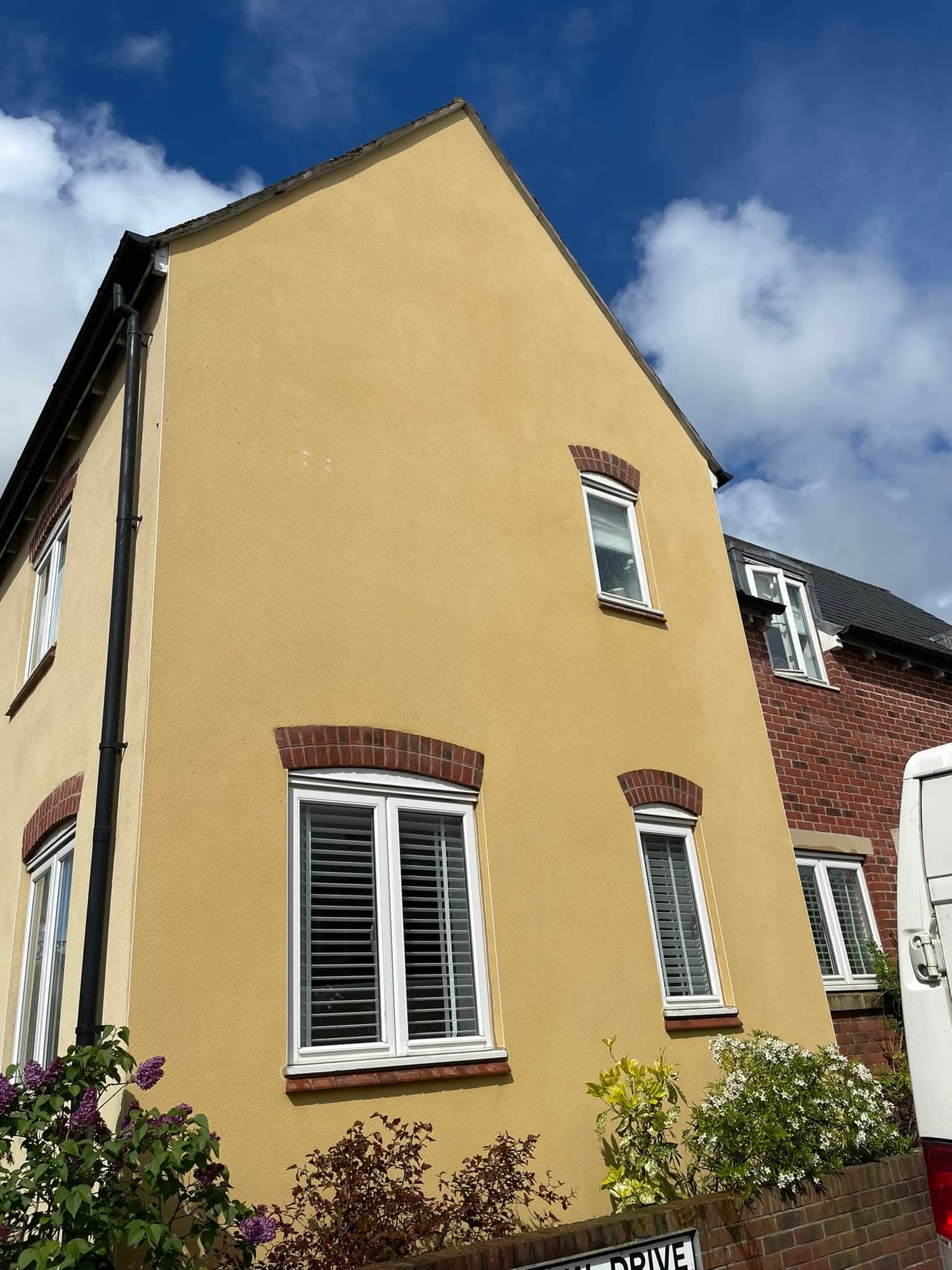
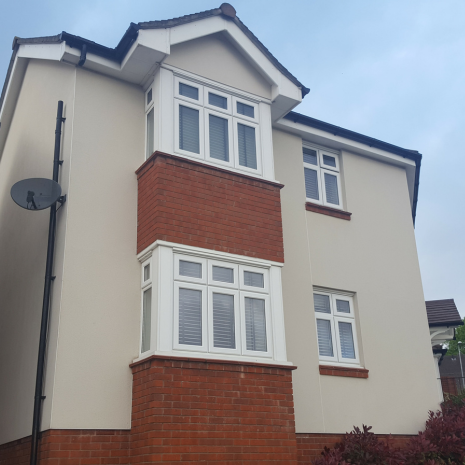

Not all K Rend looks the same, and the difference affects how it is cleaned. The systems are supplied in a range of finishes, from finely textured through to heavily scraped surfaces with pronounced relief, and the deeper the texture, the more sheltered surface area there is for spores to settle in and the longer moisture is retained after rain. A finely finished silicone elevation generally colonises more slowly and clears more readily. A heavily textured one on the same property, facing the same way, will typically need a longer dwell and a more thorough application to reach growth sitting at the base of the profile. Treating both at the same rate leaves the textured wall visibly behind. K Rend cleaning as we specify it accounts for that at survey. Dilution, volume applied and dwell period are all set against the actual finish in front of us rather than against a standard rate for silicone systems generally. What does not vary is the exclusion of anything abrasive. Colour is integral to the render, texture cannot be restored once damaged, and manufacturer guidance is unambiguous about high pressure. Silicone render cleaning is chemical throughout, applied at pressures that would not disturb loose material. Black spotting behaves differently on deeper textures too, sitting further into the surface and appearing more resistant than it is. Render mould removal succeeds when the treatment reaches the root structure, which on a textured wall means volume and time rather than force. House render cleaning on a K Rend property in Blakedown should finish with the whole elevation reading evenly, regardless of which finish was originally specified across it.
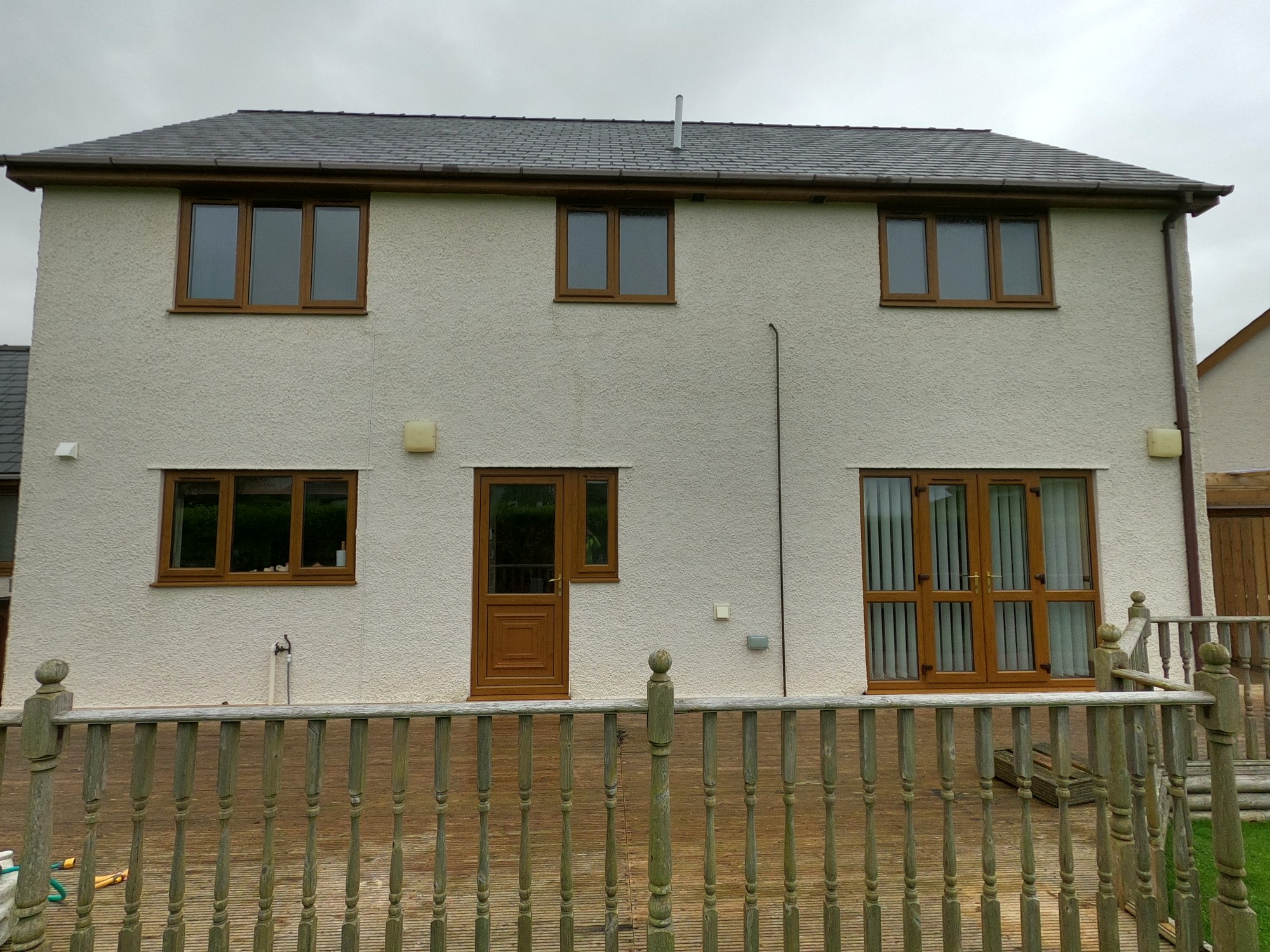
A significant proportion of the damaged monocouche we see was damaged by cleaning. That is a blunt statement, but it is accurate, and it explains why the method matters so much on this particular finish. The failures follow a pattern. A pressure washer used at working pressure strips aggregate from the scraped face, leaving smooth, slightly shiny areas that catch light differently from the surrounding texture. A stiff brush used on stubborn growth does the same thing more locally. Treatment mixed strong and applied unevenly bleaches tone inconsistently across a through-coloured wall. In each case the damage is permanent, because there is no surface coating to make good and the colour cannot be matched. Monocouche render cleaning avoids all three by design. Pressure stays very low throughout, nothing is agitated mechanically, and dilution is set to the growth present and applied consistently across complete elevations. Treatment is delivered in sufficient volume to flow into the depth of the texture and then given time to work at root level, which is what removes the temptation to resort to force in the first place. Areas that always need particular attention are those where water concentrates: beneath bead lines and sills, at reveals, and along the base course where splashback drives soiling into the surface. These are treated as separate zones within the overall specification. Render restoration on an undamaged monocouche wall is genuinely achievable, and repeatable across the life of the coating. Residential render cleaning done properly can be carried out again in several years time with the same result. Render maintenance intervals are long once growth has been eliminated at source rather than merely cleared from view.
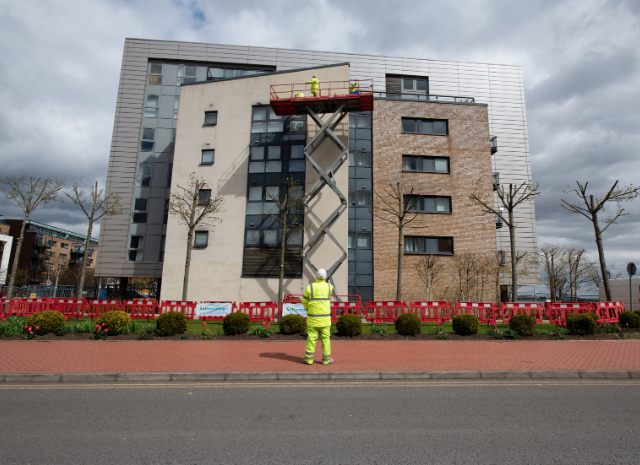

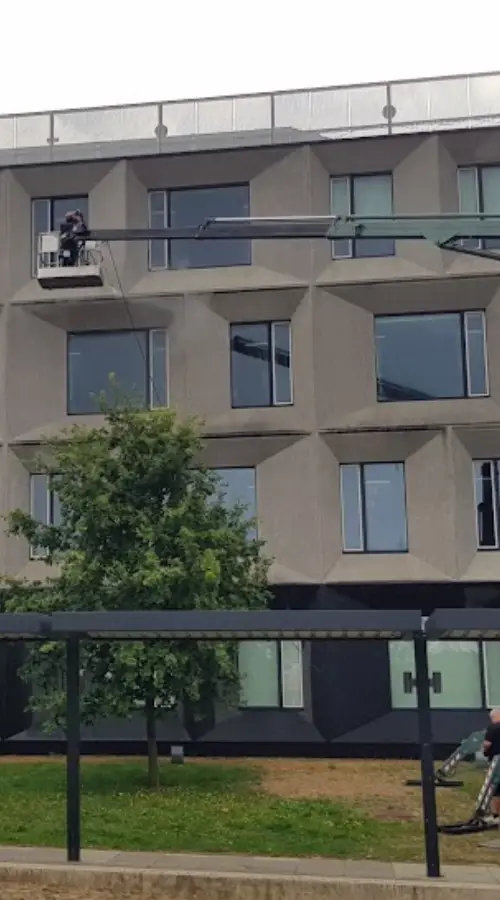
Care homes, schools and similar occupied institutional buildings need exterior work handled with more care around the site than around the wall. The premises are in constant use, the occupants may be vulnerable, and access routes cannot simply be closed for a day. Commercial render cleaning on these buildings is planned in detail before anyone attends. We agree working areas in stages so that only one part of the building is affected at a time, confirm which windows need closing and when, establish exclusion zones with proper signage, and arrange timing that avoids arrivals, departures and outdoor use. Where safeguarding procedures apply, our operatives complete the required checks and site induction. Documentation is provided in advance as standard, covering method statements, risk assessments and full insurance, and all personnel hold current working at height certification. Technically the work follows the same principles as any large elevation. Soft wash render cleaning applied across a substantial facade must maintain identical dilution and continuous wet edges, since inconsistency shows later as banding across the wall. On buildings with multiple wings or blocks, each elevation is completed as a unit rather than left partly treated overnight. The low pressure method is a particular advantage on occupied premises. There is very little noise, no drifting spray across the grounds, and no water being driven at a building where windows may be open. Work proceeds quietly enough that the day is barely interrupted. For institutional and commercial premises in and around Blakedown, a planned cycle avoids the situation where a building deteriorates to the point of needing a major clean, and keeps the annual cost predictable.
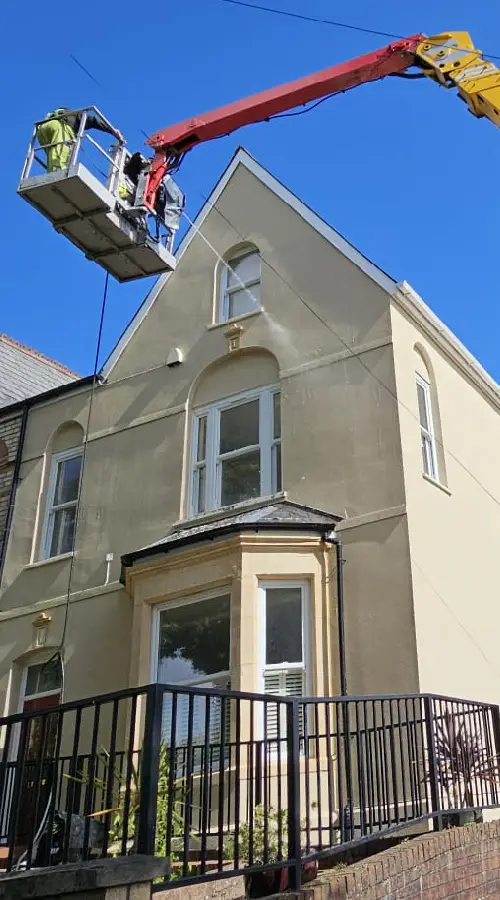
There is a great deal of upselling in exterior maintenance, and rendered walls attract more of it than most. Owners are told their render needs recoating, treating annually or protecting with something proprietary, usually immediately after a clean when the elevation is looking its best and the argument is easiest to make. We do not work that way. Our position is that a properly soft washed wall needs nothing further for a period of years, and that the correct interval depends on the aspect, shelter and surroundings of each elevation rather than on a sales calendar. If your south-facing frontage will not need attention for five years, we will tell you that even though it means not seeing you for five years. Softwashing UK earn work through recommendation, and overselling is a poor way to generate it. What we will do is explain honestly which factors on your property shorten the interval, such as planting hard against a wall or a persistent damp patch from a discharging outlet, and which of those are worth addressing. Render cleaning cost is quoted once, after a survey, and does not move. Affordable render cleaning means paying for the work the wall actually requires. We are fully insured, certified for working at height, and every operative is trained specifically in this discipline. Anyone comparing quotations should ask what method will be used and what interval is being claimed for the result. As a local render cleaning company we would rather answer those questions plainly than compete on a headline figure that hides what is being left out.
Coverage runs across Blakedown together with Churchill, Mustow Green and Tanwood, all treated identically for pricing, survey and scheduling purposes. What differs between these places is not how we work but what we find. The rendered stock across them spans several eras and several systems. Older properties often carry traditional coatings that have been repaired, patched and painted repeatedly, so a single elevation can present multiple absorbencies and needs testing before anything is applied. Mid-century properties frequently have painted render whose condition governs whether cleaning is advisable at all. Newer builds and extensions are usually finished in through-coloured silicone or monocouche systems that tolerate no abrasion. It is common to encounter two of these on the same house. That variety is the reason we survey rather than quote by area. Two properties of identical size in Churchill, Mustow Green or Tanwood can require genuinely different specifications, dwell times and access arrangements, and a rate per square metre would misprice at least one of them. Access across these settlements is generally manageable. Where frontages are narrow or approaches are tight, our hose runs let the vehicle stay clear while treatment still reaches every elevation, and nothing is taken across lawns or planted ground. Because these are smaller settlements, we group bookings by area and work through them together. Properties arranging within the same week share the mobilisation cost, and the individual quotations reflect it. A survey takes around twenty minutes, can be completed without anyone present provided all walls are reachable, and produces an itemised quotation by email, broken down by elevation so you can see precisely what drives the total.
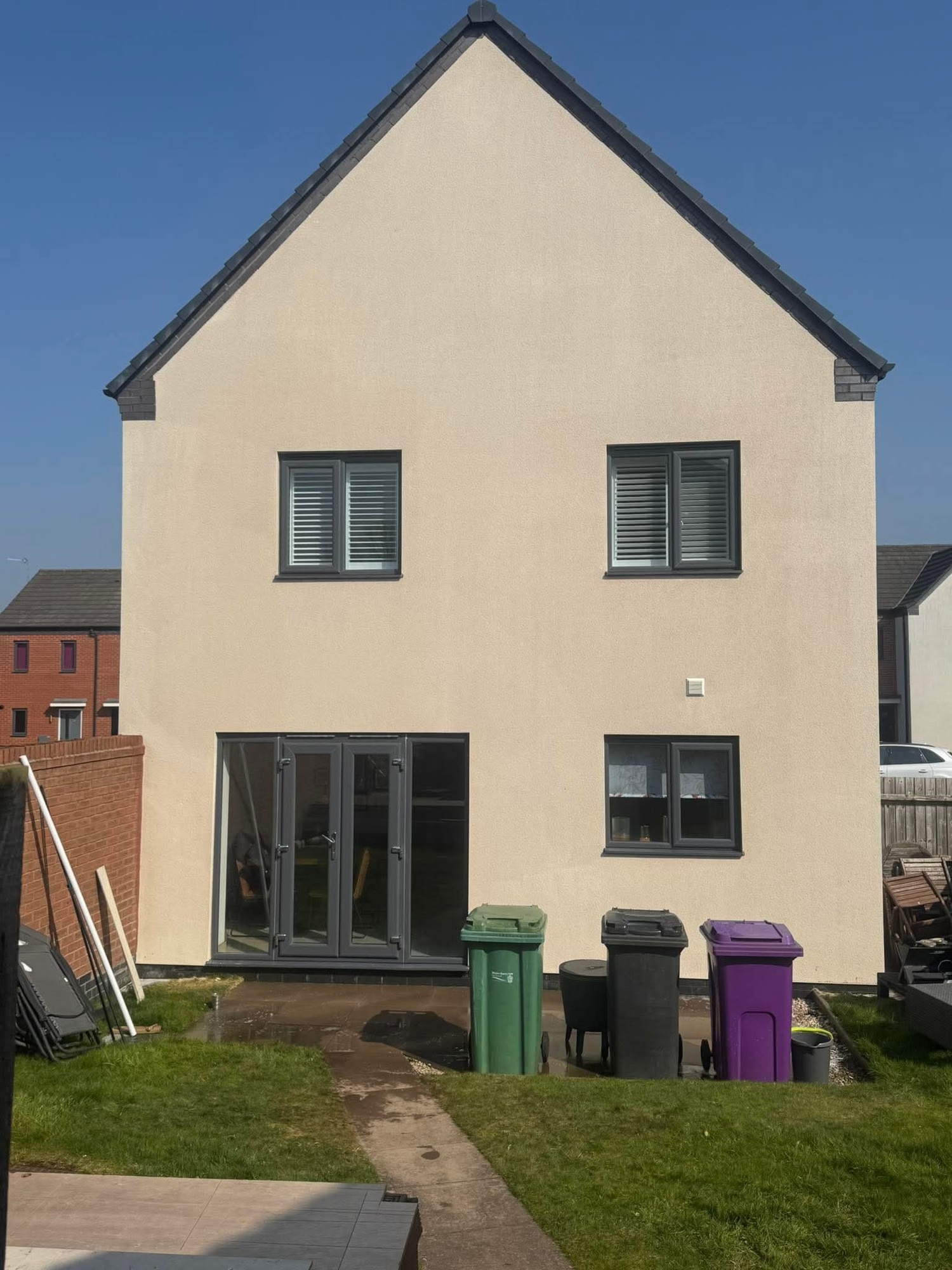
Most properties in Blakedown benefit from professional render cleaning every 3 to 5 years, although this depends on the surrounding environment. Properties near trees, woodland, busy roads or coastal areas may require more frequent cleaning due to algae, mould and airborne contaminants. Our soft washing process removes existing growth and helps keep your render cleaner for longer.
Yes. Soft washing is specifically designed for delicate surfaces such as K-Rend, silicone render, monocouche render and painted render. Unlike high-pressure washing, it cleans at low pressure while treating biological growth at its source, reducing the risk of damage to the render finish.
We clean virtually all external render finishes, including K-Rend, Monocouche, Weber, Sto, silicone render, acrylic render, painted render, roughcast and pebble dash. Every cleaning method is tailored to the specific render type to achieve the best possible results.
Yes. Our specialist soft washing treatments are highly effective at removing green algae, red algae, black mould, mildew, lichen and other organic staining. We also apply professional biocide treatments to kill spores and slow down regrowth.
Because our process targets the biological growth rather than simply washing the surface, results typically last much longer than pressure washing alone. The exact lifespan depends on weather conditions, surrounding vegetation and the property’s location.
No. Our soft washing process is specifically designed to clean render safely. We use low-pressure application methods and specialist cleaning solutions that remove contamination without damaging the render surface when carried out by trained professionals.
The UK’s damp climate provides ideal conditions for algae, mould and other biological growth to develop on rendered surfaces. Areas with limited sunlight, nearby trees or persistent moisture are especially susceptible. Professional soft washing safely removes these contaminants and restores your property’s appearance.












































WhatsApp us