It helps to know what a render clean actually involves on the day, because the process is far less dramatic than most people expect. Softwashing UK begin by walking the elevations and confirming what was established at survey, since conditions can change between quoting and attending, particularly after a wet spell. Protection comes next. Planting close to the walls is covered or pre-wetted, hard surfaces beneath the working area are sheeted, drainage points are noted, and external fittings, sockets and vents are masked or isolated. Anything moveable in the working zone is shifted clear. This stage takes longer than people anticipate and it is the reason the job goes smoothly. Application follows. The biocidal solution is mixed to the dilution specified for the growth present and delivered at very low pressure, typically through a telescopic lance so that upper elevations are reached from ground level. Coverage is worked systematically across a complete elevation rather than in patches, keeping the applied edge live so nothing dries partly treated. Then the wall is left alone. Dwell time is where render cleaning services succeed or fail, and it cannot be rushed. The treatment works down into the texture and destroys the growth at root level while nothing appears to be happening. Rinsing is gentle and sequential. Render algae removal is largely complete by this point, though heavier colonisation continues breaking down over subsequent weeks. Finally, protection is cleared, surfaces are rinsed down and the site is checked. Exterior render cleaning on a typical property in Broadway is usually a single day from arrival to departure.
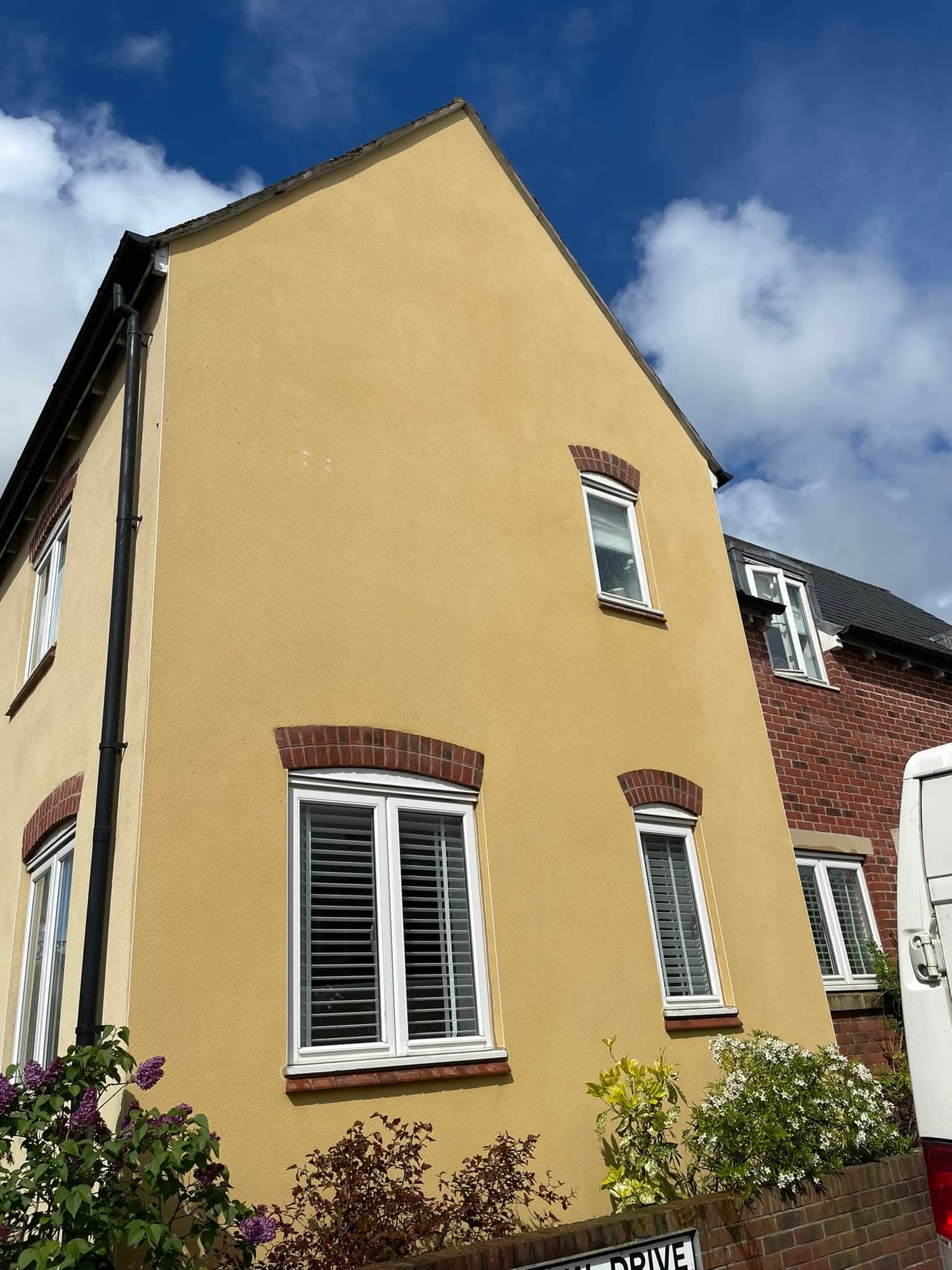

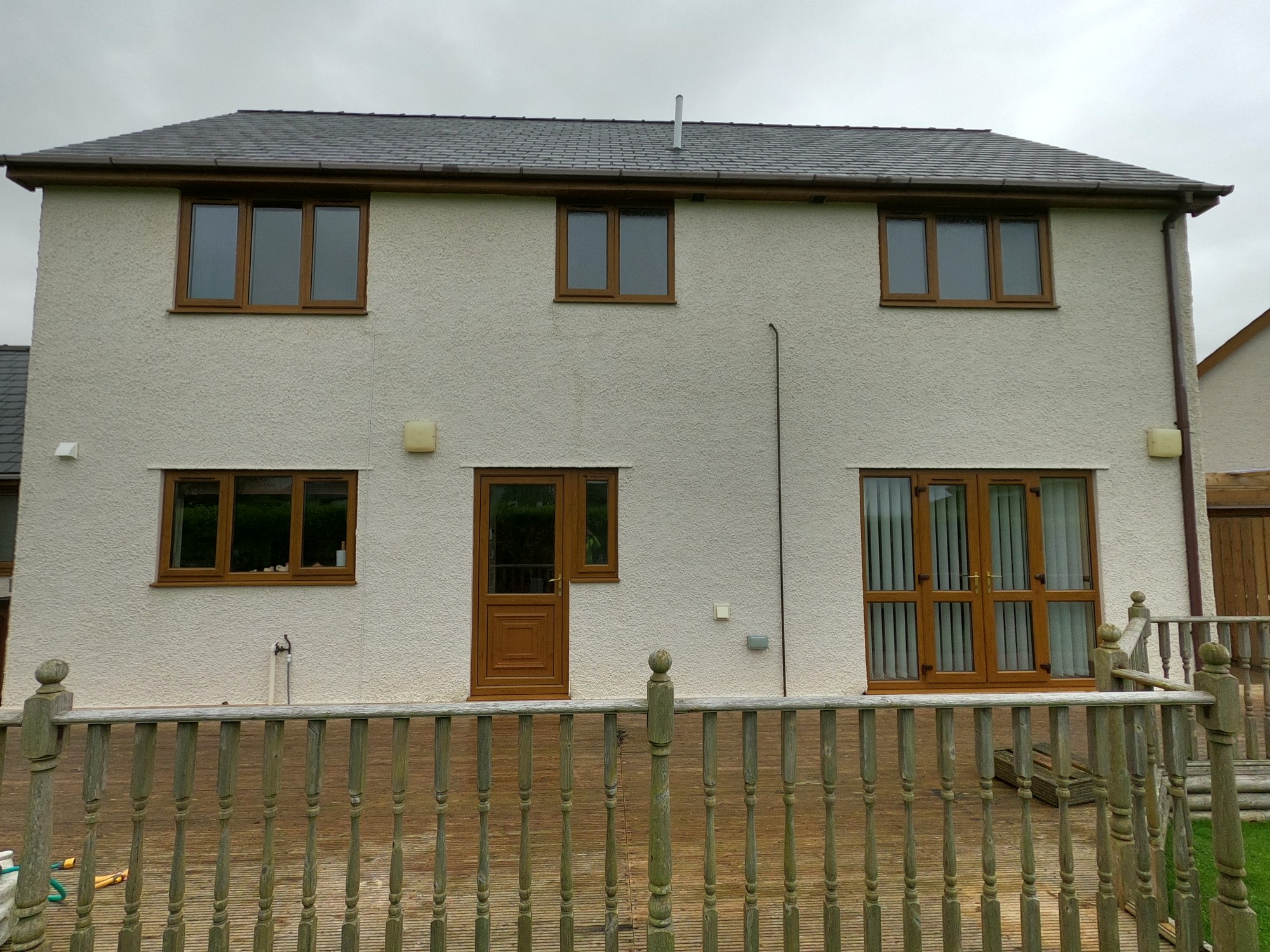
Texture depth is the variable that most affects how a silicone render responds to cleaning, and it varies considerably between properties finished in the same system. A lightly textured elevation presents relatively little sheltered surface for spores to occupy and dries reasonably quickly after rain. A heavily scraped one has far more surface area, holds moisture deep in the profile, and consequently colonises faster and more persistently. The practical implication is dwell time. K Rend cleaning on a deep texture needs the treatment applied in greater volume, so it flows to the base of the profile rather than bridging across the ridges, and left considerably longer before rinsing. Applying the same specification used on a fine finish leaves growth alive below the surface, and the wall greens again within a season. We assess texture at survey alongside coating type and organism, and specify accordingly. It is one of the reasons two apparently identical properties can carry different figures. Everything else about silicone render cleaning stays constant regardless of texture. Pressure remains very low, nothing is brushed or agitated, and coverage is even across complete elevations. The colour is integral to the render, so any inconsistency in application shows permanently as tonal variation in raking light, and abrasion cannot be corrected without recoating an entire wall. Render mould removal on deeper textures often continues visibly improving for a few weeks after treatment as broken-down growth weathers out of the surface. That is expected rather than a shortfall, and we explain it in advance so the result is judged fairly. House render cleaning on a K Rend property should end with the whole elevation reading uniformly.
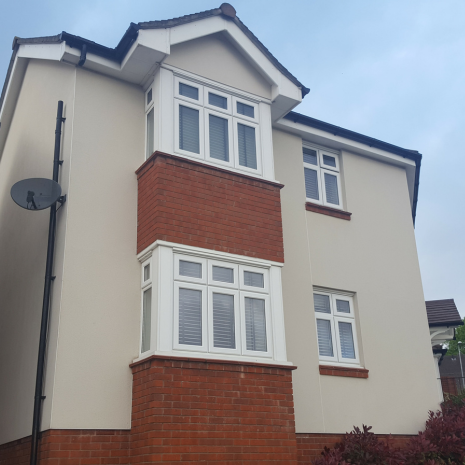
Beads are the detail that separates a monocouche elevation that has been cleaned properly from one that has been cleaned quickly. Bellcast beads at the base, stop beads at terminations, corner profiles at returns and drip details beneath sills all do the same thing: they concentrate water into lines and shed it at specific points. Growth follows that water, so colonisation beneath a bead line is almost always denser than on the open wall above it. Monocouche render cleaning that applies uniform treatment across an elevation therefore finishes with clean wall and visibly darker bands immediately below every detail. It looks worse in some respects than before, because the contrast draws attention to exactly the lines nobody previously noticed. We treat those zones as separate areas within the overall specification, applying appropriate strength and allowing longer dwell where growth is heaviest. The open wall gets what it needs and the detail lines get what they need. The general principles hold throughout. The scraped face is open and lightly bound, so nothing abrasive is used at any point. Treatment goes on at low pressure and in volume to reach the base of the texture, dwells long enough to destroy growth at root level, and is then rinsed gently. Reveals and returns deserve the same attention for a different reason. They hold shade for most of the day, dry slowly and colonise heavily, and they are easy to underapply when working across a large elevation quickly. Render restoration on monocouche is judged by whether the detailing looks right, not just the open wall. Residential render cleaning done properly leaves no evidence of where the water runs.
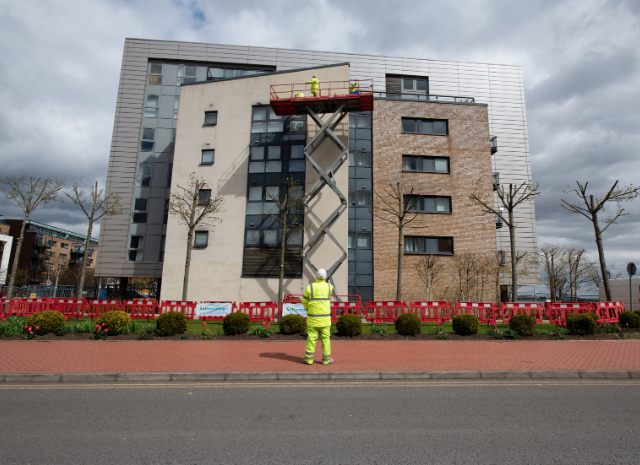

Retail frontages finished in render are assessed continuously and unconsciously by everyone who passes them. A discoloured elevation above a shopfront reads as decline even when the business inside is thriving, and on a parade of units the contrast between a clean frontage and a soiled one is immediate. Commercial render cleaning on retail premises is largely a scheduling problem. Trading hours are long, footfall is unpredictable, and pavements outside cannot simply be closed. We survey first, establish what can be reached safely and from where, and plan the work into early mornings or quieter periods, agreeing exclusion zones and signage that keep pedestrians clear without blocking access to the premises. Adjacent occupiers matter too. Where units share a continuous elevation, we confirm boundaries and liaise with the businesses either side so nobody is surprised by activity outside their door. Documentation is issued ahead of attendance as standard, covering insurance, method statements and risk assessments, and all operatives hold current working at height certification. The technical requirement on a continuous parade is consistency above everything. Soft wash render cleaning across adjoining elevations must hold identical dilution throughout and maintain live wet edges, because banding between sections is far more obvious on a long horizontal run than on a detached building. There is also a straightforward maintenance argument. A coating held permanently damp by algal growth deteriorates faster than one allowed to dry, and recoating a retail frontage is disruptive as well as expensive. Businesses in Broadway that move onto a planned interval find each subsequent visit shorter, cheaper and far less noticeable than the first.
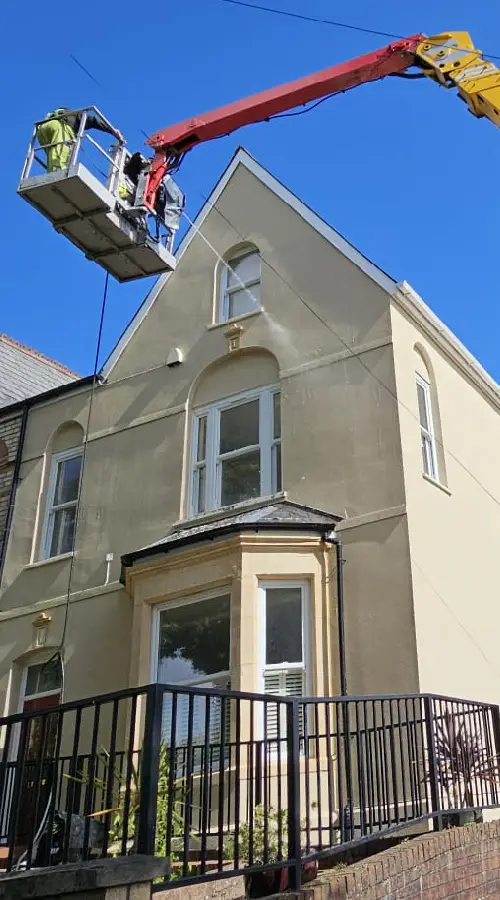
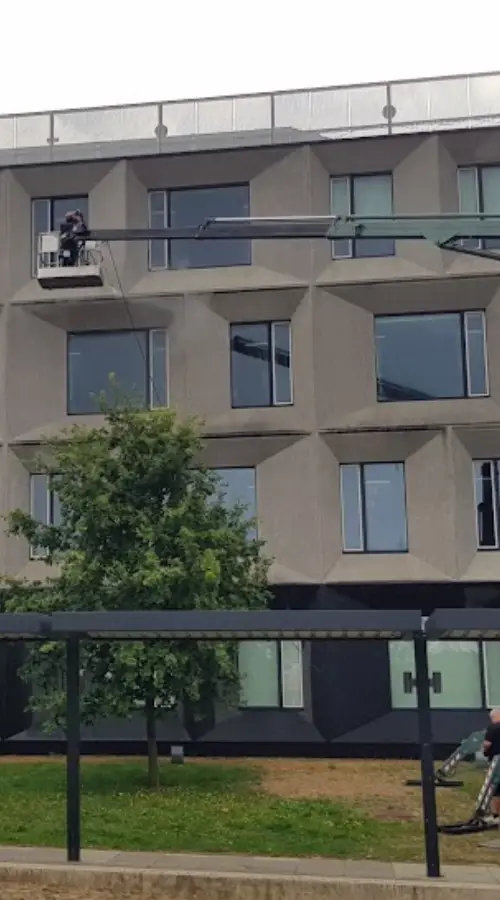
A quotation is only as good as the survey behind it, and most of the problems people report with this kind of work begin at that stage rather than on site. A figure given over the phone from a description cannot account for coating type, elevation height, access constraints or how far the growth has progressed, all of which materially change the job. We survey every property before quoting. It takes around twenty minutes, it costs nothing, and it produces an itemised written figure that holds. The survey establishes what is on the wall, what condition it is in, which organisms are present, how each elevation differs from the others and what access is required. The specification is written from that. The consequence is that render cleaning cost varies between properties that look superficially similar. A larger elevation in sound modern render can be a simpler job than a smaller older wall carrying a painted finish of uncertain condition. Quoting by area alone would misprice both. The other consequence is that our figures do not move. There is no mid-job revision because something was not anticipated, and no separate charge appearing for access that was always going to be necessary. Render cleaning prices are agreed once. Where we find a wall that should not be cleaned yet, we say so. An elevation with open cracking, failed sealant or chalking paintwork needs attention of a different sort first, and professional render cleaning means declining that work rather than taking it. It costs us occasional jobs and earns a good deal of recommendation.
Broadway and Middle Hill both sit within our standard coverage, surveyed, priced and scheduled on identical terms with no travel loading applied to either. Exposure is the most useful thing to consider when planning work here. Properties differ enormously in how much sun and air movement their elevations receive, and that single factor governs both how quickly growth establishes and how long a clean will last. A frontage that dries within an hour of rain behaves entirely differently from a shaded gable that stays damp through much of the winter, and pricing a whole building at one rate ignores that. We therefore survey and quote per elevation. On many properties, one wall needs a full specification with extended dwell while the others need comparatively little, and reflecting that honestly usually produces a lower total than an averaged figure would. Middle Hill properties are frequently set among established planting and mature trees, which reduces air movement and keeps walls damp for longer after rain. Elevations in that position consistently carry heavier colonisation, and we specify for it rather than treating it as an anomaly. Access is generally workable. Where frontages are narrow, parking is limited or approaches are shared, our hose runs allow the vehicle to remain clear while treatment still reaches every wall, and nothing is taken across lawns or planted ground. Work is programmed by area so travel is shared between jobs. Properties booking within the same period benefit from that in their individual quotations. Surveys take around twenty minutes and produce an itemised written figure by email.
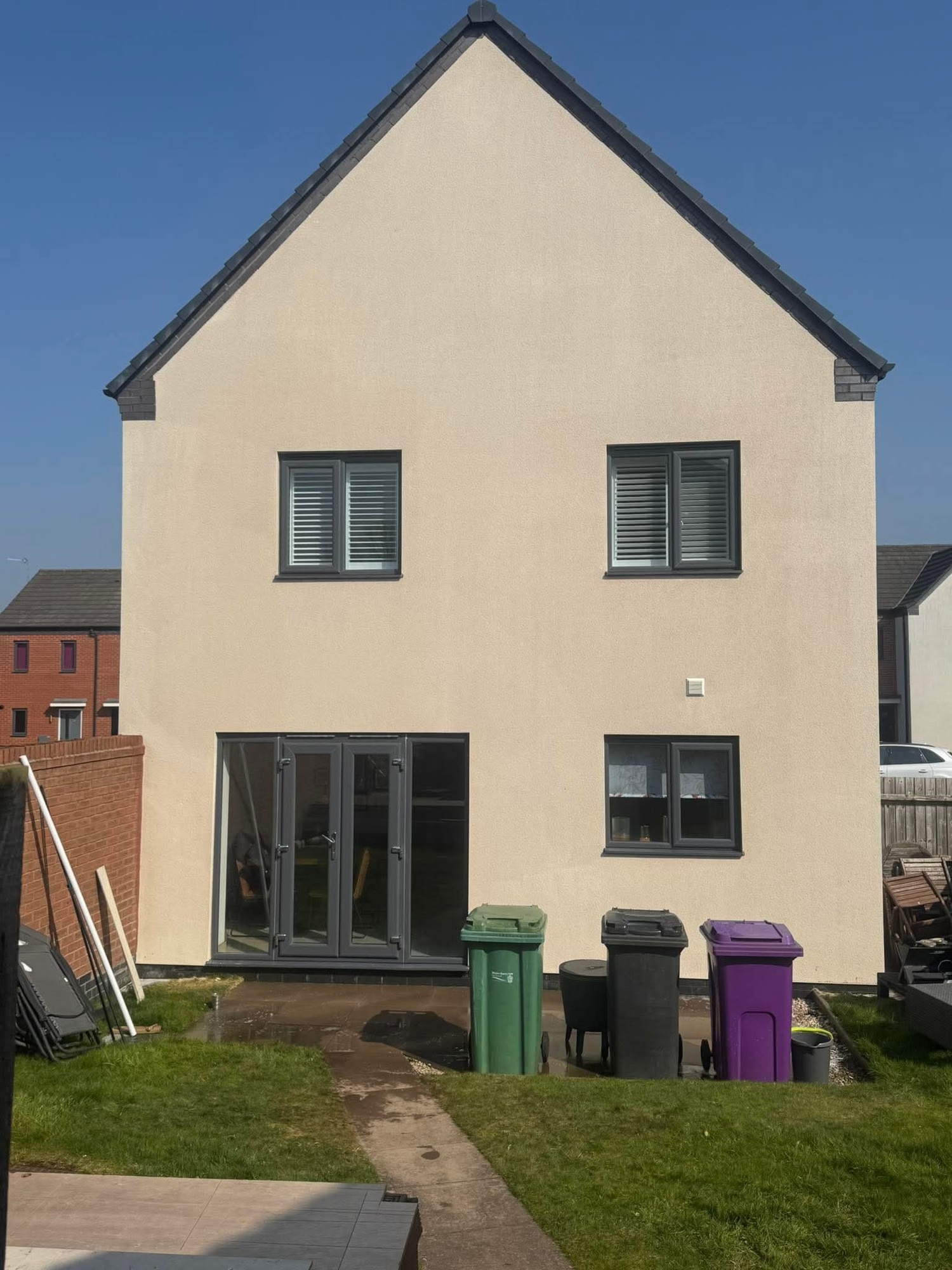
Most properties in Broadway benefit from professional render cleaning every 3 to 5 years, although this depends on the surrounding environment. Properties near trees, woodland, busy roads or coastal areas may require more frequent cleaning due to algae, mould and airborne contaminants. Our soft washing process removes existing growth and helps keep your render cleaner for longer.
Yes. Soft washing is specifically designed for delicate surfaces such as K-Rend, silicone render, monocouche render and painted render. Unlike high-pressure washing, it cleans at low pressure while treating biological growth at its source, reducing the risk of damage to the render finish.
We clean virtually all external render finishes, including K-Rend, Monocouche, Weber, Sto, silicone render, acrylic render, painted render, roughcast and pebble dash. Every cleaning method is tailored to the specific render type to achieve the best possible results.
Yes. Our specialist soft washing treatments are highly effective at removing green algae, red algae, black mould, mildew, lichen and other organic staining. We also apply professional biocide treatments to kill spores and slow down regrowth.
Because our process targets the biological growth rather than simply washing the surface, results typically last much longer than pressure washing alone. The exact lifespan depends on weather conditions, surrounding vegetation and the property’s location.
No. Our soft washing process is specifically designed to clean render safely. We use low-pressure application methods and specialist cleaning solutions that remove contamination without damaging the render surface when carried out by trained professionals.
The UK’s damp climate provides ideal conditions for algae, mould and other biological growth to develop on rendered surfaces. Areas with limited sunlight, nearby trees or persistent moisture are especially susceptible. Professional soft washing safely removes these contaminants and restores your property’s appearance.












































WhatsApp us