What separates a treatment from a wash is what stays behind. When a biocidal solution has broken down a colony, a residue of the active ingredient remains within the surface of the render, and it continues to suppress anything landing there afterwards. That residual effect is the reason a properly treated wall stays clear for years rather than months. A pressure wash leaves nothing at all. The visible growth is removed, the anchoring structures stay in the coating, the surface is saturated, and regrowth begins immediately from what survived. Our render cleaning services rely entirely on the chemical route because the lasting protection comes from the chemistry rather than from the cleaning. How long the residue lasts depends on the surface. A porous or heavily textured coating holds it well and gives a long interval; a smooth or highly water-repellent one holds less but colonises more slowly in any case. Render algae removal carried out with enough dwell to kill through the colony also leaves a stronger residual than a treatment rushed off the wall. What erodes it is straightforward: rainfall, sunlight and time. Render moss removal on horizontal details tends to run out first, since those surfaces catch the most water and the most debris. Professional render cleaning of a house in Bryanston is bought as much for the two or three years afterwards as for the day itself, and house render cleaning judged only on the immediate appearance misses most of what was paid for. Exterior render cleaning is protection as well as a clean. The two are bought together whether or not anybody says so.
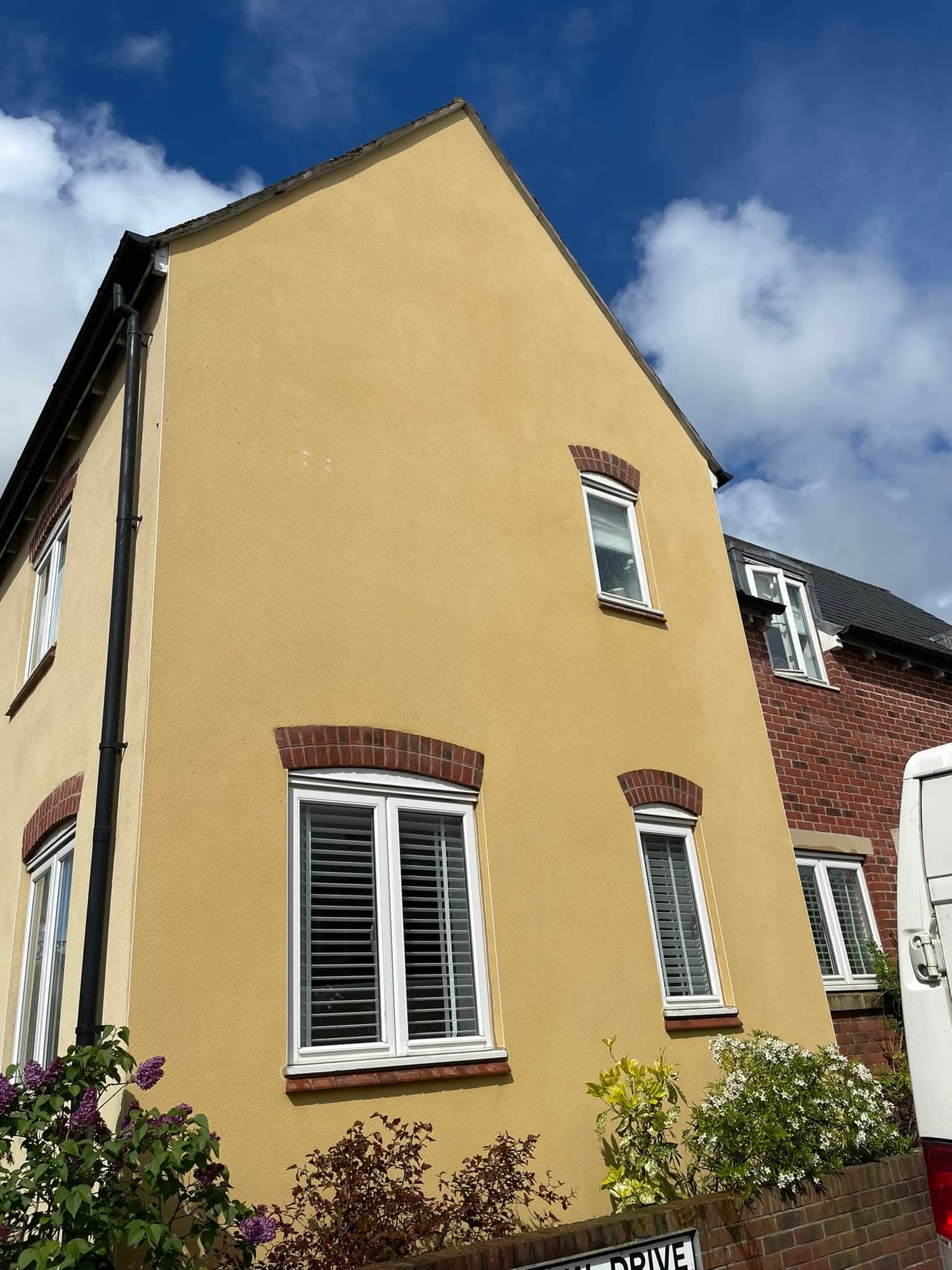
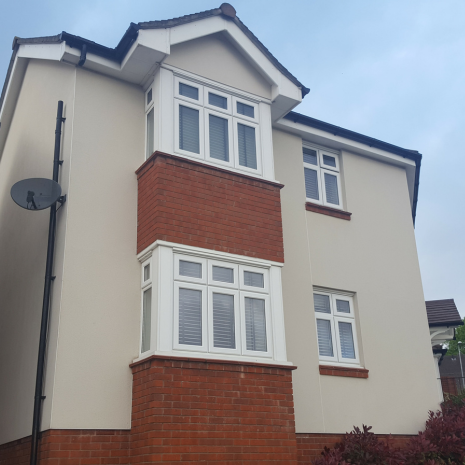

Silicone systems get the longest intervals of anything we treat, and the reason is a combination of two effects. The surface sheds water quickly, so colonisation is slow to begin with; and the residue left by a properly dwelled treatment continues suppressing whatever does land. K Rend cleaning done correctly frequently holds for four or five years and sometimes longer. That interval is the single strongest argument for treating these systems chemically. Getting that residual in place is the whole point of the method. Soft wash render cleaning applies a biocidal solution at a pressure barely above hose flow and in generous volume, because a hydrophobic face sheds solution before the chemistry finishes and a thin application simply runs off without leaving anything behind. The dwell is long, and a face that has dried too early is re-wetted rather than rinsed. Nothing mechanical touches the surface at any stage, since pigment runs through the material and abrasion removes it permanently. Silicone render cleaning that has been hurried loses both halves of the benefit, coming out patchy and offering no lasting protection either. Both failures come from the same shortcut. Render stain removal works differently, since mineral marks do not regrow and nothing needs to be left behind. Iron bleed from ties and brackets, cement residue at fixing points and dark runs beneath a leaking joint each need a specific product and a test patch first, and on a Bryanston property those are treated as one-off work while the biological element carries a stated expected interval. Nobody should expect a rust mark to stay away while the fixing behind it corrodes.
Monocouche render cleaning holds a residual better than almost any finish, because the scraped texture that makes it so good at collecting growth is equally good at retaining treatment. Softwashing UK takes advantage of that by applying generously rather than sparingly, so the profile is genuinely wet through rather than glazed on the peaks. A thin application leaves nothing behind and clears nothing properly either. The sequence is unchanged. Solution at low pressure in volume, a long dwell so growth is killed at root level, a repeat application on the heaviest deposits along copings and projecting bands, then a soft even rinse across each full face. What is rinsed away is the broken-down growth; what stays in the texture is the protection. Render pressure washing destroys both. It flattens the scrape, exposes the aggregate beneath, leaves permanent tracking, and removes any prospect of a residual because nothing has been left in a surface that has itself been damaged. Coloured render cleaning offers no top coat to renew over that, so the correction is recoating a whole elevation. That removes the protection along with the finish. Treated properly, render wall cleaning of monocouche gives an interval at the longer end of what any textured finish achieves, provided debris is not accumulating on the horizontal details. On buildings around Bryanston where a decade of growth had obscured the specified colour, the tone recovered over the following weeks is a genuine render restoration, and the wall then stays that way for several years rather than a single season. Debris left on a coping is what usually ends an interval early.
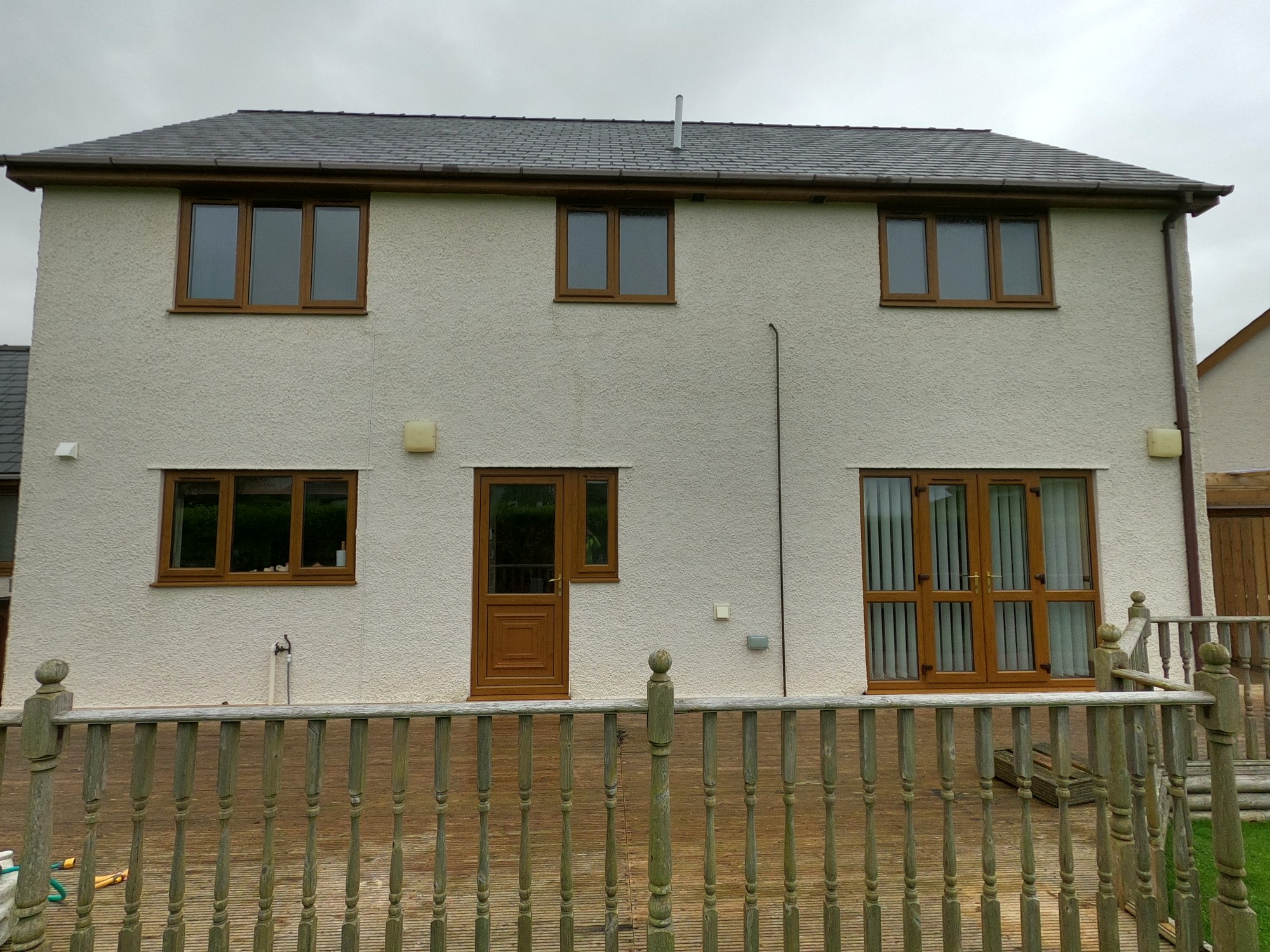
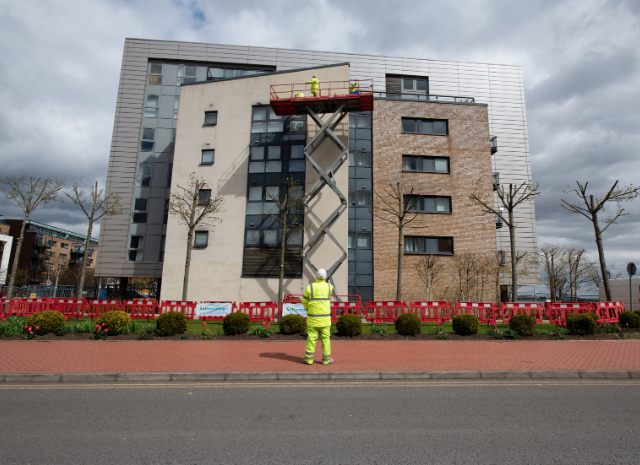

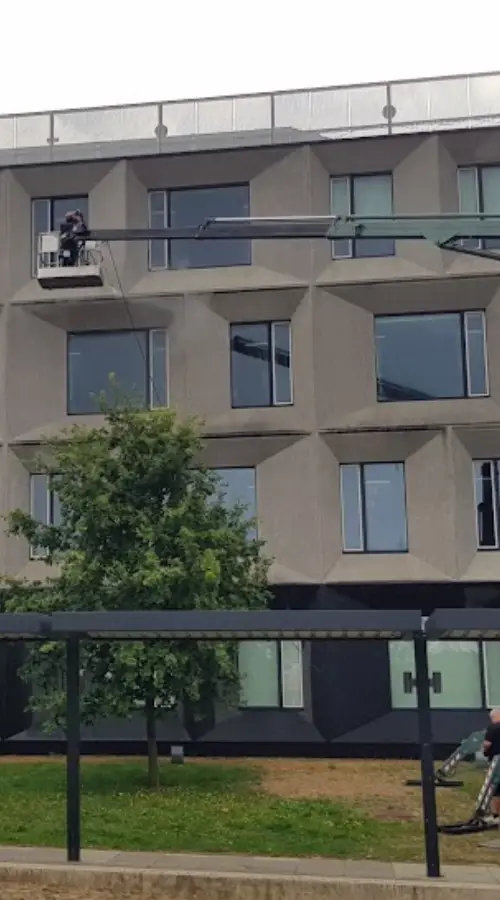
Residual protection is what makes a maintenance cycle affordable. If each visit left nothing behind, a large building would need treating annually and the cost would be prohibitive. Because a properly dwelled treatment continues suppressing growth for years, commercial render cleaning can sit on a sensible interval and still keep a property presentable throughout. The economics of a cycle depend entirely on that lasting effect. Getting that requires the work to be specified on method rather than duration. A programme priced on finishing quickly will cut the dwell, and cutting the dwell removes the residual along with much of the effect. A fast programme is nearly always a shorter-lived one. Access is established first — powered platforms, tower scaffold or extended pole systems according to height and standing ground — with the sequence arranged so elevations are treated whole and nothing dries before the rest has been wetted. Render soft washing delivers the volume and the contact time the residual depends on, while using very low water quantities, keeping run-off directable clear of entrances and parking, and producing negligible drift near occupied doorways. The programme is written around trading hours, deliveries and staff movement, with method statements and risk assessments issued in advance. Render facade cleaning specified this way is judged on the state of the building two years later rather than on completion day. That is the only test worth applying to a maintenance contract. Render mould removal on shaded and north-facing elevations is where the residual runs out first, and those faces usually set the render maintenance interval for premises in Bryanston. Where those faces return early, the interval is shortened for them alone.
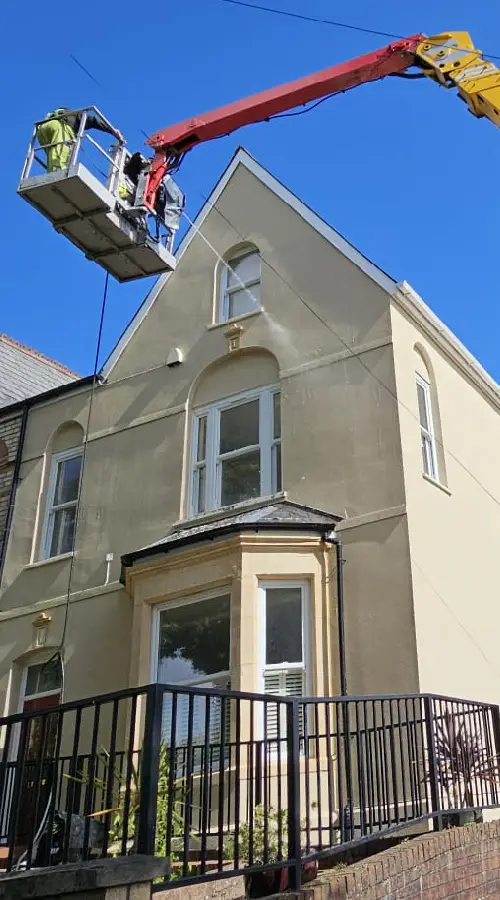
It is worth asking a contractor how long the work is expected to hold, because the answer says more about method than any description of the process. A firm working chemically will give you a range in years. A firm working with pressure will usually talk about the finish rather than the interval, because there is no residual protection to talk about. Nothing has been left in the surface to do anything. Render cleaning prices are established at an assessment from elevation count, working height, access arrangements and the extent of the growth, with an expected interval attached to the figure. The written render cleaning cost then holds. Affordable render cleaning is best judged across that interval rather than on the day, since a treatment lasting four years at a given price is cheaper than one lasting twelve months at half of it. The crews are render cleaning specialists rather than general exterior cleaners, and the residual effect depends directly on their judgement. Applying enough volume, holding the dwell, and re-wetting a face that has dried too quickly are what leave the surface protected rather than merely clean. Everything used is an eco friendly render cleaning product chosen because it breaks down safely once its work is complete, which is a balance rather than a contradiction: the residue suppresses regrowth for a useful period and then degrades. Anyone comparing firms in search of the best render cleaning service should ask what will be left in the surface afterwards, and what that means for how soon they will be calling again. A firm that has never thought about it has never measured its own work.
Bryanston falls within our regular working patch, and the enquiries here come from a broader mix of people than most would assume. Homeowners are the majority, and residential render cleaning on an owner-occupied property is usually a single visit arranged around whatever suits the household. Most are a single day with nobody needing to be present. Landlords are the next largest group, generally wanting the work between tenancies or ahead of an inspection, and they tend to book on a cycle once they have seen how long a treatment holds. Managing agents and estate managers come to us for buildings where the external walls are a shared responsibility, and those are quoted with a written specification rather than a verbal figure so the instruction can be approved properly. Buyers and sellers form a steady stream of their own, usually working to a fixed date. Both tend to want the work finished several weeks before it matters. We also get a reasonable number of calls from people who have simply been quoted for painting and want to know whether cleaning would do instead. Frequently it would, and we will say so plainly even where the answer means a smaller job for us. Turning a painting enquiry into a clean is usually the cheapest advice anybody gets that week. None of those groups is quoted differently. There is no travel charge, no minimum job size and no charge for the assessment, and a single elevation is priced on exactly the same basis as a full property. Anyone searching render cleaning near me should expect a local render cleaning company to treat a one-wall enquiry as seriously as a whole building.
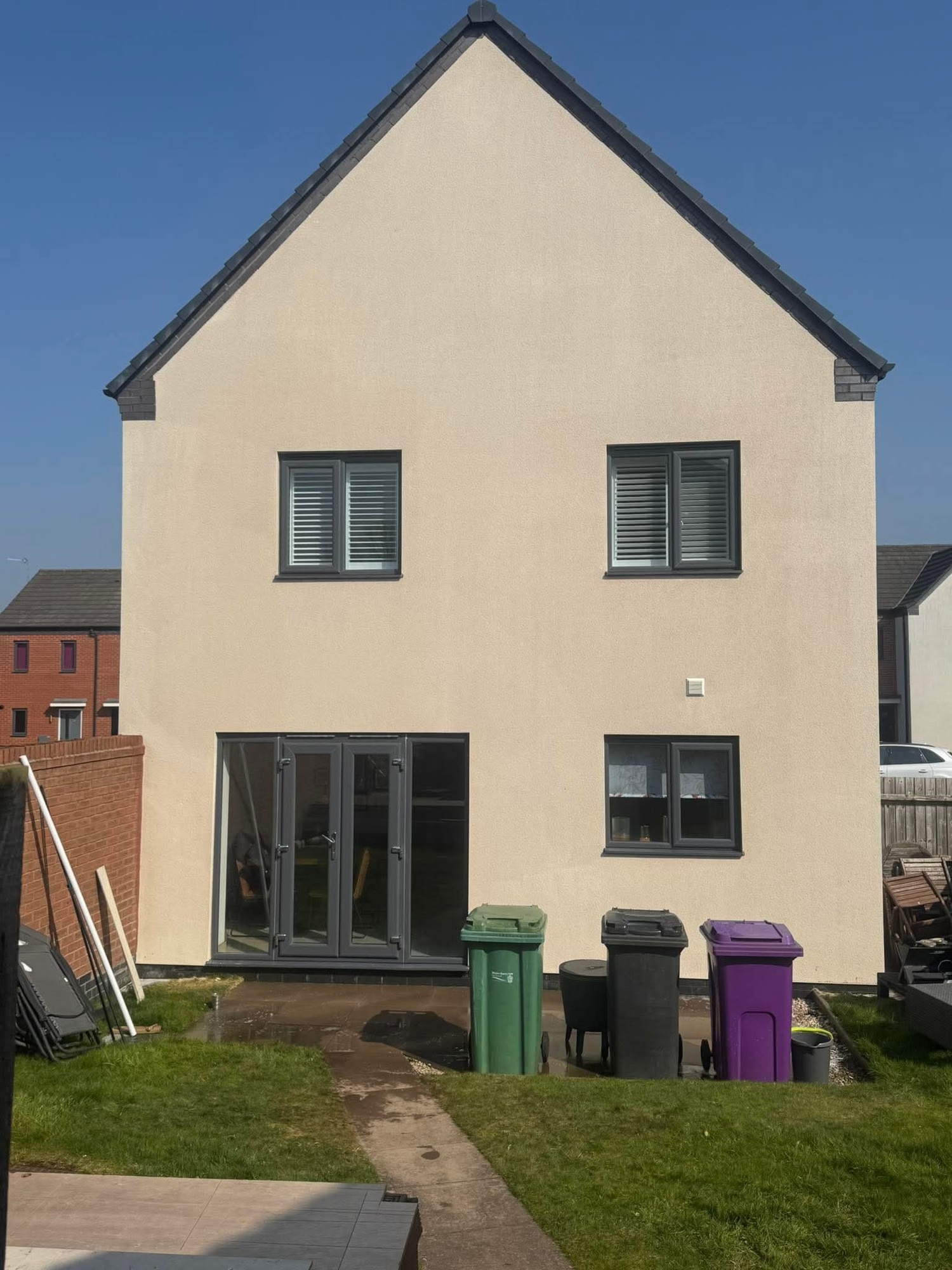
Most properties in Bryanston benefit from professional render cleaning every 3 to 5 years, although this depends on the surrounding environment. Properties near trees, woodland, busy roads or coastal areas may require more frequent cleaning due to algae, mould and airborne contaminants. Our soft washing process removes existing growth and helps keep your render cleaner for longer.
Yes. Soft washing is specifically designed for delicate surfaces such as K-Rend, silicone render, monocouche render and painted render. Unlike high-pressure washing, it cleans at low pressure while treating biological growth at its source, reducing the risk of damage to the render finish.
We clean virtually all external render finishes, including K-Rend, Monocouche, Weber, Sto, silicone render, acrylic render, painted render, roughcast and pebble dash. Every cleaning method is tailored to the specific render type to achieve the best possible results.
Yes. Our specialist soft washing treatments are highly effective at removing green algae, red algae, black mould, mildew, lichen and other organic staining. We also apply professional biocide treatments to kill spores and slow down regrowth.
Because our process targets the biological growth rather than simply washing the surface, results typically last much longer than pressure washing alone. The exact lifespan depends on weather conditions, surrounding vegetation and the property’s location.
No. Our soft washing process is specifically designed to clean render safely. We use low-pressure application methods and specialist cleaning solutions that remove contamination without damaging the render surface when carried out by trained professionals.
The UK’s damp climate provides ideal conditions for algae, mould and other biological growth to develop on rendered surfaces. Areas with limited sunlight, nearby trees or persistent moisture are especially susceptible. Professional soft washing safely removes these contaminants and restores your property’s appearance.









































WhatsApp us