Render is one of the cheapest exterior finishes to own and one of the most expensive to replace, and the gap between those two facts is where the case for regular cleaning sits. A coating kept clear of organic growth will do its job for decades. One left to hold moisture against itself through repeated winters will eventually crack, blow at the edges and need remedial work costing many times what a clean would have. Our render cleaning services are, in that sense, maintenance rather than cosmetics. A biocidal solution applied at low pressure kills algae and lichen at root level, so the surface stops retaining water and returns to drying at the rate it was designed for. Render algae removal restores the coating’s behaviour as much as its appearance. The arithmetic is worth doing. A domestic clean every three to five years is a modest recurring figure. Recoating a whole property is a different order of expense entirely, involving scaffold, material and several days of labour, and it is the outcome that neglect eventually produces. Render moss removal along ledges and copings matters disproportionately in that calculation, since those horizontal surfaces stay wet longest and cause the most damage where a coating is thinnest. Professional render cleaning of a house in Charlton Down is not an indulgence but the least expensive intervention available on the building, and house render cleaning deferred long enough stops being a cleaning question altogether. Exterior render cleaning is cheap precisely because it is done before anything has failed. Every year it is deferred, the eventual bill moves in one direction only.
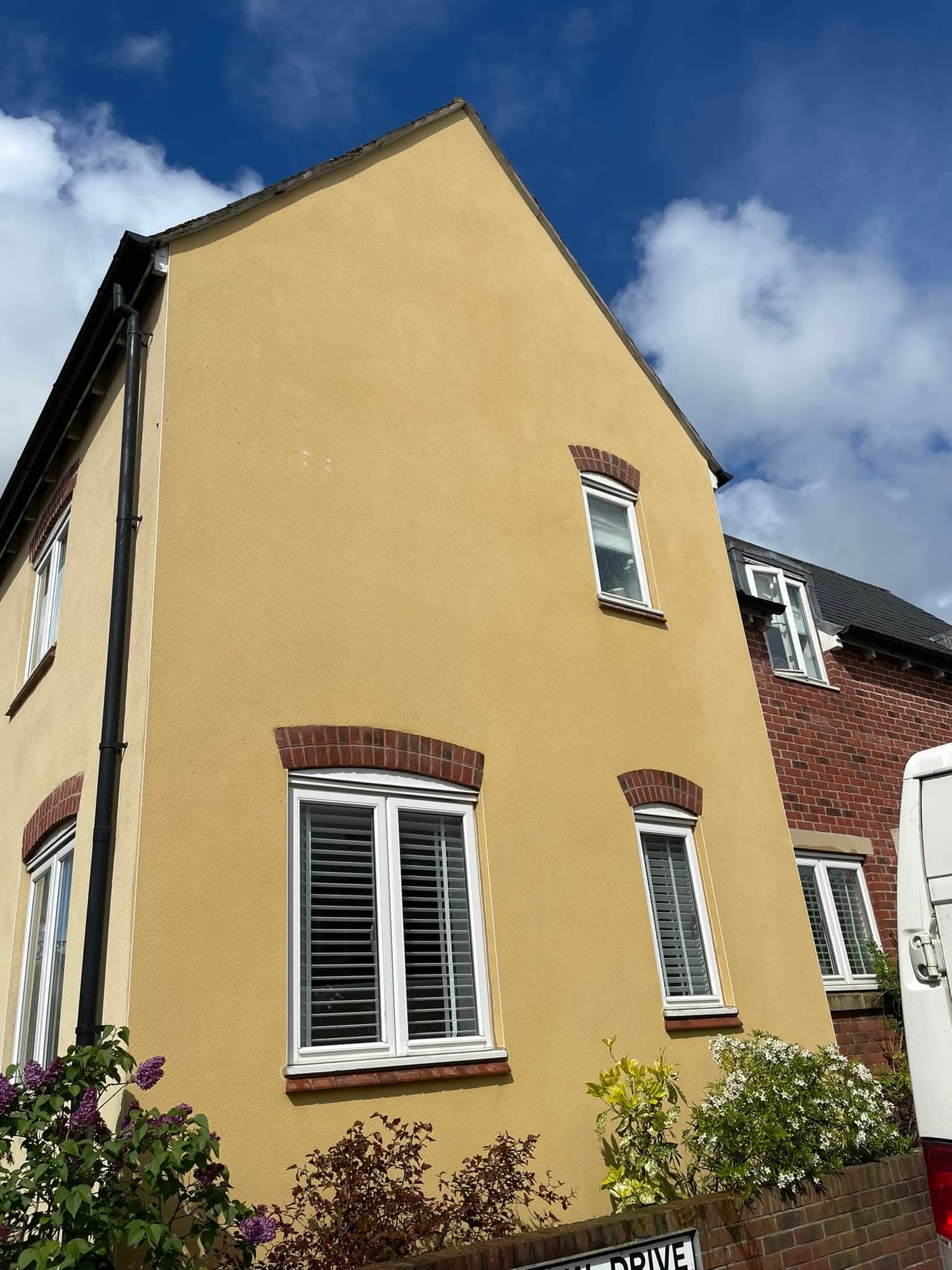
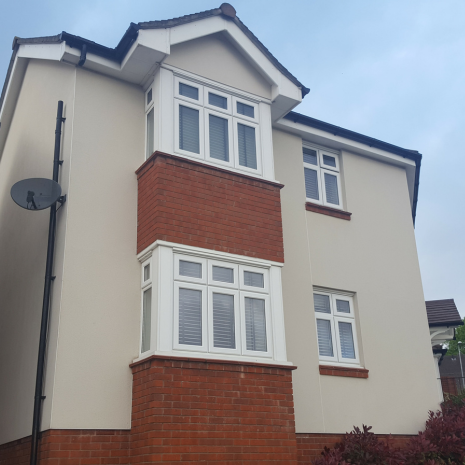

A silicone system is specified partly because of what it saves over time. It never needs painting, holds its colour, and resists water and staining well enough that maintenance amounts to an occasional clean. Softwashing UK sees plenty of houses where the render has cost less to keep over fifteen years than a painted equivalent would over five. That economy depends entirely on the cleaning being done correctly. K Rend cleaning carried out with a lance removes pigment permanently, and the only remedy for a scoured elevation is recoating — which eliminates the whole cost advantage of the system in a single afternoon. Nothing recovers that; the elevation simply has to be recoated. Soft wash render cleaning protects it instead. A biocidal solution applied at a pressure barely above hose flow, dwelled long enough to destroy algae and lichen at root level, then rinsed gently, with no mechanical contact anywhere. Silicone render cleaning also benefits from residue held in the surface afterwards, which suppresses regrowth and stretches the interval further than most finishes achieve. Render stain removal is the element most likely to recur, and it is worth understanding why before budgeting. Iron bleed from a corroding fixing returns while the fixing corrodes; dark runs beneath a leaking joint come back while the joint leaks. Each needs its own product and a test patch first. On a Charlton Down property we will say which marks are a one-off cost and which will keep appearing until something on the building is put right, because that distinction changes what the wall costs to maintain. Budgeting for a recurring mark is quite different from budgeting for a one-off.
The whole economic case for careful monocouche cleaning is the price of the alternative. Recoating a through-coloured finish means scaffold, a matched colour batch across an entire building, and several days of skilled labour, because a patch on this material never blends. Set against that, Monocouche render cleaning at sensible intervals is an almost trivial expense. The difference between the two figures is usually two orders of magnitude. The risk is not neglect so much as impatience. Render pressure washing produces a fast result and destroys the scraped profile, exposes the aggregate beneath and leaves tracking that catches low sun permanently. Coloured render cleaning offers no top coat to renew over the damage, so a single ill-judged afternoon converts a maintenance item into a capital one. The correct process costs nothing extra in materials and only time. Solution is applied at low pressure in enough volume to soak through the texture rather than glaze the peaks, dwells long enough to kill growth at root level, is repeated on the heaviest deposits along copings and projecting bands, and is rinsed softly and evenly across each full face. None of that requires anything beyond time and an unhurried operator. Done that way, render wall cleaning of monocouche keeps the finish serviceable for the life of the building, with each visit costing a fraction of a percent of what replacement would. On properties around Charlton Down where a decade of growth had obscured the specified colour, the tone returning across the following weeks is a render restoration achieved for the price of a day’s work rather than a project. That is the whole argument for treating the finish gently.
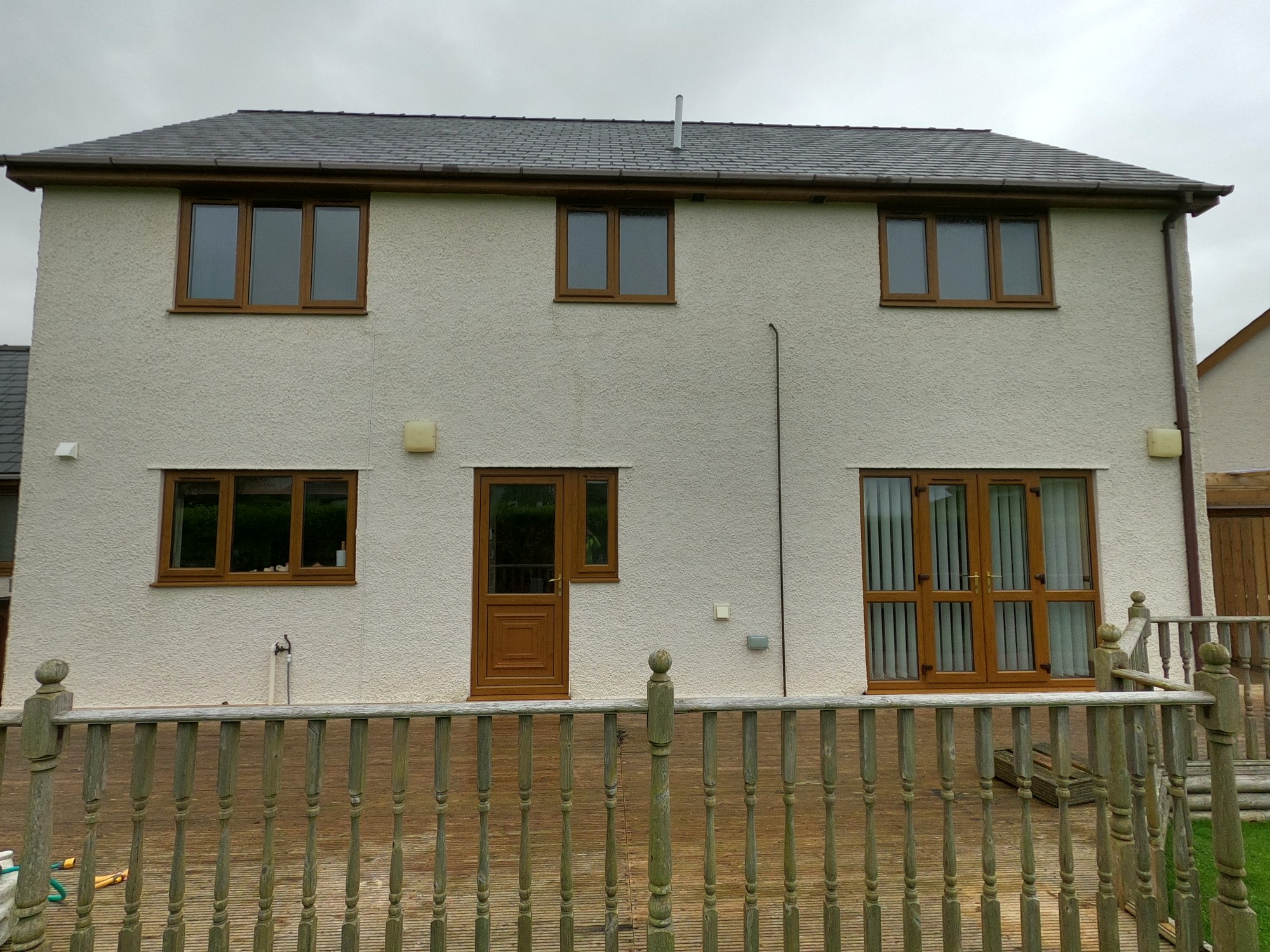
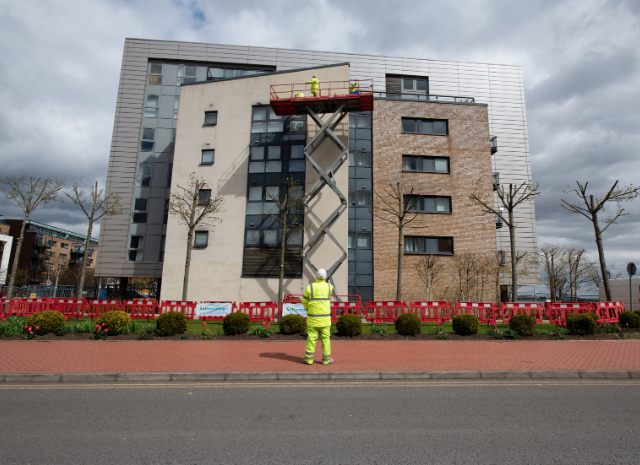

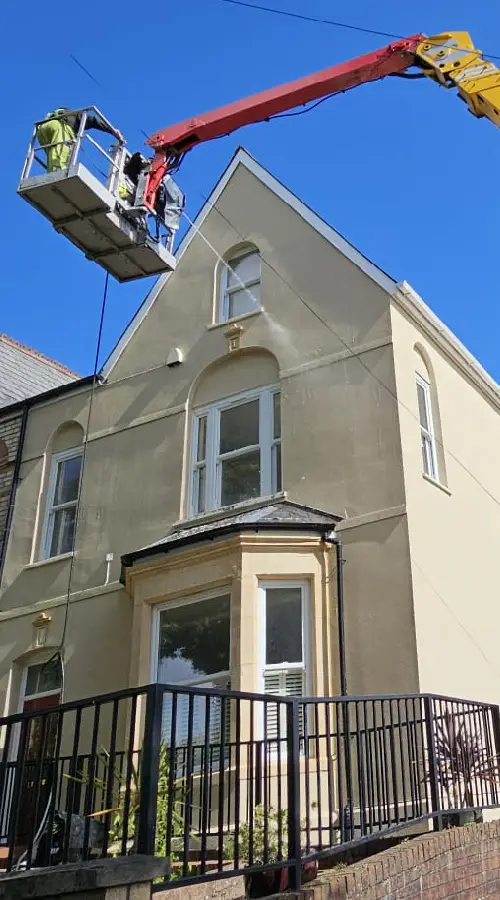
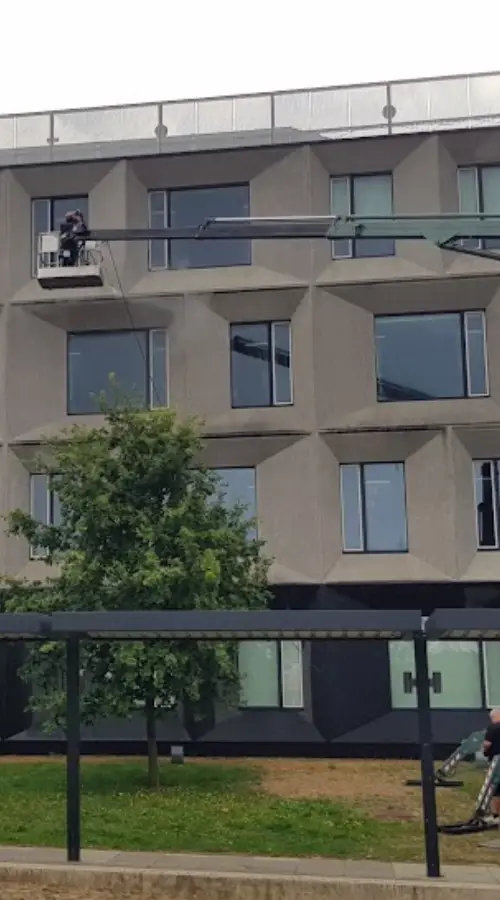
Render sits in an awkward place on most commercial budgets. It is not urgent, so it gets deferred; and once deferred long enough it stops being a modest operating cost and becomes a capital project. Commercial render cleaning handled as a scheduled item keeps it firmly in the first category. The numbers usually make the argument on their own. Treating elevations on a known interval is a predictable annual figure that can be budgeted and forecast. Leaving them until the coating has failed brings scaffold, materials, disruption and a specification exercise, at a scale that has to be approved rather than simply spent. Delivery is straightforward once the decision is made. Access is established first — powered platforms, tower scaffold or extended pole systems according to height and standing ground — with the programme written around trading hours, deliveries and staff movement, and method statements and risk assessments issued in advance. Render soft washing is used across every elevation, giving even coverage, very low water volumes, run-off that can be directed clear of entrances and parking, and negligible drift near occupied doorways. Render facade cleaning delivered consistently across a whole building is also far easier to justify to a board than a partial programme. Render mould removal on shaded and north-facing elevations drives the interval, since those faces darken fastest and return within a year if growth was rinsed rather than killed. Building them into a render maintenance cycle at a shorter frequency than the rest is usually cheaper than treating everything more often, and it keeps premises in Charlton Down presentable on a figure that does not move from year to year. Predictability is frequently worth more to a budget holder than the saving itself.
The useful way to compare quotations is by cost per year rather than cost per visit. A cheap wash needing repetition every twelve months is more expensive than a properly executed treatment holding for four, and it also leaves the coating in worse condition each time. The headline figure tells you very little on its own. Two quotations can differ by a third and still cost the same across a decade. Render cleaning prices are calculated from elevation count, working height, access arrangements and how much growth has accumulated, all established at an assessment rather than guessed remotely. Once done, the render cleaning cost is confirmed in writing and holds. Affordable render cleaning means the lowest annual cost of keeping a building sound, which is rarely the lowest number on a quotation. The crews are render cleaning specialists rather than general exterior cleaners, and that matters commercially as much as technically. Damage to a coating converts a maintenance expense into a capital one, and recognising an overpainted section, a fragile bead or hairline cracking before treating it is what prevents that happening. Everything used is an eco friendly render cleaning product chosen because it breaks down safely after use, which matters wherever run-off reaches planting and drainage. Anyone comparing firms in search of the best render cleaning service should ask how long the work is expected to hold. A figure with no interval attached to it is only half a quotation, and the interval is the part that determines what a building actually costs to keep. Anybody unwilling to estimate one has not thought past the invoice.
Charlton Down falls within our normal working patch, and residential render cleaning here is quoted the same way as anywhere else, with one point worth making about how the work can be phased. Not everything has to be done at once. Where a property has several rendered elements — the main elevations, a garage, a porch, a boundary wall — each is priced separately, so it is entirely possible to treat the worst faces this year and the remainder next. Plenty of people do exactly that, and it spreads a cost that would otherwise land in one go. Adding a structure later is priced on its own rather than triggering a fresh quotation for the whole property. Nothing is lost by taking the work in stages provided the stages are sensible ones. The one thing worth avoiding is deferring an elevation so long that it moves into needing two applications rather than one. That is the point at which phasing stops saving money, and we will say plainly at the assessment which faces are approaching it and which have several years in hand. There is no travel charge, no minimum job size and no charge for the assessment itself, and a single elevation is quoted on exactly the same basis as a full property. A second visit within the same year is priced as a return rather than as a new job. Anyone searching render cleaning near me should expect a quotation broken into parts they can choose between, and a local render cleaning company willing to tell you which of those parts can safely wait is being considerably more useful than one quoting for everything at once.
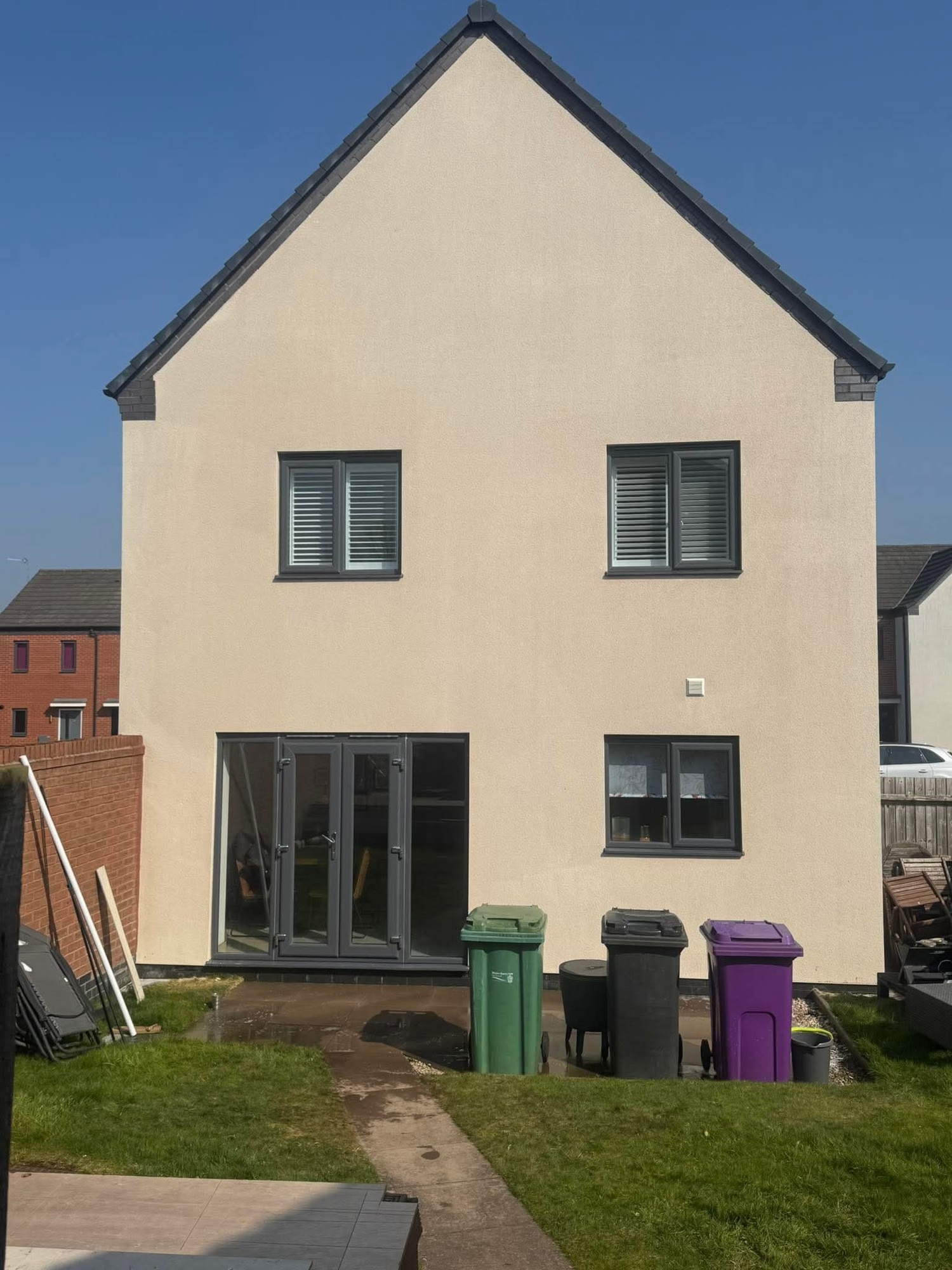
Most properties in Charlton Down benefit from professional render cleaning every 3 to 5 years, although this depends on the surrounding environment. Properties near trees, woodland, busy roads or coastal areas may require more frequent cleaning due to algae, mould and airborne contaminants. Our soft washing process removes existing growth and helps keep your render cleaner for longer.
Yes. Soft washing is specifically designed for delicate surfaces such as K-Rend, silicone render, monocouche render and painted render. Unlike high-pressure washing, it cleans at low pressure while treating biological growth at its source, reducing the risk of damage to the render finish.
We clean virtually all external render finishes, including K-Rend, Monocouche, Weber, Sto, silicone render, acrylic render, painted render, roughcast and pebble dash. Every cleaning method is tailored to the specific render type to achieve the best possible results.
Yes. Our specialist soft washing treatments are highly effective at removing green algae, red algae, black mould, mildew, lichen and other organic staining. We also apply professional biocide treatments to kill spores and slow down regrowth.
Because our process targets the biological growth rather than simply washing the surface, results typically last much longer than pressure washing alone. The exact lifespan depends on weather conditions, surrounding vegetation and the property’s location.
No. Our soft washing process is specifically designed to clean render safely. We use low-pressure application methods and specialist cleaning solutions that remove contamination without damaging the render surface when carried out by trained professionals.
The UK’s damp climate provides ideal conditions for algae, mould and other biological growth to develop on rendered surfaces. Areas with limited sunlight, nearby trees or persistent moisture are especially susceptible. Professional soft washing safely removes these contaminants and restores your property’s appearance.









































WhatsApp us