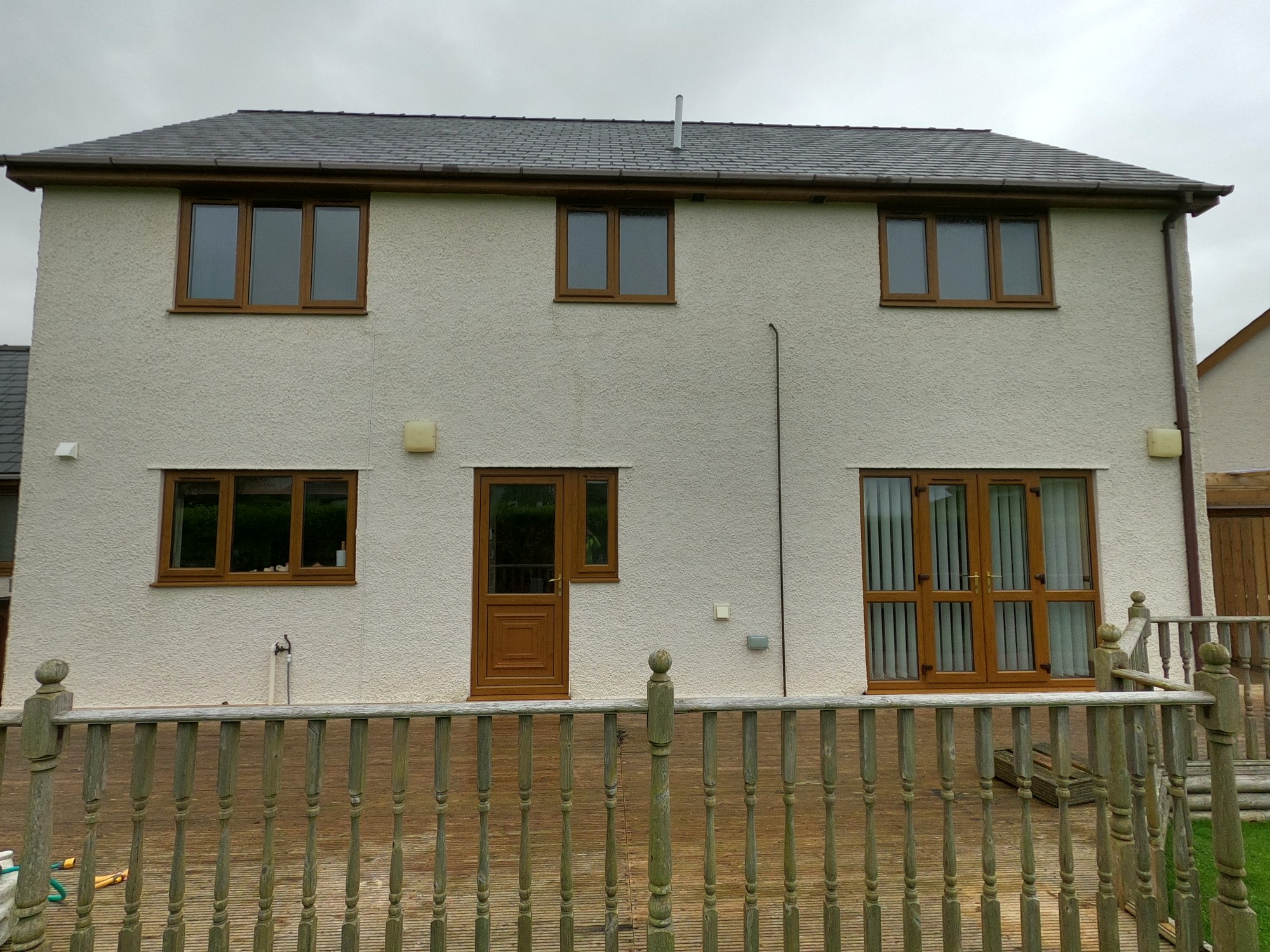
A house is rarely the whole of the job. Rendered garages, porches, boundary and retaining walls, garden rooms, outbuildings and the flanks of extensions all form part of what people see, and leaving them out produces a building that looks half-attended-to. Our render cleaning services are quoted across everything rendered on a property, with each element priced separately so anything can be included or left out as the owner prefers. Low-level structures are frequently in the worst condition of all. A boundary wall sits in shade for much of the day, catches splash from the ground on both faces, collects debris along its coping and is rarely more than a metre or two from planting. Growth on one is often heavier than anything on the house itself. The method does not change with the element. A biocidal solution is applied at low pressure, dwelled long enough to destroy the colony at root level, then rinsed gently. Render algae removal works identically on a garage as on a gable, and render moss removal along the coping of a low wall follows the same principle of killing the deposit and letting it release rather than scraping it away. What does change is the assessment. A detached outbuilding may carry a completely different coating from the house, applied decades apart, and treating both at the same strength suits neither. Professional render cleaning of a property in Charminster is specified element by element, and house render cleaning that stops at the main building leaves the most heavily colonised surfaces untouched. Exterior render cleaning is worth doing across everything or it is barely worth doing at all.
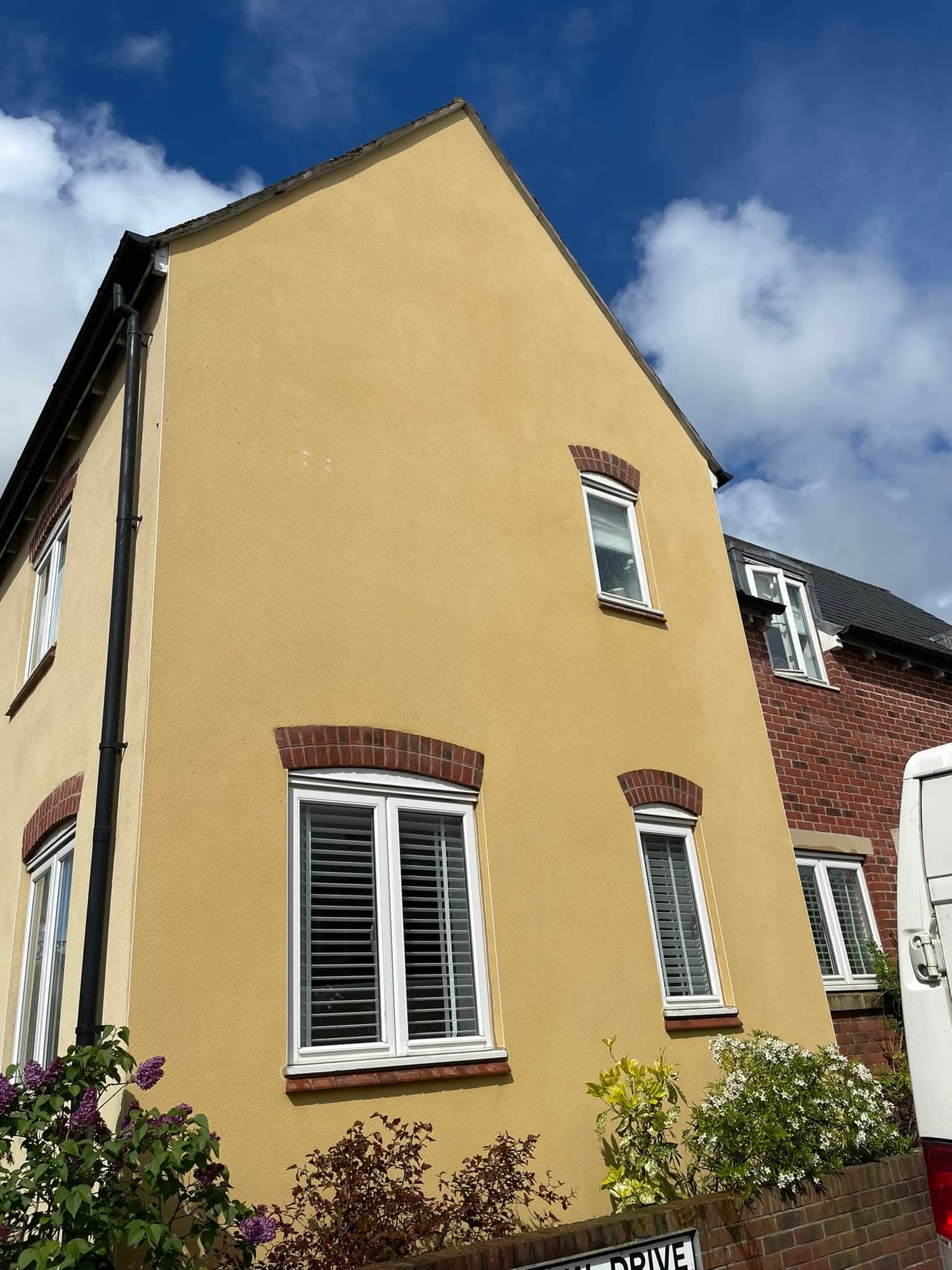
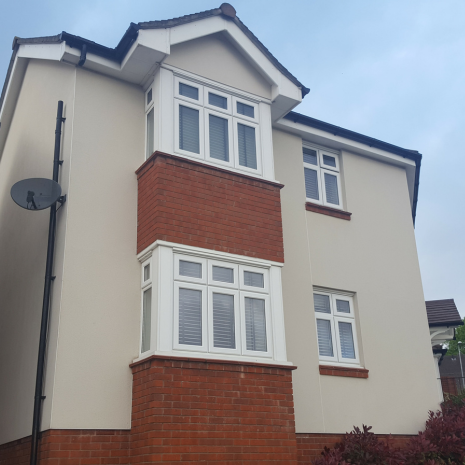

On newer houses the garage, porch and any extension are usually finished in the same silicone system as the main elevations, applied at the same time and behaving identically. That makes K Rend cleaning across a whole property straightforward, though it also means growth appears on all of it at once rather than on the house alone. Low structures are the ones most often overlooked and most often the worst. A garage flank sitting in shade beside a boundary, or a porch return that never catches sun, will colonise well ahead of anything at first-floor level, and cleaning the house while leaving those makes the difference more obvious rather than less. A bright elevation above a green garage draws the eye straight to the part that was skipped. Soft wash render cleaning treats every element the same way: a biocidal solution at a pressure barely above hose flow, a long dwell to destroy algae and lichen at root level, then a gentle rinse. Nothing mechanical touches the surface anywhere, because pigment runs through the material and abrasion removes it permanently. Silicone render cleaning also requires generous volume on a water-repellent face, and low-level structures take proportionally more because the growth on them is usually denser. Render stain removal tends to concentrate at low level too. Splash marking at the base of a garage wall, cement residue left where a drive was laid, and rust bleed from a bracket or a gate fixing all need targeted products and a test patch first. On a Charminster property those are itemised alongside the elevations they sit on rather than absorbed into a single figure.
Monocouche is often used on the house while a garage or boundary wall carries something older and quite different, and the two need treating as separate jobs even though they sit a few metres apart. Applying a mix suited to a hardy older render to a through-coloured mineral finish risks the colour; applying the gentler approach to a heavily colonised older wall achieves very little. Monocouche render cleaning is specified for the finish rather than for the property. Two structures on one plot can quite reasonably need two different strengths and two different dwell times. On the monocouche itself the process is consistent: solution applied at low pressure in enough volume to soak through the scraped texture rather than glaze the peaks, a long dwell to kill growth at root level, a repeat application on the heaviest deposits along copings and projecting bands, and a soft even rinse across each full face. Render pressure washing is excluded everywhere on this material regardless of which element is being treated. It flattens the scrape, exposes the aggregate beneath and leaves tracking visible in low sun permanently, and because coloured render cleaning has no top coat to renew, the correction is recoating an entire elevation. Treated correctly across every rendered element, render wall cleaning leaves a property reading consistently from the road rather than showing a bright house beside a green garage. On buildings around Charminster where growth had obscured the specified colour for years, what returns over the weeks after treatment is the original tone throughout, and render restoration is a fair description of an outcome achieved without applying anything to the surface.
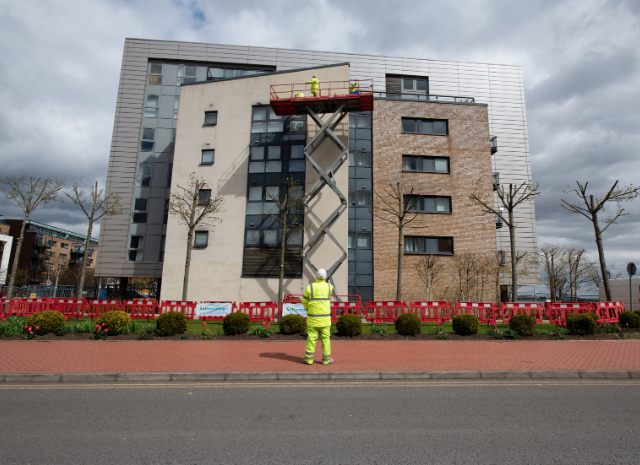

Commercial sites carry far more rendered surface than the main building. Bin stores, plant enclosures, boundary and retaining walls, gatehouses, canopy returns and the flanks of ancillary buildings all form part of what visitors see, and they are almost always in worse condition than the elevations anybody thought to quote for. Commercial render cleaning is worth scoping across a whole site rather than the principal structure alone. Those low-level elements are usually the cheapest part of a programme and make a disproportionate difference to how a site presents. They also need very little access equipment, so they can often be added to a visit already planned for the main elevations at minimal extra cost. Treating them at the same time also avoids a second mobilisation later in the year. Access for the building itself is established first — powered platforms, tower scaffold or extended pole systems according to height and standing ground — with the programme written around trading hours, deliveries and staff movement, and method statements and risk assessments issued in advance. Render soft washing is used on every element, giving even coverage, very low water volumes, run-off that can be directed clear of entrances and parking, and negligible drift near occupied doorways. Render facade cleaning of a main elevation beside an untouched bin store is a false economy that undoes much of the benefit. Render mould removal is often heaviest on exactly those shaded ancillary structures, and building them into the render maintenance cycle alongside the shaded elevations keeps the whole of a premises in Charminster consistent rather than only the parts visible from the entrance.
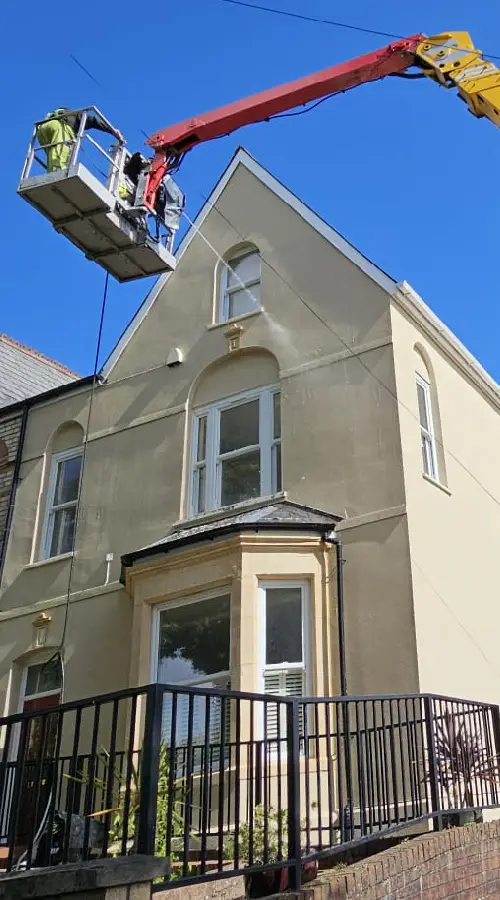
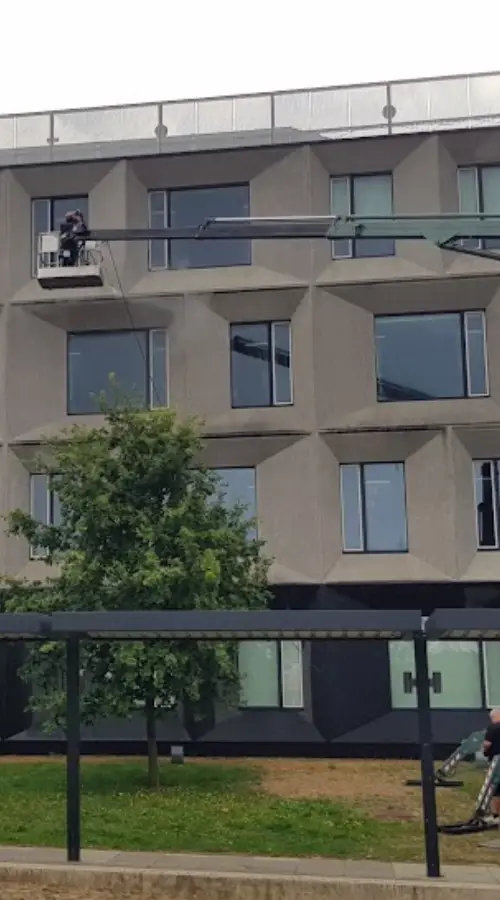
Scope is where most disagreements in this trade begin, and an itemised quotation removes nearly all of them. Softwashing UK lists each rendered element separately — main elevations, garage, porch, outbuilding, boundary wall — with a figure against each, so you can see exactly what is covered and adjust it before anything is booked. Render cleaning prices for each element are worked out from its height, its access, its coating and the extent of growth on it, all established during the assessment. Once agreed, the render cleaning cost holds, and if you decide to add a structure later it is priced on its own rather than triggering a fresh quotation for the whole property. Affordable render cleaning frequently means treating the elements that matter now and leaving others for a future visit, which is a perfectly sensible way to spread the work. The crews are render cleaning specialists rather than general exterior cleaners, and on a property with several different structures that experience earns its keep. Different coatings applied in different decades need different strengths, and recognising which is which prevents an outbuilding being treated as though it were a modern house wall. Every product used is an eco friendly render cleaning treatment chosen because it breaks down safely after use, which matters most around low-level structures where run-off lands directly in planting. Anyone comparing firms in search of the best render cleaning service should ask for the quotation broken down. A single total tells you nothing at all about what has been left out. Itemising also makes it obvious where the cheapest gains on a property actually are.
What gets included in a quotation varies a great deal across this patch, mainly because of how much rendered structure sits alongside the house. Residential render cleaning at Godmanstone, Nether Cerne and Sydling St Nicholas frequently involves a main building plus a rendered outbuilding or two, and each is priced separately so an owner can take all of it or start with the house. Up Sydling, Hermitage and Hilfield bring plenty of properties with rendered boundary and retaining walls, which are usually the most heavily colonised surfaces on a plot. They sit low, stay shaded, catch splash from the ground and collect debris along the top, and treating them costs relatively little compared with the difference they make. Batcombe, Holway, Holywell and Leigh include a number of older properties where outbuildings carry coatings applied decades apart from the house, often in quite different materials. Those are assessed individually rather than assumed to match, since a strength suited to one would be wrong for the other. Where an outbuilding turns out to be too fragile to treat, we say so rather than including it for the sake of a larger figure. None of these addresses attracts a travel charge or a minimum job size, and a single structure is quoted on exactly the same basis as a full property. A boundary wall alone is perfectly worth a visit. Anyone searching render cleaning near me should expect the quotation to list everything rendered on the plot rather than only the front of the house, and a local render cleaning company that has walked the whole boundary before pricing is one that will not be finding extras halfway through the day.
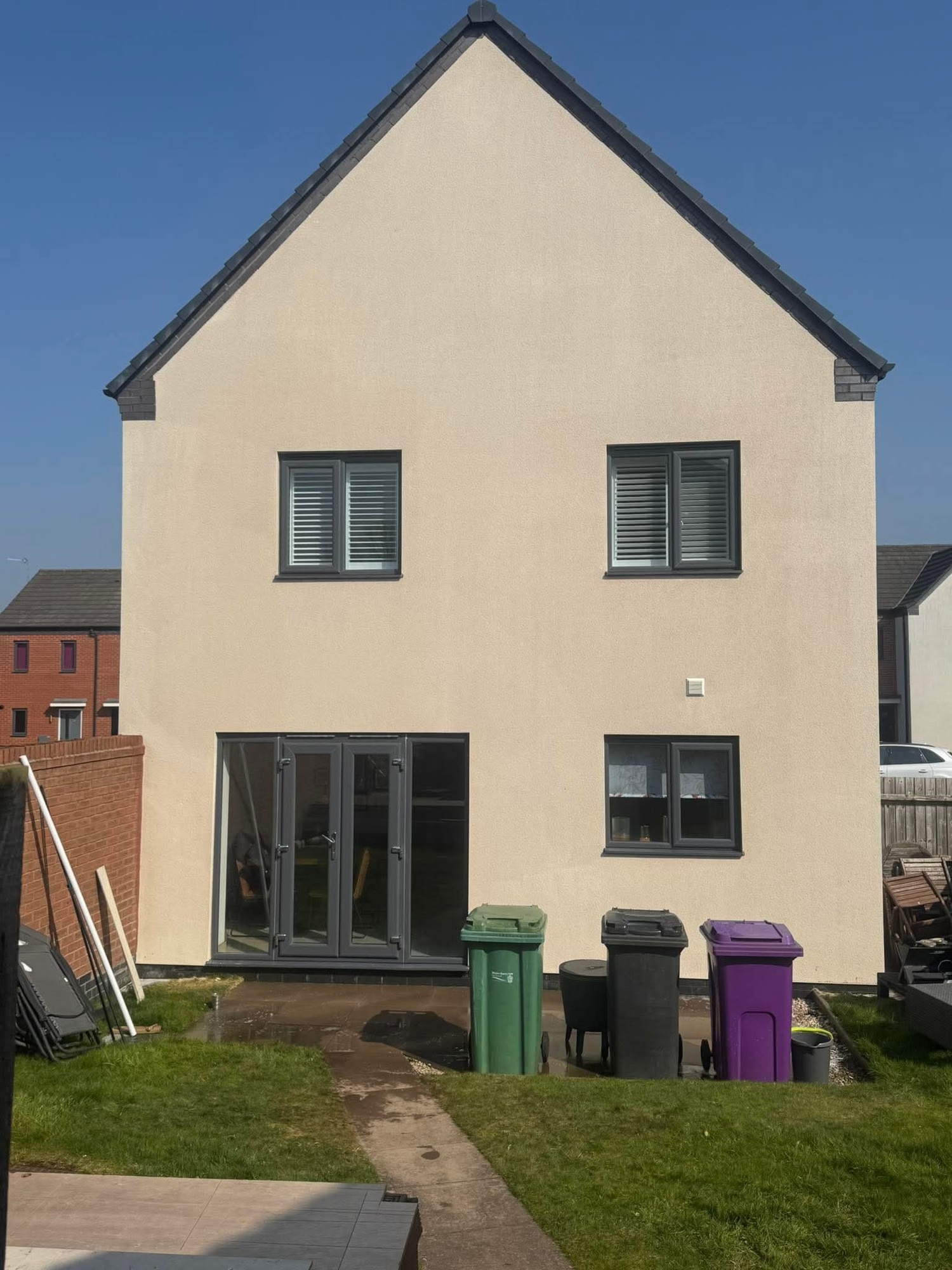
Most properties in Charminster benefit from professional render cleaning every 3 to 5 years, although this depends on the surrounding environment. Properties near trees, woodland, busy roads or coastal areas may require more frequent cleaning due to algae, mould and airborne contaminants. Our soft washing process removes existing growth and helps keep your render cleaner for longer.
Yes. Soft washing is specifically designed for delicate surfaces such as K-Rend, silicone render, monocouche render and painted render. Unlike high-pressure washing, it cleans at low pressure while treating biological growth at its source, reducing the risk of damage to the render finish.
We clean virtually all external render finishes, including K-Rend, Monocouche, Weber, Sto, silicone render, acrylic render, painted render, roughcast and pebble dash. Every cleaning method is tailored to the specific render type to achieve the best possible results.
Yes. Our specialist soft washing treatments are highly effective at removing green algae, red algae, black mould, mildew, lichen and other organic staining. We also apply professional biocide treatments to kill spores and slow down regrowth.
Because our process targets the biological growth rather than simply washing the surface, results typically last much longer than pressure washing alone. The exact lifespan depends on weather conditions, surrounding vegetation and the property’s location.
No. Our soft washing process is specifically designed to clean render safely. We use low-pressure application methods and specialist cleaning solutions that remove contamination without damaging the render surface when carried out by trained professionals.
The UK’s damp climate provides ideal conditions for algae, mould and other biological growth to develop on rendered surfaces. Areas with limited sunlight, nearby trees or persistent moisture are especially susceptible. Professional soft washing safely removes these contaminants and restores your property’s appearance.















































WhatsApp us