Softwashing UK are frequently asked to compare soft washing against pressure washing, and the fairest way to answer is to describe what each wall looks like five years later rather than five minutes later. A pressure washed elevation is impressive on the day. Growth is stripped away visibly and quickly, and the immediate contrast is dramatic. What has happened underneath is less encouraging. The force required to detach growth also detaches surface material, opening the texture and, on through-coloured finishes, lifting pigment unevenly. Water is driven into the coating, and any root structures within the texture survive. Within a season, regrowth begins from that surviving base, and it establishes faster than before because the surface is now more open and holds moisture more readily. By year three the wall usually looks much as it did, with the added problem of patchy weathering where pigment was lost. A soft washed elevation is undramatic on the day. Treatment is applied at low pressure, left to dwell so it destroys the colony at root level, and rinsed gently. The wall keeps improving for several weeks afterwards as dead growth weathers off. Nothing has been removed from the coating itself. Recolonisation has to begin from airborne spores landing on a sterile surface, which takes years rather than months. Our render cleaning services use the second approach exclusively. Render algae removal and render moss removal both work at root level, and render soft washing produces intervals typically four or five times longer than the alternative. Exterior render cleaning on a property in Childswickham is therefore judged on how it looks in year four, not on the afternoon it finished.
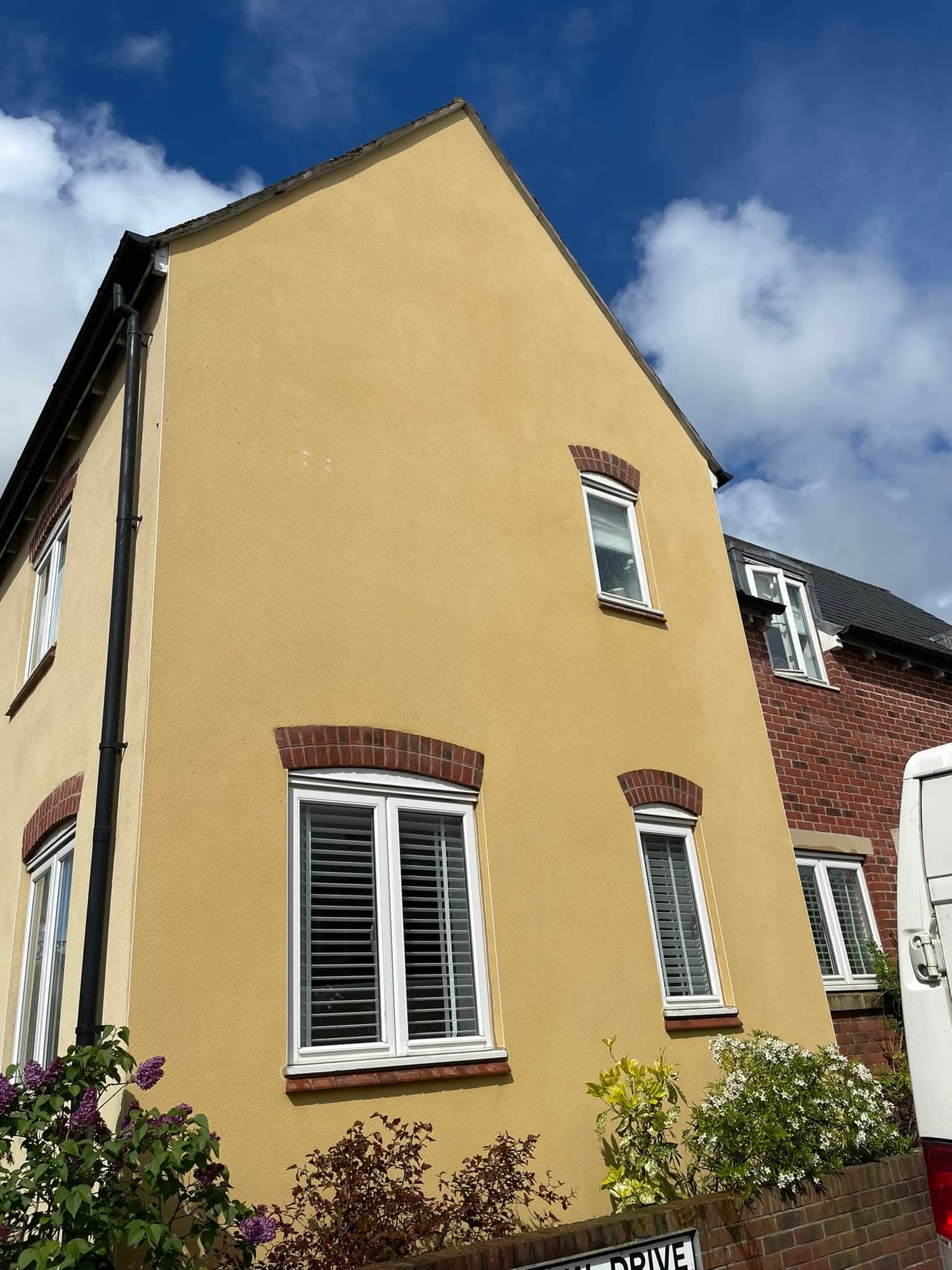
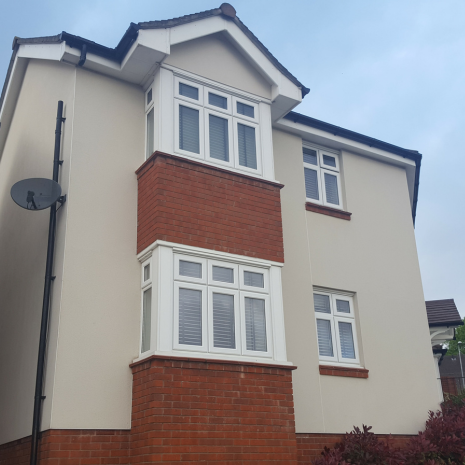

There are several persistent myths about cleaning silicone render, and each of them causes real damage. It is worth addressing them directly. The first is that these systems are self-cleaning and never need attention. Water repellency prevents rain penetrating the coating; it does nothing to stop spores landing on a textured face and germinating in the moisture that sits there after every shower. Every silicone elevation will colonise eventually, and shaded walls do so quickly. The second is that a pressure washer on a low setting is acceptable. It is not. Even reduced pressure detaches material from a textured face and lifts pigment from a through-coloured render, and the damage cannot be made good because there is no separate coating to reinstate. The third is that household bleach does the same job cheaply. It removes colour from growth almost immediately, which looks like success, but it does not reliably destroy root structures, it damages planting wherever it runs, and on coloured render it can alter tone permanently. The fourth is that stubborn areas need scrubbing. On K Rend they need more product and a longer dwell instead. K Rend cleaning as we carry it out follows manufacturer guidance closely: chemical treatment at very low pressure, matched in strength to the organisms present, applied evenly across complete elevations, given full dwell time, then rinsed gently. Coloured render cleaning depends entirely on that restraint, since inconsistent application or abrasion on integral pigment leaves permanent evidence. Silicone render cleaning done properly leaves nothing to see except the manufacturer’s original colour returning across the whole wall.
Monocouche rewards being cleaned properly more than most finishes, because the same wall can be brought back repeatedly across its life provided nothing has ever been taken off it. That is the useful way to think about maintenance on this render: each clean either preserves the asset or quietly reduces it. A wall cleaned by soft washing loses nothing. The treatment works chemically, growth is destroyed at root level, and the scraped face with its fine aggregate is exactly as it was afterwards. Repeat the process in five years and the result is the same. Repeat it again five years after that and it is still the same. A wall cleaned by pressure or brushing loses a little each time. Aggregate is detached, the face is smoothed in patches, and pigment is lifted unevenly. Each clean starts from a slightly worse baseline than the last, and after two or three cycles the elevation reads as blotchy regardless of how clean it is. Monocouche render cleaning as we specify it is therefore low pressure throughout, applied in volume so the treatment reaches the base of the texture, given a full dwell period, and rinsed without contact of any kind. Areas that concentrate water are given their own attention within the specification, particularly beneath bead lines and sills and along the base course where splashback keeps the render wet. Render maintenance planned this way keeps the intervals long and the coating intact. Residential render cleaning becomes a straightforward recurring item rather than a decision about how much appearance to trade for a faster result, and render restoration remains achievable throughout the life of the render.
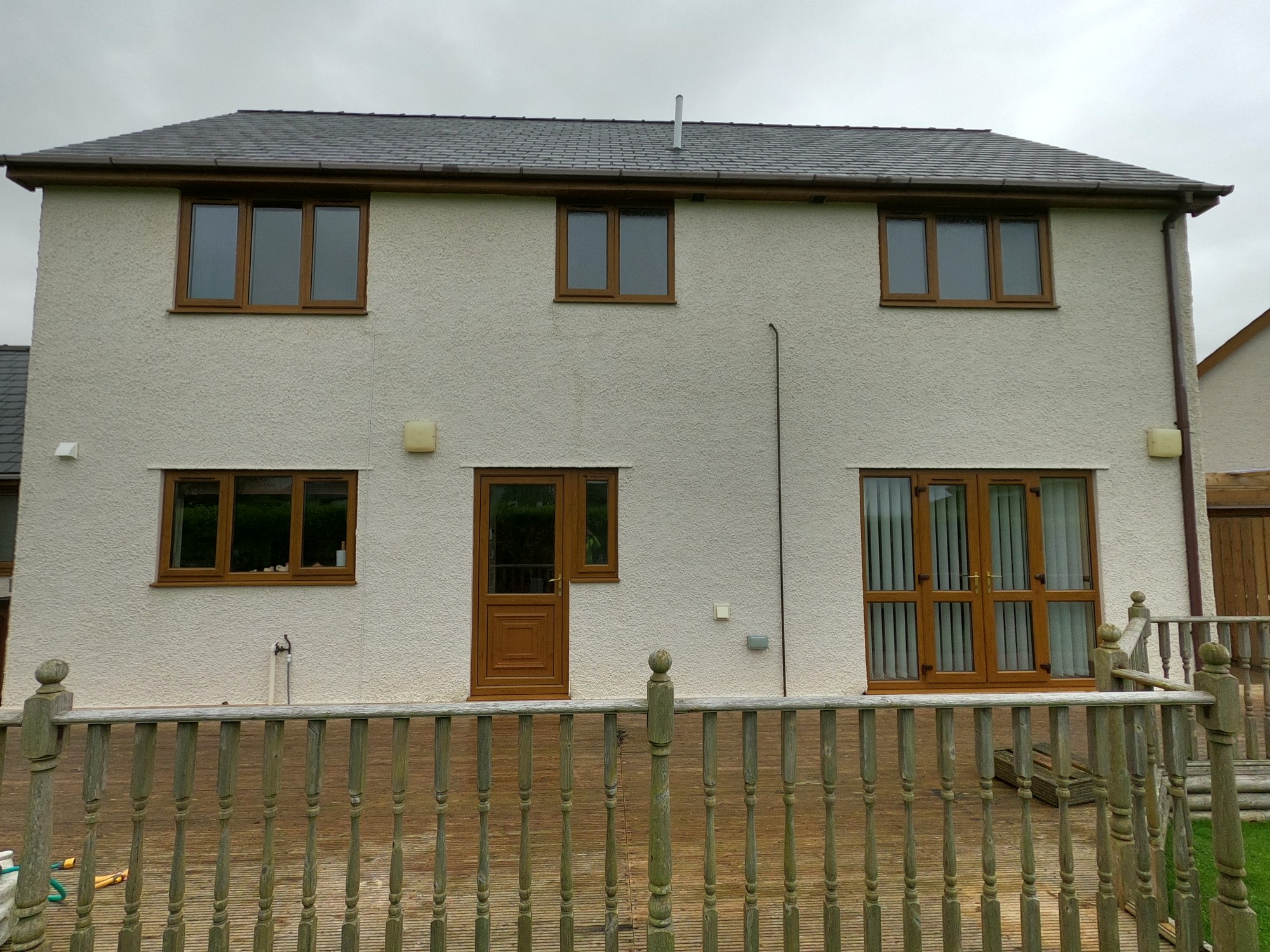
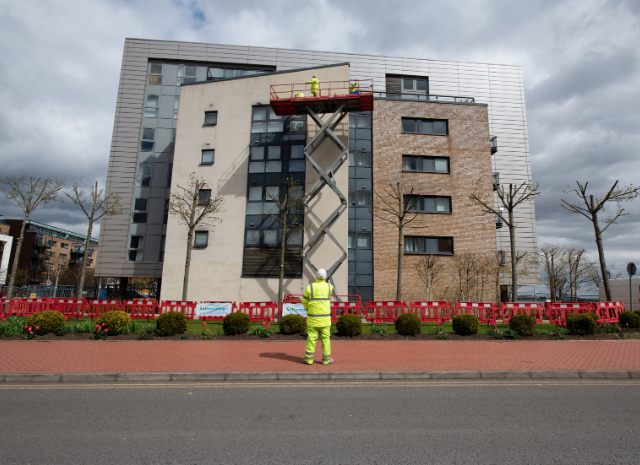

Clinics, surgeries and professional practices operating from rendered buildings have a particular reason to care about the exterior. Patients and clients draw conclusions about standards from what they see on the way in, and a soiled frontage sits awkwardly against a business that trades on care and precision. Commercial render cleaning at these premises is planned around appointments rather than trading hours. Arrival and departure times are concentrated, waiting areas are often at the front of the building, and parking is usually tight. We survey first, agree which elevations can be worked when, and schedule around clinic sessions, which in practice often means early starts or a closing day. The low pressure method is a real advantage on this kind of site. There is very little noise, no machine running continuously, and no spray drifting across an entrance or car park, so the working day inside is largely unaffected. Exclusion zones are agreed and signed clearly, entrances stay usable throughout, and anything at ground level within the working area is protected. Insurance, method statements and risk assessments are provided ahead of attendance, and operatives hold current working at height certification. Technically the requirement is the same as on any elevation. Render facade cleaning maintains identical dilution and continuous wet edges across each wall, so the finished surface shows no record of the sequence in which it was treated. For practices around Childswickham, the practical result is a building that presents consistently, achieved in a single visit with minimal interruption, and a rendered coating kept dry so that recoating remains a distant consideration rather than an approaching cost.
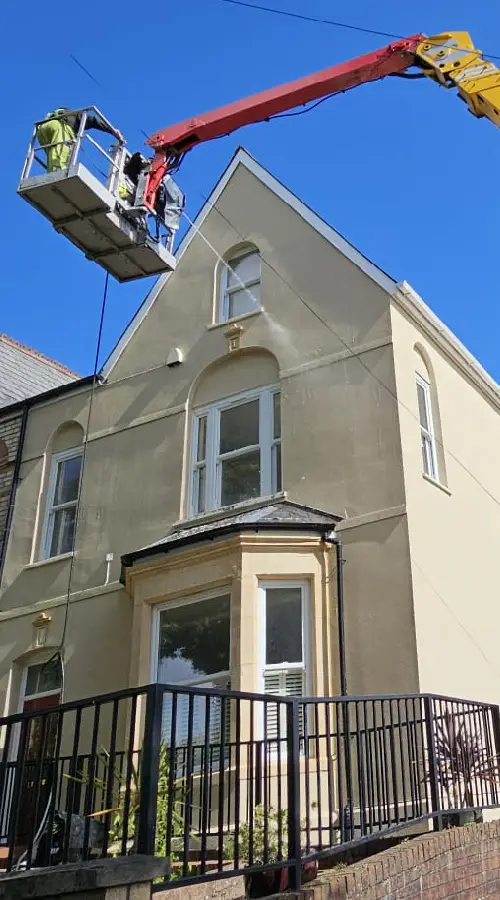
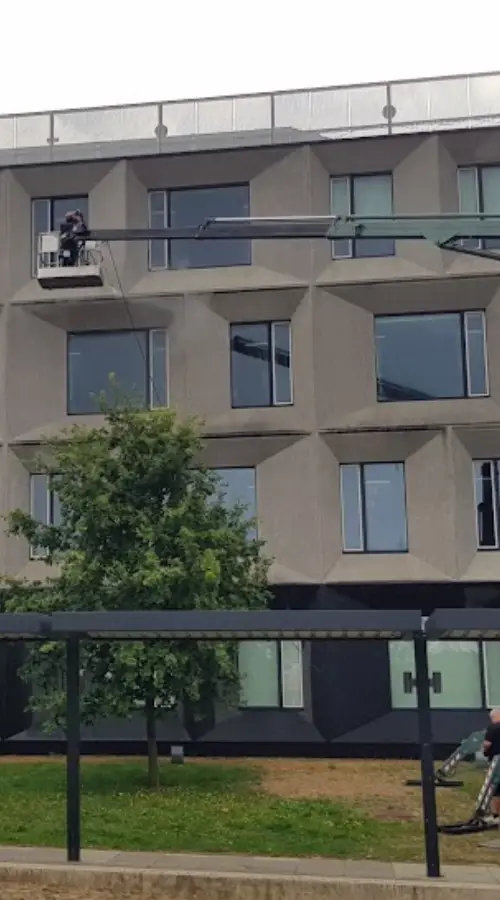
There are things render cleaning will not fix, and saying so at the survey rather than after the invoice is a reasonable expectation that is not always met. Previous damage is the main one. A wall that has been pressure washed hard in the past, with pigment lifted in patches or aggregate stripped from the texture, will read unevenly once the growth covering it is removed. Cleaning reveals that damage rather than causing it, but the owner reasonably experiences it as a disappointing result. We identify it in advance where we can. Patch repairs are similar. Areas made good at some point in a slightly different colour or texture are usually invisible beneath established growth and obvious once the elevation is clean. Some staining is also simply not biological. Rust bleed around fixings, deposit carried down from projecting details and marking driven into a base course by years of splashback need different chemistry, and where render stain removal is not going to achieve full clearance we say so rather than implying it will. And some walls should not be cleaned yet. Chalking paintwork, failed sealant at junctions or open cracking all need attention of a different sort first. Professional render cleaning means describing the likely outcome accurately before taking a booking. Our render cleaning specialists would rather lose a job than deliver something the owner was not expecting, and render cleaning prices are quoted against a result we can actually stand behind. That approach costs us occasional work. It is also the reason most of our jobs arrive through recommendation rather than through being the cheapest quotation on the doormat.
Childswickham and Aston Somerville are both within our standard coverage, surveyed and priced identically, with no travel loading applied to either. The variety of coatings across these properties is the thing that most affects how work is planned. Older buildings frequently carry traditional render that has been repaired, made good and painted at intervals over many decades. A single elevation of that kind can present several different absorbencies, and the paint layer determines whether cleaning is advisable at all, since a finish that has begun to chalk or lift will not survive any treatment regardless of how gentle it is. We test before quoting and give an honest answer. Newer properties and extensions are generally finished in modern through-coloured systems, either silicone-based or monocouche. These behave predictably and clean up extremely well, but they permit no abrasion whatsoever, and the specification has to be written accordingly. It is entirely normal to find both on one building, particularly where an extension has been added to an older property. That means one house can require two separate specifications, applied to different elevations at different strengths, and pricing that reflects it honestly rather than averaging across the whole. Aston Somerville properties tend to be individual rather than uniform, so nothing transfers from one job to the next. Every quotation is built from what is actually on the wall. Access is rarely an obstacle, since our hose runs allow the vehicle to remain on hard standing or at the roadside while treatment still reaches every elevation, and nothing is taken across lawns or planted ground. Surveys take around twenty minutes and produce an itemised written figure by email.
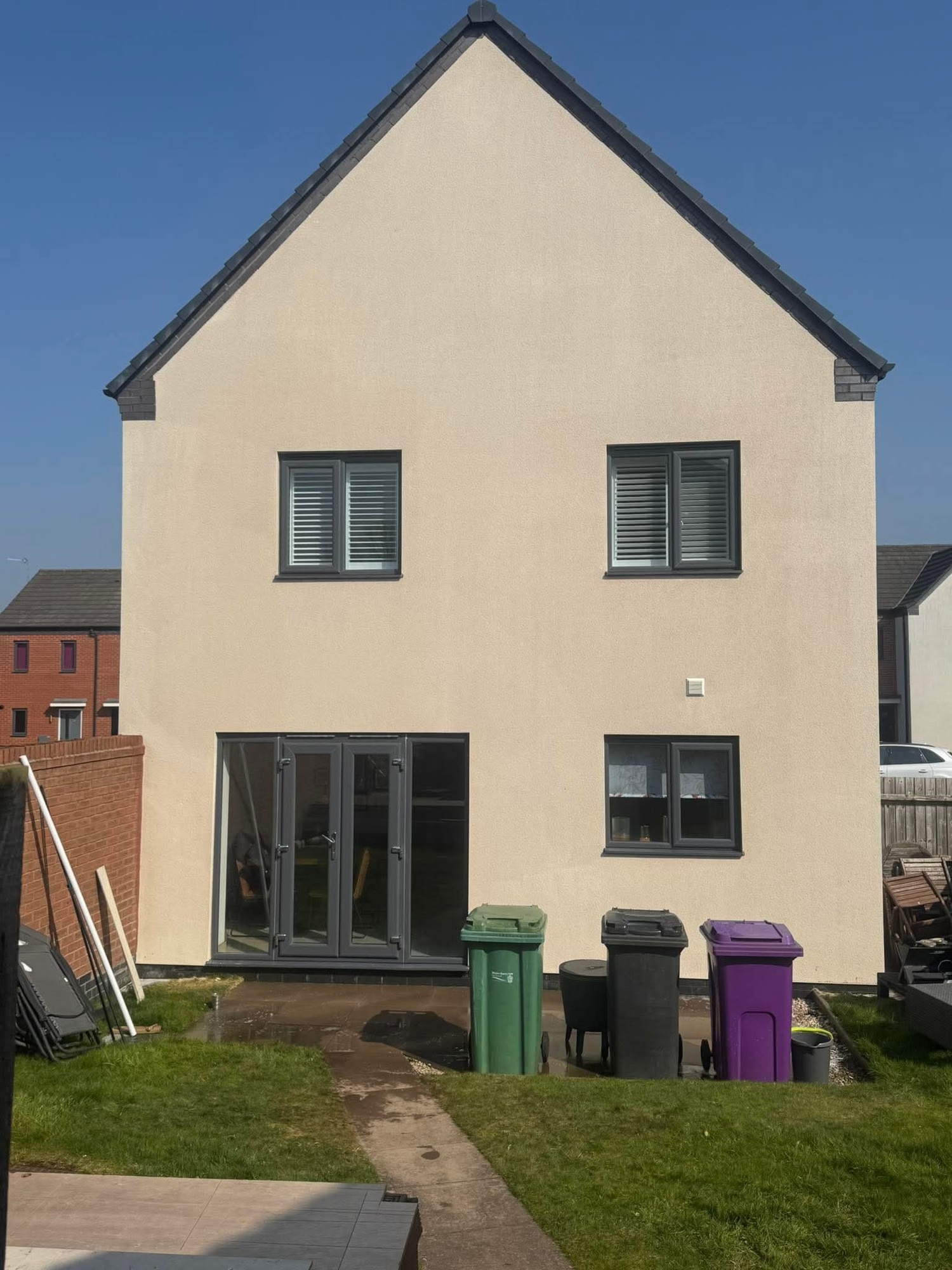
Most properties in Childswickham benefit from professional render cleaning every 3 to 5 years, although this depends on the surrounding environment. Properties near trees, woodland, busy roads or coastal areas may require more frequent cleaning due to algae, mould and airborne contaminants. Our soft washing process removes existing growth and helps keep your render cleaner for longer.
Yes. Soft washing is specifically designed for delicate surfaces such as K-Rend, silicone render, monocouche render and painted render. Unlike high-pressure washing, it cleans at low pressure while treating biological growth at its source, reducing the risk of damage to the render finish.
We clean virtually all external render finishes, including K-Rend, Monocouche, Weber, Sto, silicone render, acrylic render, painted render, roughcast and pebble dash. Every cleaning method is tailored to the specific render type to achieve the best possible results.
Yes. Our specialist soft washing treatments are highly effective at removing green algae, red algae, black mould, mildew, lichen and other organic staining. We also apply professional biocide treatments to kill spores and slow down regrowth.
Because our process targets the biological growth rather than simply washing the surface, results typically last much longer than pressure washing alone. The exact lifespan depends on weather conditions, surrounding vegetation and the property’s location.
No. Our soft washing process is specifically designed to clean render safely. We use low-pressure application methods and specialist cleaning solutions that remove contamination without damaging the render surface when carried out by trained professionals.
The UK’s damp climate provides ideal conditions for algae, mould and other biological growth to develop on rendered surfaces. Areas with limited sunlight, nearby trees or persistent moisture are especially susceptible. Professional soft washing safely removes these contaminants and restores your property’s appearance.









































WhatsApp us