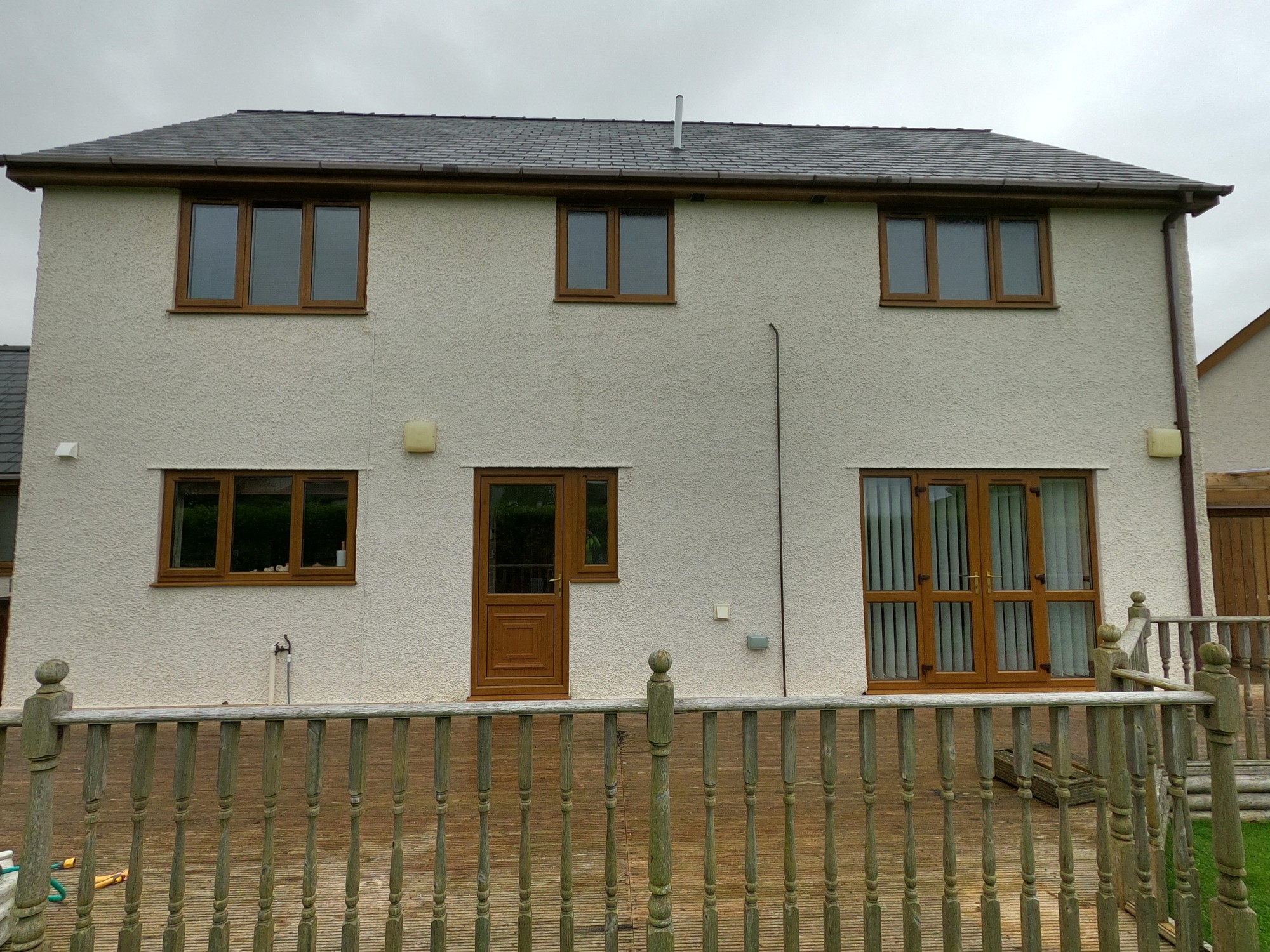
Grading how far growth has progressed is the part of a survey that most directly determines the price, and it is more precise than simply noting that a wall looks green. Softwashing UK work to a straightforward assessment of density and depth on each elevation, because the two together dictate dilution, volume and dwell time. Light colonisation is a thin biofilm, often barely visible except when compared against a sheltered patch that has stayed clean. It sits shallowly, clears readily, and needs a modest specification. Moderate colonisation is continuous filming with the beginnings of darker streaking where water tracks. The organism has established properly in the texture, and treatment needs to reach further into the surface than a light pass would. Heavy colonisation means dense filming with established black spotting, visible lichen patches or moss at low level and in sheltered corners. This is where render moss removal becomes a genuinely different job, requiring more product, considerably longer dwell and an honest conversation about the weeks of weathering that follow. Depth matters alongside density. A finely textured wall carrying moderate growth may be easier than a deeply scraped one carrying light growth, because the treatment has less distance to travel to reach root level. Our render cleaning services are specified against that assessment per elevation rather than per building, since it is entirely normal for one wall to grade heavy while another grades light on the same property. Render algae removal on the sunny frontage and full treatment on a shaded gable are priced separately and honestly. Exterior render cleaning quoted this way costs what the wall actually needs. On properties around Clifton upon Teme, that usually works out lower than a single averaged figure would.
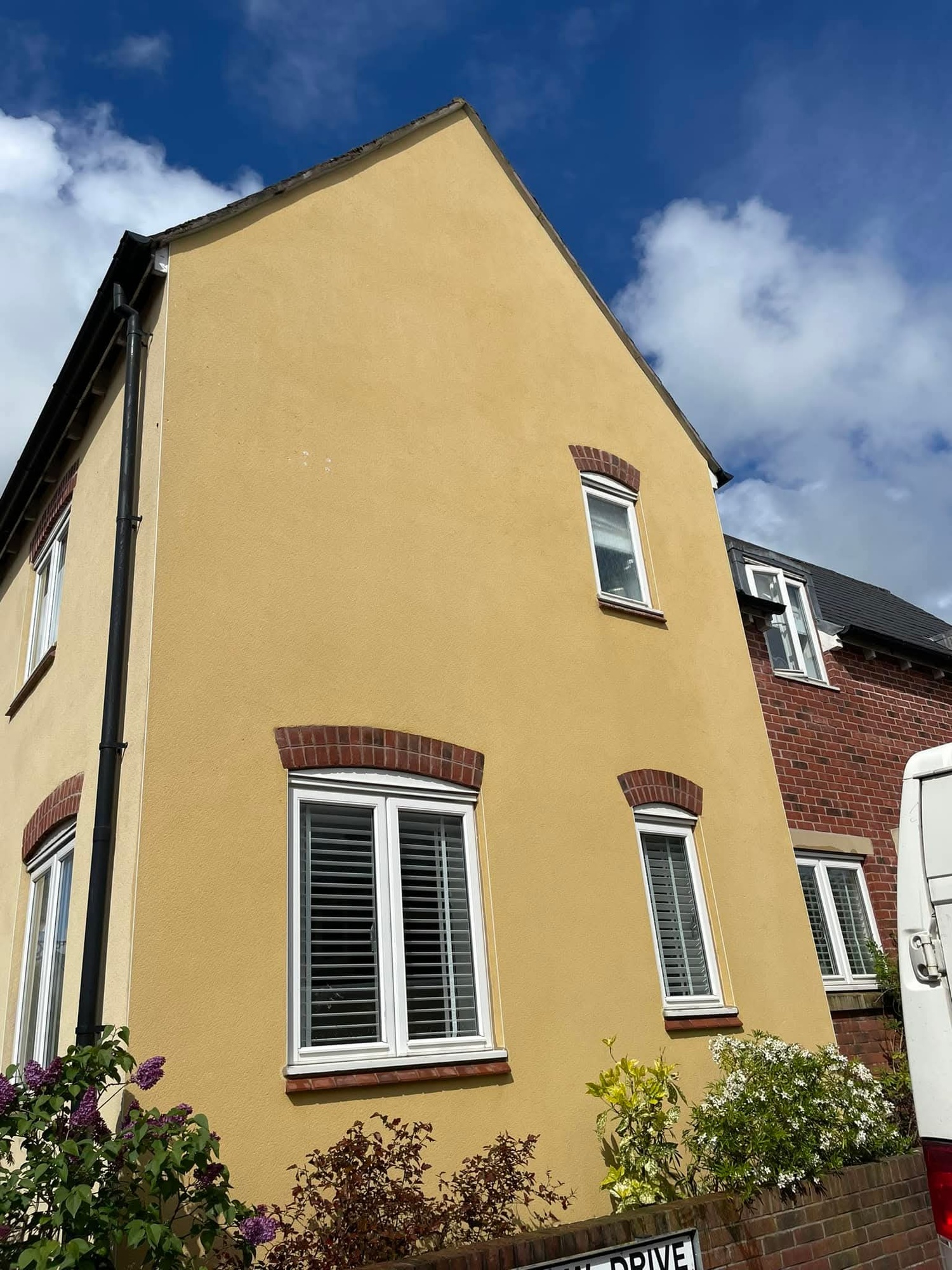
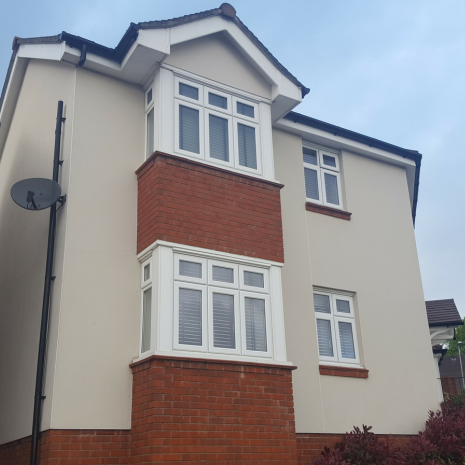

Not every through-coloured silicone render is the same product, and knowing which one is on your wall genuinely changes how it should be treated. K Rend is the name most people use, but the market includes several comparable systems from different manufacturers, alongside cheaper thin-coat finishes that look similar at a glance and behave rather differently under treatment. The differences that matter are texture depth, binder content and how absorbent the surface has become with age. A high-specification silicone system sheds water well and holds treatment on the surface for longer, which suits a dwell-based approach. A lower-grade thin-coat finish may be more absorbent, taking product into the coating rather than holding it where the growth is, and needing a different volume and application rate to achieve the same result. We identify what is present at survey rather than assuming. It affects dilution, how much is applied and how long the treatment stays workable before it needs refreshing on a large elevation. K Rend cleaning and its equivalents share the same non-negotiables regardless of manufacturer. The colour is integral, so abrasion cannot be corrected. Texture cannot be repaired. High pressure is excluded by every manufacturer’s guidance. Silicone render cleaning is therefore chemical throughout, at very low pressure, with nothing brushed or agitated. Render mould removal and render stain removal are specified separately where both are present, since fungal colonisation and atmospheric deposit need different handling. House render cleaning on any of these systems is judged the same way: an even, uniform elevation in the original supplied colour, with no evidence of how the work was carried out.
Openings are where monocouche elevations tend to disappoint after a rushed clean, and the reason is that reveals and returns are genuinely harder to treat properly than open wall. A reveal is the narrow face running back into a window or door opening. It sits in shade for most of the day regardless of which way the elevation faces, it receives less direct rain to wash it, and it is awkward to reach with a lance held at a distance. Returns at corners behave similarly. Both colonise more heavily than the flat wall around them and both need deliberate attention. Monocouche render cleaning that treats an elevation as a single flat plane leaves those faces visibly darker once everything dries. The effect is particularly noticeable on pale finishes, where every opening ends up outlined. We work reveals and returns as their own areas within the specification, applying treatment directly onto those faces at appropriate strength and allowing the same dwell as the main wall. Drip details beneath sills receive the same treatment, since water concentrates and sheds along them. The general discipline is unchanged throughout. The scraped face holds aggregate loosely, so nothing abrasive is used at any point. Treatment goes on at low pressure and in volume so it reaches the base of the texture, dwells fully so growth is destroyed at root level, and is rinsed gently. Render restoration judged properly includes the detailing rather than just the field of the wall. Residential render cleaning that leaves clean elevations and dark reveals has drawn attention to exactly the areas nobody previously looked at, which is the opposite of the intended result.
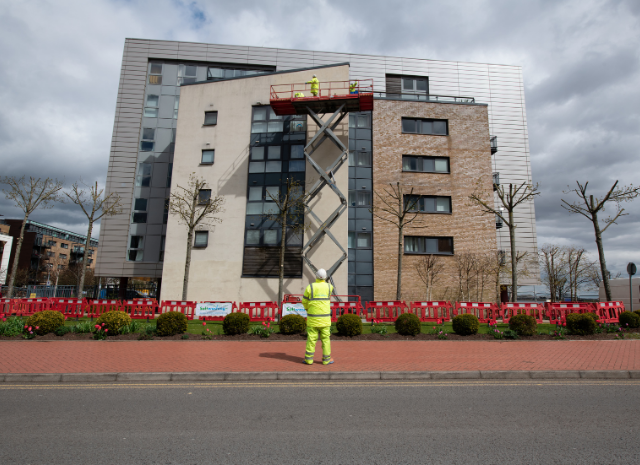

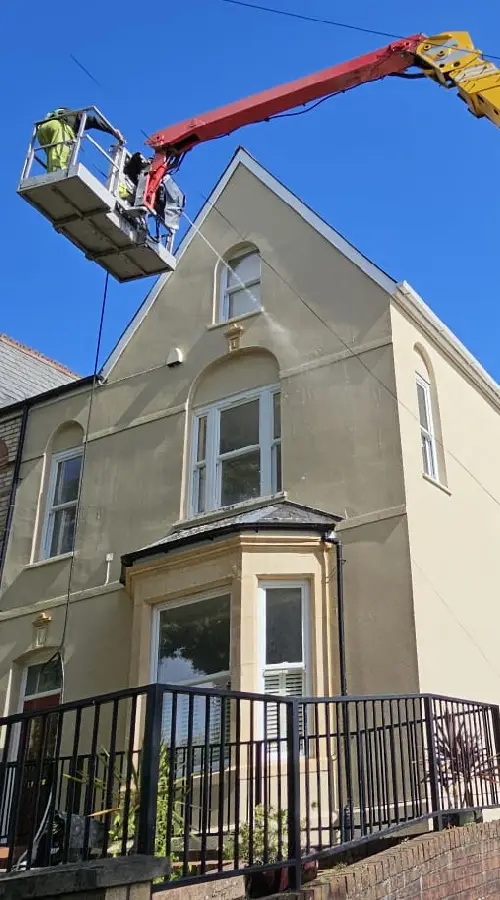
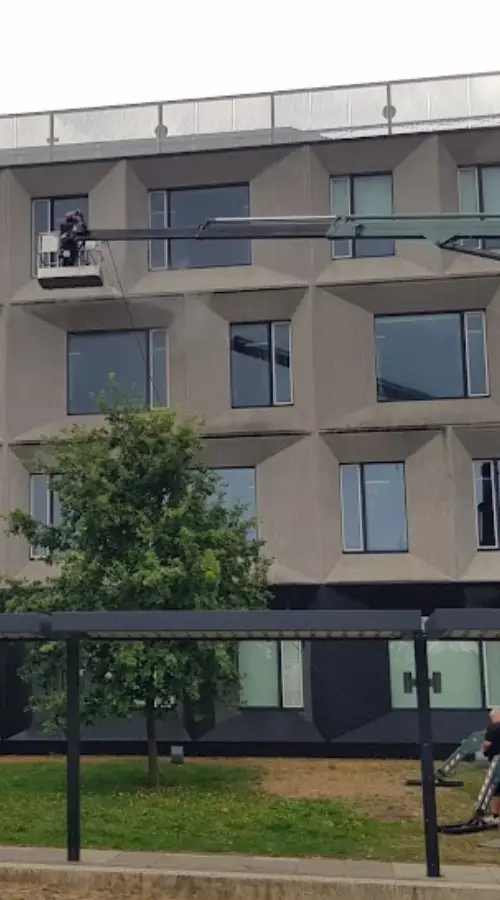
Village halls, community buildings and similar premises with rendered elevations sit in an awkward position. They are highly visible, used by a broad cross-section of people, and maintained on budgets that have to be justified to a committee rather than signed off by an owner. Commercial render cleaning on these buildings therefore needs to be predictable in cost and straightforward to schedule. We survey first and produce a fixed itemised figure that a management committee can consider properly, with the basis of the price visible rather than presented as a single total. Booking patterns are the operational constraint. These buildings are often in use most evenings and at weekends, with daytime availability varying week to week. We work to whatever window the calendar allows and complete the job in a single visit wherever the size of the building permits. Most premises of this scale can be treated entirely from ground level using telescopic delivery, which keeps access costs out of the figure and shortens the visit considerably. Where a hall has a tall gable or an awkward elevation, the access required is identified at survey and included. Insurance, method statements and risk assessments are provided in advance, and operatives hold current working at height certification. Where the building is used by children, any additional checks required are completed before attendance. Technically the work is no different from a domestic elevation, just larger. Render facade cleaning holds consistent dilution and live wet edges across each wall. For community buildings around Clifton upon Teme, a clean every few years keeps the premises presenting well at modest recurring cost.
It is worth being specific about what a quoted figure covers, because the gap between contractors is usually in what has been left out rather than in the headline number. Ours includes the survey, which is free and carries no obligation. It includes all preparation and protection: covering planting, sheeting hard surfaces, masking external fittings and isolating anything that needs it. It includes the treatment itself at whatever dilution and volume the elevation requires, rather than a standard mix applied until the tank runs out. It includes the full dwell period, which is the part most often shortened to fit more jobs into a day. It includes rinsing, clearing down and checking the site before we leave. Where access equipment is genuinely necessary, it is identified at survey and included in the figure. It does not appear afterwards as an addition. What is not included is anything we have not quoted for, and we would rather explain that clearly at the outset. If a wall needs attention of a different sort before it can be cleaned, we say so in the quotation rather than proceeding and charging for a compromised result. Render cleaning cost set out this way is predictable. Render cleaning prices are itemised per elevation so the reasoning is visible, and the figure holds for a stated period without revision. Full public liability cover and current working at height certification are in place, and our render cleaning specialists work on rendered elevations exclusively. Affordable render cleaning should mean nothing has been quietly omitted, which is a more useful definition than simply being cheap.
Coverage takes in Clifton upon Teme together with Harpley, Lower Sapey and Upper Sapey, all on identical terms with no travel loading applied to any of them. Work across scattered settlements is programmed differently from work in a town, and it is worth explaining why that benefits customers rather than costing them. Rather than travelling between individual jobs on separate days, we group bookings by area and spend a full day or more working through them. Mobilisation is then shared between properties instead of being carried by each one, which is what allows us to quote the same rates here as anywhere else on our books. The practical consequence is that timing flexibility helps. If you are not in a hurry, telling us so lets us fit the job into a day already planned in the area, and that is usually reflected in the figure. If several properties along the same road or lane arrange together, the saving is larger again. Harpley, Lower Sapey and Upper Sapey properties are typically individual rather than uniform, with elevations facing in every direction and considerable variation in exposure around a single building. Nothing transfers from one job to the next, so every quotation is built from what is actually on the wall. Access is rarely a difficulty. Our vehicles carry water and treatment on board and deliver through hose runs long enough to reach elevations at distance, so we do not need to bring equipment across gravel, grass or planted ground. Surveys take around twenty minutes, can be carried out without anyone present provided all elevations are reachable, and produce an itemised written quotation by email.
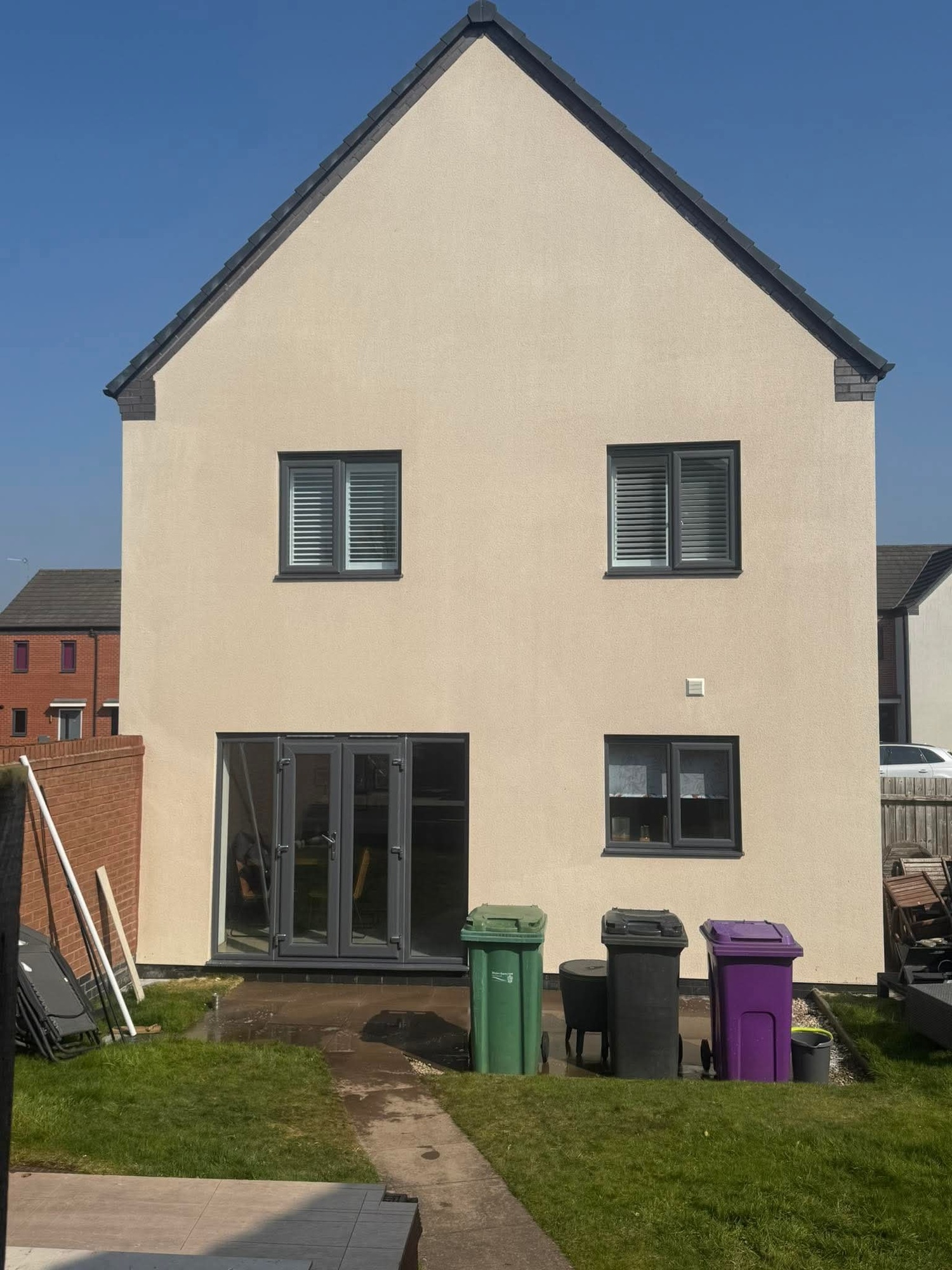
Most properties in Clifton upon Teme benefit from professional render cleaning every 3 to 5 years, although this depends on the surrounding environment. Properties near trees, woodland, busy roads or coastal areas may require more frequent cleaning due to algae, mould and airborne contaminants. Our soft washing process removes existing growth and helps keep your render cleaner for longer.
Yes. Soft washing is specifically designed for delicate surfaces such as K-Rend, silicone render, monocouche render and painted render. Unlike high-pressure washing, it cleans at low pressure while treating biological growth at its source, reducing the risk of damage to the render finish.
We clean virtually all external render finishes, including K-Rend, Monocouche, Weber, Sto, silicone render, acrylic render, painted render, roughcast and pebble dash. Every cleaning method is tailored to the specific render type to achieve the best possible results.
Yes. Our specialist soft washing treatments are highly effective at removing green algae, red algae, black mould, mildew, lichen and other organic staining. We also apply professional biocide treatments to kill spores and slow down regrowth.
Because our process targets the biological growth rather than simply washing the surface, results typically last much longer than pressure washing alone. The exact lifespan depends on weather conditions, surrounding vegetation and the property’s location.
No. Our soft washing process is specifically designed to clean render safely. We use low-pressure application methods and specialist cleaning solutions that remove contamination without damaging the render surface when carried out by trained professionals.
The UK’s damp climate provides ideal conditions for algae, mould and other biological growth to develop on rendered surfaces. Areas with limited sunlight, nearby trees or persistent moisture are especially susceptible. Professional soft washing safely removes these contaminants and restores your property’s appearance.









































WhatsApp us