A neighbouring property in similar condition is one of the more useful reference points available when deciding whether your own wall needs attention. The comparison works because the variables are shared. Two houses on the same road, of similar age and construction, experience the same weather, the same air quality and roughly the same spore load. What differs is aspect, shelter, planting and whether either has ever been treated. So if a neighbouring wall of the same orientation is noticeably worse than yours, the likely explanation is either planting or shelter differing between the plots, or that yours has been treated at some point and theirs has not. If theirs is noticeably better, the same logic applies in reverse, and it is worth asking whether they have had work done. A neighbour who had their render cleaned three years ago and whose wall still looks clean is telling you what a proper treatment achieves, and equally a neighbour whose wall regreened within a year is telling you something about whoever did it. The other useful comparison is a treated wall against an untreated one on the same building or the same terrace, which shows exactly what is recoverable. None of this replaces a survey, since coatings, condition and access differ even between apparently identical houses. But it is a free and reasonably reliable indication of whether the time has come. It is also the commonest reason people contact us, which is not a coincidence. Render cleaning at properties around Codford St Peter is assessed on the wall in front of us, though a neighbour’s is often what prompts the call.
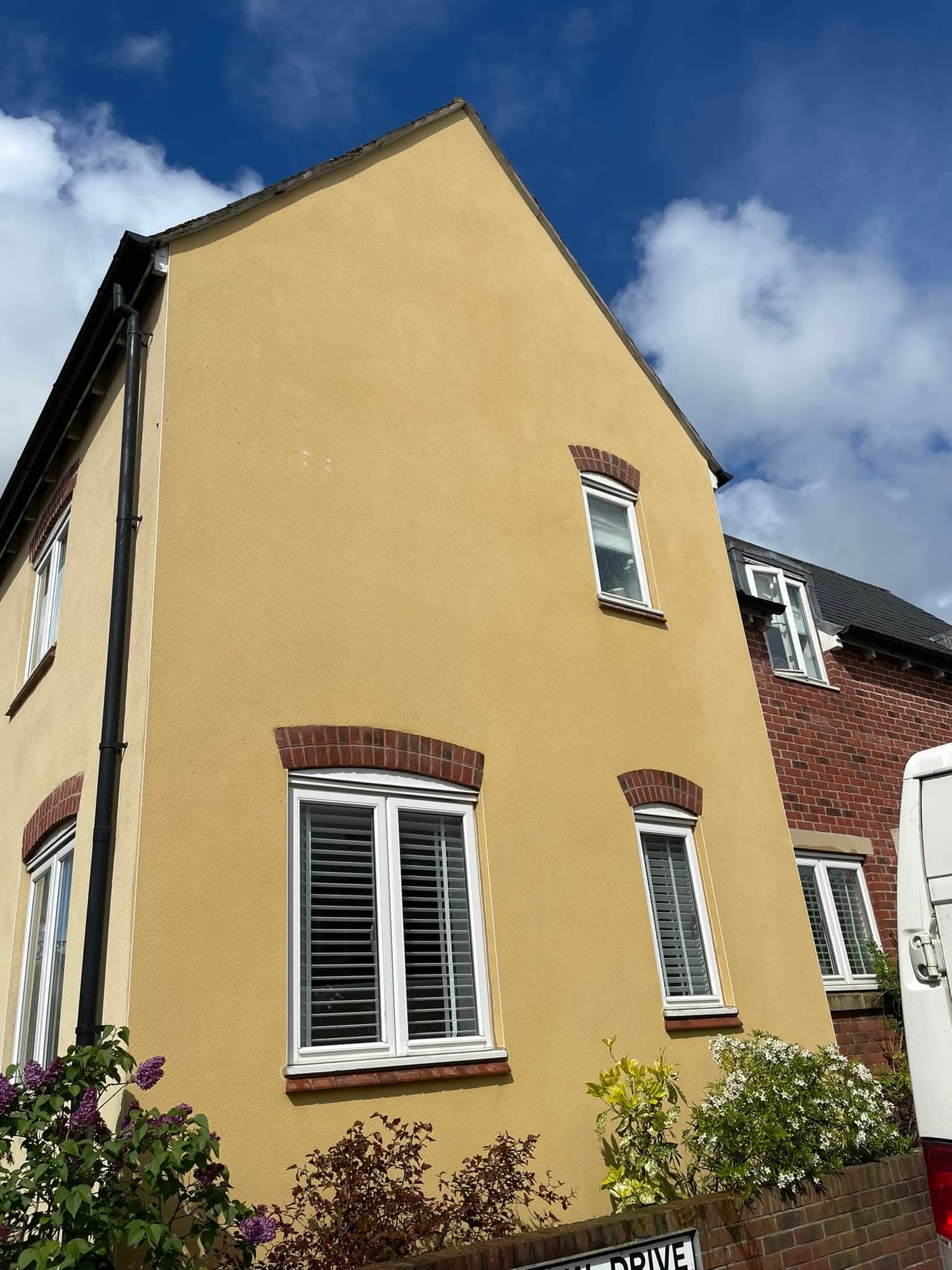
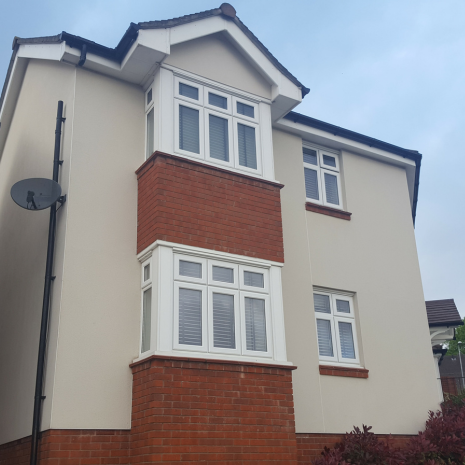

Comparing your K Rend elevation against a neighbour’s is more informative than comparing it against how you remember it, and it is worth doing deliberately. The reason is that memory adjusts. A wall that has declined slowly over six years reads as normal to somebody who sees it daily, which is why so many enquiries begin with a photograph or a comment from a visitor. A neighbouring property of the same age and specification provides an external reference. Where the two share an orientation, any difference between them is down to shelter, planting or whether either has been treated. Where they face differently, the comparison shows how much aspect alone accounts for. The most useful case is a neighbouring wall that has recently been cleaned, since it shows exactly what the colour should be. Owners looking at that comparison frequently realise their own render is not the shade they thought it was, having grown used to a dulled version. The reverse comparison is equally useful. A neighbouring wall that was cleaned and regreened within a year is evidence about the treatment rather than about the render. Sheltered patches on your own wall, beneath cills and behind downpipes, serve the same purpose at a smaller scale and are available without involving anybody else. We use both at survey to predict the finished appearance and to explain it. None of it replaces a survey, since coatings, condition, access and aspect differ even between houses that look identical from the road. It simply gives an owner a free and reasonably reliable indication of whether the time has come. K Rend cleaning at properties around Codford St Peter is described against those references rather than in general terms.
Monocouche applied over an earlier finish is a situation worth identifying, since it changes both the assessment and the risk. It happens during refurbishment, where an existing rendered or painted wall is over-rendered rather than stripped back. The new coating may sit on the old render, on a bonding coat applied over it, or on a mesh reinforcement layer. In some cases only part of an elevation was treated that way while the rest was applied to fresh substrate. Two consequences follow. The bond depends on whatever was underneath, which may have been sound or may not, so hollow areas are more common than on render applied to purpose-built blockwork. And the wall build-up is thicker than standard, which shows at reveals and at the base and can leave the bell-cast at an awkward height relative to the damp proof course. For cleaning, the method does not change. What changes is that we tap more carefully and more systematically, reduce rinse pressure further around every edge and junction, and treat any hollow-sounding area as a reason to stop rather than to proceed with care. Where a wall sounds hollow across a significant area, treatment adds water to a section already separating and we say so and decline. We look for the indicators at survey: unusual reveal depths, a thick appearance at corners, a base detail that does not sit right, and inconsistent sound. Where documentation exists from the refurbishment it usually settles the question in a moment, and it is worth looking for before we arrive, since inference from reveal depths and sound is reliable but less precise. Monocouche render cleaning at over-rendered properties around Codford St Peter is quoted with the construction identified as far as possible and any limitation recorded.
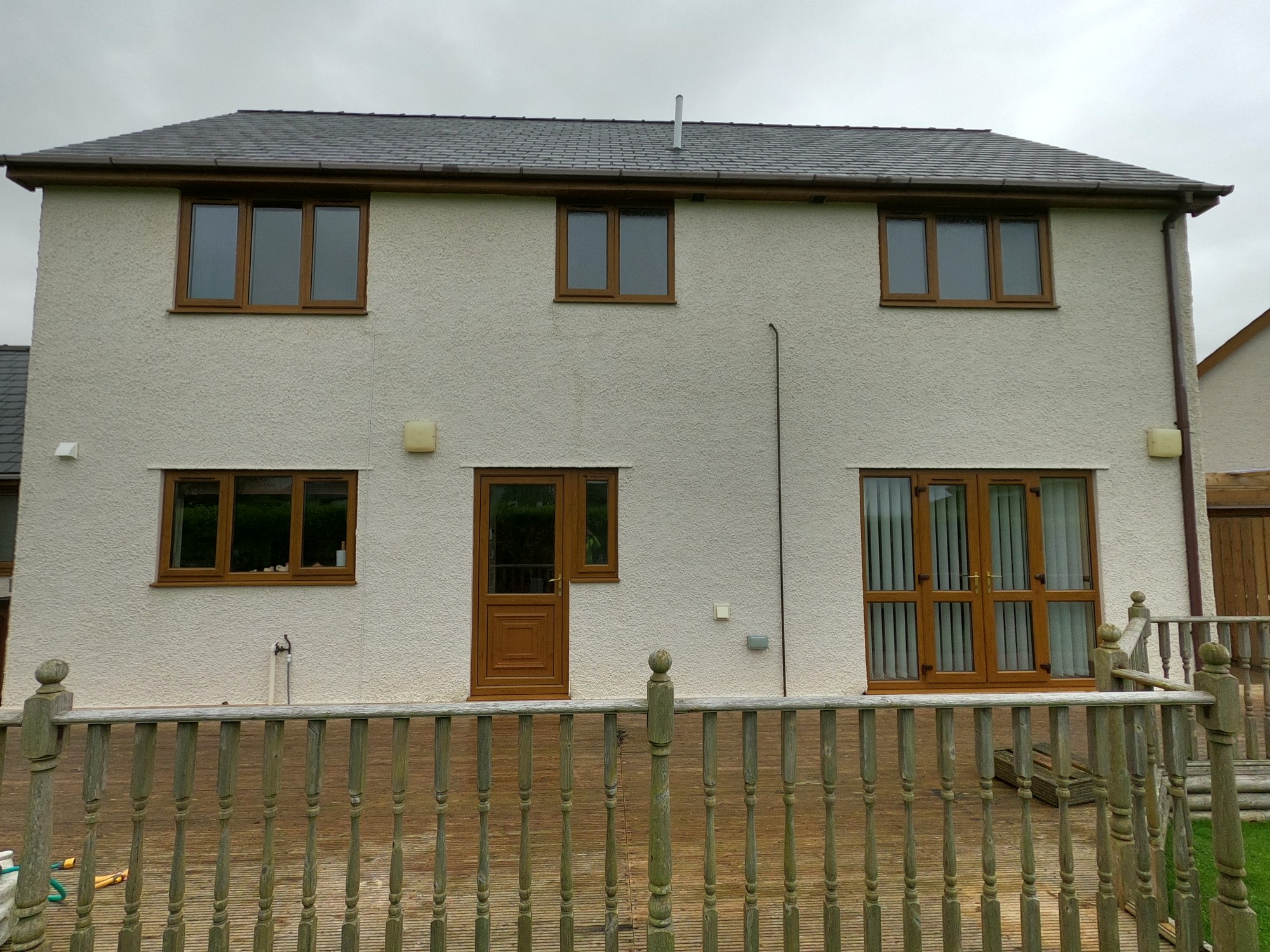
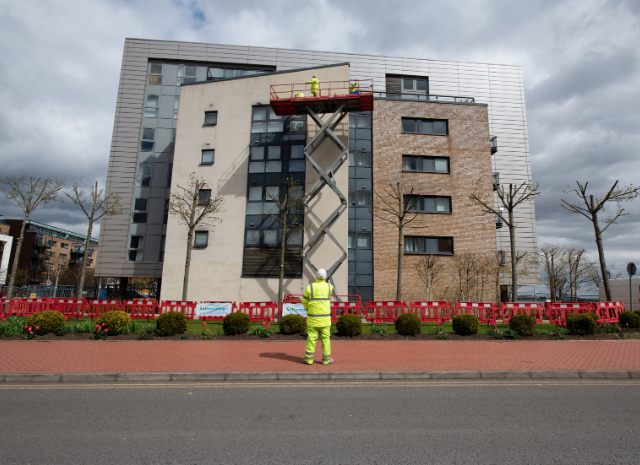

Commercial premises adjoining others in similar condition present an opportunity that is usually missed, and it is worth raising. The situation is common on parades, terraces and small estates, where several units of similar age and specification have reached the same point at the same time. Each occupier or owner considers the problem individually, obtains a quotation for their own frontage, and either proceeds alone or defers. Treating them together is materially cheaper for everybody. Mobilisation, setup, protection, mixing and, critically, any access equipment are costs that apply once rather than per unit. A row of units treated in one programme costs each party noticeably less than the same units treated separately over several years. It also produces a better result. A continuous rendered frontage cleaned in sections months apart shows the joins, particularly on a through-coloured finish, and a single clean unit between two untreated ones looks conspicuous rather than impressive. The practical obstacle is coordination, and we make that as simple as possible. We quote each party separately so nobody is dependent on anybody else’s payment or decision, while carrying out the work as one programme. Where a managing agent or landlord holds the frontage, we quote the whole run with a breakdown by unit so recharge is straightforward. We are happy to provide a quotation an occupier can show a neighbour. Where only some parties proceed, we treat the units that have been agreed and explain in advance where the boundary will fall, choosing a genuine architectural break rather than an invisible ownership line wherever the frontage allows. Commercial premises around Codford St Peter in shared frontages are welcome to a survey covering the whole run whether or not everybody proceeds.
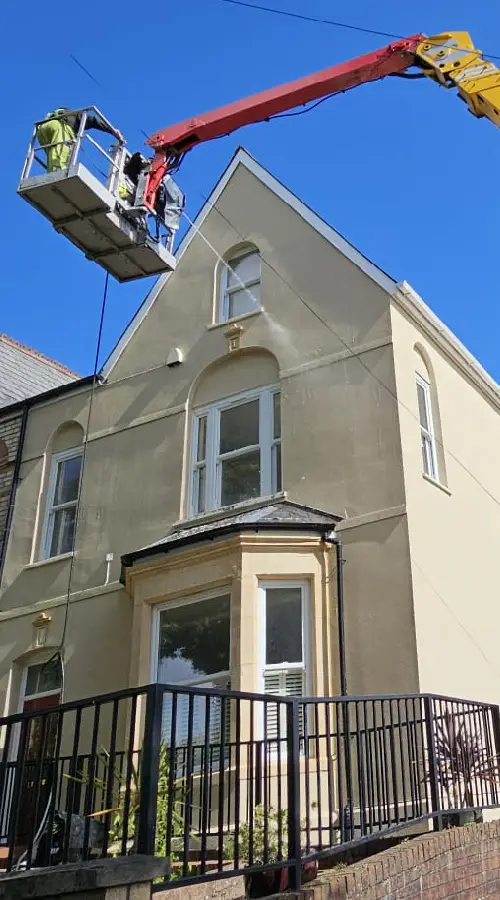
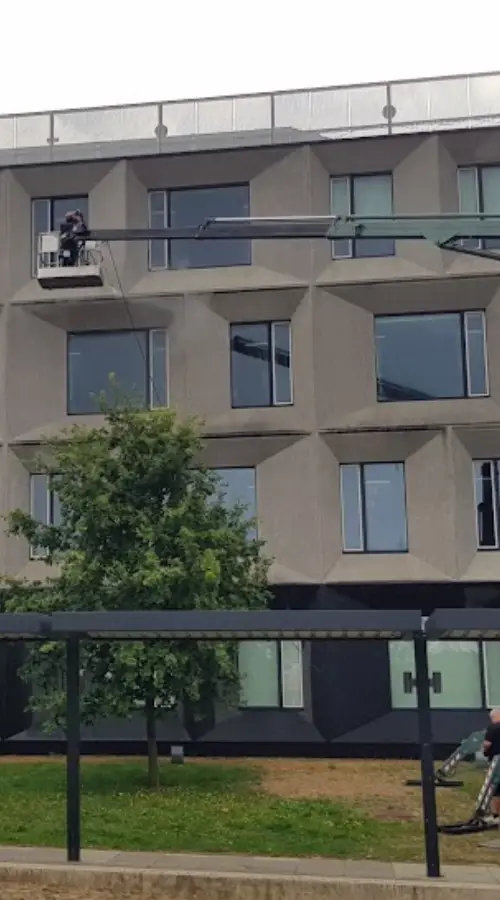
A great many of our enquiries arrive because somebody saw a neighbouring property transformed, and it is worth explaining how we handle those. The first thing we do is treat it as a fresh assessment rather than assuming the two properties are alike. Houses that look identical from the road frequently differ in coating, condition, aspect, planting and access, and the treatment and price follow from those rather than from what was done next door. The second is that we will not discuss the details of another customer’s job. What was found, what it cost and what condition their wall was in is their business, and we would say the same about yours. The third, and the useful part, is that we can usually offer to treat both together if the neighbour is also due, or to time your work alongside other properties in the same locality. That reduces the cost for everybody, since setup, protection, mixing and any access equipment are shared, and it is worth mentioning at enquiry. On continuous elevations across semi-detached or terraced properties, treating together also avoids a boundary at an invisible property line, which on a through-coloured render is unforgiving. We quote each owner separately so nobody is dependent on anybody else’s decision or payment. We also do not use anybody’s property as an advertisement without asking. Where we would like to show photographs of work, we ask the owner first, and a good number are happy to be used as a reference for exactly this kind of enquiry. Softwashing UK take most of our work from that kind of recommendation, and owners around Codford St Peter enquiring after seeing a neighbour’s property are welcome to a survey on exactly the same basis.
We cover Codford St Peter together with Codford, Fisherton de la Mere and Sherrington, and this section is about treating neighbouring properties together. Where two or more properties in the same locality are being treated in one visit, the cost to each owner is noticeably lower. Arriving, setting up, protecting, mixing and clearing away are costs that apply once rather than per house, and where any of the properties needs powered access the saving is larger still, since hire is a fixed daily cost. We quote each owner separately, with their own fixed price and their own invoice, so nobody is dependent on anybody else’s decision or payment. The work is simply carried out as one programme. On semi-detached and terraced properties there is a second benefit. Rendered elevations frequently run continuously across more than one house, and treating one section while stopping at an invisible property line produces a hard edge that shows sharply on a through-coloured render. Treating the whole elevation together removes the boundary entirely. If you are considering the work, it is worth mentioning to a neighbour before booking, and we can provide a written quotation you can show them. Where coordination is not possible, we will treat your property alone and explain in advance where the treatment will stop and what the boundary is likely to look like. Rendered garages, outbuildings, porches and boundary walls are assessed at the same visit and priced separately, so if only part of a property warrants attention you can see exactly what each element contributes. Surveys across Sherrington, Fisherton de la Mere and Codford are free, take around twenty minutes and carry no obligation. Call whenever you would like one arranged.
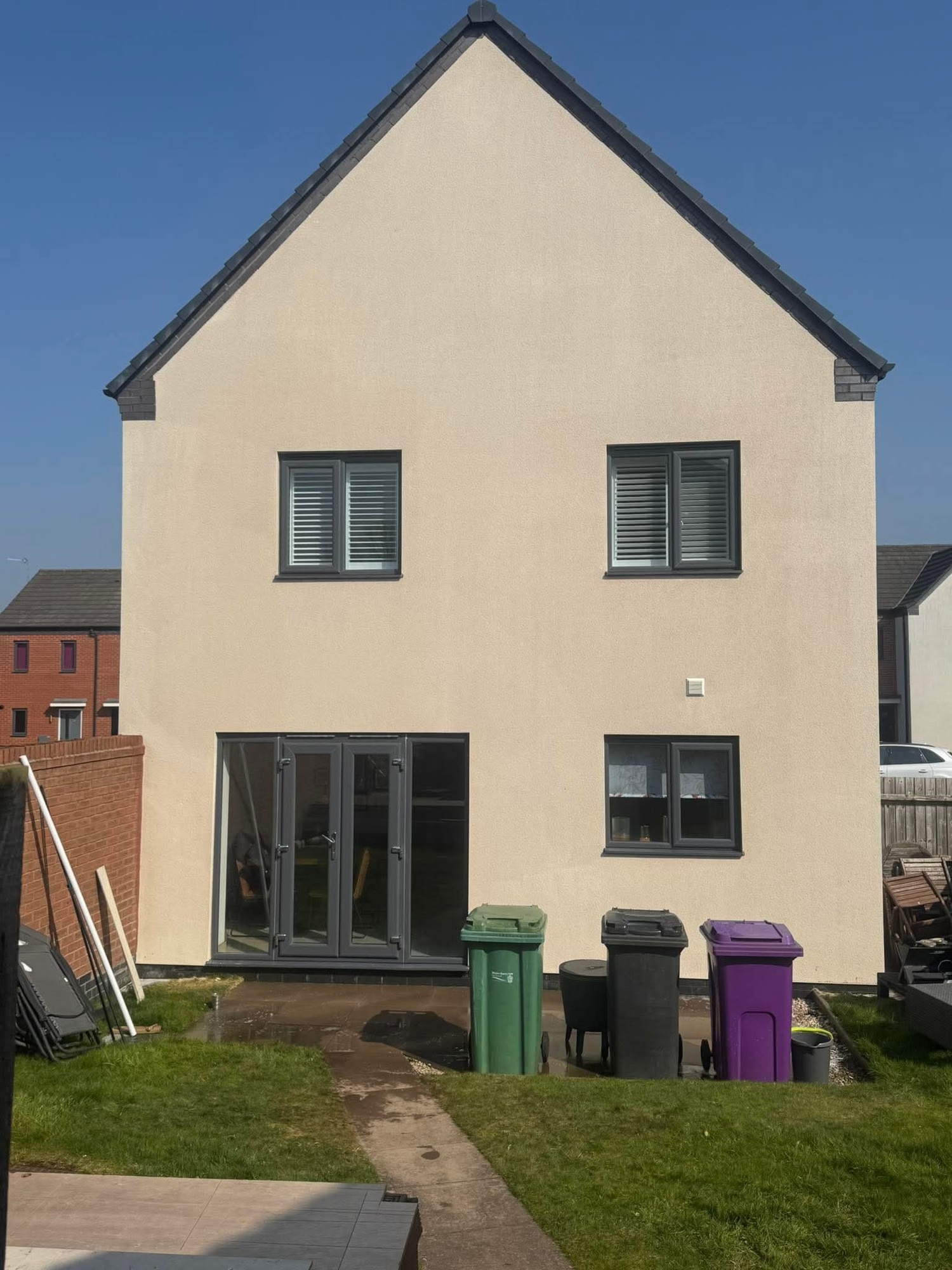
Most properties in Codford St Peter benefit from professional render cleaning every 3 to 5 years, although this depends on the surrounding environment. Properties near trees, woodland, busy roads or coastal areas may require more frequent cleaning due to algae, mould and airborne contaminants. Our soft washing process removes existing growth and helps keep your render cleaner for longer.
Yes. Soft washing is specifically designed for delicate surfaces such as K-Rend, silicone render, monocouche render and painted render. Unlike high-pressure washing, it cleans at low pressure while treating biological growth at its source, reducing the risk of damage to the render finish.
We clean virtually all external render finishes, including K-Rend, Monocouche, Weber, Sto, silicone render, acrylic render, painted render, roughcast and pebble dash. Every cleaning method is tailored to the specific render type to achieve the best possible results.
Yes. Our specialist soft washing treatments are highly effective at removing green algae, red algae, black mould, mildew, lichen and other organic staining. We also apply professional biocide treatments to kill spores and slow down regrowth.
Because our process targets the biological growth rather than simply washing the surface, results typically last much longer than pressure washing alone. The exact lifespan depends on weather conditions, surrounding vegetation and the property’s location.
No. Our soft washing process is specifically designed to clean render safely. We use low-pressure application methods and specialist cleaning solutions that remove contamination without damaging the render surface when carried out by trained professionals.
The UK’s damp climate provides ideal conditions for algae, mould and other biological growth to develop on rendered surfaces. Areas with limited sunlight, nearby trees or persistent moisture are especially susceptible. Professional soft washing safely removes these contaminants and restores your property’s appearance.













































If your property’s exterior is looking tired, stained or weathered, professional render cleaning Codford St Peter can completely transform its appearance without the expense of repainting or replacing the render. Over time, rendered walls naturally collect algae, moss, mould, pollution, dirt and other organic growth, leaving homes and commercial buildings looking older than they really are. Fortunately, modern cleaning techniques can safely restore almost every type of render while protecting the surface from unnecessary damage.
Whether you own a modern new-build with silicone render, a home finished with K Rend or monocouche render, or an older property with traditional cement render, investing in professional cleaning is one of the simplest ways to improve kerb appeal and extend the life of your exterior walls. This guide explains everything you need to know about render cleaning, including the best cleaning methods, common causes of staining, maintenance tips and how to choose the right contractor.
Render cleaning is the process of removing dirt, algae, moss, mould, pollution and other contaminants from rendered walls using specialist cleaning methods. Unlike general exterior cleaning, professional render cleaning services are designed specifically for delicate render finishes that require a more controlled approach than brick or concrete.
Many homeowners don’t realise that render is naturally porous. While it provides excellent protection against the weather, it also creates tiny surface textures where moisture and airborne contaminants can settle. Over time, these conditions encourage algae, mould and lichen to grow across the walls, causing green, black or red staining that gradually spreads if left untreated.
Professional house render cleaning removes these contaminants safely while restoring the original appearance of the property. Rather than simply washing away surface dirt, specialist treatments eliminate biological growth at its source, helping walls stay cleaner for longer.
The British climate provides ideal conditions for algae, moss and mould to thrive. Frequent rainfall, damp winters and shaded areas all contribute to biological growth on rendered surfaces.
Properties surrounded by trees often remain damp throughout the day, while north-facing walls receive very little direct sunlight. This combination of shade and moisture allows green algae to develop quickly. In urban areas, pollution from traffic gradually builds up across rendered walls, creating dark streaks and dull grey staining that cannot be removed with ordinary household cleaning products.
Red algae has become increasingly common on modern coloured render systems. Although it begins as small pink or orange spots, it can eventually spread across entire elevations if not professionally treated. Moss and lichen also develop on rendered walls, trapping additional moisture against the surface and making the property appear neglected.
Professional exterior render cleaning tackles these issues before they become permanent, helping preserve both the appearance and condition of the render.
Every render system has its own characteristics, which is why cleaning should always be tailored to the material rather than using the same method for every property.
Many newer homes benefit from silicone render cleaning, as silicone render has excellent water-repellent properties but can still become stained by algae and pollution. K Rend cleaning is another common service, restoring the appearance of this popular coloured render system without damaging its finish. Likewise, Monocouche render cleaning requires specialist knowledge to safely remove biological growth while protecting the decorative surface.
Many homeowners also request coloured render cleaning because they assume fading walls need repainting. In reality, years of dirt and algae often hide the original finish, and professional cleaning can dramatically improve the appearance without the need for costly decorating work.
Regardless of the render system installed, experienced render cleaning specialists will inspect the surface before selecting the most suitable cleaning process.
Attempting DIY cleaning often causes more harm than good. Many homeowners hire pressure washers believing that higher pressure delivers better results. Unfortunately, this can damage the render by removing protective coatings, opening small cracks or forcing water behind the surface.
Professional professional render cleaning uses methods designed specifically for rendered walls. Every property is carefully assessed before treatment begins, ensuring the safest approach is used for the particular render system.
Specialist cleaning also reaches deep into the microscopic pores where algae spores develop. This means the treatment continues working after the walls have been cleaned, slowing down future regrowth and providing much longer-lasting results.
One of the biggest misconceptions surrounding exterior cleaning is that pressure washing is suitable for every surface. While render pressure washing may remove visible dirt quickly, it is generally not recommended for delicate render because excessive pressure can permanently damage the finish.
Instead, most experienced contractors recommend render soft washing. Also known as soft wash render cleaning, this method combines low-pressure water application with specialist biodegradable cleaning solutions that remove algae, mould, moss and lichen safely.
Unlike pressure washing, soft washing doesn’t simply blast contaminants away. It kills the spores responsible for biological growth before gently rinsing the surface clean. This makes soft wash render cleaning one of the safest and most effective methods available for modern render systems.
Professional cleaning addresses far more than surface dirt. A comprehensive treatment includes render algae removal, eliminating the green staining commonly seen on shaded walls. It also provides effective render moss removal, preventing moss from retaining moisture against the building.
Many properties also require render mould removal, particularly in damp locations where mould develops around windows, beneath rooflines or on north-facing elevations. Black streaks caused by pollution and atmospheric contamination can often be eliminated through specialist render stain removal, restoring the render’s original appearance without harsh cleaning methods.
These treatments work together to improve both the appearance and long-term condition of rendered walls.
Professional residential render cleaning is suitable for detached houses, semi-detached homes, terraced properties, bungalows, apartment buildings and new-build developments. Whether the render has become lightly stained or heavily covered in algae, specialist cleaning can dramatically improve kerb appeal.
Businesses also benefit from commercial render cleaning, helping offices, hotels, schools, apartment blocks, retail premises and industrial buildings maintain a clean, professional appearance. Customers often form opinions before entering a building, making clean exterior walls an important part of presenting a positive image.
Larger commercial properties frequently require render facade cleaning to restore the appearance of external elevations exposed to weather and pollution throughout the year.
Many homeowners believe stained render needs repainting or replacing. In reality, professional render restoration often removes years of biological growth, pollution and environmental staining, revealing the original finish underneath.
Cleaning is considerably more affordable than replacing rendered walls and can often delay expensive renovation work for many years. By investing in routine render maintenance, homeowners protect their property’s appearance while reducing the likelihood of long-term deterioration.
Regular inspections also allow early signs of algae or mould to be treated before they spread across the entire property.
There is no universal schedule because every property experiences different environmental conditions. Homes surrounded by trees or located near woodland generally require more frequent attention than properties exposed to direct sunlight. Likewise, buildings close to busy roads accumulate pollution faster than those in quieter residential areas.
For most homes and commercial buildings, arranging professional render cleaning services every three to five years provides an excellent balance between appearance and preventative maintenance. Properties in particularly damp environments may benefit from more regular cleaning to prevent algae becoming firmly established.
If you’re searching online for render cleaning near me, it’s important to choose an experienced contractor rather than simply accepting the cheapest quotation.
A reputable local render cleaning company will inspect your property before recommending the most appropriate cleaning process. Rather than relying solely on pressure washing, experienced contractors understand the differences between silicone render, K Rend, monocouche render and painted render, ensuring every surface receives the correct treatment.
The best render cleaning service will also use specialist equipment, professional-grade cleaning solutions and proven soft washing techniques that deliver longer-lasting results.
Many homeowners are surprised to discover that affordable render cleaning is often far less expensive than repainting rendered walls. The overall render cleaning cost depends on factors including property size, accessibility, the severity of staining and the type of render installed. Most companies provide free surveys and quotations, allowing customers to compare render cleaning prices before making a decision.
Environmental responsibility is another important consideration. Many leading contractors now use eco friendly render cleaning products that effectively remove algae, mould and dirt while minimising the impact on surrounding plants, lawns and wildlife.
Keeping render clean isn’t just about appearance. Dirt, algae and moss trap moisture against the surface, increasing the likelihood of staining and reducing the lifespan of the render over time. Regular cleaning prevents organic growth from becoming deeply embedded, making future maintenance much easier and more affordable.
Professional cleaning also protects your investment by maintaining kerb appeal, reducing long-term repair costs and ensuring your property always looks its best. Whether you own a family home, rental property or commercial premises, regular render maintenance is one of the most cost-effective ways to preserve the exterior.
If your property has become stained by algae, moss, mould, pollution or years of accumulated dirt, professional render cleaning Codford St Peter can restore its appearance quickly, safely and effectively. From house render cleaning and commercial render cleaning to silicone render cleaning, K Rend cleaning, Monocouche render cleaning, render wall cleaning, render facade cleaning, render restoration and complete render maintenance, experienced specialists use safe soft washing techniques to deliver exceptional results.
Whether you’re searching for render cleaning near me, comparing render cleaning prices, looking for an affordable render cleaning solution or simply want advice from trusted render cleaning specialists, investing in professional cleaning will help protect your property, improve kerb appeal and keep your rendered walls looking their best for years to come.
WhatsApp us