


Hiring a professional to clean the render on your home can make a significant difference to the appearance of the property. Years of weather exposure, atmospheric contamination and biological growth can leave rendered walls looking tired and discoloured, even when the render itself remains in reasonable condition.
Before any work begins, however, there is something homeowners should pay almost as much attention to as the cleaning method: the agreement covering the work.
Whether you receive a formal contract, quotation with terms and conditions or another written agreement, it is important to understand exactly what has been included. A good agreement should make the scope of the work clear, explain relevant limitations and help ensure both the homeowner and contractor understand what has been agreed.
When considering professional render cleaning from a specialist such as Softwashing UK, here are some of the important details worth checking before accepting the work.
What Exactly Is Being Cleaned?
Start with the most obvious point: which parts of your property are included?
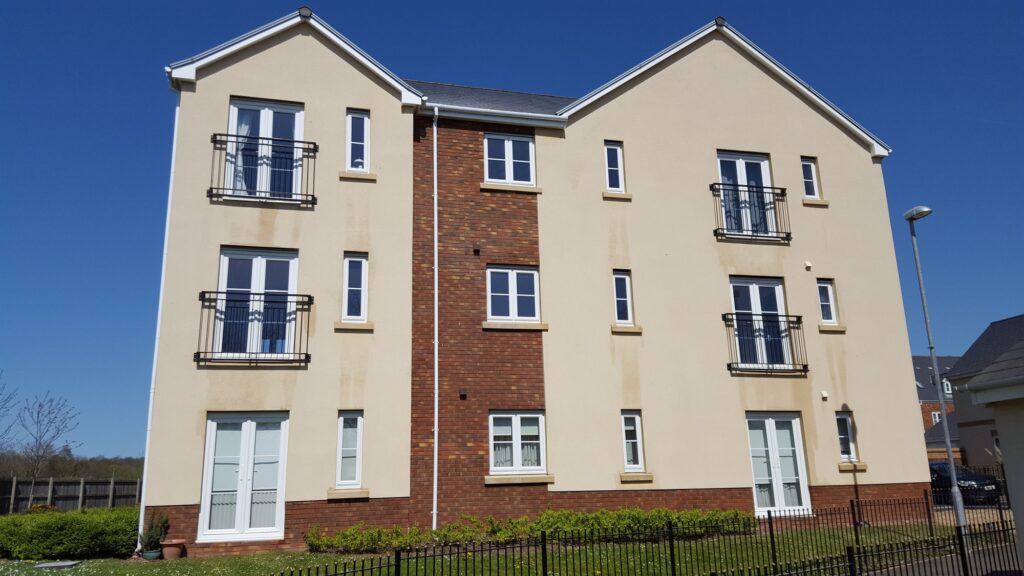
“Render cleaning” can sound straightforward, but houses often contain several different elevations, extensions and exterior finishes. You should know whether the agreement covers the entire rendered exterior or only specified sections.
For example, check whether it includes:
- Front elevation
- Rear elevation
- Side elevations
- Render around extensions
- Areas above conservatories
- Sections around windows and doors
- High-level rendered areas
- Difficult-to-access sections
Do not assume something is included simply because it appears to form part of the same wall.
| Contract Detail | What to Check |
|---|---|
| Areas included | Which elevations will be treated? |
| Areas excluded | Are any sections specifically omitted? |
| Access | Can all agreed areas be reached? |
| Surface type | Is the contractor aware of different finishes? |
| Additional structures | Are extensions or other rendered areas included? |
| Preparation | Is anything required from the homeowner? |
Clear scope protects everyone involved.
Check How the Render Will Be Cleaned
The agreement should correspond with the cleaning method discussed with you.
Render is very different from a hard surface such as concrete, so homeowners should understand whether the proposed method is suitable for their particular exterior finish.
Soft washing focuses on controlled application of specialist treatments rather than relying on unnecessarily aggressive pressure to blast contamination from a surface.
If you have chosen Softwashing UK because you want a specialist soft washing approach, make sure you understand the treatment being proposed for your property.
Ask questions if anything within the documentation appears different from what was discussed.
Understand What Results Are Being Promised
This is particularly important.
Cleaning can address contamination, but it cannot necessarily correct every visual defect affecting render.
Cracks, failed coatings, historic repairs, permanent discolouration, physical deterioration and other defects may remain visible after cleaning.
Be cautious about interpreting phrases such as “clean render” as a guarantee that the wall will look identical to newly installed render.
A professional agreement may explain limitations so that expectations are realistic from the beginning.
| Existing Issue | What Cleaning May Mean |
|---|---|
| Biological contamination | Appropriate treatment may significantly improve appearance |
| Green algae and red algae | Can be targeted with suitable treatment |
| General atmospheric dirt | May respond to professional cleaning |
| Cracked render | Cleaning does not repair the crack |
| Previous repairs | Colour differences may remain visible |
| Damaged coating | Cleaning cannot restore missing material |
| Permanent staining | May require individual assessment |
Understanding this distinction before signing can prevent misunderstandings afterwards.
Look for Information About Existing Damage
Before cleaning begins, existing defects should ideally be identified.
Render may already contain hairline cracks, chips, loose sections, previous repairs or areas where the finish has deteriorated.
A contract or associated survey documentation may refer to these issues.
It can also be sensible to have photographs showing the property’s condition before work begins. This gives both parties a record and reduces uncertainty if damage is noticed afterwards.
Cleaning should never be confused with repair work unless repair work has specifically been agreed.
Check What You Are Responsible for Before Work Starts
Homeowners may have responsibilities too.
For example, you could be asked to ensure windows are closed, move garden furniture or provide access to particular areas.
These requirements should be understood before the scheduled work.
Potential preparations could include:
- Moving vehicles away from the working area
- Closing windows and doors
- Removing portable garden furniture
- Moving children’s outdoor equipment
- Providing clear access through gates
- Identifying particularly sensitive garden areas
- Informing the contractor about known property defects
Read these sections carefully so the contractor can carry out the agreed work without unnecessary delays.
Read the Access Conditions
Access is especially important with exterior cleaning.
A rendered wall might appear straightforward from the garden, but conservatories, extensions, narrow passages, neighbouring properties and changes in ground level can complicate access.
Check whether the agreement assumes that certain areas will be accessible.
If access has been discussed verbally but the property has an unusual feature, make sure everybody understands the situation before work begins.
You do not want to discover on the day that a significant section cannot be reached.
Check How Gardens and Surrounding Areas Are Addressed
Render cleaning does not happen in isolation.
Below and around the walls may be lawns, flower beds, shrubs, patios, decking, windows, doors and other exterior surfaces.
A professional approach should consider the surrounding property when planning treatment.
If you have particularly valuable or sensitive planting close to the building, mention it beforehand rather than assuming the contractor already knows.
The same applies to ponds, garden ornaments, specialist surfaces or anything else you believe may require additional attention.
Understand the Difference Between a Quote and the Contract
Homeowners sometimes focus entirely on the quotation and overlook the accompanying terms.
The quotation might describe the main work, while additional conditions explain how the service will actually be delivered.
Read everything supplied rather than only the headline description.
Pay particular attention to:
| Section | Why It Matters |
|---|---|
| Scope | Defines what work is included |
| Exclusions | Identifies what is not included |
| Access requirements | Explains what must be accessible |
| Customer responsibilities | Shows what you need to prepare |
| Surface limitations | Explains existing defects or risks |
| Weather conditions | May explain when work can proceed |
| Cancellation terms | Explains what happens if plans change |
| Payment terms | Sets out when payment becomes due |
If anything is unclear, ask before accepting rather than afterwards.
Look at Cancellation and Rescheduling Terms
Exterior cleaning is affected by practical considerations that indoor services may not face.
Weather conditions can influence whether certain exterior work can be completed as planned. There may also be occasions where a homeowner needs to change the appointment.
Check what the agreement says about cancellation and rescheduling.
You should understand what happens if you need to change the date and what happens if the contractor determines that conditions are unsuitable for the planned work.
The important thing is clarity.
Check Whether Weather Is Covered
British weather is not always cooperative.
Wind, rain and other conditions can potentially influence exterior treatment, particularly where overspray or surrounding areas need to be carefully managed.
The documentation may explain how weather-related postponements are handled.
A weather delay should not automatically be viewed as a negative. In some circumstances, postponing work may be the more responsible option.
A specialist should prioritise carrying out the work appropriately rather than simply continuing because the appointment happens to be in the diary.
Understand Any Aftercare Instructions
Read anything relating to what happens after treatment.
Depending on the method and contamination involved, the appearance of the render may continue changing after the contractor has finished working.
If there are specific instructions for homeowners, make sure you understand them.
Do not assume that the moment the equipment is packed away represents the final stage of every treatment.
Softwashing UK can explain what homeowners should expect from the soft washing process and how the treatment relates to the contamination present on their property.
Don’t Ignore the Small Print
Terms and conditions are easy to skip, particularly when you are keen to get your property cleaned.
However, the smaller details often explain important aspects of the service.
Look for wording concerning:
- Existing surface defects
- Access restrictions
- Customer responsibilities
- Weather delays
- Cancellation
- Rescheduling
- Treatment limitations
- Areas excluded from the work
- Aftercare
- Payment arrangements
If you do not understand something, ask.
A reputable contractor should be prepared to explain the practical meaning of their terms rather than expecting homeowners to sign something they do not understand.
Be Careful With Verbal Promises
Imagine somebody tells you during a conversation that an additional wall will be cleaned, but the written scope only mentions the front and rear elevations.
Which version are you expecting on the day?
Important additions or changes should be reflected in the agreed scope wherever possible.
This is particularly valuable where a property contains multiple surfaces or difficult areas.
| Verbal Discussion | What to Do Before Signing |
|---|---|
| Extra elevation included | Check it appears in the agreed scope |
| Special access required | Ensure the contractor is aware |
| Particular stain discussed | Check expectations have been explained |
| Existing damage mentioned | Make sure it has been acknowledged |
| Special garden considerations | Confirm they are understood |
| Different surface type | Ensure it has been identified |
Written clarity helps prevent assumptions.
Check Whether the Contractor Has Assessed the Property Properly
A detailed contract cannot compensate for an inadequate assessment.
Before agreeing to the work, the contractor should have enough information to understand the property.
That might involve an on-site assessment or suitable photographs and information supplied remotely, depending on the circumstances.
The contractor should know about the approximate areas requiring treatment, accessibility, surface condition and any unusual features that could affect the work.
If the agreement appears to have been produced without anyone asking meaningful questions about your home, it is reasonable to ask how the proposed method was determined.
Understand What Isn’t Included
Exclusions can be just as important as inclusions.
Perhaps a particular section cannot be safely accessed. Maybe a different exterior material requires separate treatment. Perhaps repairs are needed before cleaning can take place.
Whatever the reason, exclusions should be understood before work begins.
This prevents a situation where you expect one thing while the contractor has priced and planned something entirely different.
Look for Unrealistic Guarantees
Be cautious if contractual wording appears to promise perfection regardless of the property’s condition.
Render varies enormously between homes.
Age, previous treatment, exposure, contamination and physical condition can all influence the finished appearance.
Professional render cleaning should be based on realistic expectations rather than exaggerated promises.
A specialist should be comfortable explaining both what treatment can achieve and what it cannot.
Keep a Copy of What You Agree To
Once you are happy with the terms, retain a copy.
Keep the quotation, scope of work, terms and any relevant correspondence together.
This gives you an easy reference point if you later need to check the agreed areas, preparation requirements or other details.
It is also worth keeping any before photographs you have taken.
A Pre-Signing Render Cleaning Checklist
Before accepting a render cleaning agreement, run through the main points one last time.
| Check | Question to Ask Yourself |
|---|---|
| Scope | Do I know exactly which walls are included? |
| Method | Do I understand how the render will be treated? |
| Results | Are my expectations realistic? |
| Damage | Have existing defects been identified? |
| Access | Can the contractor reach the agreed areas? |
| Garden | Have sensitive surrounding areas been discussed? |
| Preparation | Do I know what I need to do beforehand? |
| Weather | Do I understand what happens if conditions are unsuitable? |
| Cancellation | Have I read the relevant terms? |
| Aftercare | Do I know what to expect following treatment? |
| Documentation | Do I have a copy of everything agreed? |
Ask Questions Before You Commit
A render cleaning agreement should make the process clearer, not more confusing.
If something does not make sense, ask what it means. If an area you discussed is missing, raise it. If the expected results sound unrealistic, request clarification.
Professional contractors should welcome sensible questions because clear expectations benefit both sides.
For homeowners considering specialist render cleaning, Softwashing UK offers a professional soft washing approach designed around the property, its exterior surfaces and the contamination requiring treatment. Before work starts, understanding the scope, method and practical requirements gives you a much clearer picture of exactly what you are agreeing to.
Render Cleaning Contracts: What to Read Before Signing
Hiring a professional to clean the render on your home can make a significant difference to the appearance of the property. Years of weather exposure, atmospheric contamination and biological growth can leave rendered walls looking tired and discoloured, even when the render itself remains in reasonable condition.
Before any work begins, however, there is something homeowners should pay almost as much attention to as the cleaning method: the agreement covering the work.
Whether you receive a formal contract, quotation with terms and conditions or another written agreement, it is important to understand exactly what has been included. A good agreement should make the scope of the work clear, explain relevant limitations and help ensure both the homeowner and contractor understand what has been agreed.
When considering professional render cleaning from a specialist such as Softwashing UK, here are some of the important details worth checking before accepting the work.
What Exactly Is Being Cleaned?
Start with the most obvious point: which parts of your property are included?
“Render cleaning” can sound straightforward, but houses often contain several different elevations, extensions and exterior finishes. You should know whether the agreement covers the entire rendered exterior or only specified sections.
For example, check whether it includes:
- Front elevation
- Rear elevation
- Side elevations
- Render around extensions
- Areas above conservatories
- Sections around windows and doors
- High-level rendered areas
- Difficult-to-access sections
Do not assume something is included simply because it appears to form part of the same wall.
| Contract Detail | What to Check |
|---|---|
| Areas included | Which elevations will be treated? |
| Areas excluded | Are any sections specifically omitted? |
| Access | Can all agreed areas be reached? |
| Surface type | Is the contractor aware of different finishes? |
| Additional structures | Are extensions or other rendered areas included? |
| Preparation | Is anything required from the homeowner? |
Clear scope protects everyone involved.
Check How the Render Will Be Cleaned
The agreement should correspond with the cleaning method discussed with you.
Render is very different from a hard surface such as concrete, so homeowners should understand whether the proposed method is suitable for their particular exterior finish.
Soft washing focuses on controlled application of specialist treatments rather than relying on unnecessarily aggressive pressure to blast contamination from a surface.
If you have chosen Softwashing UK because you want a specialist soft washing approach, make sure you understand the treatment being proposed for your property.
Ask questions if anything within the documentation appears different from what was discussed.
Understand What Results Are Being Promised
This is particularly important.
Cleaning can address contamination, but it cannot necessarily correct every visual defect affecting render.
Cracks, failed coatings, historic repairs, permanent discolouration, physical deterioration and other defects may remain visible after cleaning.
Be cautious about interpreting phrases such as “clean render” as a guarantee that the wall will look identical to newly installed render.
A professional agreement may explain limitations so that expectations are realistic from the beginning.
| Existing Issue | What Cleaning May Mean |
|---|---|
| Biological contamination | Appropriate treatment may significantly improve appearance |
| Green algae and red algae | Can be targeted with suitable treatment |
| General atmospheric dirt | May respond to professional cleaning |
| Cracked render | Cleaning does not repair the crack |
| Previous repairs | Colour differences may remain visible |
| Damaged coating | Cleaning cannot restore missing material |
| Permanent staining | May require individual assessment |
Understanding this distinction before signing can prevent misunderstandings afterwards.
Look for Information About Existing Damage
Before cleaning begins, existing defects should ideally be identified.
Render may already contain hairline cracks, chips, loose sections, previous repairs or areas where the finish has deteriorated.
A contract or associated survey documentation may refer to these issues.
It can also be sensible to have photographs showing the property’s condition before work begins. This gives both parties a record and reduces uncertainty if damage is noticed afterwards.
Cleaning should never be confused with repair work unless repair work has specifically been agreed.
Check What You Are Responsible for Before Work Starts
Homeowners may have responsibilities too.
For example, you could be asked to ensure windows are closed, move garden furniture or provide access to particular areas.
These requirements should be understood before the scheduled work.
Potential preparations could include:
- Moving vehicles away from the working area
- Closing windows and doors
- Removing portable garden furniture
- Moving children’s outdoor equipment
- Providing clear access through gates
- Identifying particularly sensitive garden areas
- Informing the contractor about known property defects
Read these sections carefully so the contractor can carry out the agreed work without unnecessary delays.
Read the Access Conditions
Access is especially important with exterior cleaning.
A rendered wall might appear straightforward from the garden, but conservatories, extensions, narrow passages, neighbouring properties and changes in ground level can complicate access.
Check whether the agreement assumes that certain areas will be accessible.
If access has been discussed verbally but the property has an unusual feature, make sure everybody understands the situation before work begins.
You do not want to discover on the day that a significant section cannot be reached.
Check How Gardens and Surrounding Areas Are Addressed
Render cleaning does not happen in isolation.
Below and around the walls may be lawns, flower beds, shrubs, patios, decking, windows, doors and other exterior surfaces.
A professional approach should consider the surrounding property when planning treatment.
If you have particularly valuable or sensitive planting close to the building, mention it beforehand rather than assuming the contractor already knows.
The same applies to ponds, garden ornaments, specialist surfaces or anything else you believe may require additional attention.
Understand the Difference Between a Quote and the Contract
Homeowners sometimes focus entirely on the quotation and overlook the accompanying terms.
The quotation might describe the main work, while additional conditions explain how the service will actually be delivered.
Read everything supplied rather than only the headline description.
Pay particular attention to:
| Section | Why It Matters |
|---|---|
| Scope | Defines what work is included |
| Exclusions | Identifies what is not included |
| Access requirements | Explains what must be accessible |
| Customer responsibilities | Shows what you need to prepare |
| Surface limitations | Explains existing defects or risks |
| Weather conditions | May explain when work can proceed |
| Cancellation terms | Explains what happens if plans change |
| Payment terms | Sets out when payment becomes due |
If anything is unclear, ask before accepting rather than afterwards.
Look at Cancellation and Rescheduling Terms
Exterior cleaning is affected by practical considerations that indoor services may not face.
Weather conditions can influence whether certain exterior work can be completed as planned. There may also be occasions where a homeowner needs to change the appointment.
Check what the agreement says about cancellation and rescheduling.
You should understand what happens if you need to change the date and what happens if the contractor determines that conditions are unsuitable for the planned work.
The important thing is clarity.
Check Whether Weather Is Covered
British weather is not always cooperative.
Wind, rain and other conditions can potentially influence exterior treatment, particularly where overspray or surrounding areas need to be carefully managed.
The documentation may explain how weather-related postponements are handled.
A weather delay should not automatically be viewed as a negative. In some circumstances, postponing work may be the more responsible option.
A specialist should prioritise carrying out the work appropriately rather than simply continuing because the appointment happens to be in the diary.
Understand Any Aftercare Instructions
Read anything relating to what happens after treatment.
Depending on the method and contamination involved, the appearance of the render may continue changing after the contractor has finished working.
If there are specific instructions for homeowners, make sure you understand them.
Do not assume that the moment the equipment is packed away represents the final stage of every treatment.
Softwashing UK can explain what homeowners should expect from the soft washing process and how the treatment relates to the contamination present on their property.
Don’t Ignore the Small Print
Terms and conditions are easy to skip, particularly when you are keen to get your property cleaned.
However, the smaller details often explain important aspects of the service.
Look for wording concerning:
- Existing surface defects
- Access restrictions
- Customer responsibilities
- Weather delays
- Cancellation
- Rescheduling
- Treatment limitations
- Areas excluded from the work
- Aftercare
- Payment arrangements
If you do not understand something, ask.
A reputable contractor should be prepared to explain the practical meaning of their terms rather than expecting homeowners to sign something they do not understand.
Be Careful With Verbal Promises
Imagine somebody tells you during a conversation that an additional wall will be cleaned, but the written scope only mentions the front and rear elevations.
Which version are you expecting on the day?
Important additions or changes should be reflected in the agreed scope wherever possible.
This is particularly valuable where a property contains multiple surfaces or difficult areas.
| Verbal Discussion | What to Do Before Signing |
|---|---|
| Extra elevation included | Check it appears in the agreed scope |
| Special access required | Ensure the contractor is aware |
| Particular stain discussed | Check expectations have been explained |
| Existing damage mentioned | Make sure it has been acknowledged |
| Special garden considerations | Confirm they are understood |
| Different surface type | Ensure it has been identified |
Written clarity helps prevent assumptions.

Check Whether the Contractor Has Assessed the Property Properly
A detailed contract cannot compensate for an inadequate assessment.
Before agreeing to the work, the contractor should have enough information to understand the property.
That might involve an on-site assessment or suitable photographs and information supplied remotely, depending on the circumstances.
The contractor should know about the approximate areas requiring treatment, accessibility, surface condition and any unusual features that could affect the work.
If the agreement appears to have been produced without anyone asking meaningful questions about your home, it is reasonable to ask how the proposed method was determined.
Understand What Isn’t Included
Exclusions can be just as important as inclusions.
Perhaps a particular section cannot be safely accessed. Maybe a different exterior material requires separate treatment. Perhaps repairs are needed before cleaning can take place.
Whatever the reason, exclusions should be understood before work begins.
This prevents a situation where you expect one thing while the contractor has priced and planned something entirely different.
Look for Unrealistic Guarantees
Be cautious if contractual wording appears to promise perfection regardless of the property’s condition.
Render varies enormously between homes.
Age, previous treatment, exposure, contamination and physical condition can all influence the finished appearance.
Professional render cleaning should be based on realistic expectations rather than exaggerated promises.
A specialist should be comfortable explaining both what treatment can achieve and what it cannot.
Keep a Copy of What You Agree To
Once you are happy with the terms, retain a copy.
Keep the quotation, scope of work, terms and any relevant correspondence together.
This gives you an easy reference point if you later need to check the agreed areas, preparation requirements or other details.
It is also worth keeping any before photographs you have taken.
A Pre-Signing Render Cleaning Checklist
Before accepting a render cleaning agreement, run through the main points one last time.
| Check | Question to Ask Yourself |
|---|---|
| Scope | Do I know exactly which walls are included? |
| Method | Do I understand how the render will be treated? |
| Results | Are my expectations realistic? |
| Damage | Have existing defects been identified? |
| Access | Can the contractor reach the agreed areas? |
| Garden | Have sensitive surrounding areas been discussed? |
| Preparation | Do I know what I need to do beforehand? |
| Weather | Do I understand what happens if conditions are unsuitable? |
| Cancellation | Have I read the relevant terms? |
| Aftercare | Do I know what to expect following treatment? |
| Documentation | Do I have a copy of everything agreed? |
Ask Questions Before You Commit
A render cleaning agreement should make the process clearer, not more confusing.
If something does not make sense, ask what it means. If an area you discussed is missing, raise it. If the expected results sound unrealistic, request clarification.
Professional contractors should welcome sensible questions because clear expectations benefit both sides.
For homeowners considering specialist render cleaning, Softwashing UK offers a professional soft washing approach designed around the property, its exterior surfaces and the contamination requiring treatment. Before work starts, understanding the scope, method and practical requirements gives you a much clearer picture of exactly what you are agreeing to.
Check What the Contract Says About Changes to the Work
Exterior cleaning projects do not always unfold exactly as expected. Once work begins, an area may be found to be in a different condition from what photographs or an initial inspection suggested.
Your agreement should make it clear how any changes to the original scope will be handled.
For example, if an additional rendered section is identified or an agreed area cannot be treated as originally planned, you should know how this will be communicated. Changes should not simply appear without explanation.
This is particularly important on larger properties where different elevations may have different render finishes, levels of contamination or access requirements.
| Possible Change | What to Look For |
|---|---|
| Additional area identified | Clear agreement before extra work proceeds |
| Access problem discovered | Explanation of how the affected area will be handled |
| Surface condition differs | Appropriate reassessment before treatment |
| Homeowner requests extra work | Confirmation that the scope has changed |
| Weather interrupts work | Clear arrangements for completing the agreed service |
Keeping changes documented helps ensure that both sides continue working from the same understanding.
Read Any Clauses About Surface Condition Carefully
Render can look reasonably sound from ground level while still containing small cracks, previous repairs, weakened coatings or other imperfections.
Contracts may therefore contain wording relating to the existing condition of the surface.
Do not automatically skim over these clauses. Read what they actually say and ask for clarification if the wording seems unusually broad or difficult to understand.
There is an important difference between acknowledging genuine pre-existing defects and accepting unclear wording that you do not fully understand.
A sensible agreement should help establish the condition of the property and the realistic limitations of the cleaning process.
Make Sure Different Exterior Materials Are Identified
Many houses do not have one continuous exterior material.
A rendered elevation may meet brickwork, stone, timber, cladding, painted surfaces, decorative trims or other materials. Windows, doors, metalwork and roofline components may also sit directly alongside the treatment area.
If your property contains several finishes, check that the contractor is aware of them.
The presence of different materials can affect how the job is planned, particularly where treatment needs to be carefully controlled around adjoining surfaces.
This is another reason a detailed property assessment is valuable before the agreement is accepted.
Check Whether Utilities or Facilities Are Required
Some exterior cleaning work may require access to facilities at the property. If anything is required from you, this should ideally be established before the appointment.
You should not be left trying to resolve practical arrangements once work has already started.
Read any customer preparation information and ask whether you need to provide access to particular areas or facilities.
Straightforward practical details can make a significant difference to how smoothly the scheduled work proceeds.
Look for Clear Start and Completion Arrangements
Homeowners often focus on what will be cleaned but forget to check the practical arrangements surrounding the appointment.
Where relevant, understand when the contractor expects to attend, whether the work may require more than one visit and what happens if conditions prevent completion as planned.
Exterior work can sometimes be affected by circumstances outside anyone’s control, particularly weather.
What matters is that the agreement or communication surrounding it gives you a reasonable understanding of the process.
Understand What Counts as Completion
The phrase “job completed” can mean different things depending on the treatment being used.
With professional exterior treatment, homeowners should understand whether the expected appearance is immediate or whether the surface may continue to improve after the initial work.
This is particularly relevant when biological contamination is involved.
If green algae and red algae are present, for example, the treatment process should be understood rather than judging the service solely by whether every visible trace disappears while the contractor is still standing outside the property.
Ask what you should reasonably expect on the day and during the period following treatment.
Check What Happens If You Have a Concern Afterwards
Even when a project has been carefully planned, homeowners may occasionally have a question after the work has been carried out.
Your paperwork should make it reasonably clear how you can contact the company if you need to discuss the service.
Keep relevant correspondence and photographs so that you can clearly explain your question if necessary.
This does not mean expecting problems. It simply means knowing what the process is if you need clarification afterwards.
Choosing an established specialist such as Softwashing UK also means homeowners can discuss the proposed soft washing process before agreeing to the work and make sure expectations are clear from the outset.
Don’t Sign Something You Haven’t Had Time to Read
Render cleaning can produce a major visual improvement to a property, and it is understandable to want to secure an appointment quickly. That does not mean you should rush through the paperwork.
Take enough time to read the relevant information.
If there is terminology you do not understand, ask what it means. If the scope seems incomplete, query it. If something discussed verbally does not appear in writing, raise it before accepting.
You should feel confident that you understand the basic agreement rather than signing simply because you assume all render cleaning contracts are essentially the same.
Watch for Vague Descriptions of the Service
A description such as “clean outside of house” leaves considerable room for interpretation.
A more useful scope identifies what is actually being treated.
This becomes especially important when only part of the exterior is rendered or when different elevations require different work.
| Vague Wording | What Needs Clarifying |
|---|---|
| Clean house | Which elevations and surfaces? |
| Treat walls | Which walls are included? |
| Remove staining | What type of staining is being addressed? |
| Exterior cleaning | Does this mean render only? |
| Complete treatment | What areas constitute the complete treatment? |
The clearer the description, the easier it is for everybody to understand what the service includes.
Check Whether Access Problems Could Create Exclusions
Some sections of render are much harder to reach than others.
Conservatory roofs, extensions, narrow gaps between buildings, sloping ground and restricted rear access can all influence how exterior cleaning is approached.
If your home has any obvious access challenges, check whether these areas are included in the agreed work.
Do not assume that because a section is visible it is automatically accessible using the planned method.
Discussing this beforehand prevents disappointment when the work takes place.
Make Sure Your Own Expectations Match the Written Scope
Before signing, mentally walk around the property and compare what you expect to be cleaned with what the paperwork actually describes.
Think about every elevation, extension and awkward section.
If you expect a particular area to be treated but cannot see it reflected anywhere in the agreement, ask about it.
The same applies to particular stains or contamination that prompted you to arrange the cleaning in the first place.
Your expectations and the contractor’s written scope should broadly match before work is authorised.
Why Detailed Agreements Benefit Homeowners
Contracts and written terms are sometimes viewed as unnecessary paperwork, but clear documentation can actually make the experience easier for homeowners.
It establishes what is being done, identifies relevant limitations and provides a reference point if anybody later forgets what was discussed.
A useful render cleaning agreement should leave you with answers to the most important questions: what is being cleaned, how it will be treated, what preparation is required, what limitations exist and what happens if circumstances change.
For homeowners considering professional render treatment, Softwashing UK can provide specialist guidance on soft washing and the appropriate approach for exterior contamination. Taking time to understand the proposed work before signing means you can proceed knowing what has been agreed and what to expect when the cleaning takes place.