Texture is the single biggest factor in how quickly a rendered wall soils, and the difference between a smooth finish and a heavily textured one is far greater than most owners expect. A smooth render presents very little sheltered surface. Rain runs off it freely, it dries quickly, and airborne spores landing on it have limited purchase and a narrow window in which to establish. Such walls do colonise, but slowly, and the growth tends to sit shallowly where it does. A textured finish is a different proposition entirely. Whether the texture comes from scraping, from a coarse aggregate or from a applied pattern, it creates an enormous increase in surface area and thousands of small sheltered points where moisture lingers after the flat surface has dried. Spores settle into those points, germinate in the retained damp, and root into a profile that offers physical protection from wind and rain. The practical consequence is that a textured wall needs both more treatment and more time. Our render cleaning services apply product in sufficient volume that it flows down into the profile rather than bridging across the high points, and allow dwell periods judged against the depth involved rather than against a standard figure. Render algae removal on a smooth elevation is straightforward. On a deeply textured one, the same organism at the same density is a materially bigger job, and quoting them identically would misprice both. Exterior render cleaning across the range of finishes found on properties in Cookley therefore starts with assessing texture alongside coating type, because the two together determine what the wall actually requires.
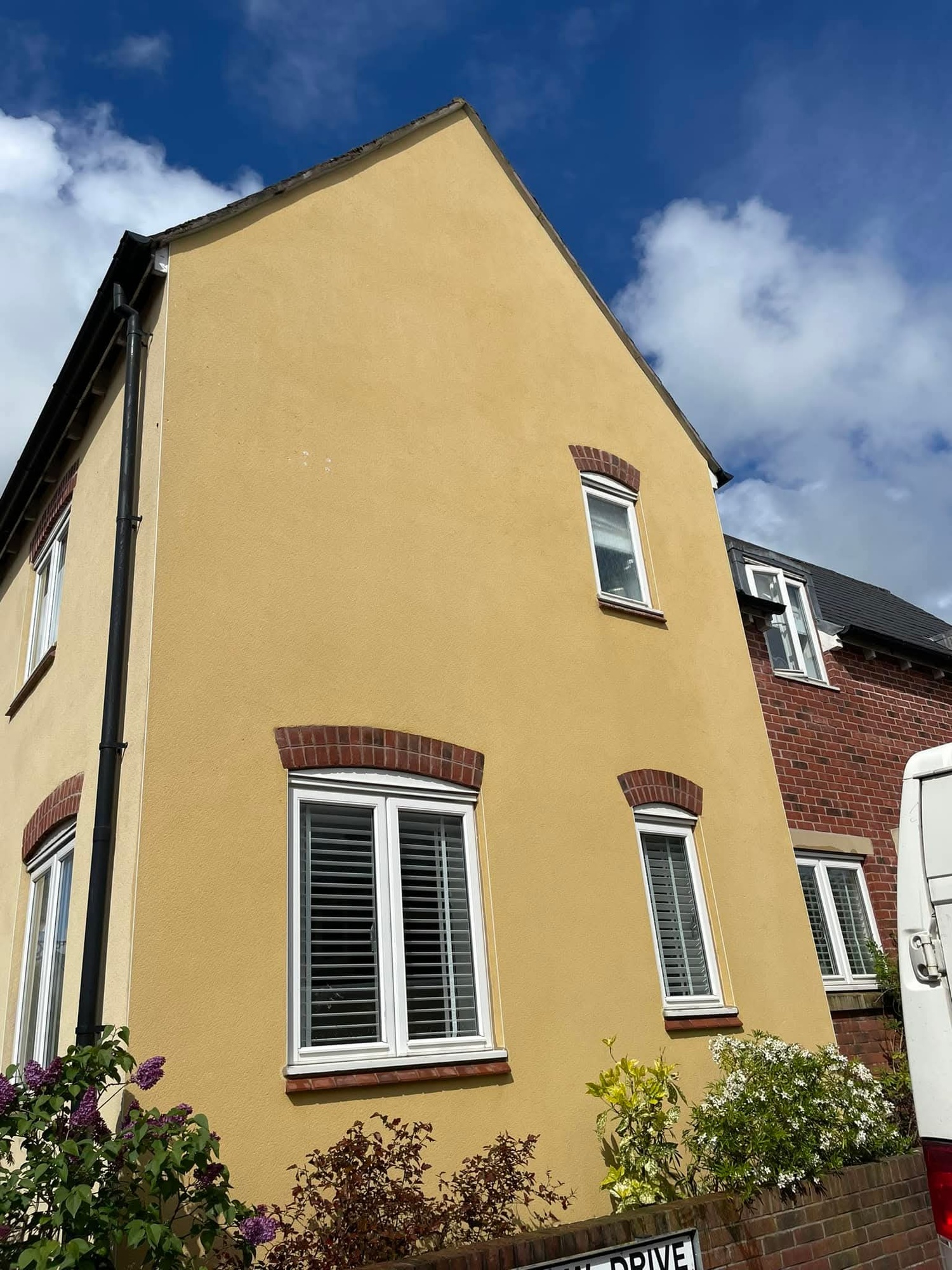
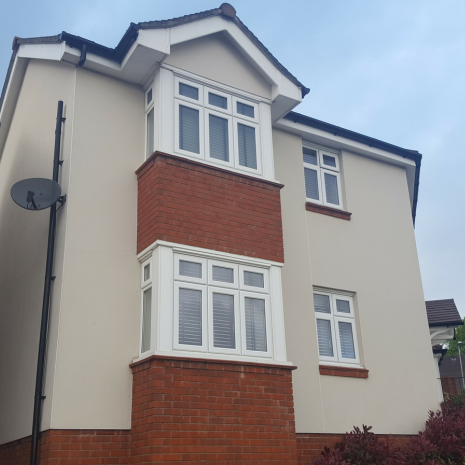

Detailing is where silicone render elevations tend to soil first, and around openings it is especially predictable. Water sheds from the ends of sills rather than evenly across them, producing two darker lines beneath rather than a uniform band. It tracks down reveals, which sit in shade for most of the day. It collects at bead terminations before dropping. And at any point where a surface above discharges onto the wall below, it lands concentrated rather than dispersed. Every one of those locations stays damp longer than the open wall and colonises accordingly. On a pale K Rend finish the pattern becomes an outline around every window and door, which is more conspicuous than general filming because it follows the architecture. K Rend cleaning that treats an elevation as a flat plane leaves those areas behind. We work them as their own zones within the specification, applying treatment directly onto reveals, returns, sill undersides and bead lines at appropriate strength, with the same dwell as the main wall. Where the staining at these points is not biological, which is common, render stain removal is specified alongside using different chemistry, always at the same very low pressures used everywhere else. Silicone render cleaning otherwise proceeds as it must on any through-coloured finish: chemical throughout, no brushing, no agitation, even coverage across a complete elevation with a live wet edge maintained so nothing dries part-treated. Coloured render cleaning is judged on whether the detailing reads as cleanly as the field of the wall. House render cleaning that clears the open elevation and leaves outlined openings has moved the problem rather than solved it.
Planting close to a monocouche wall changes everything about how that elevation behaves, and it is worth understanding before deciding what the render actually needs. A shrub or hedge growing hard against the render does three things at once. It shades the wall, so drying time extends considerably. It restricts air movement across the surface, which extends it further. And it provides a continuous local supply of spores and organic debris directly onto the coating. Where a border sits at the base, splashback from rain striking soil adds soiling to the same area. The result is entirely predictable. The section of wall behind planting is almost always the heaviest colonised part of the elevation, often by a considerable margin, and it can look markedly different from the wall two metres to either side. Monocouche render cleaning has to reach those areas properly, which sometimes means asking for planting to be cut back or tied clear temporarily so the wall can be treated and rinsed. We raise that at survey rather than discovering it on the day, and where access is genuinely restricted we explain what can and cannot be achieved. The treatment itself is unchanged: applied at low pressure and in volume to penetrate the scraped texture, given full dwell to destroy growth at root level, then rinsed gently with nothing brushed or agitated. Aftercare advice matters more here than anywhere. Where planting cannot be moved, the interval before that section needs attention again will be shorter than the rest of the building, and render maintenance planned honestly accounts for it rather than pretending the whole elevation behaves as one.
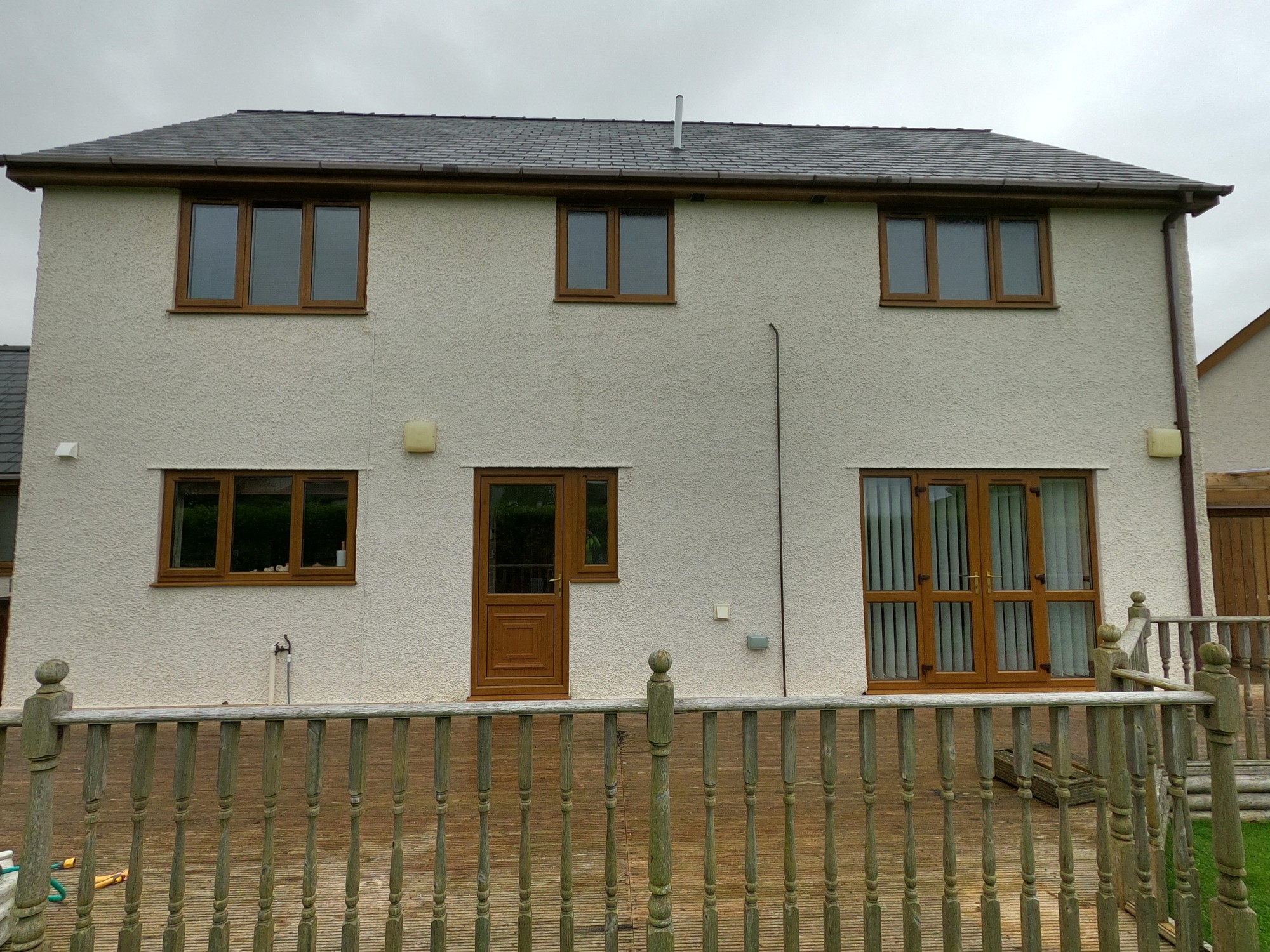
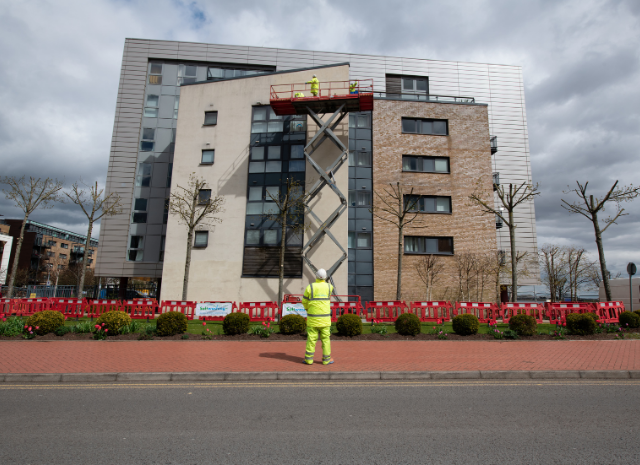

Nurseries, pre-schools and childcare settings operating from rendered buildings need exterior work handled with more care around the site than the wall itself demands. The premises are occupied throughout the day, outdoor areas are in constant use, and the people using them are small, curious and unpredictable. Commercial render cleaning at these settings is planned in detail before anyone attends. We agree working areas in stages so that only one part of the building is affected at a time, confirm which outdoor spaces need to be clear and when, and establish exclusion zones with proper barriers rather than tape alone. Where a session-based timetable allows, work is scheduled around the quietest part of the day or during closure periods. The low pressure method is a genuine advantage here. There is very little noise, no machine running continuously, and no drifting spray across an outdoor area, so the routine inside is largely undisturbed. Safeguarding requirements are taken seriously. Where checks are needed for personnel working on site during occupied hours, they are completed in advance, and we work to whatever visitor and signing-in procedure the setting operates. Insurance, method statements and risk assessments are supplied ahead of attendance, and operatives hold current working at height certification. Technically the work matches any domestic elevation of similar size. Render facade cleaning maintains consistent dilution and live wet edges across each wall so the finish is uniform. For childcare premises around Cookley, a clean every few years keeps the building presenting well to visiting parents at a cost proportionate to the size of the setting, and a coating kept dry lasts considerably longer.
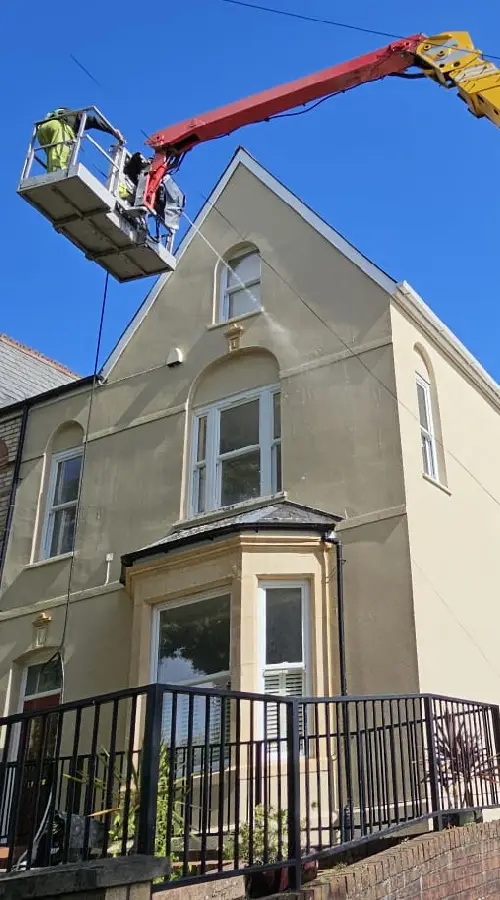
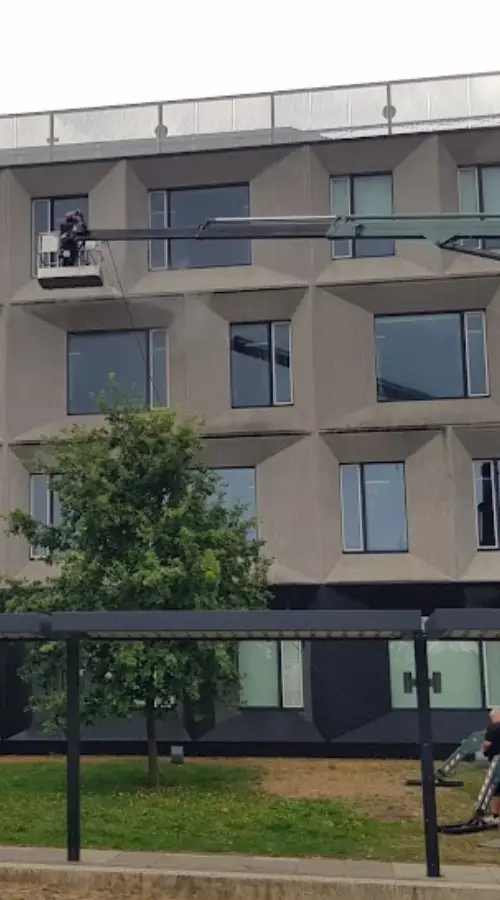
Softwashing UK clean rendered elevations and nothing else, and that narrowness is deliberate rather than a limitation. The argument for specialisation in this trade is straightforward. Render is not one material but a family of them: silicone and acrylic thin-coat systems, monocouche, insulated assemblies, traditional sand and cement, and any of those carrying paint applied at some point by somebody. Each behaves differently under treatment. Several are permanently damaged by methods that would be entirely appropriate on other surfaces. Recognising which is which, and knowing how each responds, is the whole skill. A contractor covering a broad range of exterior surfaces cannot build that depth on any one of them. We can, because it is all we do. Our operatives train specifically on rendered finishes, the equipment is specified for this work rather than adapted from something more general, and the insurance covers precisely what we carry out. It also means we decline work that falls outside it. If an elevation needs attention of a different kind before it can be cleaned, we say so rather than taking the booking, and if a property is not suited to treatment we explain why. Professional render cleaning delivered by render cleaning specialists is ultimately about judgement made quickly and reliably at survey. Render cleaning cost then reflects a specification written against what is genuinely there. As a local render cleaning company we are around afterwards, and most of our work arrives through recommendation rather than through advertising, which is the strongest incentive there is to get the assessment right first time.
Cookley and Caunsall are both within our standard coverage, surveyed, priced and scheduled on identical terms with no travel loading applied to either. The property mix across the two is broad, and that is the reason every job is surveyed rather than quoted from a description. Some properties are terraced or semi-detached with modest rendered areas, straightforward from ground level and completed well within a day. Others are larger detached houses with three-storey gables, extensions finished in different systems from the original walls, and elevations facing in every direction with very different exposure. Coating age spans a similar range. Older walls frequently carry traditional render that has been repaired and painted at intervals over decades, where the paint layer determines whether cleaning is advisable at all. Newer builds and extensions carry modern through-coloured systems that clean up extremely well but tolerate no abrasion whatsoever. Finding both on one building is entirely normal. Confirming coverage is the easy part. An address is enough, and we can say immediately whether a property falls within our working area, which both of these do without qualification. Photographs sent with an enquiry are genuinely useful and often let us give a realistic indication of cost before attending. Nobody is expected to identify their own render accurately, and a guess is fine. Access is rarely a constraint. Hose runs allow the vehicle to remain clear of the property while treatment reaches every wall, and telescopic delivery covers most domestic elevations from ground level. Surveys take around twenty minutes and produce an itemised written figure by email.
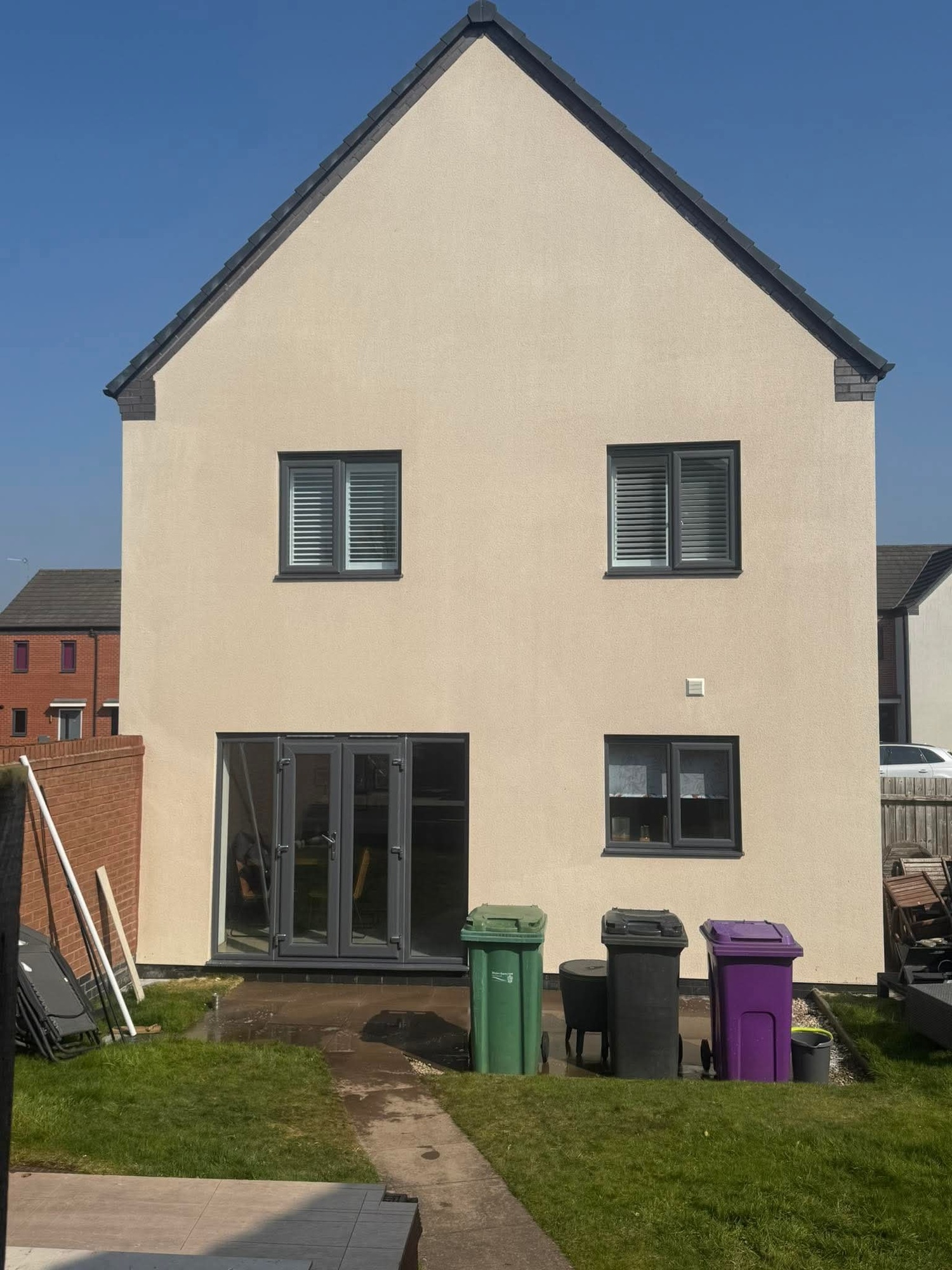
Most properties in Cookley benefit from professional render cleaning every 3 to 5 years, although this depends on the surrounding environment. Properties near trees, woodland, busy roads or coastal areas may require more frequent cleaning due to algae, mould and airborne contaminants. Our soft washing process removes existing growth and helps keep your render cleaner for longer.
Yes. Soft washing is specifically designed for delicate surfaces such as K-Rend, silicone render, monocouche render and painted render. Unlike high-pressure washing, it cleans at low pressure while treating biological growth at its source, reducing the risk of damage to the render finish.
We clean virtually all external render finishes, including K-Rend, Monocouche, Weber, Sto, silicone render, acrylic render, painted render, roughcast and pebble dash. Every cleaning method is tailored to the specific render type to achieve the best possible results.
Yes. Our specialist soft washing treatments are highly effective at removing green algae, red algae, black mould, mildew, lichen and other organic staining. We also apply professional biocide treatments to kill spores and slow down regrowth.
Because our process targets the biological growth rather than simply washing the surface, results typically last much longer than pressure washing alone. The exact lifespan depends on weather conditions, surrounding vegetation and the property’s location.
No. Our soft washing process is specifically designed to clean render safely. We use low-pressure application methods and specialist cleaning solutions that remove contamination without damaging the render surface when carried out by trained professionals.
The UK’s damp climate provides ideal conditions for algae, mould and other biological growth to develop on rendered surfaces. Areas with limited sunlight, nearby trees or persistent moisture are especially susceptible. Professional soft washing safely removes these contaminants and restores your property’s appearance.















































WhatsApp us