The question worth asking about any render clean is not how good it looks afterwards but how long it stays that way. The answer depends on three things: whether the growth was killed or merely removed, how quickly the elevation dries after rain, and whether anything on the building keeps feeding it moisture. Our render cleaning services are built to influence the first of those and to identify the other two. Killing the colony is the part that matters most. A biocidal solution applied at low pressure penetrates algae and lichen and destroys them, including the anchoring structures held down in the texture, so regrowth has to begin from airborne spores landing on a clean surface. Render algae removal by pressure alone leaves those structures in place and colonisation resumes from an established base, which is why a washed wall greens up faster the second time than it did originally. Drying rate is largely fixed by aspect and shelter, though it improves considerably once the growth holding water against the face has gone. Render moss removal along copings and ledges makes a disproportionate difference here, because those horizontal surfaces stay wet longest and reseed everything below them. The third factor is defects. A blocked outlet, a filled drip groove or a splash zone at ground level will undo good work within a season, and we point those out as part of the job. Professional render cleaning should come with that information attached. Exterior render cleaning of a Corfe Mullen property done chemically and reported honestly typically holds three to five years, and house render cleaning intervals stretch further still where drainage has been sorted out.
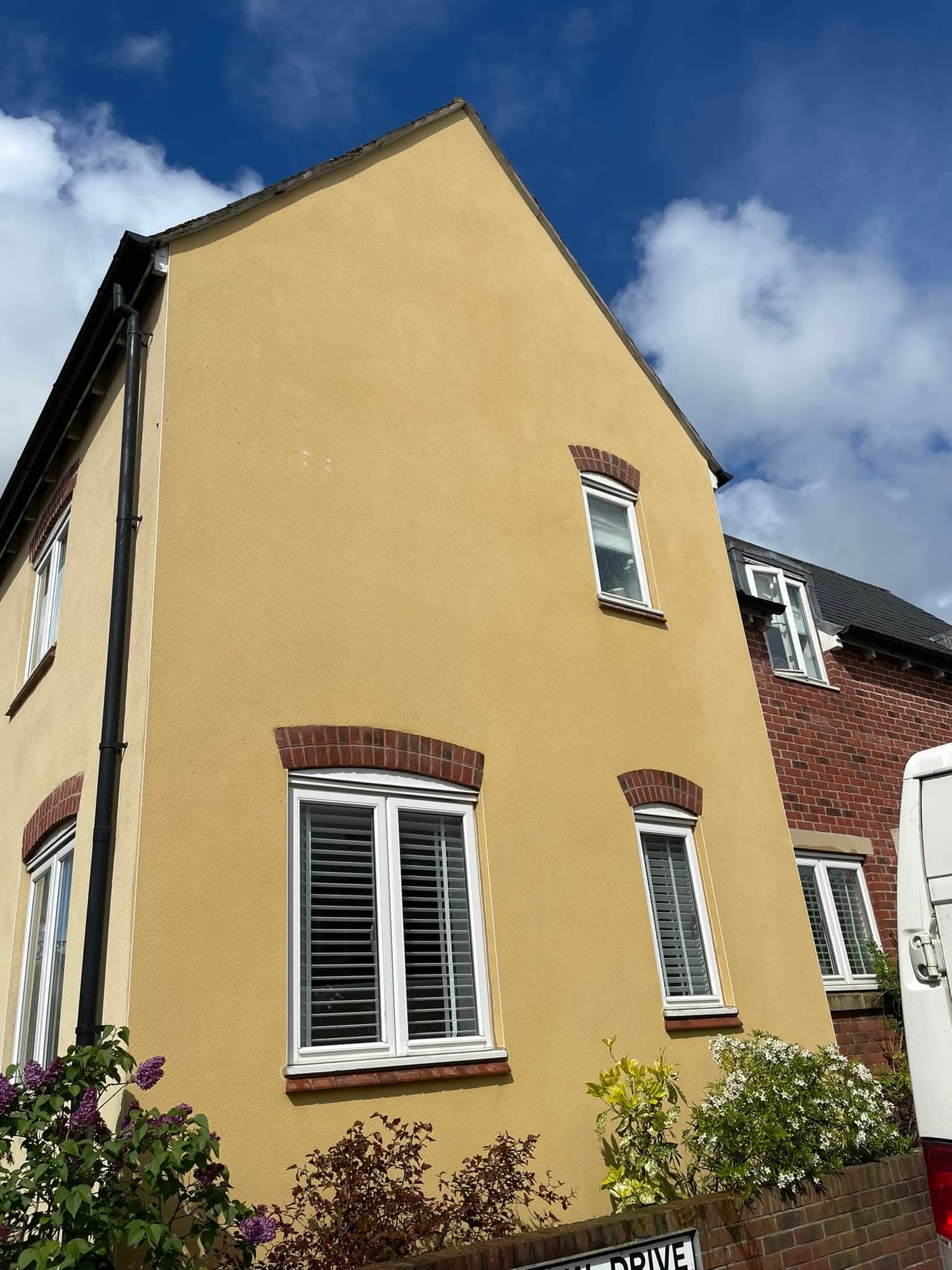
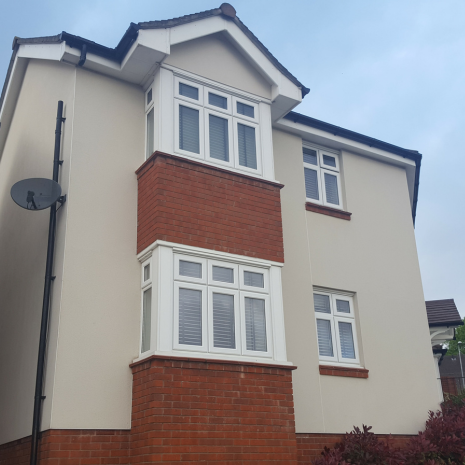

K Rend is common on housing built in the last fifteen years, and the point at which it needs attention is fairly predictable — somewhere past year five on shaded elevations, later on faces that get sun and wind. Nothing has failed when that happens. A silicone through-coloured system resists water and staining extremely well, but airborne spores will eventually settle on any exterior surface, and K Rend cleaning is the maintenance that follows. Because the colour is integral, the work is entirely chemical. Soft wash render cleaning puts a biocidal solution onto the face at a pressure barely above hose flow, gives it a long dwell to break the colony down, then rinses gently. There is no brushing, no lance and no mechanical contact, so texture and pigment survive the process intact. Silicone render cleaning does need judgement in application. A deliberately water-repellent surface encourages solution to run before the chemistry has finished, so it goes on at the correct volume and dilution, and elevations in strong sun are left until later in the day. Done properly, residue remaining in the surface continues suppressing regrowth long after the visit. Render stain removal covers what the biocide will not touch. Rust bleed from ties, brackets and fixings, cement splash left from construction, and dark runs beneath a leaking joint are mineral contaminants requiring their own products and a test patch before wider use. On newer estate housing in Corfe Mullen it is common to find all three on one building, and each is priced and explained separately rather than folded invisibly into the total.
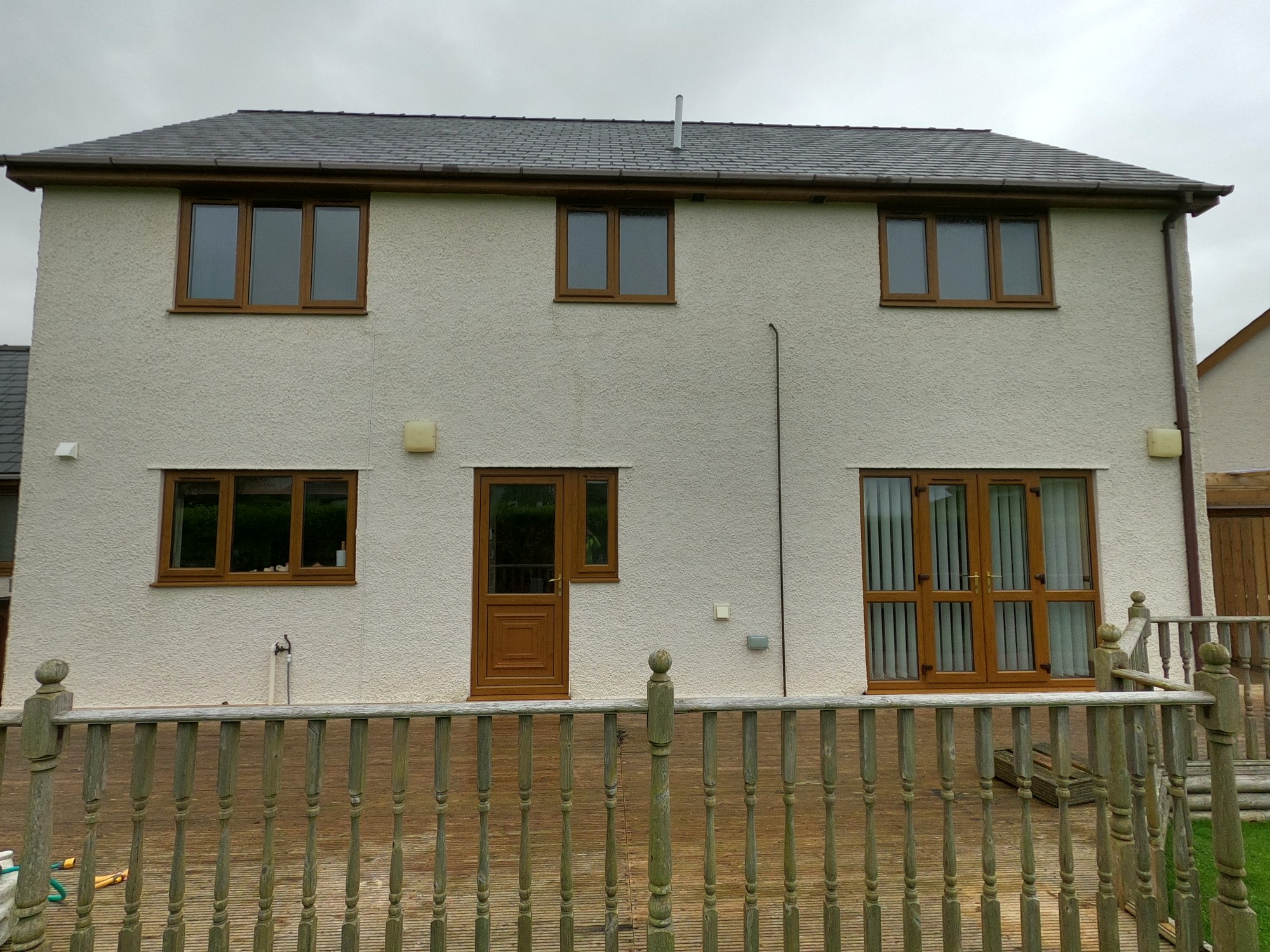
Monocouche cleans best when the wall is neither baking nor freezing, which in practice means most of the year excluding the extremes. That matters more on this finish than on others, because the whole process depends on solution staying wet on the surface long enough to work its way into the texture. Monocouche render cleaning rushed on a hot afternoon produces patchy results that then get blamed on the product. The reason dwell time is everything comes down to how the finish is made. A single thick coat, coloured throughout, scraped back to an open texture — organic growth roots into those pores rather than resting on them, so anything that only affects the surface leaves the colony intact. Treatment is applied at low pressure in volume, left, and repeated where deposits are heaviest along copings and projecting details. Render pressure washing is the one approach guaranteed to cause permanent harm. It flattens the scraped profile, exposes aggregate and leaves tracking visible in any low sun, and because coloured render cleaning has no top coat to renew, the only correction is recoating an entire elevation for uniformity. Set against the cost of a clean carried out patiently, that is an expensive way to save an afternoon. Carried out correctly, render wall cleaning of monocouche produces a face with no banding, no bright spots and no evidence of working joints, because no section has been treated harder than another. Where growth had been left long enough to read as grey rather than the specified colour, the change is substantial enough to call render restoration, and owners in Corfe Mullen regularly assume a coating has been applied when nothing has.
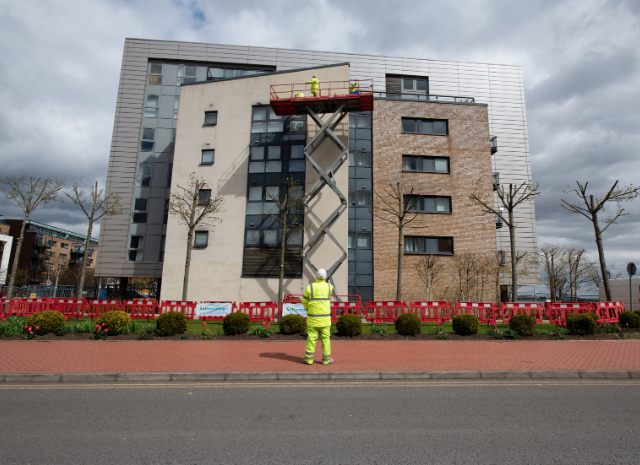

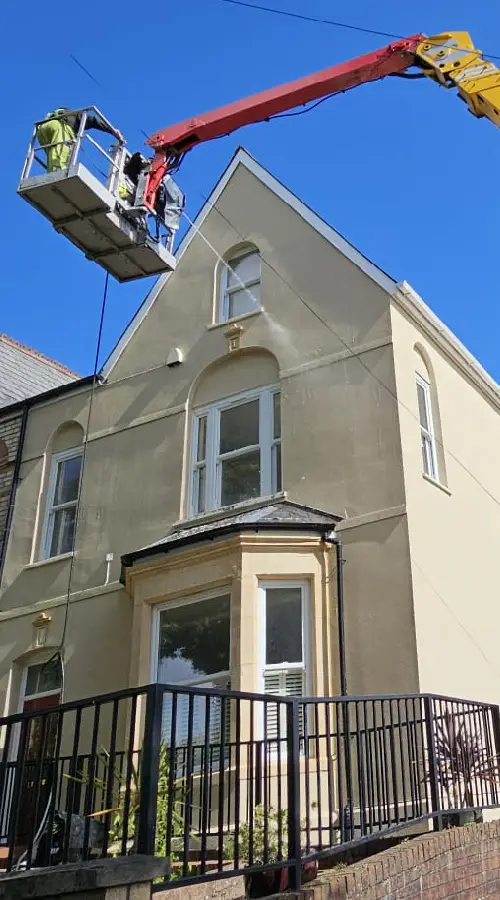
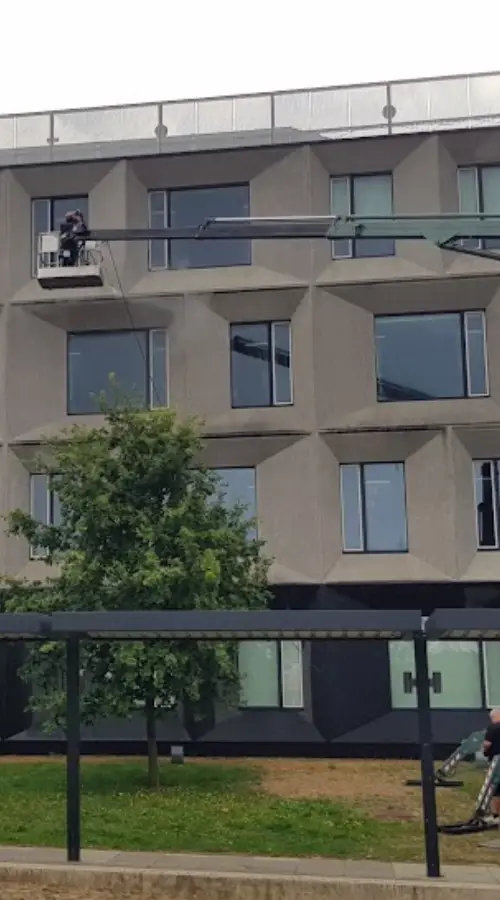
Render sits awkwardly in most property budgets. It is not urgent enough to force a decision and not cheap enough to ignore, so it gets deferred until the elevations are bad enough that somebody complains — at which point the job is larger and the cost higher. Treating commercial render cleaning as a scheduled item rather than a reactive one removes that cycle entirely. Softwashing UK organises this work around the building’s operations. Access is determined first, using powered platforms, tower systems or extended poles according to height and standing ground, then the programme is agreed around trading hours, deliveries and staff movement. Method statements and risk assessments go out before the crew arrives, and the site contact knows the timings. Where a building stays occupied throughout, we agree in advance which entrances remain in use and how run-off will be routed clear of them. Render facade cleaning across large elevations relies on even coverage. A long wall is seen all at once, so any inconsistency between where an operator started and finished is obvious. Render soft washing delivers that consistency while using very low water volumes, keeping run-off controllable around entrances and parked vehicles and generating almost no drift near occupied doorways. Render mould removal on the shaded flanks is the recurring item on nearly every commercial building. Those faces blacken first and, if growth has only been rinsed away, return within a year. Killed properly they stay clear for several. That difference is what makes a render maintenance cycle worth setting up: a fixed interval, an agreed figure, and elevations on premises in Corfe Mullen that never reach the stage where cleaning alone stops being enough.
What you are buying with a render clean is years, not appearance. Appearance is easy and temporary; the years come from method. That is the frame we would encourage anyone to use when comparing quotations, because a cheaper job lasting one winter is not actually cheaper. Our figures come after an assessment. Render cleaning prices are driven by elevation count, working height, access and how long growth has been left to build, and none of that is knowable over the telephone. After the visit you receive a written render cleaning cost that does not move. Affordable render cleaning comes from turning up with the right equipment and completing the work in one visit, not from shortening dwell times or thinning solution to stretch it further. The people doing the work are render cleaning specialists rather than general exterior cleaners, and that specialisation is the reason nothing gets damaged. They identify coatings on sight, spot overpainted sections, notice beads and edges that will not take handling, and raise defects rather than cleaning past them and leaving the consequences for somebody else. All treatments are eco friendly render cleaning products selected to break down once used, since run-off from a domestic elevation reaches borders, gullies and open ground however carefully it is managed. Anyone trying to identify the best render cleaning service would do better asking how long the last ten jobs have held than asking what this one costs. The second question has an easy answer; the first has an honest one. We are happy to talk through what has held and what has needed revisiting, because a firm doing this properly has nothing awkward to report on either count.
Working a compact patch has one obvious advantage: nobody waits long. Corfe Mullen sits at the centre of ours, with Henbury and Lytchett Minster covered on identical terms, and residential render cleaning at any of those addresses is generally assessed within a few days of the first call rather than a few weeks. That closeness changes how jobs are handled as well as how quickly. Where a property needs a second visit — heavy lichen that will not release on a single application, or an elevation better treated in cooler conditions — returning is straightforward, so we plan for it rather than forcing everything into one appointment and risking the coating. Where a quotation needs adjusting because access turns out differently in practice, that conversation happens before work starts rather than after. The housing across this patch is mixed enough that no standard price would be meaningful. Post-war and 1960s stock tends to carry older mineral finishes with decades of growth on them, needing longer dwell times and often a repeat application. Newer detached and estate properties usually have modern through-coloured systems that respond quickly and predictably. Bungalows are simple on access but frequently have deep eaves shading one elevation permanently, and that face is almost always the worst on the building. So every job starts with somebody standing in front of the wall. Anyone who has searched render cleaning near me and been handed a figure before a person has seen the property is being quoted a guess. A local render cleaning company should be close enough to come and look, and near enough to come back if something needs a second pass.
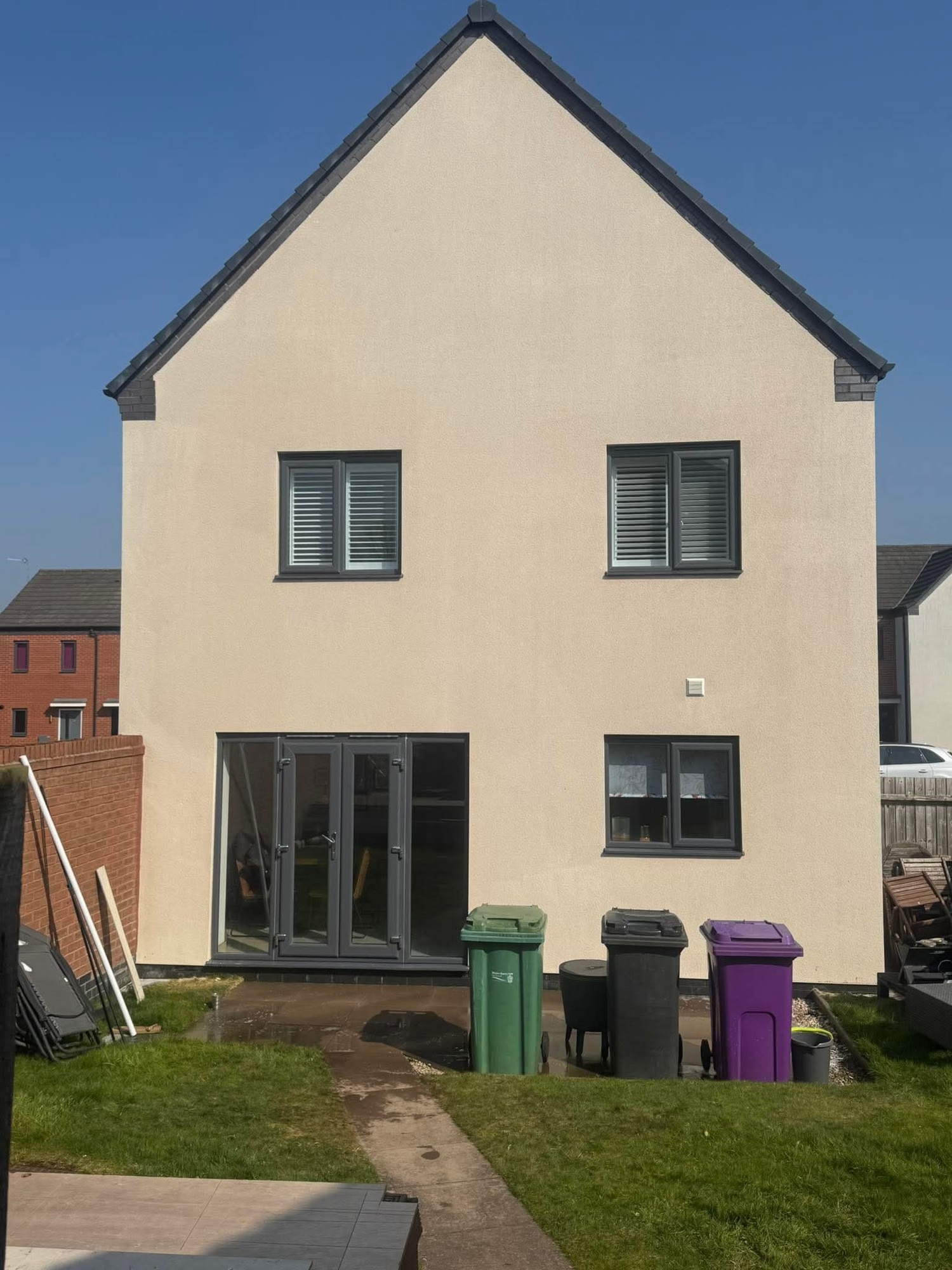
Most properties in Corfe Mullen benefit from professional render cleaning every 3 to 5 years, although this depends on the surrounding environment. Properties near trees, woodland, busy roads or coastal areas may require more frequent cleaning due to algae, mould and airborne contaminants. Our soft washing process removes existing growth and helps keep your render cleaner for longer.
Yes. Soft washing is specifically designed for delicate surfaces such as K-Rend, silicone render, monocouche render and painted render. Unlike high-pressure washing, it cleans at low pressure while treating biological growth at its source, reducing the risk of damage to the render finish.
We clean virtually all external render finishes, including K-Rend, Monocouche, Weber, Sto, silicone render, acrylic render, painted render, roughcast and pebble dash. Every cleaning method is tailored to the specific render type to achieve the best possible results.
Yes. Our specialist soft washing treatments are highly effective at removing green algae, red algae, black mould, mildew, lichen and other organic staining. We also apply professional biocide treatments to kill spores and slow down regrowth.
Because our process targets the biological growth rather than simply washing the surface, results typically last much longer than pressure washing alone. The exact lifespan depends on weather conditions, surrounding vegetation and the property’s location.
No. Our soft washing process is specifically designed to clean render safely. We use low-pressure application methods and specialist cleaning solutions that remove contamination without damaging the render surface when carried out by trained professionals.
The UK’s damp climate provides ideal conditions for algae, mould and other biological growth to develop on rendered surfaces. Areas with limited sunlight, nearby trees or persistent moisture are especially susceptible. Professional soft washing safely removes these contaminants and restores your property’s appearance.













































WhatsApp us