Two identical houses on the same street will often be in completely different condition, and the reasons are rarely mysterious once you look. One has a hedge grown up against the gable, keeping the wall shaded and damp. One has a downpipe that has been overflowing quietly for three winters. One catches a drying wind and one sits in a sheltered corner. Small differences in moisture produce very large differences in growth. Our render cleaning services start by identifying which of those factors is at work, because treating a wall without addressing an ongoing source simply resets a clock that is still running. A hedge cut back, a gutter cleared or a blocked gully freed will extend the interval between cleans by years at no cost whatsoever. The treatment itself does not vary with the cause. A biocidal solution is applied at low pressure across whole elevations, dwelled long enough to destroy the colony at root level, then rinsed gently. Render algae removal is chemical throughout and nothing is forced off the surface. What does vary is the strength and the number of applications. A wall kept damp by a defect for a decade carries far more established growth than an identical one two doors along, and render moss removal on its ledges and copings will need a second treatment where an identical wall further along the road needs none. Professional render cleaning of a building in Crossways is quoted on what is actually there rather than on what a street average would suggest, and house render cleaning priced any other way tends to be wrong in both directions. Exterior render cleaning is a specific job on a specific building.
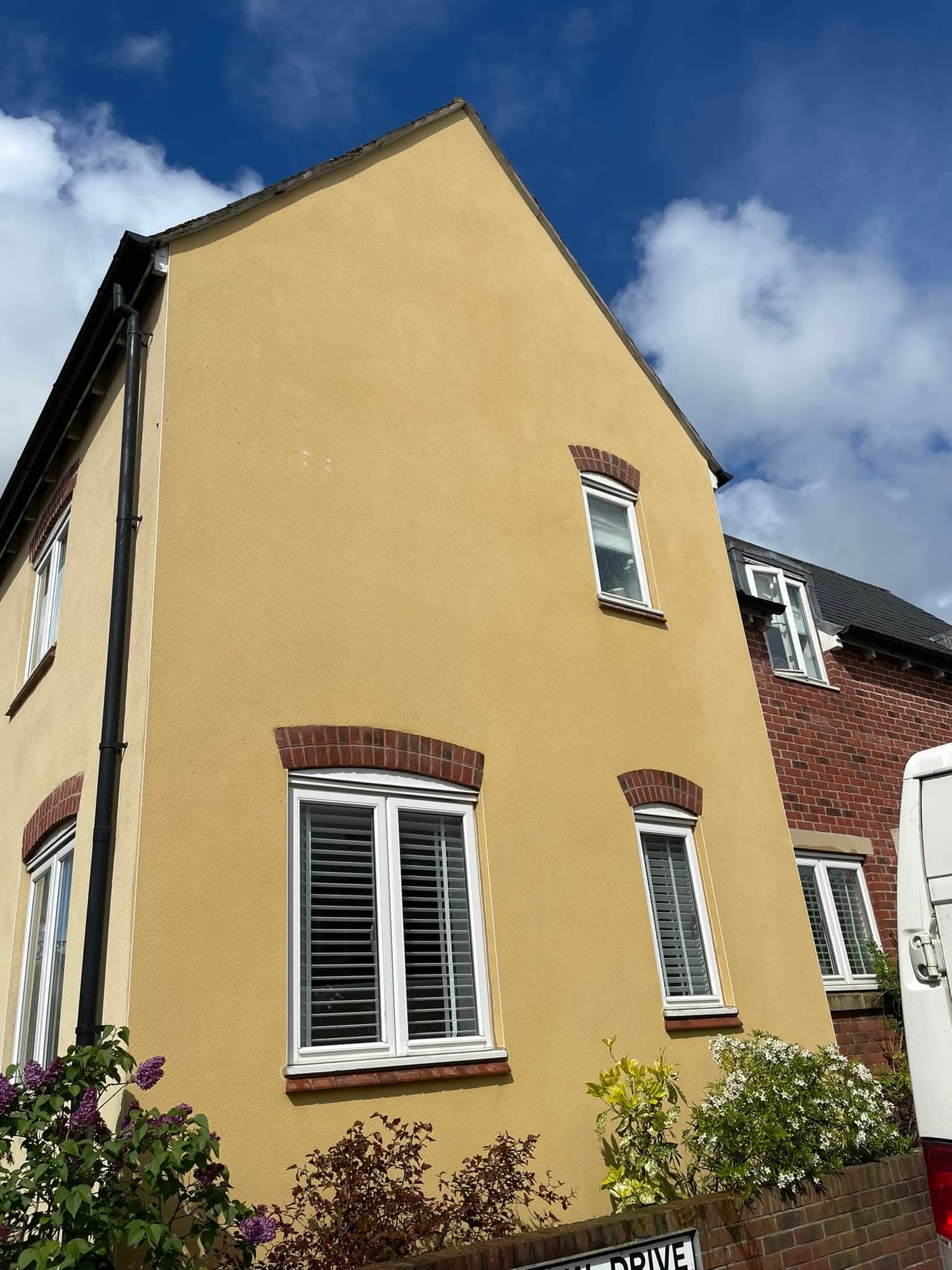
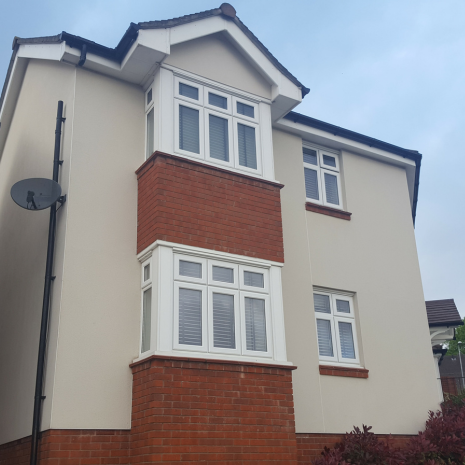

On an estate built out in a single phase, every house has the same system applied at the same time by the same contractor, and within eight years they will still be in noticeably different condition. Softwashing UK sees that constantly. The variable is never the render — it is the fence line, the planting, the position of a downpipe, the shade cast by an adjoining building, and whether a gable faces open ground or a sheltered corner. K Rend cleaning is quoted on the specific building rather than on the estate. The method is identical throughout: soft wash render cleaning applies a biocidal solution at a pressure barely above hose flow, dwells long enough to destroy algae and lichen at root level, then rinses gently, with no mechanical contact anywhere because pigment runs through the material and abrasion removes it permanently. Volume and application count are where the difference shows. Silicone render cleaning on a lightly affected sunlit wall uses a fraction of what the same house’s shaded gable requires, and pretending otherwise produces a building that is clean in some places and merely damp in others. The quotation therefore records each face separately rather than offering a single rate for the property. Render stain removal follows the same logic. Iron bleed around a corroding fixing, cement residue from installation or dark runs beneath a leaking joint appear on some houses and not others despite identical construction. Each needs its own product and a test patch first, and on a Crossways property they are quoted separately so any difference from another invoice is visible rather than mysterious. People are entitled to see which part of a figure relates to what.
Monocouche shows differences between adjoining properties more starkly than any other finish, because the colour is uniform by design and any variation reads immediately. A semi-detached pair rendered at the same time from the same batch will, after a decade, frequently look like two different colours — one side kept shaded and damp, the other drying freely. Monocouche render cleaning on one half alone makes that contrast worse before it makes it better. The work itself is straightforward. Solution is applied at low pressure in enough volume to soak through the scraped texture rather than glaze it, dwells long enough to kill growth at root level, is repeated on the heaviest deposits along copings and projecting bands, and is then rinsed softly and evenly across the full face. Nothing is worked harder in one area than another, which is what keeps a through-coloured finish reading as a single surface. What must not happen is the quick alternative. Render pressure washing flattens the scrape, exposes the aggregate beneath and leaves permanent tracking, and since coloured render cleaning has no top coat to renew, correcting it means recoating an entire elevation rather than touching in a patch. On a semi-detached pair that would mean recoating both halves to match. Where both halves of a pair are treated together the result is genuinely uniform, and where only one is, the cleaned side simply returns to the original specified colour while the other carries on as it was. Render wall cleaning of monocouche around Crossways regularly prompts a second call from next door within a fortnight, and on buildings left a decade the change is substantial enough that render restoration describes it fairly.
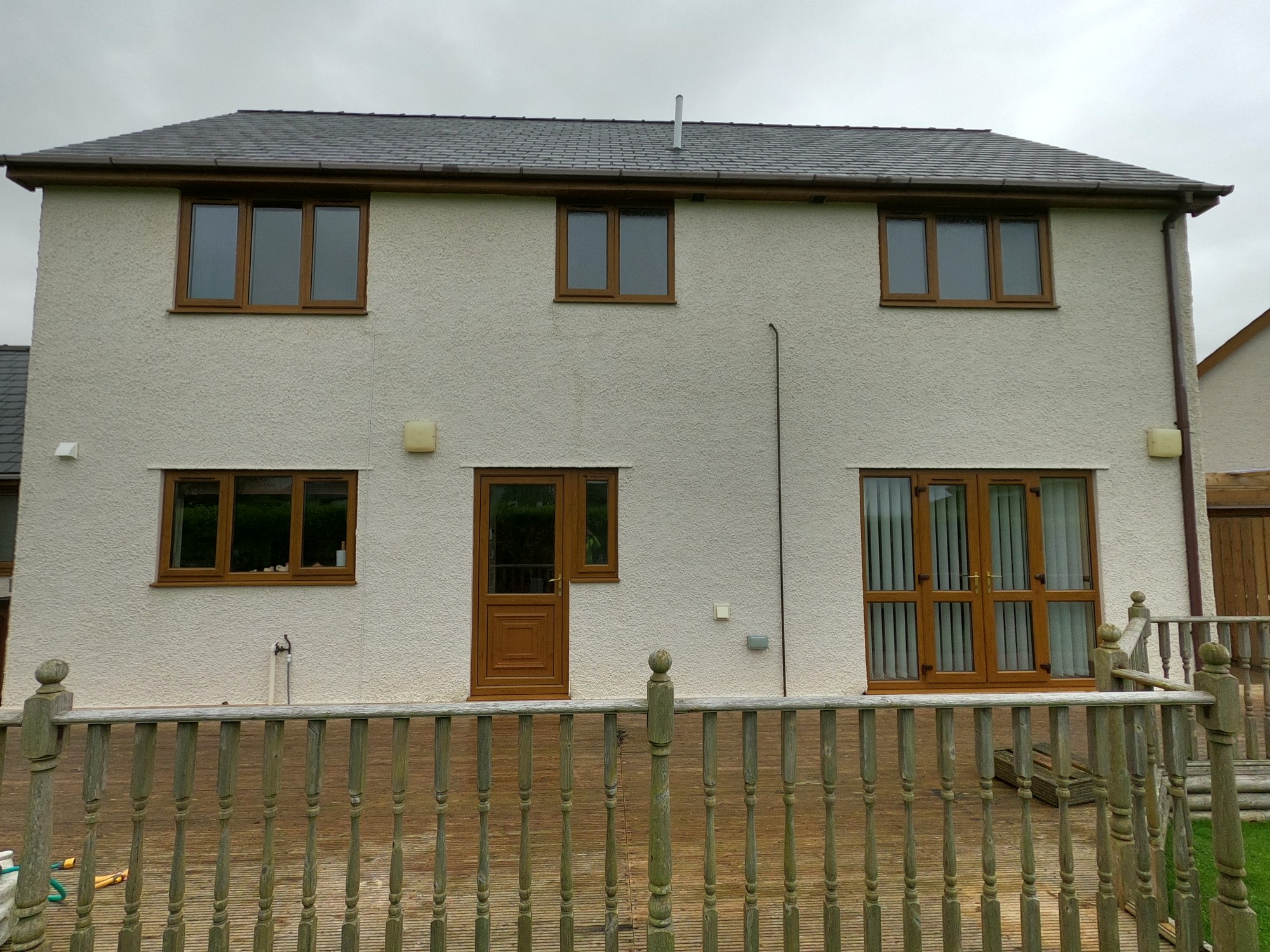
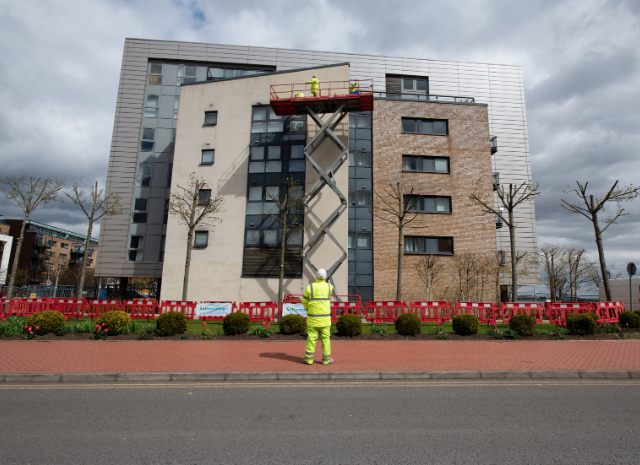

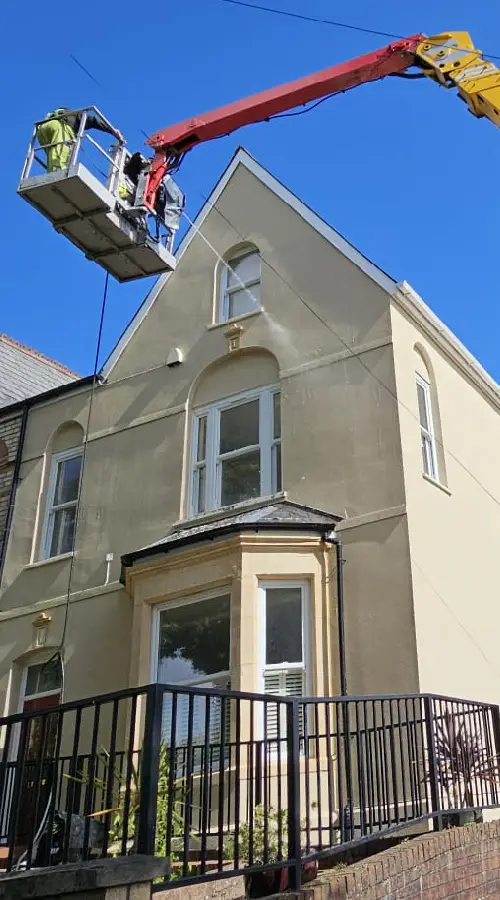
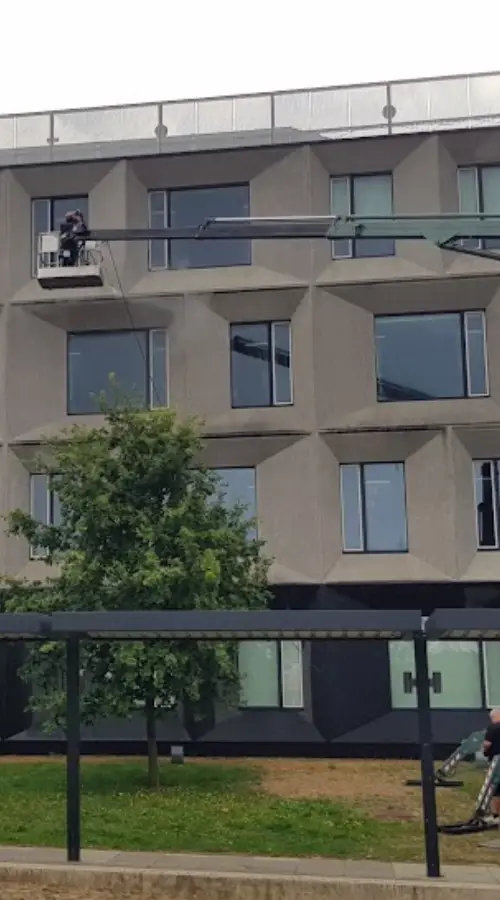
On a retail parade or an industrial estate, individual units are frequently in very different condition despite sharing one continuous elevation. One occupier has planting against the wall, another has a service yard keeping the base splashed, another sits in the shade of the building opposite. Commercial render cleaning across a shared frontage has to account for that rather than pricing by the metre. The practical answer is usually to treat the whole run at once. Access is established first — powered platforms, tower scaffold or extended pole systems according to height and standing ground — and the programme is written around trading hours, deliveries and customer movement across every unit involved, with method statements and risk assessments issued in advance. Each occupier is told which days affect their frontage so nobody is surprised by a crew outside the door. Render soft washing makes a shared elevation feasible, because it covers a long frontage evenly in a single pass, uses very low water volumes, keeps run-off directable clear of entrances and parking, and generates almost no drift near open doorways. Render facade cleaning done unit by unit at different times produces exactly the banding a continuous elevation exposes most cruelly. Render mould removal is concentrated wherever shade and moisture happen to fall, which often means one occupier’s section needs considerably more work than the next. Handling the whole parade on a single render maintenance cycle spreads that fairly, keeps premises in Crossways looking consistent along the full run, and avoids the situation where one freshly cleaned unit makes everything beside it look neglected. A shared elevation is far easier to manage as one asset than as several.
People frequently ring having been told what somebody down the road paid, and it is worth explaining why that figure may bear no relation to their own. Two houses of identical size can differ by a wide margin in the amount of growth, the number of accessible elevations, the height of a gable, and whether planting has to be worked around. The wall decides the price, not the postcode. Two quotations differing by half again are frequently both correct. Render cleaning prices are therefore calculated from elevation count, working height, access arrangements and the extent and age of the growth, all established at an assessment. Once done, the render cleaning cost is confirmed in writing and holds. Affordable render cleaning comes from quoting a property accurately in the first place, which is also the only way to avoid the conversation where a figure changes halfway through a job. The crews are render cleaning specialists rather than general exterior cleaners, and the value of that lies in the reading. An overpainted section, a bead that will not take handling, or hairline cracking that would carry solution behind a coating gets identified and raised rather than treated and regretted. On an older building that judgement is worth more than any equipment on the van. All products used are eco friendly render cleaning treatments chosen because they break down safely after use, which matters wherever run-off reaches borders and drainage. Anyone comparing firms in search of the best render cleaning service should be slightly wary of a quotation that matches somebody else’s exactly. It usually means nobody looked at the wall. Accuracy is the only thing that makes a fixed price genuinely fixed.
A good proportion of the residential render cleaning booked across this patch comes from somebody looking at what has just been done next door. Moreton, Woodsford and Higher Woodsford produce that pattern regularly, and where two or three properties along one road want the work at once we group them into a single trip and price accordingly rather than treating each as a separate mobilisation. That does not mean the quotations match. Osmington, Osmington Mills and Poxwell contain plenty of pairs and terraces where one property has planting against a gable, a longer-standing gutter problem or simply a different aspect, and the amount of growth on adjoining walls can differ substantially. Each is assessed individually and priced on what is actually there. Tincleton and Moigne Combe bring more isolated properties where there is no adjoining wall to compare against, and those tend to be first-time cleans on render that has been in place for decades. Longer dwell times and a possible second application are built into the original figure rather than added afterwards. Nothing about an isolated property makes it more expensive to reach; it simply tends to have been left longer. There is no travel charge and no minimum job size anywhere across these addresses, and a single elevation is quoted on the same basis as a whole building. Where a whole road books together, the saving is shared out rather than kept. Anyone searching render cleaning near me will get somebody out to look at their own wall rather than an estimate based on the one beside it, which is what a local render cleaning company should be offering as a matter of course.
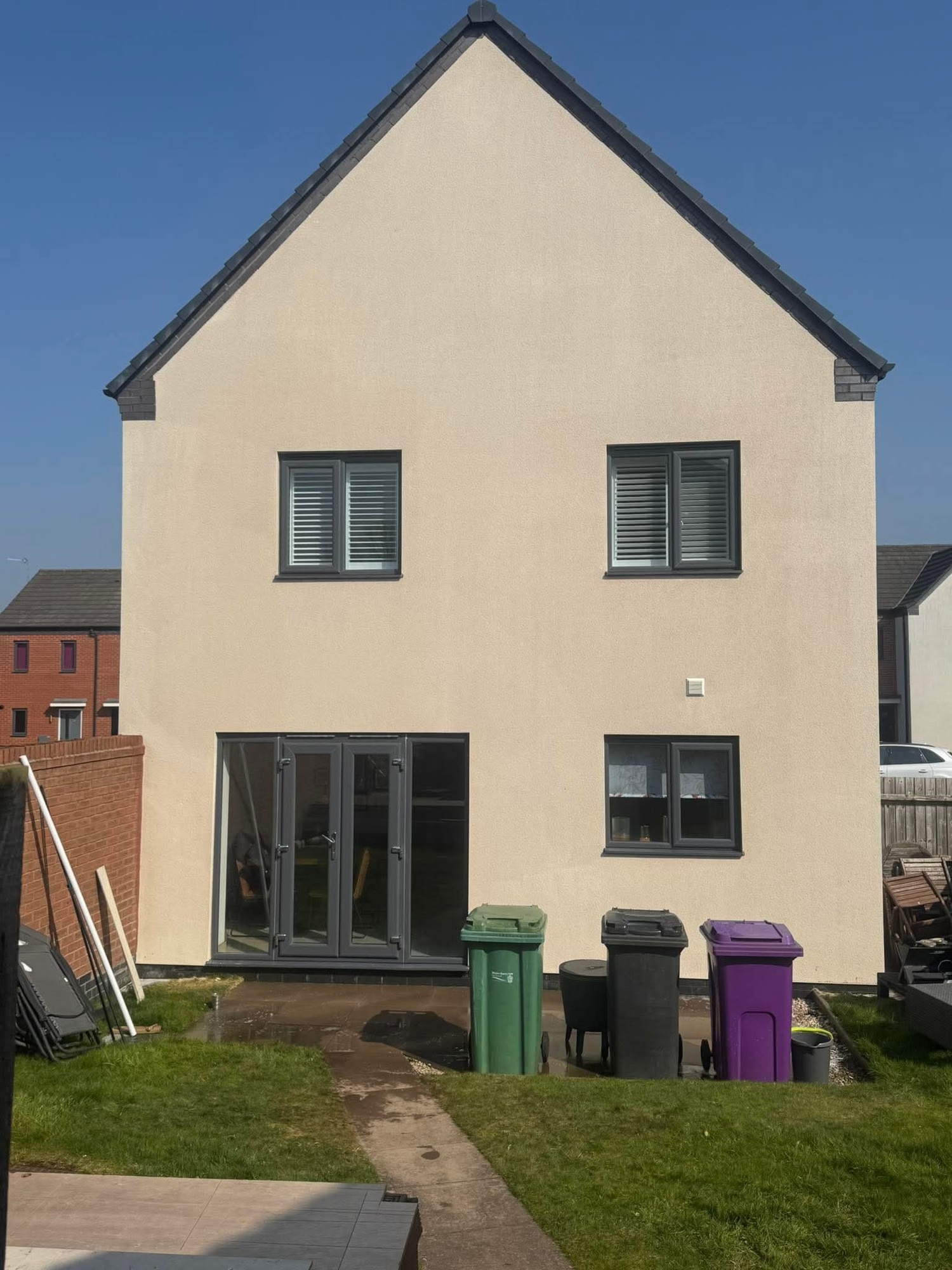
Most properties in Crossways benefit from professional render cleaning every 3 to 5 years, although this depends on the surrounding environment. Properties near trees, woodland, busy roads or coastal areas may require more frequent cleaning due to algae, mould and airborne contaminants. Our soft washing process removes existing growth and helps keep your render cleaner for longer.
Yes. Soft washing is specifically designed for delicate surfaces such as K-Rend, silicone render, monocouche render and painted render. Unlike high-pressure washing, it cleans at low pressure while treating biological growth at its source, reducing the risk of damage to the render finish.
We clean virtually all external render finishes, including K-Rend, Monocouche, Weber, Sto, silicone render, acrylic render, painted render, roughcast and pebble dash. Every cleaning method is tailored to the specific render type to achieve the best possible results.
Yes. Our specialist soft washing treatments are highly effective at removing green algae, red algae, black mould, mildew, lichen and other organic staining. We also apply professional biocide treatments to kill spores and slow down regrowth.
Because our process targets the biological growth rather than simply washing the surface, results typically last much longer than pressure washing alone. The exact lifespan depends on weather conditions, surrounding vegetation and the property’s location.
No. Our soft washing process is specifically designed to clean render safely. We use low-pressure application methods and specialist cleaning solutions that remove contamination without damaging the render surface when carried out by trained professionals.
The UK’s damp climate provides ideal conditions for algae, mould and other biological growth to develop on rendered surfaces. Areas with limited sunlight, nearby trees or persistent moisture are especially susceptible. Professional soft washing safely removes these contaminants and restores your property’s appearance.














































WhatsApp us