It is reasonable to ask what is actually being applied to your wall, and the answer is less mysterious than the term soft washing suggests. The active component is a biocide, of the same broad family used across horticulture, hard surface treatment and building maintenance for decades. Applied at appropriate dilution it destroys algae, fungal colonies, lichen and moss at cellular level, breaking down the structures that anchor growth into the render rather than detaching it by force. It does not bleach the coating, and on a through-coloured render it leaves the pigment entirely untouched. Dilution is the variable that matters. Mixed too weak, it fails to reach root structures and the wall greens over within a season. Mixed too strong, it is wasteful, harder on surrounding planting and no more effective, since dwell time rather than concentration does the work beyond a certain point. We set dilution against the organisms actually present on each elevation, which is why the survey matters. Run-off is managed throughout. Planting is covered or pre-wetted before application, hard surfaces are protected, drainage points are identified, and everything is rinsed down afterwards. Eco friendly render cleaning in practice means applying the least that will do the job properly and controlling where it goes. Our render cleaning services use nothing beyond that: treatment, time and a gentle rinse. Render algae removal and render moss removal are achieved chemically rather than mechanically, which is why the coating is left undisturbed. Exterior render cleaning on a property in Crowle involves no dramatic equipment and no visible spectacle, which is rather the point.
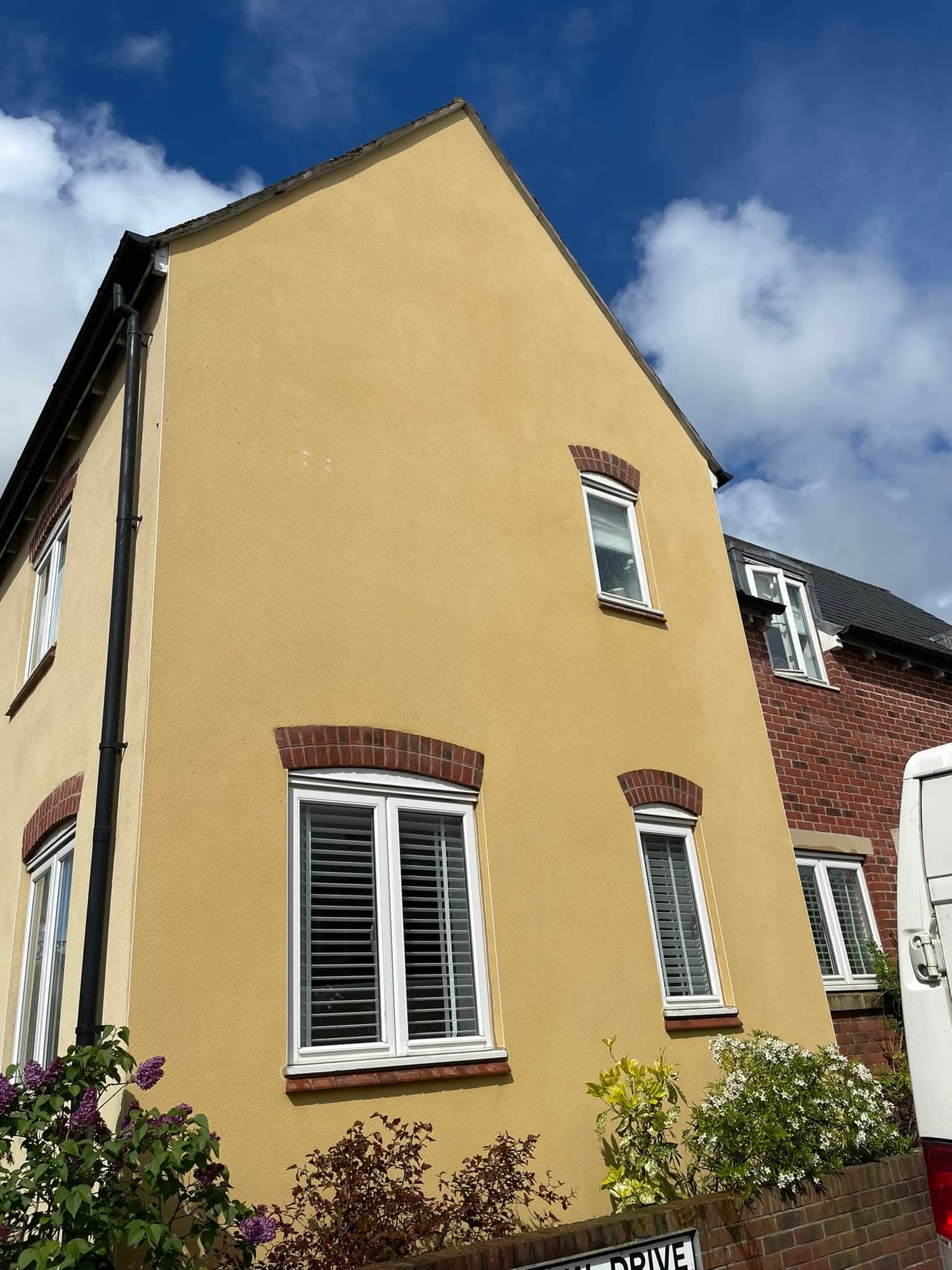
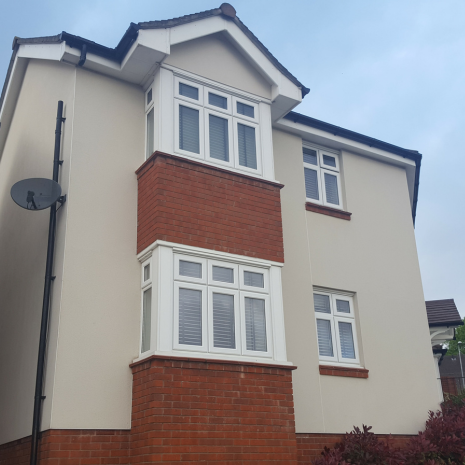

A wall that has been cleaned before and greened over again quickly is one of the more common enquiries we receive, and the explanation is nearly always the same. Growth on silicone render is not a deposit but a colony, with structures extending into the texture and the surface pores. A method that removes the visible layer, whether by pressure, brushing or a quick chemical application rinsed off immediately, takes the top and leaves the base. Regeneration then proceeds from an established foundation, and it happens faster than the original colonisation did because the surface has often been opened up in the process and now retains moisture more readily. So the second clean fails sooner than the first, and the third sooner again. Owners reasonably conclude that their render is somehow prone to the problem, when in fact the method is producing it. K Rend cleaning done properly breaks that cycle. Treatment is applied at very low pressure, at a dilution matched to the organisms present, and left to dwell for as long as the colonisation requires. It penetrates to root level and sterilises the colonised depth of the coating. Recolonisation afterwards has to begin from airborne spores landing on a clean surface, which takes years. Where a previous clean has damaged the surface, we say so at survey. Pressure washing on a through-coloured finish lifts pigment unevenly and opens the texture, and cleaning will reveal that rather than correct it. Silicone render cleaning that lasts is chemical, patient and undramatic. House render cleaning judged four years on is the only fair test of whether it worked.
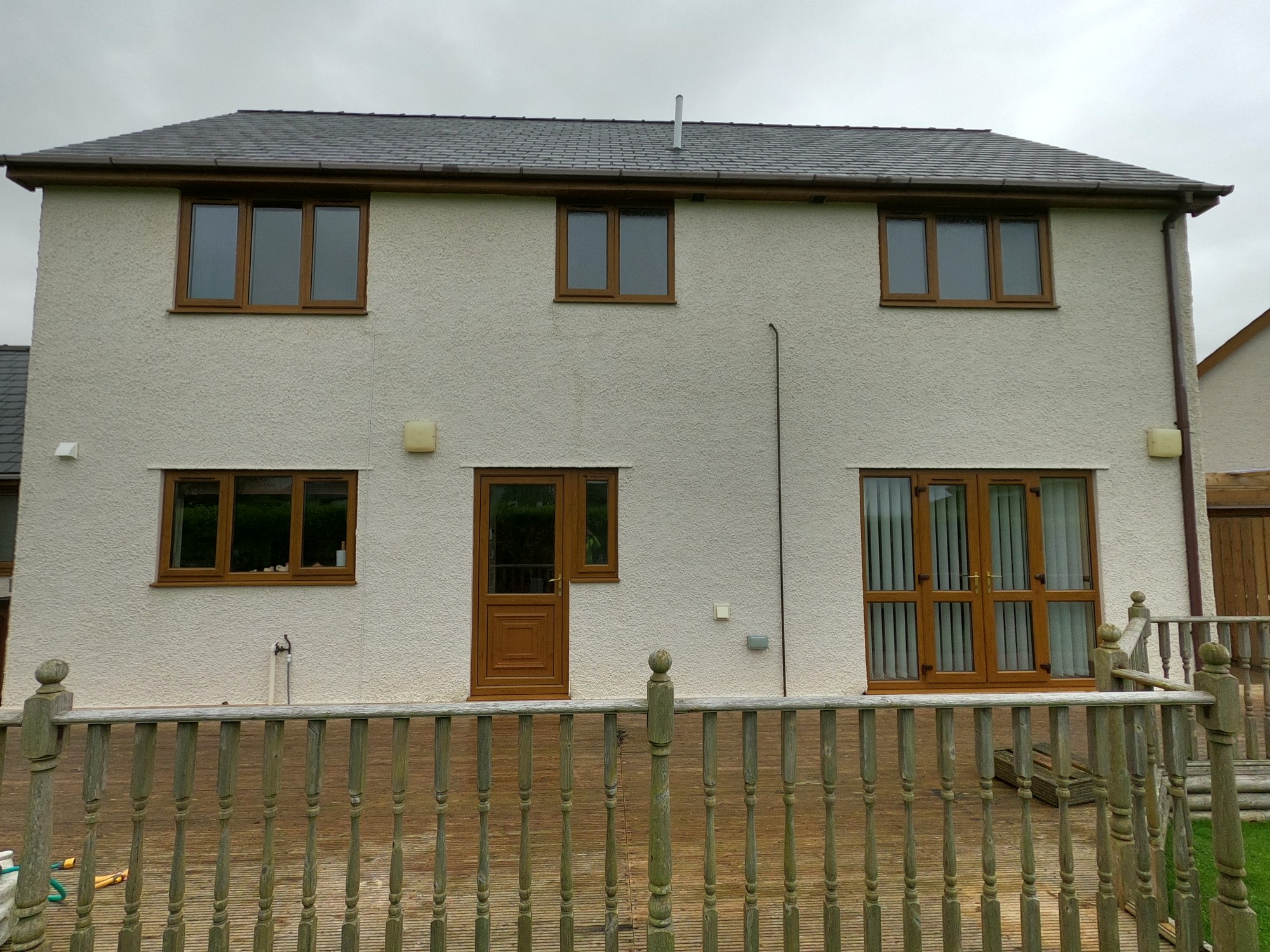
How a monocouche elevation is rinsed matters almost as much as how it is treated, and it is the stage where damage most often occurs on this finish. The temptation is understandable. After a full dwell period there is visibly dead growth on the wall, and increasing pressure appears to clear it faster. On a scraped monocouche face it also detaches aggregate, leaving smoothed patches that reflect light differently for the life of the coating. Because the colour is integral there is no repair, and the damage is permanent. Correct rinsing uses low pressure and modest volume, worked systematically down an elevation so that treated areas are never left to dry part-rinsed. Purified water avoids leaving mineral deposit as the surface dries, which on a pale finish can show as a faint haze. The aim is to remove loosened material and residual product, not to strip the wall. What remains is left to weather off naturally over the following weeks. That is a feature of the method rather than a shortcoming: not applying force is exactly why the render is undisturbed and why the result holds for years. The treatment stage follows the same restraint. Product is applied at low pressure and in volume so it reaches the base of the texture where growth is rooted, and given the dwell time the colonisation actually requires. Render restoration on monocouche is repeatable indefinitely provided nothing is ever taken off the surface. Residential render cleaning carried out this way can be done again in five years with an identical result, and render maintenance stays a modest recurring item rather than a gradual erosion of the finish.
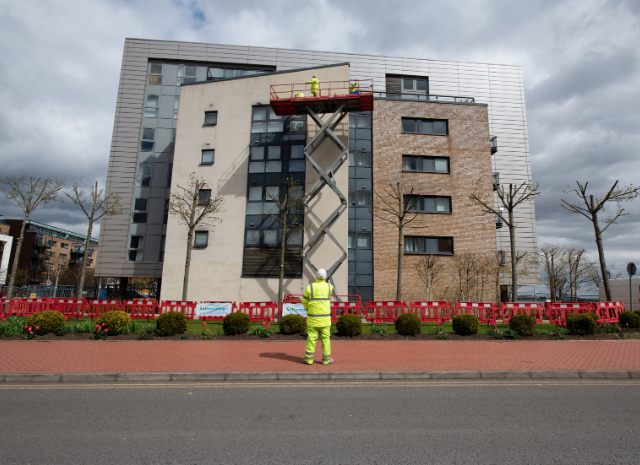

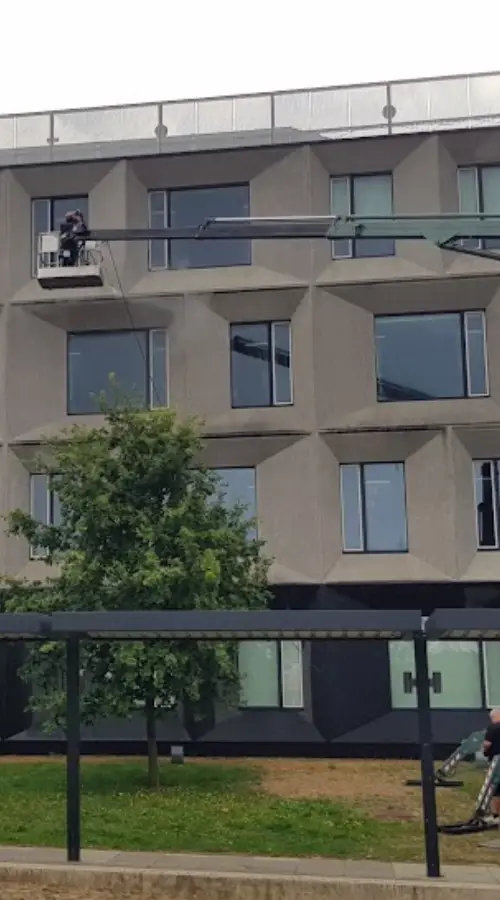
Self-storage sites, small trade units and light commercial estates finished in render present large areas of continuous wall with very little architectural interruption, which means organic growth reads clearly across the whole elevation from a considerable distance. Commercial render cleaning here is governed by access and by traffic. Yards stay live, customers arrive throughout opening hours, and unit frontages need to remain reachable. We survey first, establish what can be treated safely from ground level and where powered access is needed, and phase the work so that only part of the site is affected at any time. Where units are individually let, occupiers need notice of when work will reach their frontage and which doors will be temporarily awkward to use. We provide the information site management needs to circulate rather than leaving it to be constructed. Insurance, method statements and risk assessments are supplied ahead of attendance, and operatives hold current working at height certification. Where a site operates its own induction or permit process we complete it before starting. Technically, long single-storey runs need the same consistency as any large elevation. Soft wash render cleaning holds identical dilution and continuous wet edges across the full length, because a wall completed across disconnected sessions dries with visible banding, and on an unbroken run that banding is particularly obvious. The maintenance argument is straightforward at this scale. Growth retains moisture against the coating permanently, and recoating a large area of render is a substantial expense. Planned render wall cleaning on sites around Crowle defers it while keeping the estate presenting properly to prospective tenants and passing trade.
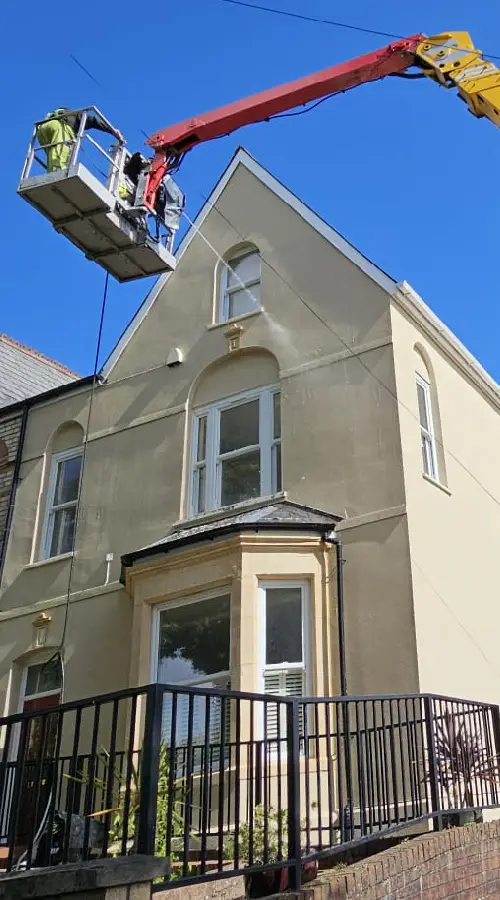
What happens if something is not right is a fair question, and it deserves a clearer answer than most contractors give. The first point is that a soft washed wall keeps changing after we leave. Dead growth breaks down and weathers off over two to four weeks, and heavier colonisation, particularly lichen, can take longer. A wall that looks incompletely cleared on the afternoon of the visit is usually not a problem at all, and we explain that timeline before booking so nobody is left guessing. The second point is that if, after that period, an area has genuinely not responded, we come back and treat it again. That is included rather than chargeable. Occasionally a heavily colonised elevation needs a second application, and where we expect it we say so at survey and price accordingly. The third point is that revisiting is straightforward because we work the same area continuously. As a local render cleaning company we are not moving on to somewhere else next season, and a property we treated badly stays visible to us and to everyone who passes it. Beyond that, the ordinary assurances apply. Full public liability cover, current working at height certification, protection of planting and hard surfaces on every job, and render cleaning prices fixed at survey without revision. Anyone comparing quotations should ask what happens if the result falls short, and should be wary of an answer that avoids the question. The best render cleaning service is judged some months later, and professional render cleaning includes standing behind the work for that long.
Softwashing UK cover Crowle together with Bredicot, Tibberton and Upton Snodsbury, all on identical terms with no travel loading and no minimum job value. Surveying across several settlements in one area shows how little transfers between properties, and it is worth being plain about that. Two houses of similar size and apparent age can require genuinely different specifications. One may carry a modern through-coloured system that cleans up readily but permits no abrasion. The other may have traditional render painted at some point, where the condition of that paint determines whether cleaning is advisable at all. A third may have an extension in a different finish from the original walls, needing two specifications on one building. Growth density varies just as widely, and independently. A sheltered property with mature planting close to the walls can be heavily colonised while a more exposed house two hundred metres away needs comparatively little. That is why we survey rather than quote by area, and why the written figure is itemised per elevation rather than presented as a single total. It shows which wall is driving the cost and allows sensible decisions about what to include. Properties in Bredicot, Tibberton and Upton Snodsbury are typically individual rather than uniform, so each is assessed on its own terms. Because travel is a real cost across scattered settlements, we group bookings and work through an area together. Properties arranging within the same period share the mobilisation, and the individual quotations reflect it. Surveys take around twenty minutes, can be carried out unattended provided every elevation is reachable, and produce an itemised written figure by email.
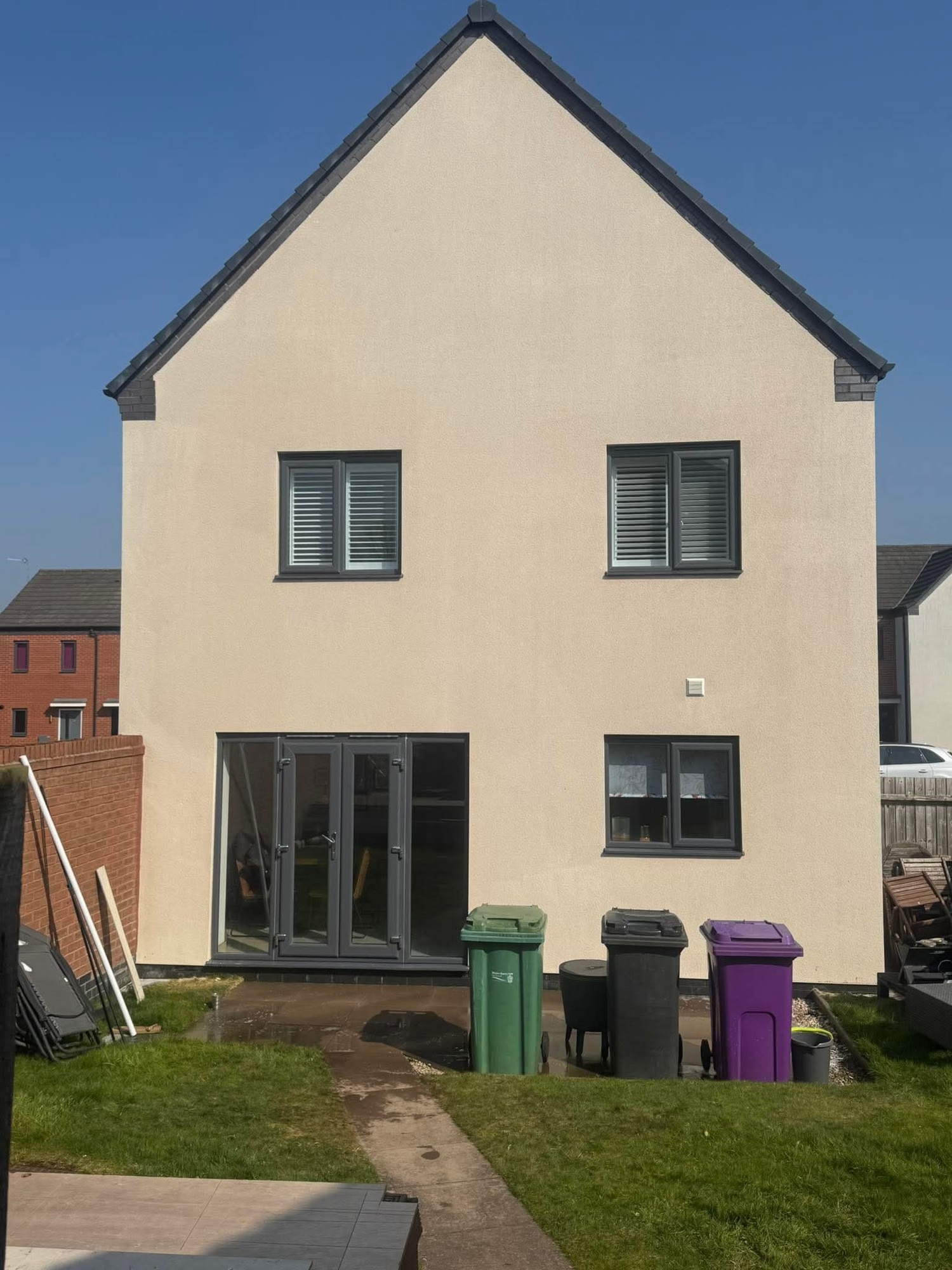
Most properties in Crowle benefit from professional render cleaning every 3 to 5 years, although this depends on the surrounding environment. Properties near trees, woodland, busy roads or coastal areas may require more frequent cleaning due to algae, mould and airborne contaminants. Our soft washing process removes existing growth and helps keep your render cleaner for longer.
Yes. Soft washing is specifically designed for delicate surfaces such as K-Rend, silicone render, monocouche render and painted render. Unlike high-pressure washing, it cleans at low pressure while treating biological growth at its source, reducing the risk of damage to the render finish.
We clean virtually all external render finishes, including K-Rend, Monocouche, Weber, Sto, silicone render, acrylic render, painted render, roughcast and pebble dash. Every cleaning method is tailored to the specific render type to achieve the best possible results.
Yes. Our specialist soft washing treatments are highly effective at removing green algae, red algae, black mould, mildew, lichen and other organic staining. We also apply professional biocide treatments to kill spores and slow down regrowth.
Because our process targets the biological growth rather than simply washing the surface, results typically last much longer than pressure washing alone. The exact lifespan depends on weather conditions, surrounding vegetation and the property’s location.
No. Our soft washing process is specifically designed to clean render safely. We use low-pressure application methods and specialist cleaning solutions that remove contamination without damaging the render surface when carried out by trained professionals.
The UK’s damp climate provides ideal conditions for algae, mould and other biological growth to develop on rendered surfaces. Areas with limited sunlight, nearby trees or persistent moisture are especially susceptible. Professional soft washing safely removes these contaminants and restores your property’s appearance.














































WhatsApp us