It is worth being precise about what clean means on a rendered wall, because the word covers two quite different outcomes and only one of them is desirable. The first is uniformity. A properly treated elevation reads as a single continuous tone from any angle and in any light, in whatever colour the render actually is. Detailing matches the open wall, the base course matches the middle band, and there is no line showing where one section was worked and another began. That is the result worth paying for. The second is whiteness, and it is what aggressive methods produce. A wall stripped hard looks startlingly bright in patches immediately afterwards, because pigment has been lifted and surface material removed unevenly. It photographs well on the day and weathers badly for years, since the treated and untreated areas now age at different rates. Our render cleaning services aim for the first exclusively. Treatment is biocidal, applied at low pressure, given full dwell so growth is destroyed at root level, then rinsed gently. Nothing is stripped, nothing is bleached and nothing is removed from the coating itself. The practical consequence is that a soft washed wall looks like the wall did when it was new, rather than looking scrubbed. Render algae removal restores the original tone; it does not create a brighter one. Owners occasionally expect more dramatic contrast on the day, which is why we describe the outcome honestly beforehand. Exterior render cleaning on a property in Evesham is judged on whether the elevation reads evenly, and that is the standard we quote against.
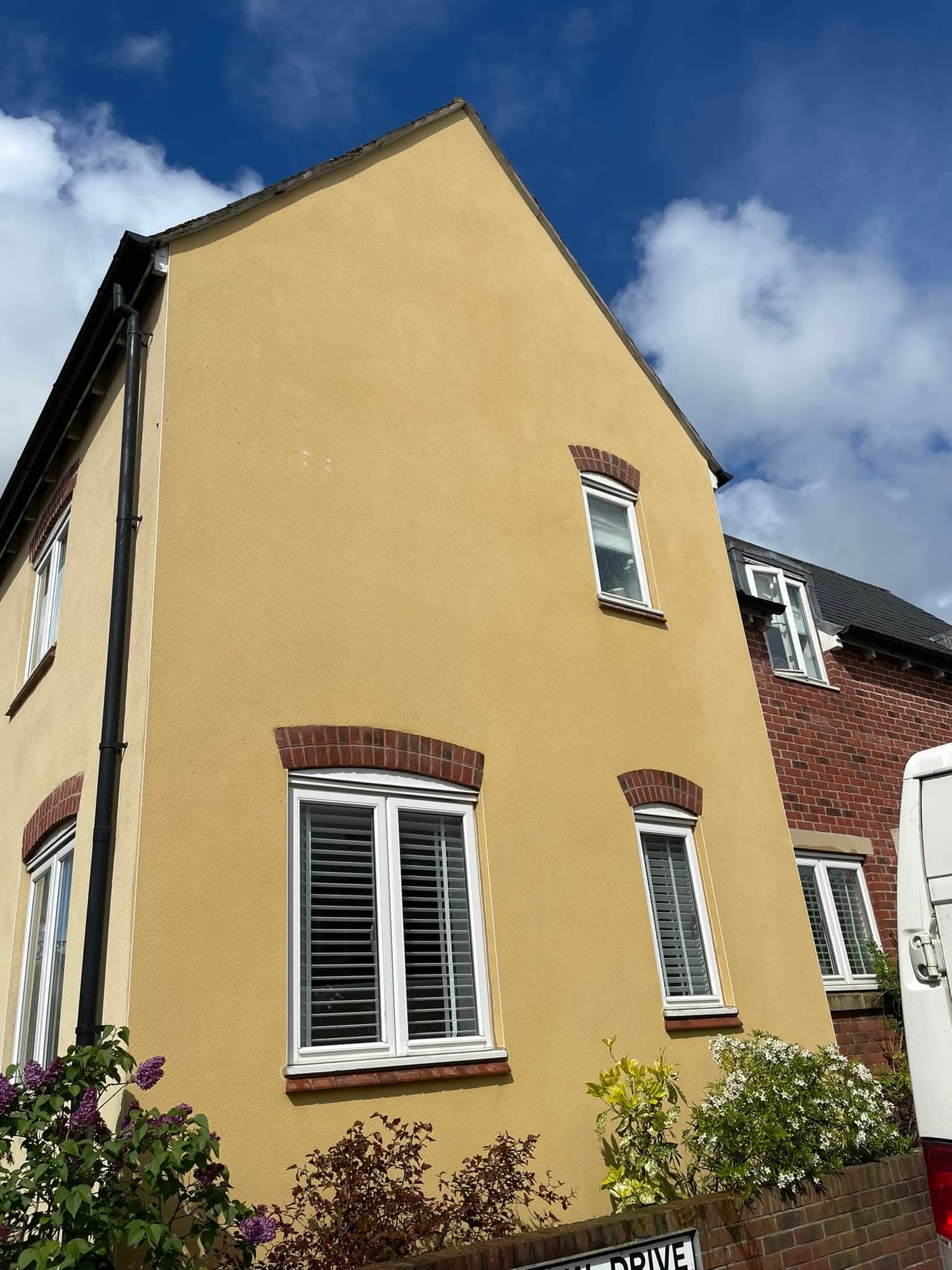
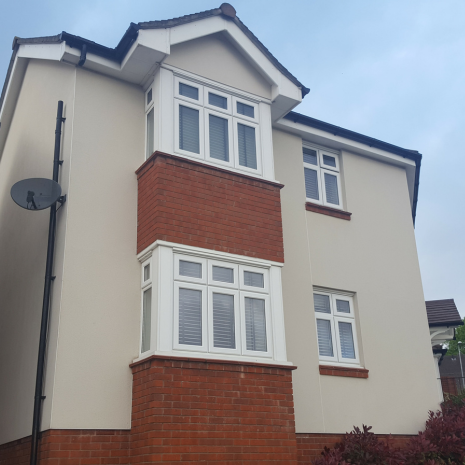

Black spotting is the complaint Softwashing UK are asked about most on silicone render, and understanding what it actually is explains why it behaves the way it does. It is not dirt, and it is not a defect in the render. It is a fungal colonisation, appearing as discrete dark specks scattered across the surface rather than as a continuous film. The organism establishes in the textured face where moisture is retained, and its structures extend below what is visible into the pores and profile of the coating. What you can see is the fruiting part; most of the colony is not visible at all. That explains several things owners find puzzling. It explains why scrubbing removes the specks and they return within weeks, since only the visible portion was taken. It explains why it appears worst on shaded elevations, because sustained damp is what the organism needs. And it explains why it seems to arrive suddenly, since colonies are well established before density reaches the point of being noticeable. K Rend cleaning addresses it by reaching the root structure, which is a matter of chemistry and dwell time rather than effort. Treatment is applied at a strength judged for fungal colonisation specifically, which is generally higher than that needed for algal filming, and left considerably longer. Render mould removal on a wall carrying both organisms therefore needs the stronger specification, or the green clears and the black remains. Silicone render cleaning stays entirely chemical throughout, at very low pressure with nothing brushed. House render cleaning judged a month later is where black spot results properly show.
Measuring what a monocouche clean has actually recovered is easier than it sounds, and it is worth doing before deciding whether a wall needs attention. Find a section of the elevation that has stayed sheltered from weather and light, such as beneath a deep sill, behind a downpipe bracket or inside a recessed detail. Those areas are usually close to the original colour, having been protected from both colonisation and atmospheric deposit. Compare them with the open wall and the difference is the extent of what has accumulated. On many properties that comparison is startling. A wall the owner has come to think of as a soft grey turns out to be a warm cream, and the change happened so gradually that nobody registered it. Monocouche render cleaning recovers that difference because the pigment is mineral, distributed through the body of the render and effectively unchanged. What has altered is only what is sitting on top. The method is fixed by the material. Treatment applied at low pressure and in volume so it reaches the base of the scraped texture, a full dwell period so growth is destroyed at root level, then gentle rinsing with nothing brushed or agitated, since the exposed aggregate detaches permanently under abrasion. We use the sheltered-area comparison at survey to set expectations honestly. Where a wall will come back close to that reference tone we say so, and where previous damage or non-biological staining will prevent it, we say that instead. Render restoration measured this way is specific rather than vague, and residential render cleaning quoted against it delivers what was described.
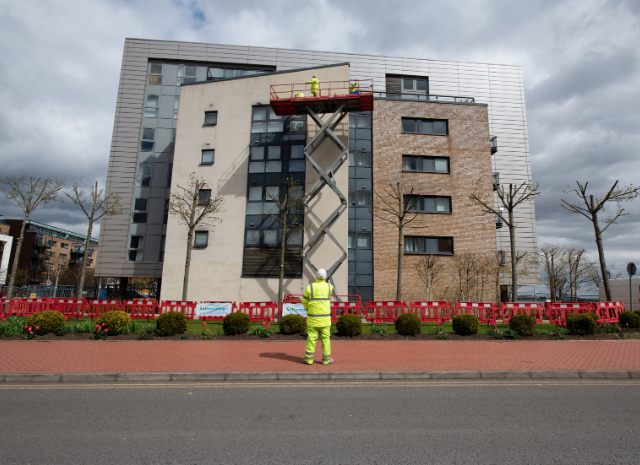

Supermarkets, convenience stores and food retail premises with rendered elevations trade across long hours in locations where the building is seen by very large numbers of people. A soiled frontage on a shop selling food carries an implication that no amount of interior presentation offsets. Commercial render cleaning at these premises is dominated by continuous trading and by traffic. Car parks stay live, deliveries arrive throughout the day, and trolley routes and entrances cannot be obstructed. We survey first, phase the work so only one elevation is affected at a time, and schedule into the quietest available window, which in practice is usually very early or, on larger sites, overnight. Protection covers vehicles within reach of the working area, trolley bays, external displays and anything at ground level. Exclusion zones are agreed and signed clearly, and pedestrian routes are maintained around them rather than closed. The low pressure method matters on a live retail site. There is no machine running continuously, no drifting spray across a car park and no noise carrying into the building. Insurance, method statements and risk assessments are supplied ahead of attendance, and operatives hold current working at height certification. Where the site operates its own permit or induction system, we complete it before starting. Technically these buildings present long, largely uninterrupted elevations. Soft wash render cleaning must hold identical dilution and continuous wet edges across the full run, since banding on an unbroken wall of that length is immediately visible from the approach. For food retail premises around Evesham, a planned interval keeps the building presenting properly and protects a large area of coating from permanent damp.
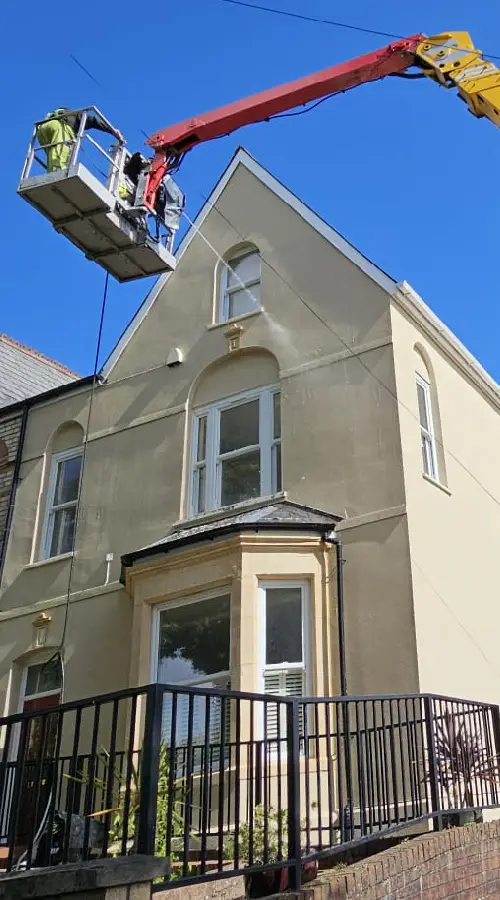
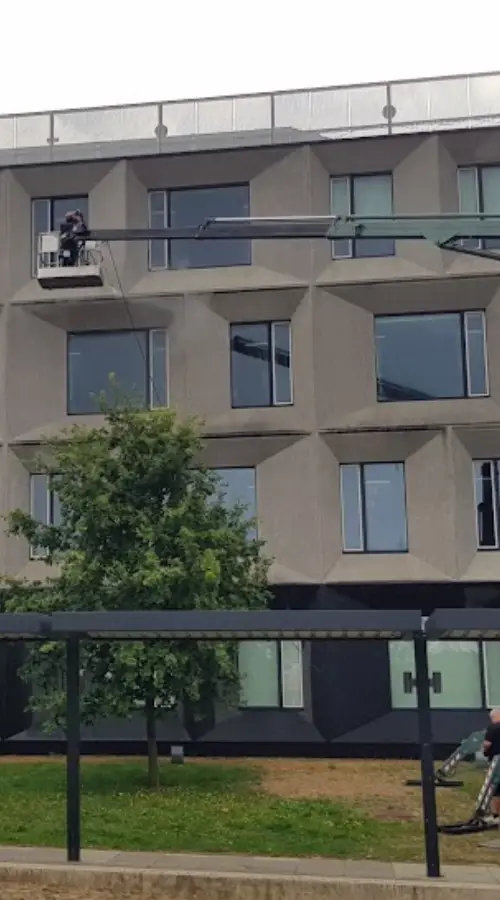
Comparing quotations for render cleaning is harder than it should be, because the figures rarely describe the same work. A few questions make the differences visible. Ask what method will be used. If the answer involves pressure washing at any setting, that is a different job with a different outcome, and on a through-coloured finish it carries a risk of permanent damage. Ask how long the treatment will be left to dwell. Dwell time is where the work actually happens, and shortening it is the commonest way to fit more jobs into a day. A contractor who cannot answer this has not thought about it. Ask whether preparation and protection are included, or whether they are assumed to take five minutes. Covering planting, sheeting hard surfaces and masking fittings takes real time on any property. Ask whether access is in the figure. Where a gable cannot be reached from the ground, the equipment required should be quoted at the outset rather than appearing later. And ask what happens if an area has not responded after a month, because the answer to that one is often evasive. Our answers are consistent: soft washing only, dwell periods set against the organisms present, all preparation included, access identified at survey and priced, and a free return visit if something genuinely has not cleared. Render cleaning prices are itemised per elevation and fixed at survey. Professional render cleaning is largely decided before anyone arrives. Anyone searching for render cleaning near me and holding three figures will find those five questions separate them faster than any amount of comparison on price alone.
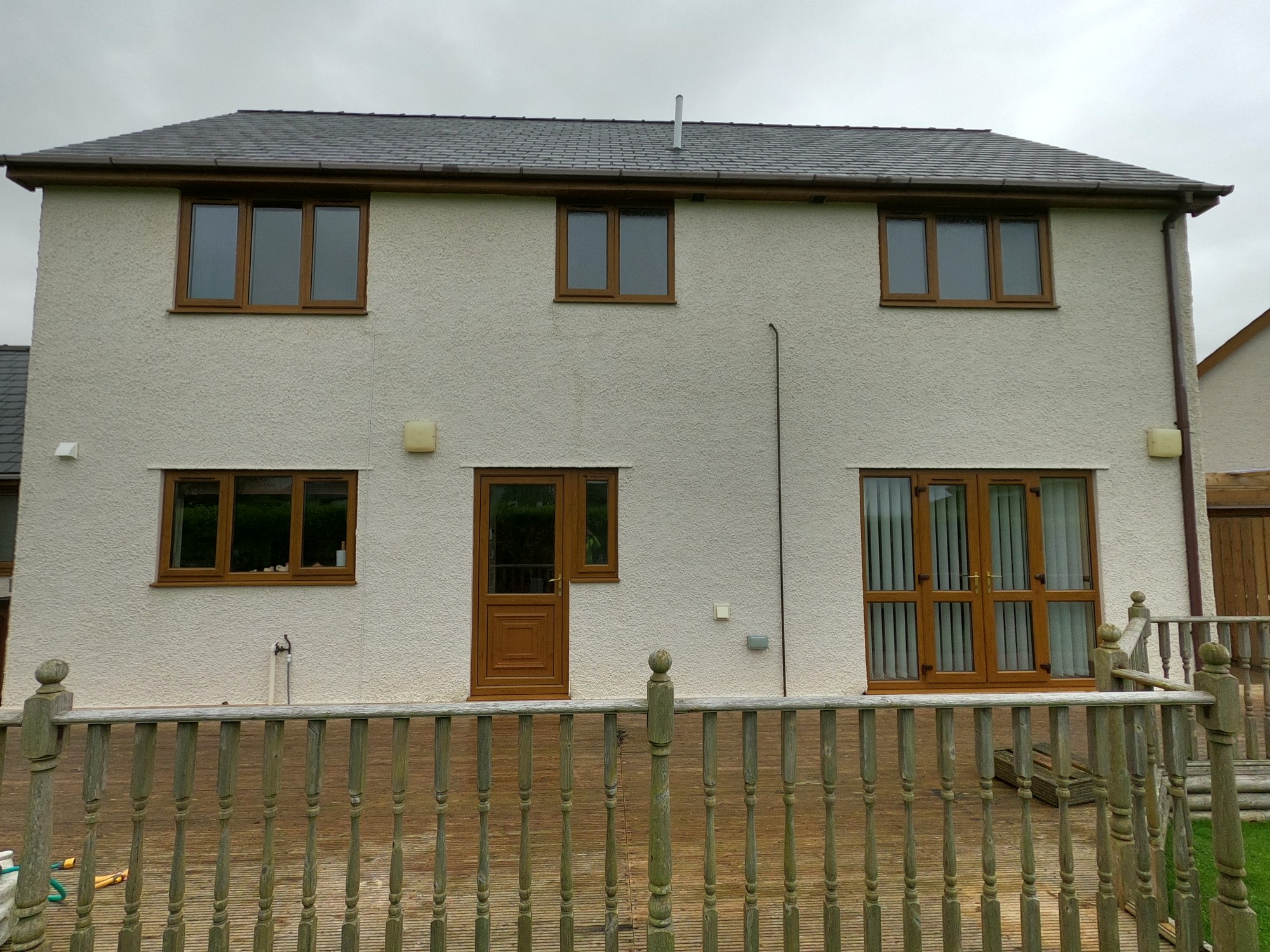
Coverage takes in Evesham together with Bengeworth, Farringdon, Great Hampton and Hampton, all on identical terms with no travel loading applied to any of them. An area of this size contains a genuinely wide spread of rendered property, and it shapes how work is organised. There are terraced and semi-detached frontages where the rendered area is modest and the whole job is straightforward from ground level, usually completed well within a day. There are streets of similar-age housing where finishes repeat from one property to the next, which makes clustering particularly effective. And there are larger detached properties with three-storey gables, extensions in different systems from the original walls and access that needs proper assessment. Because finishes vary independently of property size, we survey each address rather than pricing by area. A modest wall in an older painted render can be a more careful job than a larger modern elevation, and quoting the two identically would misprice both. Clustering is worth raising when you enquire. Where several properties on the same street book within the same period, mobilisation is shared and each individual figure comes down. On roads with consistent house types the specification often transfers between properties, which shortens both the survey and the visit. Access ranges from tight frontages with restricted parking to properties set well back, and neither is a difficulty. Our hose runs allow the vehicle to remain clear while treatment reaches every elevation. Surveys can usually be arranged within the week, take around twenty minutes, and produce an itemised written quotation by email.
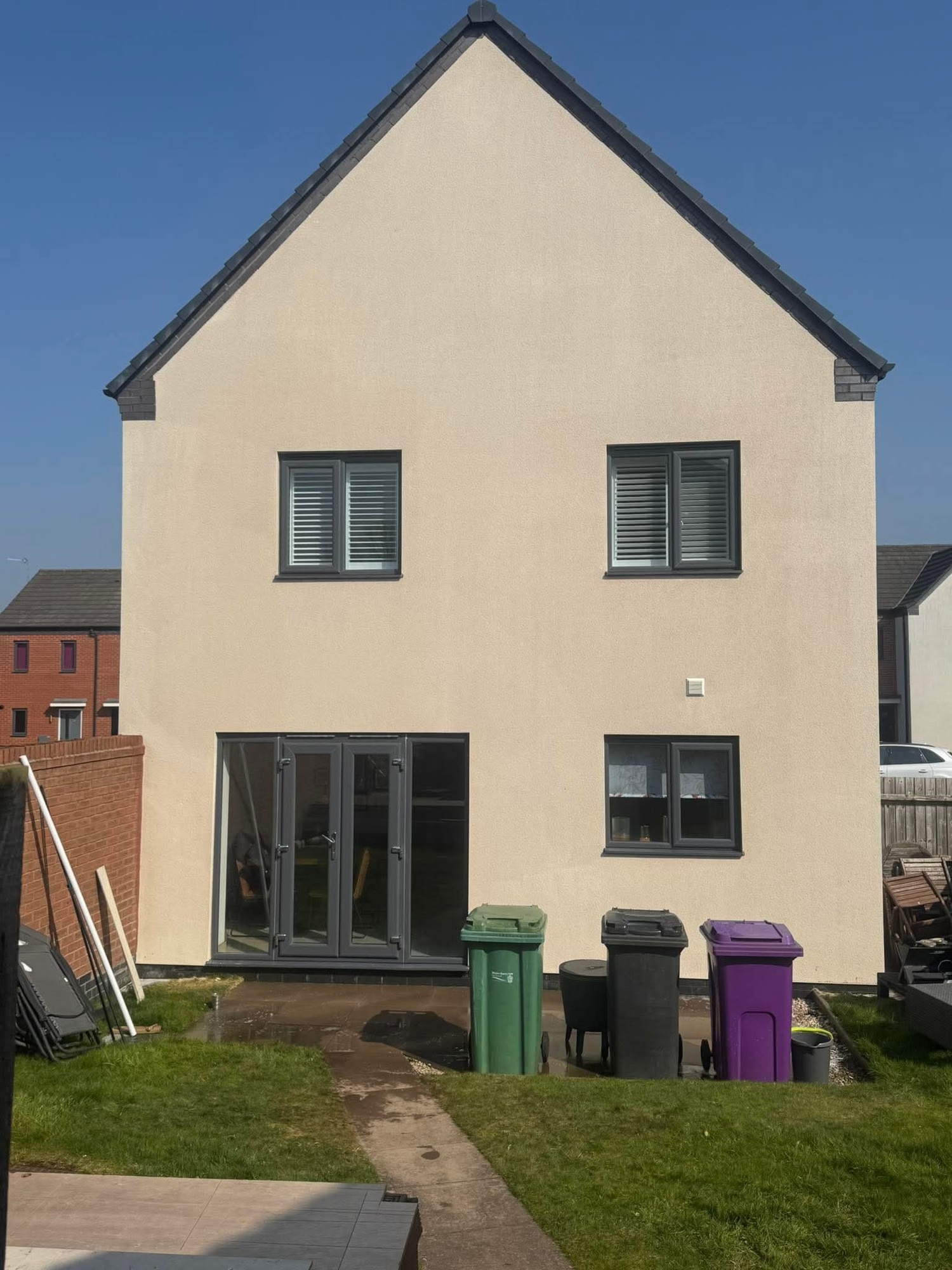
Most properties in Evesham benefit from professional render cleaning every 3 to 5 years, although this depends on the surrounding environment. Properties near trees, woodland, busy roads or coastal areas may require more frequent cleaning due to algae, mould and airborne contaminants. Our soft washing process removes existing growth and helps keep your render cleaner for longer.
Yes. Soft washing is specifically designed for delicate surfaces such as K-Rend, silicone render, monocouche render and painted render. Unlike high-pressure washing, it cleans at low pressure while treating biological growth at its source, reducing the risk of damage to the render finish.
We clean virtually all external render finishes, including K-Rend, Monocouche, Weber, Sto, silicone render, acrylic render, painted render, roughcast and pebble dash. Every cleaning method is tailored to the specific render type to achieve the best possible results.
Yes. Our specialist soft washing treatments are highly effective at removing green algae, red algae, black mould, mildew, lichen and other organic staining. We also apply professional biocide treatments to kill spores and slow down regrowth.
Because our process targets the biological growth rather than simply washing the surface, results typically last much longer than pressure washing alone. The exact lifespan depends on weather conditions, surrounding vegetation and the property’s location.
No. Our soft washing process is specifically designed to clean render safely. We use low-pressure application methods and specialist cleaning solutions that remove contamination without damaging the render surface when carried out by trained professionals.
The UK’s damp climate provides ideal conditions for algae, mould and other biological growth to develop on rendered surfaces. Areas with limited sunlight, nearby trees or persistent moisture are especially susceptible. Professional soft washing safely removes these contaminants and restores your property’s appearance.













































WhatsApp us