Exposure cuts both ways on a rendered elevation, and it is one of the more counterintuitive parts of assessing a wall. Softwashing UK look closely at it, because owners frequently assume a sheltered wall is a protected one. Wind-driven rain wets an exposed elevation far more thoroughly than still rain wets a sheltered one. It reaches areas that would otherwise stay dry, drives water into the texture rather than letting it run off the surface, and carries airborne material onto the wall with it. On the most exposed aspect of a property, the render is genuinely wetted more often and more deeply than anywhere else on the building. The same exposure then works in the opposite direction. Wind dries a wall quickly once the rain stops, and air movement across the surface removes the retained moisture that growth depends on. An elevation that is wetted hard and dried fast frequently carries less colonisation than one that is wetted gently and stays damp for days. That is why the worst wall on a property is usually the shaded, sheltered one rather than the one taking the weather. Reduced air movement extends the damp period far more than reduced rainfall shortens it. Our render cleaning services are specified per elevation against that balance rather than against a general impression of the property. Render algae removal on a sheltered gable typically needs a stronger specification and longer dwell than an exposed frontage of identical size. Exterior render cleaning quoted this way reflects what each wall actually carries, and on properties around Fairfield the difference between elevations is often considerable.
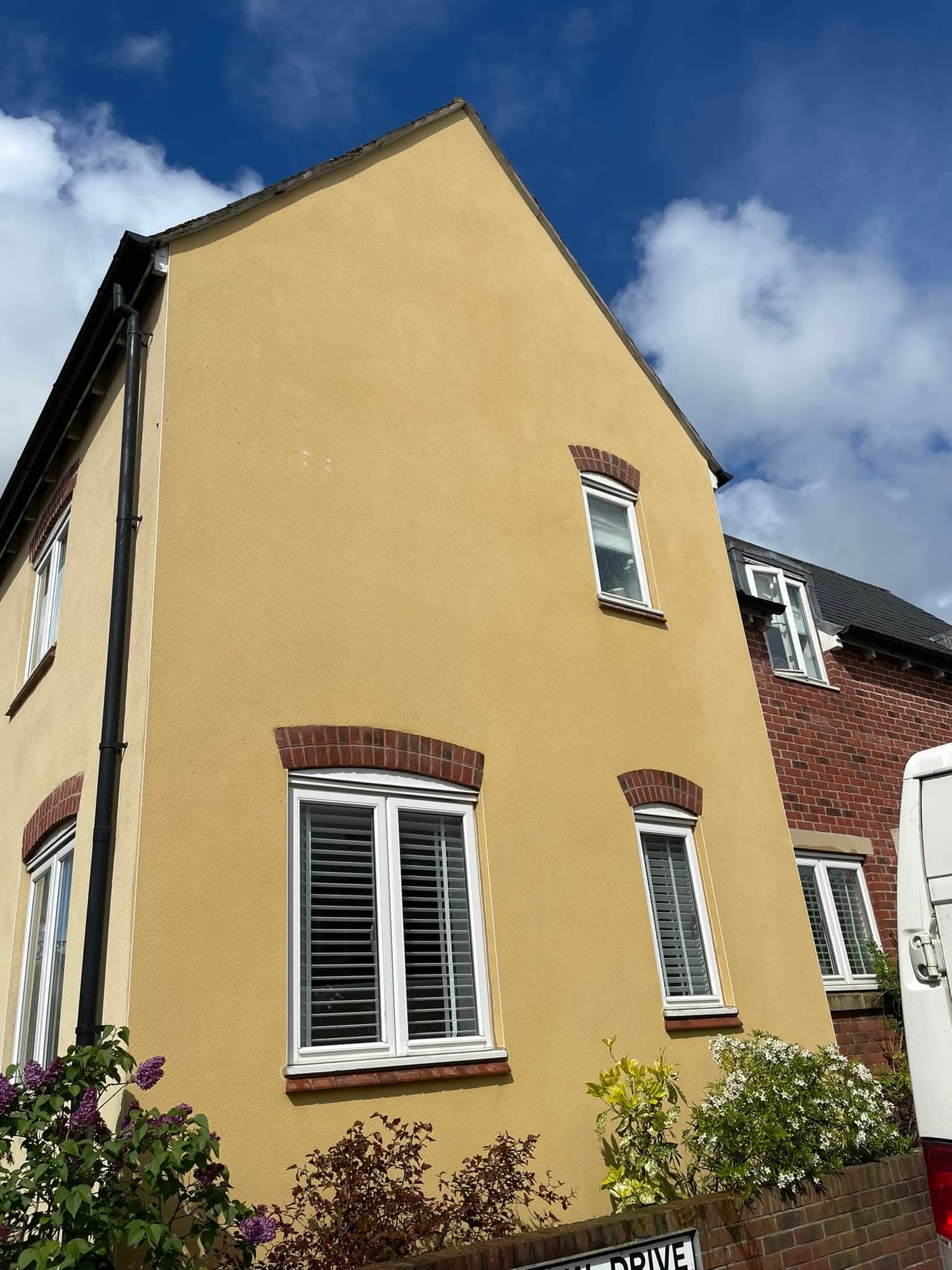
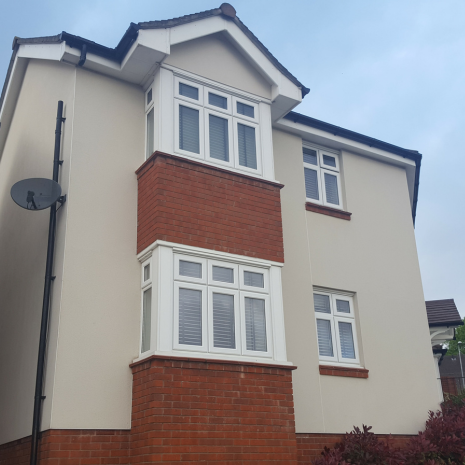

Silicone render on terraced and semi-detached properties raises a consideration that detached houses do not, and it is worth thinking about before booking. Where a run of properties shares a continuous rendered elevation, cleaning one of them leaves a visible difference at the boundary. On a through-coloured finish that difference can be marked, because the treated section returns to its original colour while the adjoining sections stay as they are. The result is a clean wall that draws attention to itself rather than blending in. There is no technical problem with treating a single property. K Rend cleaning stops cleanly at a boundary, and nothing carries across. The question is purely how the finished run will look. In practice, the sensible answer is often to speak to the properties either side. Where two or three arrange together, the whole run is treated to the same standard, the shared elevation reads consistently, and the cost per property falls because mobilisation is shared. We raise this at survey rather than leaving it to be discovered afterwards. Where a single property is being treated regardless, we set expectations honestly about how the boundary will look. Within any elevation, silicone render cleaning is worked as a continuous unit with a live wet edge, at consistent dilution, entirely chemically and at very low pressure with nothing brushed or agitated. Coloured render cleaning records every inconsistency permanently, which is exactly why partial working within a wall is never acceptable even where partial working across a terrace sometimes is. House render cleaning quoted properly makes that distinction clear.
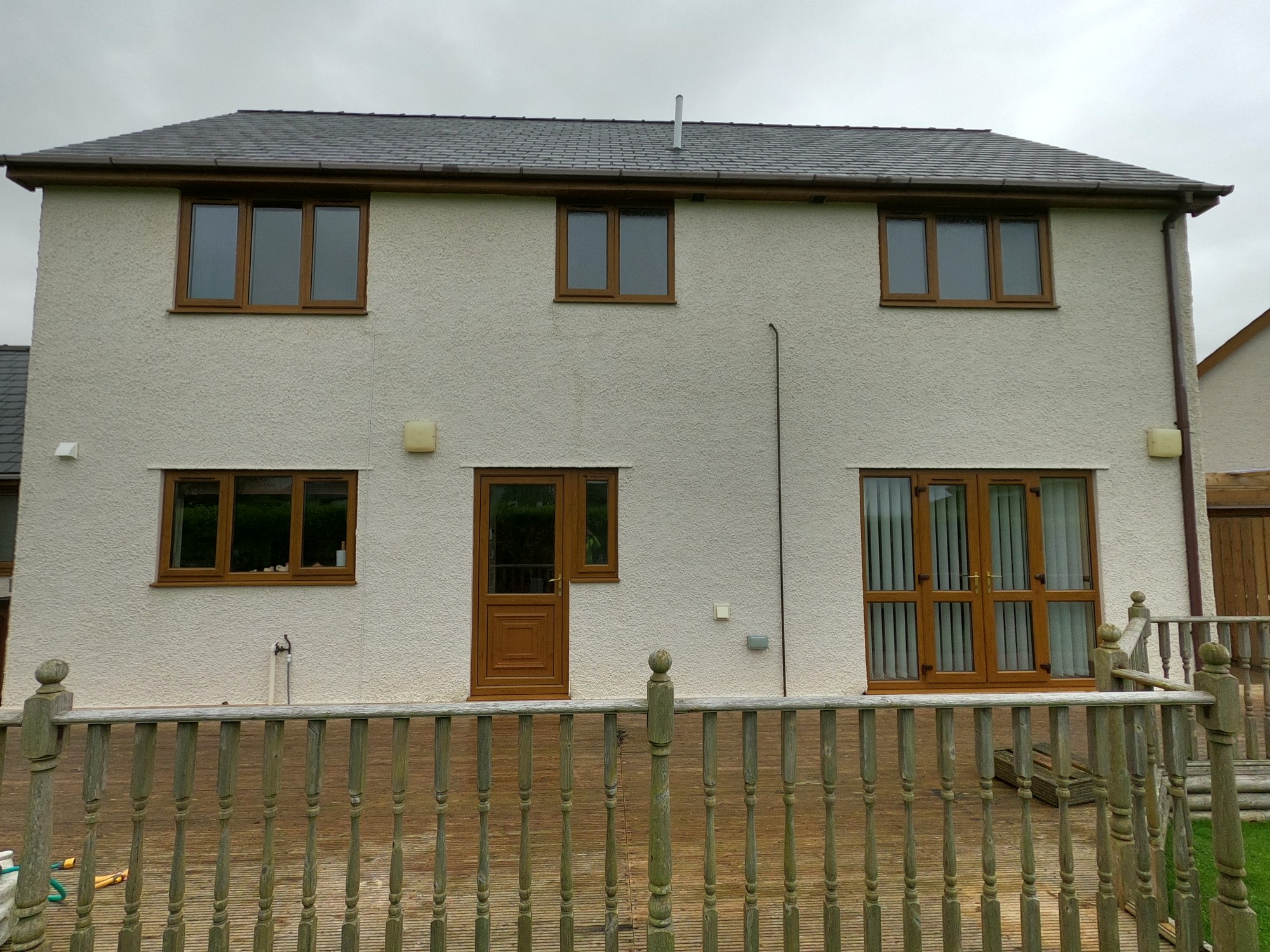
Bungalows and single-storey properties finished in monocouche are among the most straightforward jobs we carry out, and it is worth explaining why the cost usually reflects that. Height is the main driver of render cleaning cost on most properties, because anything that cannot be reached safely from the ground changes the access requirement. A single-storey elevation removes that variable entirely. Every part of the wall is comfortably within reach of telescopic delivery, no access equipment is needed, and the job is quicker from set-up to clearing down. What does not change is the method. Monocouche is scraped back to expose fine aggregate that sits loosely at the face, and abrasion detaches it permanently regardless of how low the wall is. Treatment is applied at low pressure and in volume so it reaches the base of the texture, given full dwell so growth is destroyed at root level, then rinsed gently with nothing brushed. Single-storey properties do have one characteristic worth noting. Because the whole elevation sits close to ground level, splashback from rain striking hard surfaces affects a larger proportion of the total wall area than it would on a taller building. The base band is often the dominant part of the job rather than a detail within it, and it needs its own specification for the mineral soiling driven into the texture. Reveals, returns and the lines beneath sills receive the same deliberate attention as on any property. Render restoration on a single-storey monocouche elevation is frequently completed in a few hours, and residential render cleaning at this scale is one of the better value pieces of maintenance available.
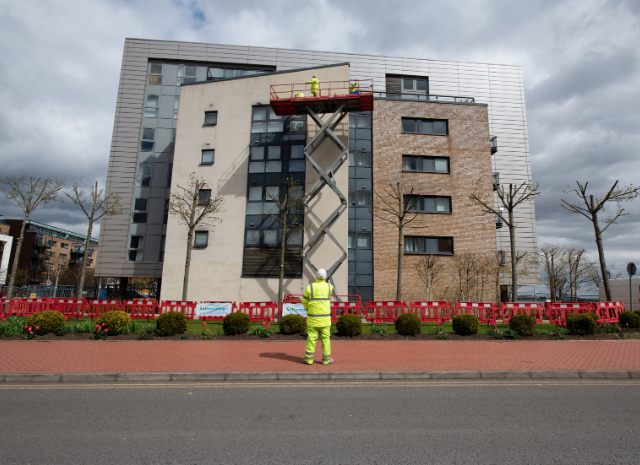

Salons, barbers and beauty premises operating from rendered buildings depend heavily on how the frontage presents. The business sells appearance and attention to detail, and a soiled elevation contradicts that before a client reaches the door. Commercial render cleaning at these premises is a scheduling exercise more than a technical one. Appointment books run across long days, often including evenings and weekends, and the frontage cannot be obstructed while clients are arriving. In practice the work usually goes into an early morning slot or a closing day, and premises of this size are almost always completed within a single visit. Anything on the pavement or forecourt is cleared and protected before we start, and signage, lighting and external fittings are masked or isolated. The low pressure method is a real advantage here, since there is no machine noise carrying into a treatment room and no spray drifting across an entrance. Exclusion zones are agreed and signed so passers-by stay clear without the doorway being blocked. Insurance, method statements and risk assessments are provided ahead of attendance, and operatives hold current working at height certification. Where the premises sit within a continuous run of units, we confirm boundaries and coordinate with the businesses either side, since a single treated frontage in a run reads differently from the ones around it. Technically the requirement matches any elevation. Render facade cleaning maintains consistent dilution and live wet edges so the finished wall is uniform. For premises around Fairfield, a clean every few years is a modest cost against the visibility it buys and keeps the coating dry into the bargain.
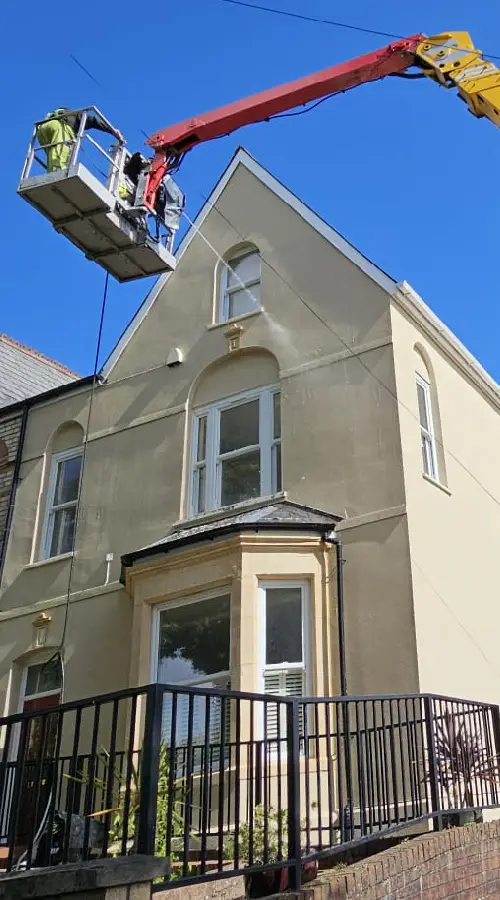
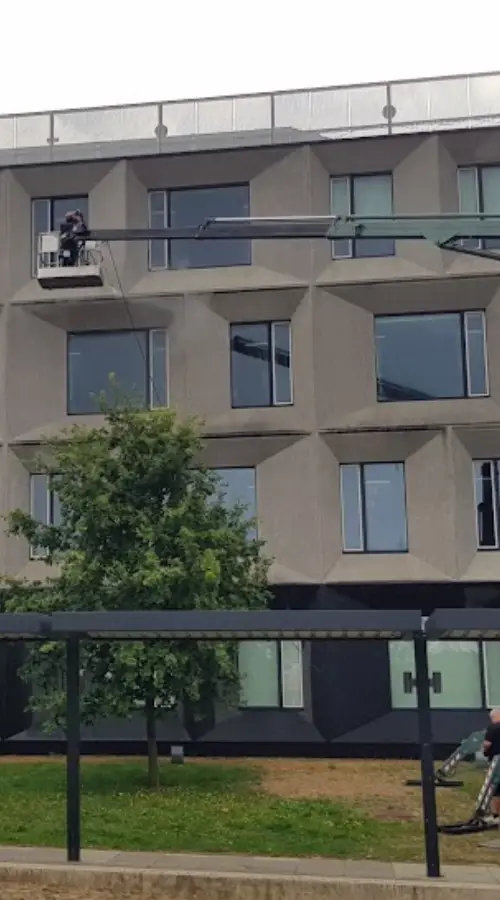
Completing a property in a single visit is worth more than it might appear, and we plan for it on almost every domestic job. The reason is technical as much as convenient. Each elevation has to be treated, dwelled and rinsed as a continuous operation, because treatment that dries part-worked or rinsing left half done shows on the finished wall. Spreading a property across two days means at least one elevation is interrupted, and the join tends to be visible once everything dries. Single-visit working also means the protection goes down once and comes up once, planting is covered for hours rather than days, and you are not living around a partly finished job. Achieving it takes resourcing rather than rushing. Enough operatives on site, enough water and product carried to finish without a change of batch mid-elevation, and access arranged so nothing needs revisiting. That is planned at survey and built into the quoted figure. Most domestic properties here are a single day from arrival to departure, and many considerably less. Where a building is genuinely too large, we say so at the quotation stage and set out how it will be divided so that no individual elevation is split. Render cleaning prices are fixed at survey and cover the whole job including preparation and clearing down. Full public liability cover and current height certification are in place, and our render cleaning specialists work on rendered elevations exclusively. Professional render cleaning organised properly is undramatic and quick. Affordable render cleaning is partly a matter of not paying for a job that takes longer than it needs to.
Fairfield is covered in full, with the same survey process, pricing basis and scheduling applied to every property and no travel loading regardless of position. A large proportion of the work here is on modest domestic properties, and it is worth explaining what that means practically. Most can be treated entirely from ground level using telescopic delivery, which removes access equipment from the figure altogether. Most are a single day from arrival to departure, and many are considerably less than that. The cost is correspondingly proportionate. What varies between them is what is on the wall rather than how big it is. Older properties frequently carry traditional render that has been repaired and painted at intervals, where the condition of the paint determines whether cleaning is advisable at all. Newer builds and extensions carry modern through-coloured systems that clean up well but tolerate no abrasion. Finding both on one building is normal, and it means one property can require two specifications. Growth density varies independently again. A sheltered elevation with planting close to it can be heavily colonised while an exposed wall on the same house needs comparatively little, which is why we quote per elevation rather than as a single total. Because jobs at this scale are quick, we often fit several into a day in the same area. Properties booking within the same period share the mobilisation cost and see it reflected in their figures, so it is worth mentioning if others nearby are considering the same work. Surveys take around twenty minutes and produce an itemised written quotation by email.
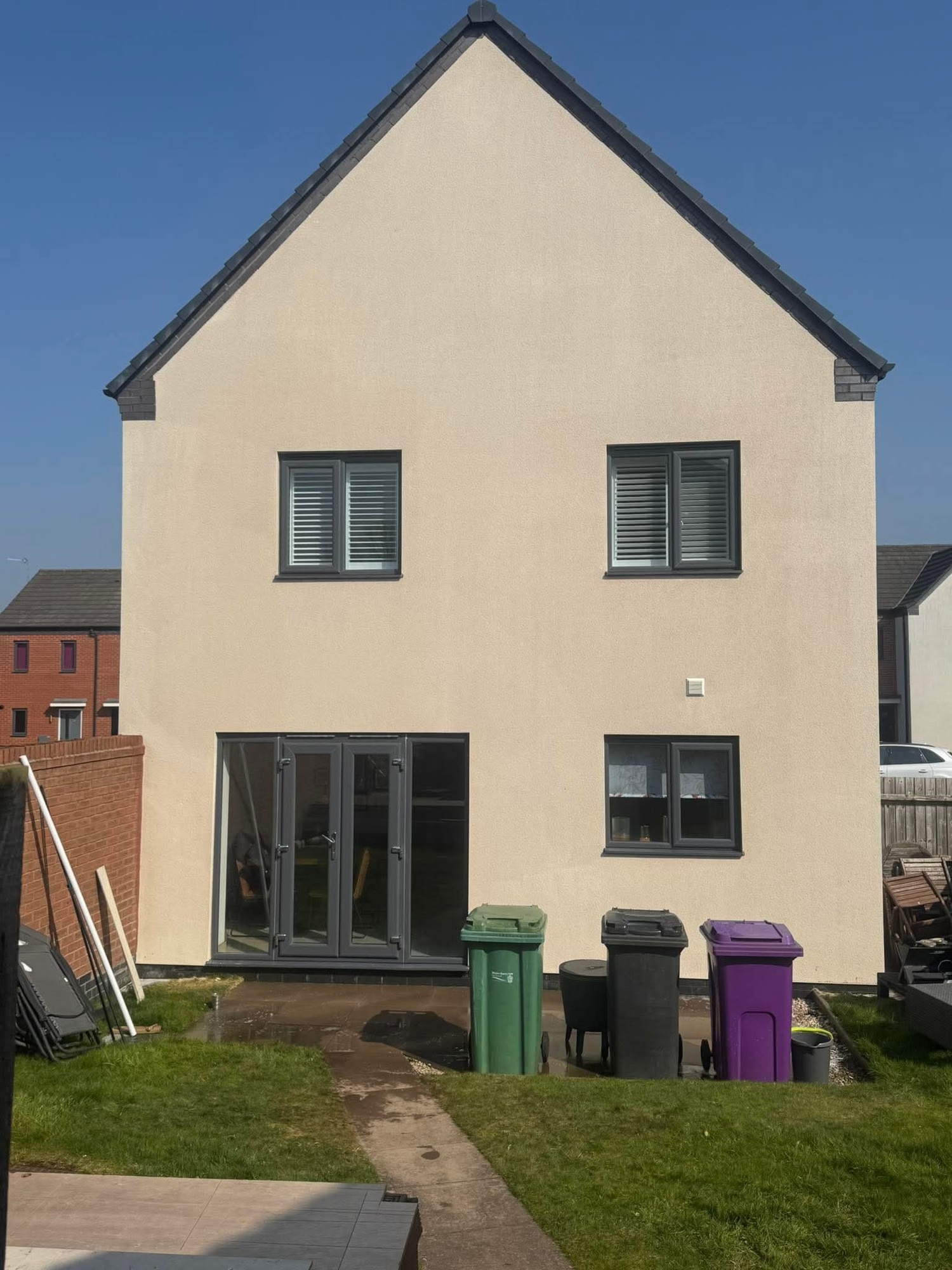
Most properties in Fairfield benefit from professional render cleaning every 3 to 5 years, although this depends on the surrounding environment. Properties near trees, woodland, busy roads or coastal areas may require more frequent cleaning due to algae, mould and airborne contaminants. Our soft washing process removes existing growth and helps keep your render cleaner for longer.
Yes. Soft washing is specifically designed for delicate surfaces such as K-Rend, silicone render, monocouche render and painted render. Unlike high-pressure washing, it cleans at low pressure while treating biological growth at its source, reducing the risk of damage to the render finish.
We clean virtually all external render finishes, including K-Rend, Monocouche, Weber, Sto, silicone render, acrylic render, painted render, roughcast and pebble dash. Every cleaning method is tailored to the specific render type to achieve the best possible results.
Yes. Our specialist soft washing treatments are highly effective at removing green algae, red algae, black mould, mildew, lichen and other organic staining. We also apply professional biocide treatments to kill spores and slow down regrowth.
Because our process targets the biological growth rather than simply washing the surface, results typically last much longer than pressure washing alone. The exact lifespan depends on weather conditions, surrounding vegetation and the property’s location.
No. Our soft washing process is specifically designed to clean render safely. We use low-pressure application methods and specialist cleaning solutions that remove contamination without damaging the render surface when carried out by trained professionals.
The UK’s damp climate provides ideal conditions for algae, mould and other biological growth to develop on rendered surfaces. Areas with limited sunlight, nearby trees or persistent moisture are especially susceptible. Professional soft washing safely removes these contaminants and restores your property’s appearance.














































WhatsApp us